Monday's technology stories

Washington Post exposes apparent sting by fake Moore accuser
Over the course of two weeks, a woman named Jaime Phillips met for several interviews with the Washington Post during which she falsely alleged that Alabama Senate candidate Roy Moore had a sexual relationship with her in 1992 and that she had an abortion at 15, the Post reports. The story was fake, and, while she told it, Phillips repeatedly asked Post reporters how her claims would impact Moore's bid for the Senate if made public.
The fallout: When the Post confronted Phillips about inconsistencies in her story, she "insisted that she was not working with any organization that targets journalists." But Post reporters saw her walking into the New York offices of Project Veritas — a group that goes after mainstream media by feeding reporters fake stories to expose, as the organization calls it, media bias.

Facebook turns to AI to spot suicidal thoughts
Facebook said Monday it would use artificial intelligence to identify posts and live videos where users are expressing suicidal thoughts.
Why it matters: The company has been under pressure for live-streaming violent and graphic incidents, while being accused of not having the human resources to successfully moderate live content on its platform.

Uber banned in Israel
An Israeli court has banned Uber from operating in the country less than a month after the company began offering 24/7 ride-sharing services there, per Haaretz and The Jerusalem Post. The ban comes as the result of a lawsuit by a taxi drivers' association with a judge agreeing that Uber drivers did not have the appropriate insurance to transport customers.
Why it matters: It's illustrative of Uber's growing pains within global legal and regulatory frameworks as it attempts to expand its reach around the world. To make matters worse in Israel, Uber still has a pending lawsuit against it from Israel's Transportation Ministry, claiming that it subverts an Israeli regulation that forbids drivers offering passengers a ride for a profit without a taxi license.
The frenzy to lure Amazon
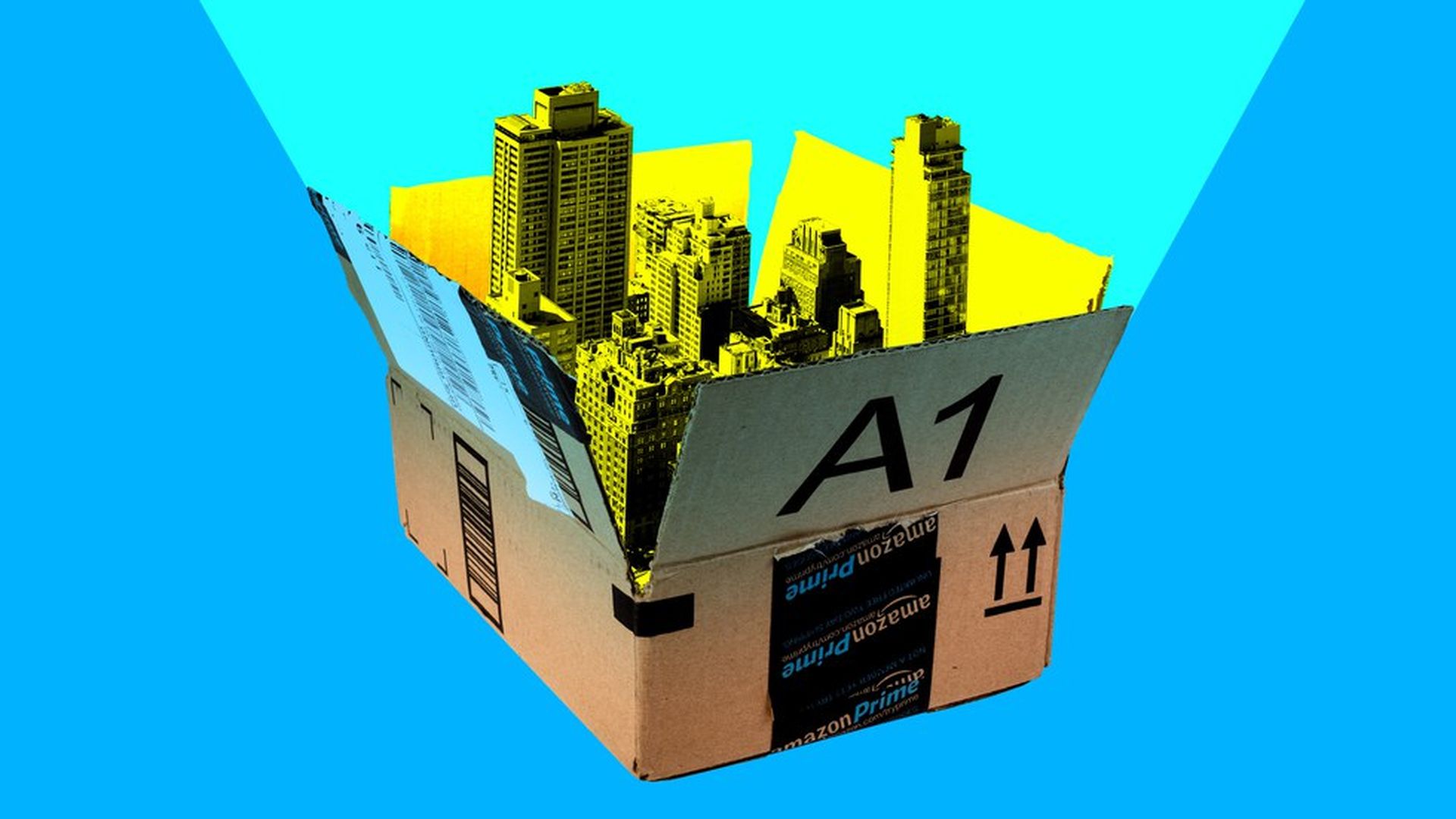
Newspaper columnists are mocking cities like Chicago and Fresno, Calif., over the largesse they are offering to attract Amazon's new headquarters, from multi-billion-dollar tax abatements to more exotic handouts like the right to have its tax dollars spent only on public projects benefitting the company directly.
Why it matters: Amazon says HQ2, as it calls its planned second headquarters, will employ some 40,000 to 50,000 future workers and pay them an average of about $100,000 a year each when you include salary and benefits. "A single company is viewed as such a shiny prize that some seem ready to wave the white flag on the whole 'for the people, by the people' experiment," writes the Seattle Times' Danny Westneat. The offers are, "let's face it, the equivalent of bribes," the L.A. Times' Michael Hiltzik wrote last month.