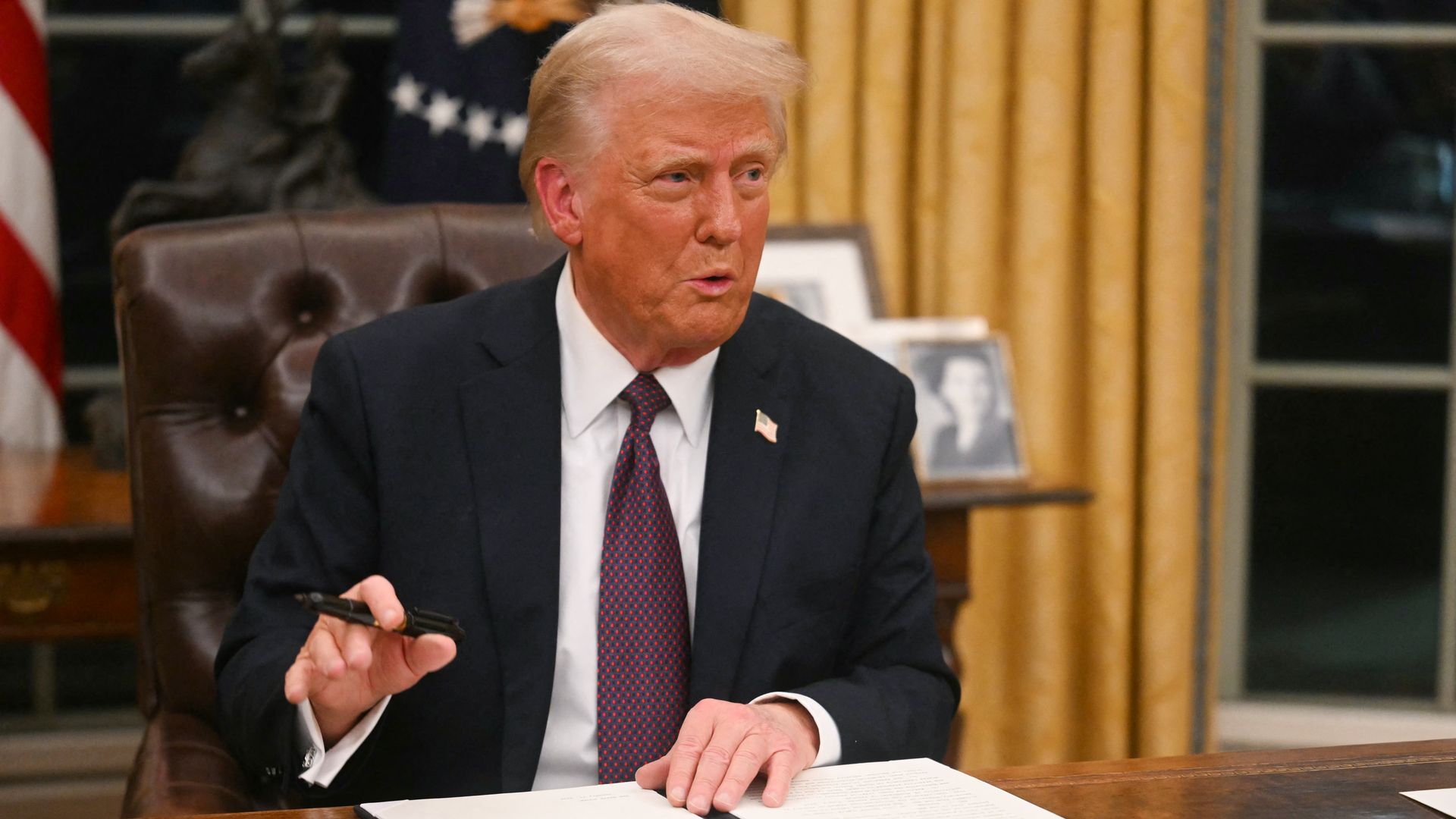
President Trump on Tuesday said he's considering a 10% tariff on China, despite a recent softening tone with the country.
The big picture: The newly inaugurated president, who held off on imposing his promised massive tariffs on Mexico and Canada on his first day in office, recently signaled he wouldn't immediately raise tariffs on Chinese products as some expected.
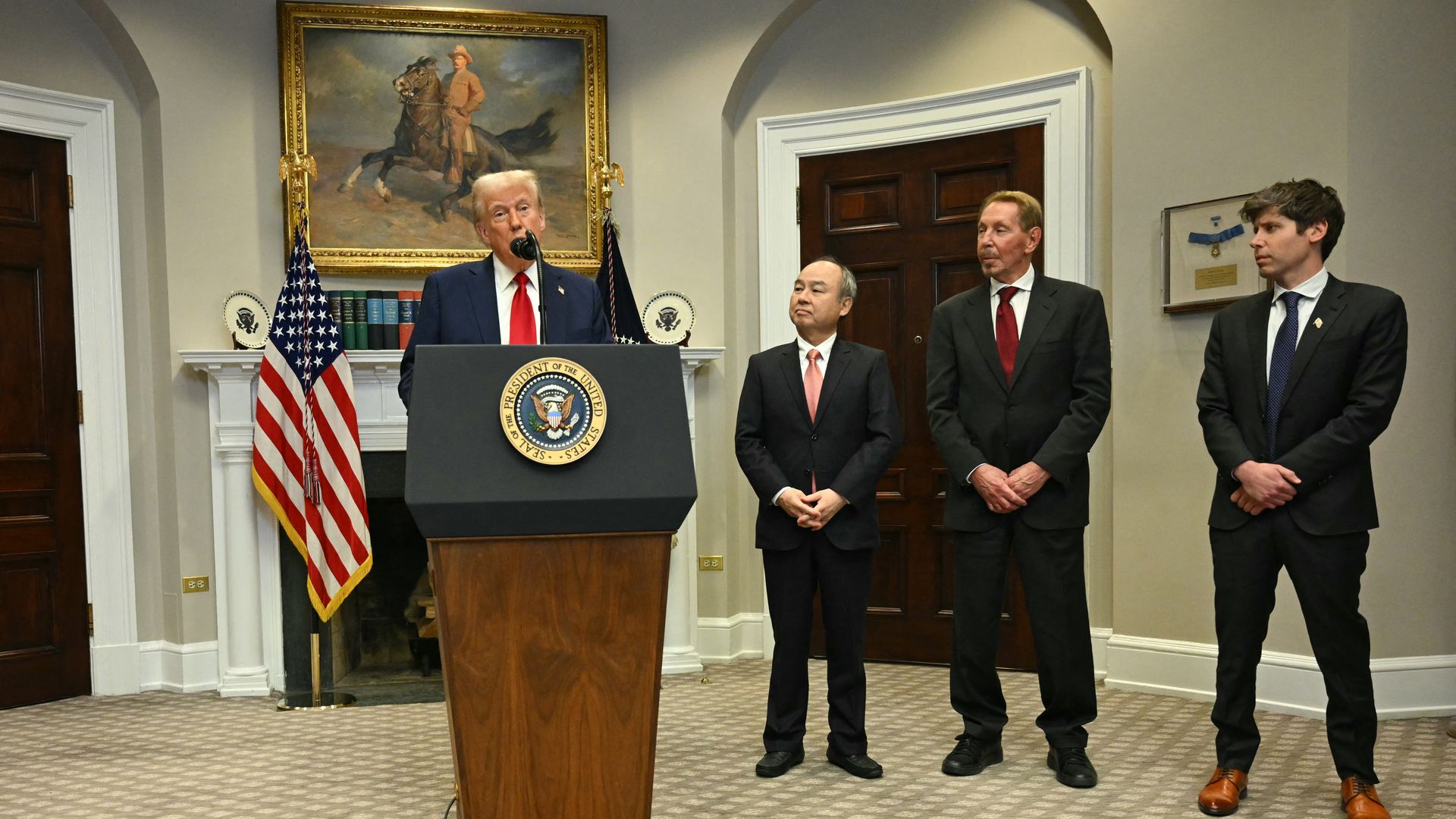
President Trump on Tuesday announced billions in private sector investments to grow artificial intelligence in the U.S. and build massive new data centers for OpenAI.
The big picture: OpenAI, SoftBank, Oracle and the UAE's MGX will convene under a joint venture called Stargate, and will commit $100 billion to start with a potential of up to $500 billion over four years.
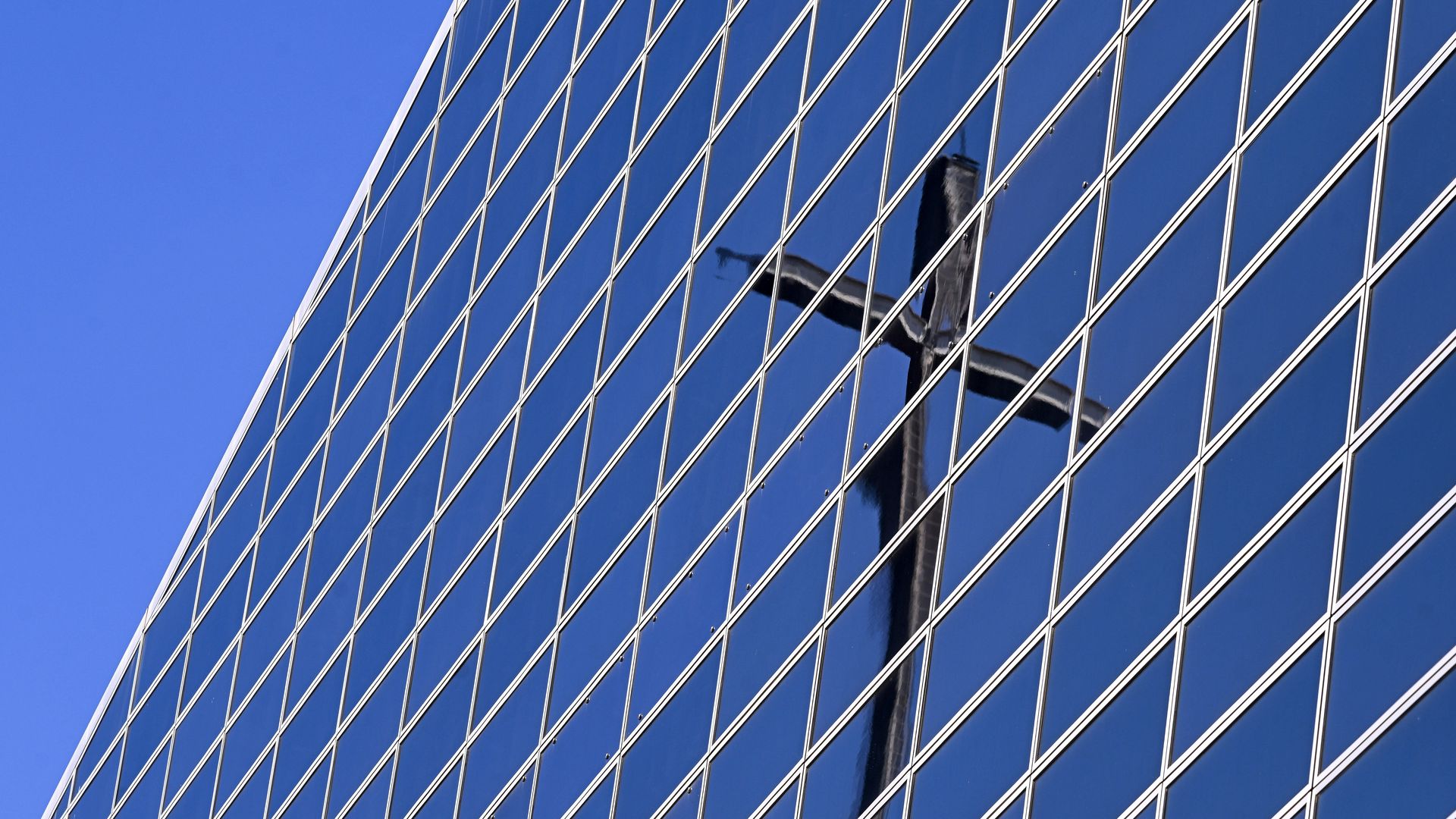
Immigration officials can raid churches and schools to arrest undocumented immigrants after the Trump administration scrapped a policy thatprotected sensitive spaces.
The big picture: President Trump has promised aggressive immigration crackdowns, and the latest directive signals the Department of Homeland Security will consider operations at sites previously deemed off-limits.
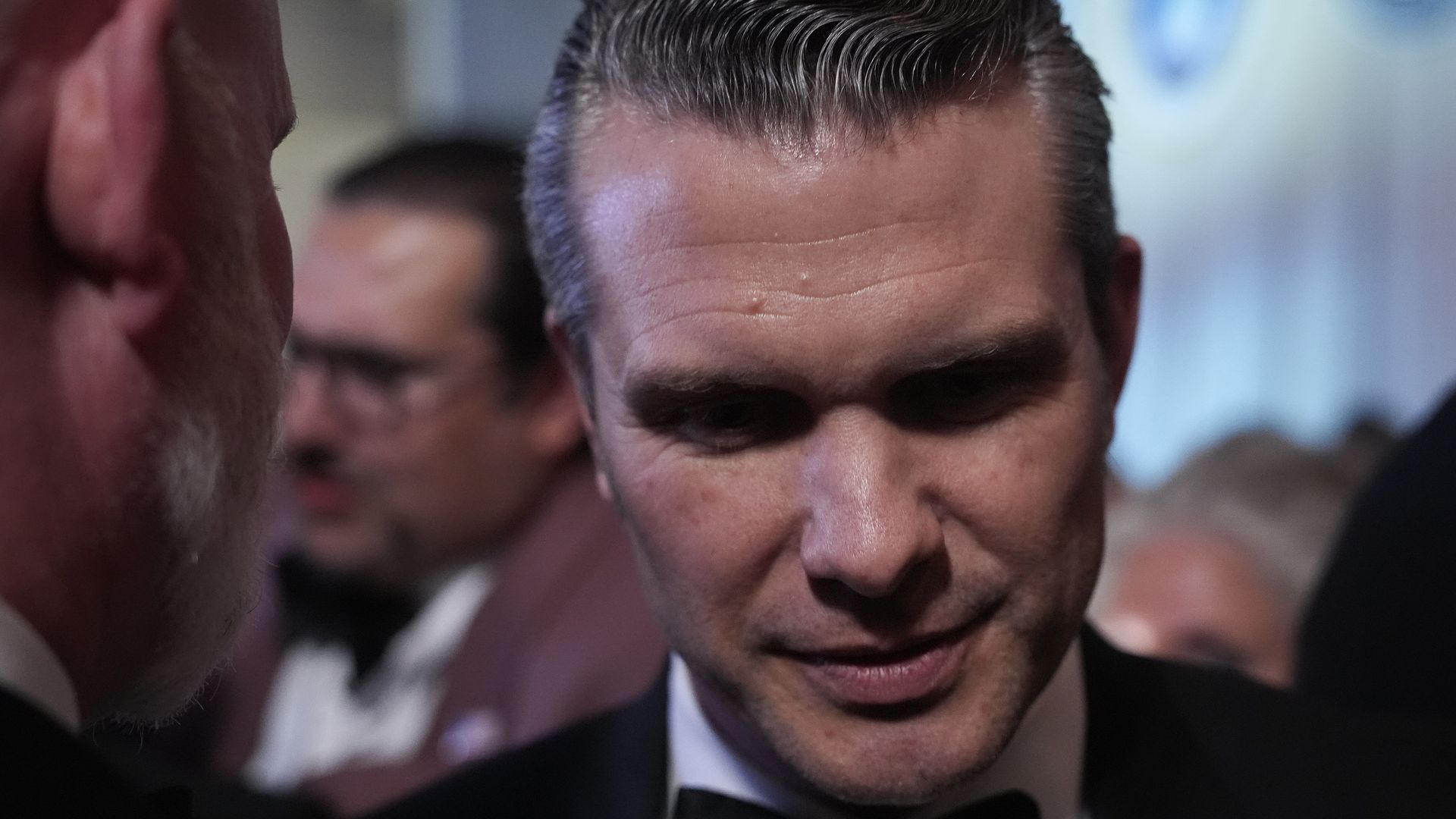
Pete Hegseth's former sister-in-law said the defense secretary nominee's ex-wife feared for her safety, according to a sworn affidavit reviewed by Axios.
Driving the news: Hegseth denies the claims in the affidavit, and his ex-wife says he was never physically abusive. Hegseth is a Senate floor vote away from running the Pentagon.
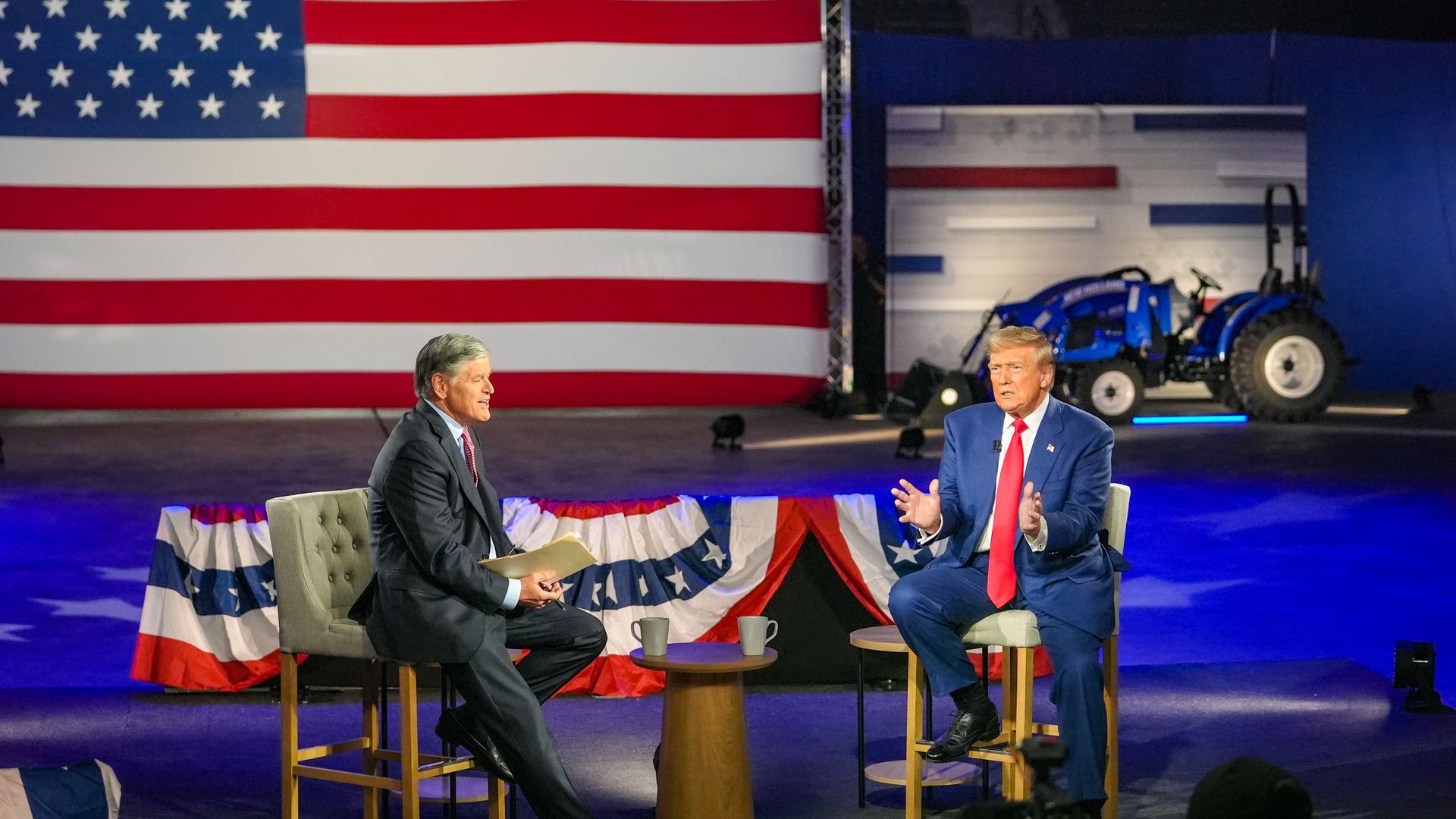
Fox News host Sean Hannity will interview President Trump in the Oval Office on Wednesday. It's Trump's first Oval interview since returning to the White House.
Why it matters: Trump has hinted at shaking up the briefing room and allies have praised unconventional news sources. But his first sit-down is with a longstanding, well-known TV host on the president's beloved network.
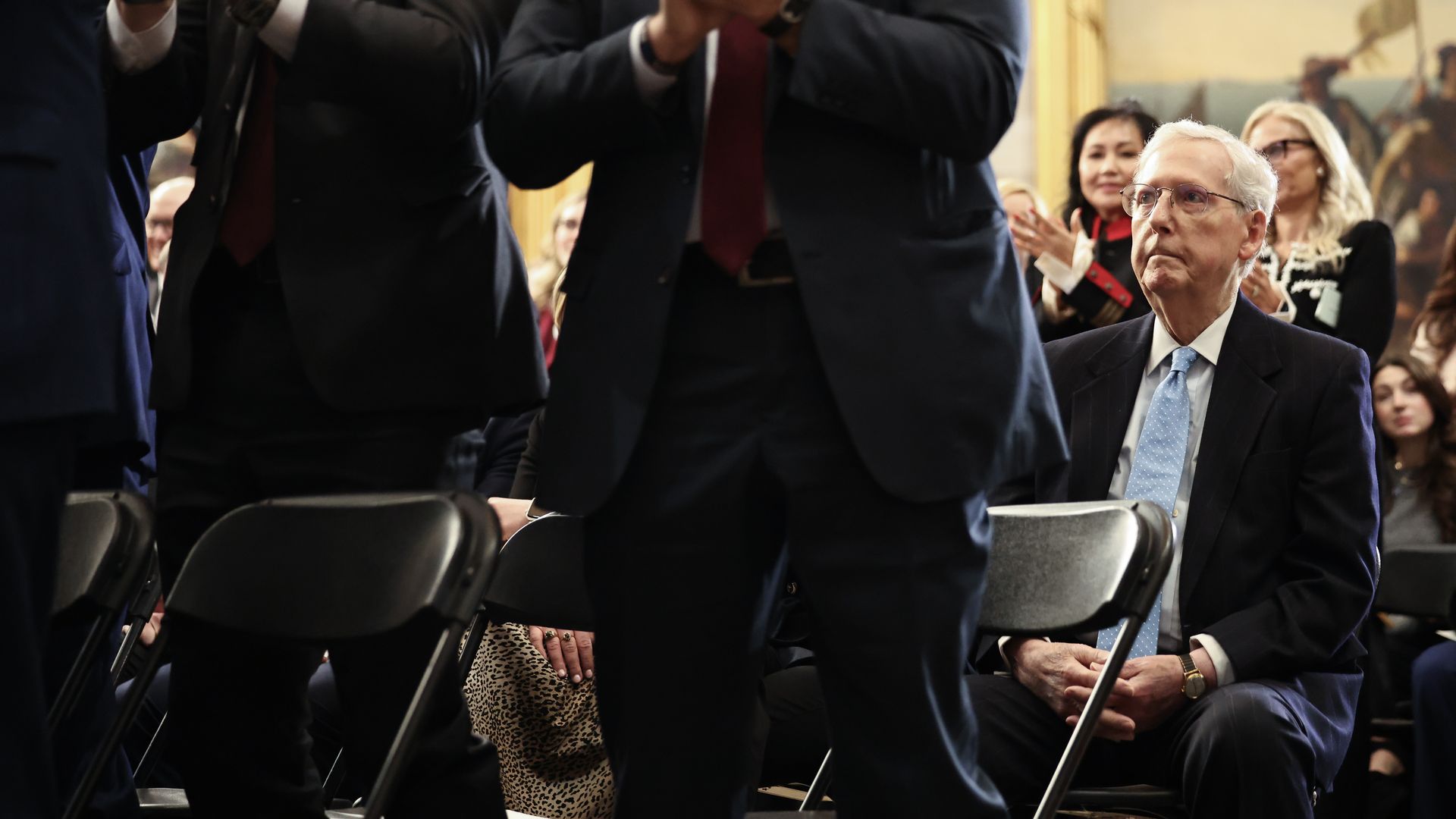
A small core of Senate Republicans — including former GOP leader Mitch McConnell — has denounced President Trump's near-blanket pardon of Jan 6 rioters.
Why it matters: These voices will be a distinct minority on Capitol Hill. Many Republicans are in lock-step with Trump, even over an issue as personal to lawmakers as Jan. 6.
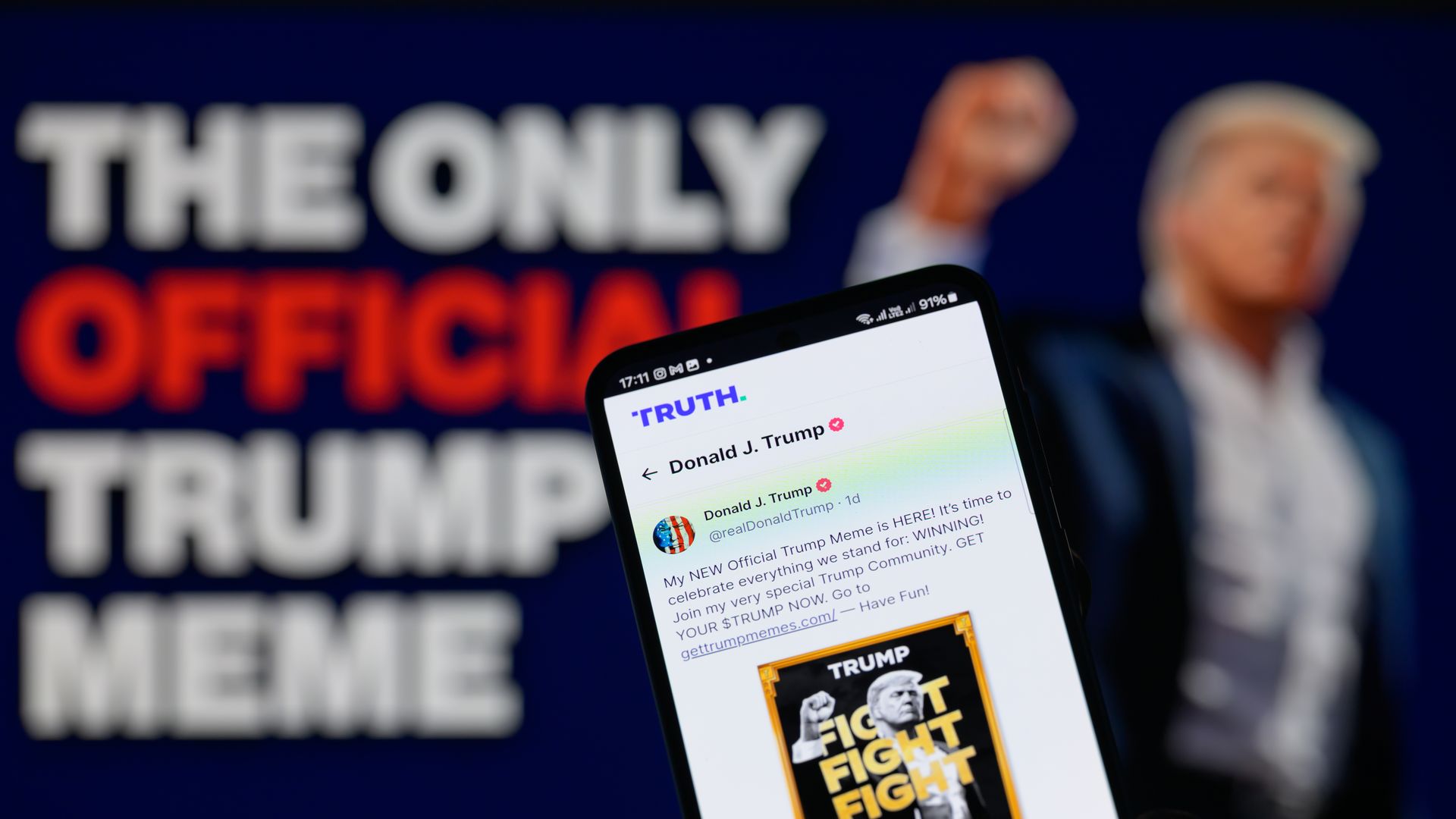
It's one thing for the new President to support the blockchain industry, but veterans aren't so crazy about him joining their ranks.
Why it matters: The president-elect nominally making $50 billion on a crypto asset that didn't exist a day prior speaks to the industry's power — but there's growing debate within the community about a stain on crypto's burgeoning credibility.
President Trump threatened to purge officers from the U.S. military upon returning to the White House, and his new administration has already started making leadership changes.
The big picture: The first woman to lead the U.S. Coast Guard has been relieved of her command, the Department of Homeland Security (DHS) confirmed Tuesday.
Pope Francis offered President Trump his congratulations on returning to the White House, but called his plan to deport millions of immigrants from the U.S. a "disgrace."
Why it matters: American Catholics strongly supported Trump in the 2024 election. Trump will need their support for any mass deportation plans, but crucial parts are being opposed by Catholic leaders.
Several Instagram users have reported seeing hashtags such as "#democrat," "republicans," "#jan6th" and "#johnoliver" being blocked, accompanied by a message stating, "We've hidden these results."
The big picture: The changes came as Meta CEO Mark Zuckerberg had initiated a rapid reversal of policies in the run-up to President Trump's inauguration, including replacing fact-checkers with community notes and having Instagram and Threads recommend political content to users once again.
When Donald Trump first ascended to the presidency in 2017, it seemed to global elites like a temporary aberration. Now, his leadership is set to define an era for the world economy.
Why it matters: The economic thrust that prevailed for decades — a period of nations becoming ever more interconnected, with the U.S. as the unquestioned protector of that world order — has receded fast, and doesn't look likely to return.
President Trump on Monday issued pardons for nearly all of the defendants charged with participating in the Jan. 6 Capitol riot — an unprecedented act of clemency.
Why it matters: In doing so, Trump absolved those who sought to undermine the democratic process. He also dashed a years-long effort by former President Biden's Justice Department to hold accountable those responsible for the deadly violence.
The wild gyrations of the Canadian dollar offer a valuable reminder to markets: There's what other people say Donald Trump will do, and what Donald Trump says he'll do.
Why it matters: The difference between the two can be worth billions of dollars.

White House Chief of Staff Susie Wiles and White House Deputy Chief of Staff Dan Scavino watch as President Trump talks to journalists in the Oval Office yesterday. Photo: Jim Watson/AFP via Getty Images
A portrait of Andrew Jackson—"Old Hickory," the seventh president — is back in the Oval Office. So is President Trump's Diet Coke button.
The big picture: The Oval Office getsa new look every time there's a new president, as each commander-in-chief selects their own artwork and some of their own furniture.
The Trump administration inherited some big health policy headaches on Monday. And the nature of federal rules means it can't start from scratch on key questions about surprise billing, coverage of GLP-1s and prescribing controlled substances.
The big picture: All eyes will be on Trump health appointees as they sort through unfinished business from the Biden years.
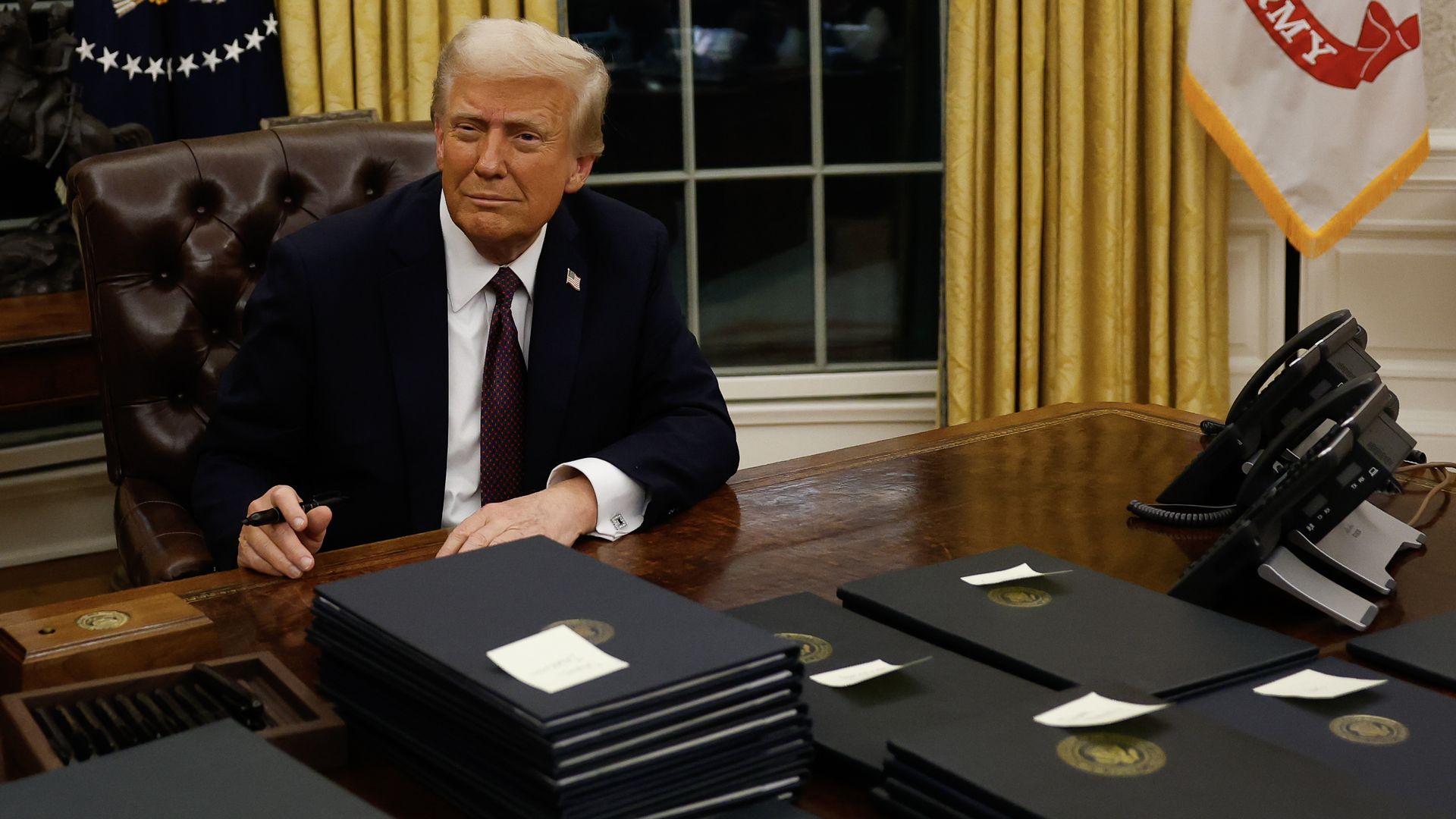
President Trump moved to obliterate the outer bounds of executive power Monday, igniting a series of constitutional showdowns that could curtail — or enable — his vision for a maximalist second term.
Why it matters: Within hours of taking office, Trump dared the courts, Congress and his fragmented opposition to stand in the way of what could be his most enduring legacy: a radical expansion of presidential power.
President Trump's inaugural speech Monday was the one his staff and advisers wanted: He hailed a new "golden age," vowed unity and a "revolution of common sense," and set forth an aggressive conservative agenda while bashing his predecessor.
Less than an hour later, Trump gave a speech to Republican allies that was for him and his fans — a stream-of-conscious series of gripes and attacks on political enemies, including his oft-repeated claim that the 2020 election was "totally rigged."
"I think this was a better speech than the one I gave upstairs," he joked to the crowd in the Capitol's Emancipation Hall.
Why it matters: He's back, and this is the new normal. The contrasting speeches showed the tension that has hovered over Trump and his team — and that's sure to continue.
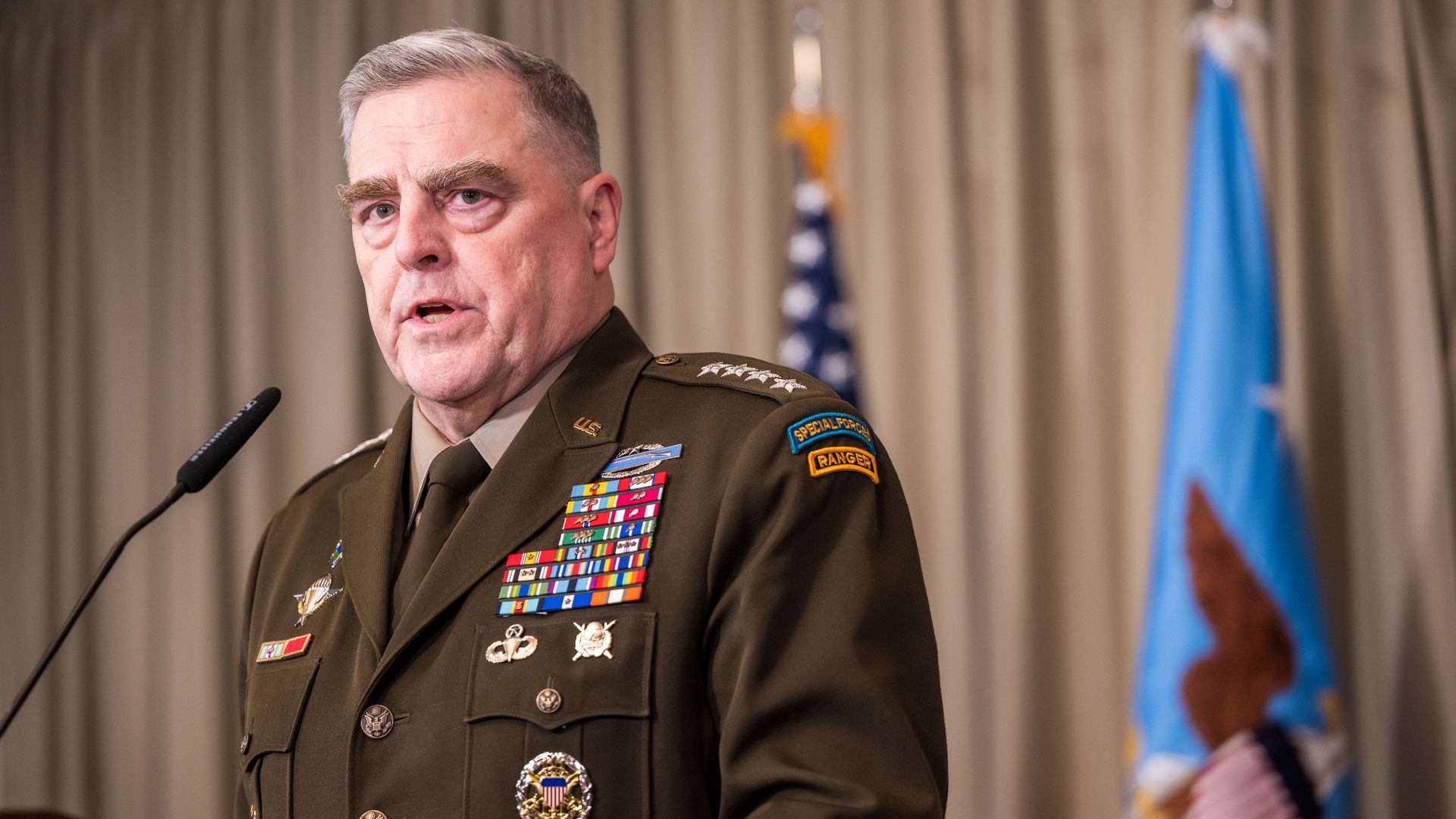
President Trump said early Tuesday his staffers are "actively in the process of identifying and removing" over a 1,000 presidential appointees from the Biden administration, including retired U.S. Army Gen. Mark Milley and celebrity chef José Andrés.
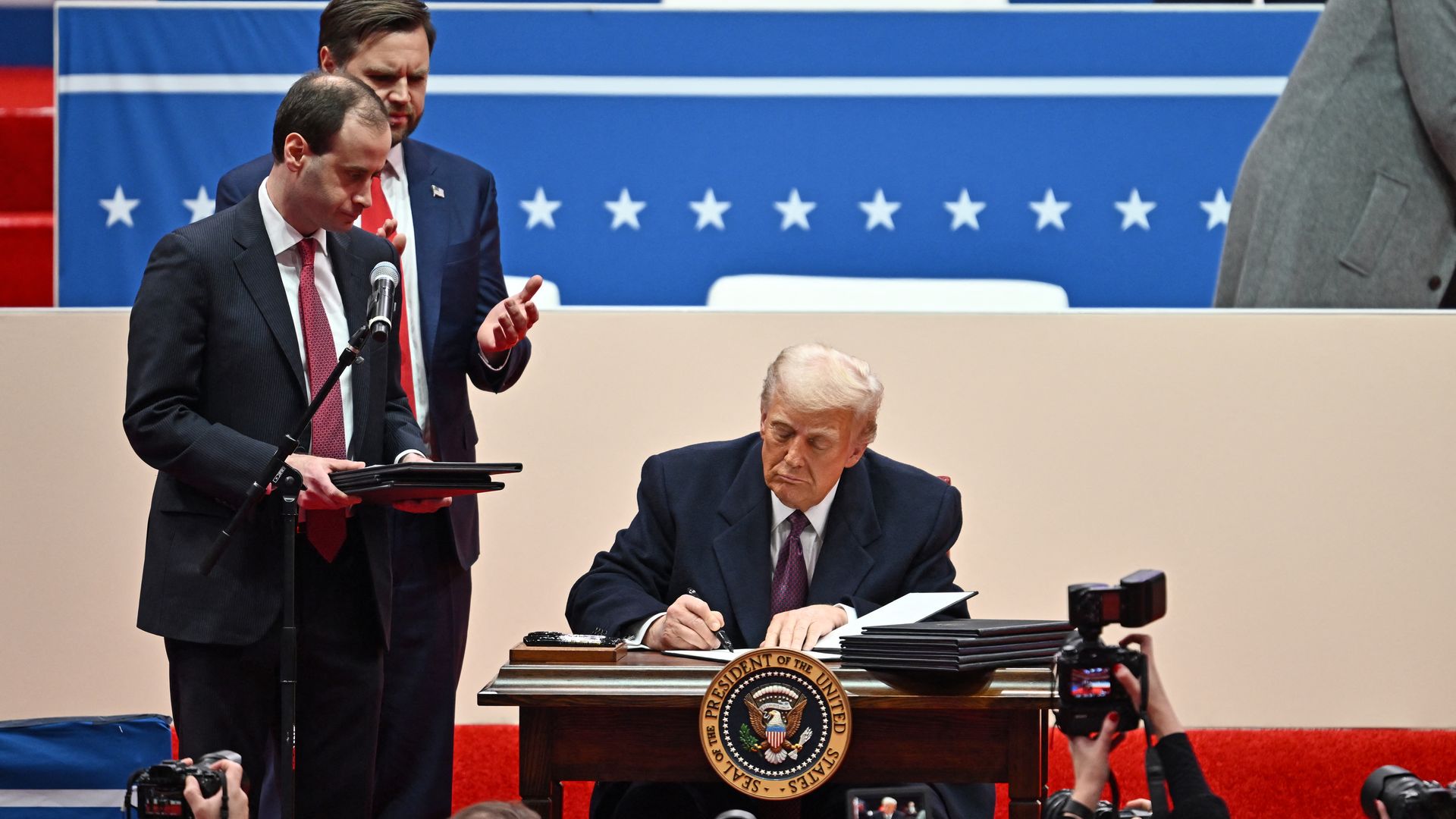
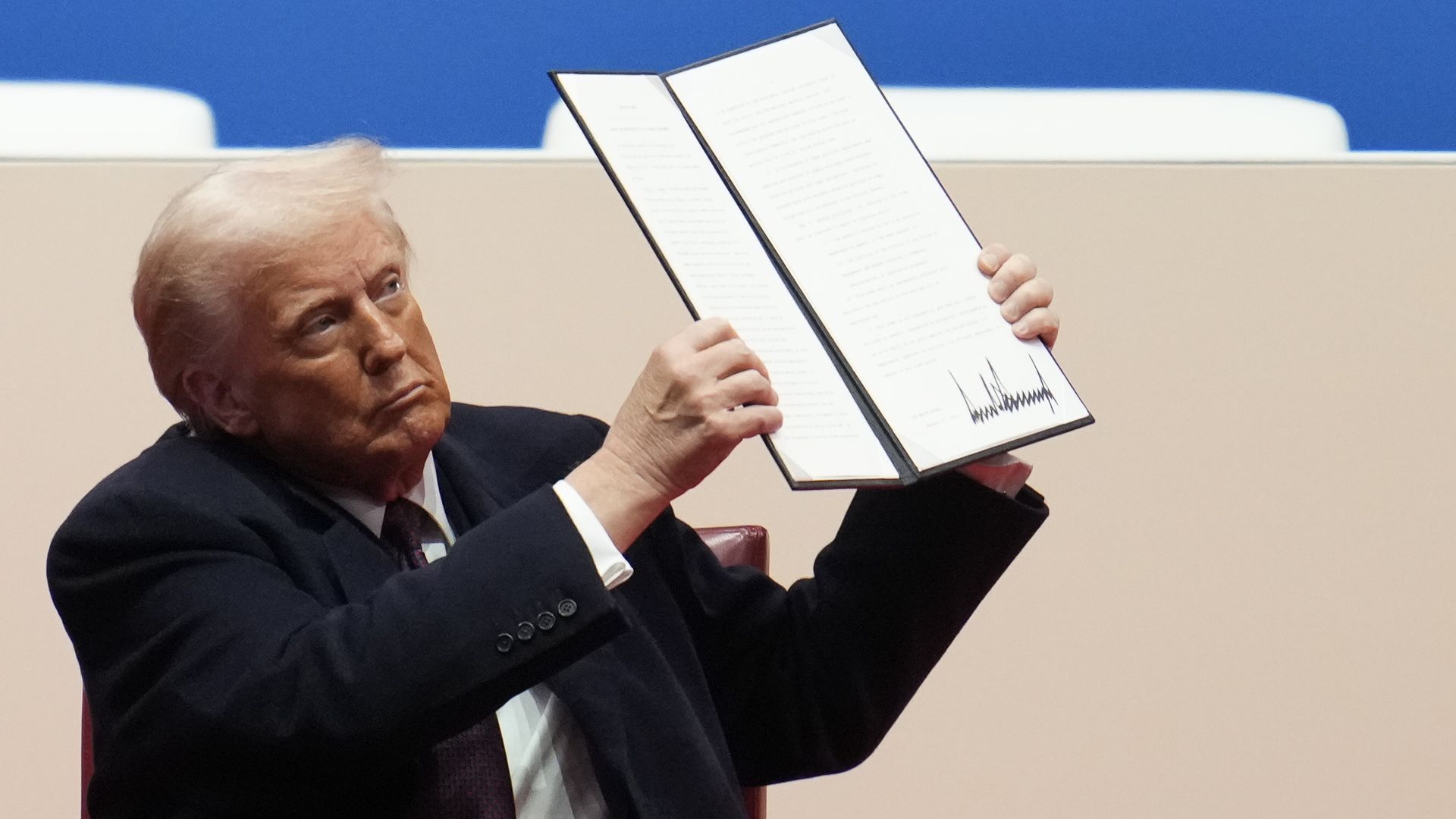
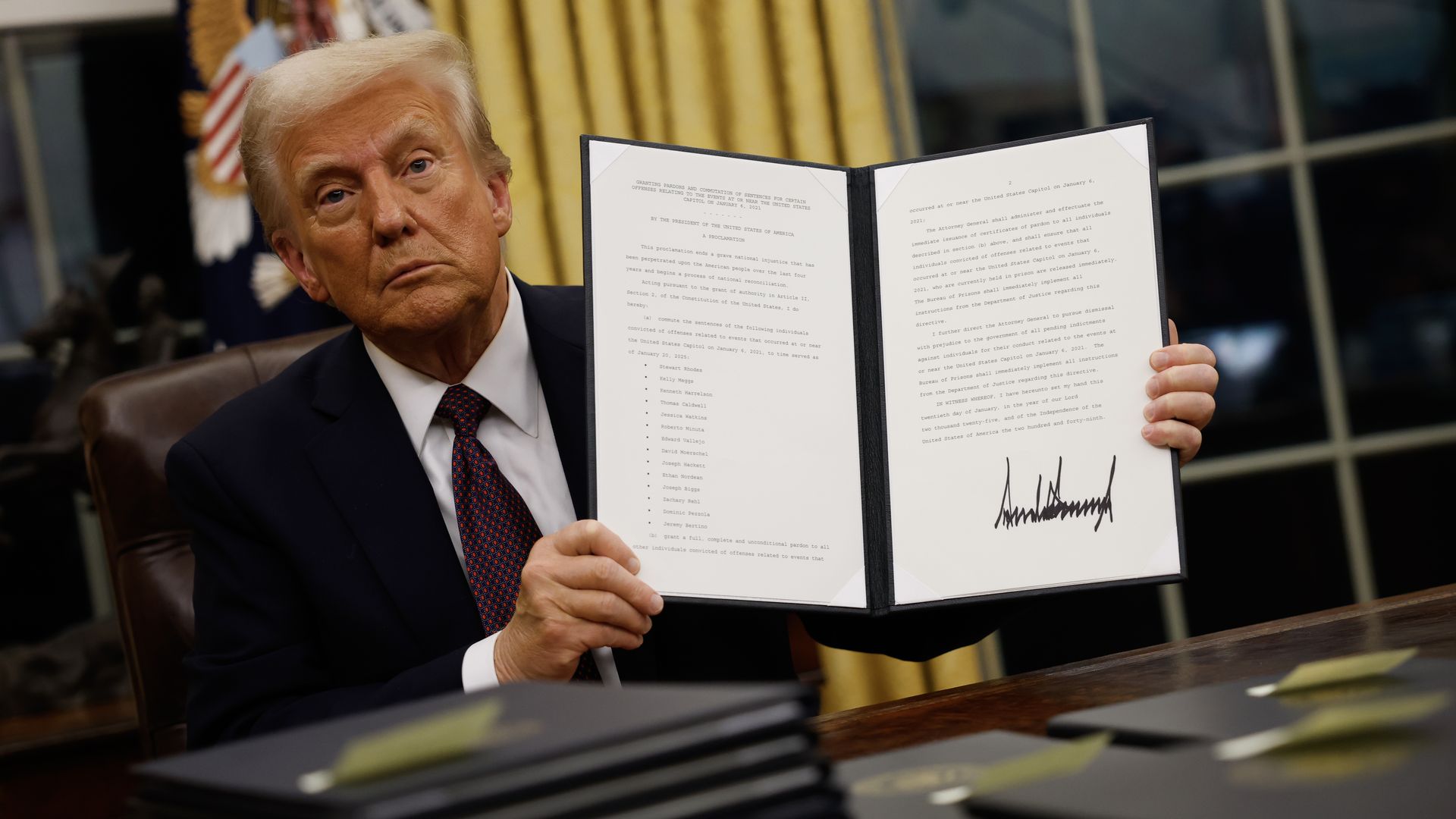
President Trump signed an executive order on Monday granting a "full, complete and unconditional pardon" to the vast majority of Jan. 6 defendants charged with participating in the Capitol riot four years ago.
Why it matters: Among the roughly 1,500 pardoned and 14 others whose sentences were commuted were leaders of the extremist groups Proud Boys and Oath Keepers who were convicted of the seditious conspiracy for their roles in the attack.
President Trump has signed an executive order attempting to end birthright citizenship in the U.S. — a right guaranteed by the U.S. Constitution and affirmed by the Supreme Court more than 125 years ago.
Why it matters: Trump is acting on a once-fringe belief that U.S.-born children of undocumented immigrants have no right to U.S. citizenship and are part of a conspiracy (rooted in racism) to replace white Americans.
A coalition of civil rights and civil liberties groups are suing to stop President Trump's new executive order attempting to end birthright citizenship in the U.S. — a right guaranteed by the U.S. Constitution.
Why it matters: The lawsuit filed late Monday in U.S. District Court in New Hampshire is the first of many expected legal challenges Trump will likely face in his new term following his early executive orders on immigration.
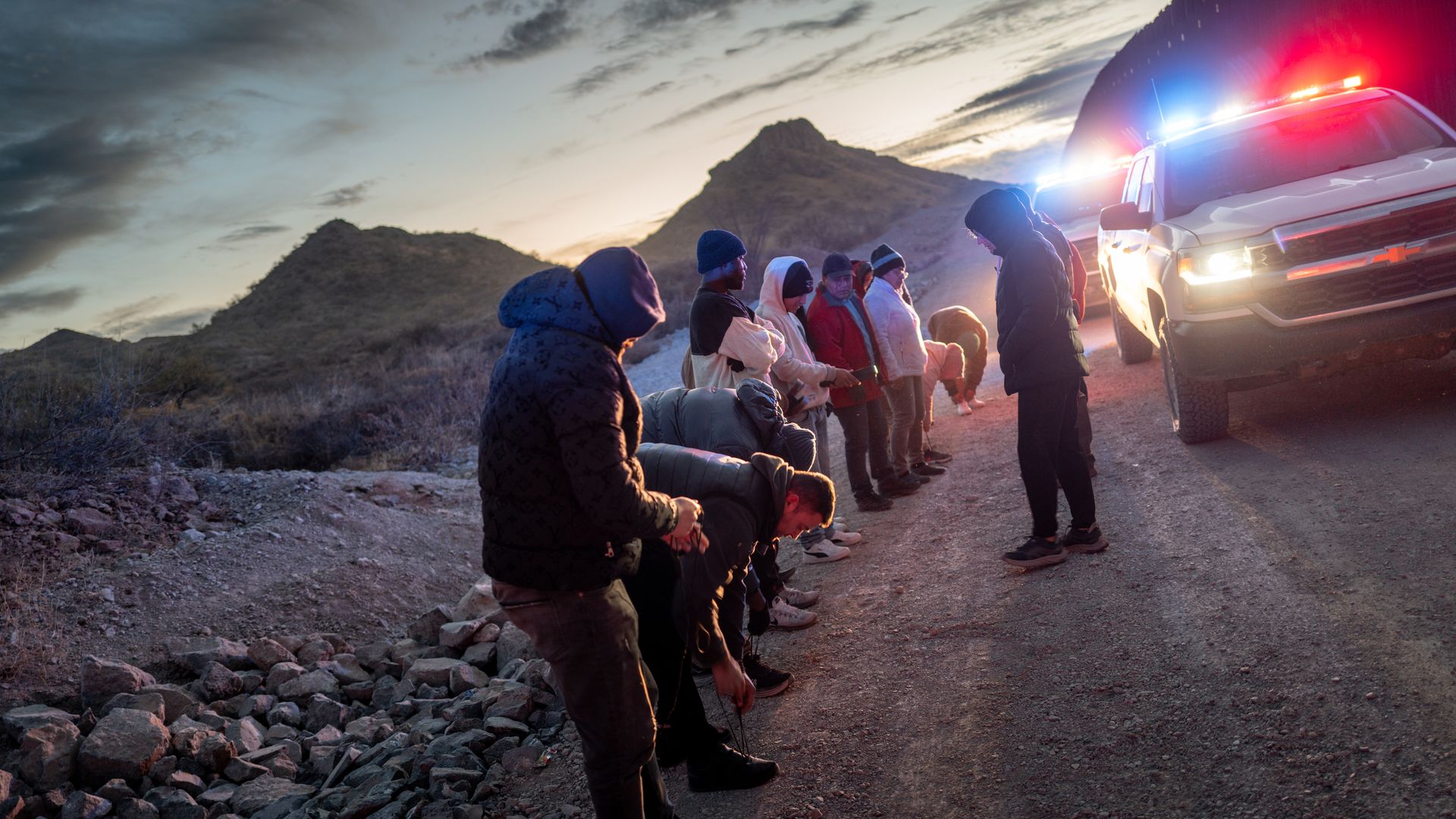
Hours after being sworn in as president for a second time, President Trump signed executive orders declaring a national emergency on the U.S.-Mexico border and calling for more barriers as part of an aggressive crackdown on undocumented immigrants.
Why it matters: Some of Trump's most audacious plans — which include deporting millions of immigrants and ending birthright citizenship — won't happen immediately since they are certain to draw legal challenges.
President Trump took the first step toward rolling back protections for transgender people on Monday, signing an executive orderthat the federal government would only recognize two sexes, male and female.
Why it matters: Trump made attacks on transgender individuals a central focus of his 2024 campaign, and by issuing the executive order on his first day in office, signaled the importance of the issue in his second term.
Why it matters: On Day 1, Trump is following through on his promise to overhaul the federal government, which employs hundreds of thousands of people in the Washington region.
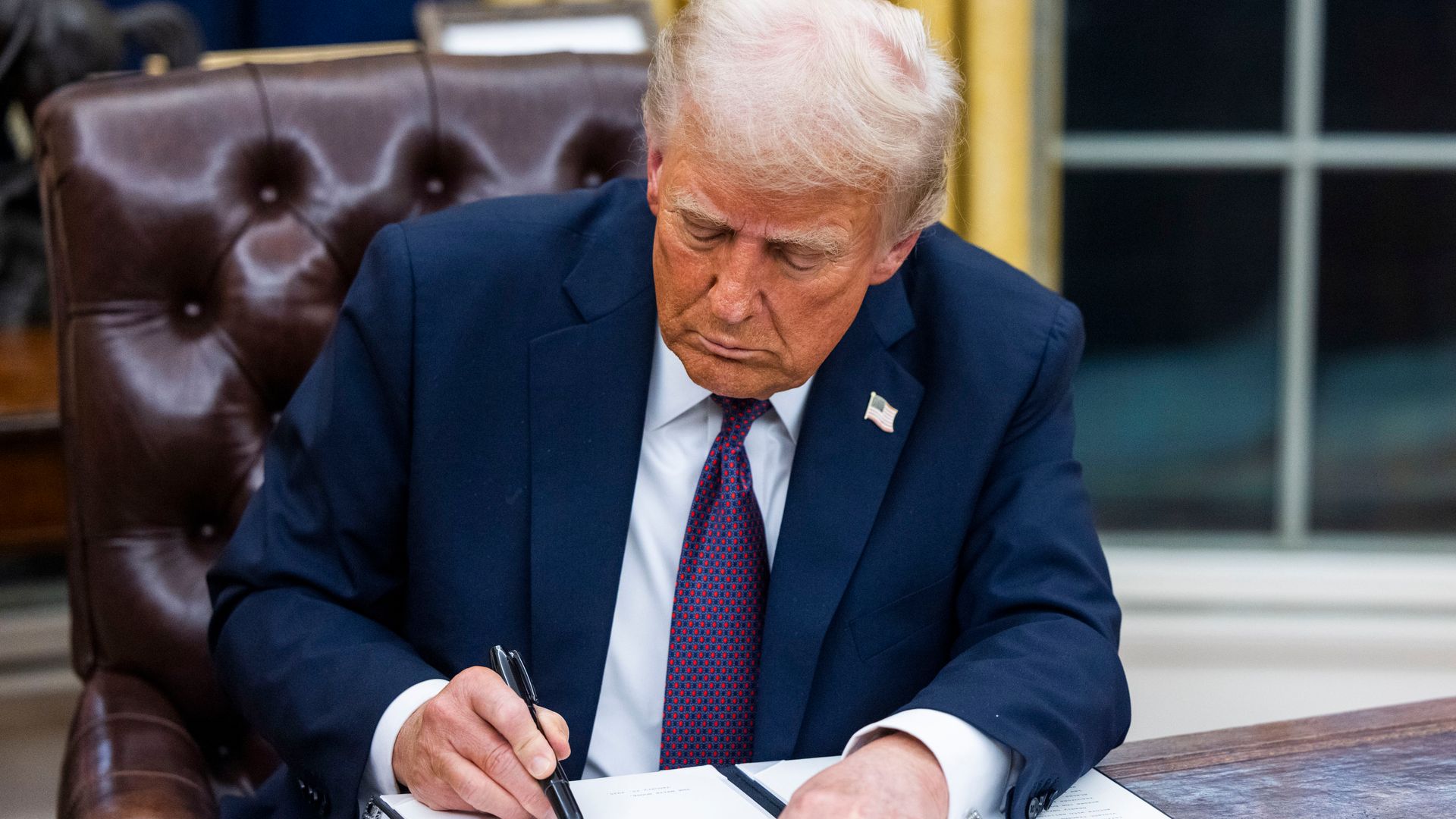
President Trump issued an executive order Monday that could strip thousands of civil servants of their employment protections.
Why it matters: The order — essentially a reinstatement of Schedule F — makes it easier to fire federal employees considered disloyal to the administration.
Why it matters: The moves amount to policy whiplash for the energy industry, segments of which had chafed under former President Biden's policies aimed at igniting the renewable sector.
The big picture: The U.S. is the WHO's top donor, contributing about $130 million per year to help cover its global health preparedness and response, along with efforts to address HIV, tuberculosis, and childhood vaccination, per Devex.
President Trump signed an executive order Monday dismantling diversity, equity and inclusion initiatives within the federal government.
Why it matters: The U.S. government is the largest employer in the country, with 3 million workers — nearly twice as many as private sector job leader Walmart, which also recently rolled back its DEI policies.












/2025/01/21/1737466986248.gif?w=3840)