More than $35 million in congressionally approved aid to Ukraine has not been dispersed, according to a new report by the Los Angeles Times. The outstanding sum is part of the $400 million assistance package that President Trump delayed earlier this year, igniting the ongoing impeachment inquiry.
Where it stands: Trump released part of the aid on Sept. 11 after a whistleblower report surfaced alleging a quid pro quo. Lawmakers granted the Pentagon a year-long extension to save $250 million worth of the aid before it expired at the start of the new fiscal year on Oct. 1.
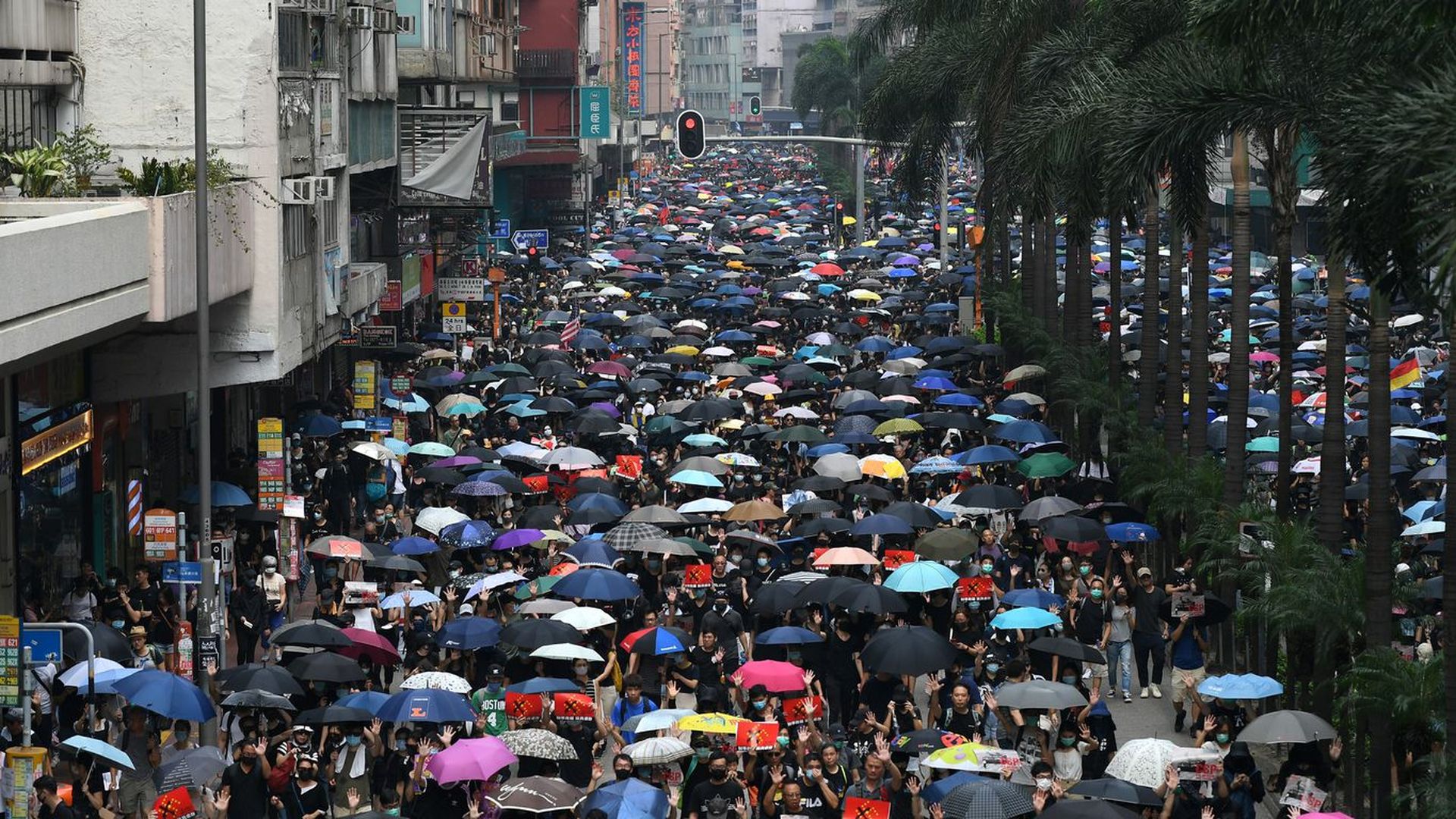
The Senate unanimously passed the Hong Kong Human Rights and Democracy Act on Tuesday to reaffirm American support for the city's autonomy.
The big picture: The bill asserts the U.S.' commitment to "democracy, human rights, and the rule of law" as it relates to Hong Kong's autonomy, according to bill sponsor Sen. Marco Rubio's description. The legislation comes amid months of violent clashes between police and protestors in Hong Kong.
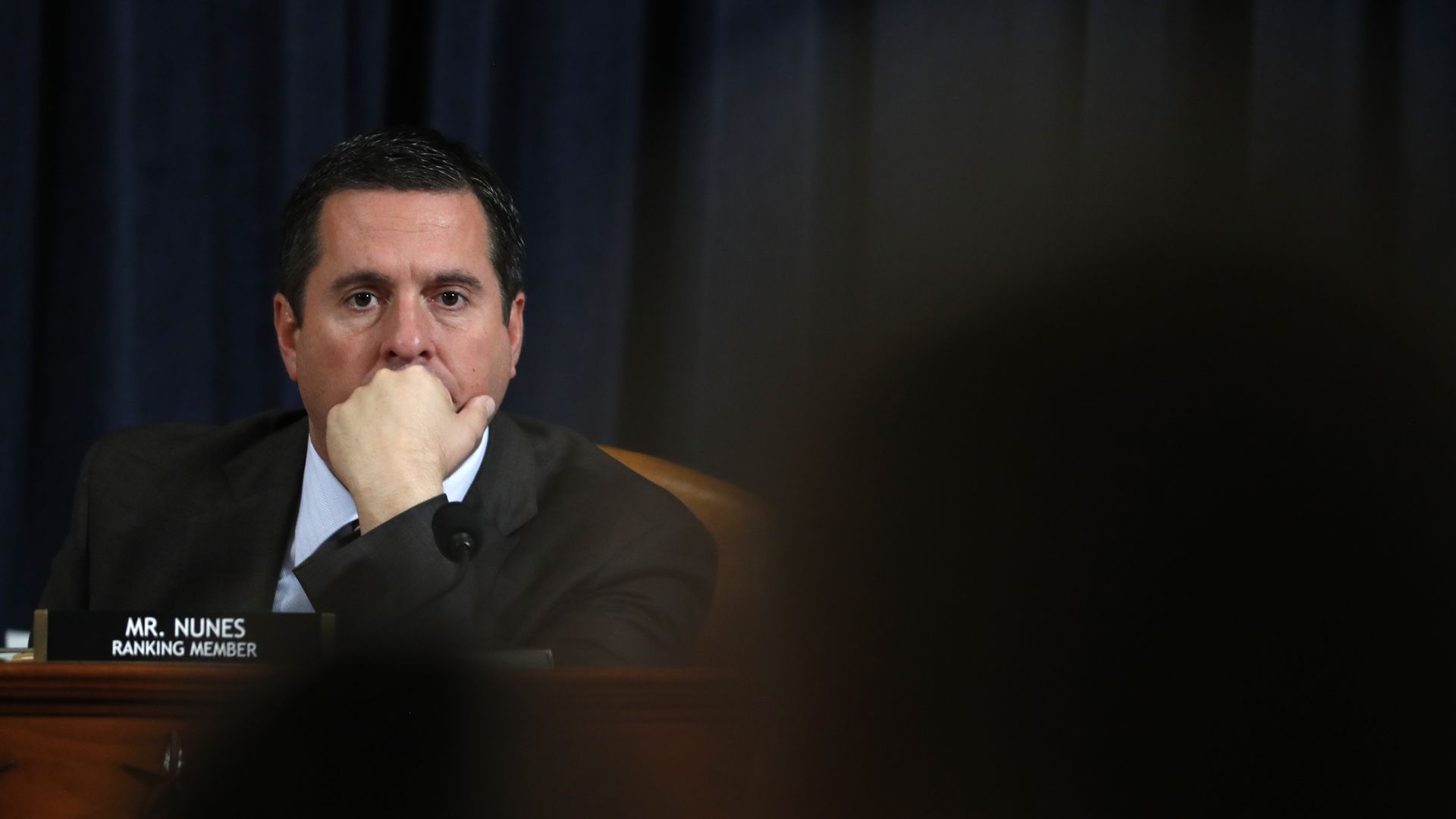
House Intelligence Committee ranking member Devin Nunes (R-Calif.) continued to attack the impeachment inquiry as biased and unfair during his opening statement of the second public hearing of the day, featuring Kurt Volker and Tim Morrison.
The big picture: Nunes, who has left the hearing for significant chunks of witness testimony, criticized Democrats for their statements in the press calling President Trump a "threat to our democracy" and for attempting to "overthrow a duly elected president."
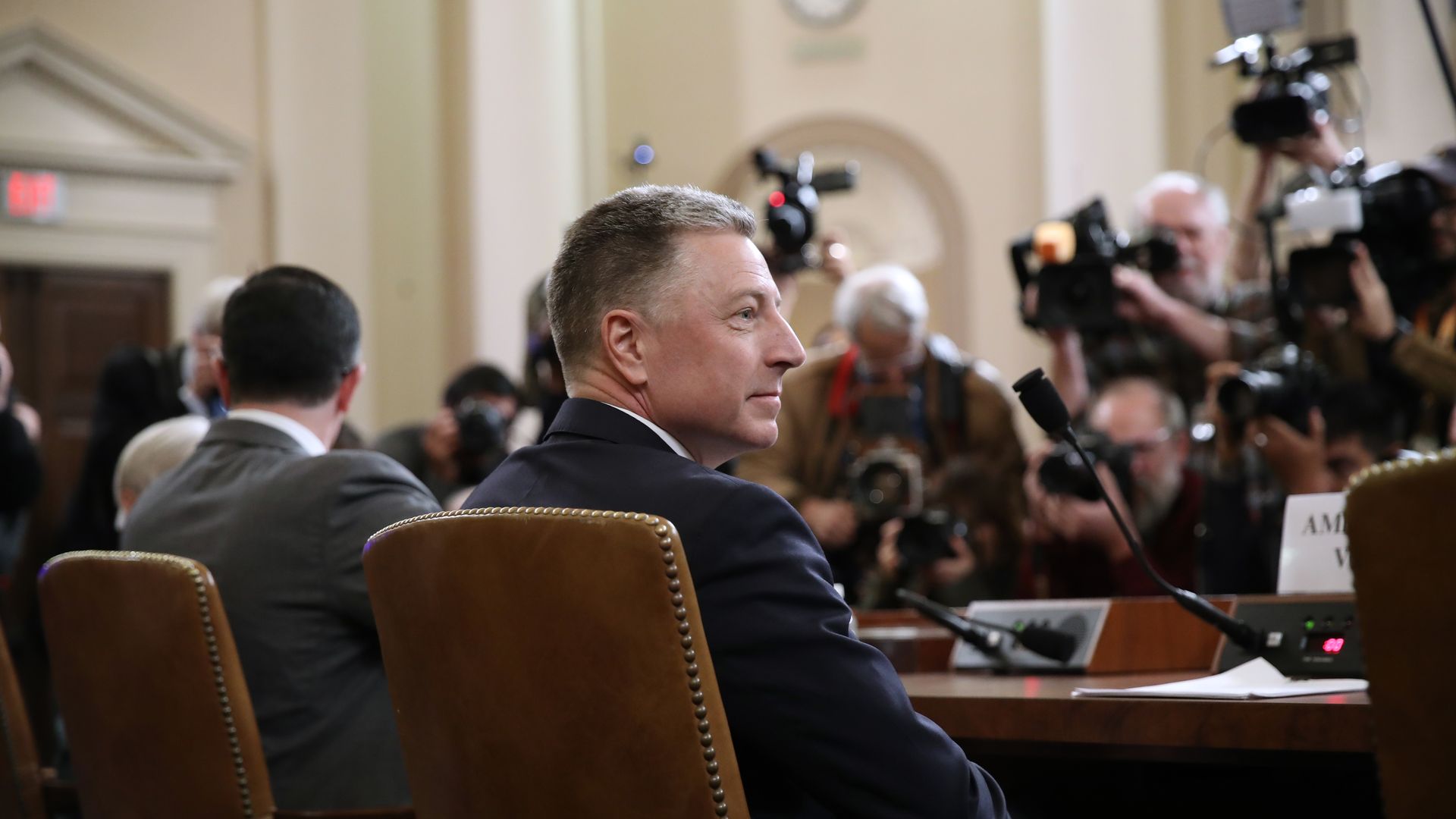
Former U.S. special envoy to Ukraine Kurt Volker testified in an impeachment hearing Tuesday that allegations against Joe Biden and former Ambassador to Ukraine Marie Yovanovitch, which were promoted by former Ukrainian Prosecutor General Yuriy Lutsenko and spread in the U.S. by Rudy Giuliani, are "self-serving and not credible."
Former U.S. special envoy to Ukraine Kurt Volker testified Tuesday in the second public impeachment hearing of the day.
Why it matters: Volker was part of a cadre of officials who worked with Rudy Giuliani to push Ukraine to announce investigations into Trump's political rivals, but he maintains that he never believed those investigations to include Joe Biden. In one major change from his closed-door deposition, Volker said in his opening statement that EU Ambassador Gordon Sondland brought up "investigations" in a meeting with Ukrainian officials at the White House.
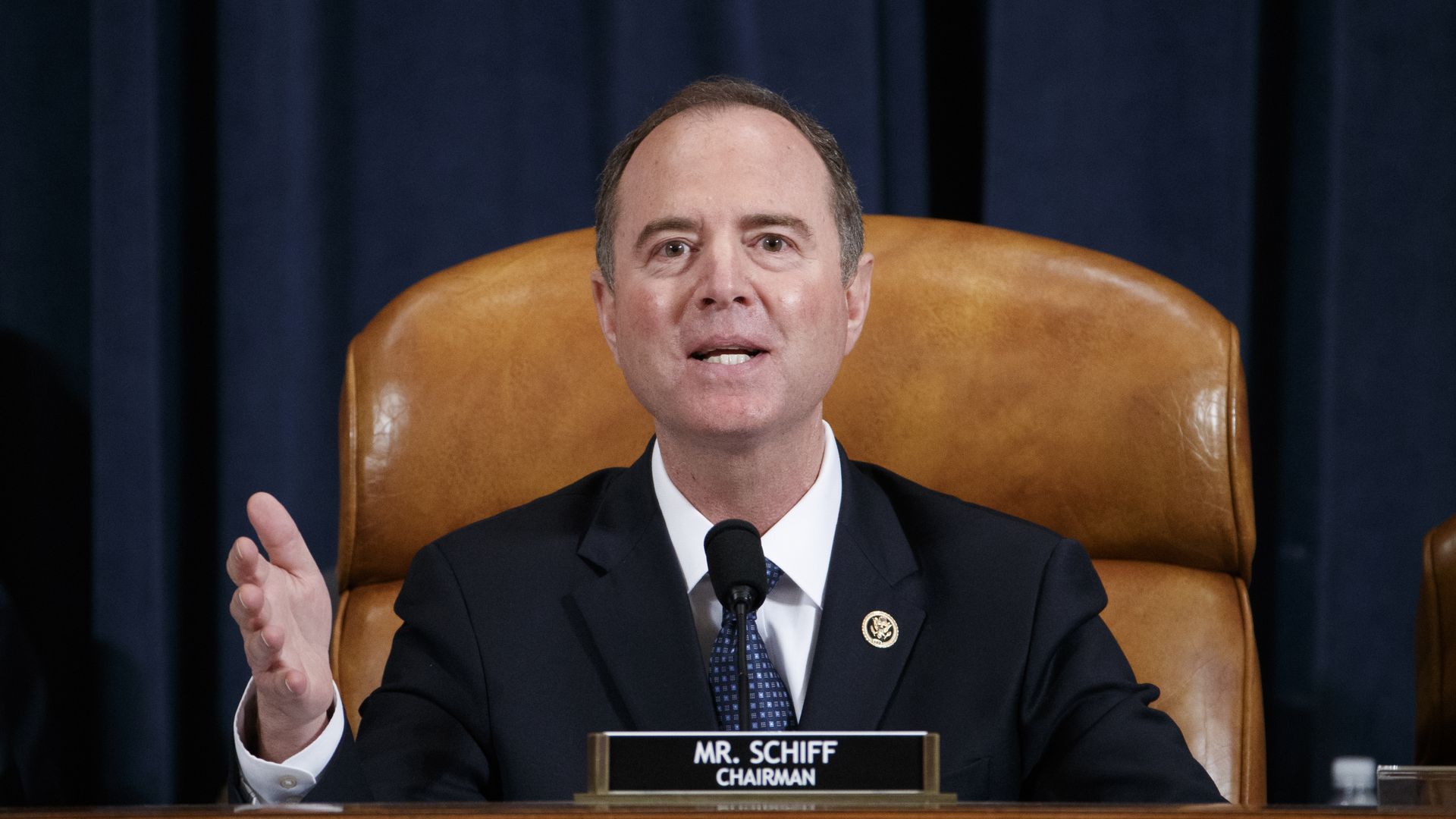
House Intelligence Chairman Adam Schiff (D-Calif.) gave an opening statement Tuesday in the second impeachment hearing of the day, featuring former U.S. special envoy to Ukraine Kurt Volker and former National Security Council official Tim Morrison.
The big picture: Schiff pointed out that both witnesses were requested by Republicans on the committee, but he also outlined a number of episodes detailed in both Volker and Morrison's closed-door depositions that could be perceived as damaging to President Trump.
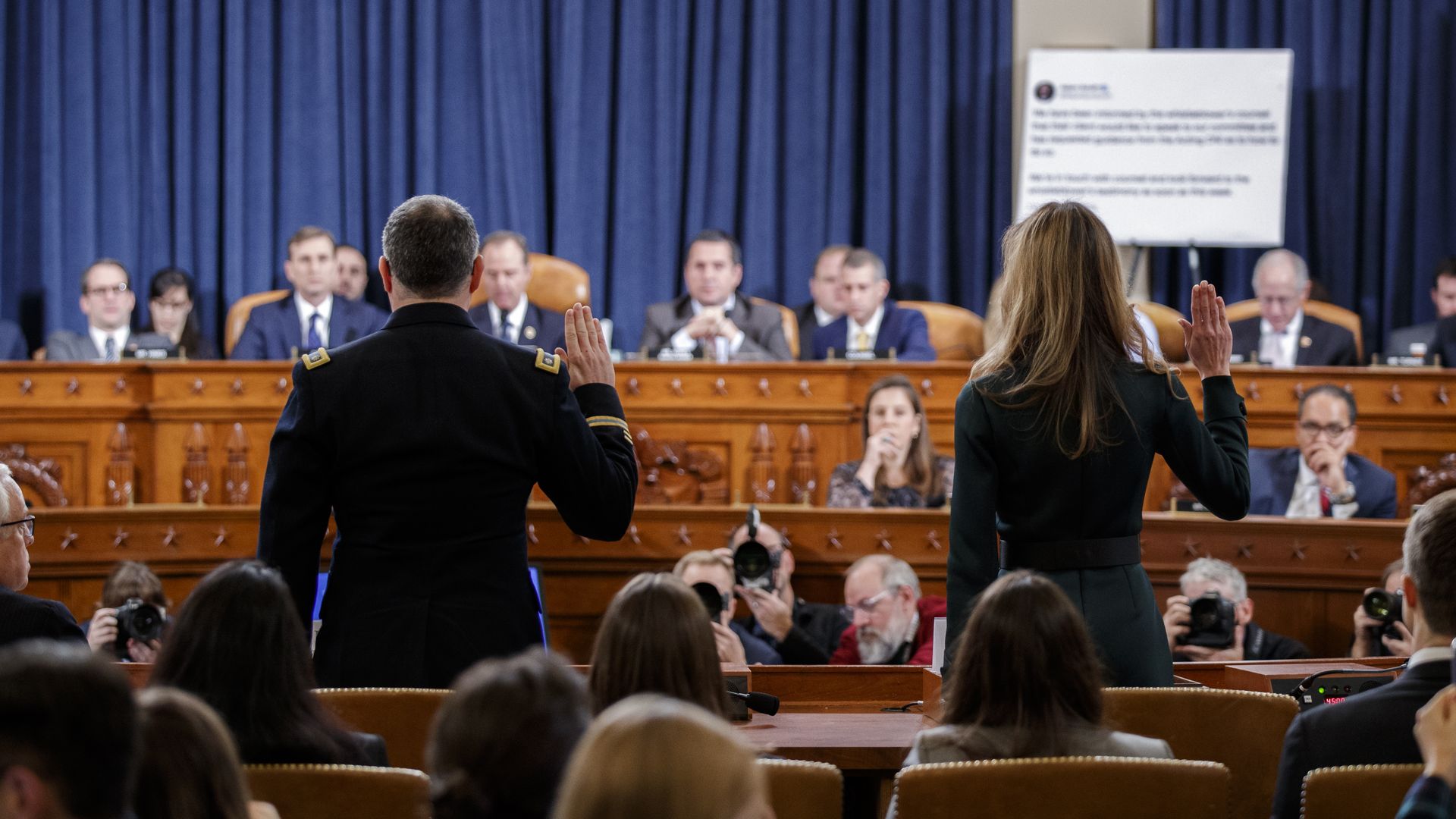
Lt. Col. Alexander Vindman, the National Security Council's top Ukraine expert, and Jennifer Williams, an aide to Vice President Pence, testified Tuesday morning as the House kicked off its second week of impeachment hearings.
Why it matters: The hearing was the first time the public heard directly from witnesses who listened to the July 25 call between President Trump and Ukrainian President Volodymyr Zelensky that lies at the heart of the impeachment inquiry.
The Supreme Court last week heard arguments on President Trump's efforts to end DACA, the Obama-era program that allows hundreds of thousands of undocumented immigrants to remain in the country if brought here as minors. Dan digs in with Axios' Stef Kight, who watched and reported on the proceedings.
All eyes today are on the House of Representatives, which this morning hosts a hearing that could significantly impact the 2020 presidential election.
Driving the news: No, not impeachment. I'm talking about the House Financial Services hearing on private equity, an industry that yesterday received two freshlashings from Sen. Elizabeth Warren.
Lt. Col. Alexander Vindman faced questioning from the House Intelligence Committee's Republican counsel Steve Castor during Tuesday's impeachment hearing about an offer to become Ukraine's defense minister, which Vindman denounced as "rather comical."
Why it matters: Vindman, the National Security Council's top Ukraine expert, has faced unsubstantiated cable news attacks questioning his loyalty to the U.S. because of the fact that he immigrated from Ukraine as a young child.
Lt. Col. Alexander Vindman and Jennifer Williams testified during Tuesday's impeachment hearing that the allegations claiming that the Biden family engaged in improper business dealings in Ukraine lack credible evidence.
The big picture: The allegations against the Bidens form a key concern for the impeachment inquiry regarding President Trump's July 25 call with Ukrainian President Volodymyr Zelensky. Vindman and Williams, who both listened to the call, testified that they were concerned by the fact that Trump mentioned the allegations.
What's believed to be the first congressional hearing in recent years squarely focused on the practices of private equity firms is happening later this morning.
Why it matters: Private equity is facing "the most serious political challenge it has seen in years," per the WSJ.
As televised impeachment hearings roll into Week 2, one surprise has been how many of the Trump team's wounds have been self-inflicted, because of his allies' curious habit of leaking on themselves.
Why it matters: The leaks and revelations have thrown President Trump into a constant state of defensiveness, and turned a growing number of Republicans into frustrated, sometimes bewildered, defenders.
The pro-Trump group America First says focus groups show that suburban swing voters — even some who strongly dislike President Trump — remain skeptical about impeachment.
Why it matters: These early findings will help shape Republican messaging about impeachment and Trump's top Democratic rivals.
The White House tweeted a memorandum from President Trump's physician on Monday evening about his weekend checkup, denying reports that he had any chest pain or that he was treated for any "acute or urgent issues."
Driving the news: As speculation swirled about an undisclosed medical condition following his visit to Walter Reed National Military Medical Center, Trump tweeted that everything was "very good (great!)" following his "yearly physical," and White House Press Secretary Stephanie Grisham said he's "healthy and energetic without complaints."
What they're saying: The New York Times reported that Trump's two-hour medical examination over the weekend was not on his schedule, unlike his February checkup. Dr. Sean Conley, a Navy officer who is the president’s physician, "released scant details" about the physical, unlike the doctor of former President Obama, the NYT noted.
CNN reported that Trump's visit to Walter Reed "did not follow the protocol of a routine presidential medical exam."
Andrew Vernon, a contributor to the Hill, tweeted, "Sources tell me from Walter Reed the President was being checked out for chest discomfort."
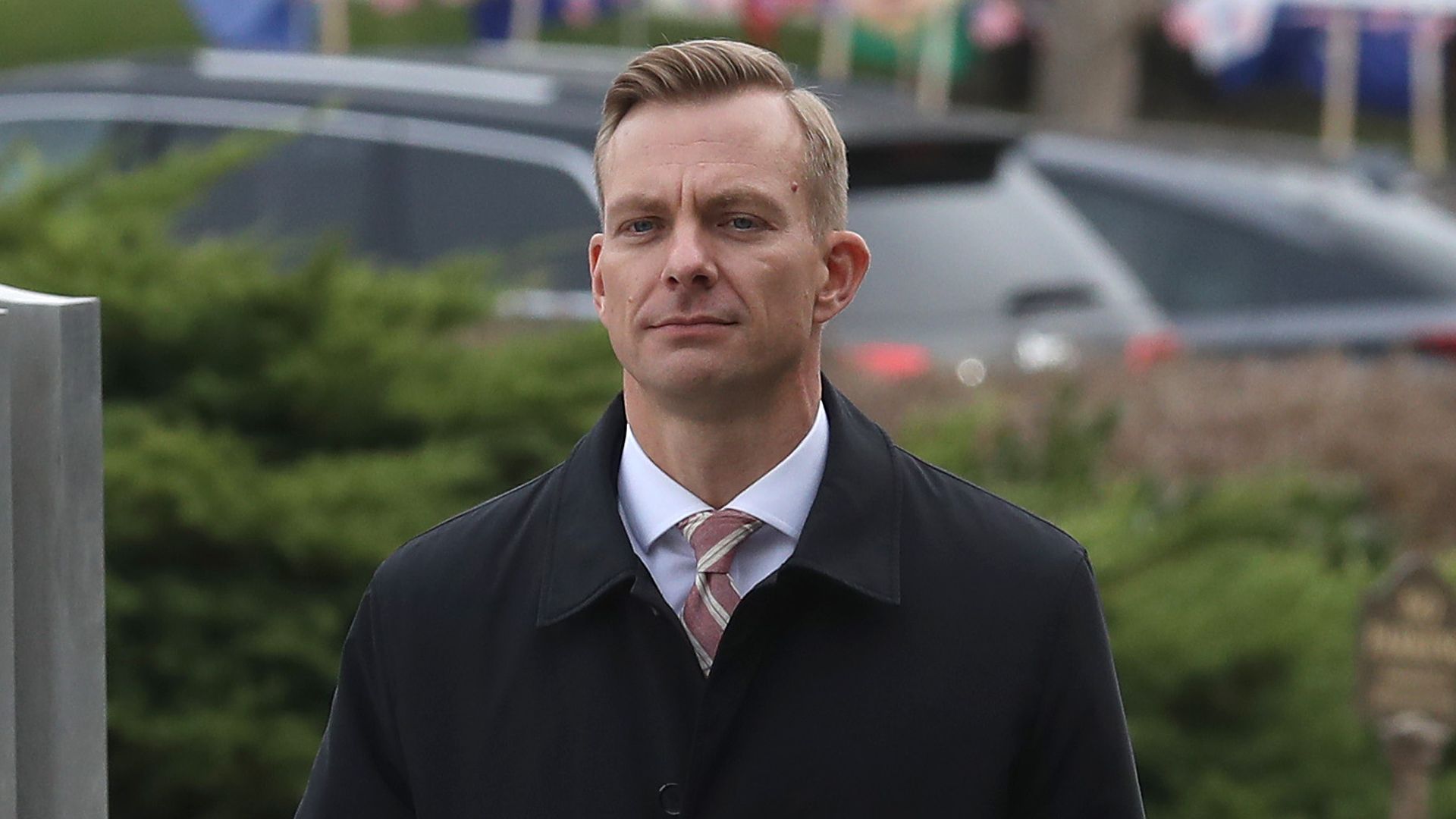
A transcript of State Department official David Holmes' impeachment testimony published Monday reveals that he assumes calls made from Ukraine are usually monitored by Russians — including one between U.S. ambassador to the EU Gordon Sondland and President Trump on July 26.
What they're saying: Holmes, who works at the U.S. Embassy in Ukraine, said in closed-door testimony that Sondland phoned Trump the day after the president's now-famous call with Ukraine President Volodymyr Zelensky. Holmes said Sondland used his mobile phone for the call, which was "surprising" because "generally, phone calls with the president are very sensitive and handled accordingly."
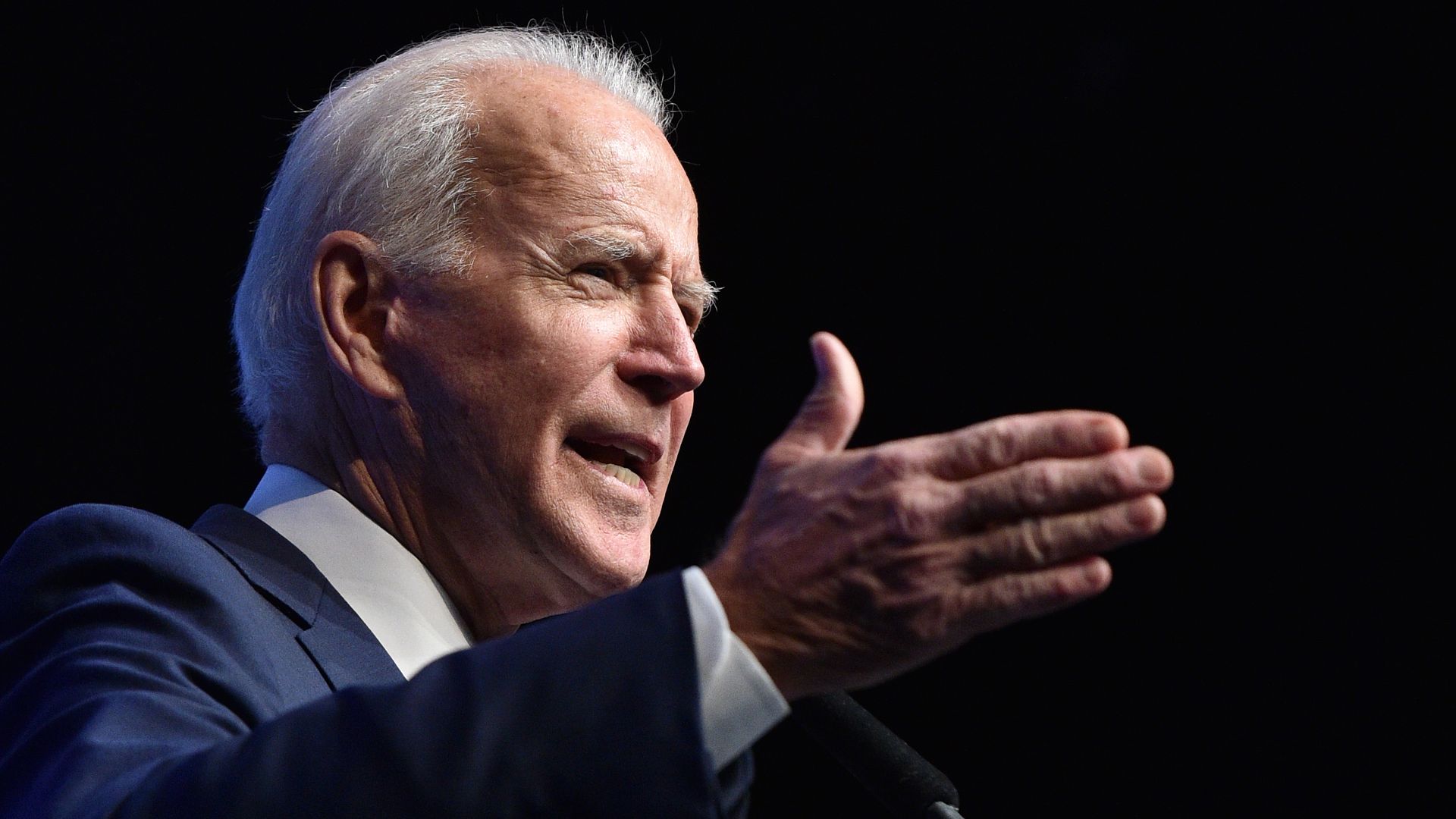
Former Vice President Joe Biden, the sole top 2020 Democrat to oppose the federal legalization of marijuana, clarified his stance on the drug Monday.
Driving the news: Biden was criticized over the weekend for saying he opposes the federal legalization of marijuana because "there's not nearly been enough evidence that has been acquired as to whether or not it is a gateway drug." He argued to leave it to the states, but he supports legalizing medical marijuana and does not believe possession of the drug should be a crime.