It’s already too late to upgrade election system security for the 2018 midterms, but there are four things the U.S. can do to prepare for 2020, former Facebook chief information security officer Alex Stamos writes in Lawfare.
Why it matters: 14 states are currently unable to double check that election results accurately reflect votes cast. Congress earlier this year set aside million of dollars to help states with election security in the face of potential Russian cyberattacks — but it's likely not all of the funds will be used by the November midterms.
Since taking office, Americans' expectations of Donald Trump in regards to whether he would improve the way government works and set a high moral standard for the presidency have varied only slightly, a new Pew Research survey finds.
By the numbers: Prior to the 2016 election, 59% of voters believed he wouldn't improve the way government works, and 61% now agree with that. Similarly, 66% of Americans said in 2016 he wouldn't set a high moral standard, compared to 71% today who say he "definitely or probably not set a high moral standard for the presidency."
60% of voters oppose the idea of President Trump granting a pardon to Paul Manafort with only 11% saying that a pardon would be appropriate, according to a recent Politico/Morning Consult poll.
Why it matters: Despite a majority of voters being against a pardon for Manafort, Trump has reportedly seriously floated the idea of pardoning his former campaign manager. The president had consulted his legal team about doing so, but was advised against it.
Conversations have begun between television networks and the Democratic Party about a string of 2019 presidential primary debates, the Associated Press' Bill Barrow reports:
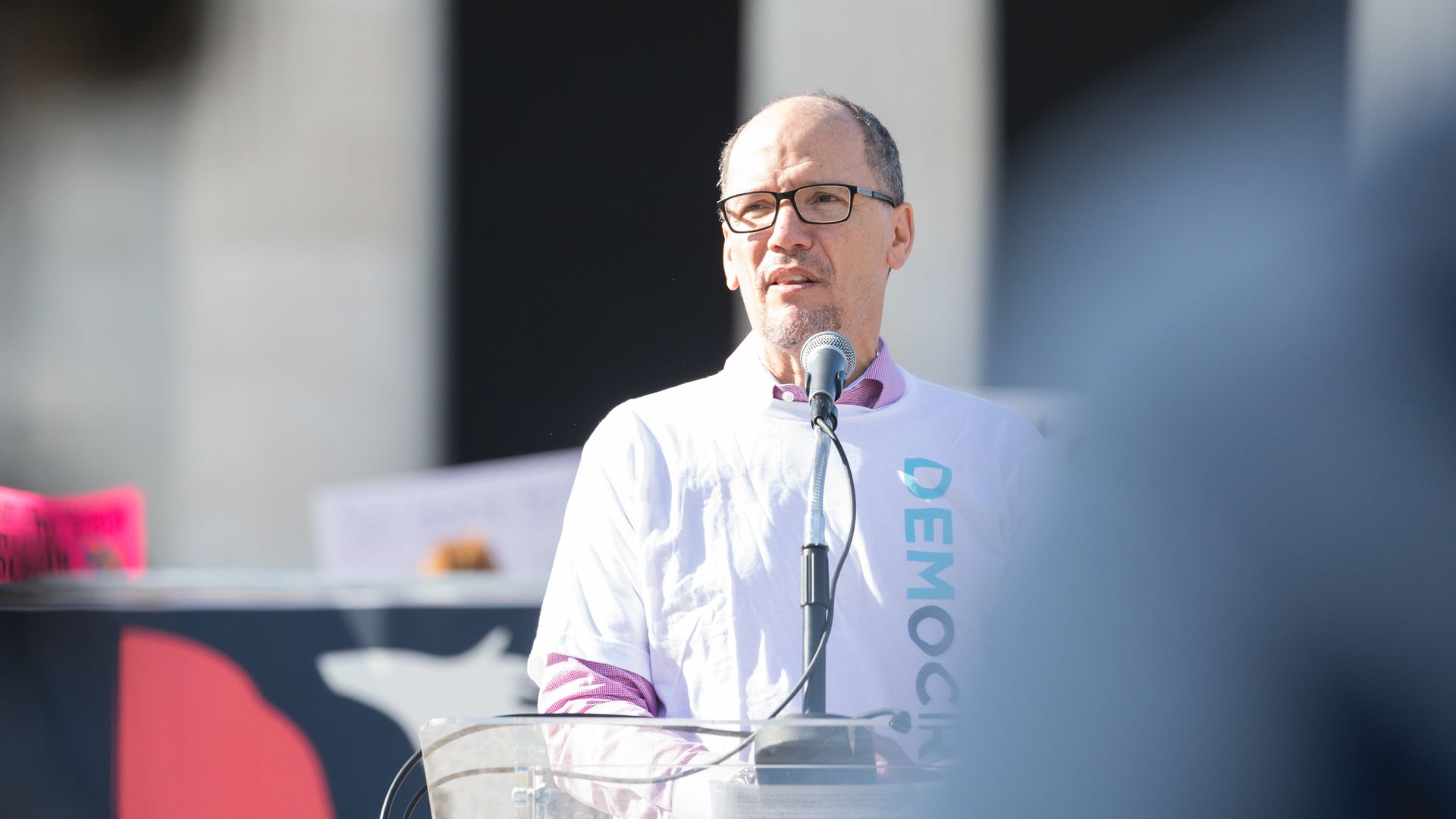
Why it matters: "The early start, well before the 2020 field is known, signals the importance that the Democratic National Committee chairman, Tom Perez, is placing on decisions that will be scrutinized for any signs of favoritism among potentially two dozen or more candidates."
The writing is on the wall, top Republicans tell us: Democrats will likely win the House and undoubtedly move to impeach President Trump.
The big picture: Assuming Democrats win the House, it is inconceivable charges that Trump illegally paid off two women to protect his political campaign, corroborated by two longtime loyalists under oath, alone would not provoke impeachment proceedings. It’s equally inconceivable Robert Mueller won’t provide much more impeachment fodder when he reports his findings.
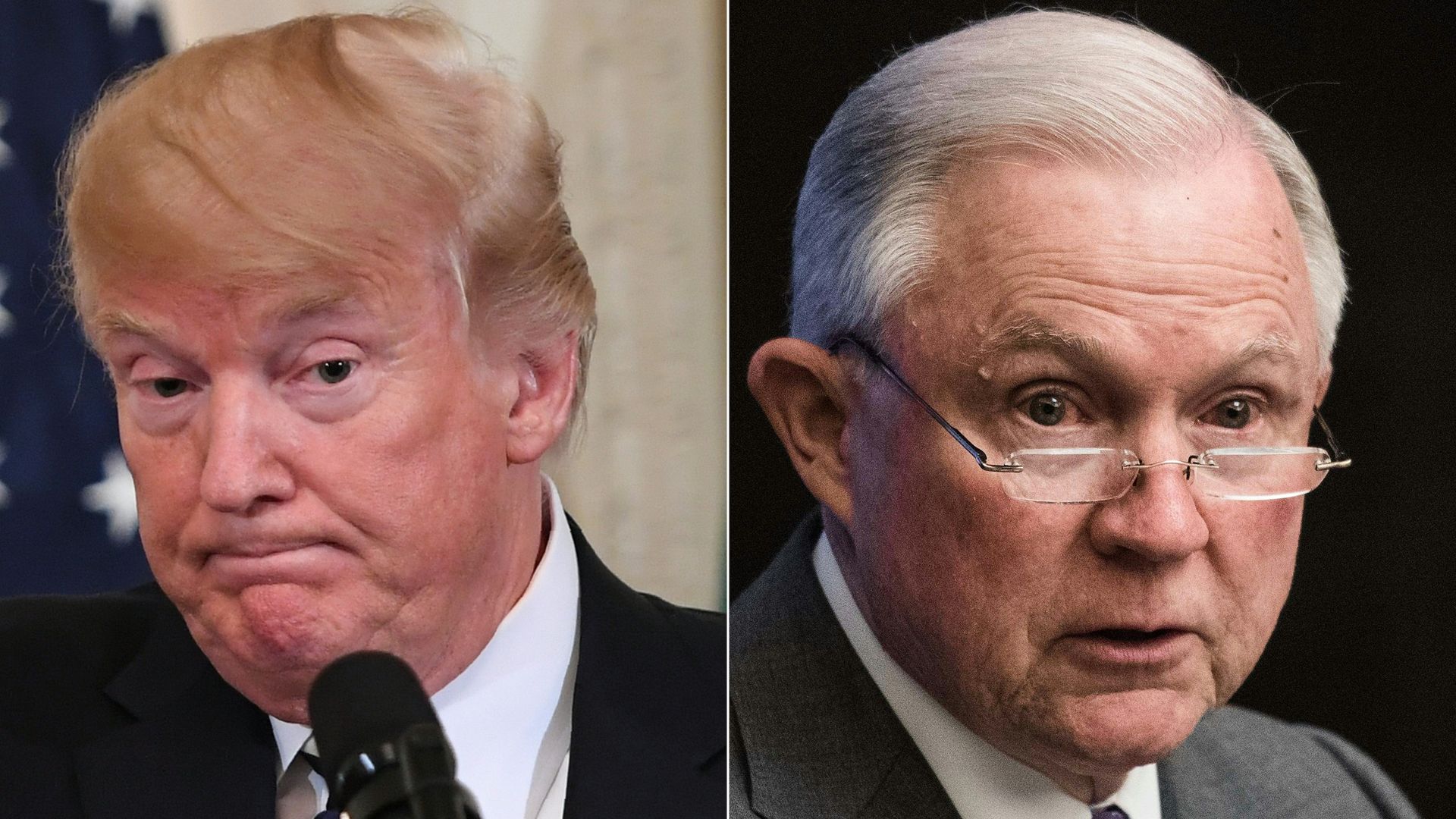
President Trump said in a Saturday morning tweet that Attorney General Jeff Sessions "doesn't understand what is happening underneath his command."
"Jeff Sessions said he wouldn’t allow politics to influence him only because he doesn’t understand what is happening underneath his command position. Highly conflicted Bob Mueller and his gang of 17 Angry Dems are having a field day as real corruption goes untouched. No Collusion!"
The big picture: The already-present tension between the president and Sessions has been rising in recent days, with lawmakers weighing in on the possibility that the attorney general could be booted from the Department of Justice after the midterms.
President Trump tweeted Saturday morning that he "did NOT know about the [Trump Tower] meeting," referencing Michael Cohen's attorney Lanny Davis backing up his client who told lawmakers last year, in sworn testimony, he didn't know whether then-candidate Donald Trump had foreknowledge of the 2016 Trump Tower meeting with Russians.
The big picture: Axios' Jonathan Swan reported this week that Cohen still doesn't know whether Trump knew about the infamous meeting, according to Davis. "Nothing has changed," he told Axios. Newsreports last month said Cohen was willing to assert to special counsel Robert Mueller that Trump did know about the meeting in advance.
President Trump had a shift of tone on Friday in regards to the 2018 midterms, saying it's "probably tougher" to keep control of the House, the Washington Post reports.
Why it matters: Trump has projected nothing but confidence in the Republican party's ability to keep hold of the House and Senate — so much so that Axios' Jonathan Swan reported his "red wave" predictions could stop Republicans from heading to the polls. But at the Ohio Republican Party's annual dinner, Trump said the GOP will "win a lot of seats" in the Senate, but "the House is probably tougher."
Emails between Trump administration officials reveal ongoing efforts to end Temporary Protected Status for vulnerable countries despite pushback. In one instance, a Homeland Security official agreed to try to make the conditions in Central America appear better to justify the end of protective status, reports CNN.
The big picture: DHS has ended TPS for several nations, including Nepal, Honduras, El Salvador, Haiti, Nicaragua and Sudan — meaning hundreds of thousands of people will be forced to leave the U.S. in the near future. But the administration is currently being sued in an attempt to reverse those decisions.
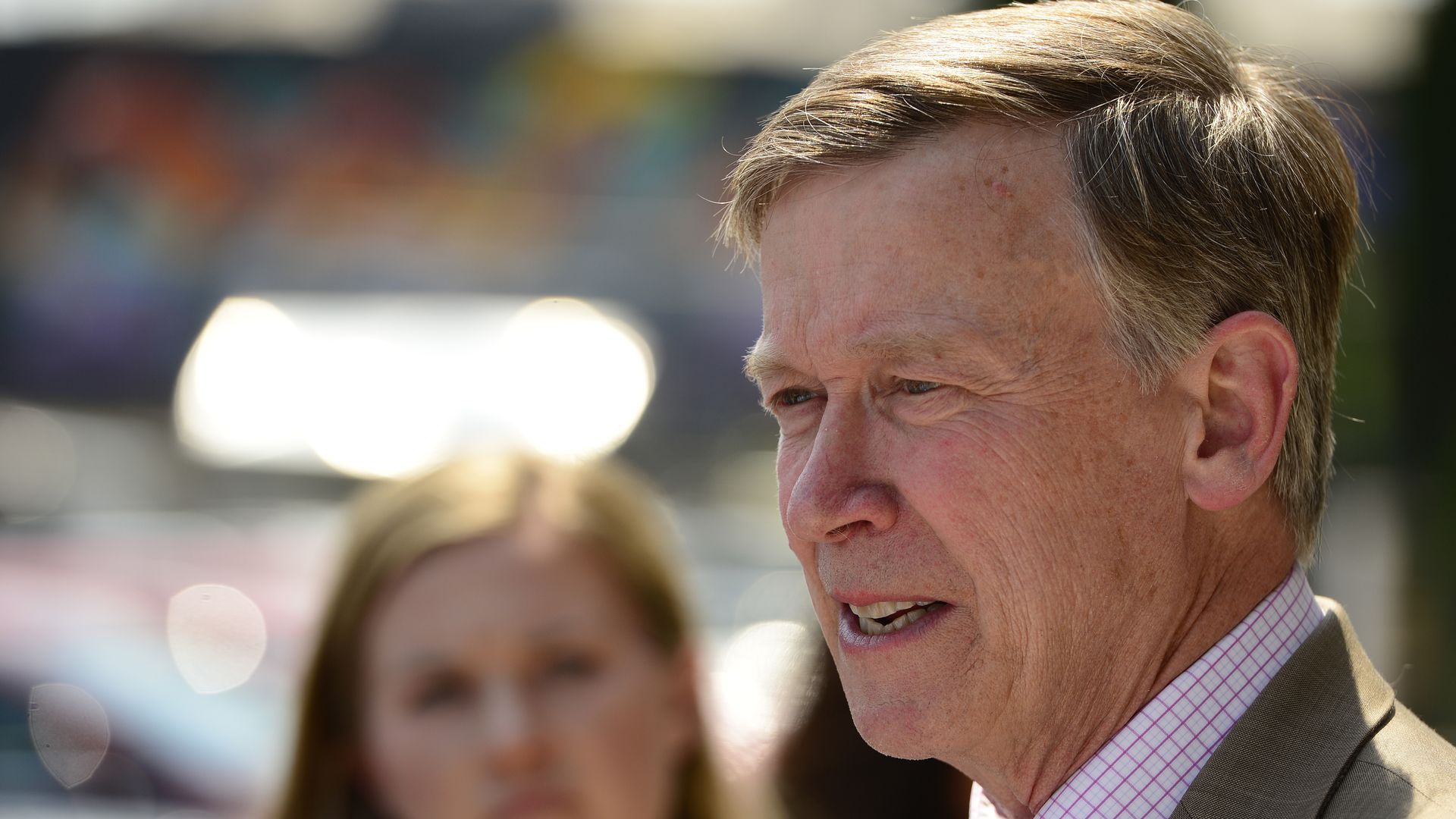
One of the lead organizers of an anti-fracking ballot initiative in Colorado said this week the state's Democratic Gov. John Hickenlooper would alienate himself from progressives if he ran for president given his support for the oil industry.
Driving the news: At an event hosted by Axios in Denver Friday, the outgoing governor said he has been talking to people for advice, discussing the sacrifices involved were he to run for president in 2020.
Speaking at an Axios event in Denver on Friday, Democratic governor of Colorado John Hickenlooper said that he has talked to a lot of "old friends" this summer about a potential 2020 run.
"I've done politics for 15 years...and I still feel like I'm on the steep side of the learning curve. It's been very, very useful to talk to people and say, "What are the sacrifices?", "What does it take to be successful?" We're still working on it."
The immunity deal for the Trump organization's chief financial officer leaves no doubt: This has been, unequivocally, the worst week of Donald Trump's presidency.
Why it matters: For the first time, I’m hearing real fear and concern in the voices of Trump allies.
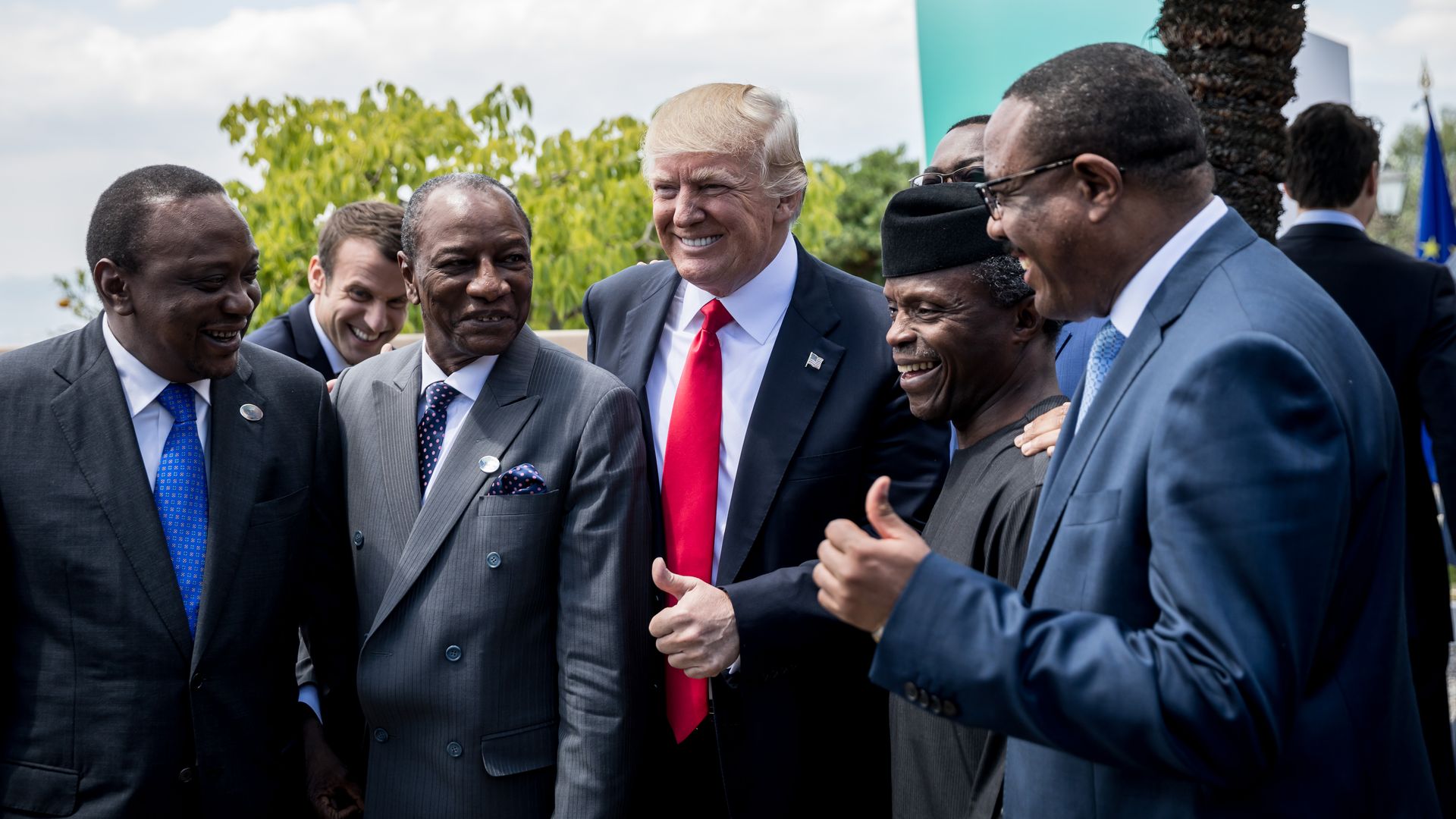
Why it matters: Leading Kenyan companies have yet to make significant domestic venture investments. In order for Kenya to maintain the rate of acceleration and reap the benefits of Africa’s most successful startups, President Kenyatta needs name-brand investors from the U.S. — figures like Peter Thiel and Ben Horowitz — to claim a stake in the Kenyan entrepreneurial ecosystem.
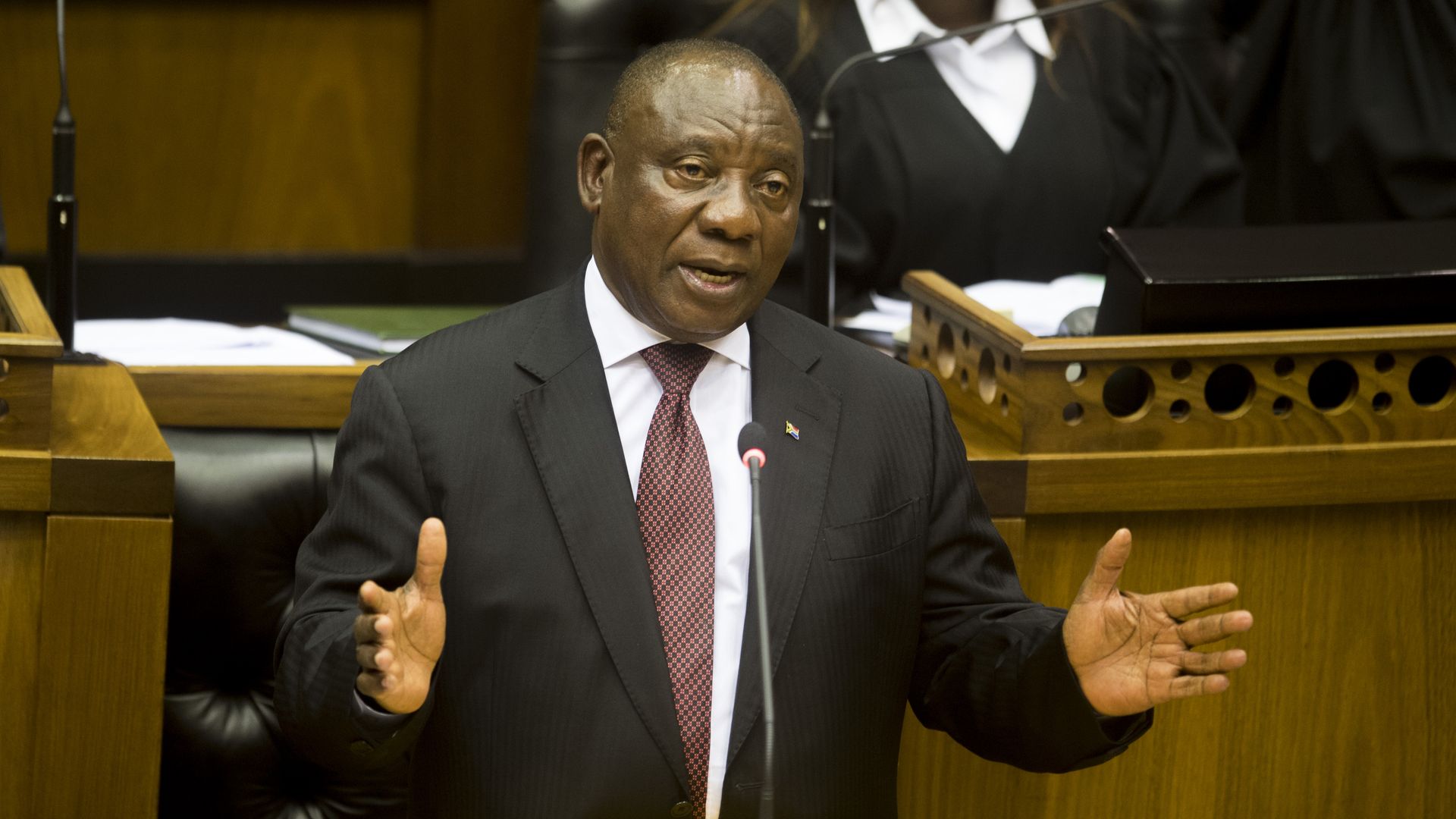
President Trump tweeted on Wednesday that he has directed Secretary of State Pompeo to “closely study the South Africa land and farm seizures” and the “large scale killing of farmers,” quoting Fox News host Tucker Carlson's claim that the “South African government is now seizing land from white farmers.”
Reality check: Although the widespread killing of white farmers is a favorite trope of AfriForum — an Afrikaner organization that views land reform as a threat to white South Africans — such violence is in fact at a 19-year low, by some measures.
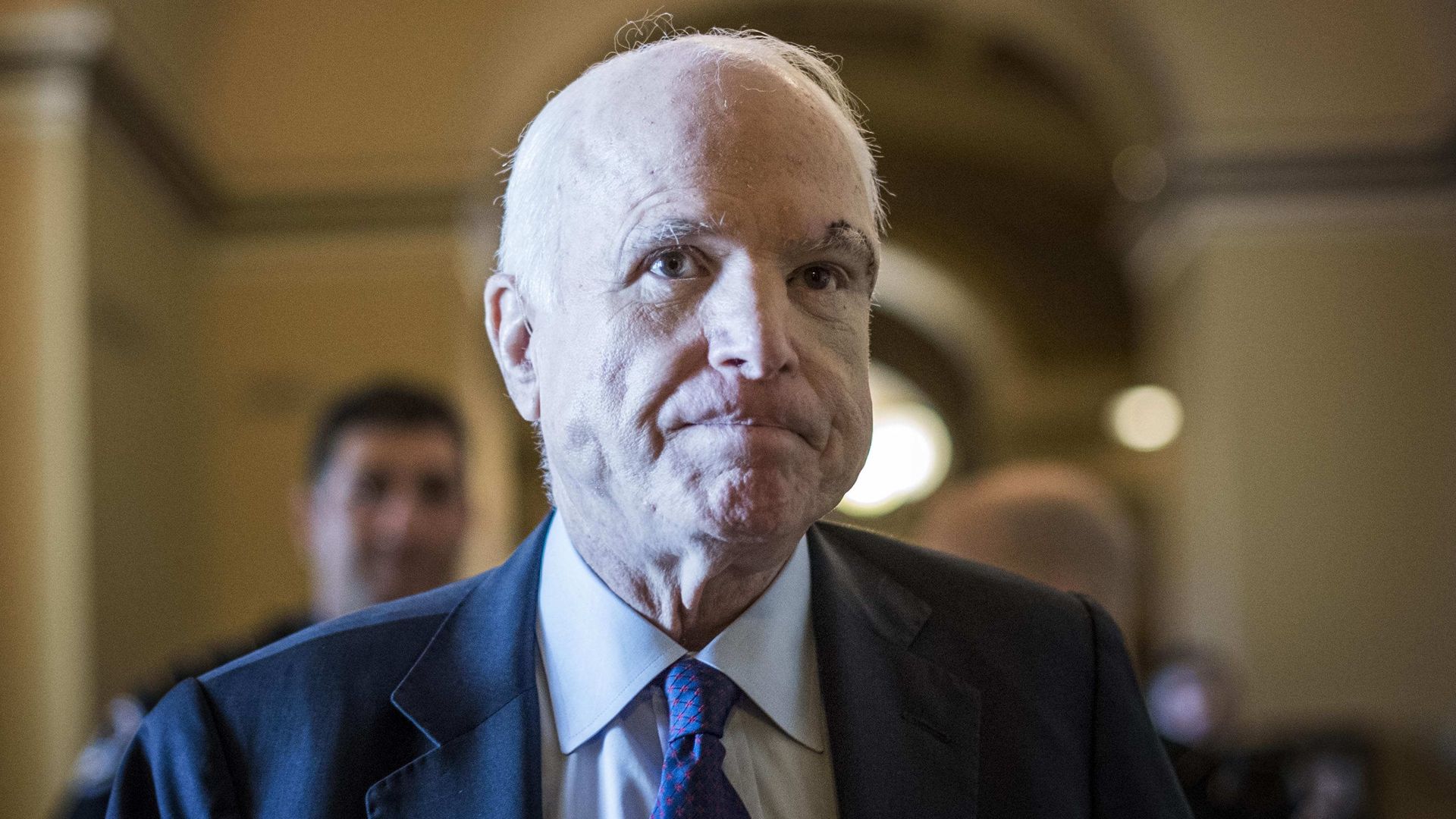
Senator John McCain (R-Ariz.), who has been battling an aggressive case of glioblastoma for over a year, has chosen to discontinue medical treatment, his family announced in a statement Friday.
“Last summer, Senator John McCain shared with Americans the news our family already knew: he had been diagnosed with an aggressive glioblastoma, and the prognosis was serious. In the year since, John has surpassed expectations for his survival. But the progress of disease and the inexorable advance of age render their verdict. With his usual strength of will, he has now chosen to discontinue medical treatment.”
Allen Weisselberg, longtime chief financial officer for the Trump organization, has been granted immunity by federal prosecutors for providing information about Michael Cohen and the 2016 payments he made to two women during the 2016 presidential campaign who alleged they had sexual encounters with the president, the Wall Street Journal reports.
Why it matters: This is a very significant story that’s already causing waves in the legal circles around the White House.Unlike Cohen, who was involved in quixotic projects and sleazy side deals to hush up women, Weisselberg has true and deep visibility into the Trump Organization. Trumpworld’s greatest fear is that U.S. District Court for the Southern District of New York (SDNY) investigators will start prying deeper into the president’s business affairs. And Trump can’t shut down such an investigation by firing Robert Mueller. This one’s out of his hands.
Michael Cohen has been requested to testify privately before the Senate Judiciary Committee, the New York Times reports.
The big picture: It's been months since the committee invited a new witness in relation to the Russia investigation. As Axios' Jonathan Swan reports, Cohen could still be of interest to Congress because of his testimony about the 2016 Trump Tower meeting.
President Trump responded Friday to Attorney General Jeff Sessions' statement pushing back on Trump for belittling him in a Fox News interview. Trump, in back-to-back tweets, directed Sessions to "look into all of the corruption on the 'other' side," and prodded him by saying, "Come on Jeff, you can do it, the country is waiting!"
Be smart: Following Trump and Sessions' war of words yesterday, the two had an awkward meeting at the White House, during which they didn't say a word about their confrontation, a source with direct knowledge told Axios. And while Trump has an aversion to in-person confrontation, he seems to have no problem going after others from behind his phone.
When President Trump told "Fox & Friends" that this "whole thing about flipping ... almost ought to be outlawed," he was continuing a long habit of declaring what he thinks laws and the legal system should be, and ignoring what they are.
Why it matters: A White House alumnus told us that the comments about “flipping,” and belittling Attorney General Jeff Sessions, reflect Trump's fundamental belief "in an ethic of loyalty rather than a traditional conception of justice or the rule of law."
The forces of anti-immigration politics are upending liberal governments all over Europe — with voters in 21 of 28 EU countries citing immigration as the top issue facing the continent, according to a recent Eurobarometer survey.
The big picture: That's a disconnect with the reality — migrant arrivals in those countries have dropped significantly. But the political turmoil is spreading, to the point where there's even a far-right, anti-immigrant party on the rise in Sweden, one of the world’s most progressive countries. That's a sign that the immigration backlash is putting pressure on governments around the world, not just in the United States.
Senate Majority Leader Mitch McConnell has agreed to a whip vote for the prison and sentencing reform bill after midterms, his spokesperson confirmed to Axios. Sen. McConnell made the commitment in a meeting with Jared Kushner and Sens. Chuck Grassley, John Cornyn and Mike Lee.
What to watch: Although Sen. McConnell’s spokesperson said a commitment to a vote had not been made, a source familiar told Axios the Majority Leader came just shy of promising a vote. Sen. Lee’s spokesperson Conn Carroll told Axios that Sen. McConnell had committed to a vote if the whip count reached more than 60.