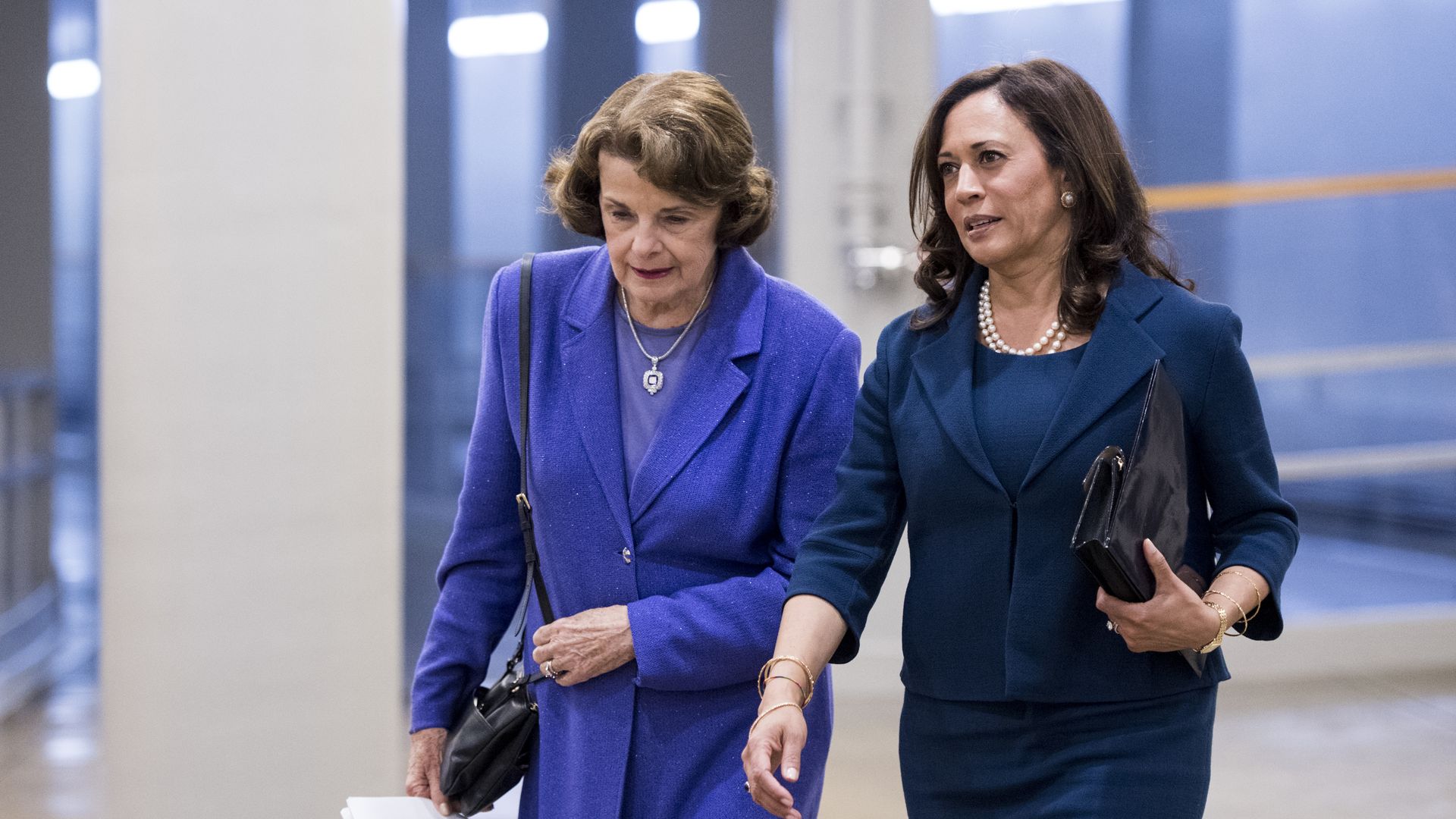
A group of 36 Indivisible chapters in California sent an open letter to Democratic Senators Dianne Feinstein and Kamala Harris Monday pressuring them to block the nominations of Gina Haspel as CIA Director and Mike Pompeo as Secretary of State.
Why it matters: Progressives have been pushing Feinstein to align with them on policy issues like immigration, and their strength was clear in February when she failed to secure the California Democratic Party's official endorsement. Various Democrats, including Feinstein, have already faced scrutiny about how they will vote for Haspel and Pompeo, and the latest pressure in California shows how progressive Democrats are fighting to pull the party farther to the left.
The FBI's raid on Trump lawyer Michael Cohen was seeking information about payments related to Karen McDougal and Stormy Daniels, two women who had affairs with now-President Trump, in addition to any potential role from the publisher of The National Enquirer, the NYTimes reported Tuesday.
Between the lines: The agents were acting on a warrant "personally signed off on" by Deputy Attorney General Rod Rosenstein, the Times notes. President Trump has increasingly pushed Attorney General Jeff Sessions to shut down the broader Mueller probe.
Sources close to the president say that a political dispute with special counsel Robert Mueller has turned visceral and personal after the feds' raid on the New York offices of Michael Cohen, Trump's personal lawyer and fixer.
What we're hearing: One of the sources said: "Mueller's investigation has been drip, drip. This was a giant leap forward ... a personal hit. ... They were moving in inches. Today, they moved a mile."
President Trump kicked off his morning by taking to Twitter to express his anger about the FBI raid of his personal lawyer Michael Cohen's office and home yesterday, once again calling the process "A TOTAL WITCH HUNT!!!"
Go deeper: Axios' Mike Allen spoke with a source close to Trump about the Cohen raid: "This was a giant leap forward ... a personal hit."
"Poised to Balloon to $1 Trillion, U.S. Deficit Fuels Fear of Crisis," N.Y. Times' Thomas Kaplan reports.
Why it matters: "The fear among some economists is that rising deficits will drive up interest rates, raise borrowing costs for the private sector, tank stock prices and slow the economy, which would only drive the deficit higher."
The U.S. still doesn’t have a national cybersecurity doctrine that outlines what would happen to adversaries when they launch cyberattacks against the U.S.
Why it matters: The country's ability to fight back is limited without the overarching doctrine and authority laid out for government agencies. That's a problem given that the midterm elections are coming up, and intelligence leaders have said Russia is showing no signs of letting up on its hacking attempts.
The Republican governors of Texas and Arizona have increased the number of National Guard troops they will deploy to the southern border to assist with security operations. The increases are part of President Trump’s recent plan to work with border-state governors to combat what he called a growing threat of unauthorized immigrants and drug trafficking from Central America.
By the numbers: Texas Gov. Greg Abbott said the state would boost the number of troops from 250 to at least 1,000, up from 250, per the AP. And Arizona Gov. Doug Ducey tweeted that 338 troops will be dispatched, up from 113.
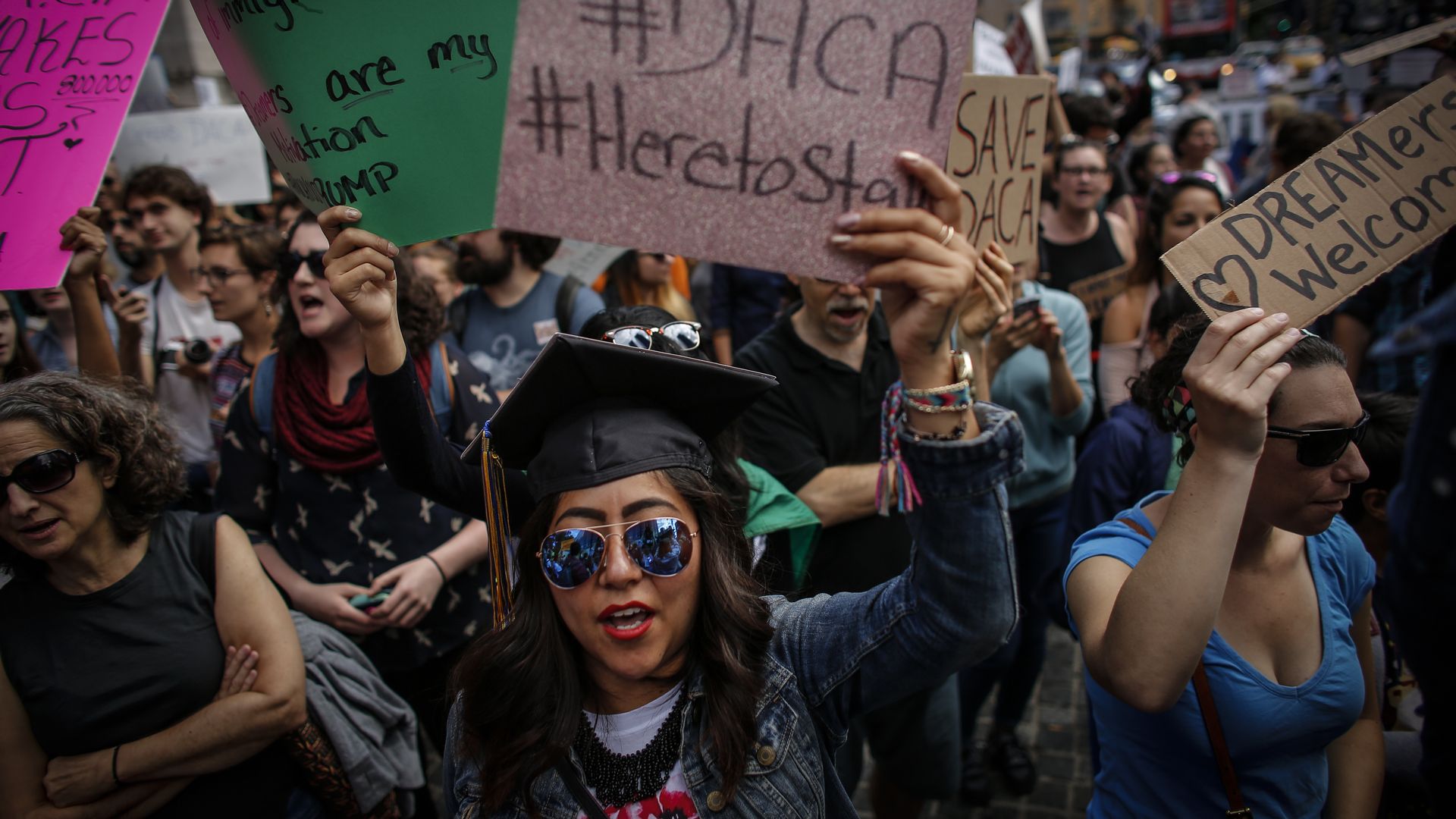
Arizona colleges are prohibited from awarding in-state tuition rates to young immigrants who are protected under the Deferred Action for Childhood Arrivals program, the state’s Supreme Court unanimously ruled on Monday.
Why it matters: The decision will reportedly affect more than 2,000 Dreamers at Arizona public colleges, who are legally allowed to study in the U.S. In 2016, Arizona voters approved a measure that mandates state-funded services and benefits, such as in-state tuition and financial aid, to those who have legal status.
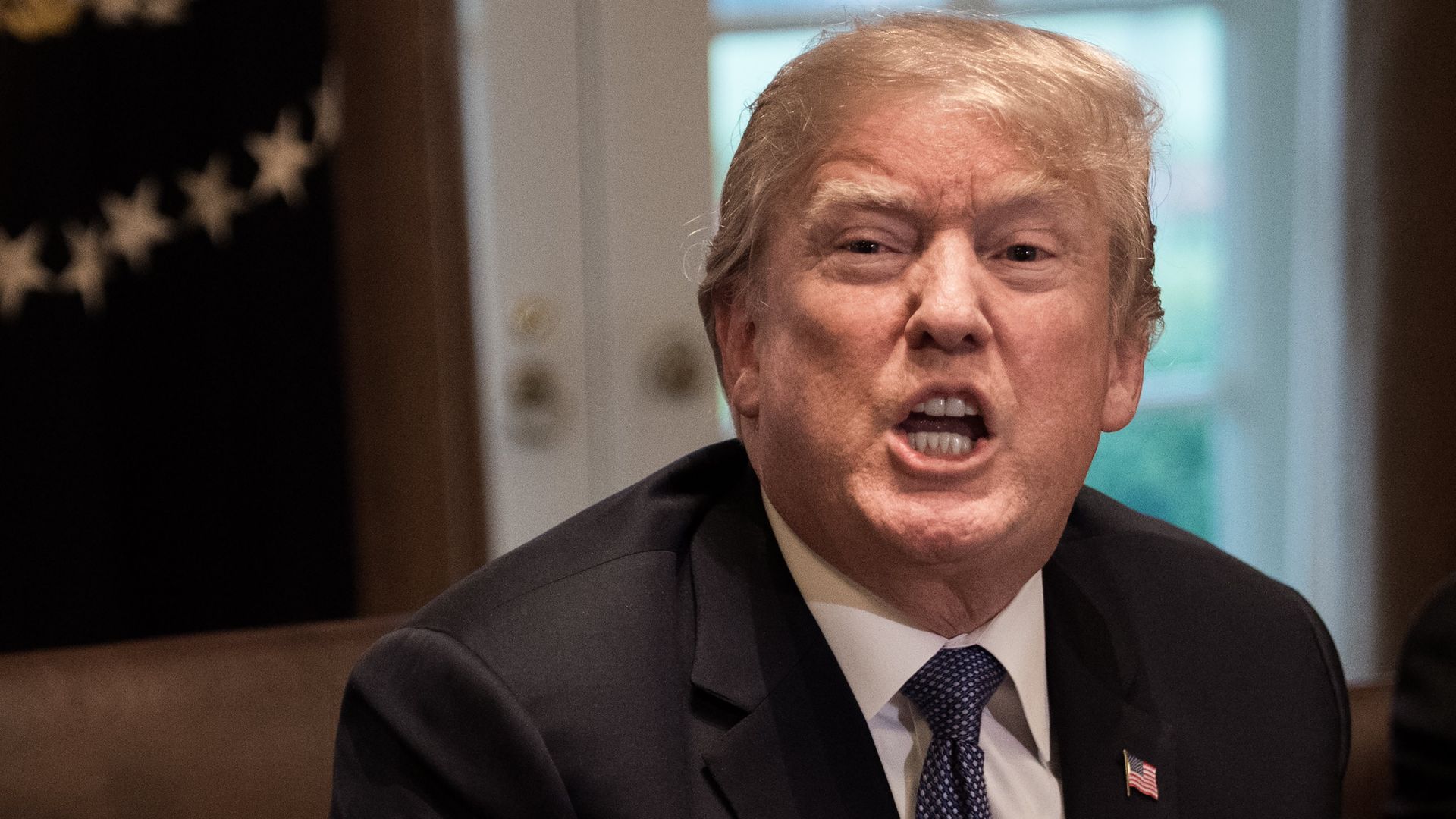
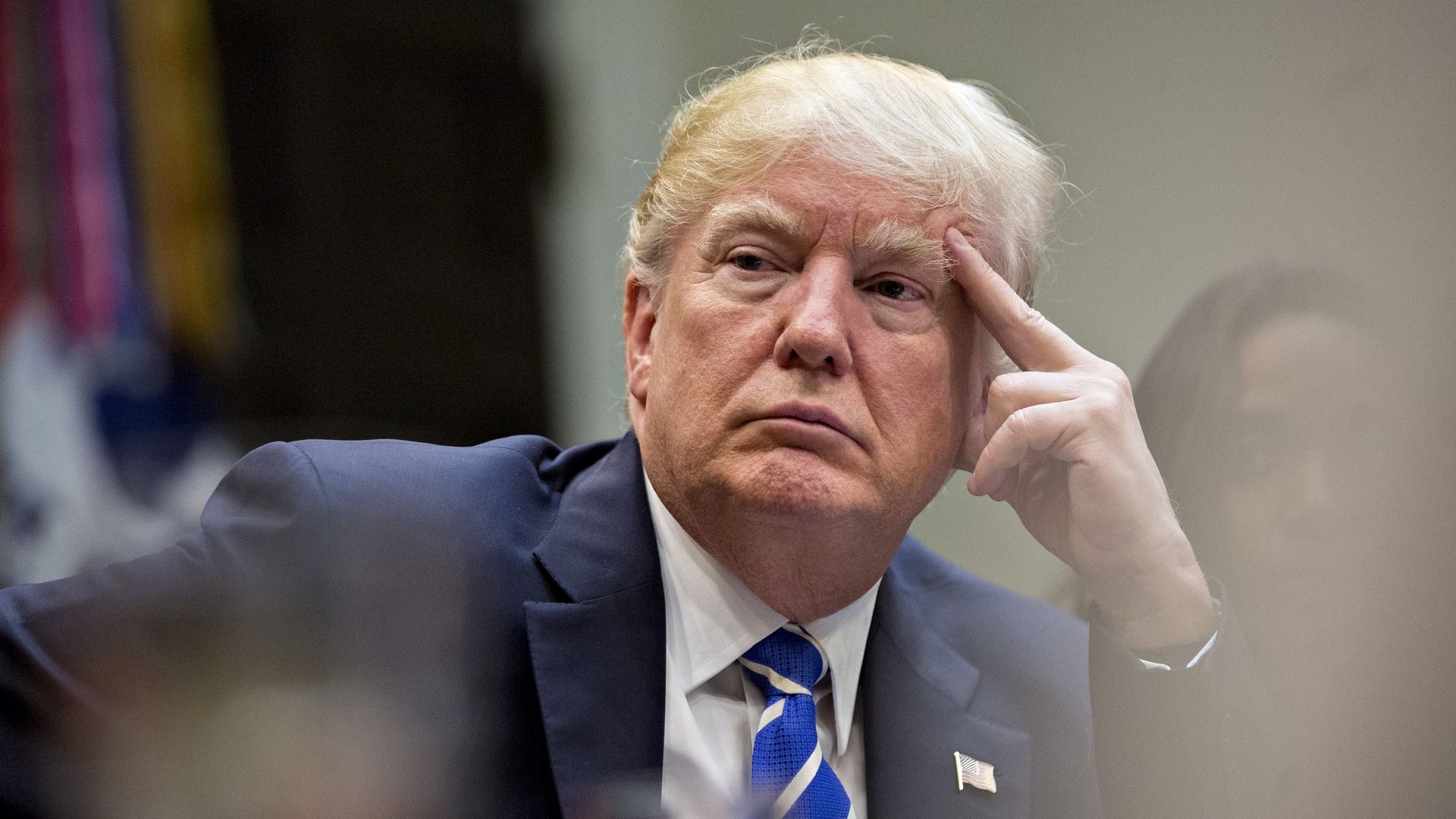
At the start of a meeting with senior military leadership Monday night, President Trump blasted the FBI's raid of his personal lawyer's office, calling it a "disgraceful situation" and an "attack on our country in a true sense ... an attack on what we all stand for."
The big picture: This is a consistent response from Trump, who has accused the probe of unfairly targeting him and who has lashed out against his attorney general for failing to restrain its spread.
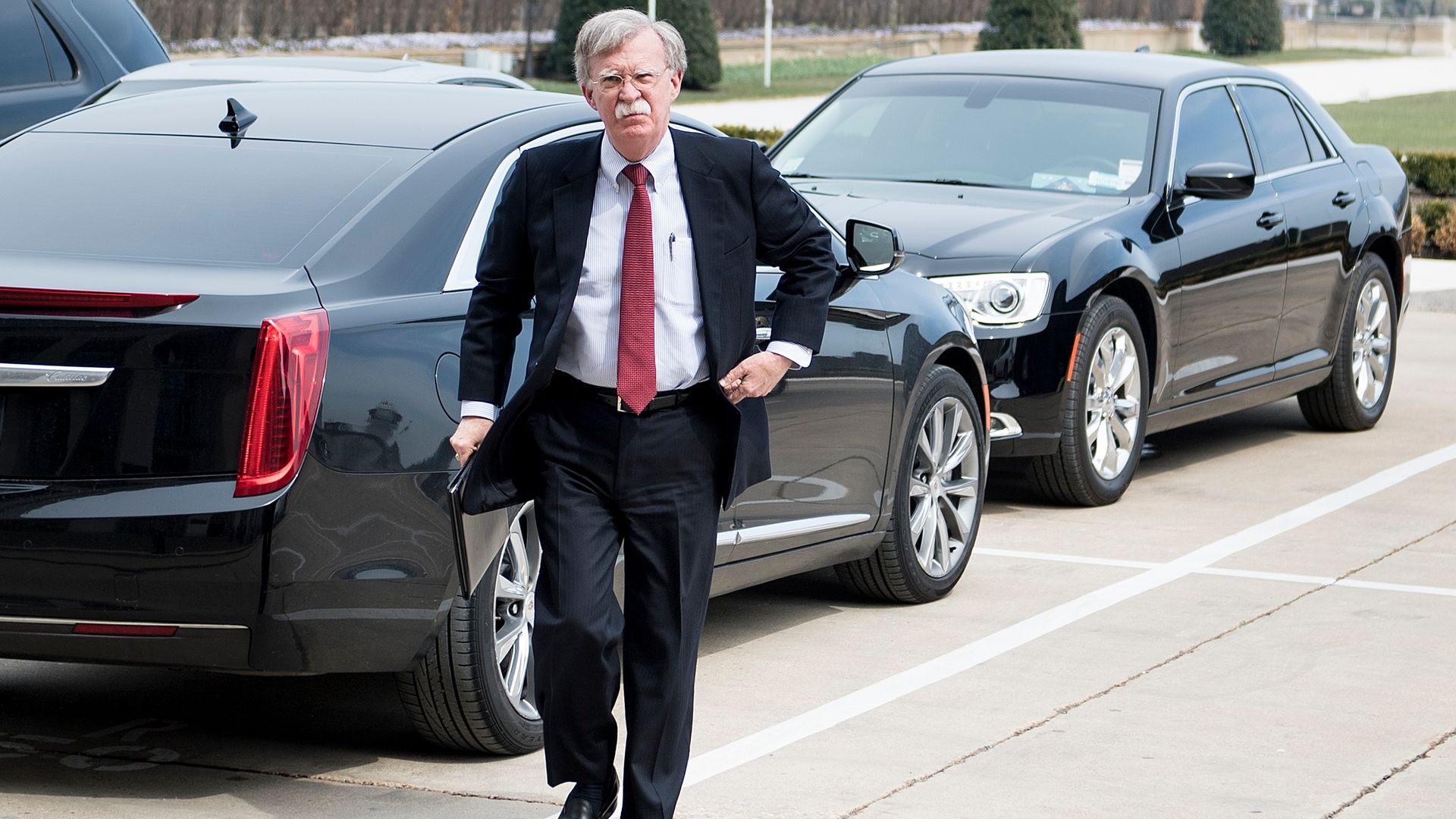
Today John Bolton starts as President Trump’s new national security adviser — his third in thirteen months — and may well become Trump‘s most influential and ideological foreign policy adviser.
What’s Next: It's too soon to tell how Bolton will interact, cooperate and compete as a member of Trump's foreign policy team. He has a reputation as a skilled bureaucratic maneuverer and infighter, though his biggest challenge may not be the bureaucracy but the all-important presidential constituency of one.
Total deficit spending will increase by $11.7 trillion over the next 10 years, including an additional $1.58 trillion because of changes like the GOP tax law and the omnibus spending bill, according to a new report released by the Congressional Budget Office. Annual deficit spending will top $1 trillion by 2020.
Between the lines: Republicans have spent nearly a decade campaigning on fiscal restraint. Now, with total GOP control of Congress and the presidency, revenues have been cut while spending has increased — the opposite of fiscal conservatism and a sore spot with many GOP voters.
Several hundred National Guard troops are headed to the border in cooperation with requests from President Trump and Defense Secretary Jim Mattis.
Why it matters: The Trump administration has authorized up to 4,000 troops to deploy to the border, but the National Guard's role on the border is limited by law.
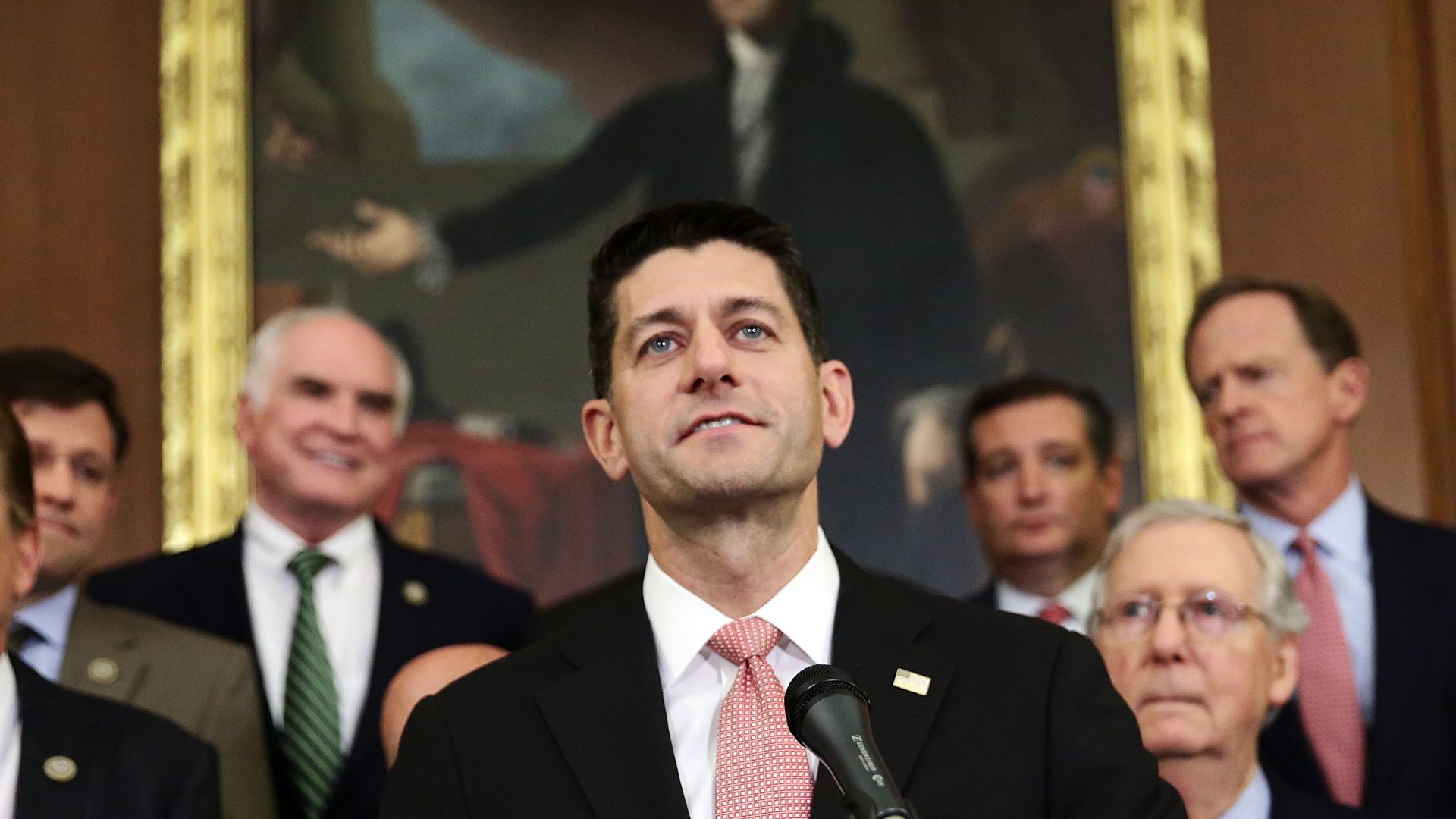
House Speaker Paul Ryan's joint fundraising committee, Team Ryan, raised $11.1 million in the first quarter of 2018, totaling to $54 million raised this election cycle — a record for a Speaker's political organization.
State of play: Ryan's early fundraising push shows that the GOP is gearing up in advance to make themselves as competitive as possible ahead of the November 6 elections, which are shaping up to be exceptionally competitive this year. Meanwhile, at least 56 House seats are up for grabs, and more than two-thirds of those are held by Republicans.
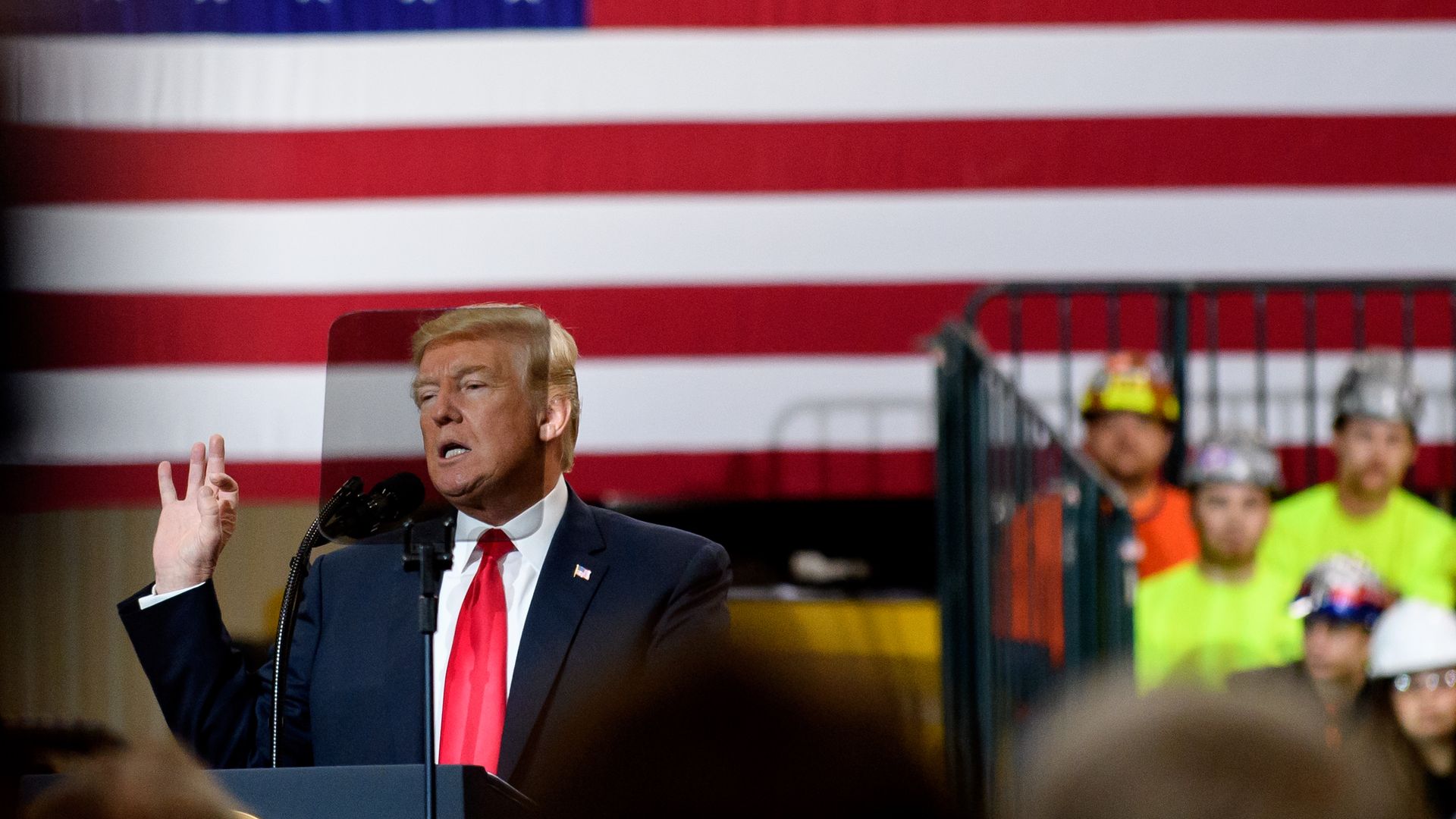
Charles Homans, politics editor of The N.Y. Times Magazine, on President Trump's rally in Moon Township, Pa. last month: "We were watching a sitting American president imitating an American president."
The big picture: "For Trump, the campaign trail was a place of self-actualization. On the stage was where he seemed most himself — so much so that, not even a full day after his election, the president-elect mused to his staff about the possibility of another series of rallies."
There's no better illustration of President Trump’s impact on the midterm elections than the soaring number of Democratic House candidates running in primaries, with women driving the surge, per the N.Y. Times' Jonathan Martin and Denise Lu.
A comparison: 1,415 Democratic candidates are running in this fall's midterm elections, remarkably similar to the 1,406 Republicans who ran in 2010's midterms. That election saw the Tea Party wave, spurred by President Obama's tenure and the Affordable Care Act.