Sunday's politics & policy stories

Trying to end the Gulf dispute
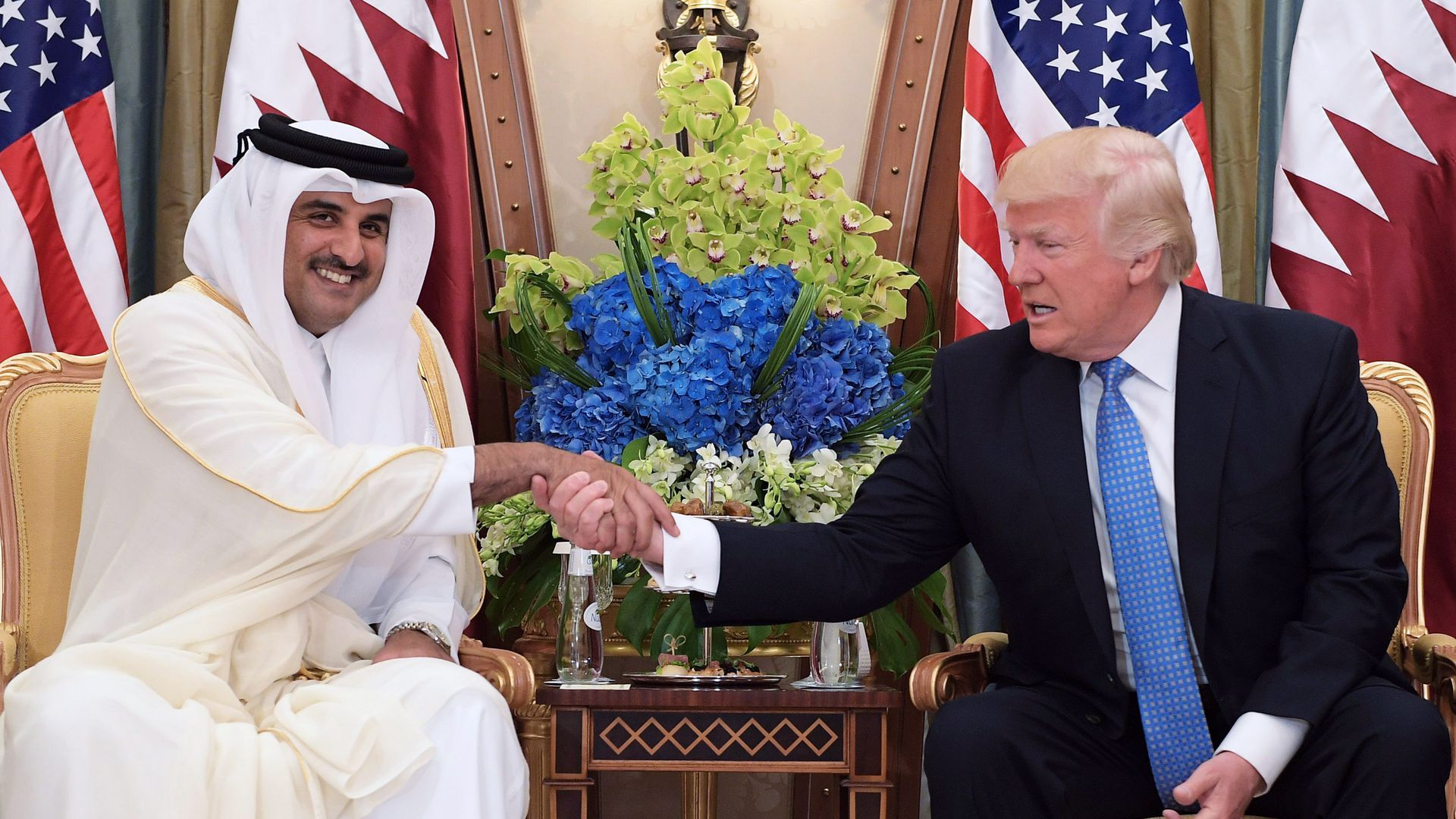
Trump has a consequential meeting on Tuesday with the Emir of Qatar, Sheikh Tamim Bin Hamad Al Thani. The President badly wants to end the feud between the Gulf nations, which formally began last June when Saudi Arabia, the UAE and others severed diplomatic and trade links with Qatar and accused their neighbor of funding terrorists and buddying up with Iran.
Why this matters: The conflict puts the U.S. in a tricky spot, given it wants to focus on beating back Iran and relies on the Qataris for an airbase.
Kirstjen Nielsen becomes Trump's immigration scapegoat
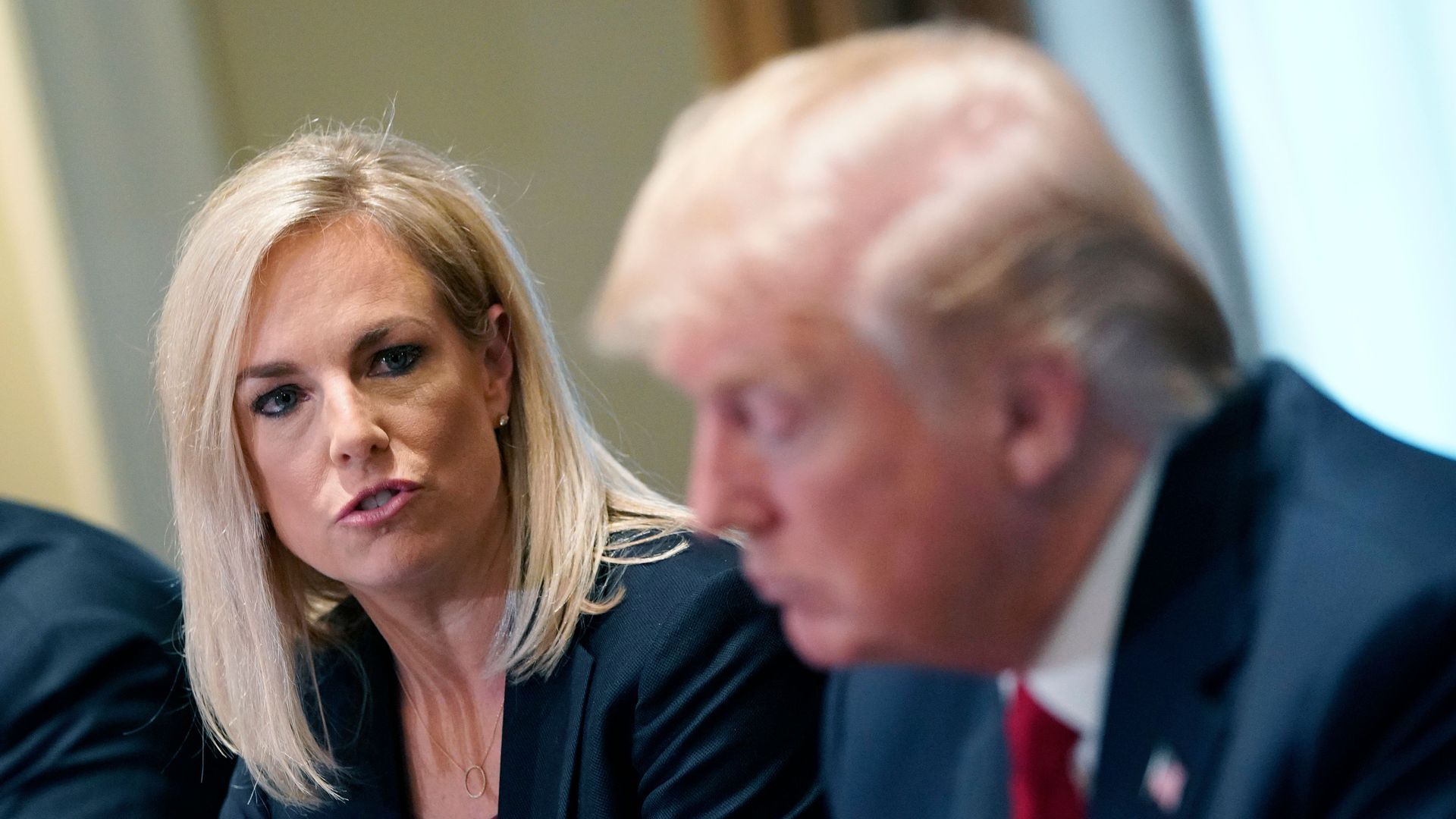
Department of Homeland Security Secretary Kirstjen Nielsen has become Trump’s immigration scapegoat — which generates friction between the president and his chief of staff, John Kelly, who is extremely close with her and believes his criticism of her is unwarranted and misplaced.
The bottom line: From when Nielsen was first nominated as secretary of homeland security, Trump had misgivings. I’ve learned that Trump even threatened to pull Nielsen’s nomination in a heated Oval Office meeting the week after she was nominated. Trump had been watching several Fox News personalities, including Ann Coulter, rip Nielsen as soft on the border. And as the Washington Post first reported, Trump claimed not to have known that Nielsen worked for George W. Bush, who he views as worse than most Democrats.
How Trumpworld is winging a trade war
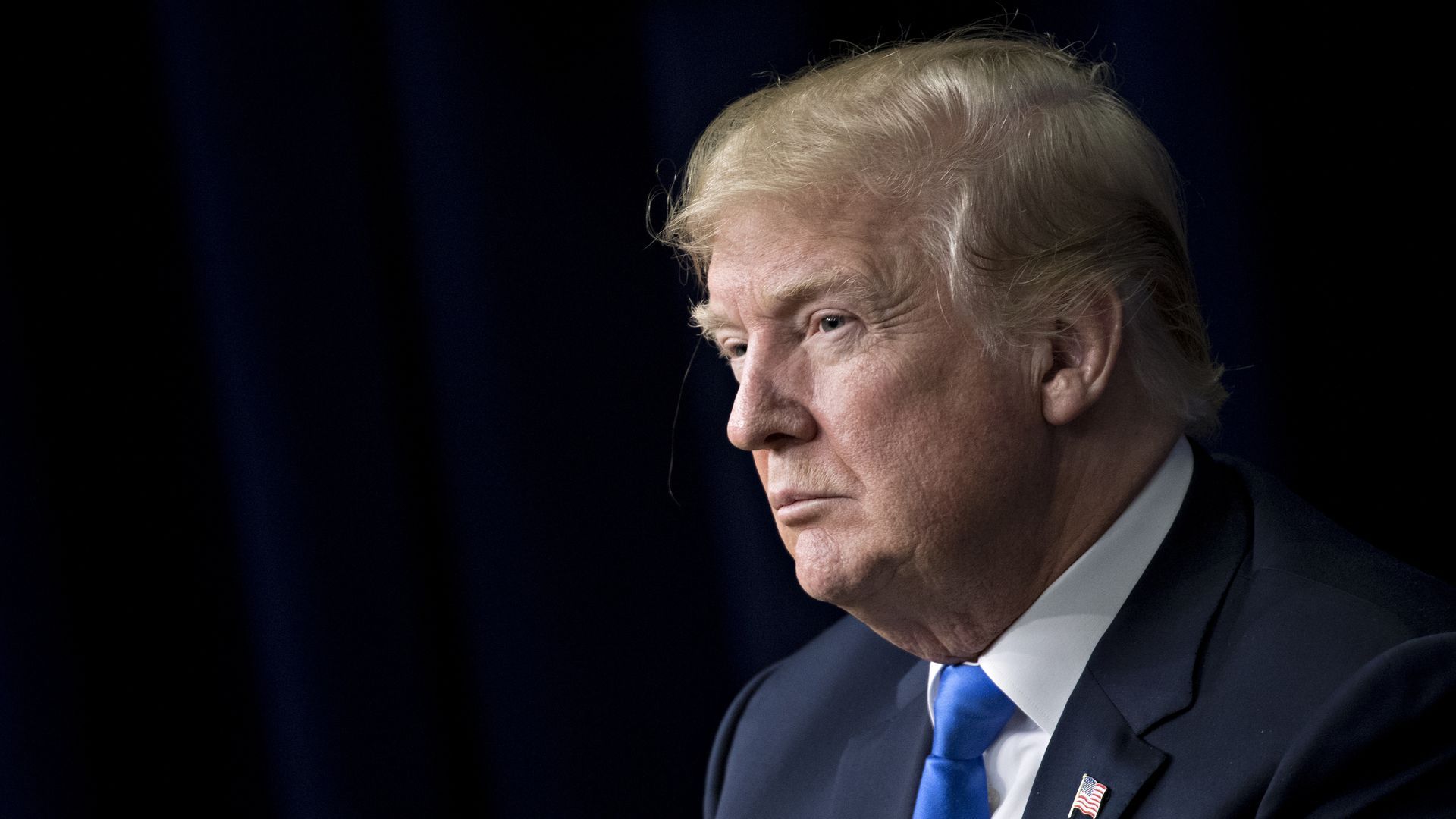
When the president threatened China with $100 billion in new tariffs, there had hardly been any White House discussion.
What I’m hearing: There wasn’t one single deliberative meeting in which senior officials sat down to debate the pros and cons of this historic threat. Trump didn’t even ask for advice from his new top economic adviser, Larry Kudlow, instead presenting the tariffs as a fait accompli. Chief of Staff John Kelly knew Trump wanted more tariffs but was blindsided by the speed of the announcement. And Legislative Affairs Director Marc Short — the White House’s liaison to Capitol Hill — was totally in the dark.

Hungary’s Viktor Orban wins re-election on anti-migration agenda
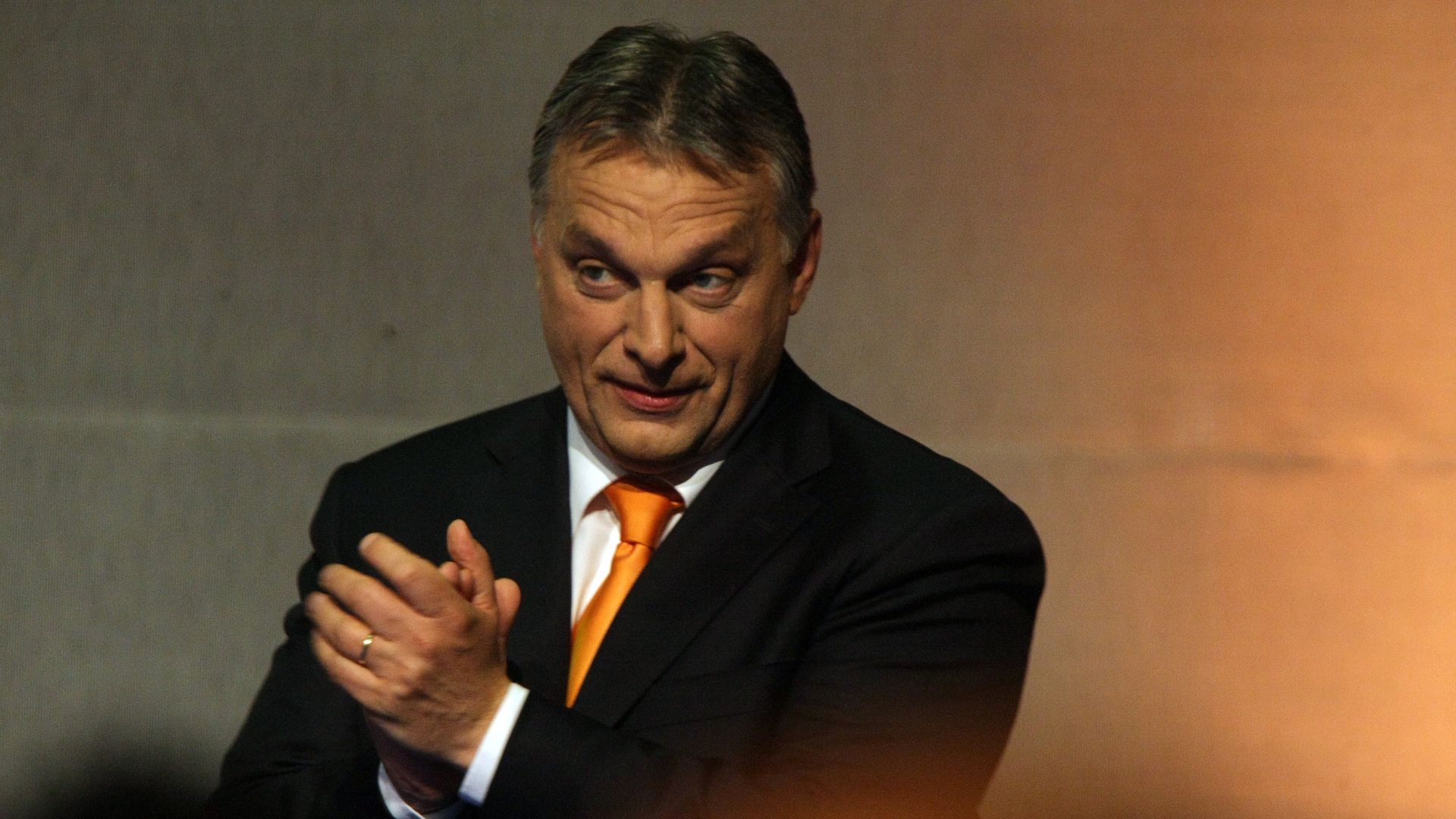
Hungarian Prime Minister Viktor Orban, who campaigned heavily on an anti-migration platform, easily won his third consecutive term in Sunday’s parliamentary election, per the AP.
The details: Orban's ruling right-wing Fidesz party and the allied Christian Democrat party secured 133 of the 199 seats, the AP reports. This year's election, which had a high turnout, was considered by some to be the most consequential since communism ended in 1989. That's because the increasingly authoritarian Orban has enacted radical changes to the country’s constitution, undermined checks and balances and imposed a crackdown on the free press.
Go deeper: Europe's illiberal state.

Netanyahu couldn't convince Trump to rethink Syria policy
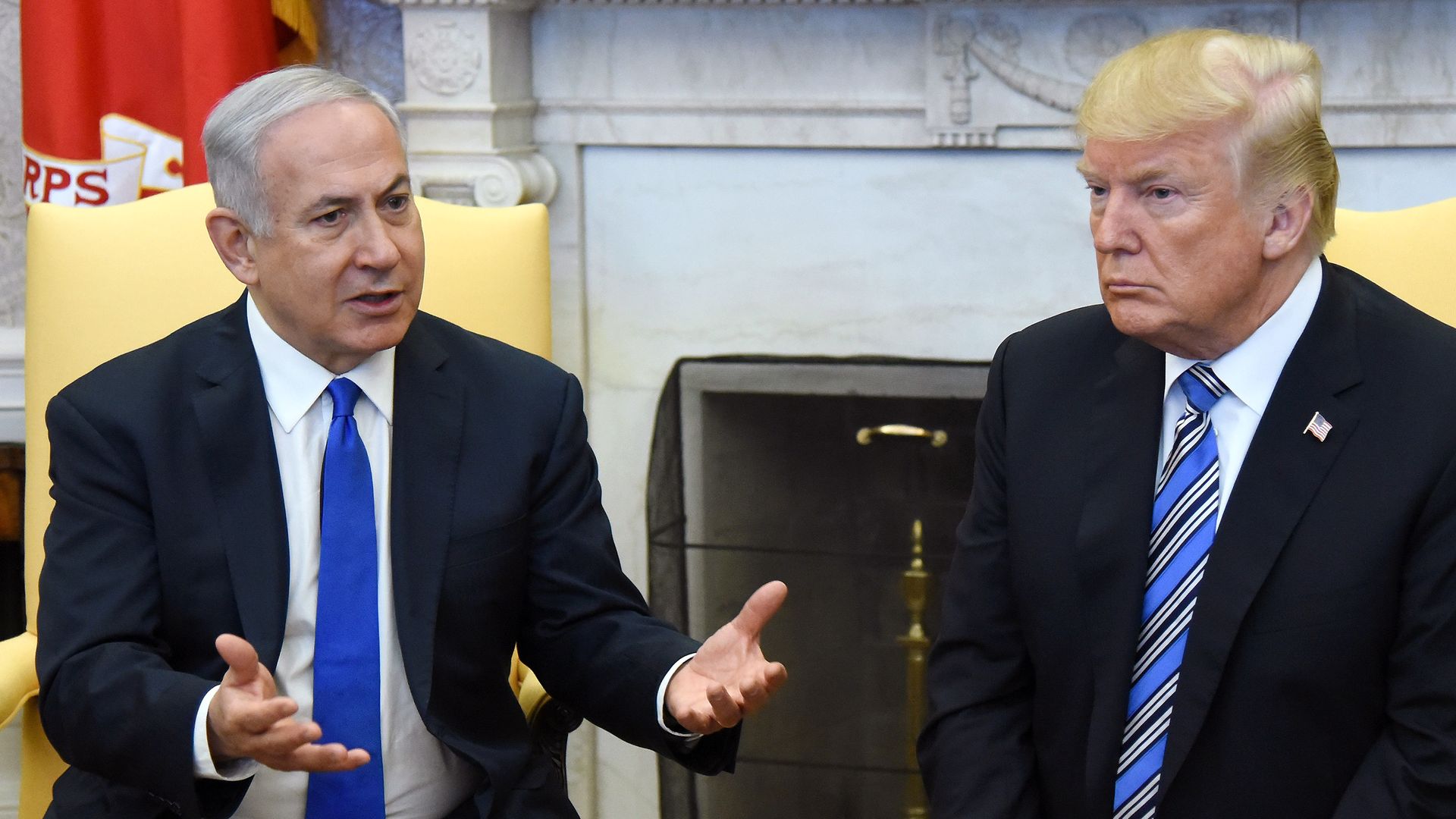
The phone call between Israeli Prime Minister Benjamin Netanyahu and U.S. President Donald Trump — which took place last Tuesday — has failed. Netanyahu could not convince Trump to rethink his decision to withdraw U.S. forces from Syria, an Israeli source briefed on the call told me.
Why it matters: Regardless of the formal statements issued by each nation, the Israeli government and security establishment is very frustrated with Trump's decision to withdraw U.S. forces from Syria. Israeli officials said the Trump administration is only interested in defeating ISIS in Syria and has no willingness to act against Iranian military entrenchment in the country. An Israeli official told me: "The Americans will support our action against Iran in Syria but the bottom line is we are on our own".
U.N. Security Council expected to meet about Syria attack
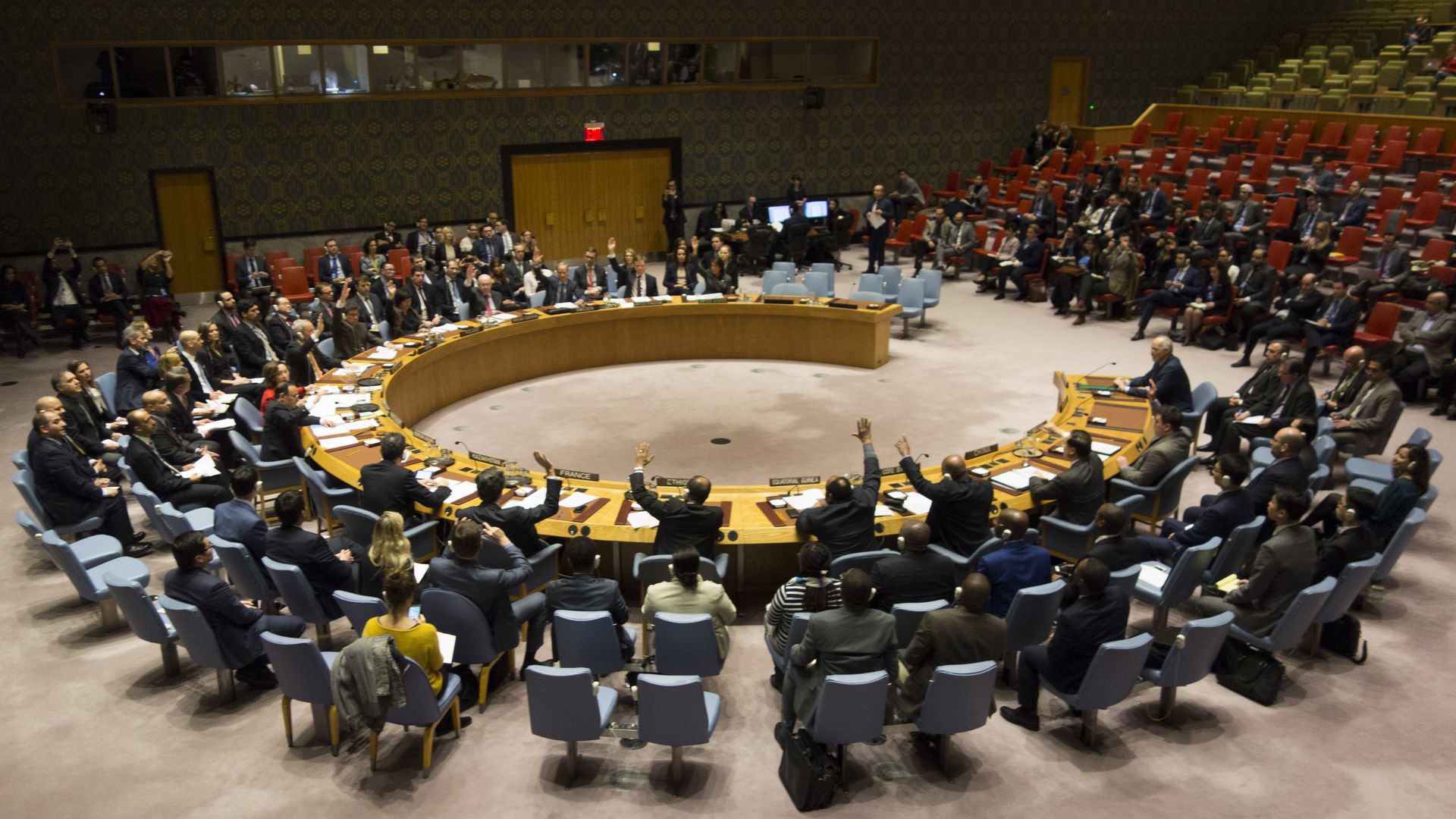
The United Kingdom's delegation to the United Nations said that the U.N. Security Council is expected to meet on Monday amid calls for a prompt meeting over this weekend's alleged chemical attack by the Syrian government. The U.K. was joined by the United States, France, Poland, the Netherlands, Sweden, Kuwait, Peru, and the Ivory Coast in calling for the emergency meeting.
The backdrop: There has been growing international outcry regarding Saturday's deadly attack in the rebel-held suburb of Douma, east of Damascus. It prompted President Trump on Sunday to level his most direct criticism yet at Russian President Vladimir Putin for aiding President Bashar al-Assad’s regime. Russia is a veto-wielding member of the Security Council, and it has pushed back against reports of the attack, calling it a "spread of bogus stories."

Trump's budget "undo" button
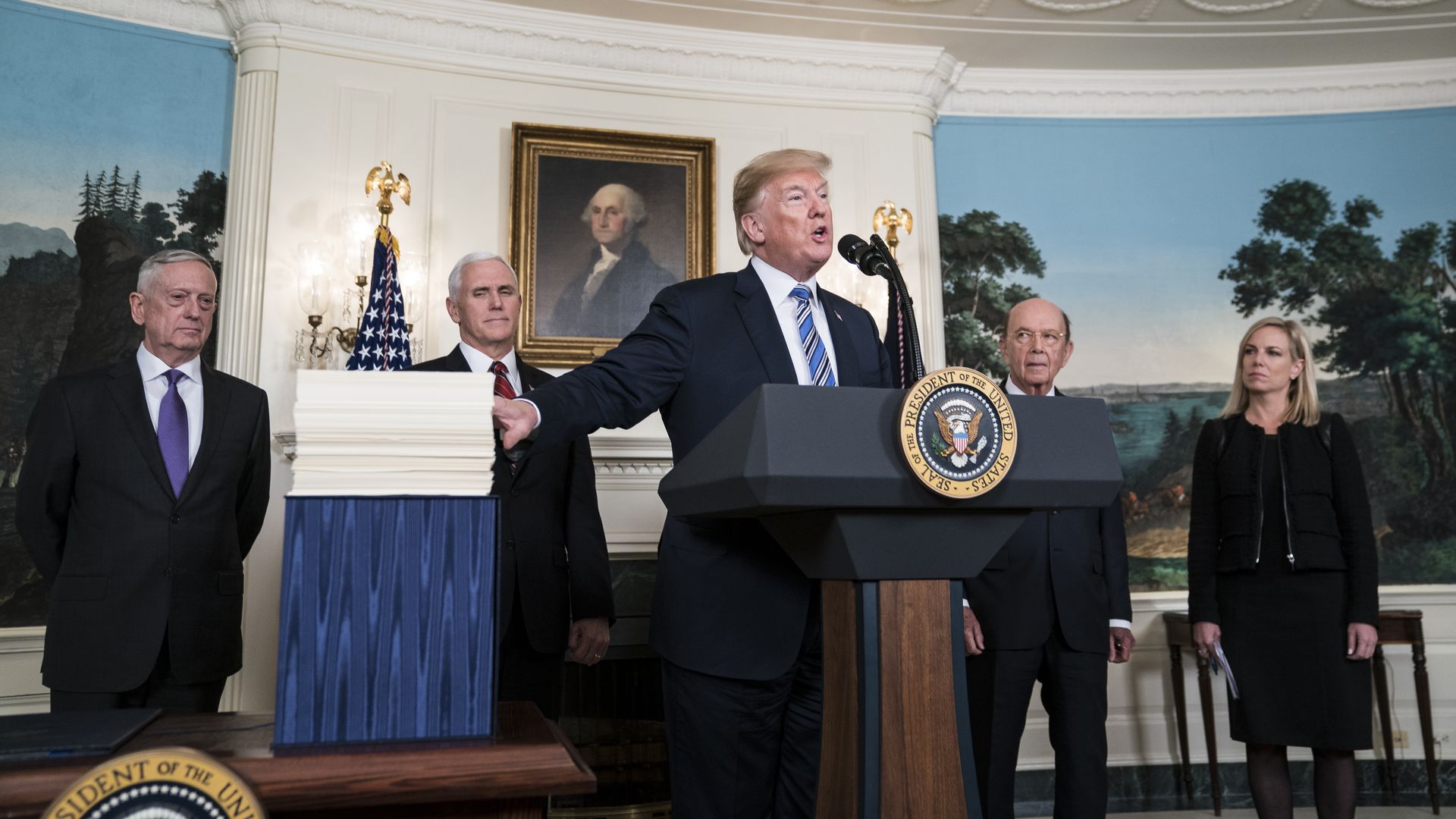
President Trump may try to hit "undo" on a slice of the $1.3 trillion spending bill that he signed last month after threatening a veto, and now regrets.
The big picture: Republican aides in the House and Senate tell me they're working with the White House on a possible plan to rescind billions of dollars — and perhaps tens of billions.

Howard Buffett explains how tougher border security can fight drugs

Since he started working for the sheriff’s department in a rural county in Illinois a few years ago, Howard Buffett, the son of billionaire Warren Buffett, has seen drug addiction lead to poverty, prostitution, overdoses and suicide. As he told Axios over dinner, he believes tougher border security is a key solution:
"You think about 65,000 people died last year from drug overdoses, and about 50% of them came from illegal drugs out of Mexico... If it happened any other way, people would go nuts."— Howard Buffett

Trump blasts DOJ over its response to House Judiciary subpoena
President Trump criticized the Department of Justice and FBI for failing to meet a Thursday subpoena deadline from the House Judiciary Committee for documents related to the FBI's actions in events surrounding the 2016 presidential election, including alleged FISA abuses and the Hillary Clinton email investigation.
What's going on: Last week, FBI Director Christopher Wray announced that he was doubling the staff working on Judiciary's request, which could require the Bureau to review and redact over a million documents. Judiciary's subpoena gave the DOJ and FBI just two weeks to respond. Per The Hill, DOJ says that it has been in "ongoing communication" with Judiciary Chairman Bob Goodlatte (R-Va.) regarding the request.
Trump drives surge in protests, activism
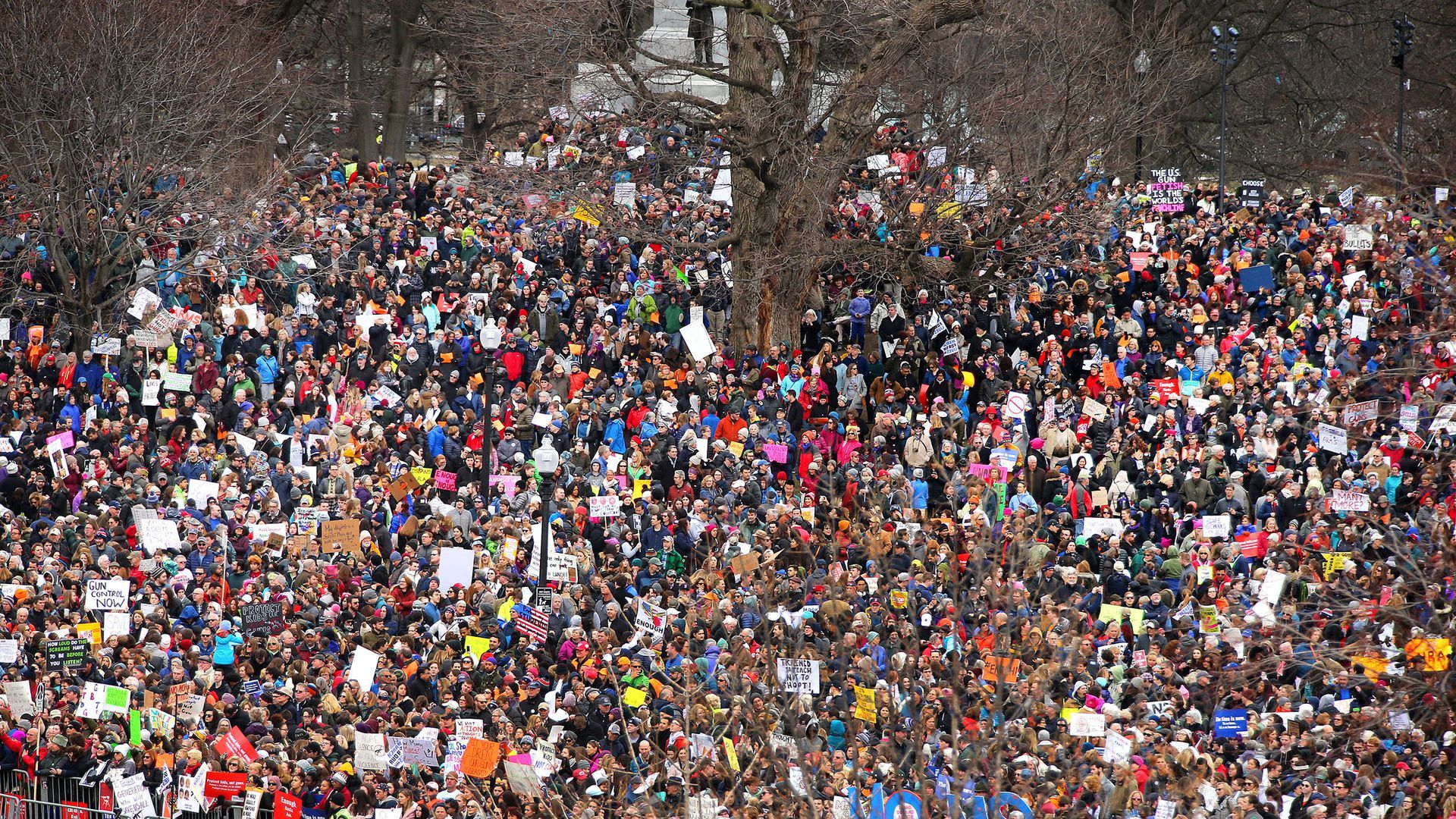
"Rallying nation: In reaction to Trump, millions of Americans are joining protests and getting political," by WashPost's Mary Jordan and Scott Clement:
- "Tens of millions of Americans have joined protests and rallies in the past two years, their activism often driven by admiration or outrage toward President Trump, according to a Washington Post-Kaiser Family Foundation poll showing a new activism that could affect November elections."
Trump's freak-out moment
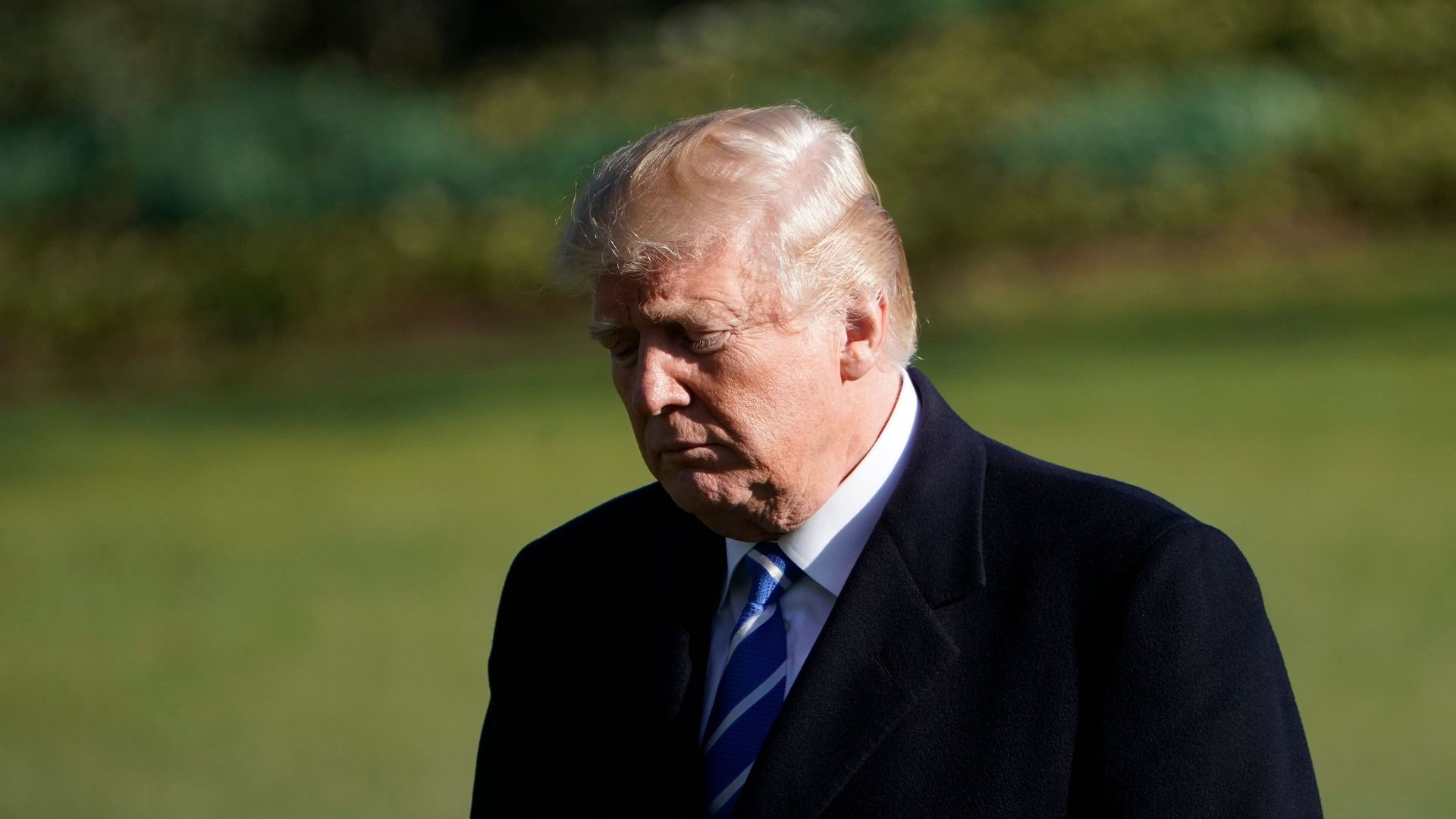
We can’t overstate the severity of President Trump’s buyer's remorse from signing last month's spending bill. It could even be a turning point in his presidency, on the issue of immigration and his level of cooperation with Republican leaders; Sources who’ve discussed it with Trump say it freaked him out to see the array of usually friendly faces on Fox News’ opinion shows ripping into him for signing a bill that spent a ton of money, but gave lots away to liberal priorities and did little for his signature promise to build a wall.
Why this matters: Truth is that Trump had little clue what was in the largest spending bill ever passed. Conventional wisdom on Capitol Hill has been that nothing will happen on immigration after the early failure to cut a deal this year. Republican leadership sources were telling us that the court decision to keep DACA alive took away Trump’s deadline and removed the pressure on Congress to act. But now some of those sources are nervous, realizing that Trump won’t let the issue fade into the background.