"Sheriff of Wall Street" Preet Bharara tweeted Saturday afternoon: "I was fired" That's certainly true, but the Trump administration says there's slightly more to the story. And in the backstory, we see how bland niceties are used to cloak raw politics.
It was Acting Deputy Attorney General Dana Boente who informed 46 federal prosecutors on Friday that President Trump wanted their resignations. So when the news popped Saturday that Bharara, the U.S. attorney for the Southern District of New York, was refusing to comply and was willing to be fired, Boente called him in the early afternoon.
"He refused to admit that this applied to him," an administration official said. "As we talked to him and tried to reinforce that it did, he basically said: 'I'm interpreting that to mean you're firing me.'"
Preet then tweeted: "I did not resign. Moments ago I was fired. Being the US Attorney in SDNY will forever be the greatest honor of my professional life."
Like clockwork, President Trump fires off an incendiary tweet (or a series of them) and opposition voices caution others to not lose focus because "he tweets to distract."
I was a guest on the final segment of Greta Van Susteren's MSNBC show last night, along with historian Michael Beschloss. The three of us sat at her anchor desk and, along with the audience, watched a dizzying day-by-day montage of President Trump's first 50 days, deftly edited by Doug Maio.
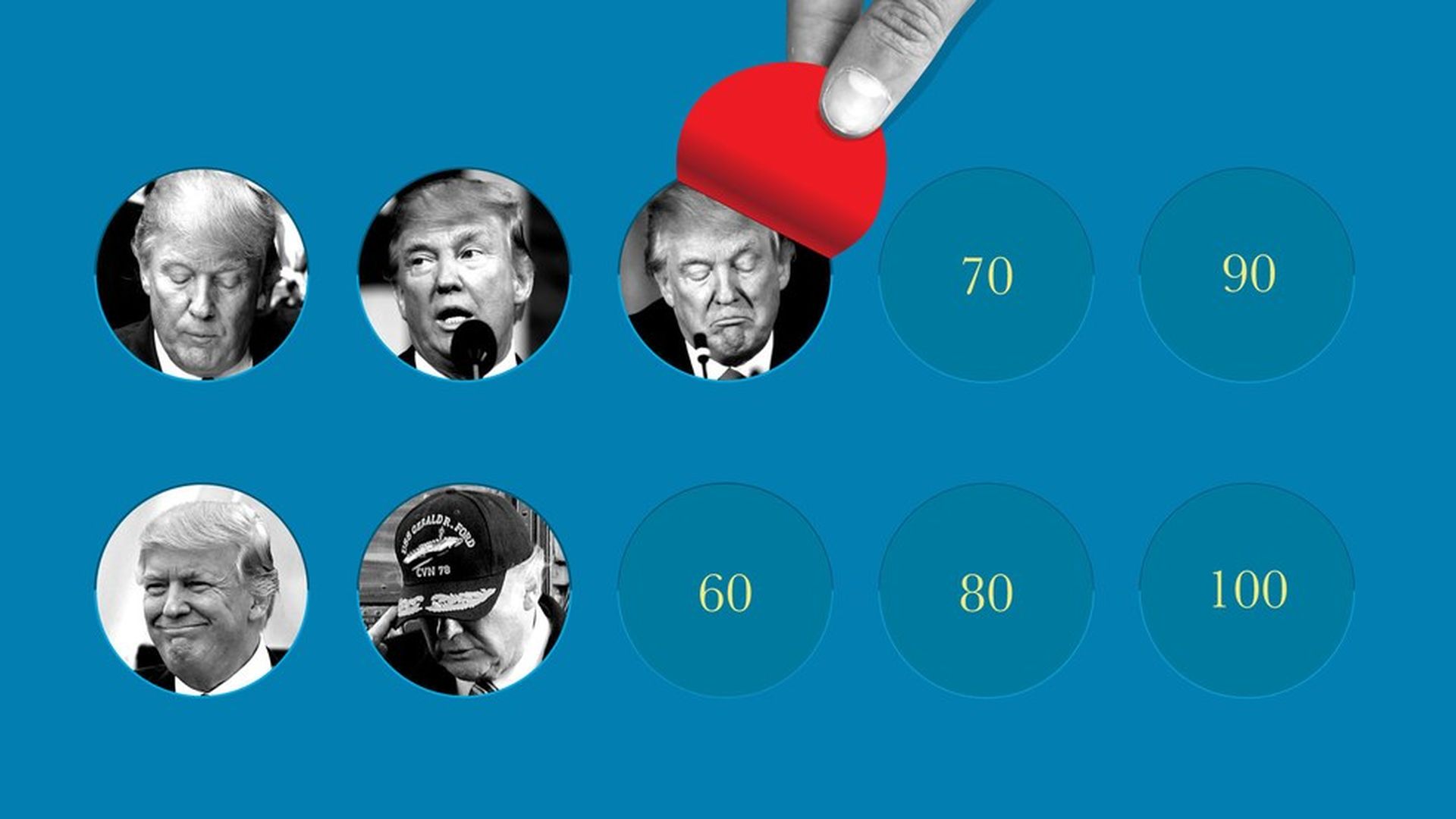
Day 1: "carnage" ... Day 12: Gorsuch ... Day 14: Arnold ... Day 16: "so-called judge" ... Day 20: Nordstrom ... Day 30: Sweden ... Day 40: "The time for trivial fights is behind us" ... Day 44: wiretapping ... Day 50: jobs.
Remember how President Trump won the U.S. presidential election and pulled the U.S. out of Trans-Pacific Partnership negotiations? That could happen to the U.S., but as the other party this time.
The WSJ notes that Mexican presidential elections will be held next year, meaning that any NAFTA renegotiations will also be contingent on a potential deal surviving a potential transition of power with our neighbors to the south. Per the WSJ:
"The process is likely to stretch to the second half of next year," said Jaime Zabludovsky, a former Mexican official who helped negotiate Nafta in the early 1990s. "Trade talks risk becoming the piñata of Mexico's election."
Conservative governors are beginning to voice their disapproval over the House Republicans' struggling Obamacare replacement plan.
On Wednesday, Mississippi Gov. Phil Bryant said the American Health Care Act looked too much like Obamacare.
A spokesman for Bryant said the governor has talked to the White House and to Secretary Price "and is confident his and other conservative voices are being heard."
Here's how the governor explained his thinking in a statement to Axios on Friday:
"Congress has offered its plan to repeal and replace Obamacare. Republicans have waited eight long years to get this done. Let us hope we are near. I am concerned that the bill maintains many of the entitlements included in Obamacare. Conservatives in the House and Senate have similar issues with the bill, as does the Heritage Foundation."
Now it's Kentucky Gov. Matt Bevinwho's coming out against the current plan. According to the AP, he said that he agrees with Rand Paul and is "not impressed" with the plan that House Republicans wrote in collaboration with the Trump Administration.
We're hearing that additional conservative governors will come out against the current plan in the coming days.
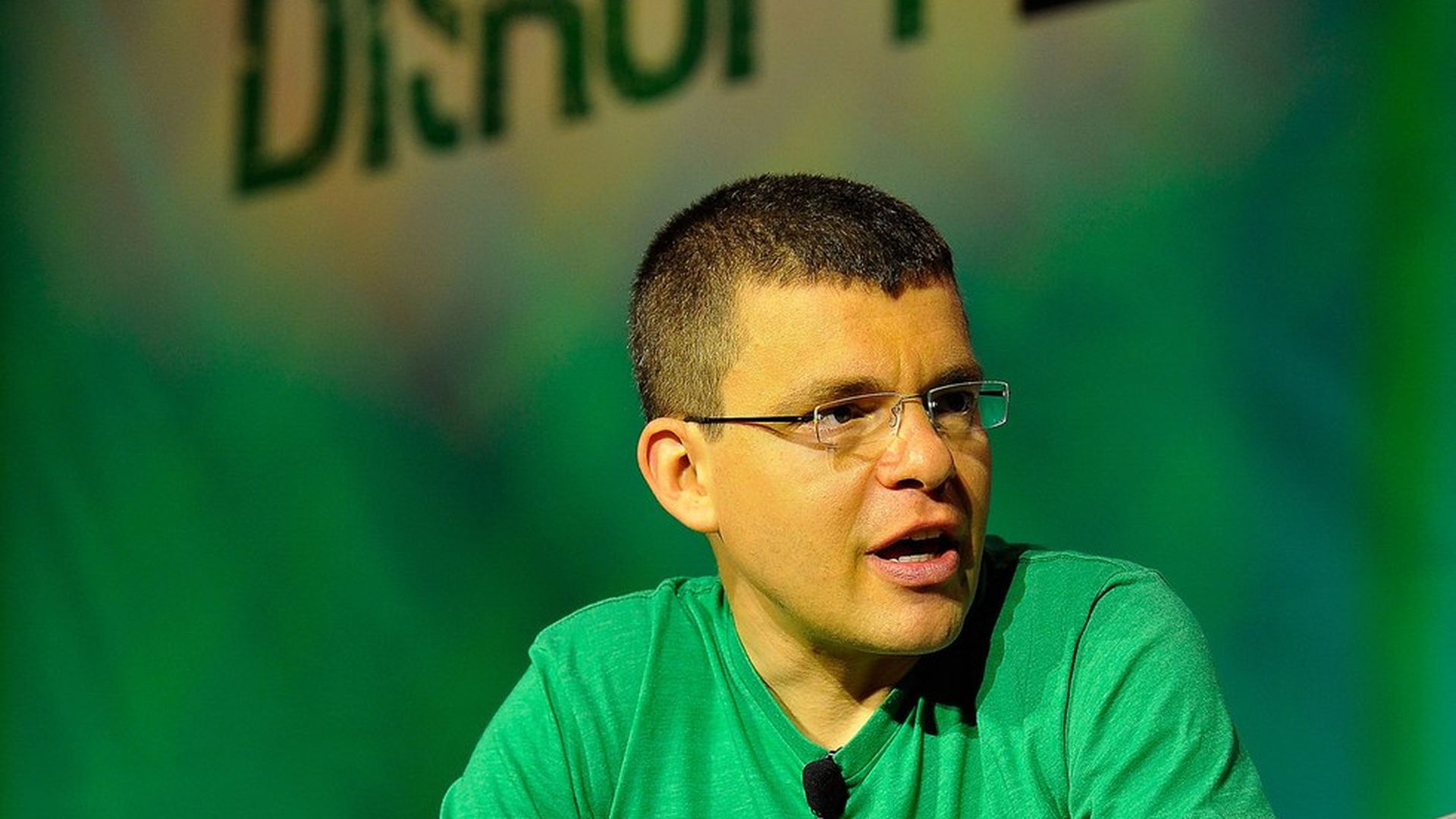
Much of Silicon Valley has been up in arms over Trump's recent travel ban. Max Levchin, an entrepreneur and investor best known for helping found PayPal, had some pointed comments on the topic during an event hosted by FWD.us and his company, Affirm:
There's a notion of morality and humane treatment of refugees, and I think that's a problem that we have successfully—to our shame— ignored, even during the last administration, and we're now institutionalizing the ignoring. And I don't think that's good. I think that's profoundly inhumane.
You can sort of pretend like it's their crisis over there in foreign lands but these people are very human, they have very real problems. I don't think that's an immigration issue so much as a humanitarian issue.
Personal experience: Levchin himself came to the U.S. in 1991 on a refugee visa from the Ukraine with his family, though he notes he was lucky in that his family had a clear path to citizenship, unlike many other refugees.
If we want to be "America First," that doesn't prevent us from being humane and participating in parts of the world that need our help. —Max Levchin
Why it matters: Studies suggest that more than 40 percent of Fortune 500 companies were founded by immigrants or the children of immigrants. Silicon Valley employees a large number of immigrants, including in executive positions, which helps fuel the vocal concern about U.S. immigration policy.
Trump's key economic advisors are pitted against each other on trade policy, with senior advisor Steve Bannon and trade advisor Peter Navarro on one side and National Economic Council Director Gary Cohn and his staff on the other, according to FT. One official said there was "a fiery meeting" recently in the Oval Office.
The FT says that Navarro is losing clout and being sidelined in the White House. As a European official put it: "His influence seems to be diminishing quickly."
Why it matters: FT nails the meaning in a quote from Thea Lee, a trade official at the AFL-CIO, who said, "At the moment it appears that the Wall Street wing of the Trump administration is winning this battle and the Wall Street wing is in favour of the status quo in terms of US trade policy."
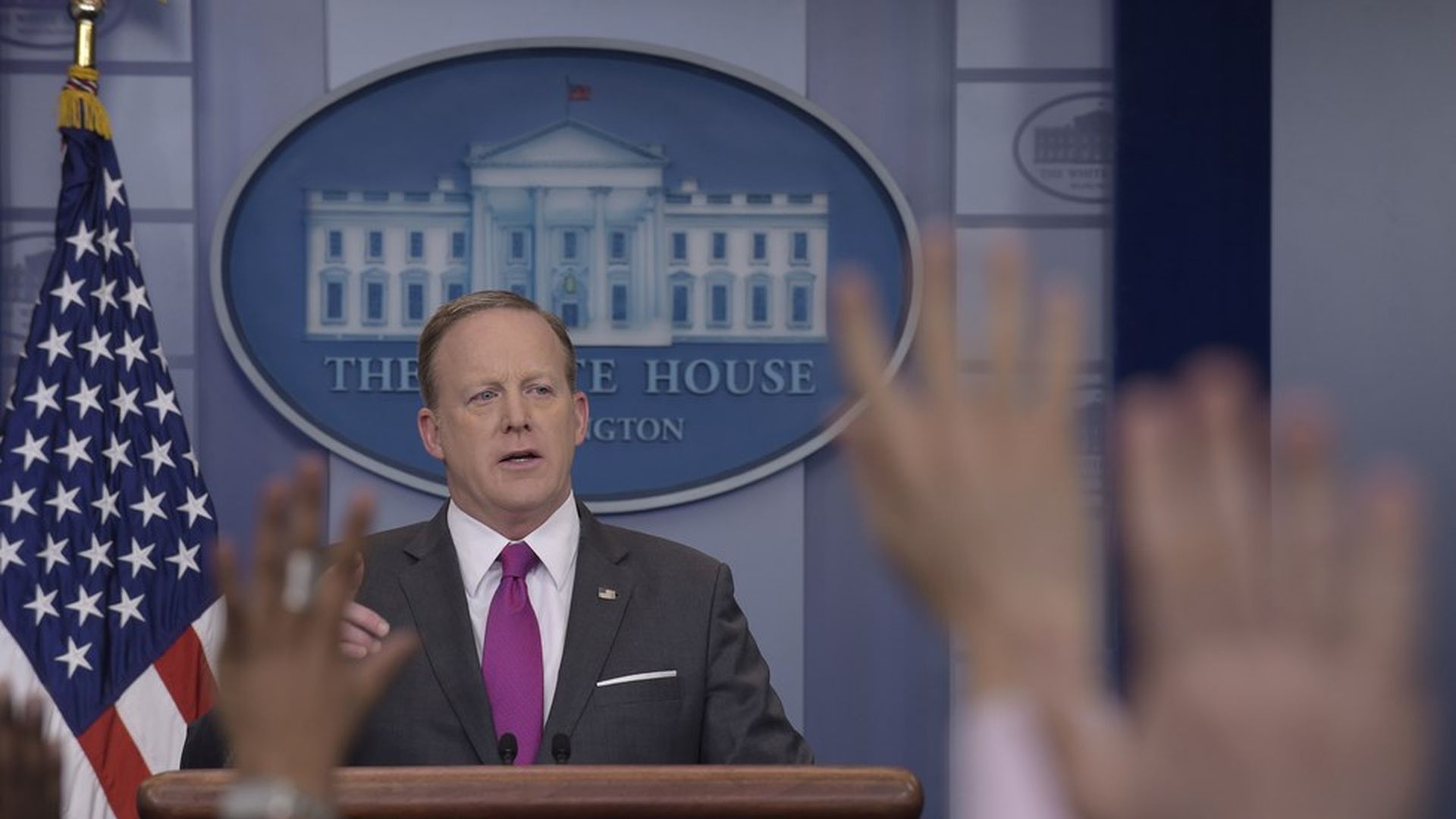
On day 50 of the Trump Administration, Spicer hit the podium with his flag pin (apparently, mistakenly) upside down — a signal of "dire distress", according to the U.S. Flag Code. Predictably, Twitter went up in flames. Then #saveseanspicer started trending... But don't worry, he fixed it! More updates below:
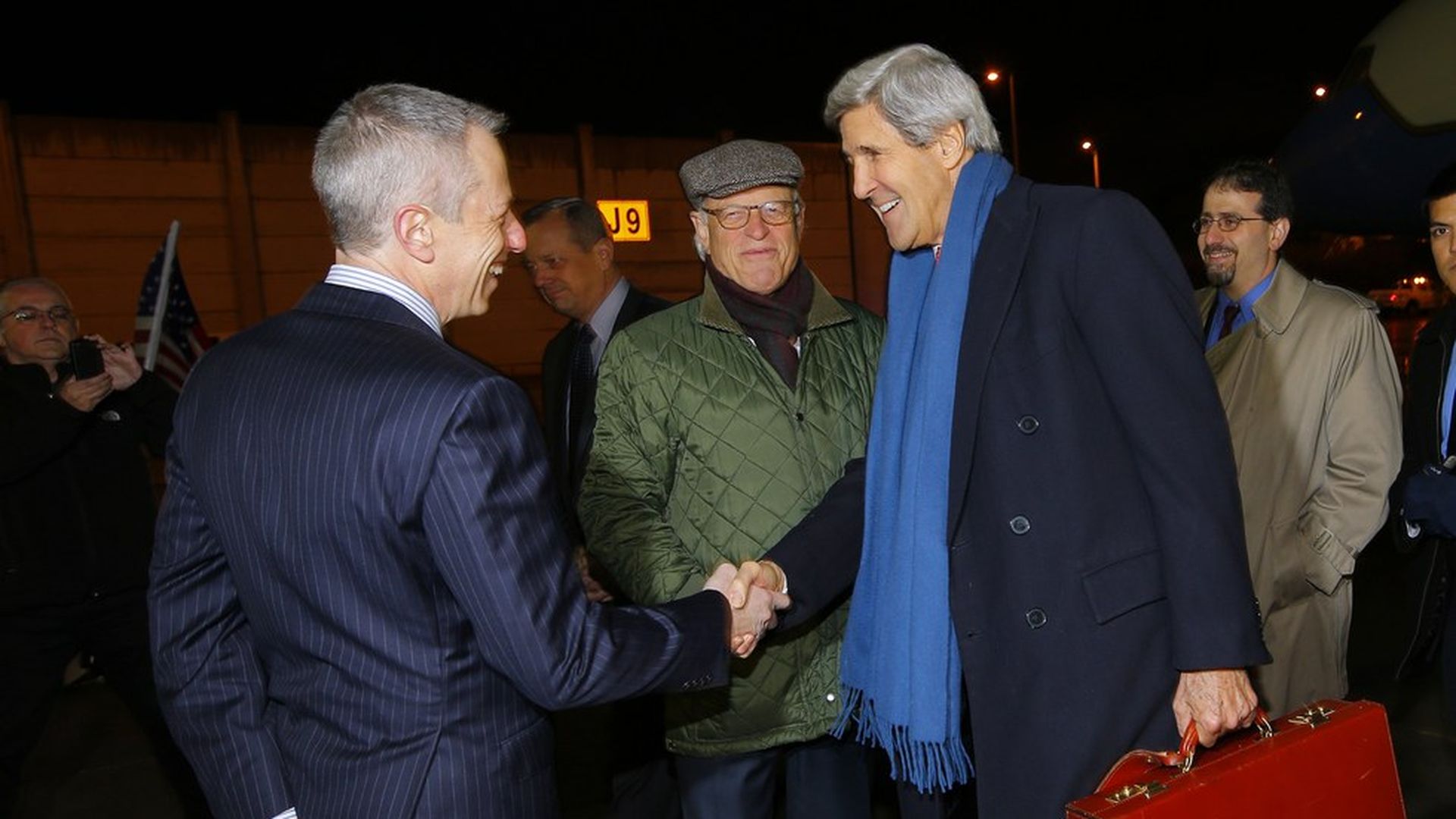
Concerns are brewing in conservative pro-Israel circles about the State Department hiring Michael Ratney, who was a senior U.S. diplomat in Jerusalem under John Kerry.
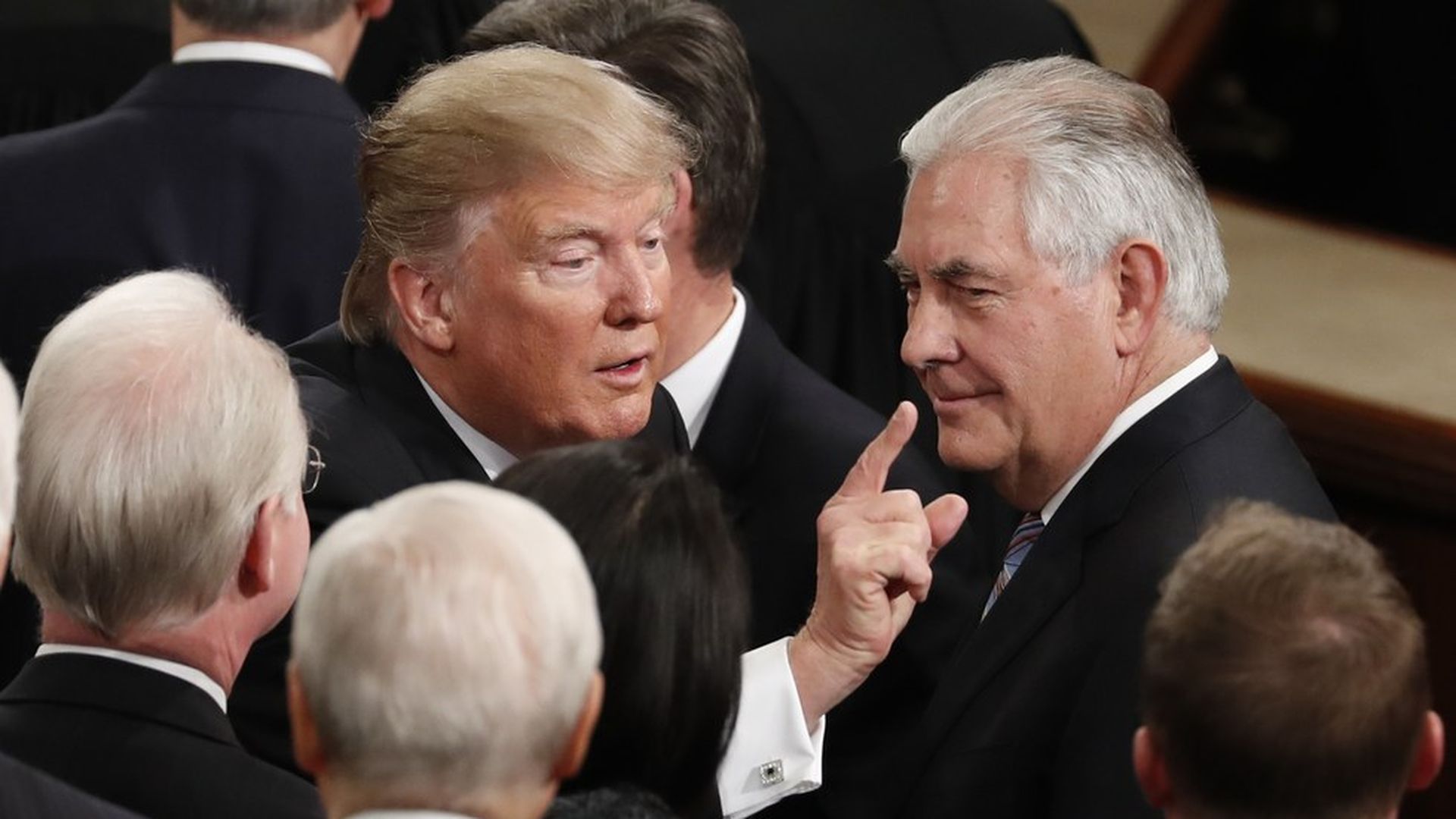
Rex Tillerson has lunch with President Trump today at the White House. The Secretary of State and the President should have plenty to talk about given the widespread concerns in Washington's foreign policy community about whether this Administration takes the State Department seriously.
As Donald Trump reaches Day 50 of his presidency, halfway to the fabled hundred days, here are some of the "known knowns" about him — certainties we have learned since the inauguration:
The internet plays a central role in Americans' daily lives, but connection speeds vary widely depending on location. Data from Akamai Technologies' "State of the Internet" report highlights the persistent divide between the two coasts, where population tends to be dense, and midwestern states that tend to be more rural.
CNN reports that the FBI's counterintelligence team is still investigating the "odd" possible server connection between the Trump Organization and Russian-owned Alfa Bank but noted that the government has not obtained a FISA warrant on the Trump server.
What happened? The Alfa Bank server repeatedly looked up the DNS address for the Trump server, which CNN compares to "looking up someone's phone number" and notes that it "indicates an intention to communicate."
A wrinkle: Alfa Bank made up 80% of the DNS lookups to the Trump server, but another 19% came from Spectrum Health, a company owned by the husband of Betsy DeVos.
What's the explanation? Well, no one seems to know. It could have been spam emails gone wrong or a case of technological mistaken identity. Alfa Bank denied any connections to Trump, and Spectrum Health said it had not been contacted by the FBI or any government agency.
Summing it up: A cybersecurity expert on the communications between Trump, Alfa Bank, and Spectrum Health told CNN, "There is some sort of connection I can't explain, and only they are doing it. It could be completely innocent."