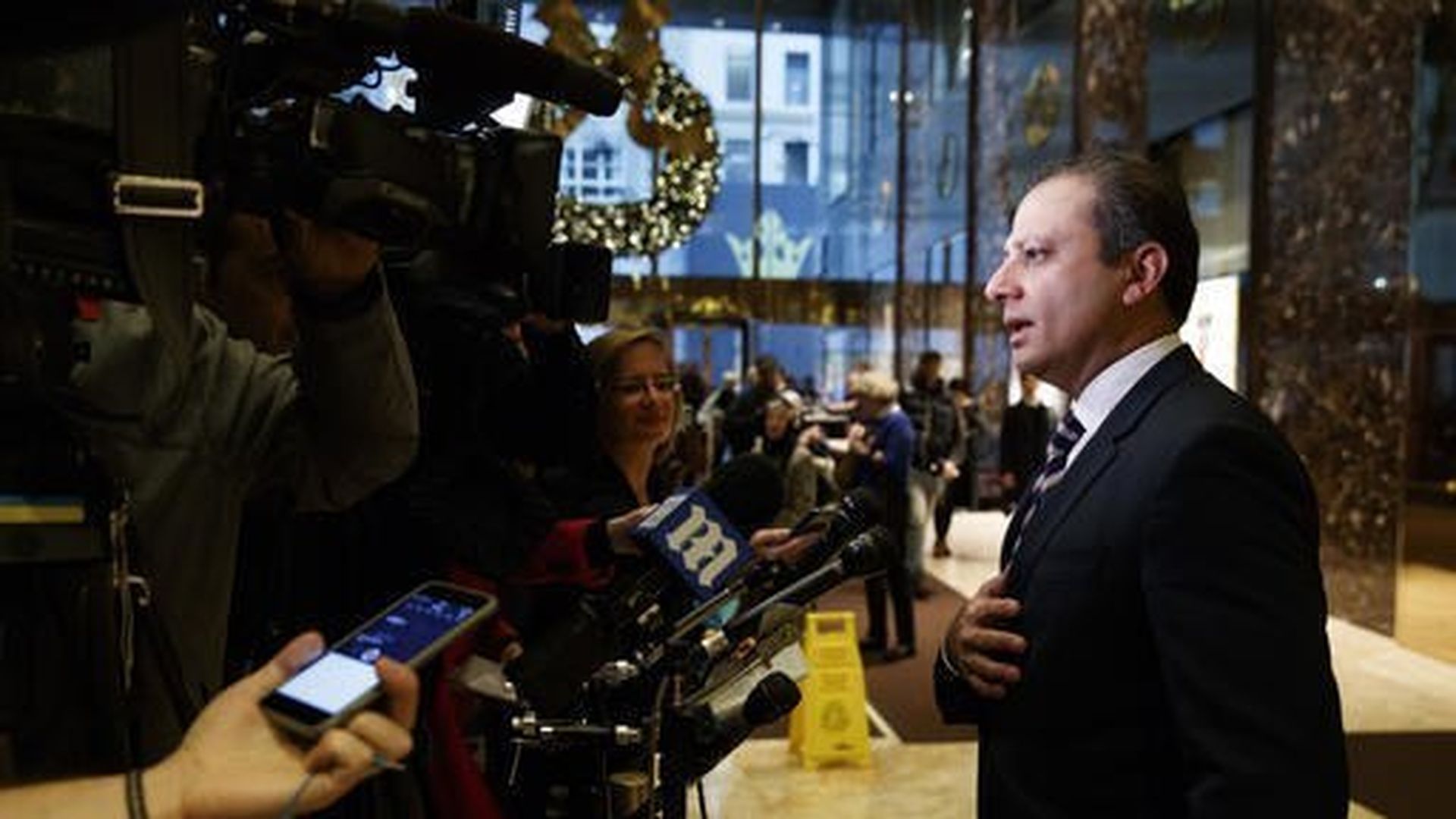
Why did Trump insiders instantly know that the "Sheriff of Wall Street," Preet Bharara of Manhattan, would be fired when he resisted President Trump's resignation order to all the holdover U.S. attorneys?
"Sheriff of Wall Street" Preet Bharara tweeted Saturday afternoon: "I was fired" That's certainly true, but the Trump administration says there's slightly more to the story. And in the backstory, we see how bland niceties are used to cloak raw politics.
It was Acting Deputy Attorney General Dana Boente who informed 46 federal prosecutors on Friday that President Trump wanted their resignations. So when the news popped Saturday that Bharara, the U.S. attorney for the Southern District of New York, was refusing to comply and was willing to be fired, Boente called him in the early afternoon.
"He refused to admit that this applied to him," an administration official said. "As we talked to him and tried to reinforce that it did, he basically said: 'I'm interpreting that to mean you're firing me.'"
Preet then tweeted: "I did not resign. Moments ago I was fired. Being the US Attorney in SDNY will forever be the greatest honor of my professional life."
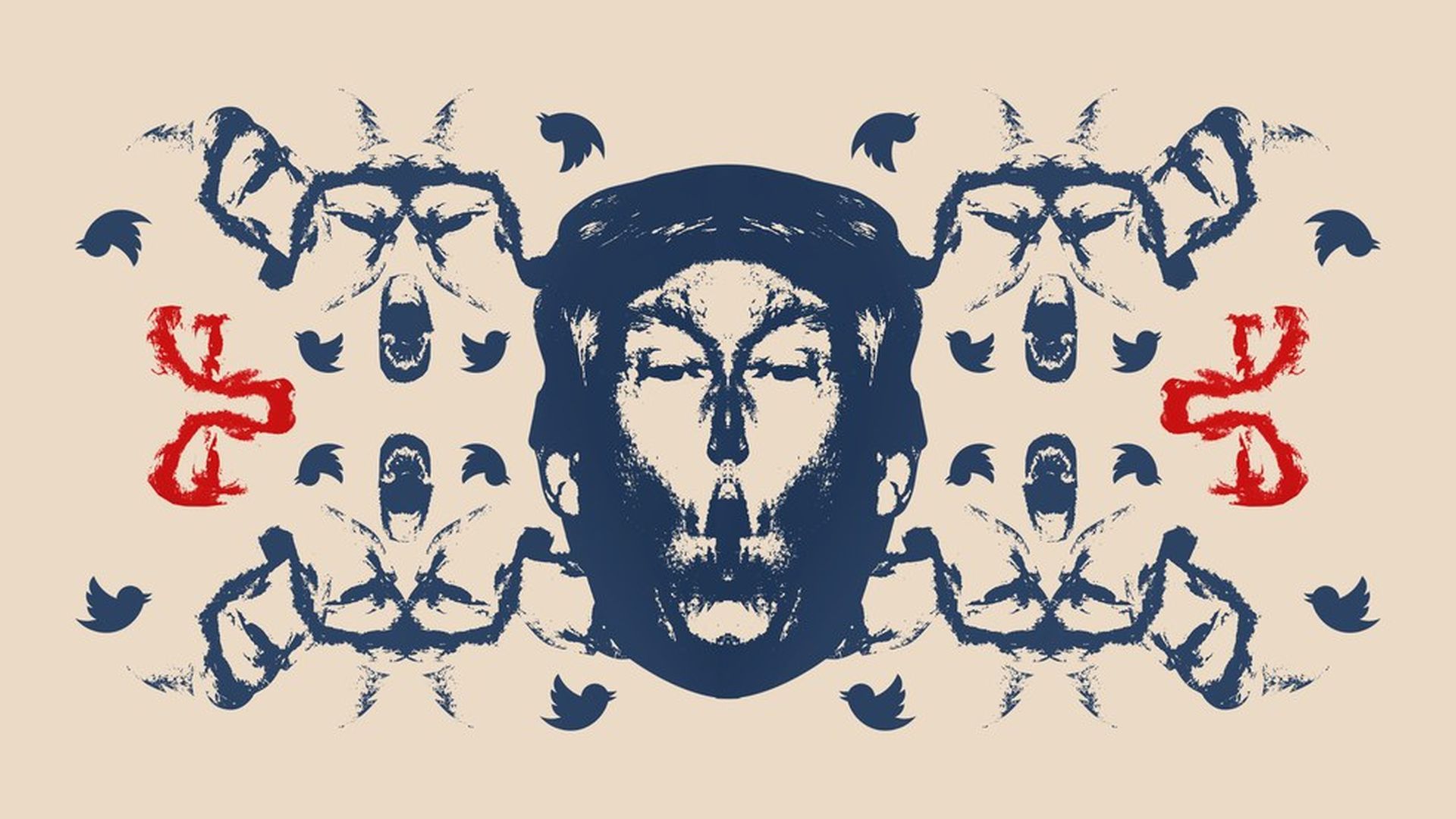
Like clockwork, President Trump fires off an incendiary tweet (or a series of them) and opposition voices caution others to not lose focus because "he tweets to distract."
I was a guest on the final segment of Greta Van Susteren's MSNBC show last night, along with historian Michael Beschloss. The three of us sat at her anchor desk and, along with the audience, watched a dizzying day-by-day montage of President Trump's first 50 days, deftly edited by Doug Maio.
Day 1: "carnage" ... Day 12: Gorsuch ... Day 14: Arnold ... Day 16: "so-called judge" ... Day 20: Nordstrom ... Day 30: Sweden ... Day 40: "The time for trivial fights is behind us" ... Day 44: wiretapping ... Day 50: jobs.
Remember how President Trump won the U.S. presidential election and pulled the U.S. out of Trans-Pacific Partnership negotiations? That could happen to the U.S., but as the other party this time.
The WSJ notes that Mexican presidential elections will be held next year, meaning that any NAFTA renegotiations will also be contingent on a potential deal surviving a potential transition of power with our neighbors to the south. Per the WSJ:
"The process is likely to stretch to the second half of next year," said Jaime Zabludovsky, a former Mexican official who helped negotiate Nafta in the early 1990s. "Trade talks risk becoming the piñata of Mexico's election."