Reproductive rights advocatesknow a new federal bill seeking to expand abortion access will face an uphill fight in Congress, but they hope it will spring communities of color to action.
Driving the news: The Abortion Justice Act, which calls for increased investments in reproductive care with the aim to better serve immigrants, people of color, and people who identify as LGBTQ+, was introduced Thursday by Rep. Ayanna Pressley (D-Mass.)
Racial disparities in food insecurity persist among low-income households that don't participate in the Supplemental Nutrition Assistance Program (SNAP), but not among those that do, according to a new study.
Why it matters: Food insecurity is considered a critical public health threat, and the new evidence suggests that SNAP can be an effective tool in minimizing inequities created by a lack of access to nutritious foods.
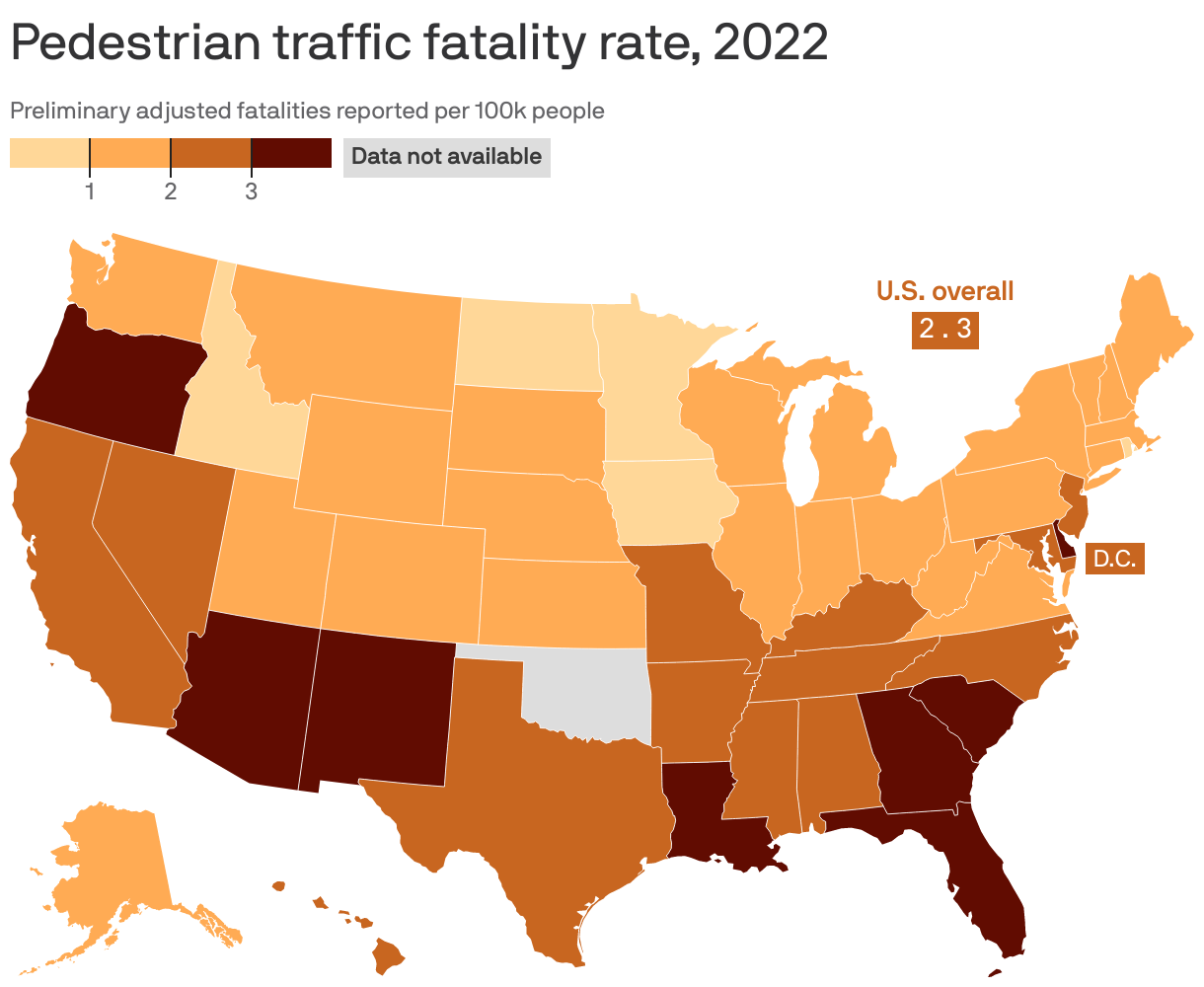
Slower speeds on major arterial, or feeder, roads could go a long way toward reducing the nationwide scourge of rising pedestrian deaths, a new study suggests.
Why it matters: Cars are safer than ever for passengers thanks to new assisted-driving technologies, but people outside of vehicles are increasingly being hit and killed.
Driving the news: Trump over the weekend said that the federal government had a "vital role" in opposing abortion, but wouldn't elaborate on what federal restrictions he'd support — a guarded stance for someone who's accustomed to defining the terms of intra-party debates.
Eli Lilly on Monday said its experimental weight loss drug retatrutide helped people lose as much as 24% of their weight over 48 weeks — the biggest reduction reported to date in clinical trials of obesity treatments.
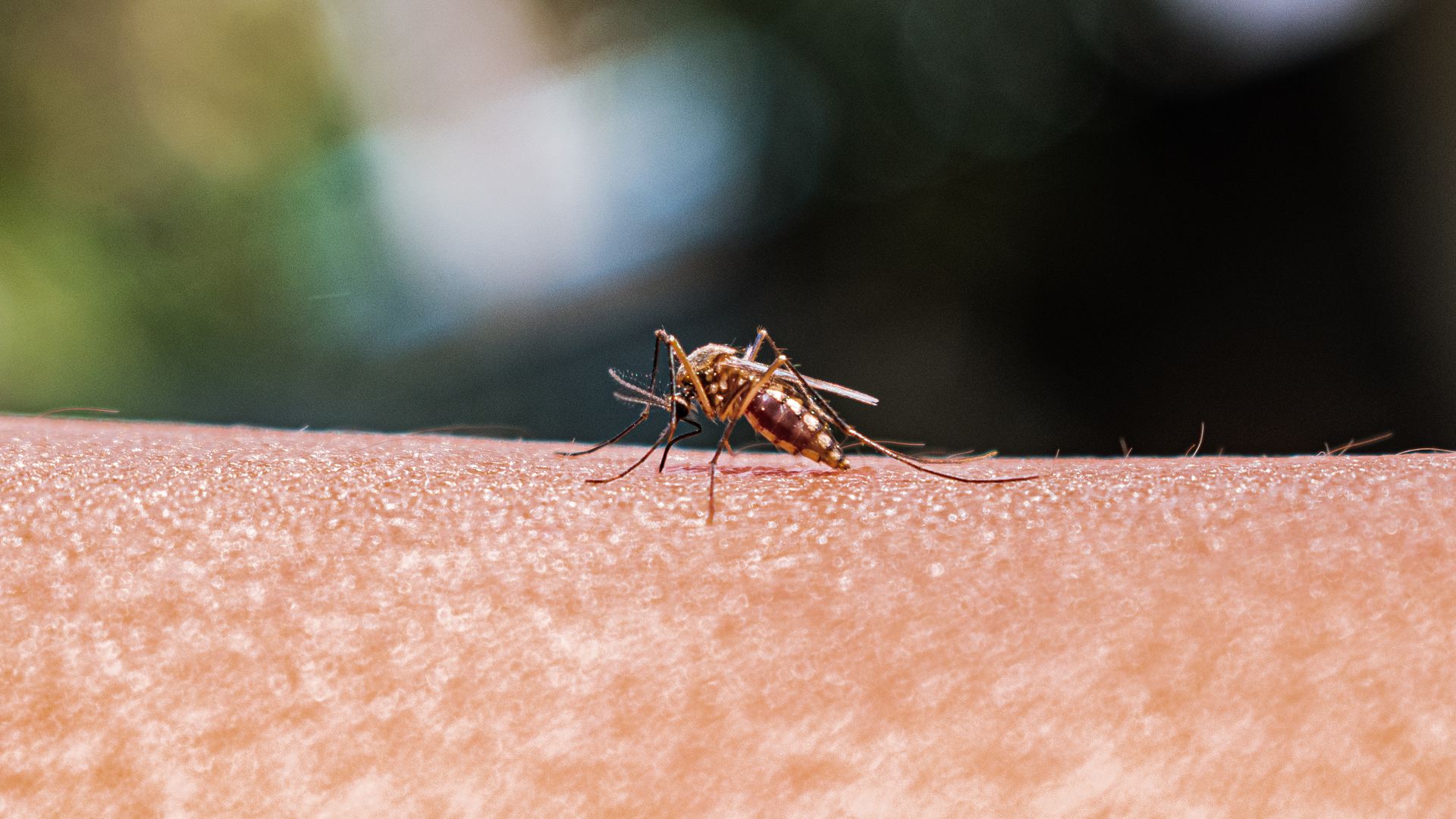
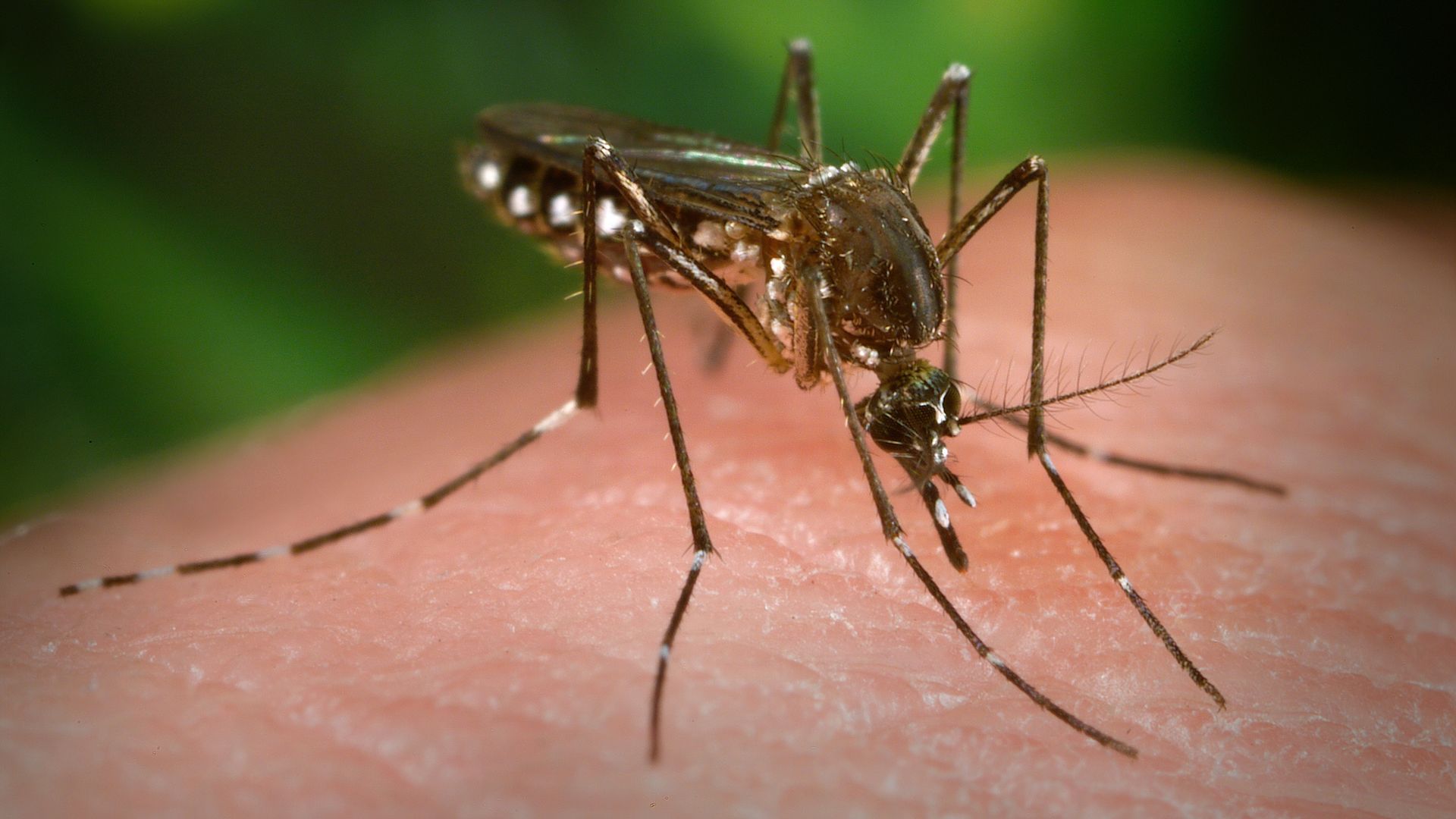
Malaria has been spread by mosquitos locally in the U.S. for the first time in 20 years, per a Centers for Disease Control and Prevention alert issued Monday.
Driving the news: Four people in Sarasota County, Florida, and a person in Cameron County, Texas, contracted the potentially deadly disease over a period from late May to late June through local transmission, according to the CDC. "All patients have received treatment and are improving," per a CDC statement.
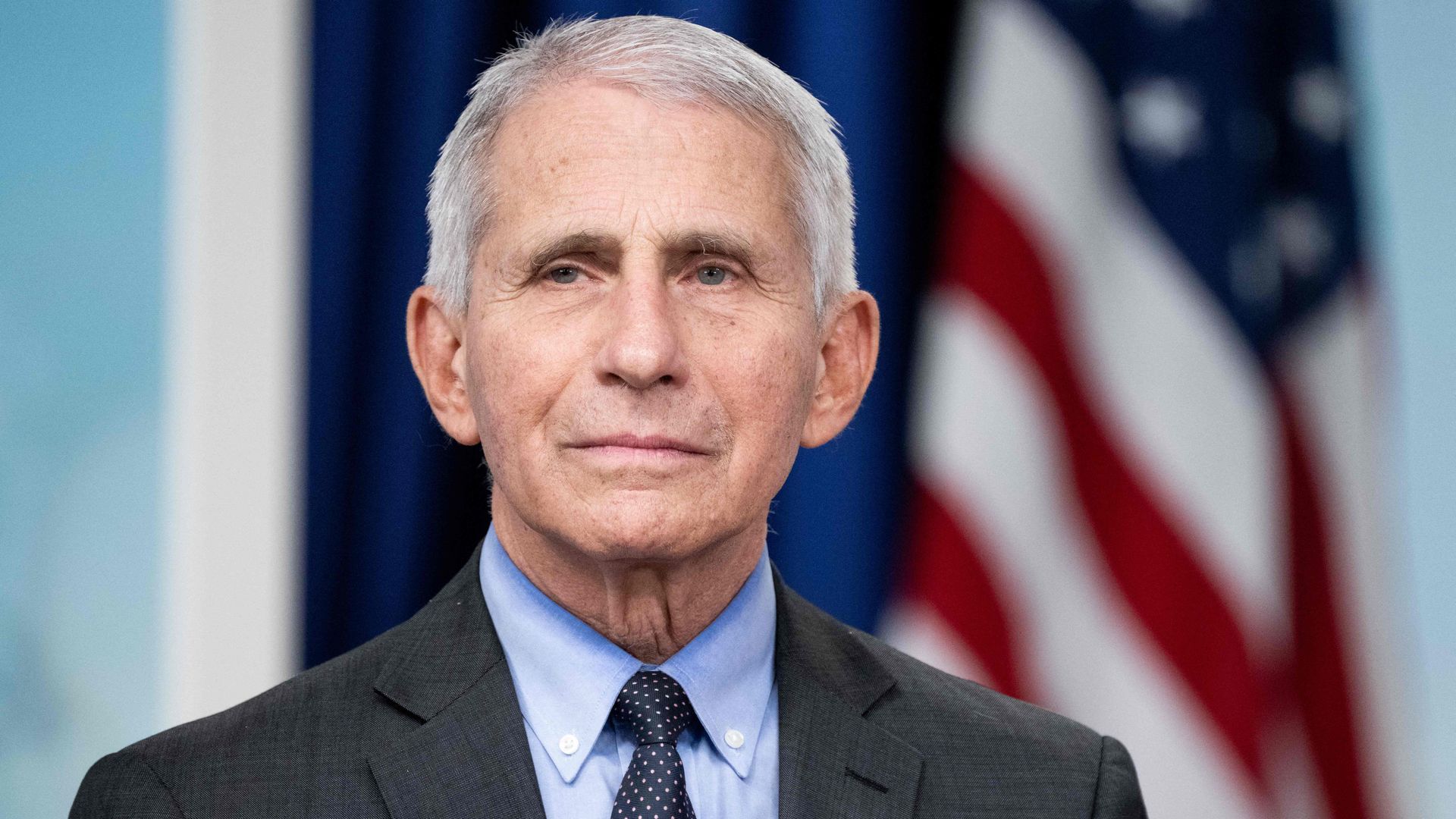
Former NIAID director Anthony Fauci will be joining the faculty at Georgetown University on July 1, the university announced Monday.
The big picture: Fauci's move to the university's School of Medicine and McCourt School of Public Policy comes after he stepped down from the NIH, where he served the government for over 50 years and advised seven presidents on health crises ranging from Ebola to COVID-19.
Health care workers who served on the front lines of the pandemic and suffered record levels of burnout are beginning to feel more optimistic about the medical profession, according to a Morning Consult poll shared first with Axios.
Why it matters: While there are still plenty of stressors, from misinformation to labor shortages, caseloads within inpatient settings have largely normalized.
The findings may also indicate that health workers believe they've gained some negotiating power coming out of the public health emergency, Ricky Zipp, a senior analyst at Morning Consult covering health, told Axios.
What they're saying: The pandemic "put issues in the health care system in the spotlight. We heard a lot about hospital staffing shortages. I don't know that before that a lot of everyday people were thinking in those terms about it," Zipp said.
"[Health care workers] were optimistic that this moment did provide leverage," he said. "There are a lot of challenges ahead, but multiple people I talked to were optimistic something can get done here and while the workers and companies are on opposing sides, there is some understanding that, particularly shortages do need to be addressed because they have such complicated ripple effects."
By the numbers: Nearly 3 in 5 health care workers said they are optimistic about the future of the medical industry.
3 in 5 said they have been mostly able to handle the stressors of work in the past six months.
Yes, but: Beyond staffing shortages and wage disputes, some hospitals are making cuts due to a rebalancing of patient volumes to new settings.
The poll indicated plenty of health workers still feel overwhelmed on the job, with 1 in 3 saying they've struggled to cope with the stressors of work in the past six months.
About 4 in 10 said they felt energized by the demands of their work in the past six months while roughly the same said they felt defeated. About half of those who said they felt defeated also said they have been affected by staff shortages.
The bottom line: About 3 in 5 health care workers said their facilities are capable of moving beyondthe end of the public health emergency declaration and have an appropriate amount of PPE. More than half said their hospitals are prepared to handle future surges.
This is notable as health care workers polled during much of the pandemic voiced worries that their facilities wouldn't be prepared for future surges.
The National Institutes of Health awarded $50 million to create five new centers to research how to improve cancer outcomes in low-income areas, officials tell Axios.
Why it matters: Patients in communities where 20% or more of the population has lived below the federal poverty line for the past 30 years often have higher cancer incidence, delays in diagnosis and treatment, and are more likely to die from the disease.
California and New York are among the states that are heightening scrutiny of health care mergers, by giving attorneys general the ability to block deals or creating new processes to review whether certain acquisitions could drive up costs or lead to the elimination of services.
Why it matters: The activity could augment the work of the Justice Department and Federal Trade Commission, which are increasingly focused on anticompetitive behavior in the sector but usually limits merger reviews to deals valued at more than $101 million.
Federal regulators are laying out guidance for psychedelic drug trials for the first time, in a move that could encourage the mainstreaming of substances like magic mushrooms and LSD as behavioral health treatments.
Why it matters: Psychedelics are turning into a multi-billion industry and gaining widespread acceptance after decades of concerns about recreational use of the products — and the high risk formisuse. But research to date has largely been backed by private sponsors.
Whoever is in the White House in 2025 will quickly face a series of legislative deadlines with impossible price tags: $3.6 trillion in tax cuts and $350 billion in Affordable Care Act subsidies are expiring — and that's after the debt limit will need to be addressed again.
Why it matters: The deadlines could force political horse-trading of epic proportions. Alternatively, gridlock or alarm over the nation's debt may lead to Americans seeing higher taxes and fewer benefits.