The Department of Veterans Affairs was more likely to deny disability health benefits to Black veterans than their white counterparts, according to a new government data analysis.
By the numbers: In fiscal year 2023, 84.8% of Black veterans who applied for physical or mental health benefits were granted assistance, compared to 89.4% of white veterans, the VA found.
Pedestrian deaths in the U.S. are the highest they've been in 40 years, in part because Americans are buying bigger cars that are more likely to kill cyclists or pedestrians in a crash.
By the numbers: Drivers struck and killed at least 7,500 pedestrians last year, according to new estimates from the Governors Highway Safety Association, a nonprofit organization focused on road safety
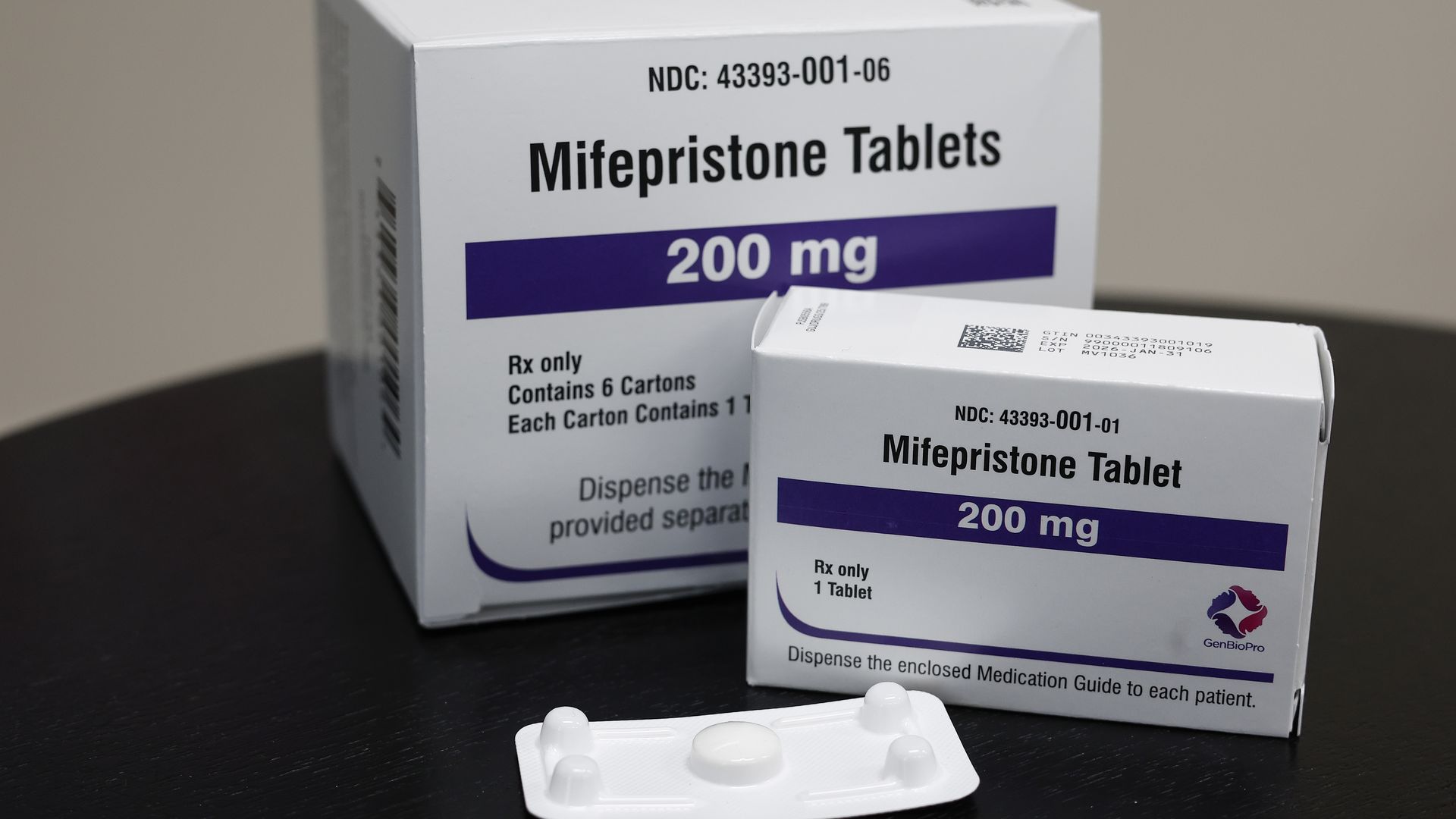
President Biden on Friday will sign an executive order aimed at expanding free access to contraception on the eve of the one-year anniversary of the Supreme Court's Dobbs ruling.
The big picture: This is Biden's third reproductive health-related executiveorder since Roe v. Wade was overturned last June and the first not to address abortion access.
In the year since the Supreme Court's Dobbs ruling, Planned Parenthood Minnesota's clinics have performed more abortions on out-of-state patients, along with more second-trimester abortions that are typically outlawed by conservative-led states, officials say.
Why it matters: Minnesota is one of at least a dozen states that have passed laws to accommodate out-of-state patients — becoming safe havens to non-residents trying to access the procedure while grappling with increased demand later in pregnancies.
Medical associations say state abortion restrictions adopted in the wake of the Supreme Court's Dobbs decision have restricted access not only to reproductive care, but "unrelated" health care treatments as well, according to a report from six Senate Democrats.
Why it matters: CongressionalDemocrats have been trying to bring abortion back to the fore of political discourse as the one-year anniversary of the landmark Supreme Court ruling overturning Roe v. Wade approaches.
3M has struck a $10.3 billion settlement with U.S. cities and towns over claims of water pollution from "forever chemicals," the chemical and manufacturing company announced Thursday.
Why it matters: The settlement in the per- and polyfluoroalkyl substances (PFAS) case that'd be paid over a 13-year period marks a major step in efforts to curb the threat of the chemicals that've been linked to health problems, and which were found to have contaminated drinking water systems.
Medicare could soon cover innovative new medical devices while more evidence on their effectiveness and safety is gathered.
Why it matters: The policy, proposed by the Biden administration Thursday, aims to improve Medicare patients' access to new technologies while filling gaps in research on the technologies.
It takes almost five years on average for new medical devices to get national Medicare coverage, according to a 2022 survey of industry players.
Catch up quick: In the final days of the Trump administration, regulators approved a policy that allowed four years of national Medicare coverage for breakthrough devices and diagnostic products.
The Biden administration scrapped the rule soon after taking office, noting that FDA-approved devices may not automatically be suitable for Medicare beneficiaries, and saying the devices needed more evaluation than the Trump-era pathway required.
How it works: If the new policy is finalized, manufacturers could nominate devices the Food and Drug Administration views as breakthrough products for short-term coverage.
Devices accepted will undergo a literature review on strengths and weaknesses of their available evidence.
Following the review, the manufacturer will make an evidence development plan to fill any gaps and make sure the device meets standards of coverage for the Medicare population.
The Centers for Medicare and Medicaid Services said it will work with manufacturers to make sure the coverage pathway doesn't duplicate or conflict with requirements the FDA already lays out for post-market surveillance.
CMS estimates temporary coverage will typically last three to five years, but said timelines will vary based on how long it takes to generate proper evidence for regular coverage.
When temporary coverage ends, CMS will reconsider the device's status. Regulators at that point can opt to cover the product with or without more evidence, or not to cover the product. They can also defer the decision to local contractors.
The intrigue: Coverage decisions based on future studies to show products' real world effectiveness might ring a bell.CMS's use ofconditional coverage for accelerated-approval Alzheimer's drugs has stirred up controversy over the last few years.
Be smart: Device manufacturers have long pushed for a predictable Medicare coverage pathway for innovative products, and communicated with CMS during the rulemaking process.
What they’re saying: “[W]e are pleased that CMS recognizes the need to improve the coverage process for seniors,” Scott Whitaker, president and CEO of the medical device industry trade group AdvaMed, said in a statement to Axios. “We continue to believe that immediate coverage of FDA approved technologies represents the best path forward.”
What we’re watching: House Energy and Commerce Committee Chair Cathy McMorris Rodgers (R-Wash.) said at the Medical Device Manufacturers Association meeting in April that she wanted to see the revamped CMS rule before advancing legislation on the issue.
Both Democrats and Republicans have pushed the Biden administration to issue a new Medicare coverage policy for breakthrough devices.
Reps. Suzan DelBene (D-Wash.) and Brad Wenstrup (R-Ohio) reintroduced legislation in March to ensure FDA-designated breakthrough devices automatically get four years of Medicare coverage.
What's next: Stakeholders now have 60 days to comment on the policy.
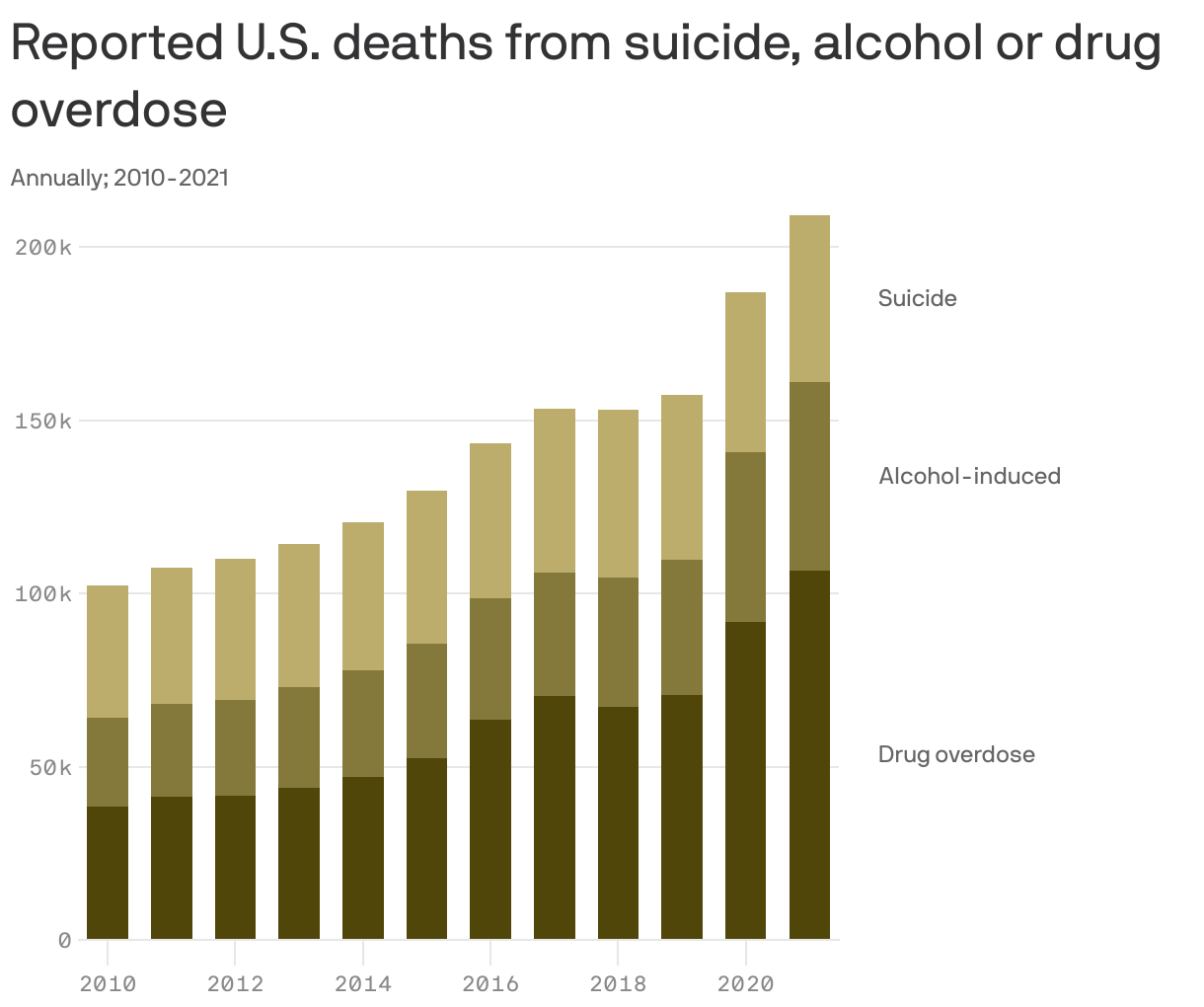
An increase in suicides, drug overdoses and alcohol-induced deaths combined with an increase of people dying from treatable conditions led to historically high rates of premature deaths nationwide from 2019 to 2021,according to a new Commonwealth Fund Scorecard on State Health System Performance.
The big picture: Both health care access and life expectancy declined in the U.S. during that time despite record-low uninsured rates.
Florida's bans on Medicaid coverage of gender-affirming health care amount to "invidious discrimination" and were politically motivated, a federal judge ruled Wednesday.
Why it matters: U.S. District Judge Robert Hinkle declared the rules are unconstitutional and violate federal law. That means that all transgender Floridians who qualify for Medicaid should now be able to seek coverage of their gender-affirming care, plaintiff's attorney Simone Chriss told Axios.
Frozen fruit products sold at major retailers including Walmart, Target, Whole Foods Market, Aldi and Trader Joe’s stores are being recalled for potential Listeria monocytogenes contamination.
Why it matters: It’s the second major recall hitting frozen fruit this month. Frozen strawberries sold at Walmart, Costco and HEB stores were recalled after being linked to a Hepatitis A outbreak.
The top lobbying organization for the pharmaceutical industry yesterday filed the fourth lawsuit challenging Democrats' law that gives Medicare the power to negotiate the prices of certain drugs, this time in a Texas district court.
Why it matters: More lawsuits give the industry more opportunities for success. And filing in this particular court means the case would run through the staunchly conservative 5th Circuit Court of Appeals.