Biden to sign executive order to expand free birth control access

Add Axios as your preferred source to
see more of our stories on Google.
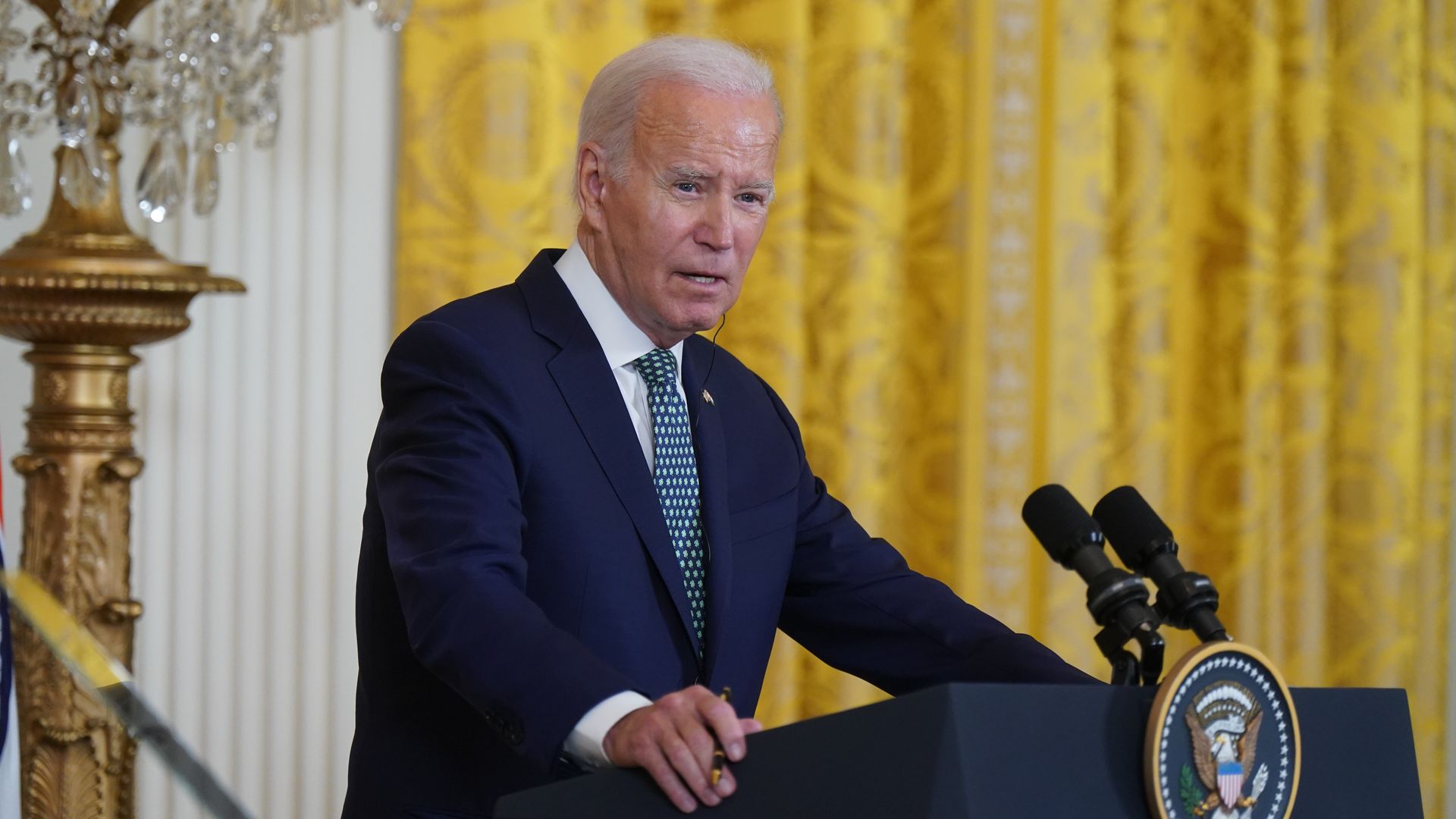
Photo: Al Drago/Bloomberg via Getty Images
President Biden on Friday will sign an executive order aimed at expanding free access to contraception on the eve of the one-year anniversary of the Supreme Court's Dobbs ruling.
The big picture: This is Biden's third reproductive health-related executive order since Roe v. Wade was overturned last June and the first not to address abortion access.
- Jennifer Klein, director of the White House Gender Policy Council, told reporters that the order does not have a deadline for agencies to act, but that it shows how the executive branch is prioritizing the issue, per The Hill.
State of play: The order directs the Treasury, Labor and Health and Health and Human Services departments to consider new guidance to ensure that private health insurers cover all contraceptives approved by the Food and Drug Administration without cost-sharing.
- These departments also have to take action to "improve access to affordable over-the-counter contraception, including emergency contraception."
- HHS must evaluate how to improve coverage and payment of contraceptives for Medicare beneficiaries, particularly women of reproductive age with disabilities. The department must also consider encouraging federally-supported health care services to expand contraception availability through new guidance, technical assistance and training resources.
- Biden is also directing the Education Department to "convene institutions of higher education to share best practices and ways to make sure that students understand their options for accessing contraception," per a White House fact sheet.
Between the lines: FDA advisers last month unanimously endorsed making daily birth control pills available over-the-counter for the first time. A final decision from the agency is expected to come at some point this summer.
- Under federal law, health plans are encouraged, but not required, to cover over-the-counter birth control without cost-sharing.
- At least 13 states though require insurers to cover over-the-counter contraceptive methods like the morning-after pill.
Don't forget: Senate Democrats this week unsuccessfully tried to bring up reproductive health legislation, including a bill that would have written into law the right to use birth control.
- While the Dobbs decision struck down federal protections on abortion, a concurring opinion from Justice Clarence Thomas suggested the Supreme Court should revisit similarly-established cases, such as those guaranteeing access to contraception.
