As gun violence remains on the uptick in the U.S., experiences with gun-related incidents are also rising, according to a KFF survey.
What they found: One in five U.S. adults said they've personally been threatened with a gun, and one in six have personally witnessed someone being shot, per the survey.
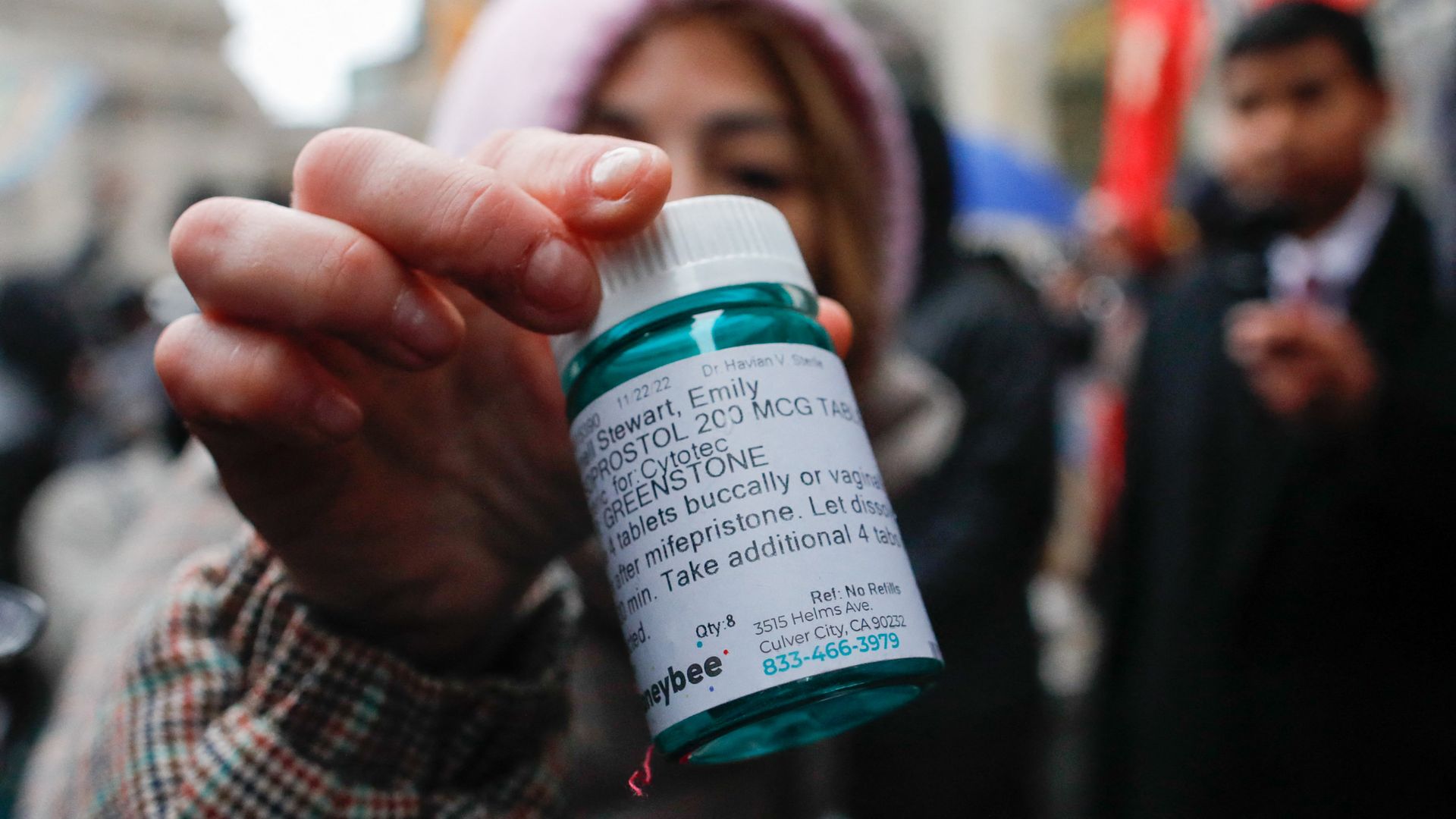
As the status of abortion pills in the U.S. remains in flux, a majority of Americans say they believe such medication should be legal, a Pew Research Center survey found.
What they found: 53% of adults believe medical abortion — the use of a prescription pill or a series of pills to end a pregnancy — should be allowed in their states.
Researchers are conducting what they call a first of its kind clinical trial to study how Hispanic and Black patients respond to a common medication for multiple sclerosis.
The big picture: Much remains unknown about MS, a chronic illness of the central nervous system, especially how it affects non-white people.
Drug and biotech companies are coming to the defense of the Food and Drug Administration and assailing a Texas court's ruling on abortion pills, saying it sets a dangerous precedent for undermining federaldrug approvals.
Why it matters: If the ruling is upheld, FDA decisions could be stayed by individual judges, injecting chaos into the regulatory process and creating new potential liabilities for manufacturers.
Hospitals are in line for a 2.8% pay increase, or $3.3 billion in additional funding in fiscal year 2024, under a proposed inpatient payment rule Medicare administrators released on Monday.
Why it matters: Hospital margins are finally starting to stabilize after what many called the worst year financially in 2022.
Reproduced from Pew Research Center; Chart: Axios Visuals
Doctors seldom ask their patients about whether they keep firearms at home or discuss gun safety with them, a new survey from the Kaiser Family Foundation found.
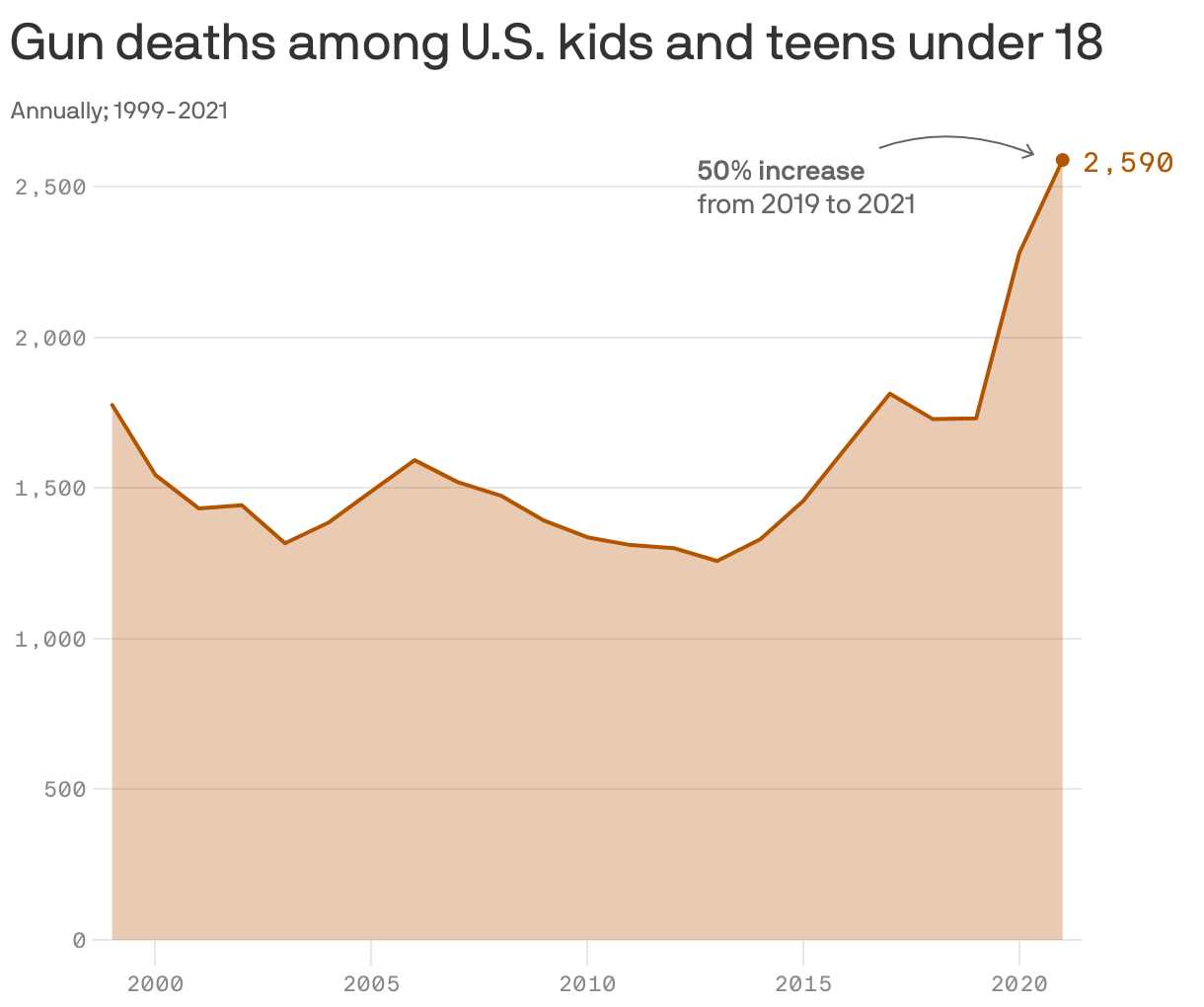
Why it matters: Gun deaths are steadily increasing among children and teens nationwide, and gun violence is the leading cause of premature death in the United States. Some professional medical groups consider it a public health crisis.
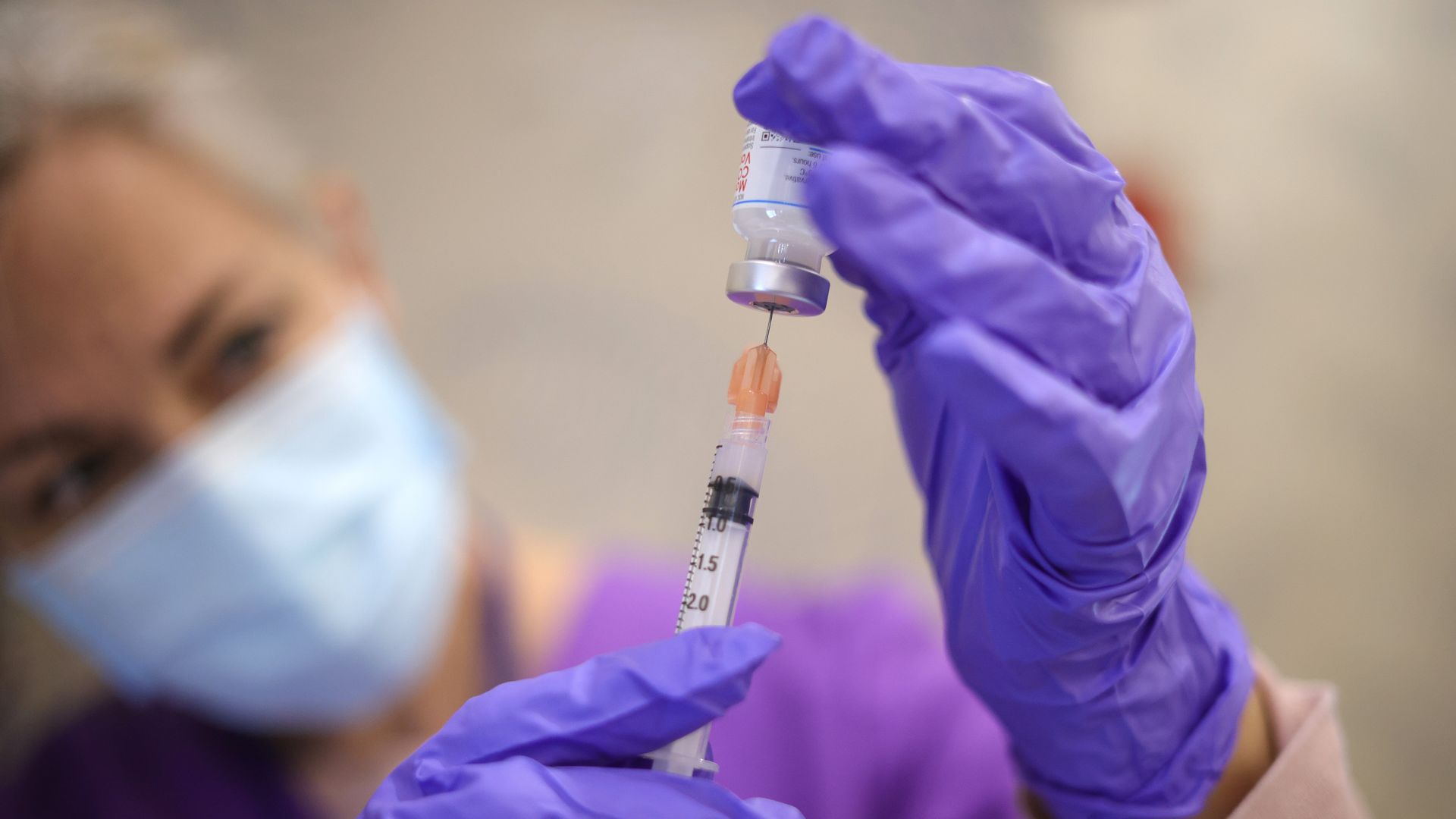
Why it matters: The initiative aims to create more durable protection in the face of a fast-changing virus and lackluster public interest in annual shots.
Reps. Alexandria Ocasio-Cortez (D-N.Y.) and Nancy Mace (R-S.C.) may be on the opposite ends of the spectrum when it comes to abortion rights, but on the conflicting rulings about abortion pills they agree: The Food and Drug Administration (FDA) should "ignore" a Texas federal judge's decision to halt the approval of abortion medication.
Why it matters: If that ruling stands, manufacturing, selling and distributing the abortion drug mifepristone will be outlawed — effectively creating a nationwide ban on abortion medication.
Driving the news: The appeal, filed in the conservative-leaning Fifth Circuit Court of Appeals, argues that the anti-abortion groups that submitted the initial case have no standing to bring the case and the Texas federal court ruling should be put on hold while the case moves forward.
House Democrats on Monday will introduce a bill affirming the Food and Drug Administration has the final say approvingdrugs used in medication abortion, in response to last week's Texas federal court ruling on abortion pills.
Why it matters: Legal experts say the decision staying the FDA's authorization of the widely used drug mifepristone could set a precedent allowing courts to define drug approval policy.
A federal judge's 67-page decision to roll back FDA approval of mifepristone repeatedly borrowed terms from antiabortion advocates, such as "chemical abortion," rather than the generally accepted terms used by the medical community.
Zoom in: In one example, a footnote in U.S. District Court Judge Matthew Kacsmaryk's ruling states "jurists often use the word 'fetus' to inaccurately identify unborn humans in unscientific ways. The word 'fetus' refers to a specific gestational stage of development, as opposed to the zygote, blastocyst, or embryo stages."
But, "centering the language on a future state of a pregnancy is medically inaccurate," according to the American College of Obstetricians and Gynecologists in an online language guide. "Through eight weeks after last menstrual period, 'embryo.' After that point until delivery, 'fetus.'"
What they're saying: "The language was really striking," Washington Post reporter Caroline Kitchener told CNN over the weekend. "Unborn human instead of fetus. Abortionist instead of abortion provider. It is really textbook from what you hear from the antiabortion movement. It really goes to the history of this judge … he has a long history of very antiabortion beliefs."
Between the lines: The decision also invokes multiple studies cited by the antiabortion plaintiffs which claim "the incidence of adverse events is 'fourfold higher' in chemical abortions when compared to surgical abortions," as well as claiming women who have abortions "often experience shame, regret, anxiety, depression, drug abuse, and suicidal thoughts because of the abortion."
Yes, but:In a 2022 letter to the FDA, ACOG and the American Medical Association both cited multiple studies demonstrating the safety of medication abortion.
A 2016 analysis by the University of California, San Francisco, found the overall mortality rate associated with medication abortion is 0.65 deaths per 100,000, compared to a rate of 0.7 deaths per 100,000 procedures of all abortions.
A 2012 study, which analyzed nearly 90 clinical trials, found that less than 0.3% of patients using medication abortion had serious complications requiring hospitalization.
A 2021 study found that safety and effectiveness of the pills prescribed via telemedicine were on par with those prescribed in a doctor’s office, with 0.7% requiring hospitalization and 0.4% requiring a blood transfusion.
Our thought bubble: For many, the language in the ruling casts doubts on Kacsmaryk's objectivity. But it also strays from offering accurate health information from some of the largest medical organizations in the nation.
Why it matters: The United States has the highest maternal mortality rate of developed countries, and the pandemic made it worse — in 2021, 1,205 women died of maternal causes, data from the CDC show, compared to 861 in 2020 and 754 in 2019.
Last week’s dueling court rulings on abortion pills are refocusing attention on what legal powers the Food and Drug Administration has over prohibited drugs — and when it can disregard a prohibition.
The big picture: If a Texas federal judge's ruling stands, and the abortion drug mifepristone no longer has FDA approval, then manufacturing, selling and distributing it will be outlawed.
Reproduced from Pew Research Center; Chart: Axios Visuals
The number of U.S. kids dying by gunfire keeps rising.
Stunning stat: Gun deaths among America’s kids rose 50% in the last two years, according to a new Pew Research Center report. More children and teens were killed by guns in 2021 than in any year since 1999, the first year the CDC began tracking the data.