A federal judge in Texas who struck down an Obamacare provision that requires employers to cover certain preventive services has repeatedly sought to undermine the landmark law.
The big picture: U.S. District Judge Reed O'Connor's ruling last month — which the Justice Department said Wednesday it will appeal — has far-reaching implications for millions of Americans' health plans.
The Biden administration on Wednesday will propose updating a landmark federal privacy law to address instances in which law enforcement targets patients seeking abortion pills and other reproductive care.
Driving the news: A proposed administrative change to HIPAA's privacy rules would block health plans and providers from disclosing protected health information regarding a patient's reproductive care.
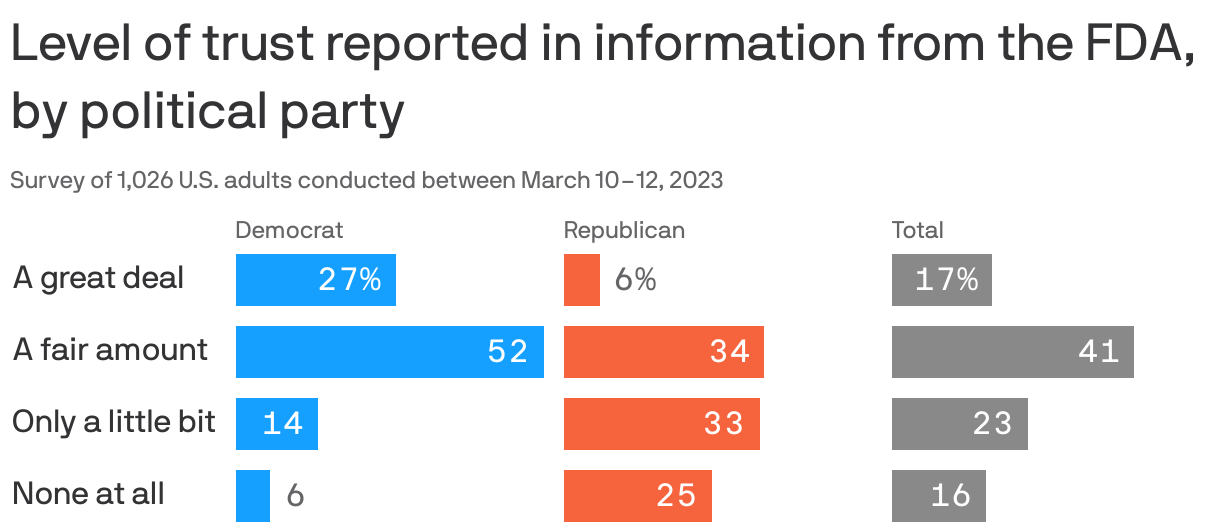
Why it matters: The ruling — which calls into question the drug's safety in a way at odds with scientific consensus — could further fuel skepticism about public health agencies that was fomented by anti-vaccine activists and amplified during the pandemic by misinformation about COVID vaccines.
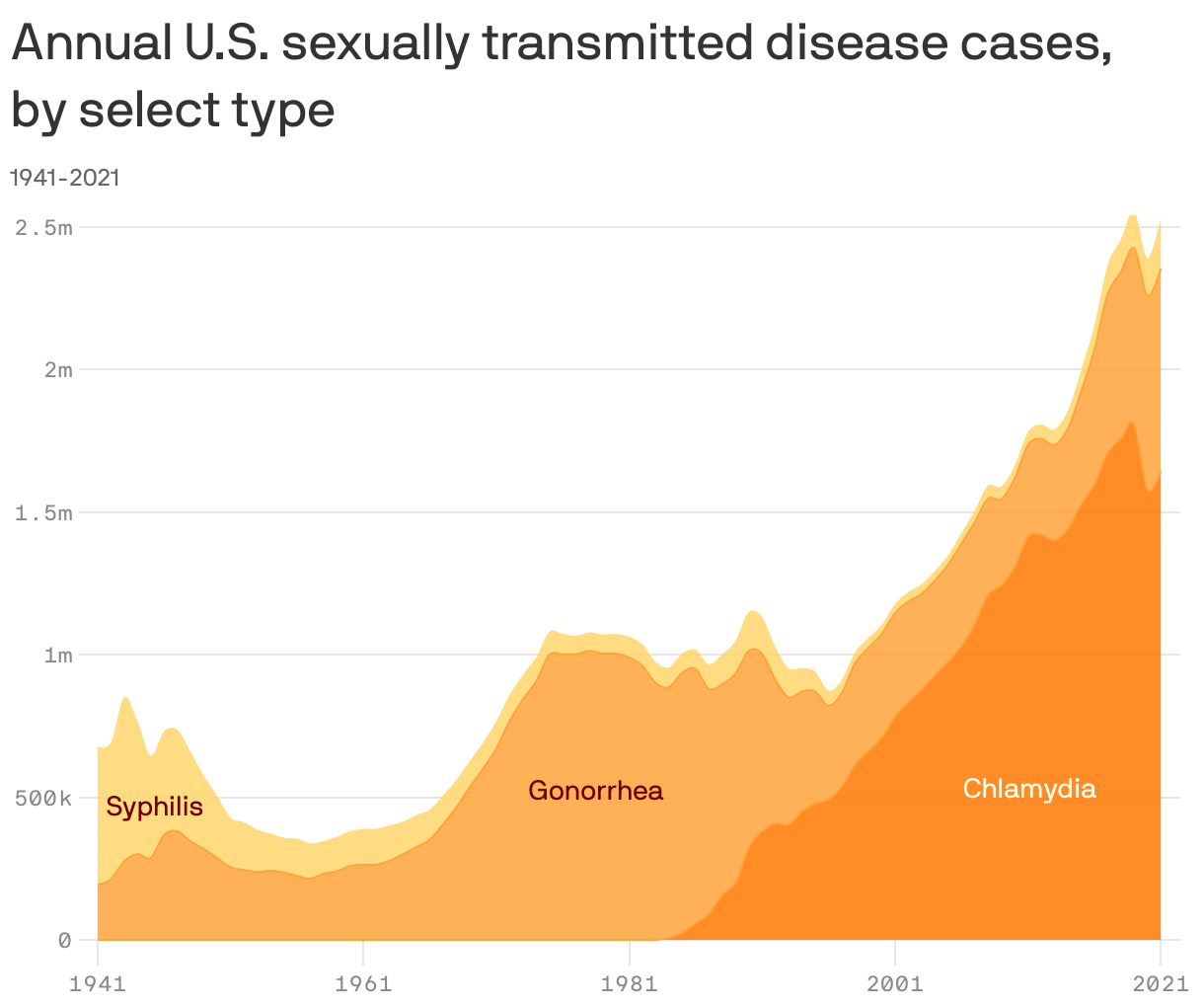
Chlamydia, gonorrhea and syphilis surged in the U.S. in the second year of the pandemic, reaching more than 2.5 million cases in 2021, the CDC said on Tuesday.
Why it matters: STI's have been on the rise since 2017 — and the number of syphilis cases recorded in 2021 was the highest in 70 years.
Technology barriers and payment policies have kept safety net clinics relying on audio-only telehealth for primary care and behavioral health when its use has declined elsewhere, according to a RAND study published in JAMA.
Why it matters: The findings raise questions about the quality of care and equity for low-income patients, researchers say, because the effectiveness of audio-only telehealth has not been established.
As gun violence remains on the uptick in the U.S., experiences with gun-related incidents are also rising, according to a KFF survey.
What they found: One in five U.S. adults said they've personally been threatened with a gun, and one in six have personally witnessed someone being shot, per the survey.
As the status of abortion pills in the U.S. remains in flux, a majority of Americans say they believe such medication should be legal, a Pew Research Center survey found.
What they found: 53% of adults believe medical abortion — the use of a prescription pill or a series of pills to end a pregnancy — should be allowed in their states.
Researchers are conducting what they call a first of its kind clinical trial to study how Hispanic and Black patients respond to a common medication for multiple sclerosis.
The big picture: Much remains unknown about MS, a chronic illness of the central nervous system, especially how it affects non-white people.
Drug and biotech companies are coming to the defense of the Food and Drug Administration and assailing a Texas court's ruling on abortion pills, saying it sets a dangerous precedent for undermining federaldrug approvals.
Why it matters: If the ruling is upheld, FDA decisions could be stayed by individual judges, injecting chaos into the regulatory process and creating new potential liabilities for manufacturers.
Hospitals are in line for a 2.8% pay increase, or $3.3 billion in additional funding in fiscal year 2024, under a proposed inpatient payment rule Medicare administrators released on Monday.
Why it matters: Hospital margins are finally starting to stabilize after what many called the worst year financially in 2022.
Reproduced from Pew Research Center; Chart: Axios Visuals
Doctors seldom ask their patients about whether they keep firearms at home or discuss gun safety with them, a new survey from the Kaiser Family Foundation found.
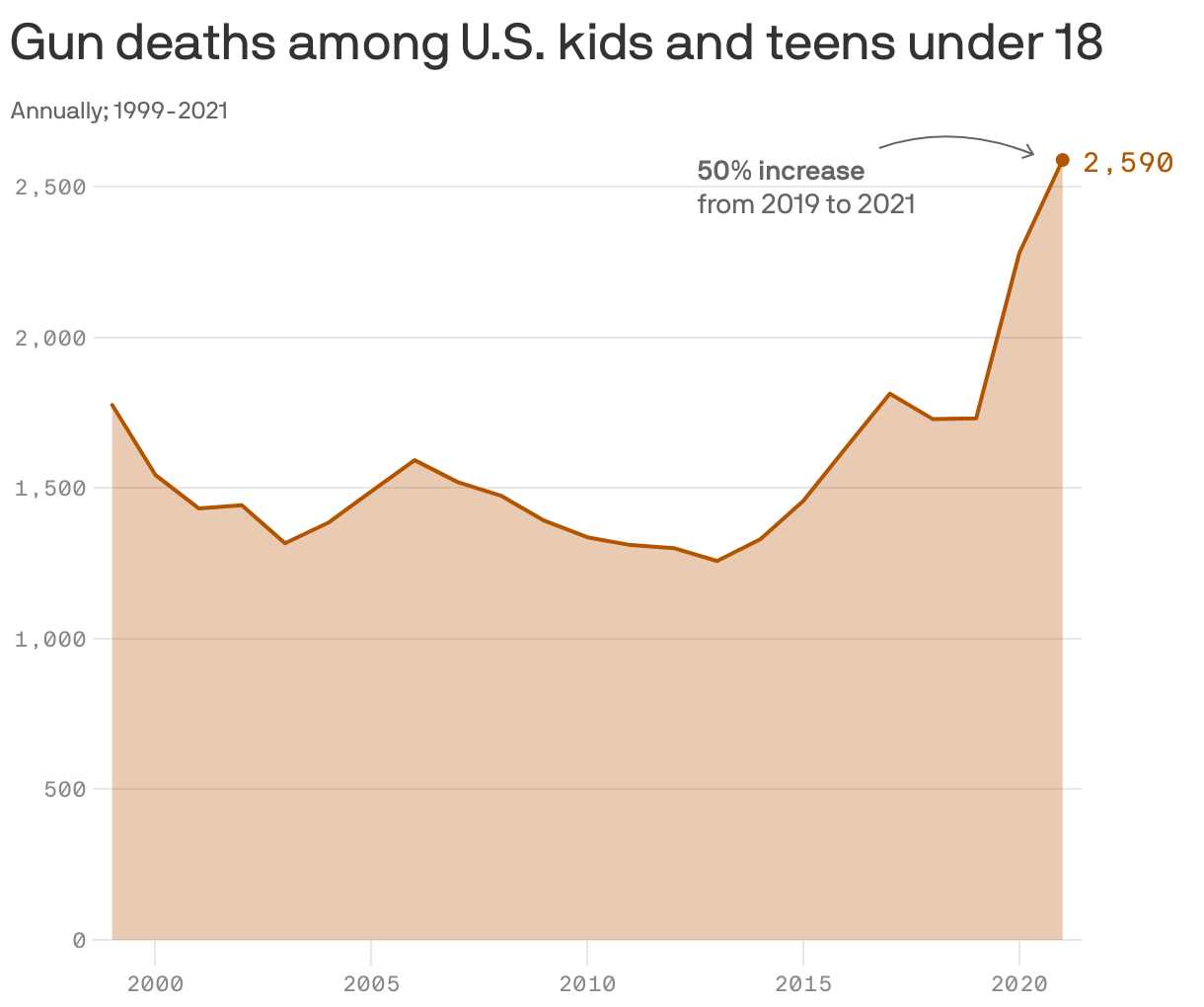
Why it matters: Gun deaths are steadily increasing among children and teens nationwide, and gun violence is the leading cause of premature death in the United States. Some professional medical groups consider it a public health crisis.