The House subcommittee probing the government's COVID response will hold a hearing in April about intelligence collected by the U.S. that could shed light on COVID's origins, Axios has learned.
Why it matters: The committee plans a series of hearings that will build a narrative arc about COVID origins — including intelligence, science and use of the media, a source familiar with committee leaders' thinking tells us.
The Justice Department on Friday appealed a federal judge's decision to invalidate the Affordable Care Act requirement for free coverage of specified preventive health services.
Why it matters: The move kicks off a legal process that could wind up at the Supreme Court and has financial implications for some 150 million Americans on employer-sponsored health plans.
A Medicare Advantage lobbying group that's emerged as the biggest political ad spender this year appears focused on prodding endangered Democratic incumbents in battleground states to turn back a package of Biden administration policy changes.
Better Medicare Alliance spent $13.5 million on media spots through March 31, according to data collected by AdImpact and shared with Axios. The group declined to comment.
The Idaho legislature on Thursday evening passed the nation's first law that makes it illegal for minors to travel out-of-state to get an abortion without parental consent. The bill now heads to the governor's desk.
Why it matters: This is the first time that a state has put a law on the books that restricts its residents from interstate travel for abortion access.
Thursday's federal court ruling against the Affordable Care Act's preventive services requirement won't bring a seismic shift to employer-sponsored health care. But experts say it could well add new costs for the approximately 100 million privately insured people who use such services.
The big picture: The ruling immediately removes a legal requirement of no-cost coverage for certain skin and lung cancer screenings, statins for heart disease, medications that prevent HIV and other services recommended by the U.S. Preventive Services Task Force, Axios' Adriel Bettelheim writes.
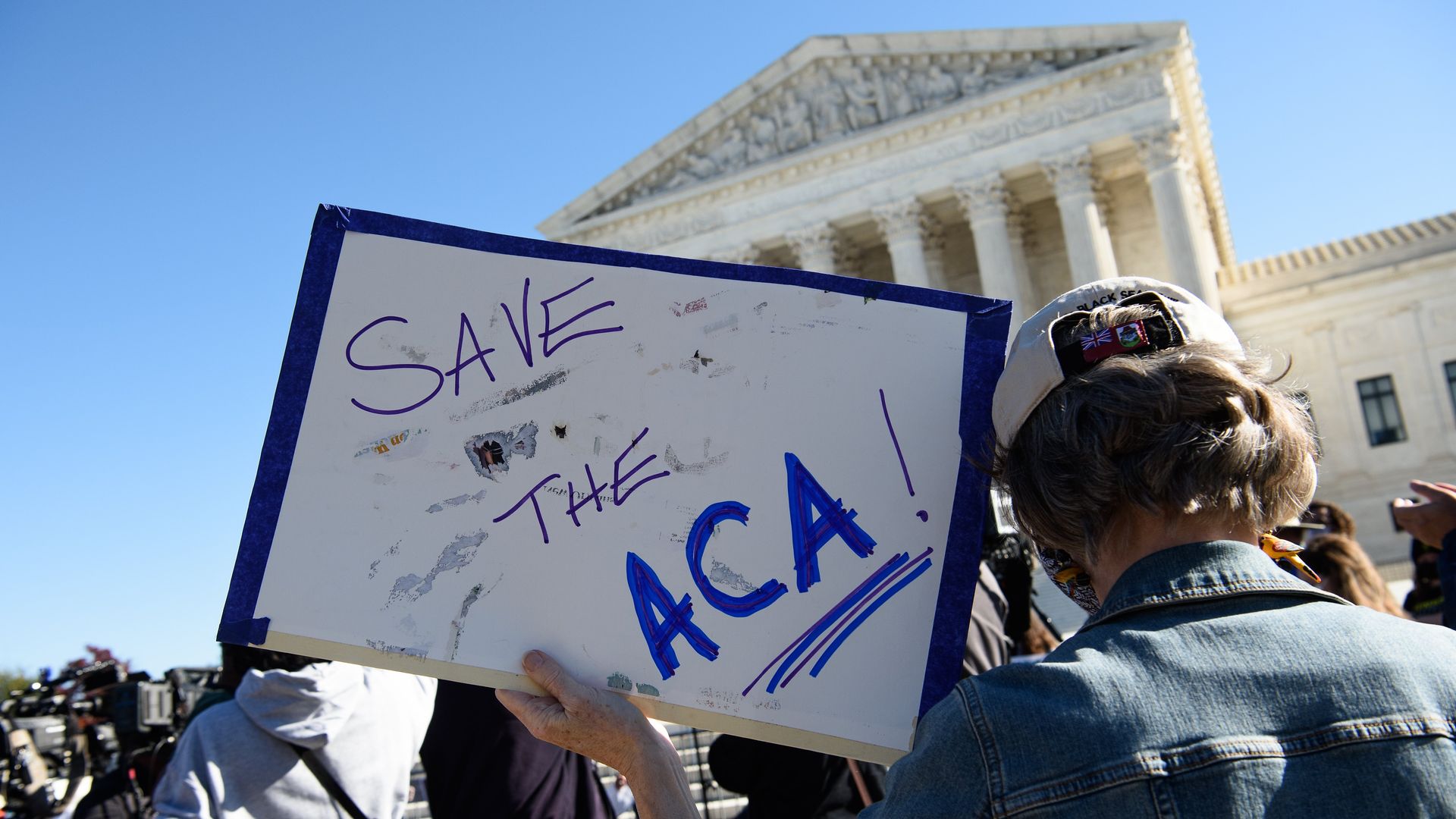
Democrats may hate the substance of yesterday's court ruling striking down elements of the Affordable Care Act — this time, its requirement that employers cover certain preventative care services. But politically, it feeds right into the party's 2024 campaign narrative.
Why it matters: Defending the ACA has been a tried-and-true strategy for Democrats since the GOP tried to repeal it in 2017. Judicial threats to the law easily fold into messaging about right-wing extremist judges that the party has been building on since the Supreme Court overturned the federal right to abortion.
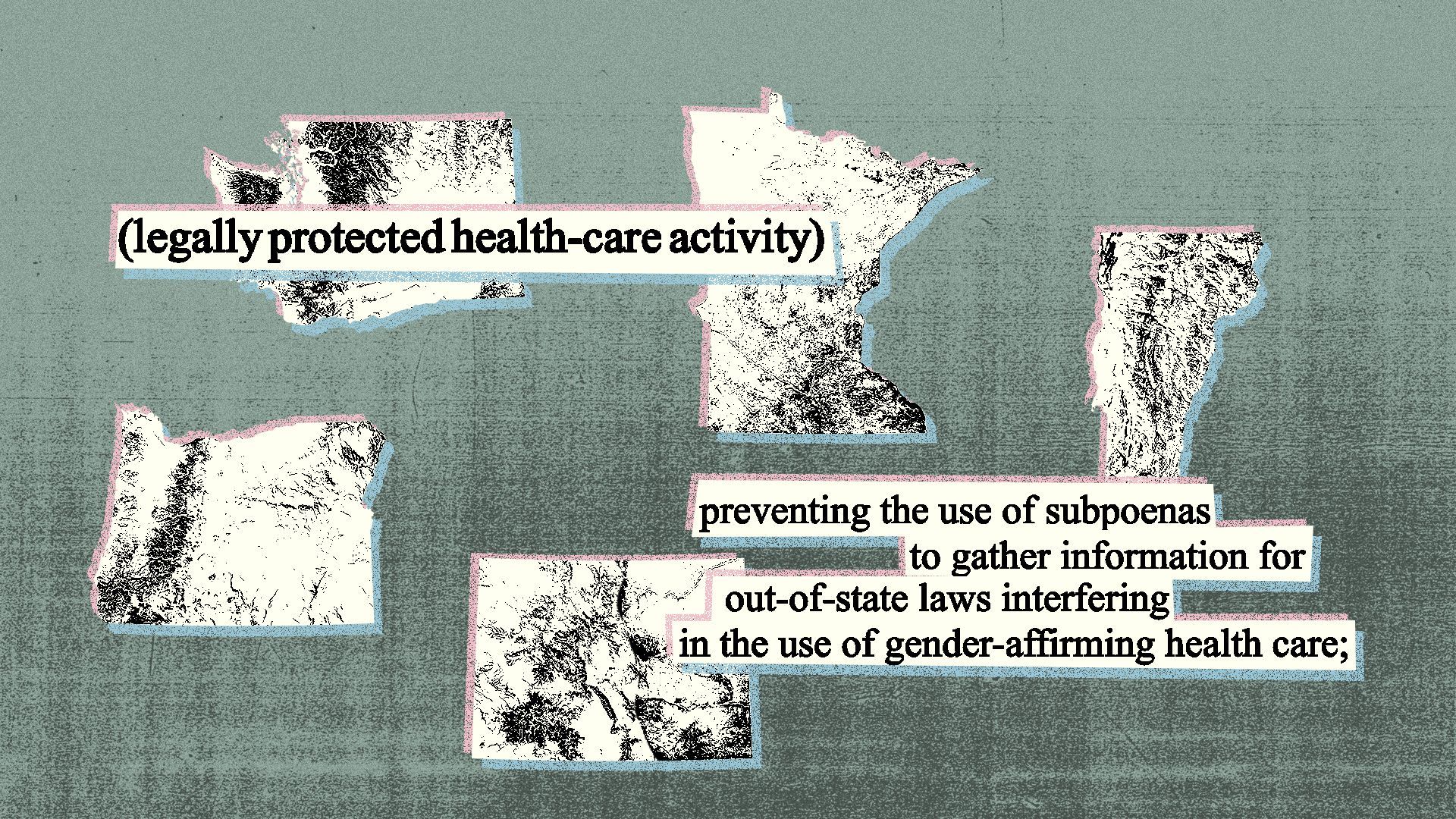
While Republican politicians in some states work to limit gender-affirming care for transgender young people, a number of Democratic-controlled legislatures are doing the opposite.
What's happening: Democratic lawmakers in more than a dozen states, including Colorado, Washington, Oregon, Minnesota and Vermont, want to shield patients and providers.
Medicaid coverage may soon end for millions of Americans as a pandemic-era rule nears its end.
The big picture: U.S. states will undergo a phased "unwinding" of coverage after years of Medicaid agencies being required under the COVID public health emergency to provide continuous Medicaid coverage to all enrollees, even if their eligibility changed.
ADHD med prescriptions for U.S. adults increased by more than 10% during the first year of COVID as telehealth's popularity and awareness of the condition grew, per a new government study.
Why it matters: The CDC’s report out Thursday is the latest insight into the “substantial spike” in demand for ADHD drugs, which has driven a months-long shortage linked to possible overprescribing.
Yes, but: Researchers say the reasons behind the surge are more complicated and could include widened access to care and the pandemic's mental health impact.
They also wrote that it points to an unrecognized public health need since ADHD is tied to higher suicide rates and health problems while being misunderstood among adults and women.
Women and older people with ADHD are also commonly under-identified and care for people in rural areas remains limited, meaning the jump in ADHD drug prescriptions could be late-identified cases, per the study.
Though researchers also acknowledged the potential for “inadequate ADHD evaluations and inappropriate stimulant prescribing” due to limited provider training and little research.
State of play: The pandemic-inspired policies allowing for telehealth dispensing of controlled substances like Adderall are already facing a federal crackdown to limit it with the Drug Enforcement Administration’s latest proposed rules.
The public comment period, which ends Friday, has spurred more than 26,000 statements — many in opposition to the DEA’s in-person prescribing requirement.
Others have written that the rules bring back the barriers to ADHD care that preventing them from seeking treatment earlier.
Why it matters: The ruling has major implications for the more than 150 million Americans on employer-sponsored health plans and could put millions on the hook financially for certain skin and lung cancer screenings, statins for heart disease, medications that prevent HIV and other services recommended by the U.S. Preventive Services Task Force.
Venture capital firm EQT Life Sciences yesterday announced the close of its debut LSP Dementia Fund, with €260 million in capital commitments.
Why it matters: This is the first dementia-focused fund ever raised entirely by a European VC firm, although there was an earlier one in 2013 that was partially formed and funded by various governments.
The FDA's approval of the first over-the-counter opioid treatment Wednesday could help prevent surging U.S. drug overdoses, which have been linked to more than 100,000 deaths annually in recent years.
Driving the news: The move to approve overdose-reversing Narcan, the best-known version of naloxone, should increase access but also comes with risk, Keith Humphreys, a professor and addiction expert at Stanford University, told Axios.
Uber Health is moving to further embed itself into health care delivery by allowing doctors and other providers to arrange to have prescriptions dropped off the same day at their patients' homes.
Why it matters: Getting patients to adhere to schedules for taking drugs has long been an Achilles heel in health care, particularly amid the shift to value-based care models, in which providers make more money by keeping people out of hospitals.
West Virginia became the latest state to ban gender-affirming care for transgender youth after Republican Gov. Jim Justice signed the legislation into law on Wednesday, per AP.
The big picture: At least 10 other states have enacted restrictions on gender-affirming treatments for minors even though major medical groups consider this type of care medically necessary and potentially lifesaving for trans youth.