Thursday's health stories

How to renew Medicaid as coverage cliff approaches

Medicaid coverage may soon end for millions of Americans as a pandemic-era rule nears its end.
The big picture: U.S. states will undergo a phased "unwinding" of coverage after years of Medicaid agencies being required under the COVID public health emergency to provide continuous Medicaid coverage to all enrollees, even if their eligibility changed.

ADHD drug prescriptions among adults soared in COVID's first year

ADHD med prescriptions for U.S. adults increased by more than 10% during the first year of COVID as telehealth's popularity and awareness of the condition grew, per a new government study.
Why it matters: The CDC’s report out Thursday is the latest insight into the “substantial spike” in demand for ADHD drugs, which has driven a months-long shortage linked to possible overprescribing.
Yes, but: Researchers say the reasons behind the surge are more complicated and could include widened access to care and the pandemic's mental health impact.
- They also wrote that it points to an unrecognized public health need since ADHD is tied to higher suicide rates and health problems while being misunderstood among adults and women.
- Women and older people with ADHD are also commonly under-identified and care for people in rural areas remains limited, meaning the jump in ADHD drug prescriptions could be late-identified cases, per the study.
- Though researchers also acknowledged the potential for “inadequate ADHD evaluations and inappropriate stimulant prescribing” due to limited provider training and little research.
State of play: The pandemic-inspired policies allowing for telehealth dispensing of controlled substances like Adderall are already facing a federal crackdown to limit it with the Drug Enforcement Administration’s latest proposed rules.
- The public comment period, which ends Friday, has spurred more than 26,000 statements — many in opposition to the DEA’s in-person prescribing requirement.
- Others have written that the rules bring back the barriers to ADHD care that preventing them from seeking treatment earlier.

Judge strikes down free HIV drugs, other preventive services under ACA

A federal judge in Texas ruled Thursday that employers can't be required to cover specified preventive health care services under the Affordable Care Act.
Why it matters: The ruling has major implications for the more than 150 million Americans on employer-sponsored health plans and could put millions on the hook financially for certain skin and lung cancer screenings, statins for heart disease, medications that prevent HIV and other services recommended by the U.S. Preventive Services Task Force.

Venture capital fund formed to focus on dementia treatment startups

Venture capital firm EQT Life Sciences yesterday announced the close of its debut LSP Dementia Fund, with €260 million in capital commitments.
Why it matters: This is the first dementia-focused fund ever raised entirely by a European VC firm, although there was an earlier one in 2013 that was partially formed and funded by various governments.

What to know about Narcan after FDA approved over-the-counter sale

The FDA's approval of the first over-the-counter opioid treatment Wednesday could help prevent surging U.S. drug overdoses, which have been linked to more than 100,000 deaths annually in recent years.
Driving the news: The move to approve overdose-reversing Narcan, the best-known version of naloxone, should increase access but also comes with risk, Keith Humphreys, a professor and addiction expert at Stanford University, told Axios.

Uber Health expands same-day prescription drug delivery

Uber Health is moving to further embed itself into health care delivery by allowing doctors and other providers to arrange to have prescriptions dropped off the same day at their patients' homes.
Why it matters: Getting patients to adhere to schedules for taking drugs has long been an Achilles heel in health care, particularly amid the shift to value-based care models, in which providers make more money by keeping people out of hospitals.


Kentucky, West Virginia latest states to step up anti-trans push

West Virginia became the latest state to ban gender-affirming care for transgender youth after Republican Gov. Jim Justice signed the legislation into law on Wednesday, per AP.
The big picture: At least 10 other states have enacted restrictions on gender-affirming treatments for minors even though major medical groups consider this type of care medically necessary and potentially lifesaving for trans youth.
CVS Health expands to the home with $8B Signify Health deal

With its $8 billion acquisition of medical services provider Signify Health in the books, CVS Health is expanding its footprint into home health, CEO Karen Lynch said Wednesday at Axios' What's Next Summit.
Why it matters: CVS is among the retail giants in an arms race to add capabilities like primary care or telehealth across the health care continuum. It's vying with Amazon, Walmart, Dollar General and Walgreens, among others.
- The pharmacy giant already owns Aetna, pharmacy benefit manager CVS-Caremark and health care service brands MinuteClinic and HealthHUB.
- In January, CVS Health announced a plan to buy Oak Street Health, a primary care group focused on Medicare patients, for $10.5 billion.
What they're saying: "If you think about what's happening in health care today, people are accessing health care in various ways," Lynch told Axios’ Hope King.
- "They're accessing it in the home. That's why Signify. We've seen primary care as an underutilized health care service. That's part of why we're extending into primary care with Oak Street. Technology is really the enabler."
Between the lines: Signify Health uses technology to support in-home care and service coordination for employers, physician groups, health systems and health plans. It has about 10,000 providers across all 50 states, Lynch said.
- "One of the things they are able to see is what is going on in the home," Lynch said. That includes visibility of what kinds of foods patients stock in their refrigerators or whether there are household hazards that could increase the risk of a fall.
- "How do we use the assets of CVS Health to make sure that they're taking the right meds? We can do pharmacy reconciliations," she said. "If they need follow-up care, we can recommend they go to a Minute Clinic. We can recommend if they need specialty infusions, we can bring our nurses in. If you think about our asset as a company, we can really improve their access and quality of care."
Be smart: CVS Health has its work cut out as it integrates Signify and Oak Street Health while tending to its other business segments, some of which are affected by declining COVID business, Evercore ISI analyst Elizabeth Anderson wrote in a note last month, noting the company has "lots of wood still to chop."
What to watch: Both the Signify deal and the Oak Street purchase are part of a focus on serving an aging population.
- "If you look around the corner, there's a tsunami of aging Americans. There are more people today between the ages of 50 and 64 than there are in the Medicare population," Lynch said.
The bottom line: For a company that already owns one of the largest commercial health insurers and one of the largest PBMs, CVS is eyeing an even bigger piece of the demographic pie.
FDA approves first over-the-counter opioid overdose treatment
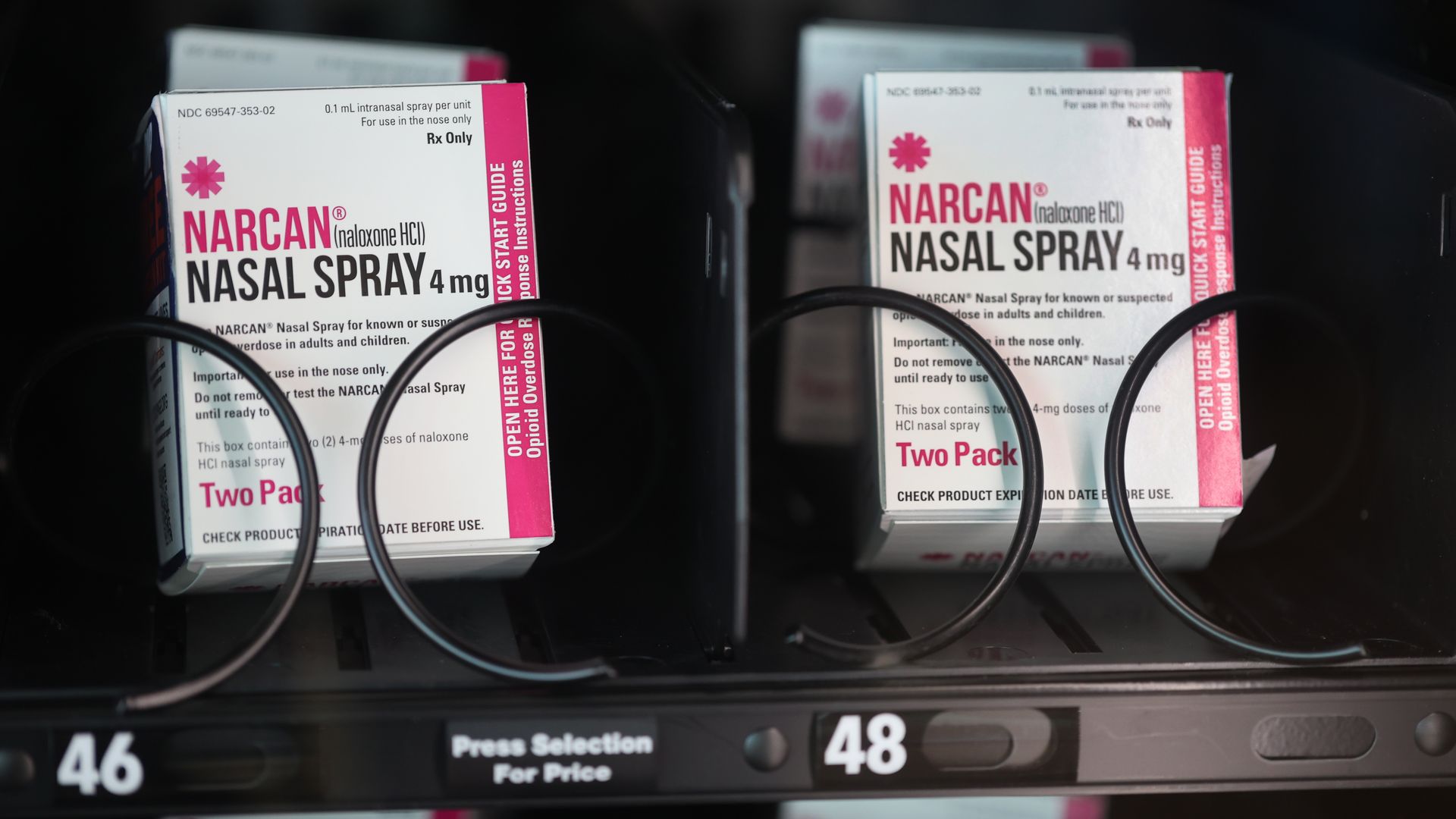
The Food and Drug Administration on Wednesday cleared the overdose reversal drug Narcan for sale without a prescription — a move health experts say could help slow a crisis that's claiming more than 100,000 lives a year.
Why it matters: Narcan acts five times quicker than the average arrival time for EMS technicians and can be administered without special training, allowing citizens to become de facto first responders.
Congress eyes making "zombie drug" xylazine a controlled substance

Congress is moving to designate an animal tranquilizer that's infiltrating the illegal drug trade as a controlled substance, to better allow authorities to track it and prosecute traffickers.
Driving the news: Bipartisan legislation introduced Tuesday by Sens. Catherine Cortez Masto (D-Nev.) and Chuck Grassley (R-Iowa) reflects the growing alarm over the proliferation of xylazine, a sedative known as "tranq" or "zombie drug" that's often mixed with fentanyl, resists common overdose reversal treatments like naloxone and causes skin-rotting wounds.

FDA advisers set new date to weigh over-the-counter birth control

Food and Drug Administration advisers will meet May 9 and 10 to weigh making a contraceptive pill available without a prescription for the first time.
Why it matters: Health experts say making birth control pills available over-the-counter will reduce the number of unwanted pregnancies and could cut down on the need for abortions. But key questions remain over cost and whether insurers will cover them.
Former FDA official on baby formula: Not much has been fixed
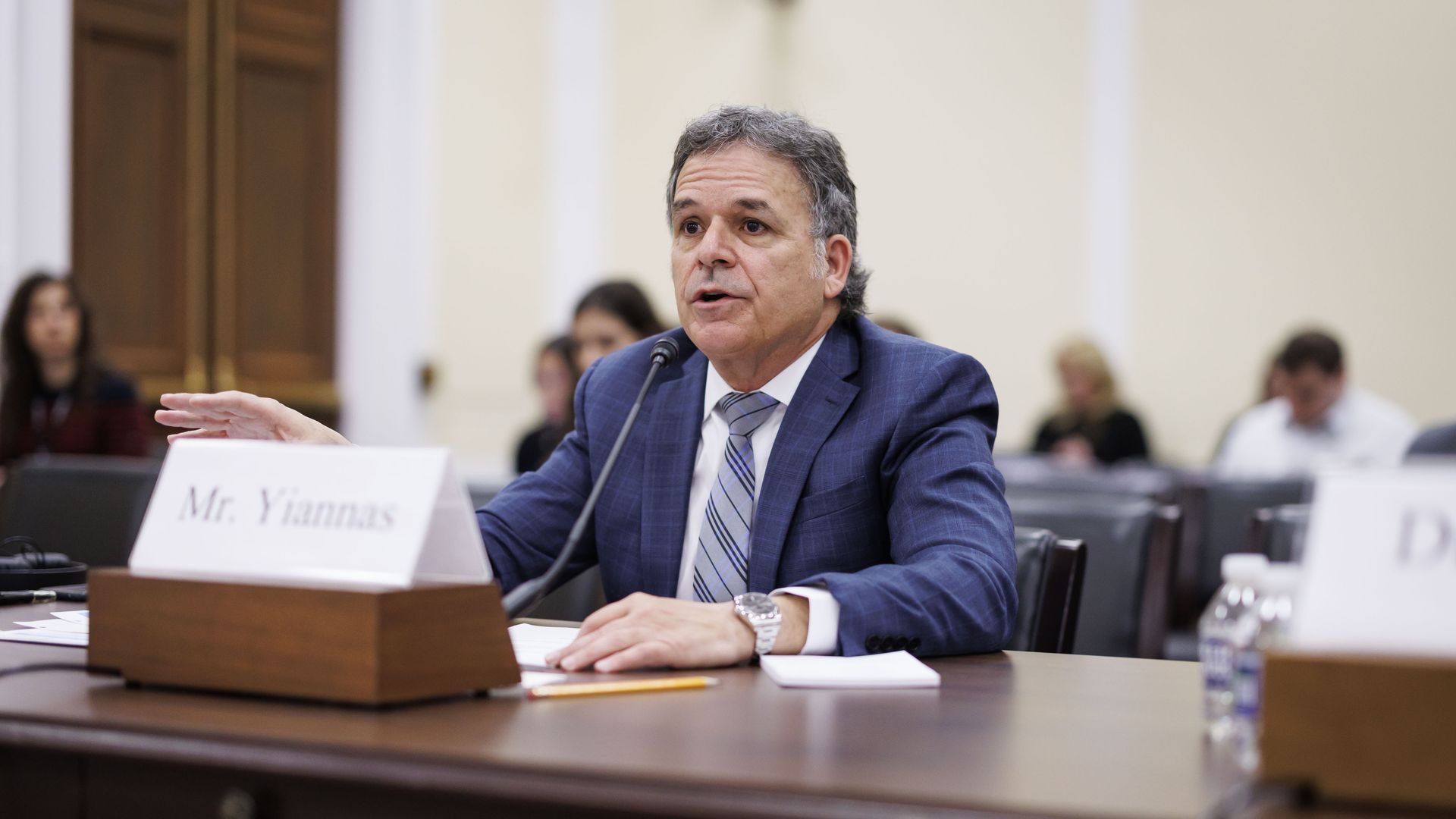
Little has been done within the Food and Drug Administration to prevent a repeat of last year's infant formula crisis, a former food safety official told a House oversight hearing on Tuesday.
Driving the news: While the direct blame falls on Abbott Laboratories for safety issues that took a key Michigan plant offline, failures by the FDA exacerbated the massive disruptions that ensued, Frank Yiannas, a former deputy commissioner of the FDA's Office of Food Policy and Response, told the House Oversight and Accountability health subcommittee.

GOP lawmakers expand gender-affirming care restrictions to adults

State efforts to restrict gender-affirming care are moving beyond trans youth and increasingly focused on patients over the age of 18.
The big picture: Legislators in Kansas, Oklahoma, South Carolina and Texas have introduced bills barring health providers from offering care such as hormone treatments or surgery to people as old as 26.