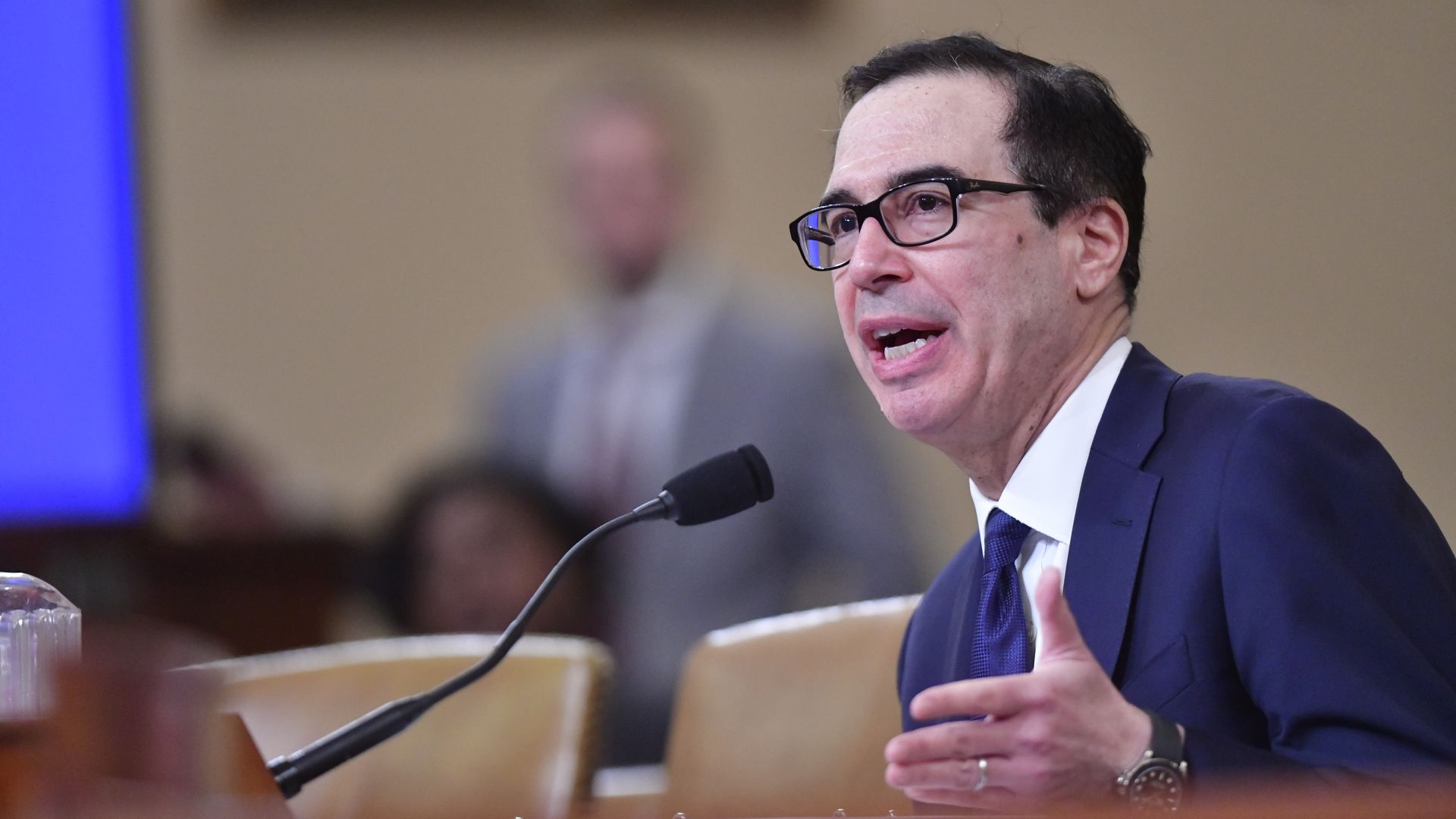
The U.S. Treasury will need to borrow a record $2.99 trillion this quarter to pay for coronavirus relief efforts, it announced Monday.
Why it matters: The borrowing is a result of nearly $3 trillion in spending that Congress has enacted since the start of the pandemic. That outlay included direct payments to most U.S. households, the Paycheck Protection Program and other economic relief. It also reflects a dip in revenues because the government delayed the tax filing deadline to June.
Spain and Italy, the European countries hardest-hit by the novel coronavirus, are reopening their economies in stages beginning on Monday.
The big picture: Both countries have emphasized bringing back industry before retail. In the U.S., some states are reopening restaurants and other non-essential businesses first, in contrast with federal guidelines for reopening.
The leaders of nations, banks and organizations gathered Monday via video conference for a European Union-led summit, collectively pledging 7.4 billion euros ($8 billion) toward research for a coronavirus vaccine, AP reports.
Why it matters: The U.S. was noticeably absent, despite appearances from the "heads of state and government from Australia, Canada, Israel, Japan, Jordan, South Africa and Turkey spoke at the event, along with China’s EU ambassador" among the many European participants.
Congress should embrace new medical methods and technologies, like gene therapy treatments, because they may become cheaper than traditional medicines over time, Rep. Scott Peters (D-Calif.) said during an Axios virtual event on Monday.
What he's saying: "People, their initial reaction to technologies is that it must be more expensive," Peters said. "It's our job to show that it's more cost-effective over time."
A Netflix-type model could lower the cost of one-time gene therapy treatments, said Jane Barlow, the chief clinical officer for Real Endpoints, a data analytics company for the healthcare industry.
Why it matters: Current medicines spread their costs out over time. Gene therapy treatments are likely to cost the health care system billions of dollars, and drugmakers are already having to come up with creative ways to get paid for high-cost drugs, Axios' Caitlin Owens reports.
The Centers for Disease Control and Prevention is projecting that by June 1, the U.S. will see a surge in daily new coronavirus cases from about 25,000 to 200,000, and an increase in daily deaths from about 1,750 to about 3,000, according to an internal document obtained by the New York Times.
Why it matters: The report comes as the federal government and individual states have been working to reopen parts of the economy after a seven-week shutdown.
Multiple promising vaccines for the coronavirus are in development, Peter Marks, the director of the Food and Drug Administration’s biologics center, said during an Axios virtual event Monday.
What he's saying: Marks said the vaccine will meet the FDA's high standards of efficacy and safety, while accelerating the approval process to combat for a vaccine.
Legislatures around the world have been experimenting with remote deliberation during the pandemic, but Congress still insists on in-person voting.
Why it matters: With social distancing rules in place, any physical gathering of a legislative body for voting almost certainly presents a health threat. Unless secure remote voting is permitted, Congress must either largely cease its work — or endanger its members.
Carnival announced Monday it will restart some cruises departing from the U.S. on Aug. 1.
Why it matters: Cruise ships, including some under Carnival's Princess brand, became hot beds for coronavirus infections earlier this year, resulting in thousands of infections and dozens of deaths around the world, per the Miami Herald.
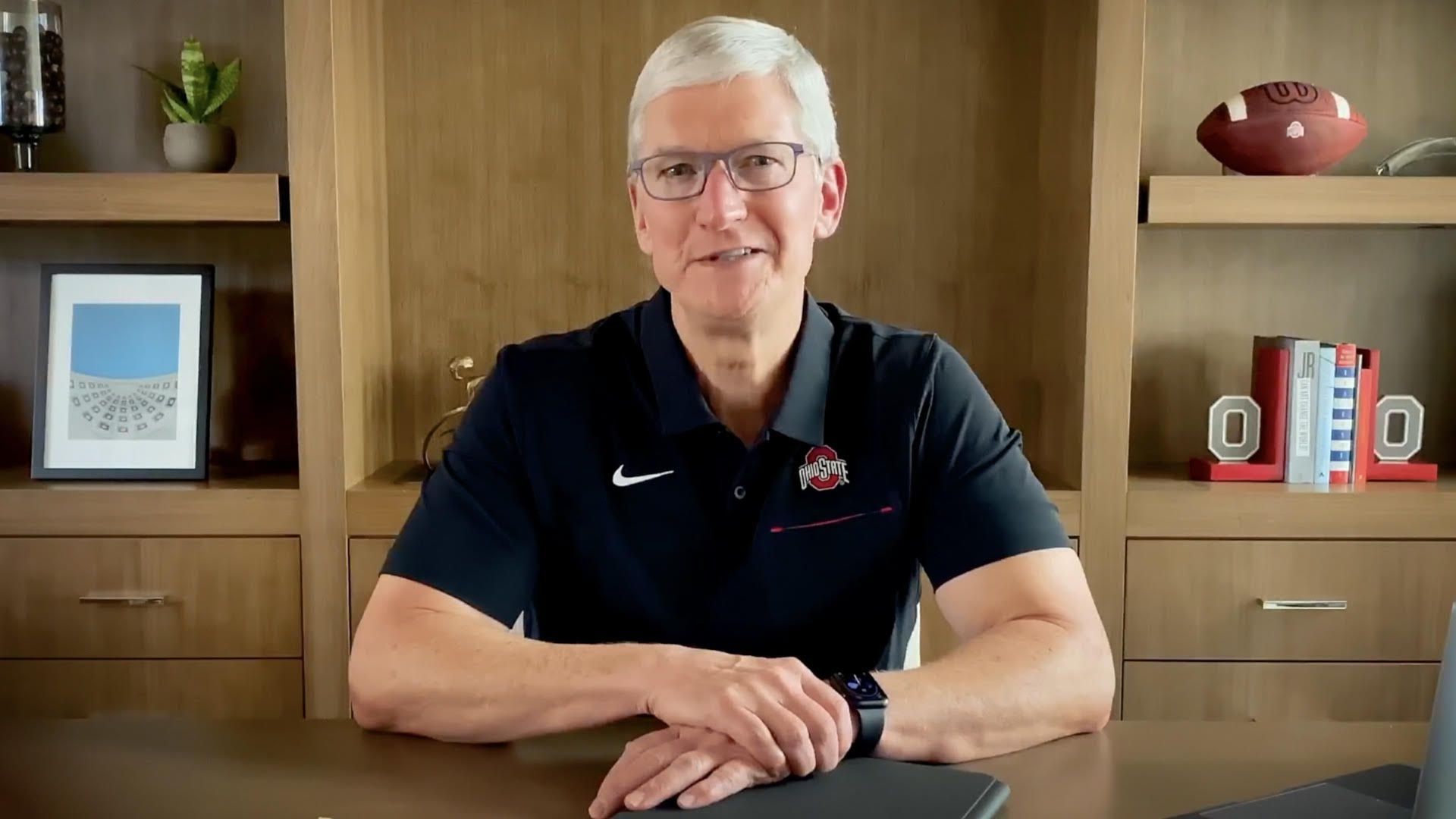
Tim Cook offered an uplifting take on the current crisis Sunday as he delivered a commencement address, virtually, to this year's graduating class at the Ohio State University.
The big picture: Graduating from college is often an uncertain time, but all the more so in the coronavirus era.
Two Brookings Institution analysts say it's possible to revive the economy while maintaining the benefits of greatly reduced traffic — but only with important policy changes.
Why it matters: The radical decline in movement during the pandemic has caused steep reductions in car travel. Going forward, the extent of the bounce back of vehicle and air travel will affect oil demand and emissions of CO2 and traditional pollutants.
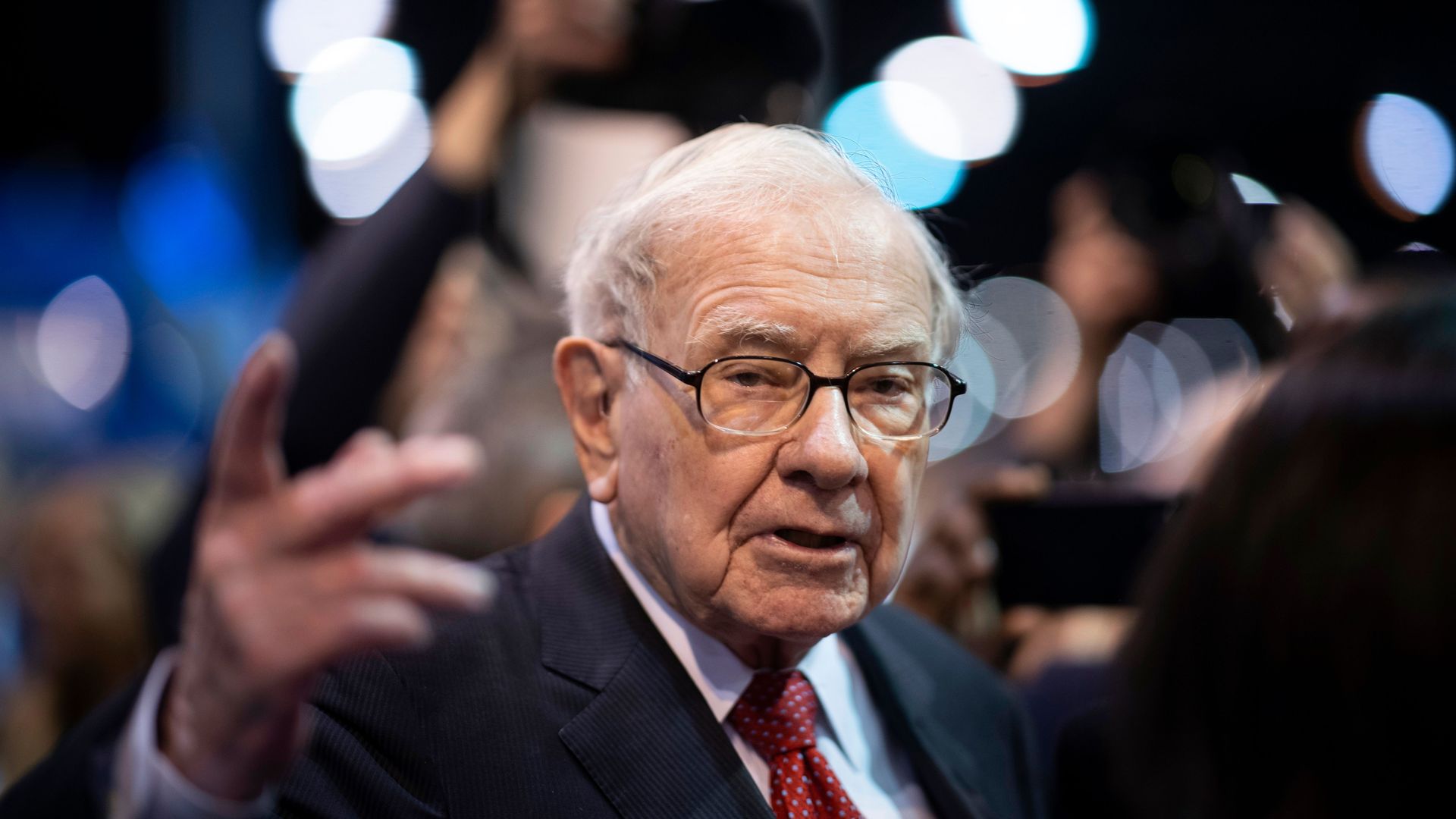
Berkshire Hathaway CEO Warren Buffett told shareholders Saturday that the company sold 16 times more in stocks than it purchased during April, including dumping $6 billion in airline stock — the company's entire equity position in U.S. airlines.
Why it matters: Long an advocate for buy-and-hold investing and being opportunistic during downturns, Buffett's actions are in stark contrast to the general mood of the market, which has seen stocks rally by around 30% since March 23.
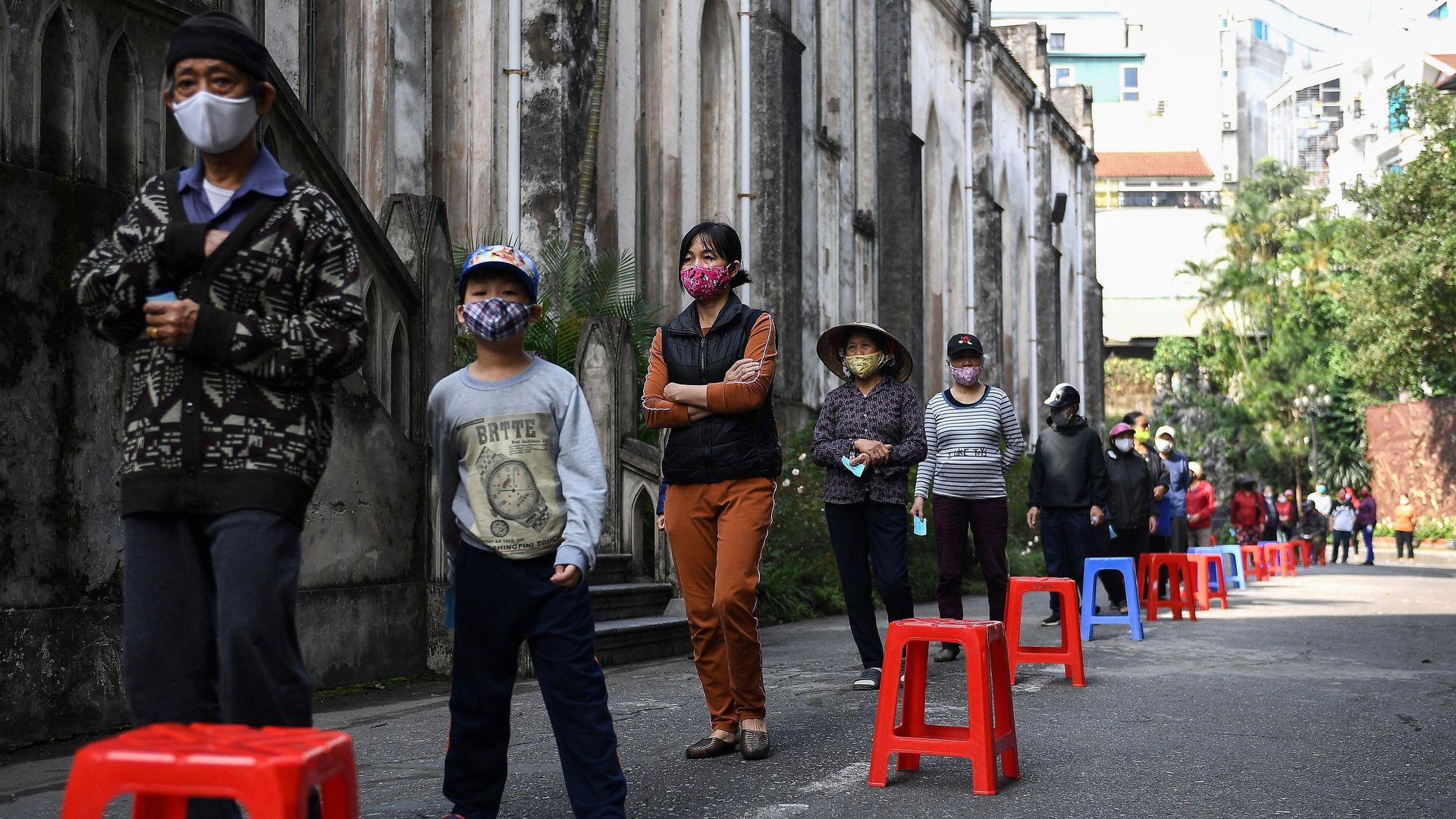
Three months after Vietnam detected its first case of coronavirus, the country of more than 95 million hasn't reported a death from the virus and most of its 270 confirmed cases have recovered, the Wall Street Journal reports.
Why it matters: Already growing as a hub for global manufacturing, companies looking to diversify their supply chains or be less reliant on China could increasingly look to Vietnam thanks to its fast recovery.
It's been 54 days since we last had sports in this country — and 187 days since we last had baseball.
Why it matters: That's a long time to go without our national pastime. In fact, unless baseball returns before July 15, we are living through the longest MLB outage in history (current record: 257 days during the 1994-95 strike).
April's U.S. jobs report will certainly reveal unprecedented losses after 30.3 million people filed unemployment claims in just six weeks, but it will also contain a number of other data points that will provide important context about the real hit to the economy and what a recovery might look like.
Why it matters: The monthly Bureau of Labor Statistics (BLS) nonfarm payrolls report uses a combination of household surveys and employer records to more accurately assess the state of U.S. unemployment.
J. Crew filed for bankruptcy Monday, reaching a deal with its lenders to convert $1.65 billion of debt into equity, Bloomberg reports.
Why it matters, via Axios' Dan Primack: It's one of the first major retail casualties of the coronavirus pandemic, though the chain was in serious financial trouble long before. The outbreak forced J. Crew, like its peers, to close its physical stores, but it also scuttled an IPO for jeans unit Madewell, which would have provided the company with fresh capital.
Coronavirus patients are most likely to infect other people in the early stages of the disease, even before they start showing symptoms, according to a new study in JAMA Internal Medicine.
Why it matters: This can help inform public health officials' efforts to trace and isolate a confirmed patients' known contacts.
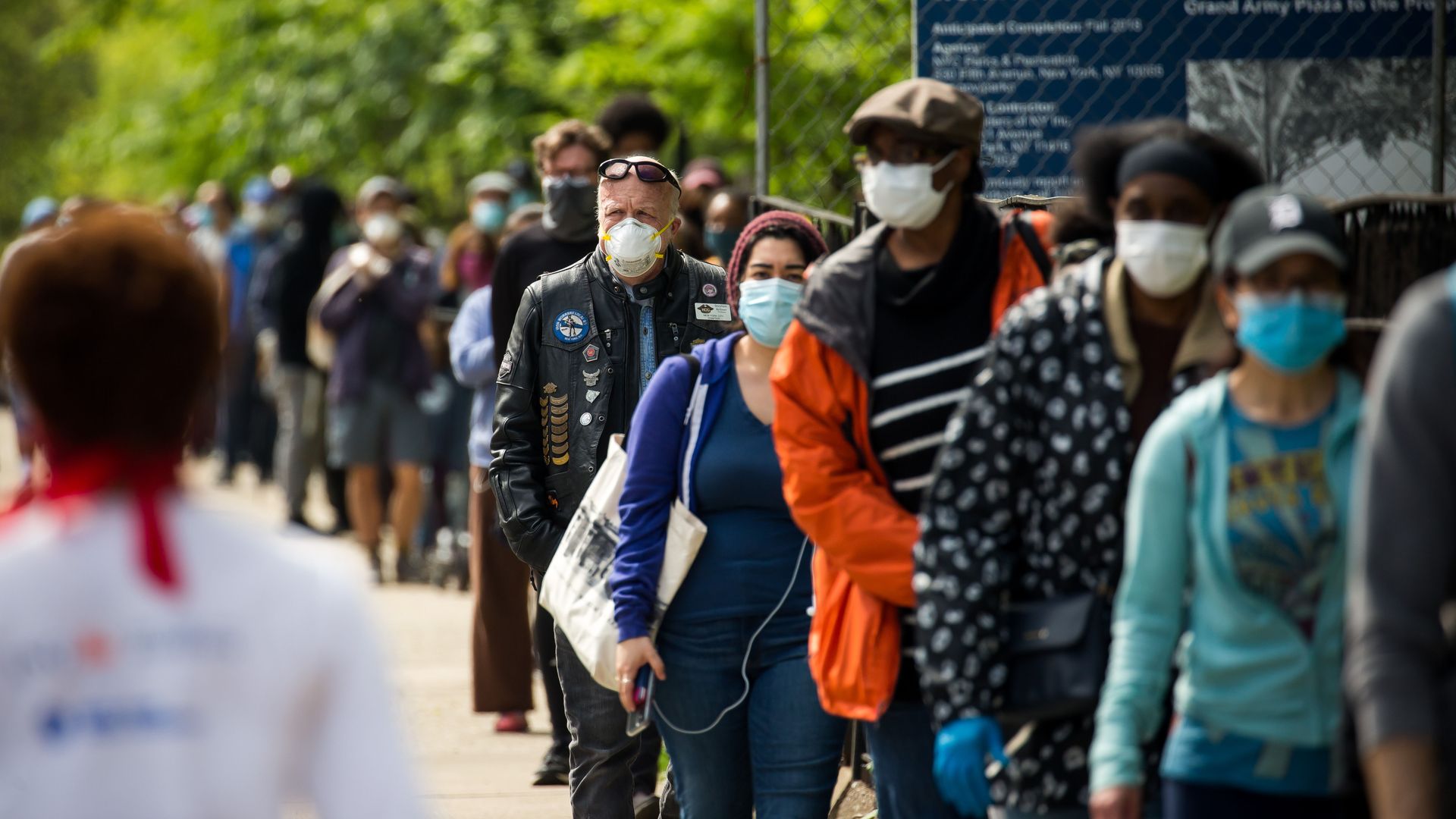
The number of coronavirus tests completed daily has plateaued again, after steadily rising for about a week.
Why it matters: This is about half of what some experts say we need to be doing every day to safely return to normal life, with others saying the target is even higher. The more testing we do, the more likely we are to catch outbreaks before they get out of control.
Republican governors run a big risk — both to public health and their own political fortunes — if they open up their economies too soon, without adequate safeguards.
The big picture: The hardest-hit areas so far have mostly been in states with Democratic governors. But the number of coronavirus cases is now increasing more quickly in states with Republican governors.
The number of new coronavirus cases nationally hovered around 30,000 a day during the entire month of April, meaning that the virus has managed to spread in spite of stringent social distancing measures.
Why it matters: Many states have already started to lift these measures, which will enable the virus to spread even faster.
Vice President Mike Pence admitted during a Fox News town hall Sunday night that he should have worn a mask when visiting the Mayo Clinic in Rochester, Minnesota, last week — a move that violated the clinic's policy and sparked widespread backlash.