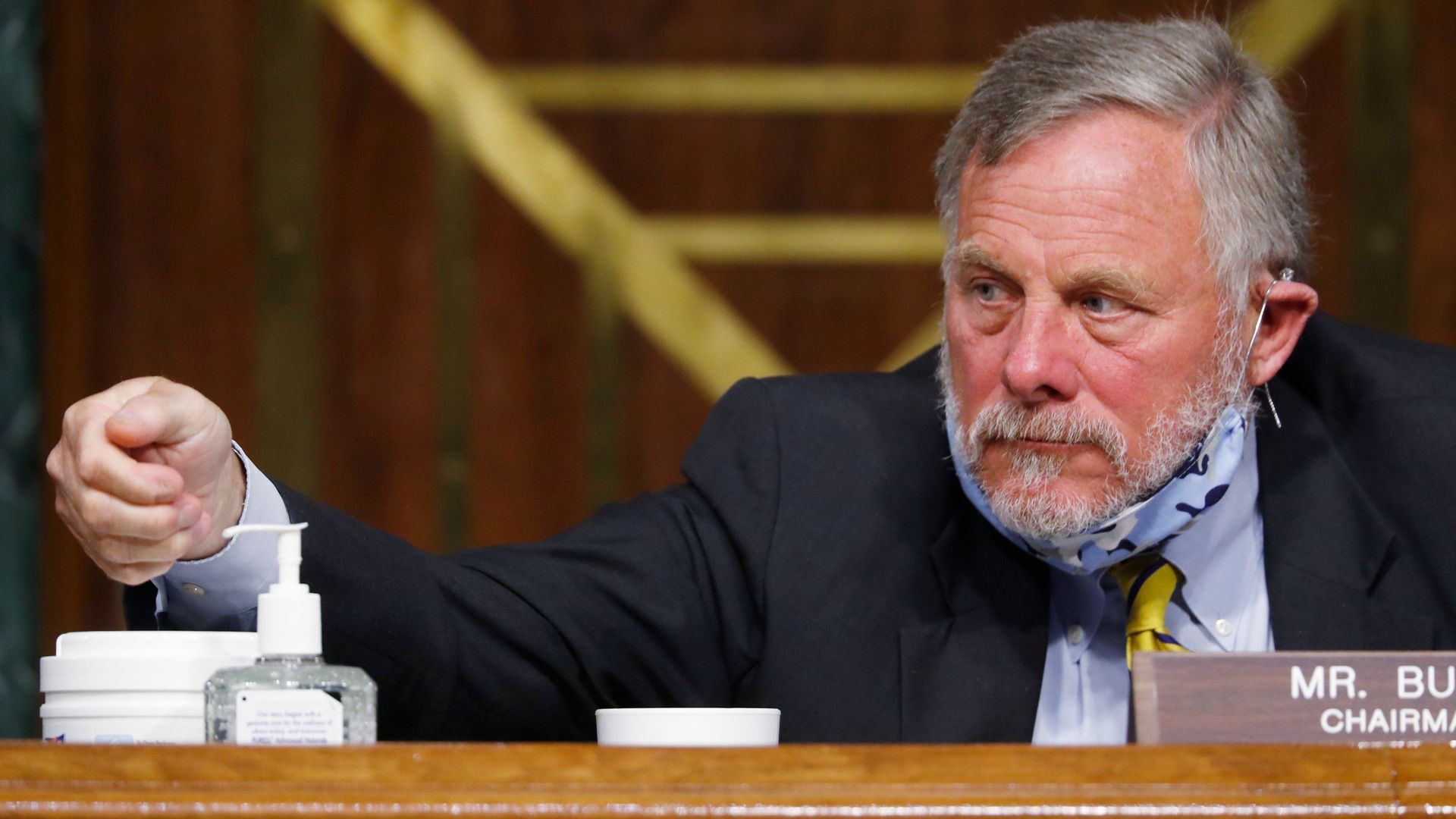
Senate Intelligence Chairman Richard Burr's (R-N.C.) brother-in-law, Gerald Fauth, dumped up to $280,000 in shares on the same day as the senator, according to documents published by ProPublica on Wednesday.
Why it matters: Burr was hit with a federal lawsuit in late March over his mass sell-off of stock holdings that preceded a market crash caused by the coronavirus pandemic. He dumped between $582,029 and $1.56 million, ProPublica reported in March.
A new wearable device is capable of catching early signs and symptoms associated with COVID-19.
Why it matters: With tests still in too-short supply, any device that can clue doctors to an early COVID-19 case is welcome. And the combination of people staying home because of social distancing and the overwhelming threat of the disease makes home diagnostics even more important.
The dramatic need caused by the pandemic and the accompanying economic devastation is being partially met by innovative approaches to philanthropy.
Why it matters: The COVID-19 pandemic could lead to human misery on a scale we haven't seen for decades. Smarter and more generous volunteering and giving could help prevent the worst outcome while demonstrating the unity that is desperately needed.
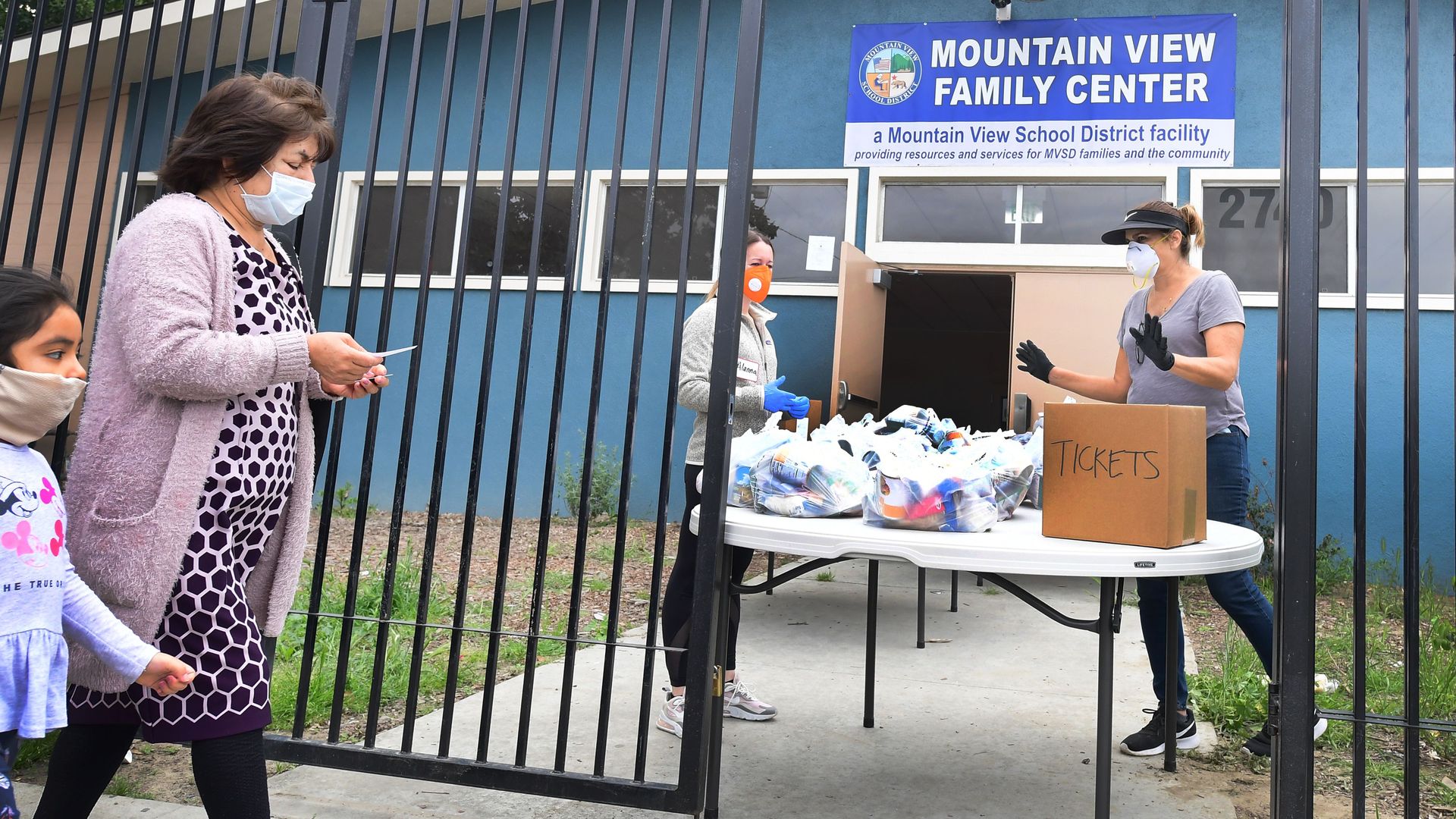
Children in the U.S. are currently experiencing food insecurity that is "unprecedented in modern times," Lauren Bauer of the Brookings Institution's Hamilton Project wrote on Wednesday.
Far from being the unifying force other catastrophes have been, the COVID-19 pandemic is tearing a divided America — and world — further apart.
Why it matters: Thanks to preexisting political and economic divisions and tech and media bubbles that allow us to choose our own reality, we're not experiencing the same pandemic. That bodes ill for our ability to overcome this global disaster, and the ones that will follow.
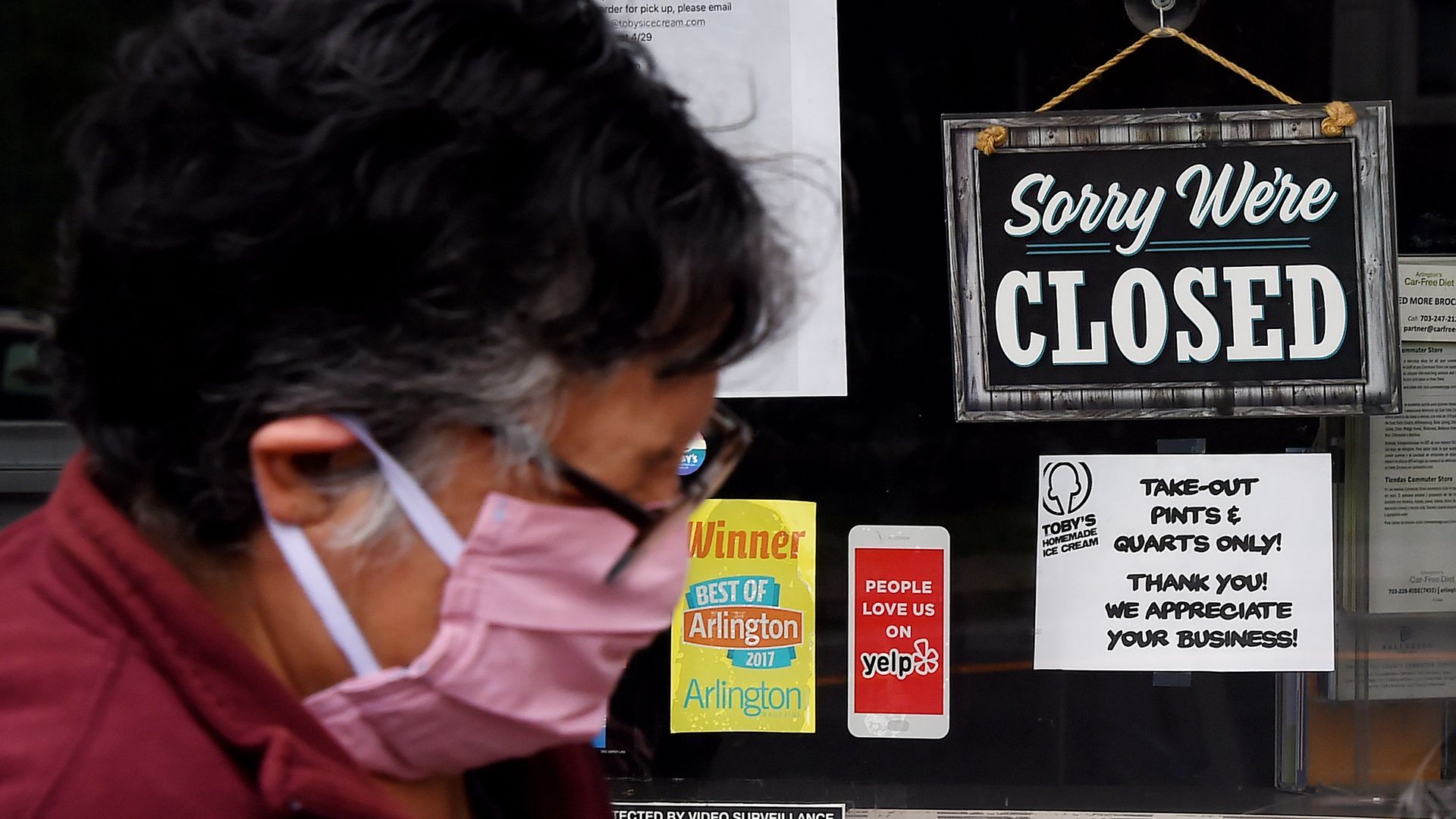
Irate business owners are finding out the hard way that their insurance policies don't cover coronavirus — and they're suing.
Why it matters: No matter how big a premium a company might pay for business interruption insurance, most policies only cover physical damage to a property, not the loss of use of a hotel, restaurant or other building from a stubborn new virus.
Restaurant chain Legal Sea Foods signed a new business interruption insurance policy on March 1, after which the coronavirus pandemic caused it to close all 33 locations and furlough thousands of employees. But its insurer won't pay up, mirroring the experiences of many other restaurateurs. Now Legal Sea Foods is suing. Dan digs in with Legal Sea Foods CEO Roger Berkowitz.
California saw a spike in confirmed coronavirus cases of 2,603 on Wednesday as Gov. Gavin Newsom (D) reported that the state has conducted 100,000 tests over the course of three days.
The big picture: The number of daily tests is at half the capacity Newsom said he wants as California moves ahead with plans to reopen retail businesses, like clothing and bookstores, for curbside service on Friday. Some beaches are also reopening soon with proper public health precautions.
A fifth of Wendy’s 1,043 fast-food restaurants have run out of meat, an analysis by the financial firm Stephens found, per the New York Times.
Why it matters: The days of unlimited meat options have temporarily come to an end across the U.S. — and while meat is still available, consumers are likely to face localized purchase limits or shortages as supply chains creak under the strain of the coronavirus.
President Trump has complained to advisers about the way coronavirus deaths are being calculated, suggesting the real numbers are actually lower — and a number of his senior aides share this view, according to sources with direct knowledge.
What's next: A senior administration official said he expects the president to begin publicly questioning the death toll as it closes in on his predictions for the final death count and damages him politically.
New York Gov. Andrew Cuomo said at a press briefing Wednesday that his state appears to have "turned the corner" when it comes to managing its coronavirus outbreak, but warned that cases are still increasing for the rest of the country.
Why it matters: Like some other initial outbreak sites, New York has seen decreases in its daily hospitalization rate, death count and number of new cases. But positive signs in those places have offset the increasing infection numbers around the country as hotspots begin to emerge in smaller communities nationwide.
LetsGetChecked, an at-home health testing startup, raised $71 million co-led by Illumina Ventures and HLM Venture Partners.
Why it matters: This reflects increased demand for at-home medical services, from consultations to testing, which many investors believe will become a permanent change to consumer and industry behaviors.
President Trump tweeted Wednesday that the White House's coronavirus task force will continue "indefinitely" but move to focus on "safety & opening up our country."
Why it matters: Trump noted that the administration may seek to "add or subtract people ... as appropriate" — adding to concerns that the White House could oust medical officials as it seeks to reframe the pandemic as an economic crisis.
The private sector lost 20.2 million jobs in April, according to ADP's private jobs report — the worst monthly job loss in the report's history.
Why it matters: "Job losses of this scale are unprecedented. The total number of job losses for the month of April alone was more than double the total jobs lost during the Great Recession," Ahu Yildirmaz, co-head of the ADP Research Institute said. The hospitality sector was hit hardest with 8.6 million jobs lost, while the trade, transportation, utilities and construction sectors also suffered major blows.
The Federal Trade Commission has signed off on AbbVie's $63 billion acquisition of Allergan, but antitrust regulators said the companies must divest three drugs — two of which will be sold to Nestlé — that would have consolidated too much power under one roof.
The bottom line: This was a contentious decision among the FTC commissioners. But now AbbVie — which makes the world's best-selling drug, Humira, and has been accused of playing games as the autoimmune drug's patent lapses — is significantly expanding by acquiring the maker of Botox.
U.S. services businesses saw their steepest drop in activity in April since the Great Recession with the Institute for Supply Management’s non-manufacturing index falling to 41.8, its lowest reading since March 2009.
Yes, but: The survey's prices paid index jumped to its highest since January and firms said they had seen the highest percentage of price increases since May 2018.
Google's philanthropic arm is doubling its planned coronavirus response donations to a total of $100 million, Google.org head Jacquelline Fuller told Axios.
Why it matters: The effort is in addition to coronavirus-related moves by the corporate side and, in some cases, also comes with hands-on technical support from Google employees to help organizations with the technical aspects of their efforts.
Having been conditioned for years by financial pundits to see the next recession as their opportunity to get rich after largely missing out on 11 years of a surging bull market, young people are viewing the coronavirus-driven stock market crash as their golden ticket.
What's happening: Thanks to zero fees, easy access afforded by the internet, and an unexpected glut of free time on their hands, millennials and Gen Zers are opening online brokerage accounts at a record pace.
In an effort to combat what it calls a confusing patchwork of reopening guidance, the U.S. Chamber of Commerce debuted Wednesday an interactive map with state-specific information to help businesses navigate local rules and guidelines.
Why it matters: The chamber has urged federal, state and local officials to move to a more unified approach.
Roughly three out of four doctors believe patient appointments will resume to normal, pre-coronavirus levels no earlier than July, and 45% expect a rebound to occur sometime between July and September, according to a survey of 163 doctors conducted by SVB Leerink.
Why it matters: States are reopening businesses now, but people may not want to trek to their doctor and sit in a waiting room with other potentially sick patients. And if doctors don't see typical numbers of patients return by this summer, many may have to sell their practice or close completely.
In addition to keeping an eye on the tragic, and climbing, numbers of total coronavirus cases and deaths across the U.S., it's important to watch how those trends are playing out over time at the state level.
Why it matters: Rising, or falling, numbers of cases is one of the key metrics for determining where mitigation efforts are working and when the economy can begin to reopen.
The evidence is mounting that America is steamrolling toward a nightmarish failure to control the coronavirus.
Where it stands: We made a lot of mistakes at the beginning, and despite a month of extreme social distancing to try to hit "reset," a hurried reopening now raises the risk that we'll soon be right back where we started.