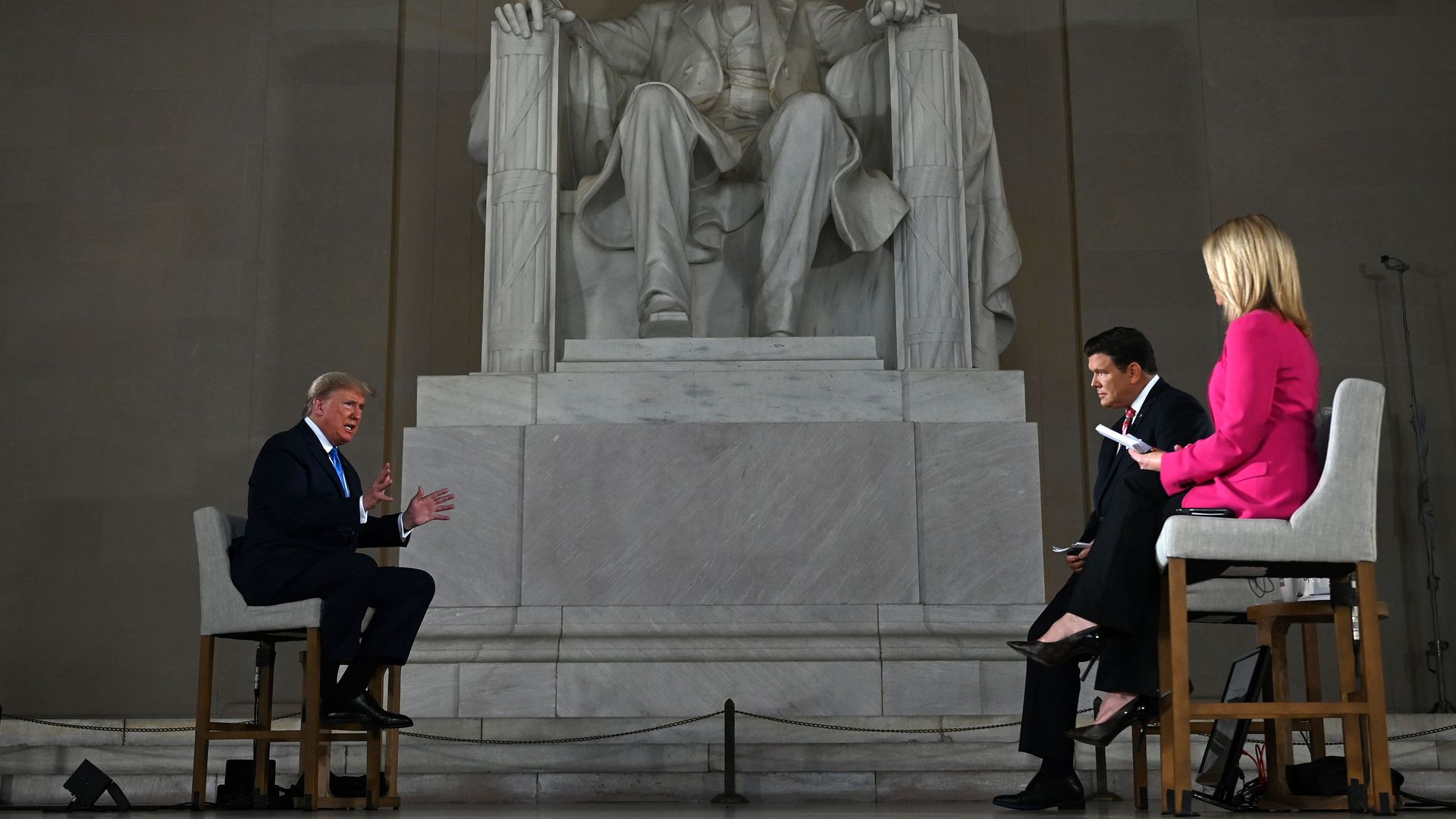
President Trump asserted during a Fox News town hall Sunday night that he's "very confident" the U.S. will produce a coronavirus vaccine by the end of the year.
Why it matters: Trump's timeline is much more optimistic than what most public health officials have predicted. Experts estimate a vaccine could take at least 12–18 months to become widely available.
Pete Gaynor, who runs the Federal Emergency Management Agency, is drafting a document whose title sounds like the stuff of horror movies: "COVID-19 Pandemic Operational Guidance for the 2020 Hurricane Season."
Driving the news: "We're doing a lot of things that are not necessarily in any playbook that has existed," Gaynor told me in an interview on Saturday. "In some cases, we write the playbook as we go."
Don't expect fast action on the next coronavirus stimulus package, known on Capitol Hill as "phase 4." Senior sources in the Republican Senate conference tell me that most GOP senators want to wait a bit before passing another big aid bill.
Between the lines: The two parties are miles apart ahead of the next stage of talks.
Ohio Gov. Mike DeWine (R) explained his decision to rescind an order requiring people to wear face masks in retail stores, stating on ABC's "This Week" on Sunday that it "became clear to me that that was just a bridge too far. People were not going to accept the government telling them what to do."
Why it matters: DeWine has earned praise for his aggressive and early steps to mitigate the impact of the coronavirus in Ohio, such as closing schools before any governor in the country and postponing the state's March 17 primary.
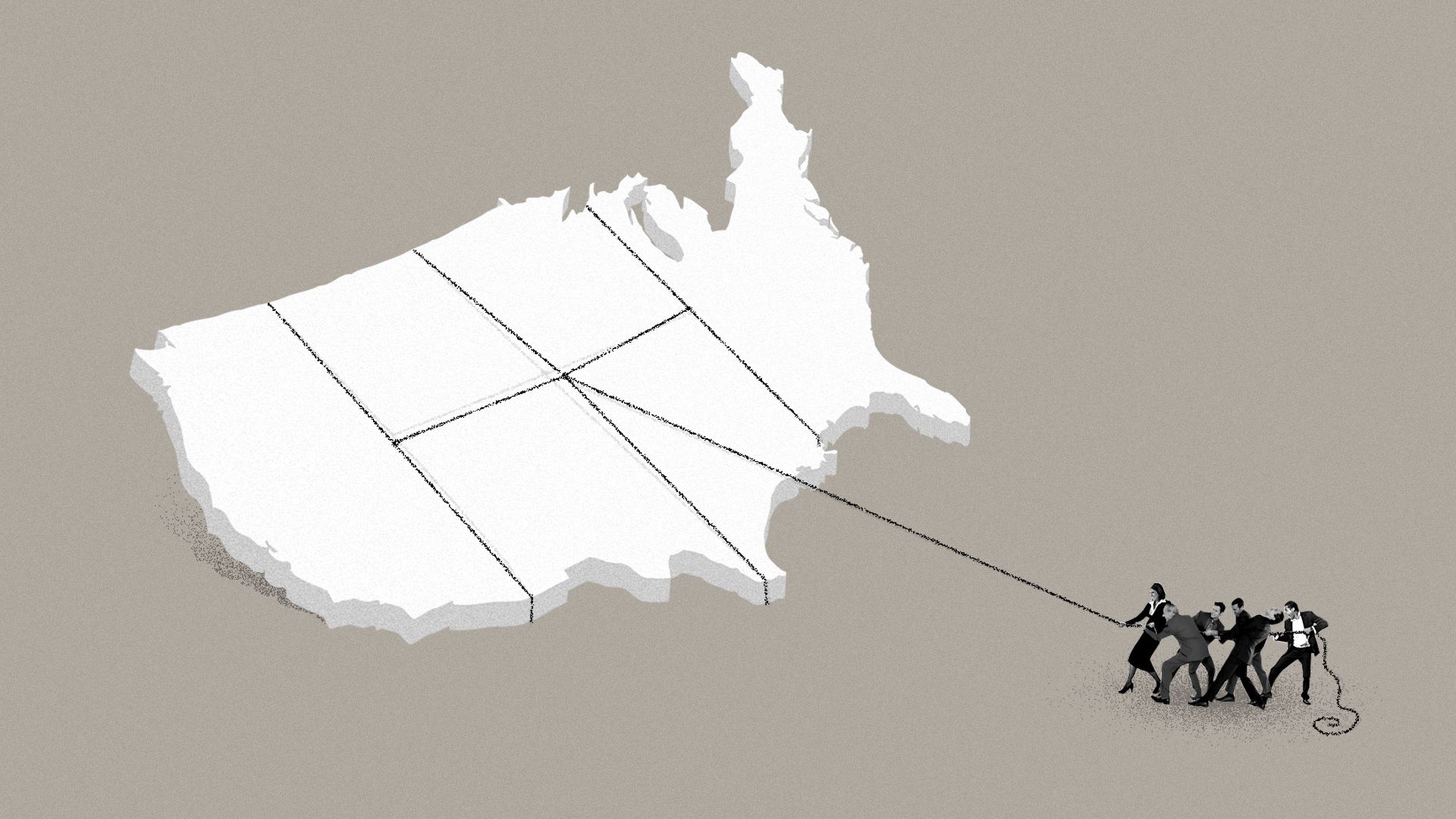
New York Gov. Andrew Cuomo announced Sunday that New York, New Jersey, Massachusetts, Connecticut, Pennsylvania, Rhode Island and Delaware are forming a regional consortium to reduce competition when purchasing personal protective equipment (PPE).
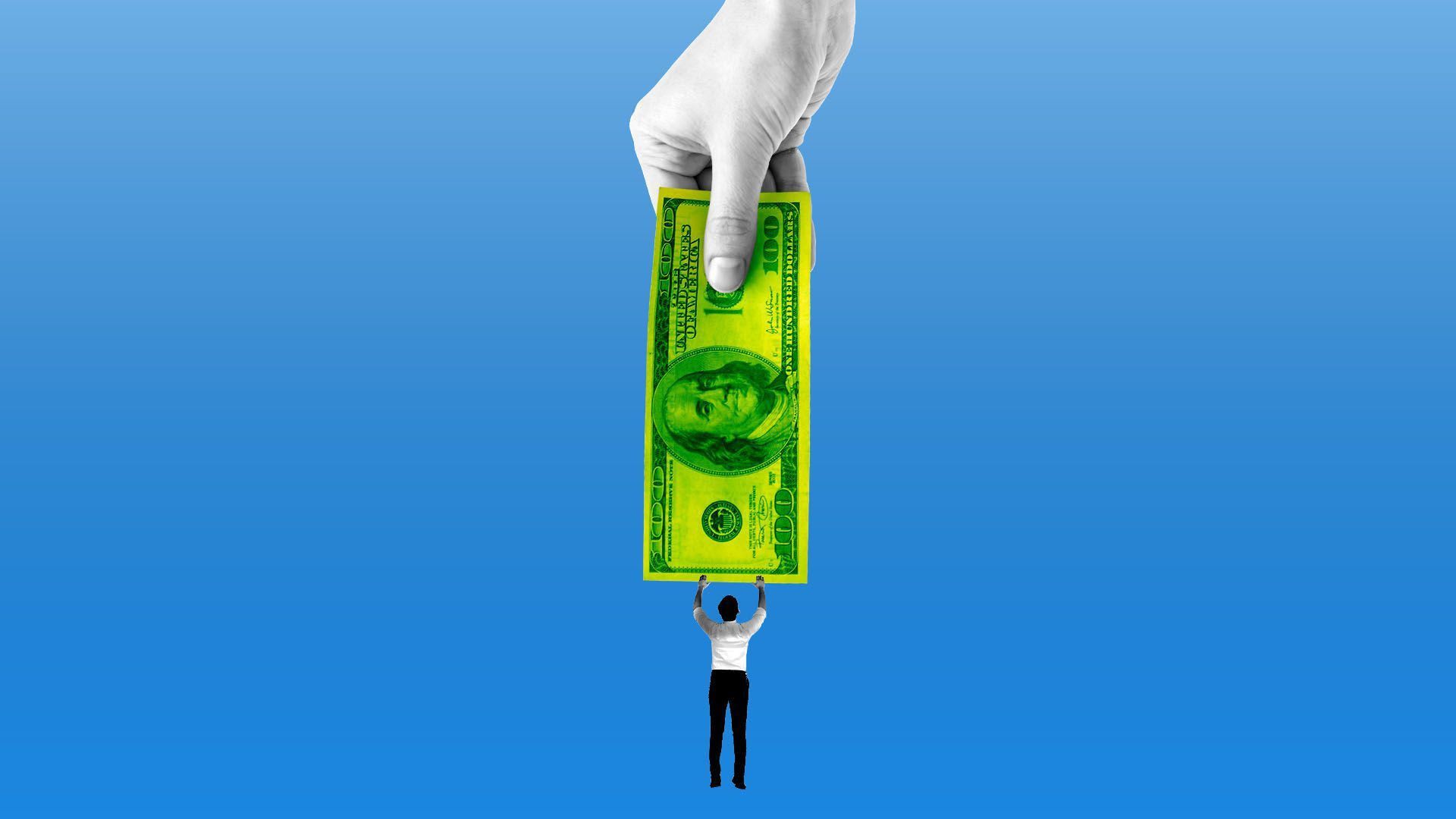
Why it matters: Cuomo and other governors have long complained that competition between states, private businesses and the federal government for critical coronavirus supplies has needlessly driven up prices in a time of emergency.
Gilead Sciences CEO Daniel O'Day said on CBS' "Face the Nation" Sunday that the company has donated its entire supply of the antiviral medication remdesivir to the federal government, which will determine which U.S. cities will receive the drug based on "urgent" need.
Why it matters: The FDA last week granted emergency use of remdesivir to treat coronavirus patients, but it has not granted official regulatory approval. Preliminary data indicates that the drug can help patients recover from the coronavirus more quickly than no treatment, but it does not significantly reduce death.
Oxford University scientist John Bell, who is leading one of the efforts to develop a coronavirus vaccine, said on NBC's "Meet the Press" Sunday that his research group will likely get evidence on whether the vaccine has efficacy by early June.
Why it matters: The world is pinning its hopes on a vaccine for COVID-19 to save lives, help us return to normal and emerge from an economic recession.
Secretary of State Mike Pompeo said on ABC's "This Week" Sunday that there's "enormous evidence" to support the theory that the coronavirus originated in the Wuhan Institute of Virology, not a nearby market.
Why it matters: The Office of the Director of National Intelligence announced Thursday that it is investigating whether the outbreak was the result of exposure to wild animals or a laboratory accident in Wuhan. Pompeo said he has no reason to doubt the intelligence community's consensus that the virus was "not manmade or genetically modified."
White House economic adviser Larry Kudlow defended his claim on Feb. 25 that the U.S. had "contained" the coronavirus "pretty close to airtight," arguing on CNN's "State of the Union" Sunday that his comments were "based on the actual facts" at the time.
Why it matters: Kudlow is among the White House officials who have faced criticism for downplaying the looming impact of the virus, which has now infected more than 1 million Americans and killed over 66,000.
White House coronavirus coordinator Deborah Birx said on "Fox News Sunday" that from a public health standpoint, it is "devastatingly worrisome" that protestors in Michigan and around the country are gathering in close quarters and not wearing masks while demonstrating against stay-at-home orders.
Why it matters: President Trump has tweeted support for the Michigan protestors, some of whom were armed and successfully entered the state's Capitol building last Thursday where lawmakers were voting on whether to extend a public health emergency.
When the history of the coronavirus pandemic is written, it will be remembered as a time when the strongest leadership had to come from the ground up, given the many failures at the national level.
These are the governors, mayors and other local government officials who have gotten the best reviews for their actions in this crisis — for taking swift action and heading off the worst outcomes, or simply for letting science guide their responses under intense political pressure.
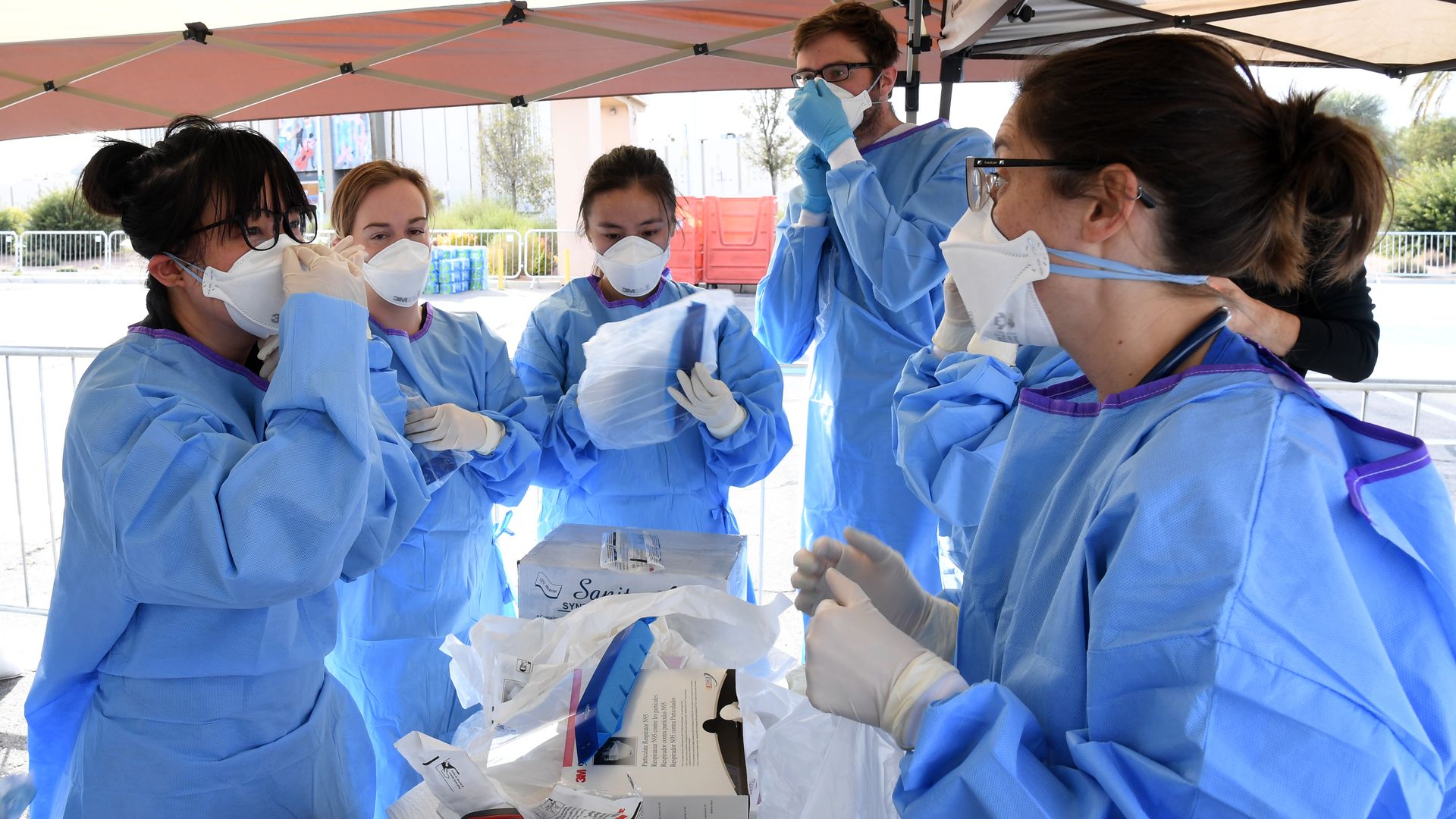
Medical schools around the country are fast-tracking soon-to-be graduates so they can join the fight against the coronavirus.
Why it matters: The move comes amid increasing demand for health care workers as coronavirus hospitalizations peak in various states, and they themselves fall ill. An estimated 10–20% of all U.S. coronavirus cases are health care workers.