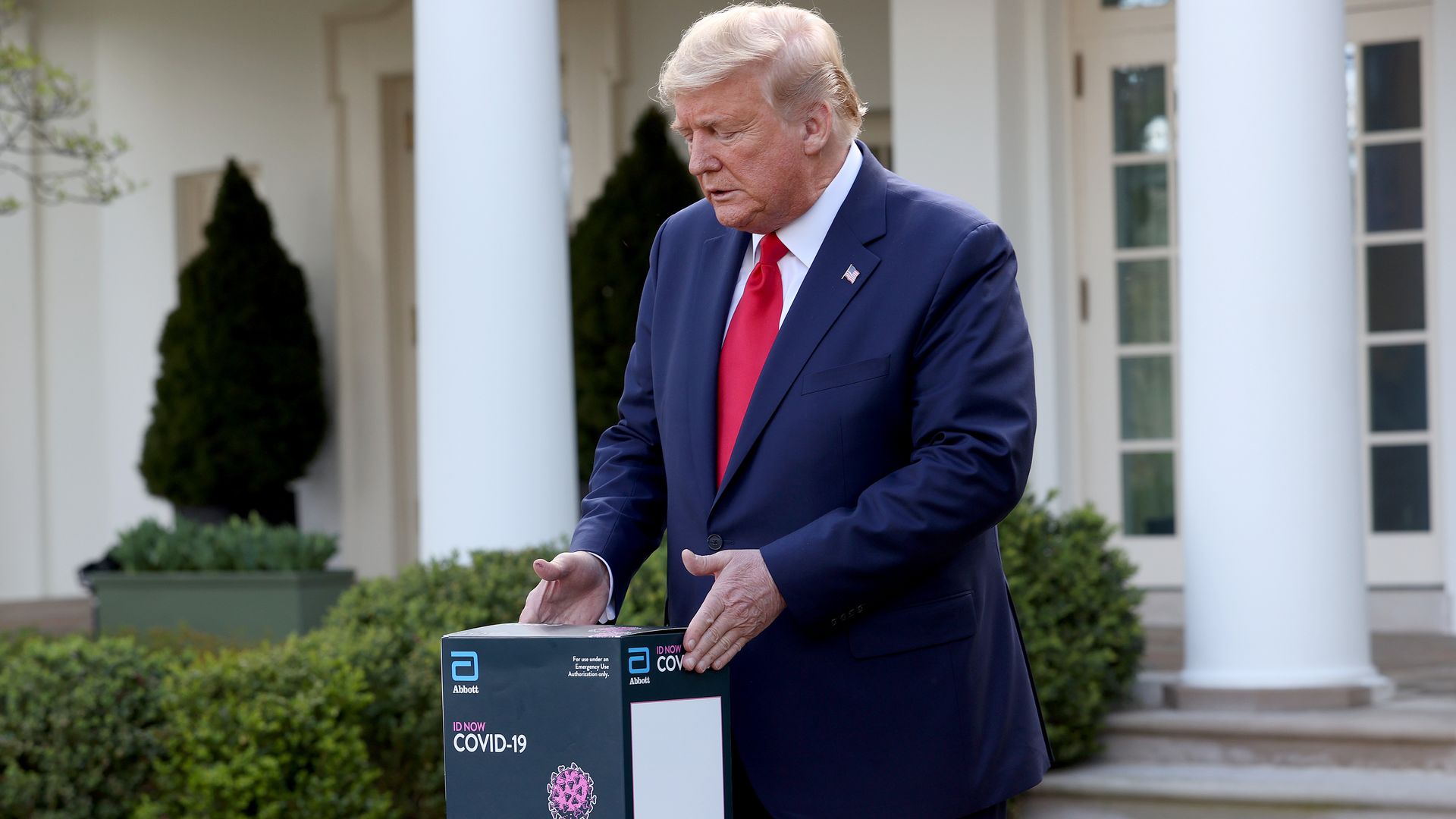
President Trump said at a press briefing on Tuesday that the next two weeks in the U.S. will be "very painful" and that he wants "every American to be prepared for the days that lie ahead," before giving way to Deborah Birx to explain the models informing the White House's new guidance on the coronavirus.
Why it matters: It's a somber new tone from the president that comes after his medical advisers showed him data projecting that the virus could kill 100,000–240,000 Americans — even with strict social distancing guidelines in place.
The captain of a nuclear aircraft carrier docked in Guam asked the U.S. Navy for more resources after nearly 100 members of his crew became infected with the coronavirus, saying, "[t]he spread of the disease is ongoing and accelerating," per a letter obtained and confirmed by the San Francisco Chronicle.
The big picture: In the letter sent to senior Navy officials, Capt. Brett Crozier noted that with "inherent limitations of space" on the aircraft carrier U.S.S. Theodore Roosevelt, it was nearly impossible to social distance with a crew of more 4,000 and follow quarantine guidelines to stay docked for 14 days.
For many people who've lost jobs or income because of the coronavirus pandemic, tomorrow presents a stressful decision: Do you pay your rent or mortgage?
Why it matters: The new CARES Act that was signed by President Trump on Friday protects homeowners and renters who are suffering from the response to the coronavirus pandemic — but it's not “a one-size-fits-all policy rulebook,” a congressional aide tells Axios.
More than 400 long-term care facilities across the United States are now combatting cases of the novel coronavirus, the Centers for Disease Control told Axios on Tuesday.
Why it matters: The numbers mark a 172% reported rise in long-term facility cases since March 23, notes NBC News, which first reported the news. Long-term care facilities often host ill and elderly people who are particularly susceptible to the adverse effects of COVID-19. A spokesperson for the CDC said the agency is working with state and local health departments to assist facilities with the virus and help those without cases to reduce their risk.
Axios incorrectly reported on Tuesday that the Food and Drug Administration had signed off on a new and faster type of coronavirus test. We have removed that inaccurate story from our website.
What happened: A medical distribution company called Bodysphere said in a press release that the FDA had granted an “emergency use authorization” that could allow patients to get a diagnosis in only about two minutes.
Nearly 6% of reported U.S. patients who tested positive for the novel coronavirus also had underlying health conditions, which typically led to more hospitalizations and the need for intensive care, according to new data out Tuesday from the Centers for Disease Control and Prevention.
Why it matters: Based on preliminary U.S. data, people with underlying conditions such as diabetes mellitus, chronic lung disease and cardiovascular disease appear to be at higher risk for severe COVID-19–associated disease than those without these underlying conditions.
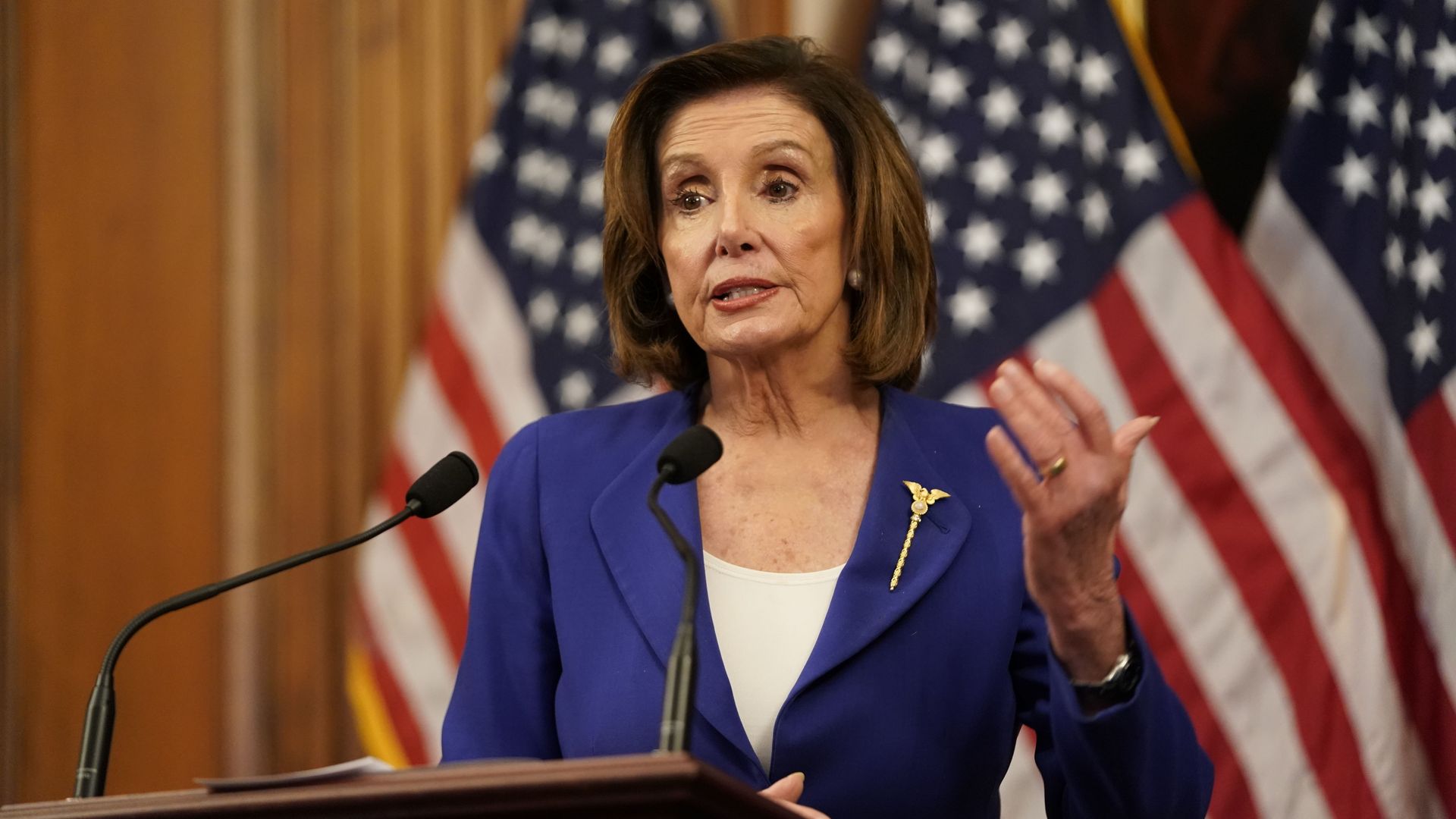
House Speaker Nancy Pelosi will headline a virtual town hall on Facebook Tuesday that will highlight the Trump administration's "failures" in responding to the coronavirus pandemic and outline a series of new health priorities that Democrats say are needed to stem the spread of COVID-19, advocacy group Health Care Voter tells Axios.
Why it matters: Discussions on the phase 4 stimulus bill are already underway now that the $2.2 trillion rescue package has been signed into law. Several Democrats, including Pelosi, who are participating in Tuesday evening's town hall, see the legislation as an opportunity to pass new health and economic policies that failed to make it into the last deal, Democratic aides on Capitol Hill tell Axios.
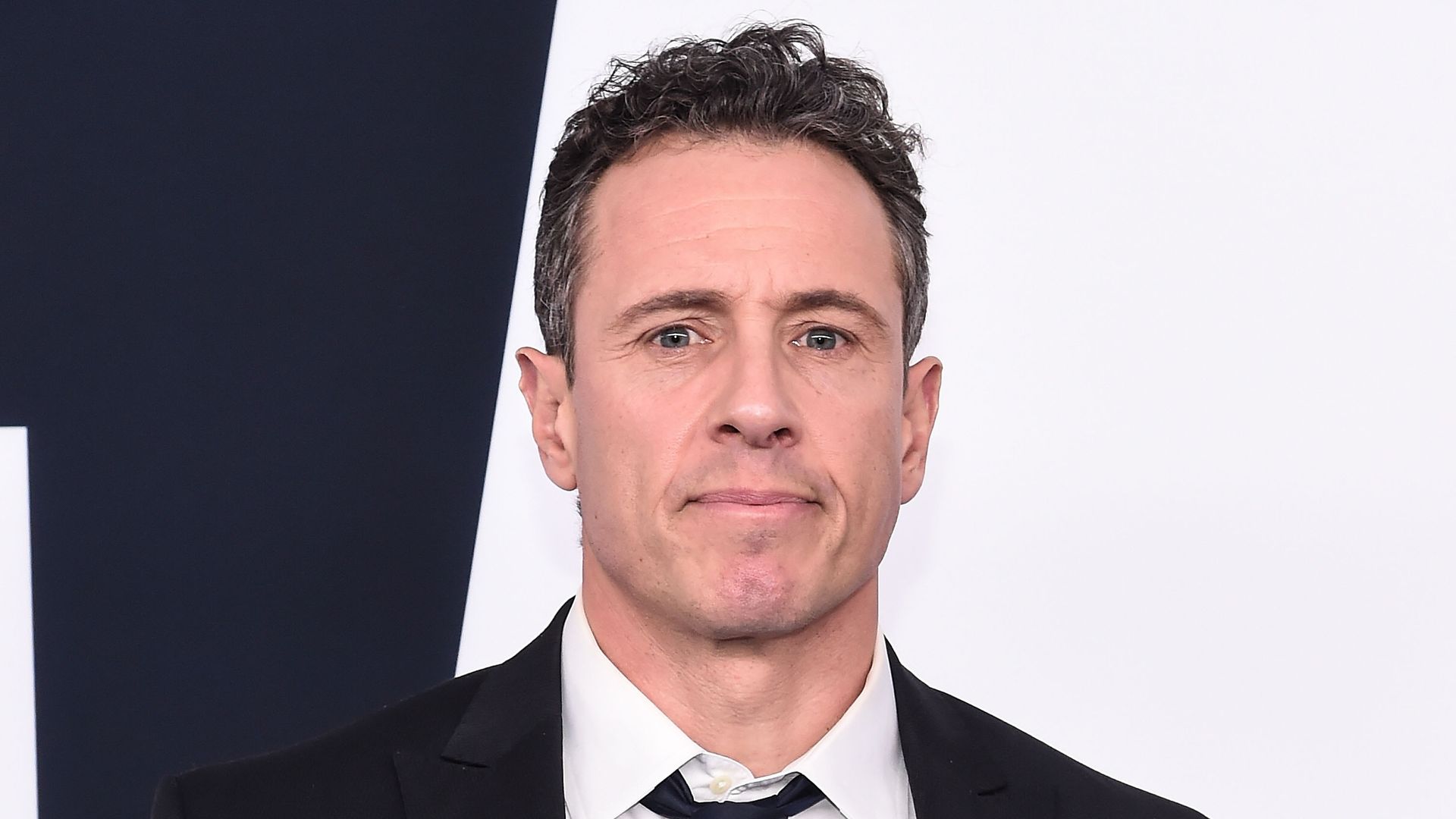
CNN anchor Chris Cuomo announced Tuesday that he tested positive for the coronavirus.
Why it matters: He's the brother of New York Gov. Andrew Cuomo, whose state has been ravaged by the illness, and frequently has had his sibling appear on "Cuomo Prime Time" throughout the crisis.
Anthony Fauci, director of the National Institute of Allergy and Infectious Diseases, told CNN Tuesday that the White House coronavirus task force will hold an "active discussion" about broadening the use of medical masks to protect against coronavirus.
Why it matters: Such a guidance shift would be a huge change in messaging from the Trump administration, which initially advised against healthy people using masks.
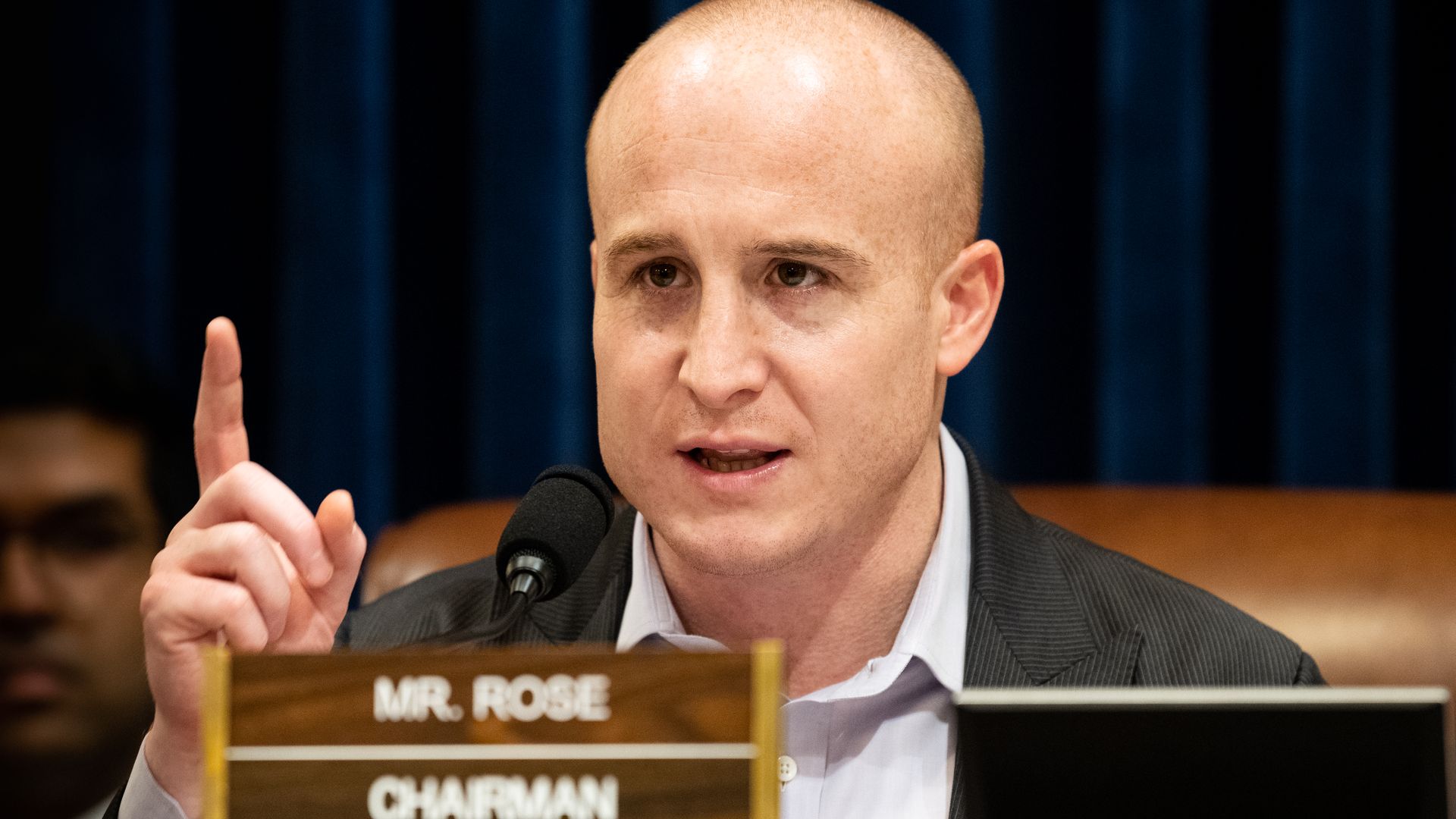
Rep. Max Rose (D-N.Y.) will deploy to the National Guard for several weeks to help with coronavirus response efforts in New York, the epicenter of the crisis in the United States, his office announced Monday.
The big picture: Starting Wednesday, Rose will spend several weeks working as an operations officer in his home district of State Island. The 33-year-old previously served as an active-duty officer in Afghanistan from 2012 to 2013 and earned a Bronze Star, Purple Heart and Combat Infantry Badge.
Easton Hospital, owned by a portfolio company of Cerberus Capital Management, secured $8 million from the State of Pennsylvania in a last-minute bailout to keep the facility's doors open. Through June, the state funding commitment would total $24 million.
Why it matters: It's very welcome news that a hospital won't close in the midst of a pandemic, but it also reflects pretty indefensible behavior by Cerberus.
President Trump and two Texas oil producers are launching new efforts to temper the stunning supply-demand imbalance and price collapse that's inflicting deep financial wounds in the U.S. industry.
Driving the news: Shale producers Pioneer Natural Resources and Parsley Energy have formally asked Texas regulators to take the extraordinary step of imposing mandatory production curbs to help steady the ship.
An International Energy Agency analysis finds that carbon emissions linked to streaming video aren't a big deal in the grand scheme of things, but are nonetheless important to track as use grows.
Why it matters: Streaming video is one of the few entertainment options for those living under coronavirus lockdowns. Even before the crisis, services like Netflix and Hulu had ballooned in use.
McClatchy will put its paywall back up around some coronavirus news as it aims to balance its duty keep people informed with its need to bolster subscriptions, executives tell Axios.
Why it matters: The company is trying to be strategic about how much they allow to be free. While it's important that some information remains free, like breaking news that could impact the health and safety of their readers, they don't want that free information to cannibalize a surge in subscription interest.
From barbers to pastors to fitness instructors, any person that used to make money via brick and mortar services, is now turning to online platforms to make money for their expertise.
Why it matters: A slew of old-line industries that once hesitated to embrace digital technologies are now being forced to do so for the sake of survival.
With states across the country banning "non-essential" construction due to the coronavirus outbreak, some major stadium projects have been halted — but not all of them.
The state of play: All work has stopped at the the New York Islanders' Belmont Park arena, which was set to open in October 2021, but will now likely be delayed.
The NCAA Division I Council voted Monday to grant an extra season of eligibility to all spring-sport athletes whose seasons were canceled due to the coronavirus outbreak.
Between the lines: The council left it up to each university to determine how much scholarship aid to offer athletes who were in what would have been their final season of eligibility.
Speaker Nancy Pelosi said Tuesday on MSNBC's "Morning Joe" that President Trump should "immediately" invoke the Defense Production Act to require U.S. companies to assemble medical equipment for health care workers fighting coronavirus.
Why it matters: Hospitals around the country lack medical equipment, like ventilators and respirators, as the number of Americans in need of treatment for the virus rises — and the wartime measure would ramp up production of the materials.
Official statistics out of China suggest it is bouncing back from the coronavirus outbreak that shuttered the country for much of the first quarter, but there is growing speculation that data is being massaged to paper over a bevy of nagging issues.
Driving the news: China said manufacturing activity returned to expansion in March, with its official metric rising to 52.0. Economists had expected a reading of 45.0 after hitting a record low of 35.7 in February.
Video conferencing giant Zoom's stock has taken flight in recent weeks, up 121% this year while the S&P 500 has fallen 19% — but the good times may be coming to an end.
Driving the news: The New York attorney general's office sent a letter to the company Monday outlining a number of concerns about security flaws and vulnerabilities "that could enable malicious third parties to, among other things, gain surreptitious access to consumer webcams," the New York Times reported.
The Dallas Fed's business activity index fell to -70, the lowest reading ever, dating back to the survey's creation in 2004.
By the numbers: Measures of production, new orders, shipments and capacity utilization were the lowest since 2009 while prices declined and wage growth slowed, according to the survey of 110 Texas manufacturers conducted March 17–25.
The Centers for Medicare and Medicaid Services yesterday issued new temporary rules that will allow hospitals to expand their capacity during the coronavirus epidemic.
Between the lines: These new flexibilities are designed to allow health care workers to treat more patients than the system is built for, and to help separate patients with the coronavirus from those without it.
The coronavirus is forcing major media giants to leverage layoffs and pay cuts in order to survive the coronavirus pandemic.
Why it matters: In the first few weeks of the outbreak in the U.S., local outlets were sounding the alarm over lost advertising revenue from shuttered local businesses. As the crisis continues, big national media companies say they are bracing for the worst.
The coronavirus is providing cover to autocrats, dictators, and even some democratically-elected leaders who were already looking for reasons to undermine the independent media.
Driving the news: Recent examples show the press is being shut out by the government under the guise of stopping misinformation from spreading about the pandemic.
With almost all U.S. states closing schools until at least the end of the month, most children ages 6–12 say they are spending at least 50% more time in front of screens daily, according to new data from SuperAwesome, a kids technology company.
Why it matters: Parents were already struggling to limit screen time for kids when they were in school, let alone trying to pull them away from their devices while they are forced to stay home away from their friends, peers and regular activities.
The San Francisco Bay Area is in waiting mode right now, hoping its first-in-the-nation adoption of shelter-in-place policies give it a shot at dodging the virus crisis' worst-case scenarios.
Yes, but: The area, which has lately struggled to deal with widening economic inequality engendered by tech industry wealth, now also faces significant county-by-county variations in coronavirus impact, with Santa Clara County hardest hit.
Scenes out of New York, including bleak hospital images played on Fox News, struck a nerve with President Trump and caused him to drop his aspiration of reopening America by Easter, senior administration officials tell Axios.
Between the lines: By the time the president's medical advisers showed him modeling on Sunday of predicted deaths, emotional and economic factors had been bearing on him for days.
Although the coronavirus is expected to peak in the U.S. in two weeks, many states will see their individual peaks well after that, according to a model by the University of Washington's Institute for Health Metrics and Evaluation.
Why it matters: States like Virginia and Maryland have more time to prepare for their systems to be maximally strained — if they make good use of that time.
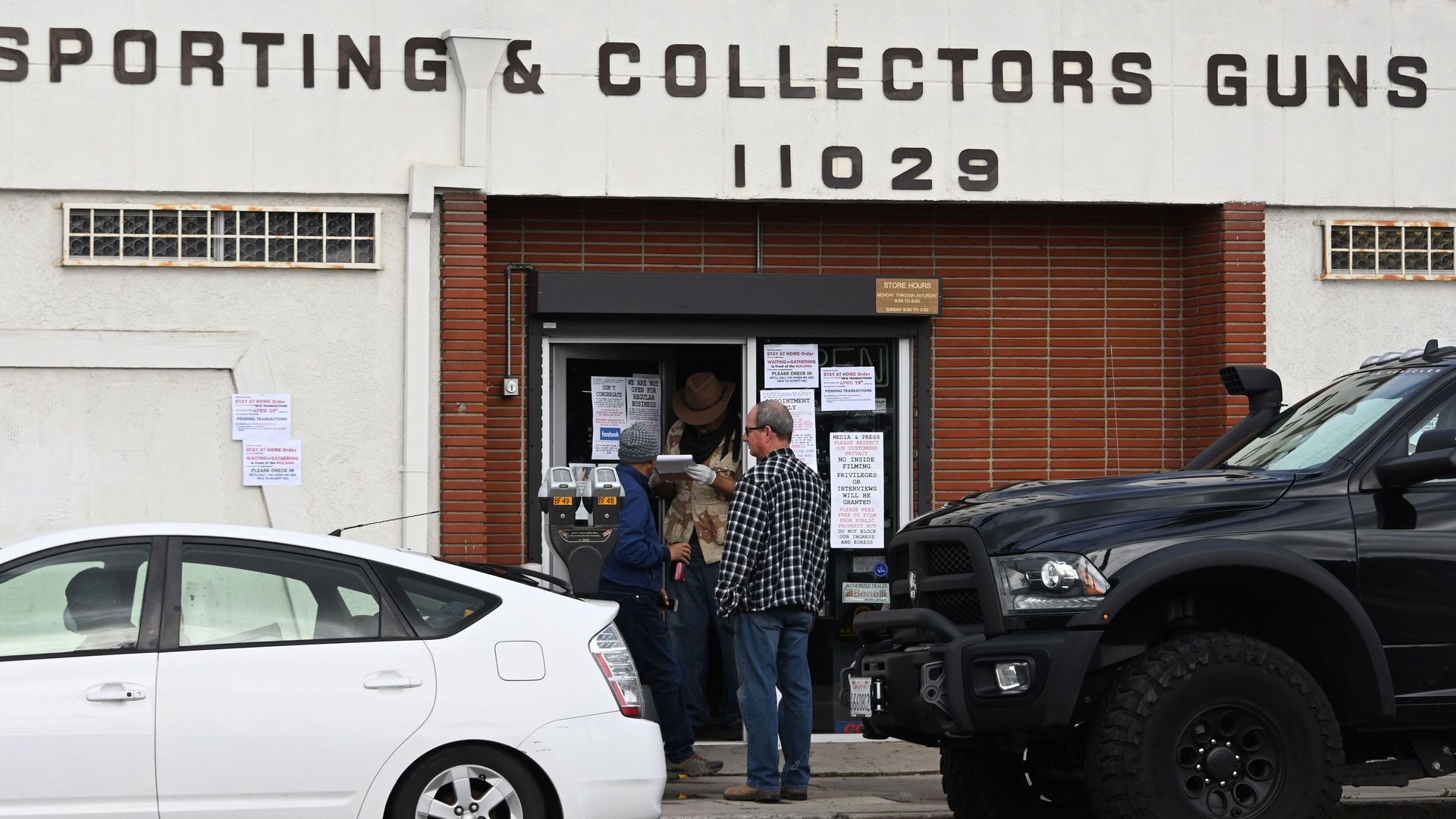
The Trump administration has now included gun stores, shooting ranges and weapons manufacturers in its guidance on the essential critical infrastructure workforce allowed to open during shutdowns over the novel coronavirus pandemic.
The big picture: Gun control advocate the Brady group criticized the move and filed a Freedom of Information Act request with the Department of Homeland Security "seeking emails and documents that explain" how it reached its decision, per AP. The NRA which is, with other pro-gun groups, suing California officials for deeming gun stores nonessential during the state's stay-at-home order, thanked President Trump for "keeping his promise to protect the Second Amendment rights of all law-abiding Americans."