House Foreign Affairs Committee members are heading to Silicon Valley next week to discuss AI and export controls with leading tech companies, according to an invitation seen by Axios.
Why it matters: The trip underscores how AI is becoming a foreign policy priority, even as the White House has diverged from the Hill on whether China should have access to the most advanced chips.
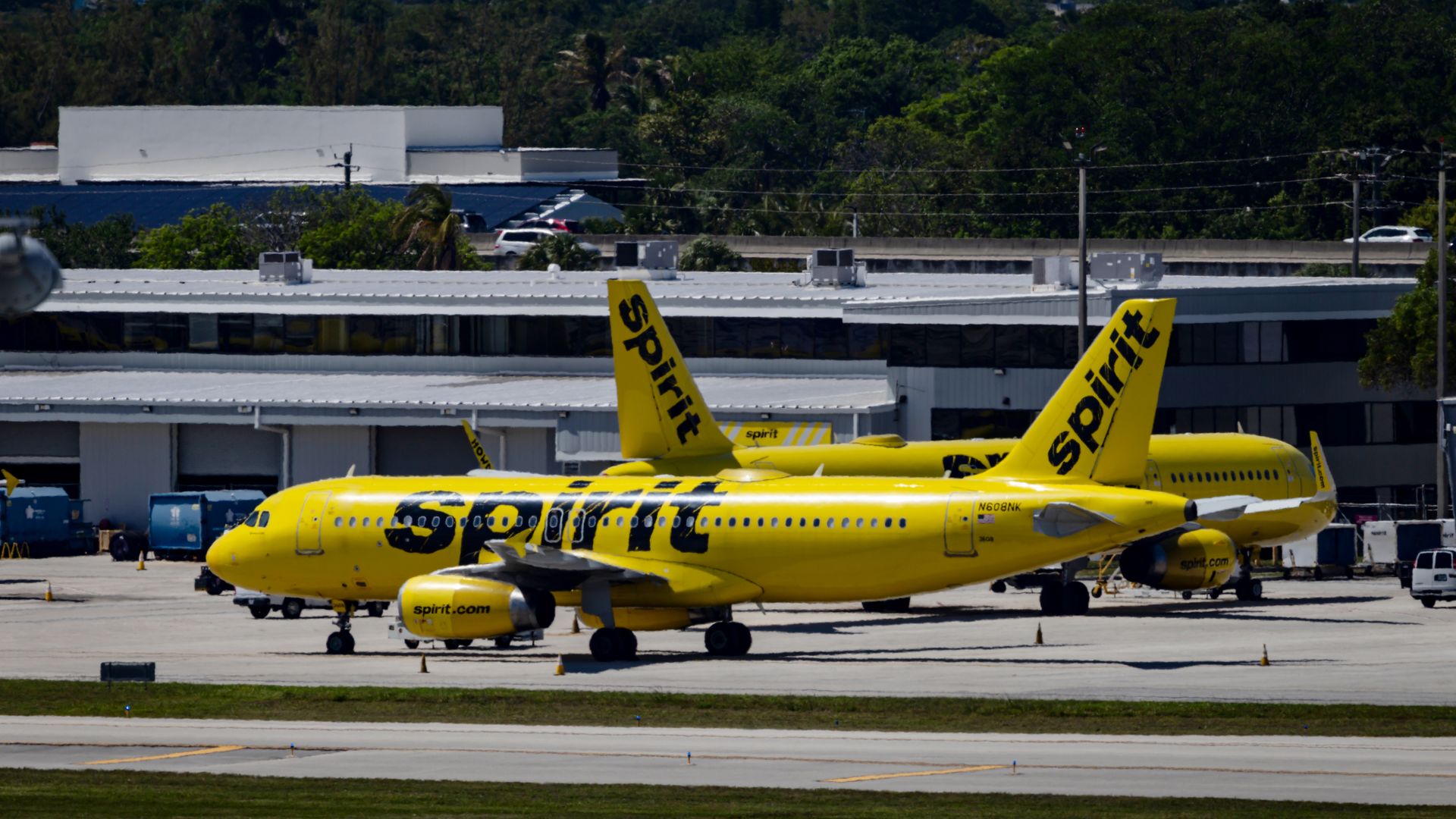
Several major airlines said Friday that they'll aid Spirit Airlines customers if the budget carrier suddenly goes out of business.
Why it matters: Spirit is said to be on the verge of ceasing operations after failing to land a government bailout during its second bankruptcy in less than a year.
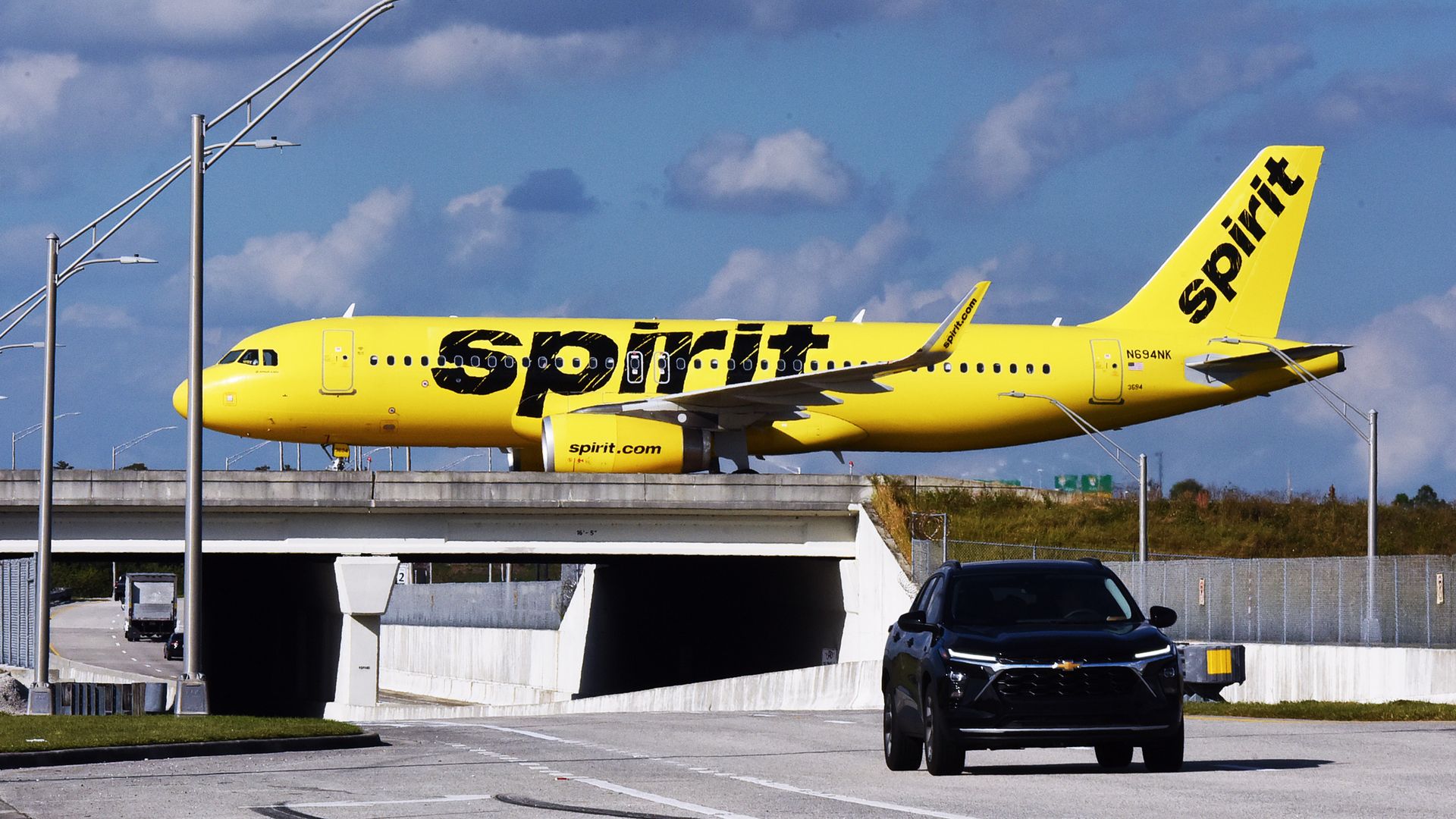
Spirit Airlines is reportedly preparing to cease operations, joining the graveyard of failed U.S. air carriers — including icons like Pan Am and Eastern Airlines — as it has not been able to identify a path out of its second bankruptcy.
Why it matters: The company's demise would leave the U.S. travel industry with fewer competitors in the low-cost space, which could drive up ticket prices and reduce route options.
The uncomfortable new normal for the U.S. economy: spending growth concentrated at the top of the income ladder, a split largely explained by wealth gains from financial assets.
Why it matters: The K-shaped economy is real, though it is not particularly new. That's the conclusion of research out Friday morning from the Federal Reserve Bank of New York.
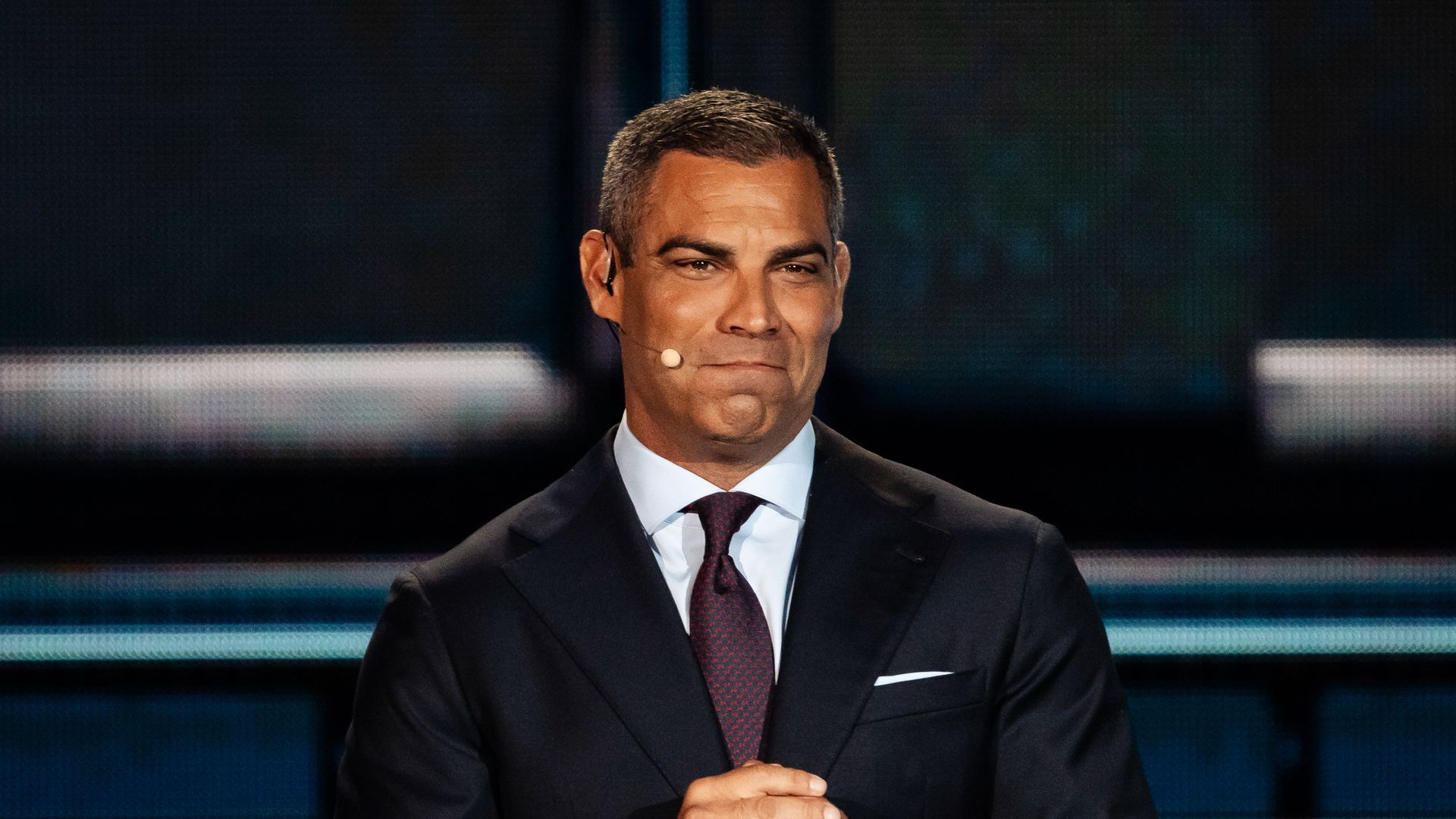
Francis Suarez, former Miami mayor, has joined the "Ambition Accelerated" campaign as a senior advisor.
The big picture: This is the effort launched by Stephen Ross and Ken Griffin to recruit more companies, CEOs and founders to Florida's "Gold Coast" corridor between West Palm Beach and Miami.
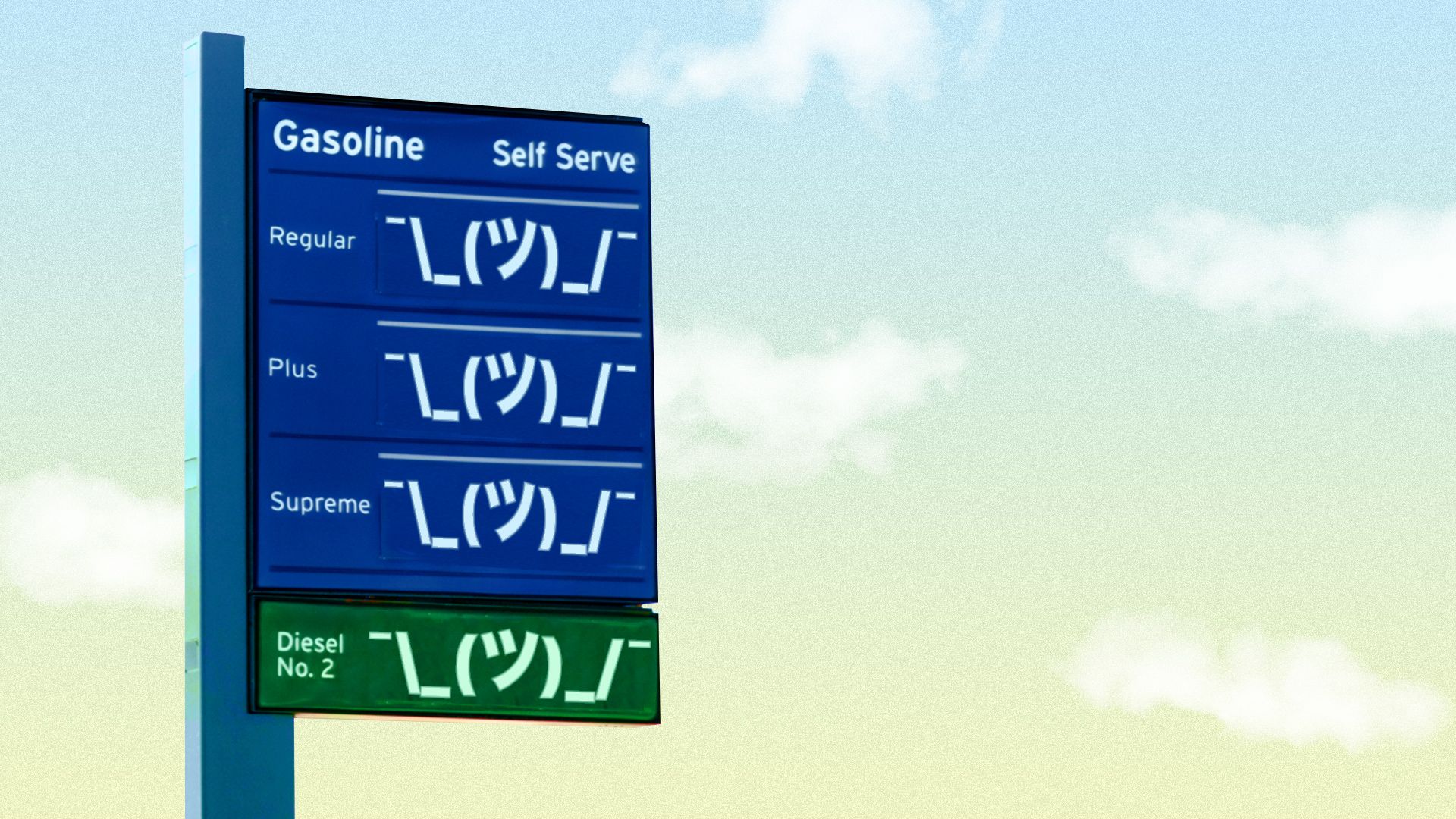
The energy crisis in the U.S. is starting to eat into American wallets, and though it's hardly an apocalyptic scenario, it sure feels awful.
Why it matters: Unlike in Asia and Europe, the U.S. is relatively insulated from the threat of actual gasoline or oil shortages, and price increases are so far manageable.
The Iran war threatens to disrupt summer travel as it sends oil prices surging — and flight and hotel bookings are already dipping, industry experts warn.
You thought Americans were bummed out? The British are among the most pessimistic in the world, according to a ranking of surveys across 139 countries from Gallup out Friday.
Why it matters: The low number speaks to the "depth of the economic malaise in the U.K.," writes Benedict Vigers, Gallup's senior global news writer.
Earlier this year, Regency Centers officially broke ground on The Village at Seven Pines, a 182,000 square foot open-air mixed-use development at Butler Boulevard and I-295 in Jacksonville, Florida.
What you need to know: The Village will serve as the commercial heart of Seven Pines, supporting convenience, connection and long-term community growth.
Why it matters: Taken together, Wednesday's news out of the William McChesney Martin Jr. Building means that Warsh will face serious constraints if he wants to rapidly steer the Fed in ways that its current leadership believes unwise.
The Saudi sovereign wealth fund on Thursday confirmed it's withdrawing support for LIV Golf after the 2026 season.
Why it matters: The move places the tour's future in jeopardy four years after it was launched as a splashy, well-capitalized competitor to the PGA Tour.
The U.S. economy expanded at a 2% annualized pace in the first quarter of 2026, the Commerce Department said Thursday.
Why it matters: The economy was on relatively solid footing as the Iran war began, amid a rebound from the government shutdown and strong AI investment.
Oil prices reached their highest levels overnight since the Iran war began, with Brent crude topping $126 per barrel before pulling back on Thursday morning.
Why it matters: The jump will keep sending U.S. gasoline prices higher — and shows the market reacting to the possibility of a long stalemate that keeps the Strait of Hormuz throttled.
Why it matters: The bluebuck — a member of the antelope family once found in modern-day South Africa — was hunted to extinction more than two centuries ago.
Claire's is launching a sweeping rebrand aimed at winning over Gen Alpha — offering an early look at how retailers are rethinking how to reach the next generation of shoppers.
Why it matters: Retailers are racing to connect with the first fully digital-native generation — those born from 2010 through 2024 — but there's no clear playbook yet.
What did investors take away from the four Big Tech companies reporting earnings late Wednesday? If you're going to spend big on AI, you better have the growth to justify it.
Why it matters: Investors are over CEOs hyping AI and ready for CFOs to start explaining the return on their AI spending.
The U.S. is producing so much natural gas that at one hub in West Texas, drillers have to pay customers to take the stuff — or put another way, prices are negative!
Why it matters: It's surprising given that we're in the middle of the worst energy shock in history.
But unlike oil, which trades in a global market, natural gas still mostly trades at the regional level. And the U.S. produces enough to supply itself.
The big picture: The negative price tag is an indication of just how well-positioned the U.S. is when it comes to coping with the energy shock of the Iran war — particularly in the natural gas market.
The natural gas bounty not only insulates the U.S. from the war shock but actually creates an economic tailwind, Bloomberg reports.
"Cheap supplies of gas — a key manufacturing input and a major player in meeting power demand from artificial intelligence — stand to give the US an edge over countries facing fuel shortages," per Bloomberg.
Between the lines: While prices at the pump get a lot of attention, and rightly so, natural gas is increasingly important. It now accounts for about 40% of all U.S. electricity generation — and is powering the AI boom.
Zoom in: The glut of natural gas in West Texas stems from a surge in production over the past 15 years that has far outpaced the pipelines needed to move it out of the region.
This isn't the first time the price has turned negative.
The gas is a byproduct created during the oil drilling process.
New pipeline capacity is set to come online, but more gluts could be on the way.
What they're saying: That will "provide incremental takeaway capacity for a basin awash in molecules," says Chris Louney, a commodity strategist at RBC Capital Markets.
But "the basin is prolific, and associated gas will continue to be produced, often in excess, alongside crude oil."
How it works: For now, that local oversupply — even as other parts of the world face acute shortages — highlights how fragmented natural gas markets remain.
Prices are still driven largely by regional infrastructure, not just global supply and demand.
By the numbers: U.S. natural gas prices outside of the region are still positive — the benchmark Henry Hub natural gas price is sitting at $2.64 per million BTUs, down about 20% from last year.
That's much lower than for Asia and Europe, both depend on imports through the Strait of Hormuz. The benchmark gas price is up about 47% in the EU and more than 50% in Asia from last year.
Asian countries, outside of China, are grappling with a shortage that's led to rationing and severe measures to deal with shortfalls and high prices.
What to watch: The market has been becoming more global, especially with the U.S. rising as the world's top exporter of liquefied natural gas.
Still, the Iran war is exposing the limits of that interconnected system.
A nonprofit that's part of the growing center-left "Abundance" movement is assembling a 2028 policy agenda aimed at targeting regulations it believes have hurt Democrats' efforts on health care, housing, energy and more.
Why it matters: The Inclusive Abundance Initiative is among several groups on the left that already are battling over what the next Democratic administration will prioritize, and what people it will hire.
The AI industry has entered an era of perpetual upheaval where market leaders are crowned — and dethroned — every few months.
Today's hottest company could be eclipsed by summer and the laggard could revolutionize the world.
Why it matters: As AI changes everything, keeping up with who's dominant and who's falling behind is becoming an existential question for investors, big businesses and regular users trying to guarantee their own futures.