AI chip smuggling signals strong Chinese demand

Add Axios as your preferred source to
see more of our stories on Google.
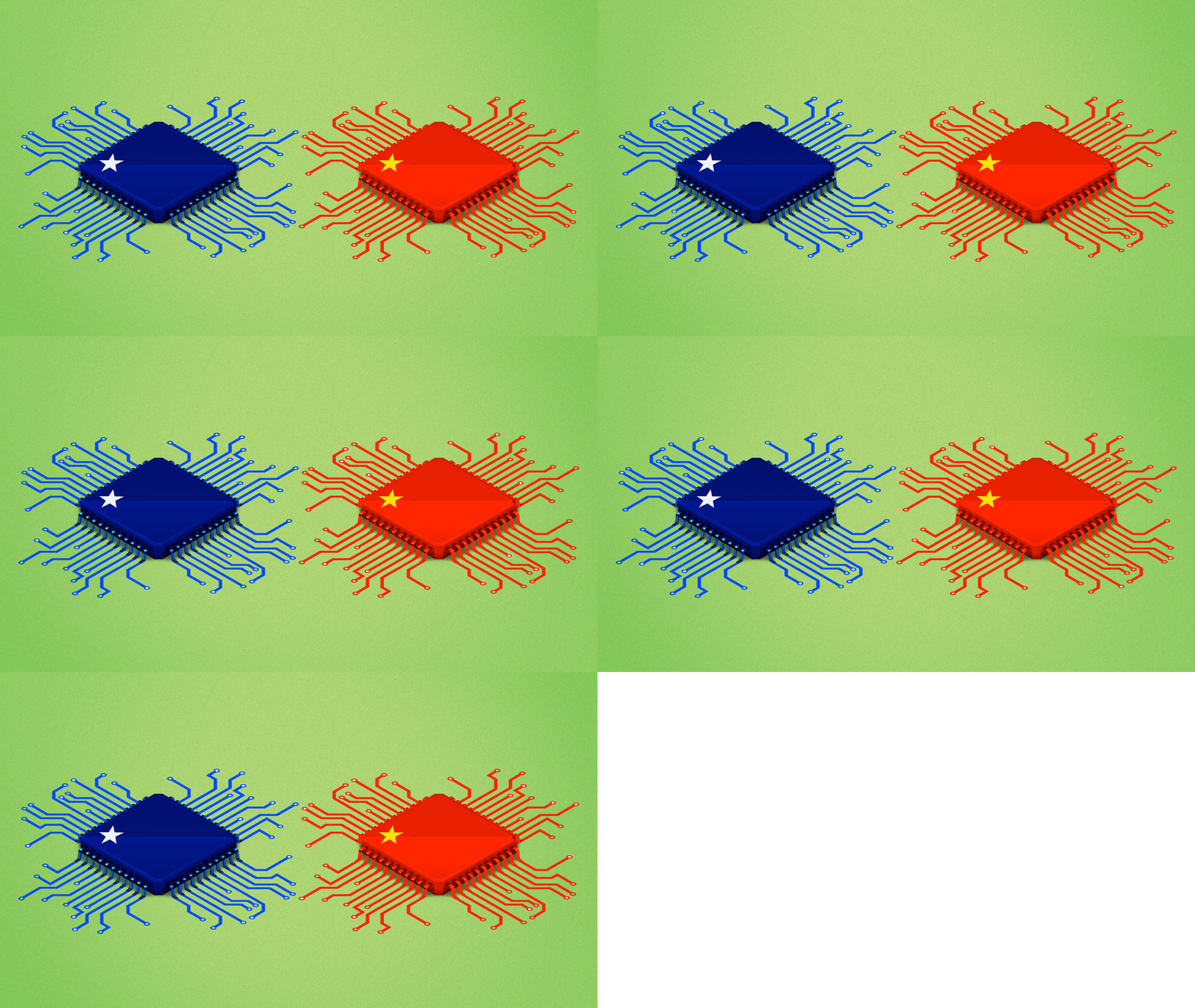
Illustration: Aïda Amer/Axios
A new AI chip smuggling case is challenging industry claims that smuggling to China isn't happening on a massive scale.
Why it matters: The Trump administration recently gave the green light to sell some AI chips to China, embracing industry arguments that Beijing has its own advanced technology and it's best for U.S. firms to enter the market and compete.
- Some China experts say if Beijing had comparable technology, there would be no need for large-scale smuggling operations like this.
- Now, key Republicans are calling for action to ensure AI chip sales to China don't take place.
"I've said this over and over again, our H200s, Blackwells, or any other AI chips that could help China win the AI arms race, can never have Chinese end users," House Foreign Affairs Committee Chair Brian Mast (R-Fla.) told Axios.
- "No American AI chips to China," Mast said, pointing to another incident last month where China smuggled in Blackwell chips.
- "Companies like Alibaba, Tencent, or DeepSeek who work for the Chinese military, are looking for every chance to lie, cheat or steal to get our technology," he said.
Context: Lawmakers have introduced several bills to tighten controls, including legislation to block exports of advanced AI chips to China and require location-tracking technology in those chips.
- Industry has repeatedly claimed smuggling isn't happening. The White House has also downplayed it.
Catch up quick: The Justice Department on Thursday charged three people, including the co-founder of Super Micro Computer, with diverting $2.5 billion of dollars worth of servers with Nvidia AI chips to China.
- "You would not be seeing such acts if there wasn't an enormous desperation within the Chinese tech industry for advanced chips," said U.S.-China Economic and Security Review Commission's Leland Miller.
The intrigue: Some U.S. firms and experts argue that China would not want to be overly reliant on American technology, but the level of smuggling could show there's still strong demand.
- "Credit to the Trump Administration for cracking down on the enforcement of export controls. Nvidia has insisted for years that there's no evidence of chip smuggling while experts raised the alarm," American for Responsible Innovation's Chris MacKenzie said.
- "As the U.S. faces conflicts abroad, there are real national security implications for advanced chips making their way into China. These chips aren't just powering chatbots."
What they're saying: "Strict compliance is a top priority for NVIDIA. We continue to work closely with our customers and the government on compliance programs as export regulations have expanded," an Nvidia spokesperson said.
- "Unlawful diversion of controlled U.S. computers to China is a losing proposition across the board—NVIDIA does not provide any service or support for such systems, and the enforcement mechanisms are rigorous and effective."
What we're watching: This case could harden congressional opposition to easing export controls and fuel calls for stricter enforcement.
