Trump signs order expanding access to retirement accounts

Add Axios as your preferred source to
see more of our stories on Google.
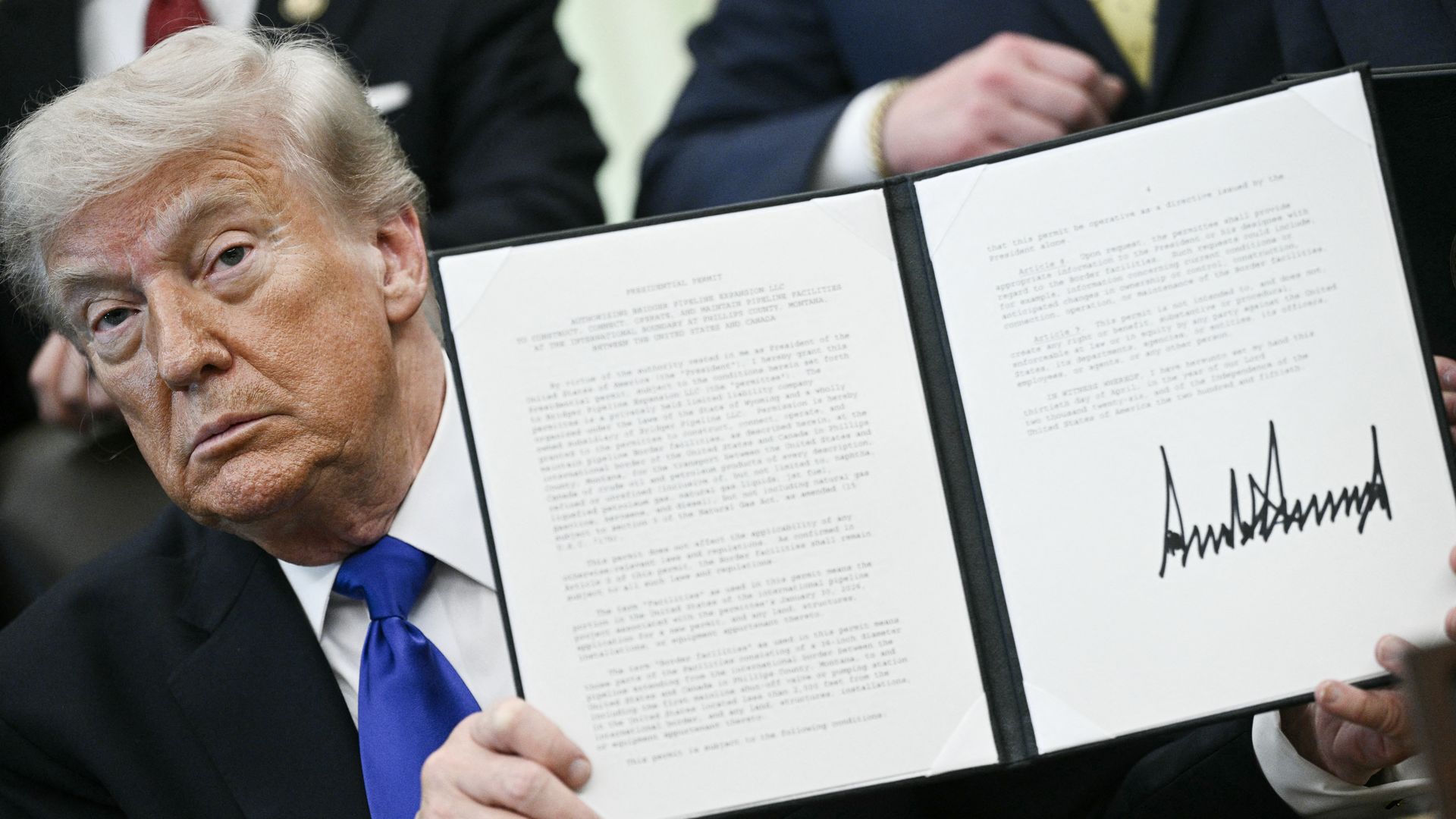
President Trump in the Oval Office Thursday; Photo: Brendan Smialowski / AFP via Getty Images)
President Trump issued an executive order Thursday that expands access to retirement accounts for workers who don't get 401(k)s.
Why it matters: The order could be a game changer for millions of lower-income Americans — it has a surprising amount of bipartisan support.
By the numbers: It's the kind of thing a lot of salaried types already get from their employers.
- But about 54 million Americans lack access to an employer-based retirement plan, according to data from the centrist Economic Innovation Group, which floated the idea in 2021 and had worked behind the scenes with the White House.
Catch up quick: A law passed under former President Biden set up a small amount of matching funds for low-earning workers who put money into a retirement plan.
- The "saver's match" was set to take effect next year and would give up to $1,000 in matching funds to certain workers who contribute $2,000 a year to an IRA.
How it works: The Trump administration is building off that to create a system where folks can more easily sign up for retirement accounts.
- The order directs the Treasury Department to set up a web portal, TrumpIRA.gov, where Americans can shop for plans starting next year.
- The plans on offer will be vetted by the Treasury Department and modeled on the well-regarded Thrift Savings Plan used by more than six million federal employees — typically low-fee index funds.
"It's a huge step forward," John Lettieri, cofounder of EIG, tells Axios.
Between the lines: This is great news for Wall Street — a number of investment firms put out statements applauding the order on Thursday.
- The universe of low-income earners is a "huge uncaptured market," Lettieri says.
Yes, but: Advocates say the real game changer for these workers would be a more robust match and automatic enrollment — but that requires legislation.
The intrigue: The proposal is a public-private tie-up akin to what the administration is doing with its Trump accounts for children.
- One economics writer compared the framework to Obamacare — where private insurers created insurance plans to conform to specific federal guidelines, selling them through a government portal.
