Trump announces new retirement plan at State of the Union

Add Axios as your preferred source to
see more of our stories on Google.
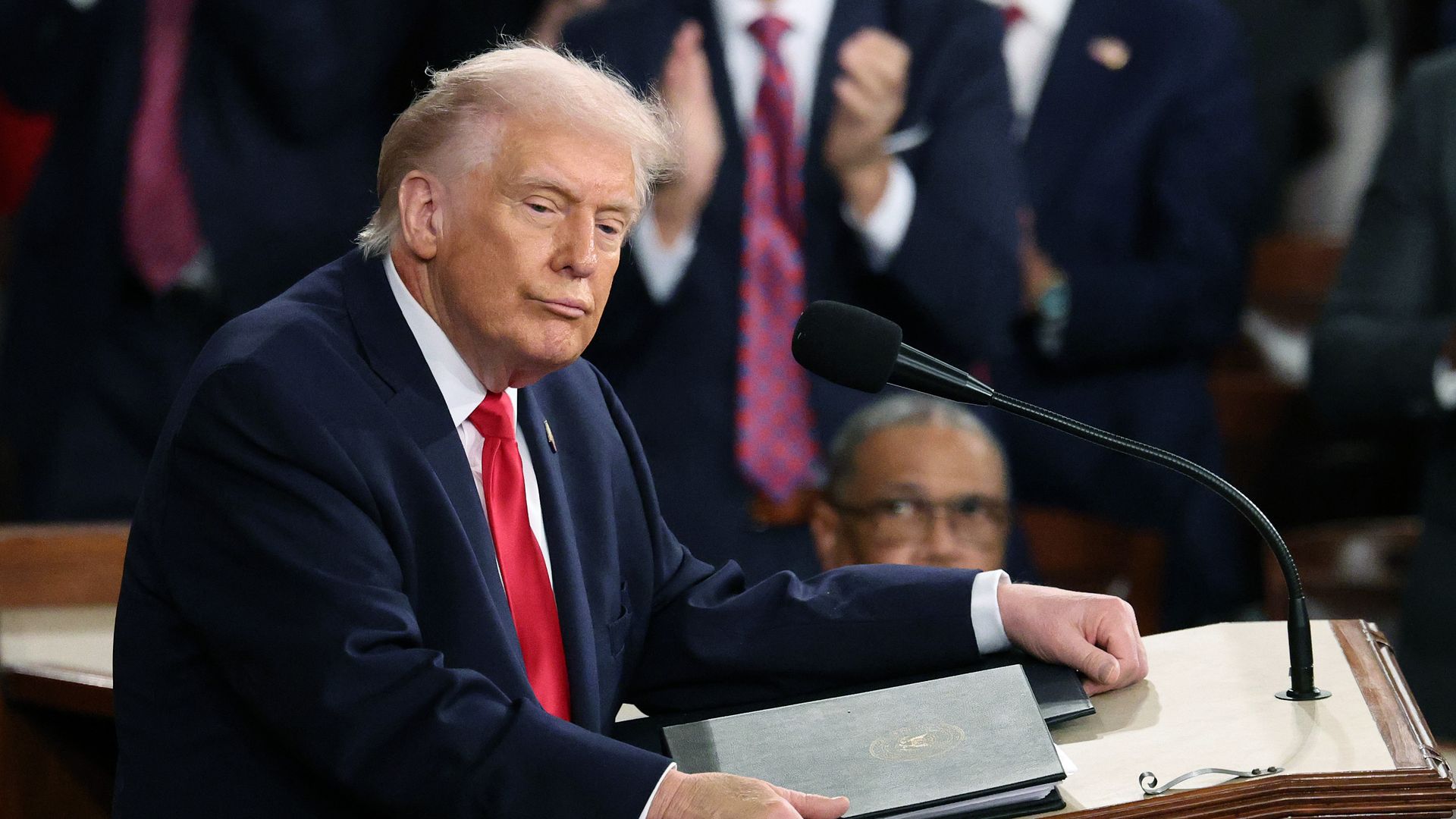
President Trump addresses Congress during the State of the Union. Photo: Win McNamee/Getty Images
President Trump announced during his State of the Union address Tuesday night plans to offer Americans access to a retirement account similar to those available to federal workers.
Why it matters: There are roughly 50 million Americans without employer-sponsored retirement plans, like 401(k)s, and there's been growing bipartisan interest in expanding access.
What he's saying: Trump said he would offer Americans who don't have 401(k)s or other employer-based retirement accounts "access to the same type of retirement plan offered to every federal worker."
- "We will match your contribution with up to $1,000 each year as we ensure that all Americans can profit from a rising stock market," he said.
How it works: The White House says it's expanding on an existing law passed under former President Biden called the Secure Act 2.0 (which is an update of a law passed during Trump 1.0).
- A piece of it takes effect next year and would offer workers who already have retirement accounts up to $1,000 in matching funds if they contribute $2,000 on their own.
Zoom in: A White House official tells Axios that it would be similar to one offered to federal employees called the Thrift Savings Plan, which offers access to a handful of low-fee funds that invest in things like short-term Treasuries and the S&P 500 index.
State of play: The White House now wants to set up retirement accounts for people who don't already have one.
- Instead of these folks opening up an IRA on their own — a hurdle most don't take — they would just check a box on their tax form to get things started, says Teresa Ghilarducci, a progressive labor economist at the New School who is familiar with the plan.
"This is a big deal," Ghilarducci says. "It finally recognizes that most people don't have anything saved for retirement, and they don't save consistently."
- She worked on an early version of this plan with White House economic adviser Kevin Hassett in 2021.
- "The idea was to get someone far on the right and far on the left to come together," she says.
Zoom out: The idea is part of a broader push by the White House to get more Americans invested in stocks, and comes on top of its new Trump accounts, a way to get kids into the markets as young as possible.
The intrigue: A White House official tells Axios that as with Trump accounts for kids, philanthropic interests will be able to contribute.
Yes, but: The one big looming threat to people's retirement savings is still on deck — the Social Security trust fund is set to be depleted in 2033, at which point recipients would see a steep cut if Congress doesn't act.
- "There's still more to be done," Ghilarducci says.
What to watch: Keep an eye out for more details. Retirement experts tell Axios that even the most well-intentioned plans can go sideways.
Editor's note: This story has been updated with additional details.
