Babies are basically getting 401(k)s now

Add Axios as your preferred source to
see more of our stories on Google.
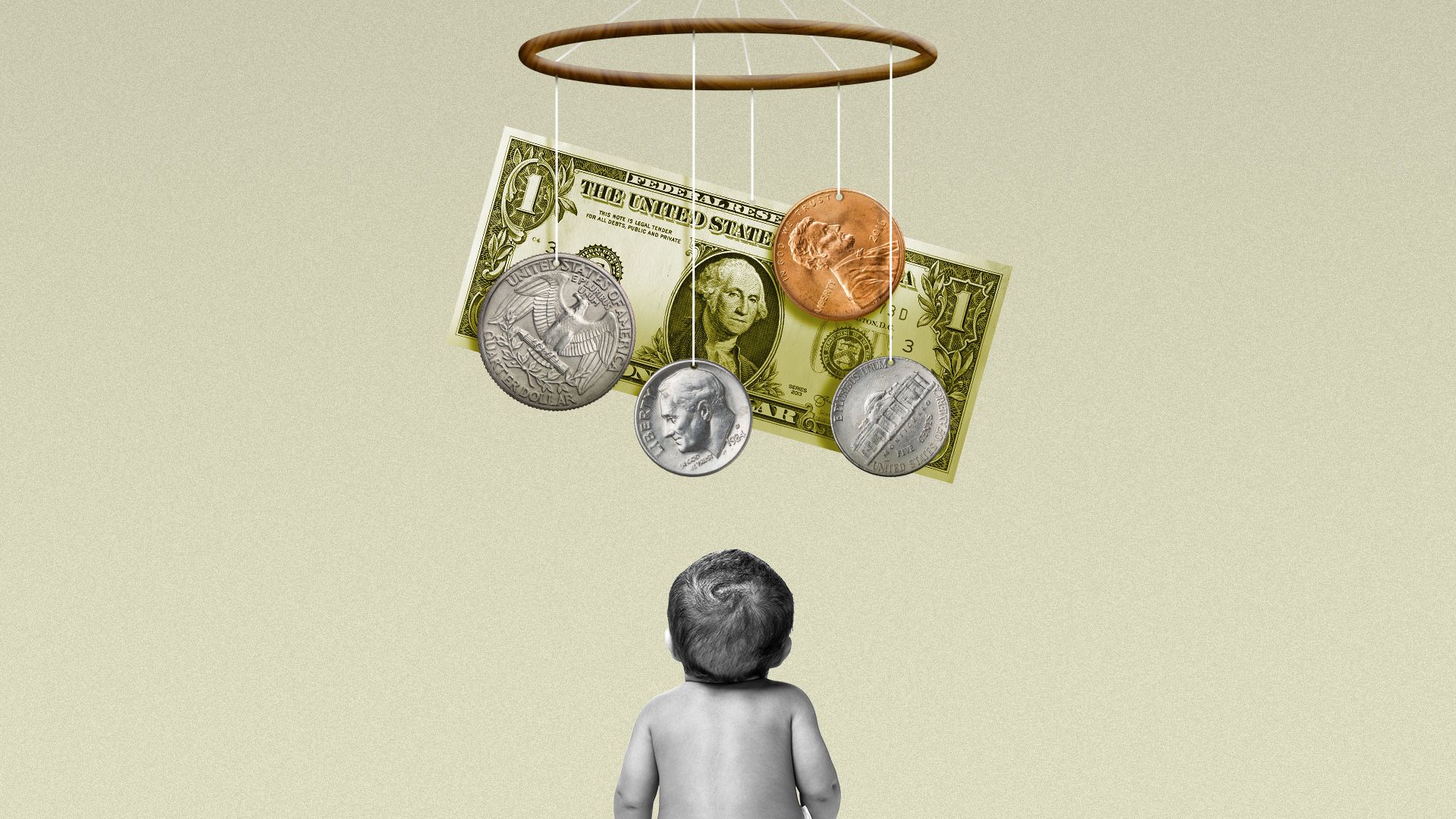
Illustration: Sarah Grillo/Axios
America's babies are joining the 401(k) generation early, thanks to the new "Trump accounts."
Why it matters: Like employment-based retirement funds, Trump accounts will draw even more Americans into the stock market — along with all the risks, rewards and drawbacks that entails.
- "It's like a 401(k) from birth," Brad Gerstner, an investor and champion of the accounts, said at an Oval Office press conference earlier this week.
Follow the money: The accounts aren't just a way to set people up for success in adulthood. Proponents say they also will draw more Americans into the stock market and financial system.
- "This is the beginning of the shareholder economy," Treasury Secretary Scott Bessent said of Trump accounts at the New York Times DealBook conference Wednesday.
- "When you see that people have a stake in the system, they don't want to bring the system down."
Between the lines: This "shareholder economy" has been a long time in the making, as policymakers and businesses gradually shift responsibility for big social safety net policies onto individuals.
- Decades ago, 401k(s) started replacing pensions — a more steady and guaranteed form of retirement income.
- 529 accounts are a way for parents to pay for higher education, as prices rise and governments pull back on funding.
- This year, there's been a growing push for health care savings accounts and even portable savings accounts to help workers pay for sick days.
Zoom out: The whole process was dubbed "the risk shift," in a book by Yale political science professor Jacob Hacker, who argues in a 2019 updated edition that there has been a large shift of risk from government and employers onto workers and their families.
- "It's one reason the tax code is now littered with various subsidized accounts with alleged social welfare purposes," he tells Axios in an email.
- "These accounts tend to magnify inequality and increase risk," he says.
- The accounts may also take the place of more secure benefits that serve as insurance, and they were passed as part of a bill that cut some of those benefits — including Medicaid and food assistance, or SNAP.
- Wealthier families will be more able to set aside money — and higher income workers are more likely to get contributions from their employers, notes Neale Mahoney, an economist at Stanford.
Yes, but: Proponents of Trump accounts say that they will reduce inequalities, thanks to the White House contributions — $1,000 to all babies born from 2025 through 2028 — and those from philanthropists like Michael Dell, who is targeting lower-income families with his donation.
What to watch: There's opportunity down the line to build on these accounts and target them more toward lower-income Americans, Mahoney says.
The bottom line: America is seeding a new generation of capitalist babies.
