Spirit Airlines prepares to shut down, reports say

Add Axios as your preferred source to
see more of our stories on Google.
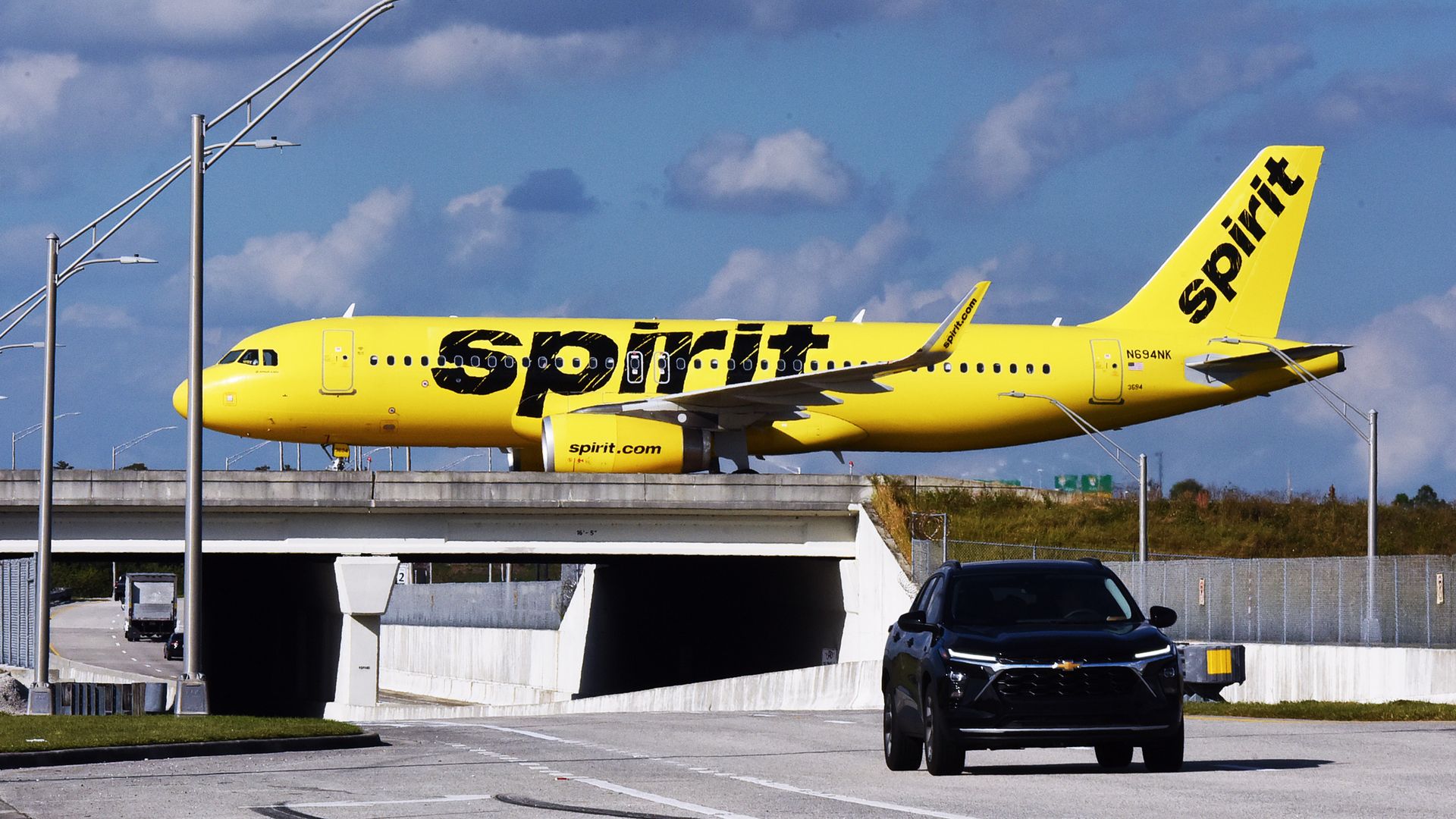
Photo: Paul Hennessy/Anadolu via Getty Images
Spirit Airlines is reportedly preparing to cease operations, joining the graveyard of failed U.S. air carriers — including icons like Pan Am and Eastern Airlines — as it has not been able to identify a path out of its second bankruptcy.
Why it matters: The company's demise would leave the U.S. travel industry with fewer competitors in the low-cost space, which could drive up ticket prices and reduce route options.
Driving the news: Spirit — which faced the extra wallop of spiking energy prices since the Iran War — is making plans to cease operations, according to reports by WSJ, NYT and Bloomberg.
- It comes after a last-ditch attempt to get a bailout from the Trump administration failed to reach a deal amid Republican opposition.
- A Spirit Airlines spokesperson declined to comment and said the company continues to operate. White House representatives did not immediately respond to a request for comment.
- The company's shares dropped 65% following the reports Friday, to $0.51.
It was not immediately clear how long the company would maintain its current flight schedule and how customers will be affected.
- Spirit had about 25,000 direct employees and independent contractors as of August, including 3,100 pilots, 5,300 flight attendants and 600 aircraft maintenance technicians.
Spirit had filed for Chapter 11 bankruptcy protection in August for the second time in less than a year, aiming to stay in business despite myriad business challenges that made it difficult for the company to compete.
By the numbers: Spirit had 3.4% market share in domestic passenger miles during the 12-month period ending in January, making it the eighth-largest domestic operator.
- Delta, American, Southwest and United collectively had 68.9%.
State of play: The ultra-low-cost carrier maintained its operations and continued accepting bookings when it filed for its second bankruptcy in August 2025 — what restructuring experts coyly call Chapter 22.
- It had pledged to use the restructuring process to overhaul its route network, reduce its fleet size, cut other costs and increase premium options for travelers.
- But a recently announced deal to restructure its debt load ultimately fell apart after the Iran war spiked jet fuel prices.
- "They've had everything from labor relations problems to trying to manage costs, publicity, service issues and of course the intense competition that the airlines have gone through," Georgetown University business professor and aviation executive Shye Gilad told Axios.
Zoom out: After Spirit's latest bankruptcy filing, United Airlines took the unusual step of publicly suggesting that Spirit might be done and saying it was adding winter routes just in case.
- "If Spirit suddenly goes out of business, it will be incredibly disruptive, so we're adding these flights to give their customers other options if they want or need them," Patrick Quayle, a senior VP for United, said in a statement in September.
- Spirit called it "wishful thinking" at the time and accused United of eyeing higher ticket prices.
Friction point: The problem for Spirit was that "you have a marketplace that is mature, that's effectively saturated — it's very difficult to find cost advantages anymore," Gilad told Axios.
- "We might be in an era where the ultra-low-cost carrier model is running its course," he added.
Flashback: Spirit had arranged a $3.8 billion sale to JetBlue in 2022, but a federal judge blocked that deal in 2024, at the urging of the Biden administration.
- The company more recently rejected a proposal to merge with Frontier Group.
- In considering a bailout for Spirit, the Trump administration blamed Biden for Spirit's troubles. Rohit Chopra, a director of the Consumer Financial Protection Bureau under Biden, said the proposed deal violated antitrust law.
