Spirit Airlines files for Chapter 11 bankruptcy protection

Add Axios as your preferred source to
see more of our stories on Google.
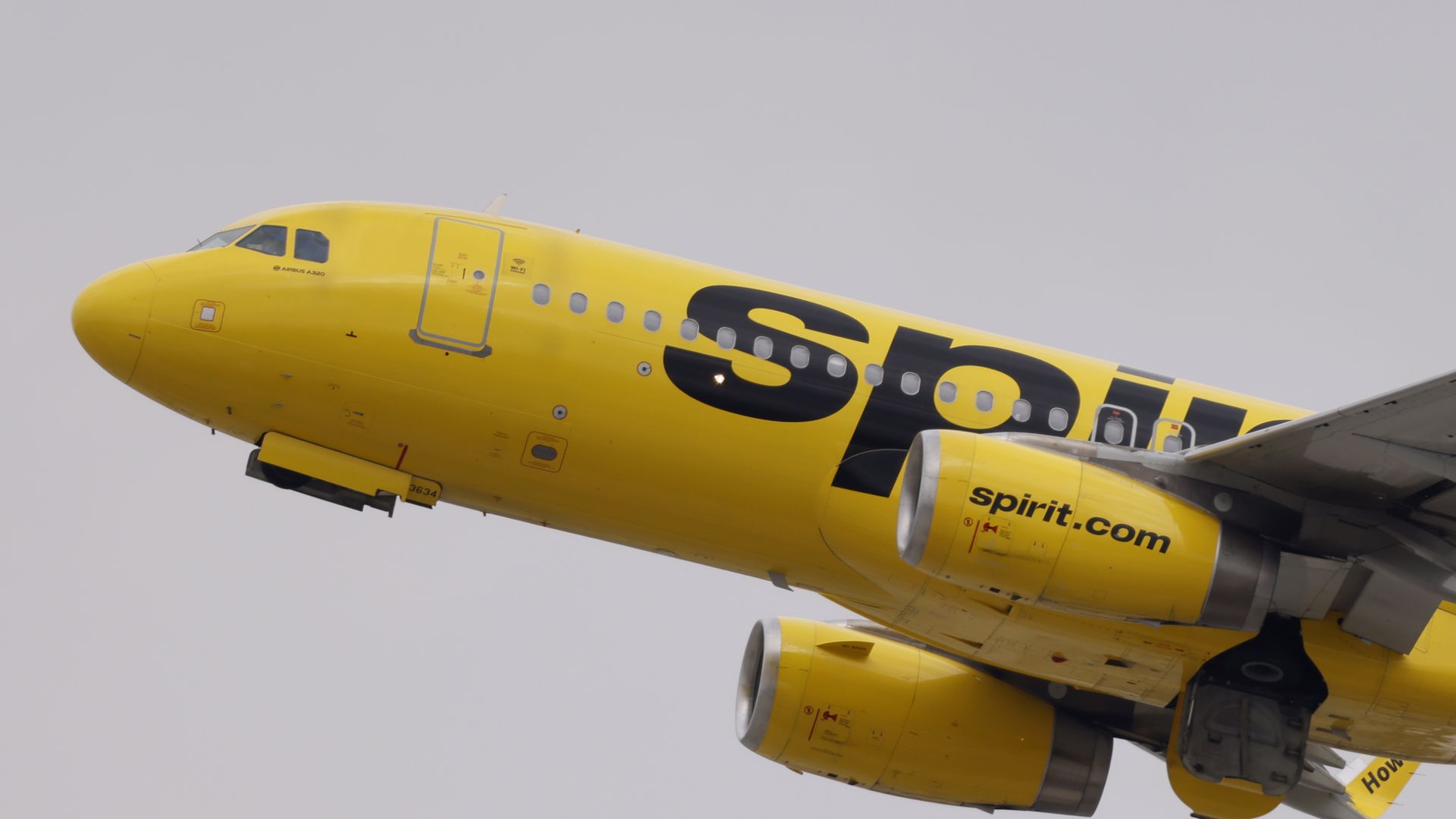
A Spirit Airlines plane departs Los Angeles International Airport. Photo: Kevin Carter/Getty Images
Spirit Airlines filed for Chapter 11 bankruptcy protection on Monday after the budget airline's merger efforts collapsed and its losses spiraled out of control.
Why it matters: The company's yellow planes became a symbol of ultra-low-cost travel, but it lost hundreds of millions of dollars struggling to make that strategy work.
Driving the news: Spirit plunged into bankruptcy after a $3.8 billion deal to sell itself to JetBlue was blocked by a federal judge and after previous efforts to combine with rival Frontier Airlines fell apart.
- The ultra-low-cost carrier is hoping to survive bankruptcy as a more sustainable company, just as American Airlines and United Airlines did in the past.
- The company said its reorganization plan had the support of a super-majority of bondholders and that it expects to emerge from bankruptcy quickly.
- Tickets, credits and loyalty points can be used as normal, and customers can continue to book future flights, the company said.
What they're saying: "There is a good chance Spirit emerges in better financial health and could attract private equity investment to help along the way," PitchBook senior analyst for industrials Jim Corridore wrote Monday.
The big picture: Spirit has been bleeding cash for years.
- The company lost money in 17 of its last 18 quarters, including about $336 million in the first half of 2024.
- It racked up $3.6 billion in debt, which it plans to restructure $1.64 billion and cut nearly $800 million.
Zoom out: With more than 21,000 employees and contractors — including 3,400 pilots and 5,800 flight attendants — Spirit has offered cheap fares by squeezing passengers together via "high-density seating," CFO Fred Cromer said in a court filing.
- The company operates a fleet of 213 Airbus aircraft — all in the A320 family of jets — of which 162 are leased, according to a court filing.
Between the lines: Spirit added market share in the aftermath of the pandemic by "aggressively adding to capacity" but the move was fueled by debt, and operating costs increased, Peter McNally, an analyst at market research firm Third Bridge, wrote in a research note.
- At the same time, other carriers added capacity as well, leading to excess capacity throughout the industry, he added.
- The added capacity, coupled with increased labor costs, led to a downward spiral as Spirit fell behind its mainline competitors.
In recent years, competitors have been swiping customers from Spirit by offering cheaper fares, while inflation has taken a toll on Spirit's margins.
- "With excess capacity in the domestic market, the major carriers can offer more competitive fares," McNally added.
The intrigue: The bankruptcy comes after the Biden administration hailed the demise in March of Spirit's deal to sell itself to JetBlue.
- Attorney General Merrick Garland argued at the time that the deal would lead to "higher fares and fewer choices" for customers — and a federal judge agreed.
- Spirit CEO Ted Christie argued at the time that the deal "would save hundreds of millions for consumers and create a real challenger to the dominant Big 4 U.S. airlines."
What we're watching: Whether Spirit attempts to revive a deal with JetBlue or Frontier once President-elect Trump takes office.
Go deeper: Charted: Too low terrain
Editor's note: This story was updated with additional details throughout.
