Colossal Biosciences reveals new species for "de-extinction": the bluebuck

Add Axios as your preferred source to
see more of our stories on Google.
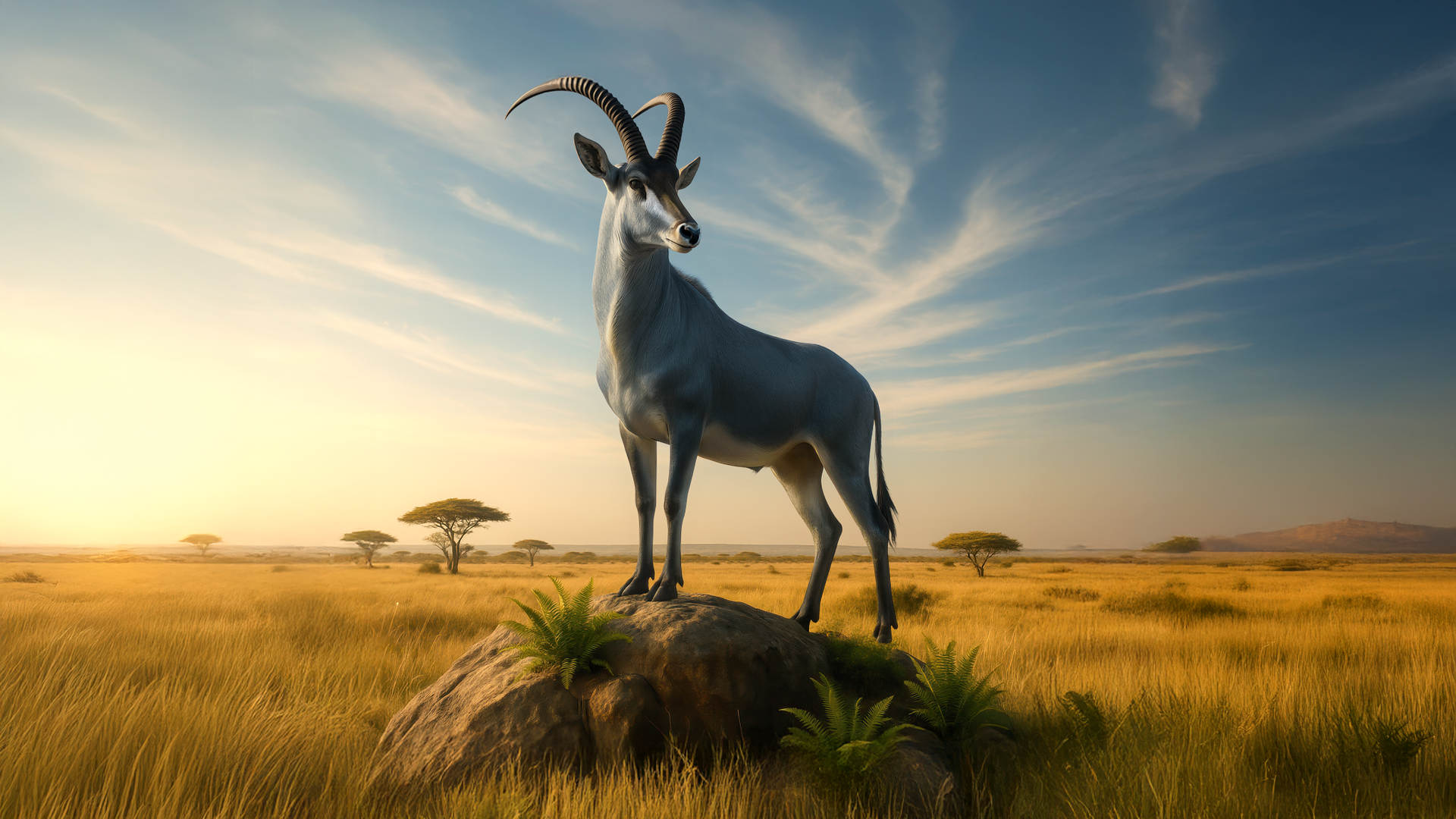
Colossal Biosciences is trying to bring back the long-extinct bluebuck, a member of the antelope family. The company released this artist's rendering of what it might look like. Photo: Colossal Biosciences
Colossal Biosciences — the company that's attempting to bring back the woolly mammoth and the dodo — revealed Thursday that it's aiming to revive another species: the bluebuck.
Why it matters: The bluebuck — a member of the antelope family once found in modern-day South Africa — was hunted to extinction more than two centuries ago.
Zoom in: Colossal said the bluebuck — which got its name from its silvery bluish hue — is the sixth member of the company's "de-extinction portfolio."
- The company already generated global buzz in 2025 when it showed off multiple dire wolves, which had been extinct for more than 12,500 years.
Colossal CEO Ben Lamm tells Axios that the company has obtained bluebuck DNA, mapped it and compared it to the animal's closest living relatives — and now it's in the final, and most difficult, phase of genomic editing.
- He says the company is aiming for a birth in "2028-ish," which will come after a nine-month gestation period via a surrogate.
- The eventual goal is to engage in re-wilding efforts, which the company said is supported by South African conservation groups.
The big picture: Lamm believes the company's de-extinction pursuits will generate new technologies, biodiversity efforts and environmental sustainability initiatives.
- He says Colossal has no plans to pursue a zoological endeavor, though he acknowledged that revived species could end up in ecological preserves that are open to the public.
- "For all of the projects that we're working on, we want to put the animals back into some form of a native habitat where they can survive, they can be accretive to the ecosystem," Lamm says.
- "But if governments and indigenous people groups and others locally want to create opportunities around … things like what Kruger National Park and others have done to the preservation of life in Africa, we were all about that, right? But that's really up to the government."
State of play: The company's highest-profile effort is its woolly mammoth project, which Lamm said remains on track to deliver its first birth in 2028.
- "The team is in the last stages of editing," he says. "The next stage will be doing embryo transfer into elephants."
Friction point: Some experts have sought to downplay the significance of Colossal's work. Some argued last year that the company's dire wolves are not actual dire wolves, but rather grey wolves genetically engineered to have dire wolf-like characteristics.
- Other critics say de-extinction efforts could surface ecological risks.
What they're saying: "Even if reviving extinct species is practical, it's an awful idea," writes Paul and Anne Ehrlich of the Yale School of Environment's Center for Conservation Biology.
Lamm says Colossal is responsibly partnering with governments, scientists, ecologists and indigenous people in a deliberative and thoughtful manner.
