How Colossal's technology works

Add Axios as your preferred source to
see more of our stories on Google.
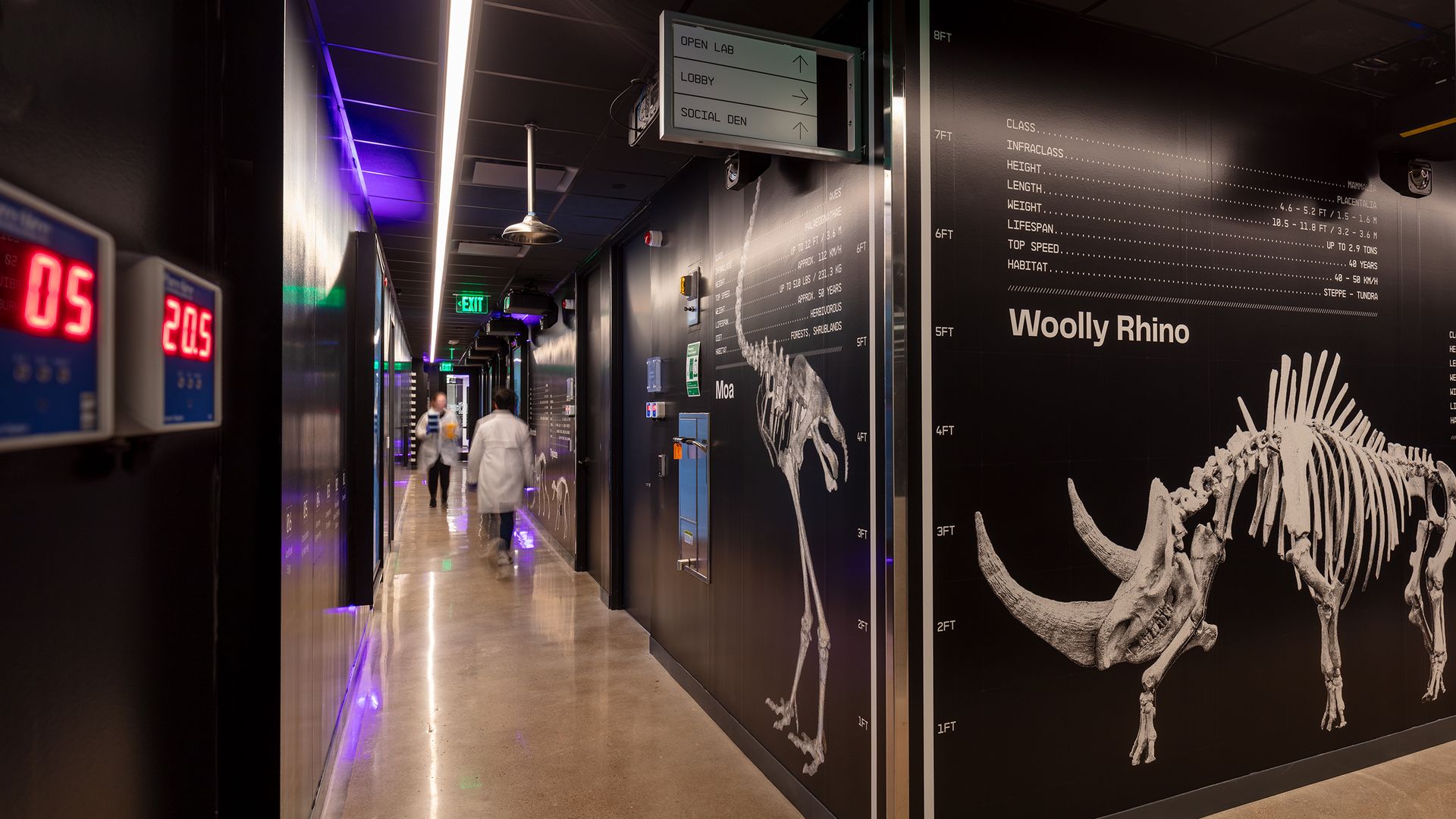
The walls throughout Colossal Biosciences have images of extinct and endangered creatures. Photo: Courtesy of Colossal Biosciences
Researchers at Dallas-based Colossal Biosciences rely on ancient DNA from extinct species and the genome of their closest living relatives to determine how they can be brought back.
Why it matters: Gene editing technology is commonly used to treat diseases and modify crops and livestock.
- Colossal is using the technology to recreate the DNA of extinct species by modifying the DNA of their closest living relatives.
State of play: Dallas billionaire Ben Lamm and Harvard geneticist George Church founded Colossal in 2021, aiming to bring back the woolly mammoth.
- *The company announced last April it had revived the dire wolf. The wolves had been extinct for over 12,500 years.
- In September, the lab announced a scientific breakthrough in resurrecting the dodo bird. The company's scientists were the first to create primordial germ cells from birds other than chickens and geese.
How it works: Gene editing is a cumbersome process that requires a lot of waiting and testing.
- Scientists edit certain DNA from the living relative to make it match the genome of the extinct species. The hybrid genes are tested to ensure the modifications worked.
- The hybrid cells are then grown into an embryo that is implanted into a surrogate.
Case in point: For the extinct dire wolf, Colossal referenced DNA from a tooth and 72,000-year-old skull to modify the DNA of gray wolves and recreate the dire wolf genome.
- Colossal's dire wolves, Remus, Romulus and Khaleesi, are now just over a year old.
- "They're hitting all their milestones, so it's really sort of a green light for us to start to look at growing the pack now," says Matt James, Colossal's chief animal officer who previously oversaw animal care at the Dallas Zoo.
What's next: Colossal scientists are now editing DNA from Asian elephants, who are 99.96% similar to woolly mammoths, to recreate mammoth DNA.
- Climate change and habitat loss may have contributed to the species' extinction thousands of years ago.
Reality check: Don't expect a woolly mammoth just yet. Scientists are still editing the genome and the species has a two-year gestation period.
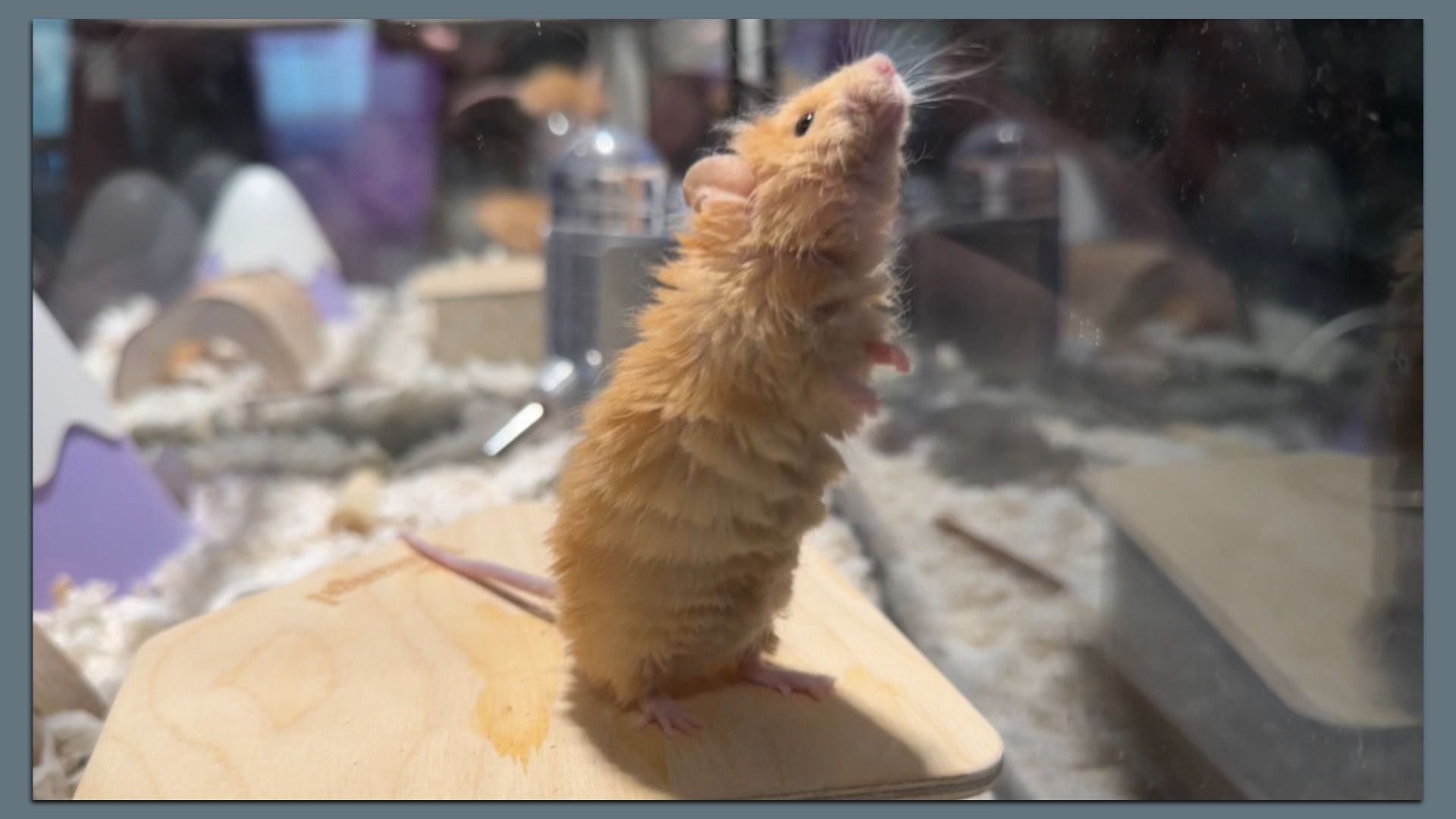
- Colossal is testing its edits on mice — which employees refer to as their "woolly mammoth mice" — to see how the modifications influence their hair color, length and texture.
The bottom line: "I sort of think about how one day my daughter could be on a safari-like experience through northern Alaska, seeing mammoth roam again. That would be incredible," James tells Axios.
Read more: Dallas-based "de-extinction" startup to open biovault in Dubai