Dallas-based "de-extinction" startup to open biovault in Dubai

Add Axios as your preferred source to
see more of our stories on Google.
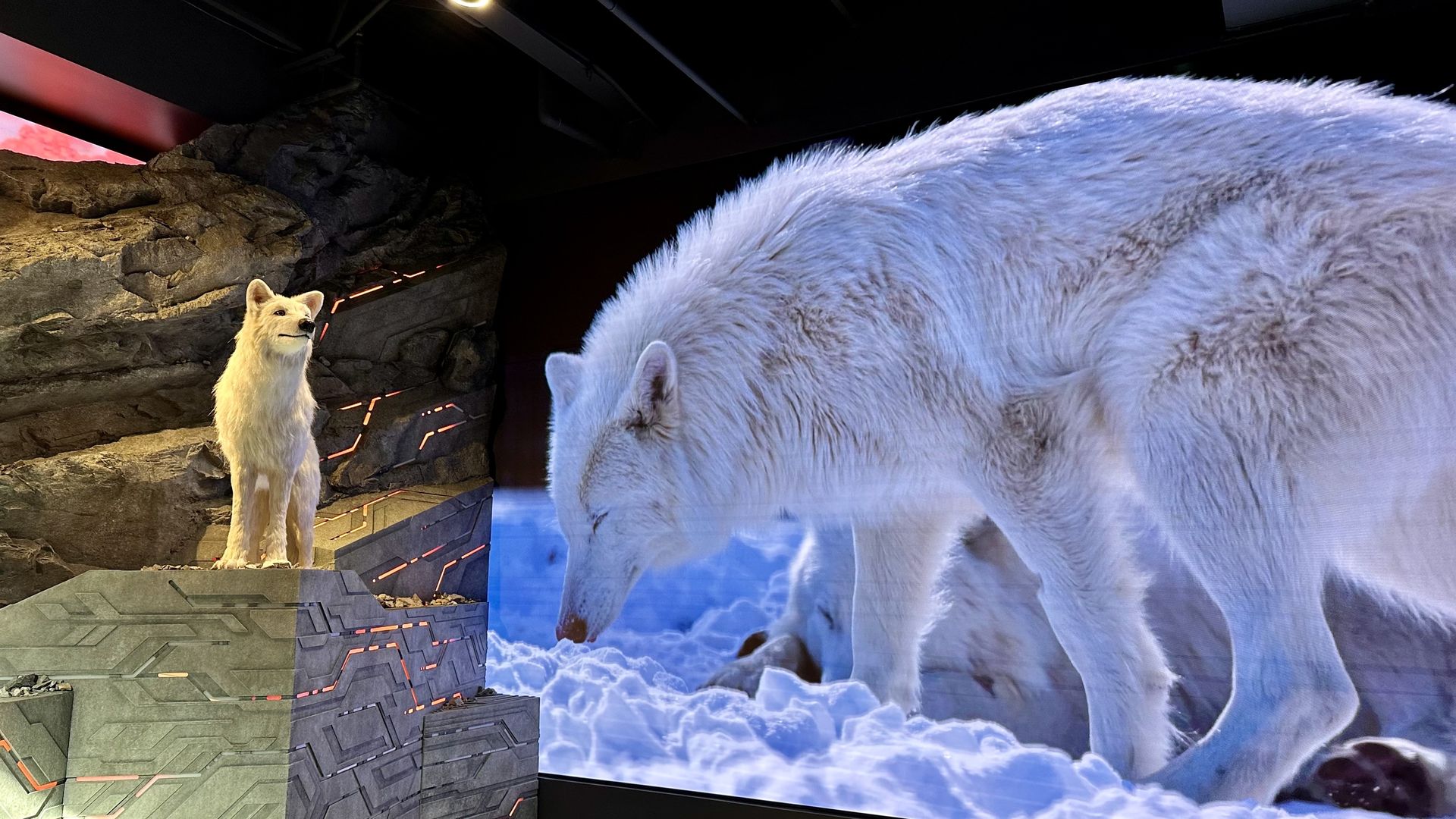
Visitors to the Colossal Biosciences lab in Dallas are greeted by an animatronic dire wolf near a large video screen showing one of the dire wolves resurrected by the biotech company. Photo: Tasha Tsiaperas/Axios
Resurrecting dire wolves is pretty darn metal. Hatching new dodo birds would make the impossible seem possible. Bringing back the woolly mammoth is cool.
Why it matters: Dallas-based "de-extinction" company Colossal Biosciences is banking on the wow factor of raising long-extinct creatures to fund the science that company founders believe is critical to conserving currently endangered species and biodiversity.
Driving the news: This month, Colossal announced it is creating a biovault and preservation lab to store frozen tissue and biological samples of 10,000 species inside Dubai's Museum of the Future.
- Colossal will focus first on collecting samples from the 100 most endangered species worldwide.
- The biovault will open to the public next year.
The big picture: Scientists are working in the company's Dallas lab to bring back the long-extinct woolly mammoth, dodo bird and the thylacine, best known as the Tasmanian tiger.
- Their scientific breakthroughs can also help endangered species adapt to a changing climate and reproduce.
Flashback: Dallas billionaire Ben Lamm and Harvard geneticist George Church founded Colossal in 2021, aiming to bring back the woolly mammoth.
Vibe check: Lamm brings a Silicon Valley startup attitude to serious science. The Dallas headquarters and lab has 170 employees in a multi-story, open space office.
- Most employees wear Colossal T-shirts covered in dire wolves and lightning bolts, though they're not required to wear a uniform.
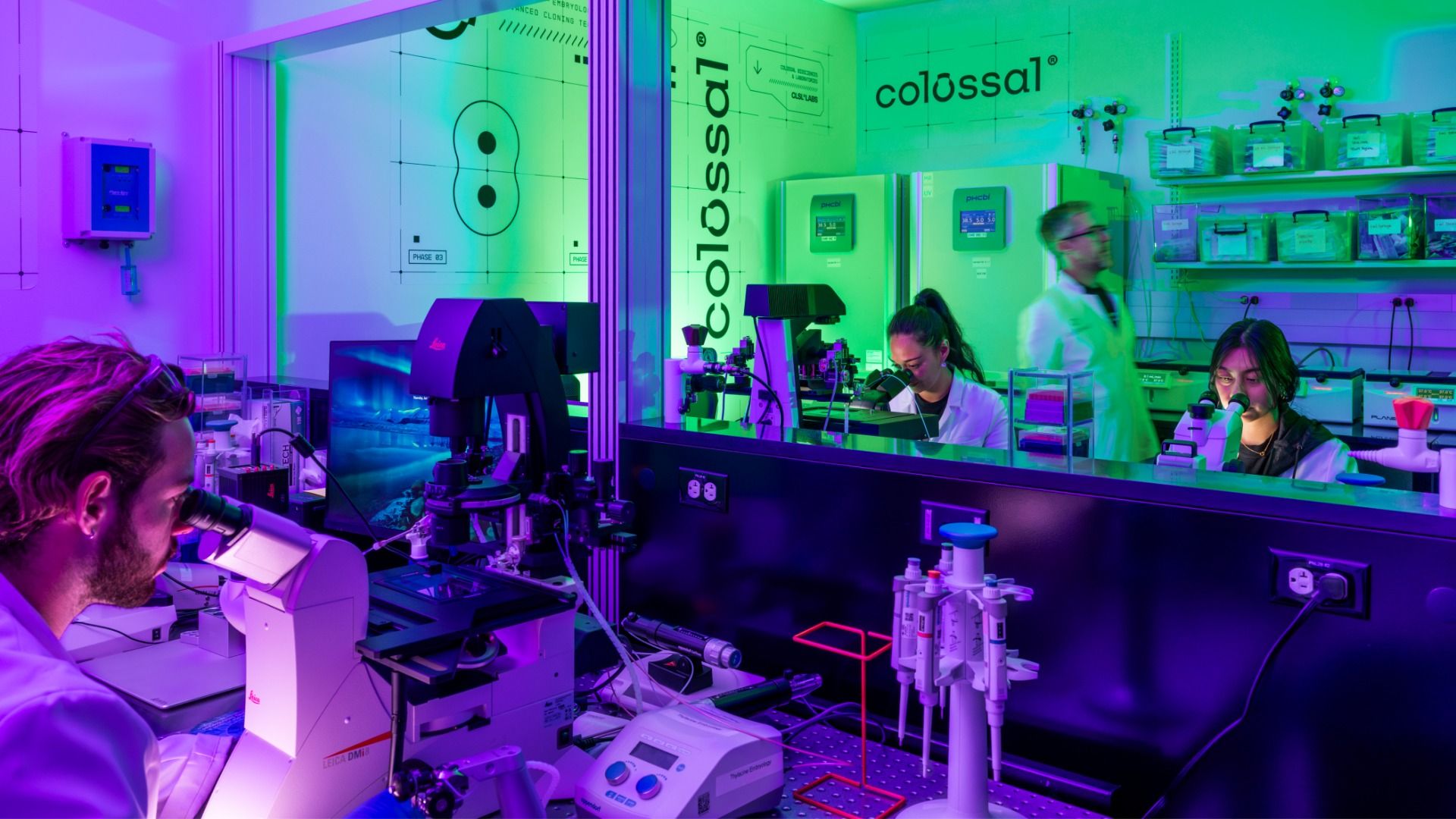
- In the lab, the scientists wear sleek lab coats over streetwear and stylish glasses instead of bulky goggles.
Follow the money: The United Arab Emirates, where the biovault will be located, invested $60 million in the latest round of funding for Colossal, bringing the total raised by the startup to $615 million.
The intrigue: About 30% of Colossal's investors come from kids telling their parents about the company after hearing about de-extinction in science class or on TikTok, Lamm tells Axios.
Catch up quick: The company announced last April it had revived the dire wolf. The wolves had been extinct for over 12,500 years.
- In September, the lab announced a scientific breakthrough in resurrecting the dodo bird. The company's scientists were the first to create primordial germ cells from birds other than chickens and geese.
Reality check: Colossal doesn't claim a resurrected species is going to be exactly like it was before.
What they're saying: Lamm believes investing in the de-extinction technology and research will have a more profound impact on worldwide conservation efforts than the current government models to protect endangered animals.
- "The U.S. spent tens of billions of dollars across the last few administrations, nothing came off the endangered species list," Lamm tells Axios.
Read more: How Colossal's technology works