OG Closer readers may rememberCourtenay Brown's story in May 2021 on how there's an exchange-traded fund (ETF) for nearly everything these days.
State of play: Well, now there's an ETF for the weight-loss drug boom.
Roundhill Investments this week debuted an ETF "focused exclusively on the rapidly growing sector of GLP-1 receptor agonists and other weight management drugs."
Zoom in: 20% is Novo Nordisk (maker of Ozempic and Wegovy), while 20% is Eli Lilly (maker of Mounjaro and Zepbound).
Other parts of the portfolio include Amgen and Viking Therapeutics.
There's no driving narrative from the crypto industry to inspire grassroots investors to believe its future is in making stuff that will be useful in the world, says Regan Bozman of Lattice, an investor in early stage companies.
Why it matters: We're in the middle of a crypto boom, which means a lot of financial power is gathering with no clear place for that energy to flow — so a lot of it is going into memecoins.
Affluent Americans are reaping the rewards of soaring prices for stocks and houses. Lower-income Americans are falling behind on their credit card bills, being pinched by high rents and interest rates and not seeing their pay rise as quickly as it did a couple of years ago.
Why it matters: The economic strains experienced by low-income households help explain negative sentiment about the economy — and President Biden's weakness in major polls.
Reality check: Speaking of financial nihilism, the interplay of thematically related meme coins like these are at the heart of all of that.
Zoom out: All of these tokens represent popular internet archetypes. If we took the Freudian construct of the id, ego and superego and overlaid them with these memes, then the breakdown here is easy.
Wojak, the feels guy, is the superego. He's the one who can get angry, who can cry, who is tapped into a values system.
Background: It's under the auspices of Karate Combat, a token-powered sports betting application in which no one loses (their principal — crypto thing / I'll explain it all later).
The bottom line: Number go up? Yes, but someone's going down.
Nvidia, the primary avatar of the AI revolution, has solidly ensconced itself not only as one of the most valuable companies in the world but also as one of the most profitable.
Why it matters: Nvidia's profit margins are the envy of the corporate world — it made $14.9 billion of net income on revenue of $26 billion last quarter. By contrast, Nvidia's net income was just $0.7 billion in the final quarter of 2022.
More than half of Americans — 56% — mistakenly believe the U.S. is currently in a recession and that Biden is responsible for a worsening economy, according to a stunning new poll conducted by Harris for The Guardian.
Why it matters: The economy is actually in good shape and there's no recession. But misperceptions like this are a huge political challenge for President Biden and an advantage for former President Trump as they vie for second terms.
Nvidia's CEO Jensen Huang said Wednesday that demand for generative artificial intelligence training is "accelerating," as the AI-chip designer posted quarterly earnings that beat market expectations.
Why it matters: Dubbed the most important stock on planet earth by Goldman Sachs, the company is the main bellwether for the pace of AI progress.
The U.K. was once home to the developed world's worst inflation. Now, it's within striking distance of the central bank's 2% target.
Why it matters: It speaks to the different nature of inflation shocks on both sides of the Atlantic. Much of the rapid price increases in the U.K. resulted from soaring commodity costs after supplies from Russia were cut off — not strong demand, like in the U.S.
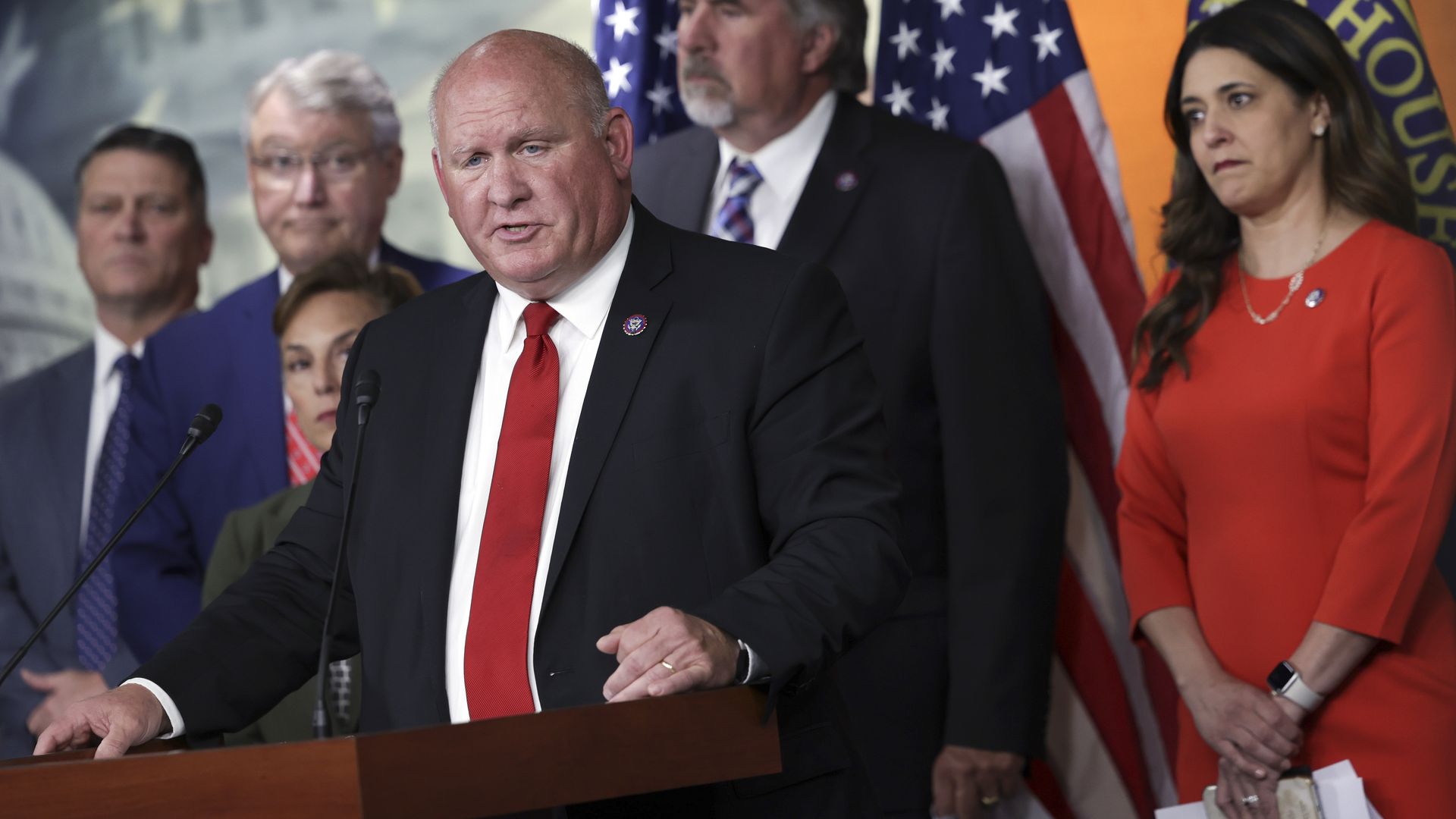
The House Wednesday passed the first major piece of legislation that would provide regulatory clarity to the cryptocurrency industry.
Why it matters: The industry has long complained that there was no way to operate in a way that conformed with U.S. regulations (other than to just not operate at all).
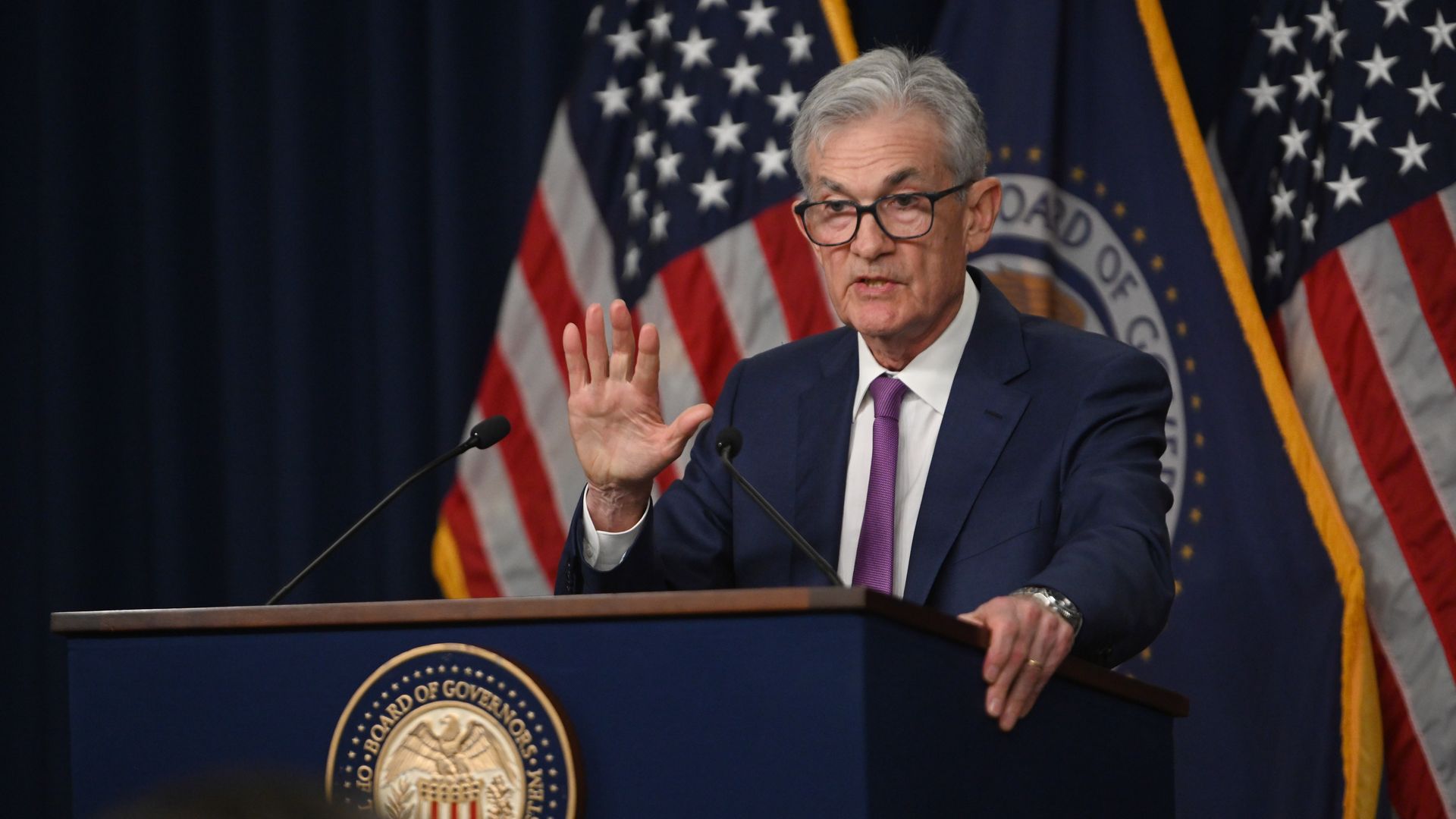
Some Federal Reserve officials questioned whether decades-high interest rates were sufficient to cool inflation, according to minutes released Wednesday from the central bank's policy meeting earlier this month.
Why it matters: Inflation eased considerably last year, but data in recent months showed progress has not continued into 2024 — a development that has muddled the outlook for how long interest rates might need to stay elevated.
This week is shaping up to be one of the more important ones for crypto, with a slate of decisions coming from lawmakers and regulators that could signal big change for the industry in the U.S.
Why it matters: The crypto crackdown in the country could be showing cracks of its own.
As much as there might be political appetite for ether ETFs, there might not be much of a business case for them right now.
The big picture: There are nine would-be issuers eagerly waiting to see if ether ETFs get approved this week, but Valkyrie is not one of them.
👆 That's the shop behind the bitcoin ETF called BRRR.
Behind the scenes: "When everybody started filing their ETH applications, we [polled] a lot of financial advisors, wirehouses, insurance companies, and pensions funds we work with and there's just no appetite for them like there is for bitcoin ETFs," Valkyrie's Steven McClurg said in an interview this morning with Axios.
The big picture: The open question for 2024 is whether last year's improvement in labor productivity — which allowed inflation to come down alongside strong growth — will continue.
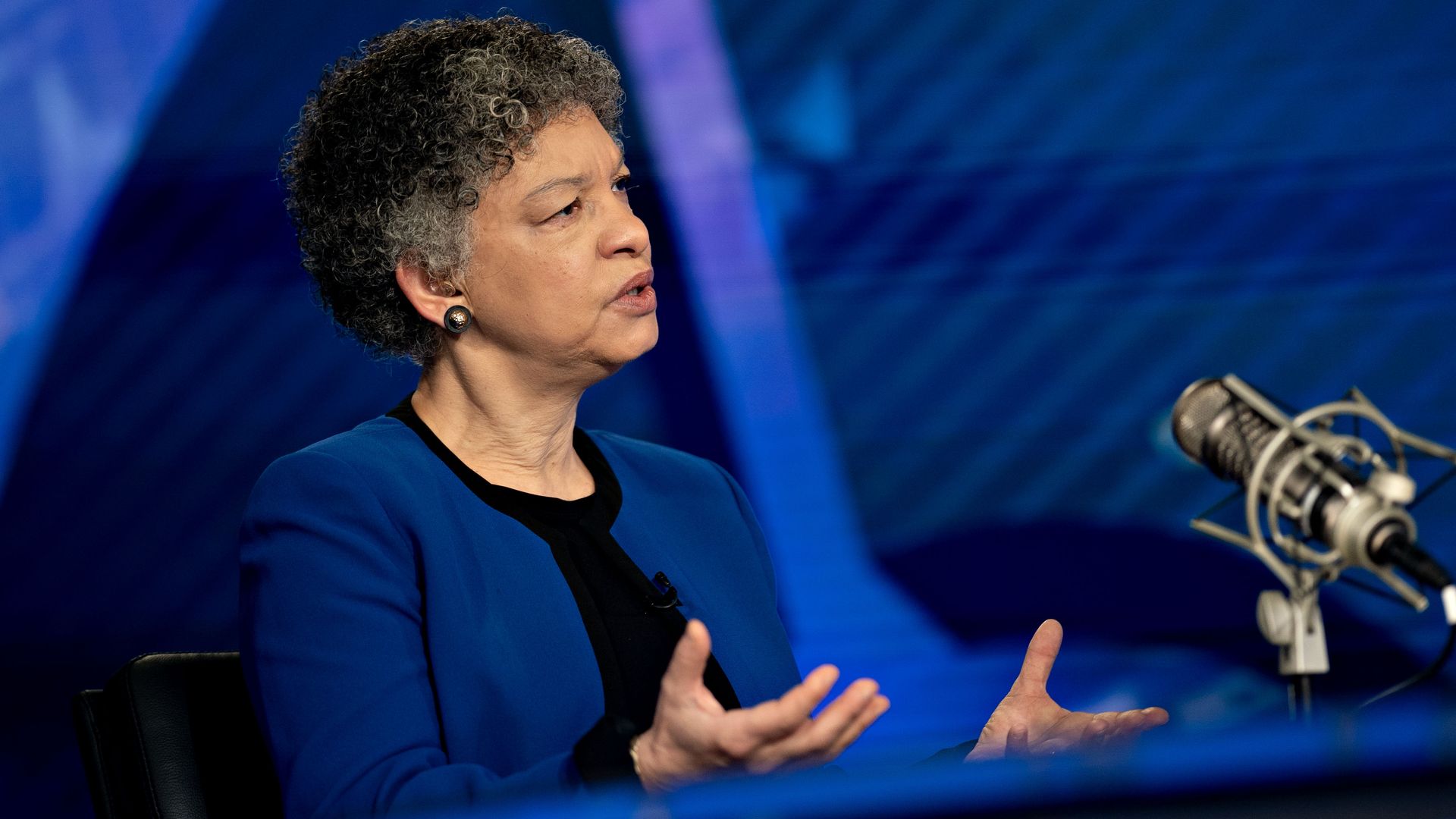
On Tuesday afternoon, Axios spoke with Susan M. Collins, the president of the Federal Reserve Bank of Boston, on the sidelines of a conference in Florida. Here's what she had to say, lightly edited for length and clarity.
This survey is the result of a partnership between Axios and Harris Poll to gauge the reputation of the most visible brands in America, based on 20 years of Harris Poll research.
Traditionally conservative-leaning brands saw sizable gains in corporate reputation thanks to growing trust from independents and some Democrats, according to new rankings from the annual Axios/Harris Poll 100.
Why it matters: Corporate reputations overall declined to their lowest level since before COVID. But companies such as Hobby Lobby, the Trump Organization and Fox were among the survey's best performers.