Data: U.S. Bureau of Economic Analysis; Chart: Axios Visuals
Americans saved a smaller share of their income in March than in any other month since 2022.
The personal saving rate, the percentage of income people are putting away after spending for things and accounting for taxes, dropped to 3.2% in March, according to government data.
Zoom in: That's down from 3.6% in February, and the 4.3% averaged over the prior 15 months from November 2022 to January 2024.

— Schenectady, N.Y., day trader Richard Persaud to the AP in a report on investors who have made tens of millions shorting Trump Media & Technology's stock.
The economic surprisein recent years is the resilience of the American consumer: high borrowing costs and lingering inflation are not crimping overall spending.
Why it matters: The drivers of such robust spending — and how long they can last — are key to what's ahead for the economy.
Following the 🥑 halving, some folks might be waiting for 🍊 bitcoin prices to rocket higher.
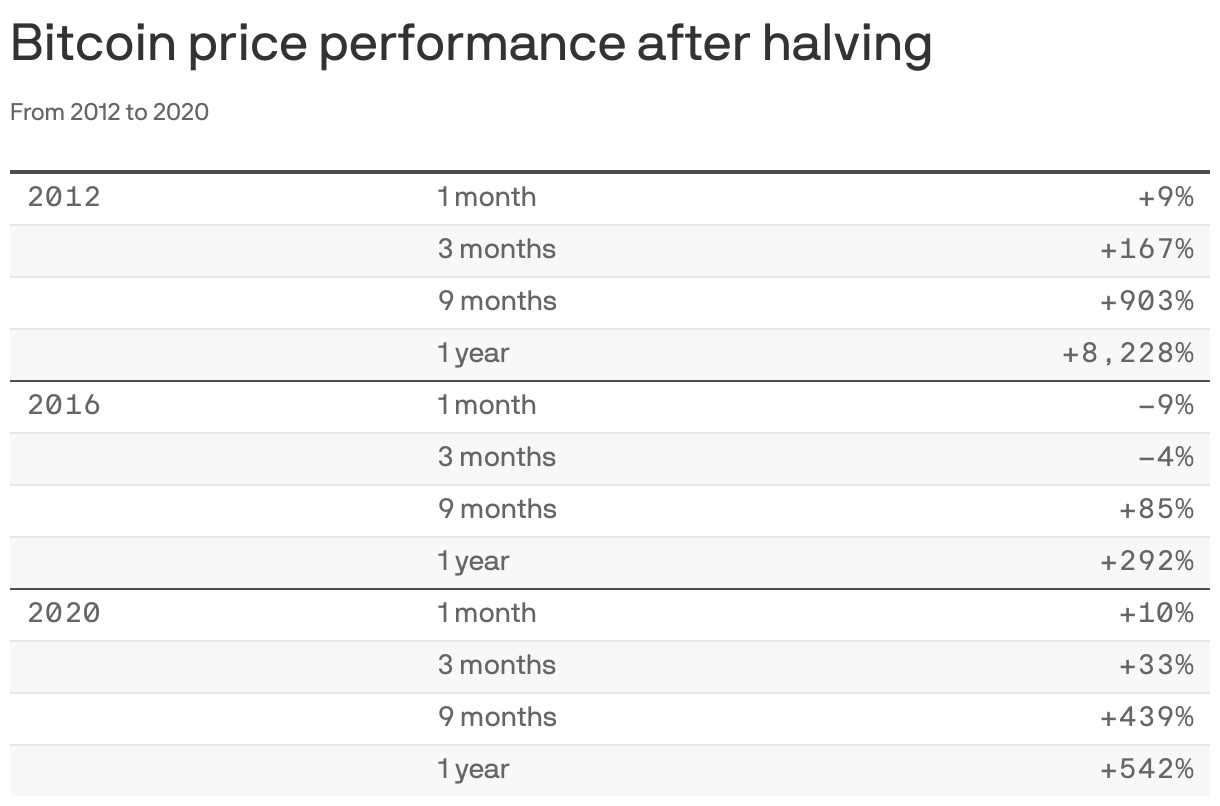
An analysis of price performance after halvings shows that the biggest returns come nine months after the event, or one year, according to Kaiko Research.
One year after the 2012 halving, BTC posted a 8,228% gain — the best performance it put up historically.
In 2020, its price was up just 542% one year after the halving.
Turkish people are leaning hard on stablecoins as the Turkish lira continues its decade-plus fall.
Why it matters: It's a sign that some parts of the world really are embracing cryptocurrency as an economic refuge when inflation becomes too severe.
Between the lines: According to the spring report from Chainalysis, spending with stablecoins in the Mediterranean nation has hit 4% of GDP.
Context: The lira has been losing against the dollar going back to 2008.
Other developing nations are also seeing significant stablecoin use.
Using data from CCData, Chainalysis shows that Thailand is also seeing more than 1% of GDP in stablecoin transactions, and Georgia is at more than 0.5%.
Why it matters: The European payments giant has had positive things to say over the years about cryptocurrency as a way to pay for things, but it nixed its experiments with using it after the market fell apart in 2018.
The latest: They have only incorporated Circle's usd coin (USDC) so far, but on several different blockchains.
It sounds like other cryptocurrencies may be coming.
But wait... there's more: Stripe co-founder John Collison seems genuinely delighted by how far the cryptocurrency user experience has come.
He buys something for 99 USDC on Solana live on stage, using the Phantom wallet, and it's done lickety-split.
The bottom line: This is a man who knows a little something about the UX of payments.
"When we see the market is receptive and we were ready, we go."
— Rubrik CEO Bipul Sinha, to CNBC, on the timing of the data management software company's decision to go public. The shares debuted today at $38.60, above their IPO price of $32.
The first cargo ship passed through Baltimore's newly opened deep-water channel on Thursday after being stranded in the harbor for a month since the Francis Scott Key Bridge collapse.
Why it matters: A cargo ship sailing past the wreckage of the bridge and the stranded Dali, which struck it, is a sign of the ongoing recovery efforts since the catastrophic bridge collapse killed six construction workers.
Consensys, the Ethereum blockchain company founded by Joe Lubin, sued the Securities and Exchange Commission Thursday seeking to head off any coming enforcement action.
Why it matters: One of the biggest Ethereum firms is striking back amid an ongoing campaign by the SEC to classify the world's second largest digital asset a security.
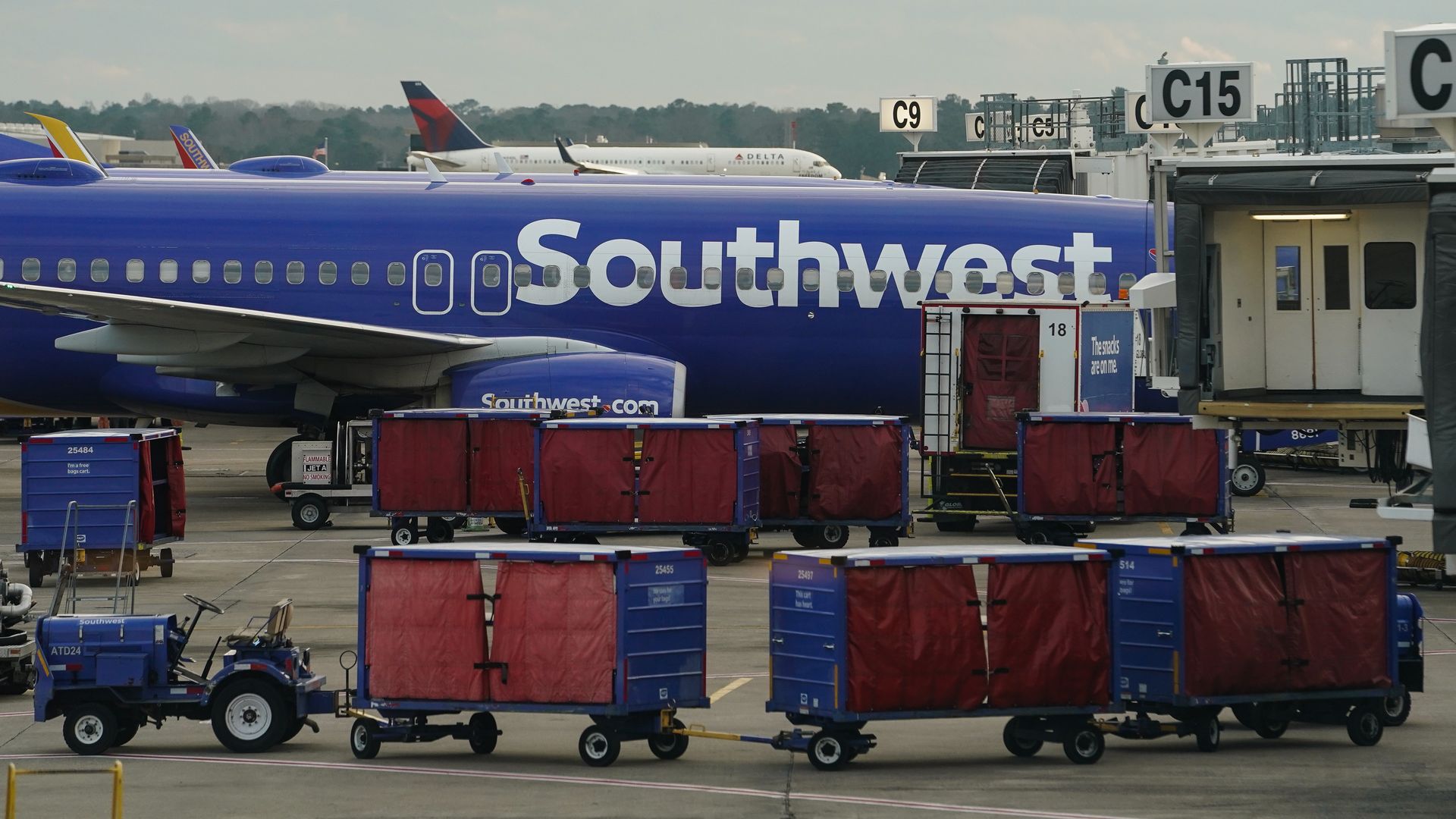
Southwest Airlines said on Thursday after posting a first quarter loss that it will stop operating at four airports and reduce flights at others to cut costs.
Why it matters: The company, which only operates Boeing 737 jets, said in an earnings call that it has been hurt by delayed Boeing deliveries stemming from the aerospace manufacturer's ongoing crisis.
The economy is slowing down, but the outlook is not as bleak as the GDP headline figure suggests. Instead, the report tells a nuanced story of where things stand.
Why it matters: The first quarter's 1.6% annualized growth rate confirms that the economy is not reaccelerating to start 2024.
Food recalls reached their highest level last year since before the pandemic, according to a new report released Thursday.
Why it matters: Outbreaks linked to recalled food products sickened 1,100 people and killed six in 2023, the U.S. Public Interest Research Group (PIRG) Education Fund report found.
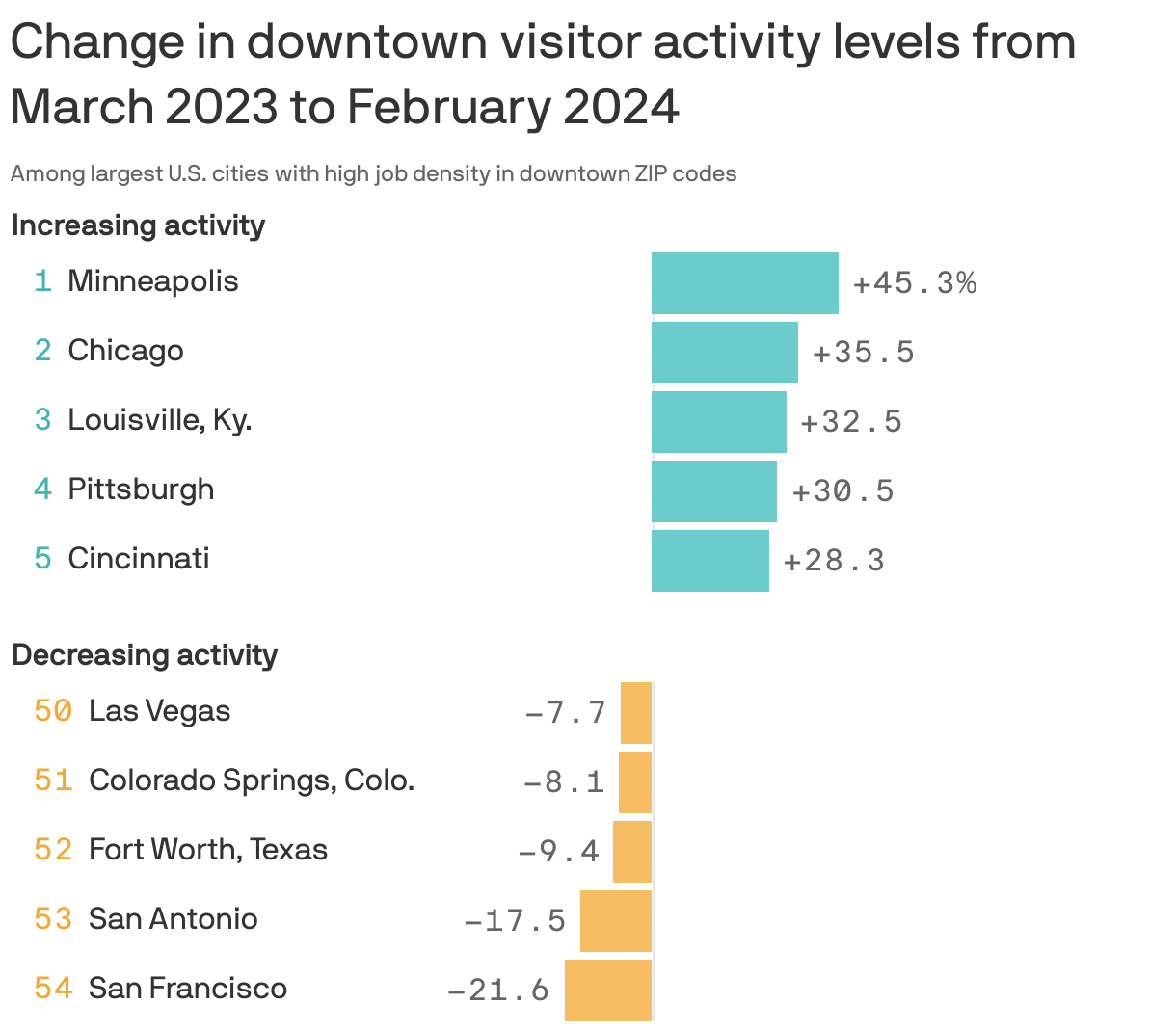
Most American downtowns saw a bump in visitor activity between March 2023 and February 2024, per new University of Toronto data.
Why it matters: The updated figures are one way to understand which cities are recovering and which are still struggling after the worst of the COVID-19 pandemic.