The NFL team owners voted unanimouslyon Thursday to approve of private equity executive Josh Harris acquiring the Washington Commanders from current owner Dan Snyder, the league said in a statement.
Why it matters: The $6 billion deal is the largest ever for a pro sports team and ends an ownership tenure that included more scandals than playoff wins.
As the writers and actors strikes continue, TV networks are cobbling together schedules for the fall season and putting their hopes on unscripted content.
Why it matters: Broadcast networks already desperate for viewers will face new challenges in trying to retain eyeballs as more people transition to streaming.
Car thefts in dozens of cities across the U.S. have skyrocketed so far this year, according to a new report on crime.
Why it matters: Motor vehicle thefts are up by roughly 34% from the same period last year, underscoring how crime patterns have evolved as the country has emerged from the pandemic.
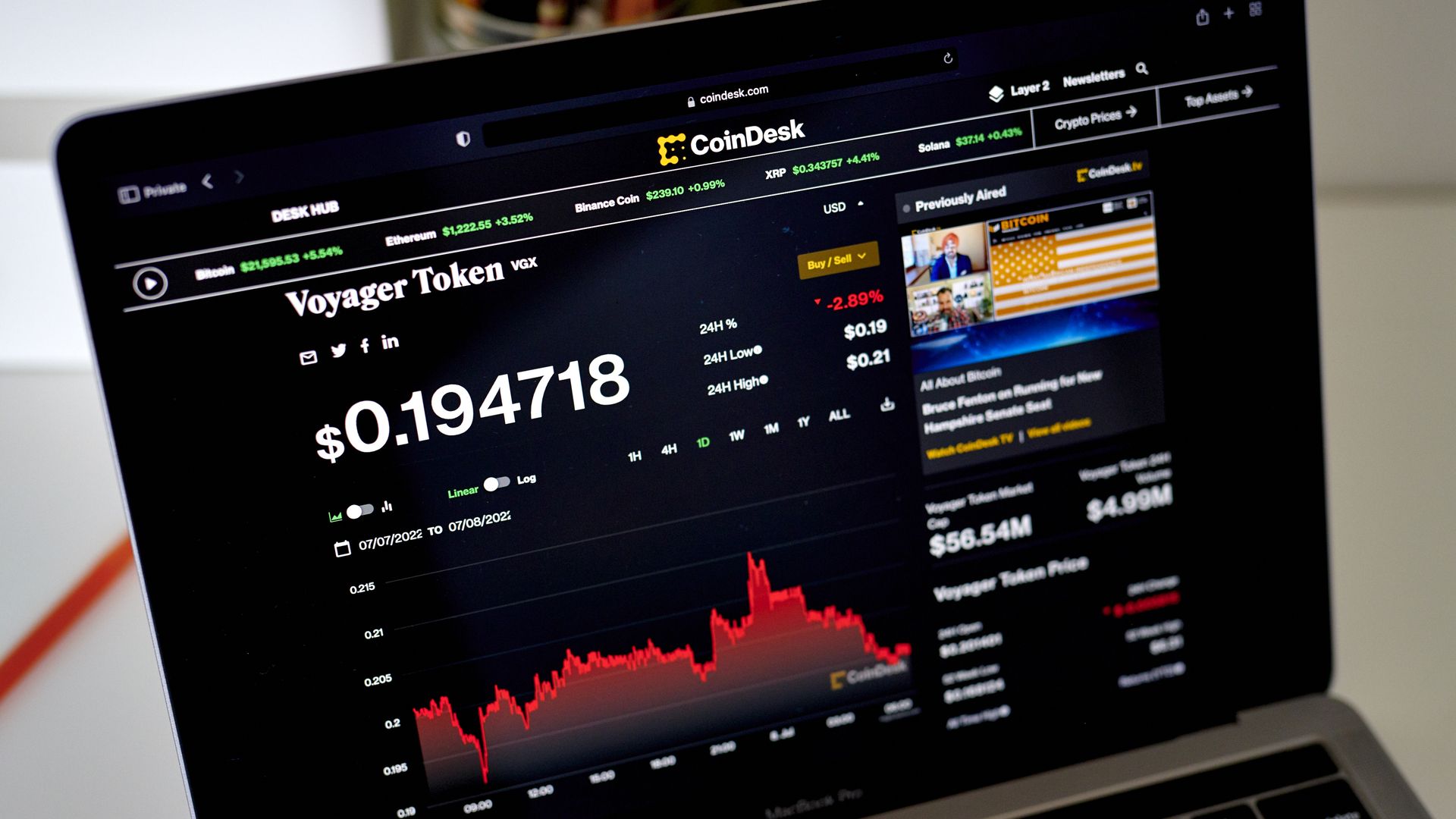
CoinDesk, a media company focused on cryptocurrency, is nearing to deal to be sold to an investor group for $125 million, Axios has confirmed. The news was first reported by the Wall Street Journal.
Why it matters: CoinDesk's parent company Digital Currency Group has been hit by the downturn in the crypto industry.
America now has two instant payment systems. FedNow — operated by the Federal Reserve — went live this morning. It runs in parallel to RTP, the 5-year-old real-time payments system operated by The Clearing House.
Why it matters: It's not yet obvious that two is better than one, especially given that the two systems are not interoperable.
The Fed is touting FedNow as offering the instant, round-the-clock ability to issue a paycheck or pay an invoice.
By the numbers: So far,35 banks have signed up as early adopters of FedNow, including JPMorgan Chase and Wells Fargo, but notably not including Citigroup or Bank of America. That number is rather lower than the Fed led us to believe as recently asrecently as June.
The U.S. Treasury is also signed up as an early adopter of FedNow.
Some 353 banks and credit unions have signed up for RTP.
In order to use either service, both the sending and the receiving bank need to be signed up for the system.
The bottom line: It's still likely to be years before most people use instant payments on a daily basis, as they do in countries like the U.K., India and Brazil. The government isn't forcing banks to sign up for either of the two systems, and for the time being, there still isn't a strong business case for banks to do so.
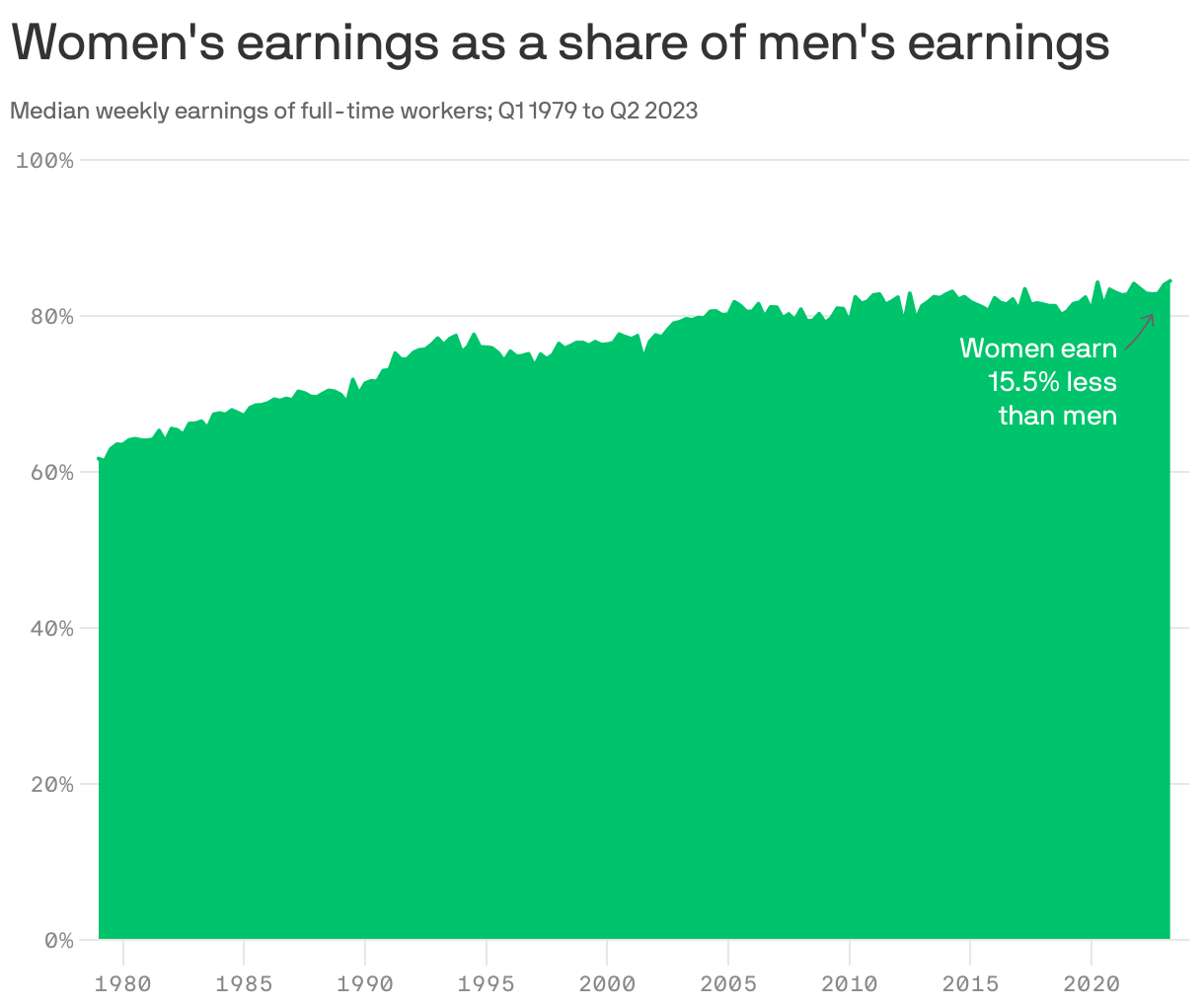
Data: Bureau of Labor Statistics; Note: Seasonally adjusted; Chart: Axios Visuals
America's working women were feared to suffer the worst in the pandemic recovery. The opposite, however, has proven to be the case, with women serving as historic drivers of a labor market that remains surprisingly strong.
Why it matters: The pay gap between full-time working women and male counterparts is now the narrowest on record. The dynamic has been long in the making — a reflection of discrimination's slow fade and other structural forces that have held women back on pay.
Substack on Thursday announced that writers on its platform have collectively earned more than $1.2 million from reader "pledges," or financial commitments to writers made before they turn their paywalls on.
Why it matters: The success of the feature, which Substack debuted in January as a way to encourage its writers to put their content behind paywalls, indicates that writers have more leverage than they may realize in charging fans for their content.
Communicatorshave become more important players in transitioning a company from startup to grown-up through an initial public offering (IPO).
Why it matters: AnIPO is the moment to tell the world why a company matters — and telling the right story with the right messaging to the right people is crucial for a successful listing.
The workplace review platform, Glassdoor, is creating more opportunity for employees to anonymously air their grievances.
Driving the news: Glassdoor has launched new message boards, called "bowls," to allow users to anonymously engage in "real talk" around topics or companies they care about.
A new reality is emerging out of the ashes of last spring's banking crisis — and it doesn't look as apocalyptic as some observers had feared.
Why it matters: The Fed's drastic rate-hiking campaign changed the dynamics of the banking business — and as U.S. midsize banks report earnings this week, more specifics are emerging on how that new world operates.
Walmart has joined the growing list of stores, theaters and attractions that offer "sensory-friendly" hours for people with autism spectrum disorder or other neurodivergent conditions.
Why it matters: Disabilities are often invisible, and by setting aside time during the business day when the lights are lower, sounds are softer and the pace is more relaxed, companies allow patrons with sensory issues to participate more fully in normal life routines.
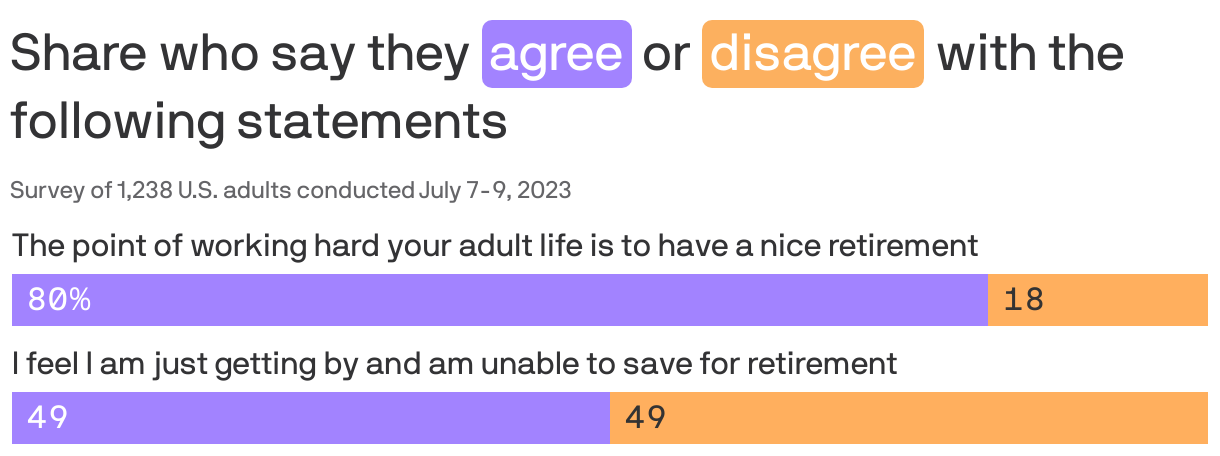
Most Americans want to retire, but only half feel like they’re able to save for the future.
The big picture: Many Americans who haven't yet retired say they are unprepared for retirement, unsure how to prepare and unsure if they even want to fully retire, according to a new Axios-Ipsos poll.













/2023/07/17/1689627232419.gif?w=3840)