If you're trying to nab a copy of Prince Harry's new memoir "Spare" from your local library, chances are you've got a long wait ahead of you.
Why it matters: The massive demand for the royal tell-all highlights how libraries remain a key public resource across America — and how a blockbuster bestseller forces them to make tough decisions to keep borrowers happy.
The bear market in cryptocurrencies hasn’t entirely scared off some Black investors, who originally embraced the sector as a means to build wealth.
Why it matters: Overnight, battered bitcoin surged back above $20,000 after languishing for weeks close to $16,000. But crypto's winter has wiped billions off the market capitalization of digital currencies; meanwhile, the unfolding FTX scandal has contributed to a lack of trust in financial institutions, and crypto itself.
Surprisingly, some hardcore enthusiasts are not rushing to leave crypto, and plan to keep investing in the battered sector.
Zoom out: In 2020 and 2021, the volatile asset class became a hot topic among Black social media users. They viewed digital currencies as a path to bridging the economic gap, creating wealth, and democratizing the global financial system.
The wealth gap to other races, some Black investors believe, could be closed through investing in cryptocurrency, according to a report from the Kansas City Federal Reserve published in 2022.
13% of Americans have reported either buying or trading crypto, while of that 44% were non-white, according to a survey by NORC at the University of Chicago published in 2021.
State of play: To be sure, retail crypto buyers are hardly ignoring the mounting risks (it's hard not to). Yet Black investors are slightly more bullish on crypto than their white counterparts, according to a survey conducted by Ariel Investment and Charles Schwab in April 2022, around the time the crypto rout picked up speed.
It showed 25% of Blacks investing in digital coins, compared to 15% of whites.
The study also showed that Black traders are “twice as likely to rank cryptocurrency as the best investment choice overall” (8% vs. 4% of whites).
What they’re saying: Deidra McIntyre, founder of Black People & Cryptocurrency, a discussion group rooted in Bitcoin's technology, told Axios in a statement that crypto crime and trading losses are dominating public opinion. That may be hindering their ability to see crypto’s longer-term potential.
"What is happening in crypto pre-exists in the finance and corporate sector but it [should not be ] indicative of how all crypto business is or should be done,” she said. “We will move in crypto's knowledge base of more equitable, global, trustless, peer-to-peer global transactions.”
Yet investors like Ivan Eberhart are still hodlers. The Atlanta resident bought Bitcoin back in 2017, then invested in Binance coin and Chainlink. Eberhart will continue in the space because of what he sees as a bright future.
Blockchain technology is the biggest upside to cryptocurrency, and is poised to change how the world operates, the 35-year-old tells Axios.
Cryptocurrencies like Bitcoin and Ethereum are a longer term store of value, Edwardo Jackson, CEO and founder of Cinema Draft LLC tells Axios.
The cryptocurrency consultant, who created Blacks in Bitcoin, tells Axios know anyone affected by the FTX debacle. Yet Jackson embraces educating investors on cryptocurrency so they fully understand it, he explained.
Yes, but: FTX's stunning downfall burned a lot of investors, with more shoes still to drop. It put celebrities under the microscope for their role in amplifying crypto to small investors.
Algernon Austin, Director for Race and Economic Justice at the Center for Economic and Policy Research, tells Axios too much emphasis is placed on crypto’s positives to Black investors, instead of its (high) risks.
"I suspect the high rate of Black investment in crypto is this very heavy marketing of crypto, often by Black celebrities. The difference that we see with crypto and with more traditional investing is…that crypto has been very, very aggressively marketed."
The bottom line: With mistrust in crypto soaring among investors of all races, Black crypto buyers are like everyone else: Struggling to figure out the next move. And while interest remains high, it’s not clear if that will continue.
Last year was a record year for venture capital fundraising, but some investors are warning that big “dry powder” figures are an illusion, and won’t translate into much startup investment in a year that's already off to a rocky start.
Why it matters: Whether VCs are willing to back companies in 2023 could spell life or death for certain cash-hungry startups.
Every object in the world has a unique fingerprint — and most modern cellphones have good enough cameras that they can read it. The implications, for almost any industry that deals with physical things, could be revolutionary.
Why it matters: Modern technology from Alitheon, a startup in Bellevue, Washington, provenance and authentication can be applied to specific mass-produced objects — be they sneakers, pharmaceuticals, car parts, art prints, t-shirts, or even bars of gold. And it can all be done just by taking photos.
I met Alitheon's CEO,Roei Ganzarski, on the sidelines of Art Basel Miami Beach last month. He was there for obvious reasons: His company's technology can easily determine within seconds whether any given artwork is genuine or fake — if it's adopted by the artist or gallerist.
Why it matters: I've lost track of the number of companies trying to put art on the blockchain in one form or another; most of them have little if any technological innovation. This, however, is clearly a vast improvement on how the art world has been able to operate until now.
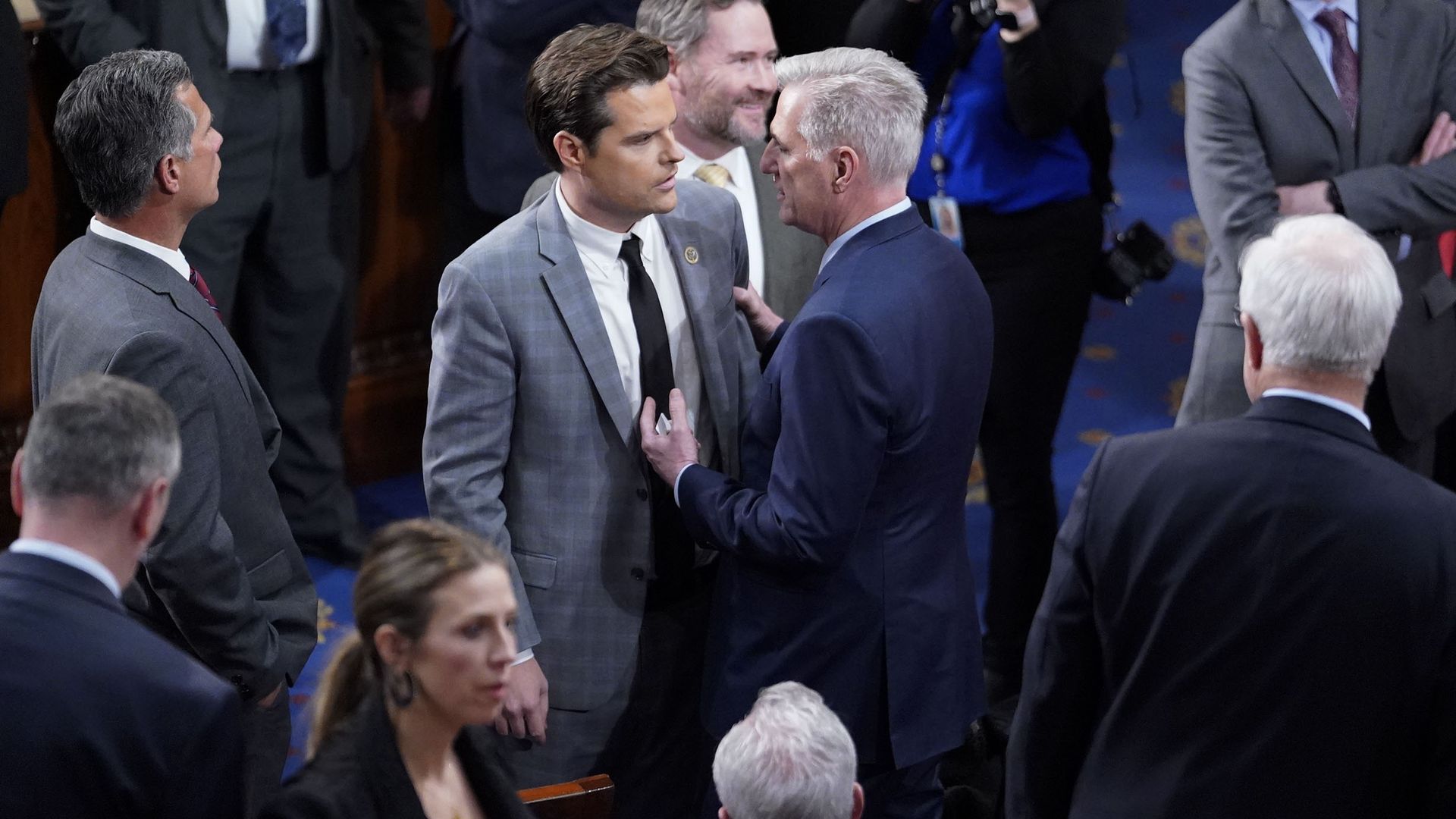
The U.S. government will reach its debt limit on Jan. 19 and initiate so-called "extraordinary measures" to avoid default, Treasury Secretary Janet Yellen told House Speaker Kevin McCarthy in a letter Friday.
Why it matters: House Republicans are interested in using debt ceiling negotiations to cut spending, but Yellen said Treasury's extraordinary measures could last until the summer.
Three major banks are bracing for an economic downturn in 2023, including an uptick in unemployment, even as they continue to benefit from strong consumer spending and higher interest rates.
Why it matters: The banking industry's convergence on the 2023 outlook comes after a period of widespread disagreement among corporate executives, economists and the public over the trajectory of the economy.
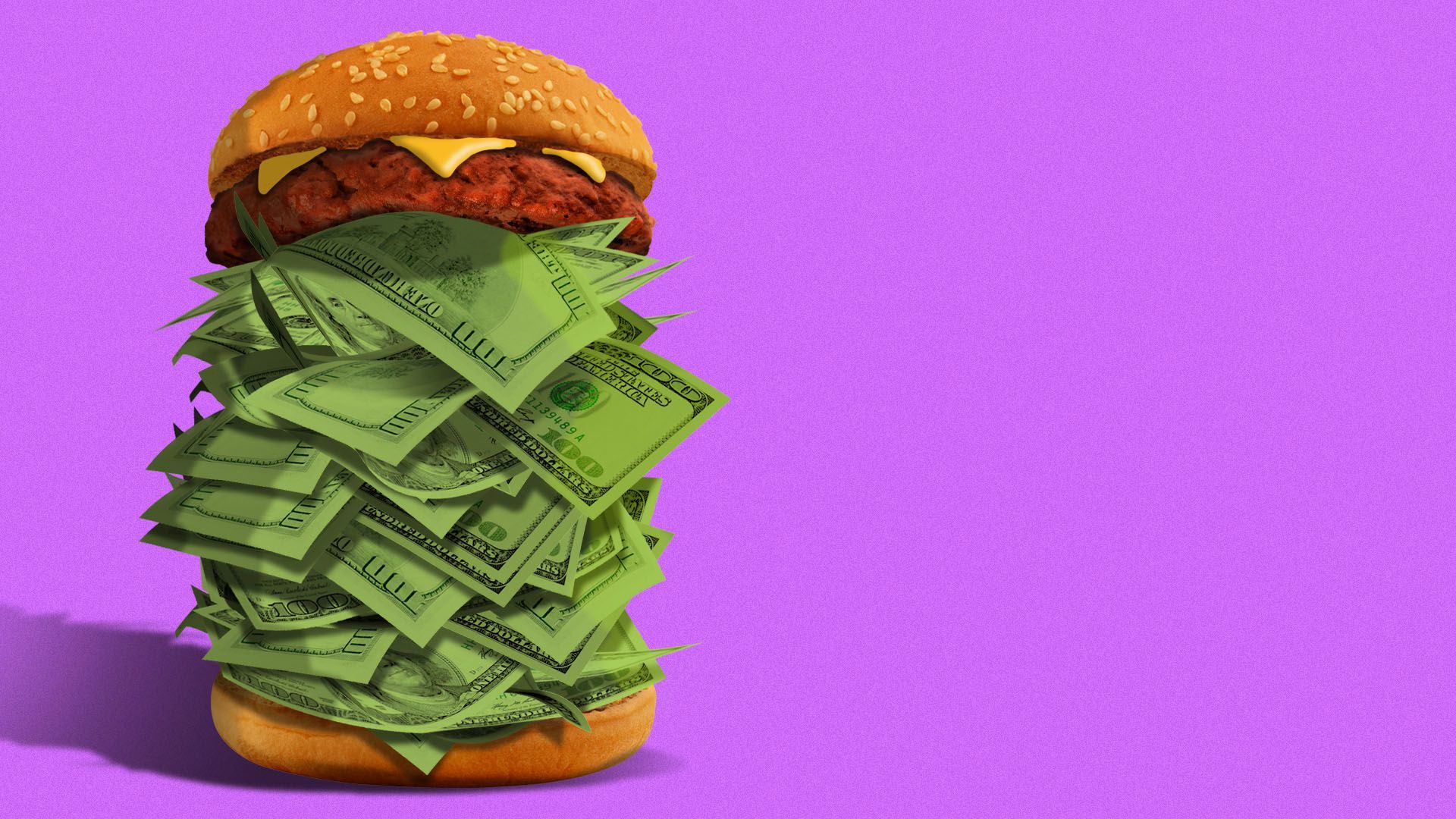
Activist hedge fund Trian Fund Management won't pursue a takeover bid for Wendy's, the company said in a securities filing Friday.
Why it matters: In May, Trian, which holds a roughly 19% stake in the company, had proposed taking over Wendy's, either alone or with third parties, as a way to bring value to shareholders.
What they're saying: "In light of the company’s current business momentum and strong liquidity position, returning additional capital to shareholders through additional stock repurchases and increased cash dividends was the appropriate path to enhance shareholder value at this time," Trian said in the filing.
What's happening: Wendy's said in a separate filing that it launched a new $500 million buyback plan and doubled its quarterly dividend to 25 cents a share.
The company also said it will reorganize its corporate structure, and announced the departures of U.S. CFO Leigh Burnside and CMO Kurt Kane. Kane’s position will be eliminated.
Shares rose over 5% on Friday afternoon
Context: Trian, which is helmed by billionaire Nelson Peltz, has a long history with the company, with Peltz serving on the board of Wendy's predecessor companies, and then on Wendy's board since 2008 when the company merged with Triarc Cos.
U.S. Customs and Border Protection officials have seized $806 million worth of imports since a forced labor law aimed at Chinese manufacturers went into effect last June, Axios has learned.
Why it matters: Intended to punishChina for its treatment of Uyghurs and other minorities across Xinjiang province, the crackdown has had the corresponding effect of crippling the U.S. solar market and freezing its supply chain.
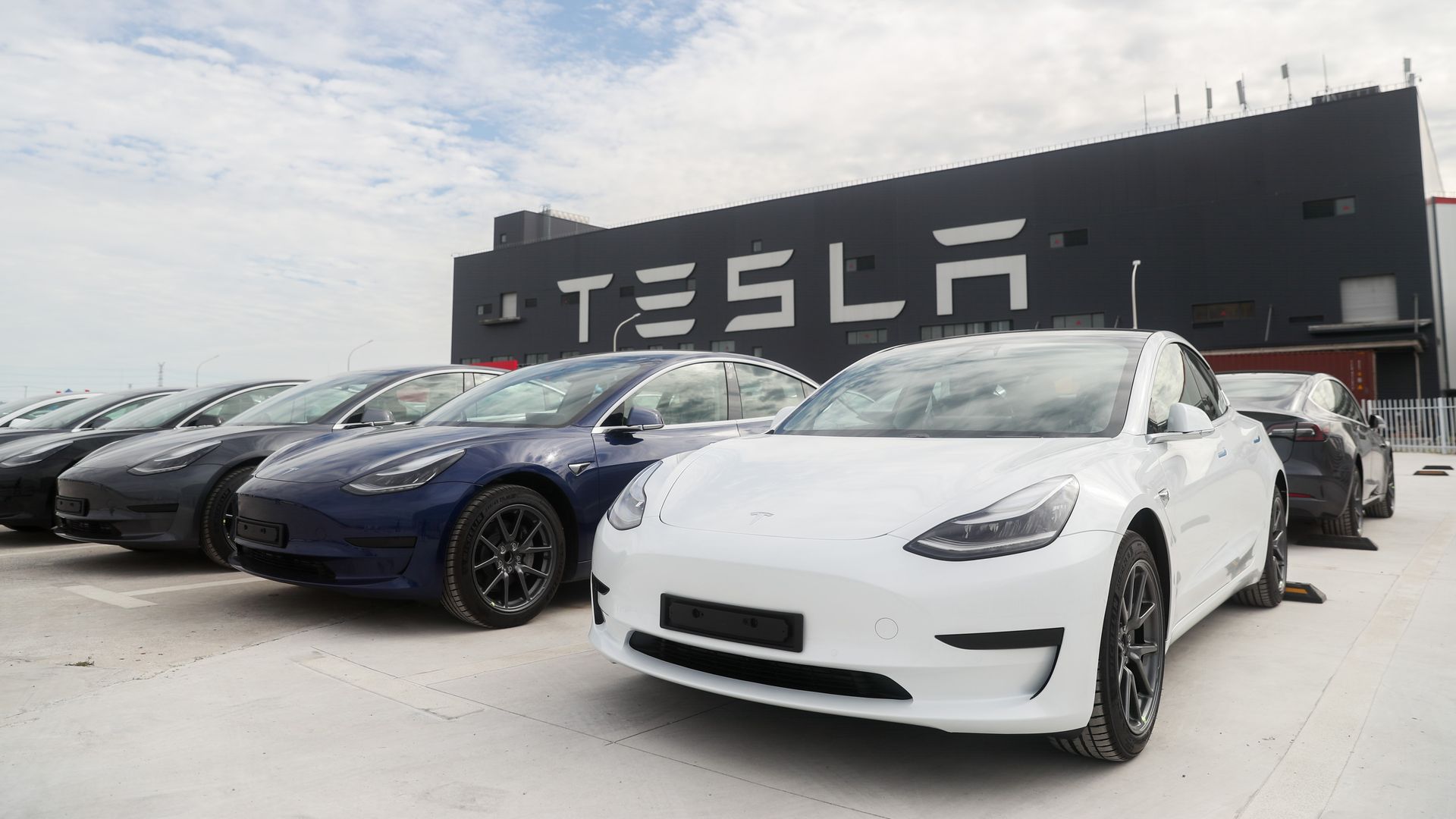
Six months after CEO Elon Musk told investors that Tesla "does not have a demand problem" — which, to be fair, might've been true at the time — Tesla now appears to have a demand problem.
Driving the news: The company overnight "dramatically" cut prices of its Model 3 and Model Y in the U.S. by a weighted average of about $10,000, or 16%, according to Evercore ISI analysts.
There's a sharp rebound in the net number of people migrating to the United States, following back-to-back years of historically low levels that contributed to the nation's labor shortages.
Details: Tucked in the Census Bureau population estimates — released late last year — was a huge jump in net international migration. It added more than a million people to the U.S. population.
Used vehicle prices — once at the bleeding edge of the post-COVID inflationary upswing — are falling fast. And the pace of the downturn is building, according to a leading indicator.
Why it matters: While auto price movements are typically a small factor in overall inflation, outsized moves can exert a big influence on inflation data.
After nearly three years of unprecedented economic and geopolitical shocks, experts are effectively throwing up their hands and admitting they don't know what's coming next.
The latest: The probability of a recession in 2023 is between 45% and 55%, per the authors of a report from Goldman Sachs' Investment Strategy Group released Friday morning.
A new era of short-form video is sweeping the internet, forcing every kind of creator — from podcasters to photographers and publishers — to adjust their media strategies.
Why it matters: There have never been so many opportunities to create content online, but business incentives are driving all kinds of creative individuals and enterprises to chase the same viral trends.
Sequoia Capital partner Alfred Lin said on Thursday at an event in San Francisco that the firm believes it was misled by FTX when it invested in the company.
Why it matters: Sequoia, which is widely regarded as the most successful venture capital firm in Silicon Valley, has faced a lot of questions over its investment in the collapsed crypto exchange.
Tesla has made significant cuts to the prices of new electric vehicle models in the U.S., according to listings on its website.
Driving the news: Elon Musk's firm has cut the price of its bestselling Model Y and Model 3 vehicles, along with its Model X sport utility vehicles and Model S luxury sedans.
This article originally appeared in Axios Finish Line, our nightly newsletter on life, leadership and wellness.Sign up here.
Occam's razor teaches us that the simplest explanation is usually the right one.
Here's the new Axios' Razor: The simplest way of doing things is usually the right one.
Why it matters: Too many people too often lard up ideas, processes, teams or companies with needless complexity. Simplicity, by contrast, greases velocity, productivity and profitability.








/2023/01/13/1673634323359.gif?w=3840)