Sunday's economy & business stories

FAA investigating near-miss between two airplanes at JFK airport

The Federal Aviation Administration (FAA) announced Sunday it is investigating a near-miss between a passenger airplane operated by Delta and another operated by American Airlines at John F. Kennedy International Airport (JFK) in New York on Friday.
Why it matters: The FAA said, based on preliminary information, that a Boeing 737 operated by Delta had to halt its takeoff roll after air traffic controllers noticed that a Boeing 777 operated by American Airlines had crossed the runway being used by the Delta plane from an adjacent taxiway.

Companies still hungry for U.S. workers
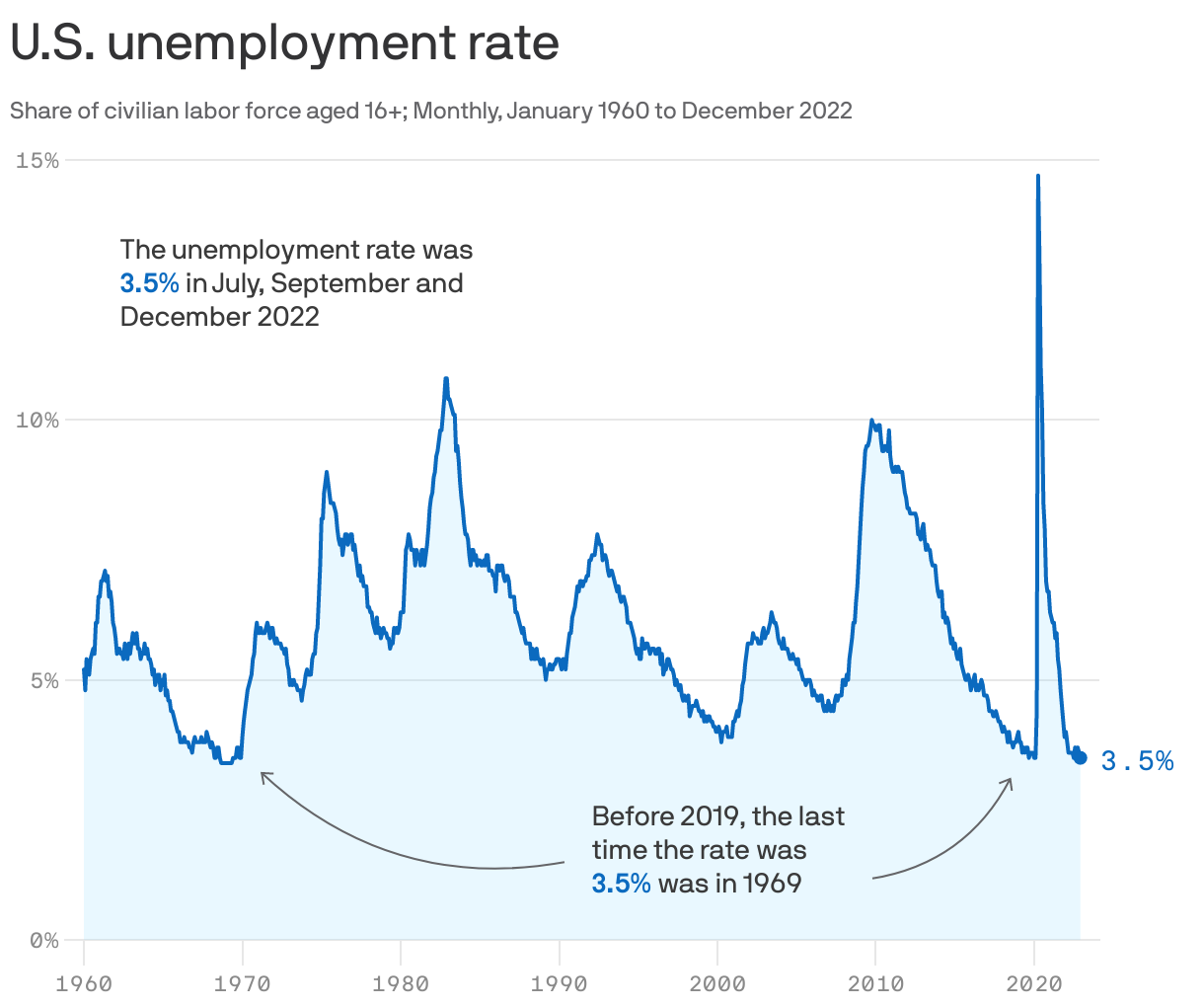
Despite scary headlines about layoffs, most employers are still hungry for workers — underpinning a still-hot labor market.
For evidence, look at the unemployment rate (above), which at 3.5% is near a historic low.
- Technically, if you include extra decimal places, the jobless rate hit 3.46% in December (hat tip: University of Michigan economist Justin Wolfers). That's a fresh half-century low.

Good luck finding a spare copy of "Spare" at your local library
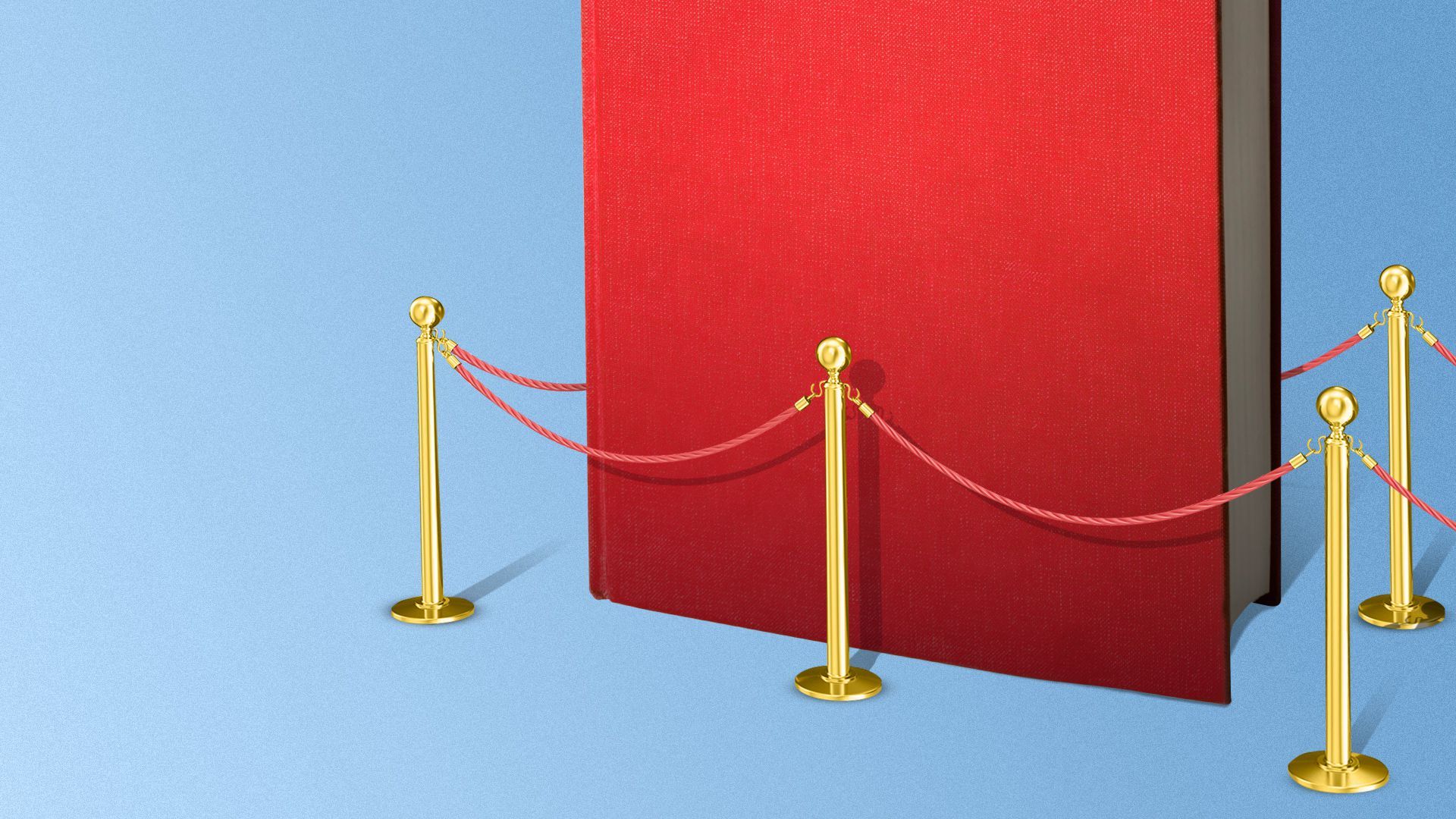
If you're trying to nab a copy of Prince Harry's new memoir "Spare" from your local library, chances are you've got a long wait ahead of you.
Why it matters: The massive demand for the royal tell-all highlights how libraries remain a key public resource across America — and how a blockbuster bestseller forces them to make tough decisions to keep borrowers happy.
Some Black investors 'hodling' crypto amidst carnage

The bear market in cryptocurrencies hasn’t entirely scared off some Black investors, who originally embraced the sector as a means to build wealth.
Why it matters: Overnight, battered bitcoin surged back above $20,000 after languishing for weeks close to $16,000. But crypto's winter has wiped billions off the market capitalization of digital currencies; meanwhile, the unfolding FTX scandal has contributed to a lack of trust in financial institutions, and crypto itself.
- Surprisingly, some hardcore enthusiasts are not rushing to leave crypto, and plan to keep investing in the battered sector.
Zoom out: In 2020 and 2021, the volatile asset class became a hot topic among Black social media users. They viewed digital currencies as a path to bridging the economic gap, creating wealth, and democratizing the global financial system.
- The wealth gap to other races, some Black investors believe, could be closed through investing in cryptocurrency, according to a report from the Kansas City Federal Reserve published in 2022.
- 13% of Americans have reported either buying or trading crypto, while of that 44% were non-white, according to a survey by NORC at the University of Chicago published in 2021.
State of play: To be sure, retail crypto buyers are hardly ignoring the mounting risks (it's hard not to). Yet Black investors are slightly more bullish on crypto than their white counterparts, according to a survey conducted by Ariel Investment and Charles Schwab in April 2022, around the time the crypto rout picked up speed.
- It showed 25% of Blacks investing in digital coins, compared to 15% of whites.
- The study also showed that Black traders are “twice as likely to rank cryptocurrency as the best investment choice overall” (8% vs. 4% of whites).
What they’re saying: Deidra McIntyre, founder of Black People & Cryptocurrency, a discussion group rooted in Bitcoin's technology, told Axios in a statement that crypto crime and trading losses are dominating public opinion. That may be hindering their ability to see crypto’s longer-term potential.
- "What is happening in crypto pre-exists in the finance and corporate sector but it [should not be ] indicative of how all crypto business is or should be done,” she said. “We will move in crypto's knowledge base of more equitable, global, trustless, peer-to-peer global transactions.”
Yet investors like Ivan Eberhart are still hodlers. The Atlanta resident bought Bitcoin back in 2017, then invested in Binance coin and Chainlink. Eberhart will continue in the space because of what he sees as a bright future.
- Blockchain technology is the biggest upside to cryptocurrency, and is poised to change how the world operates, the 35-year-old tells Axios.
Cryptocurrencies like Bitcoin and Ethereum are a longer term store of value, Edwardo Jackson, CEO and founder of Cinema Draft LLC tells Axios.
- The cryptocurrency consultant, who created Blacks in Bitcoin, tells Axios know anyone affected by the FTX debacle. Yet Jackson embraces educating investors on cryptocurrency so they fully understand it, he explained.
Yes, but: FTX's stunning downfall burned a lot of investors, with more shoes still to drop. It put celebrities under the microscope for their role in amplifying crypto to small investors.
- Algernon Austin, Director for Race and Economic Justice at the Center for Economic and Policy Research, tells Axios too much emphasis is placed on crypto’s positives to Black investors, instead of its (high) risks.
- "I suspect the high rate of Black investment in crypto is this very heavy marketing of crypto, often by Black celebrities. The difference that we see with crypto and with more traditional investing is…that crypto has been very, very aggressively marketed."
The bottom line: With mistrust in crypto soaring among investors of all races, Black crypto buyers are like everyone else: Struggling to figure out the next move. And while interest remains high, it’s not clear if that will continue.

Venture capital has lots of dry powder in 2023
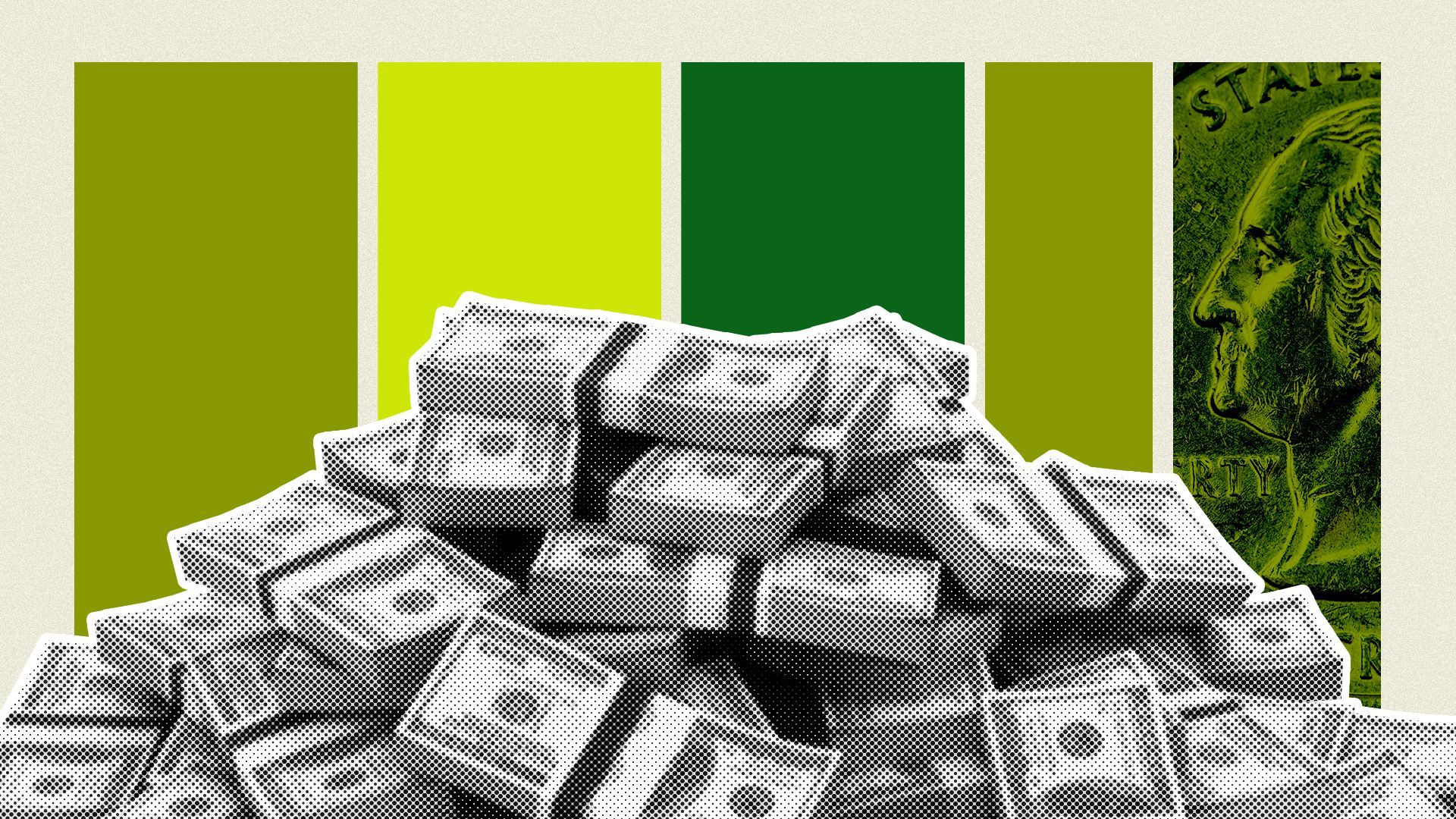
Last year was a record year for venture capital fundraising, but some investors are warning that big “dry powder” figures are an illusion, and won’t translate into much startup investment in a year that's already off to a rocky start.
Why it matters: Whether VCs are willing to back companies in 2023 could spell life or death for certain cash-hungry startups.

Using iPhones to detect fakes

Every object in the world has a unique fingerprint — and most modern cellphones have good enough cameras that they can read it. The implications, for almost any industry that deals with physical things, could be revolutionary.
Why it matters: Modern technology from Alitheon, a startup in Bellevue, Washington, provenance and authentication can be applied to specific mass-produced objects — be they sneakers, pharmaceuticals, car parts, art prints, t-shirts, or even bars of gold. And it can all be done just by taking photos.
How Alitheon's authentication technology is transforming collectibles

I met Alitheon's CEO, Roei Ganzarski, on the sidelines of Art Basel Miami Beach last month. He was there for obvious reasons: His company's technology can easily determine within seconds whether any given artwork is genuine or fake — if it's adopted by the artist or gallerist.
Why it matters: I've lost track of the number of companies trying to put art on the blockchain in one form or another; most of them have little if any technological innovation. This, however, is clearly a vast improvement on how the art world has been able to operate until now.