The Federal Communications Commission voted Tuesday to revoke authorization for China Telecom's U.S. subsidiary to operate in America, citing national security concerns.
Why it matters: The state-owned China Telecom is one of the largest telecommunications companies based in China. It has provided services in the U.S. for nearly 20 years but must now cease operations within 60 days.
JPMorgan spent $13 billion of the $30 billion it pledged over five years to improve racial equity, the bank said an update today.
Why it matters: The bulk of funds so far went to housing-related initiatives, a significant racial justice cause given the difficulty Blacks and Latinos have historically had securing mortgages.
The state of Washington is suing 19 chicken producers, accusing them of "a wide-ranging illegal conspiracy to inflate and manipulate prices, rig contract bids and coordinate industry supply reductions," Attorney General Bob Ferguson announced Tuesday.
Why it matters: The companies named in the suit account for some 95% of broiler chickens sold in the U.S., per a news release. Broiler chickens are bred and raised specifically for meat production.
Companies are making money at record rates thanks in part to customers who are willing to pay higher prices.
Why it matters: In order to keeping that corporate profitability streak going, shoppers should expect sticker prices to stay high or become more expensive well into 2022. Fewer promotions and shallower discounts will also become the norm as inventory levels remain low.
Tyson Foods said Tuesday that more than 96% of its workers have received the COVID-19 vaccine ahead of the company's Nov. 1 deadline to get all employees vaccinated.
Driving the news: Tyson Foods CEO Donnie King said nearly 60,000 additional workers received the shots after the company announced its vaccine mandate in August. At the time, a little less than half of all employees had been vaccinated.
Fear of never being able to pay off school loans is keeping many young Latinos in the U.S. from going to college or completing a degree, according to a report published in September.
State of play: Latinos tend to have more difficulty repaying school debt than white student borrowers, according to Federal Reserve data, at the same time that they need more loans in order to afford tuition.
New York's "El Museo del Barrio" and the Mexican Museum in San Francisco are offeringa virtual viewing of Latino art through augmented reality, allowing visitors to experience museum exhibits directly from their mobile devices.
Why it matters: The museums' online access makes the work of lesser-known Latino artists available around the world to anyone with broadband and a digital device, rather than limiting the audience to in-person visits to the museums and to major works of art.
CVC Capital Partners and billionaire Sanjiv Goenka each agreed to buy new professional cricket franchises in the Indian Premier League, shelling out a total of $1.69 billion, following an auction process.
Why it matters: These prices are very high for nascent clubs, reflecting an era of global sports team values being inflated by excess institutional and individual wealth.
A new public benefit corporation backed by billionaires Reid Hoffman, George Soros, and others is launching Tuesday to fund new media companies and efforts that tackle disinformation.
Why it matters: Good Information Inc. aims to fund and scale businesses that cut through echo chambers with fact-based information. As part of its mission, it plans to invest in local news companies.
Sequoia Capital, one of the world's oldest and most successful venture capital firms, is forming a single fund to hold all of its U.S. and European investments, including stakes in publicly-traded companies, Axios has learned.
Why it matters: Venture capital is the money of innovation, but the industry itself rarely innovates. This is a radical exception.
Eco-conscious salad chain Sweetgreen's new filing with regulators to go public offers a window onto how companies must grapple with climate risks to the food system.
Driving the news: Sweetgreen's paperwork, like other pre-IPO filings, lists potential headwinds. Climate change is among them.
More rentersgot help last month, as the Treasury Department released a record amount of emergency rental assistance.
Why it matters: After an initially slow rollout of the Treasury program, the Biden administration over the summer put pressure on states to speed up disbursements.
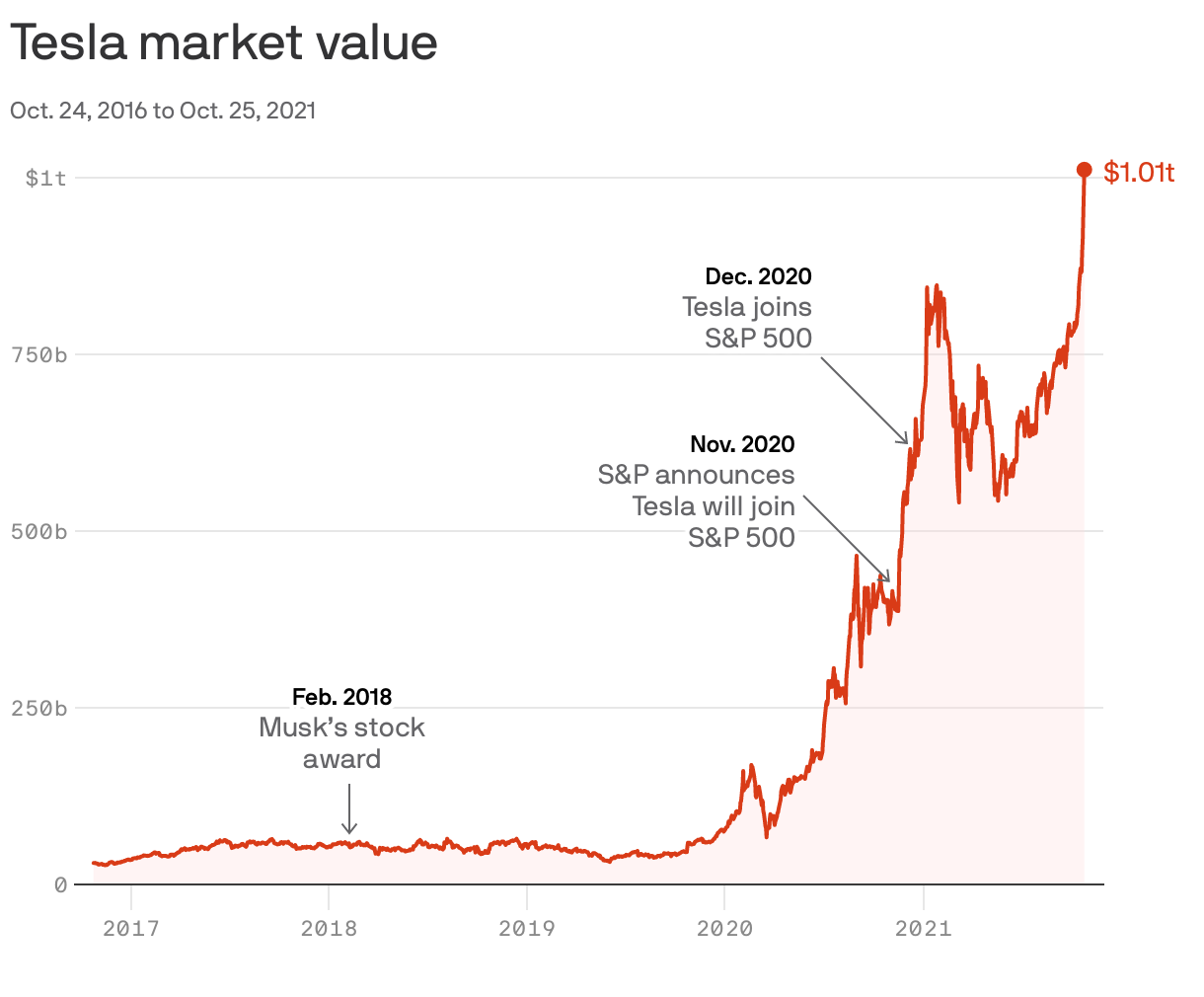
Tesla joined one of the most exclusive clubs in the world Monday when an announcement about Hertz buying its cars sent its market capitalization over the $1 trillion mark.
Why it matters: No matter how high it rises, Tesla stock always seems to be able to outperform expectations.
Facebook has been embroiled in scandal for the past five years, and while the specific allegations change over time, a central theme is constant. Given the choice between commercial and moral imperatives, Facebook always seems to choose the option that is best for the share price.
Why it matters: Facebook's stock chart supports that narrative. Since the 2016 scandals alleging that the social network was infiltrated by foreign actors trying to influence the outcome of democratic elections, Facebook's revenues — and its stock — have been soaring.
Can companies buy their way into the S&P 500? That's the explosive allegation made by a recent NBER paper — one that's strenuously denied by S&P itself.
Why it matters: According to S&P's own calculations, some $13.5 trillion is indexed or benchmarked to the S&P 500. That's well over $100,000 per U.S. household. Any question as to the integrity of the index has to be taken seriously.
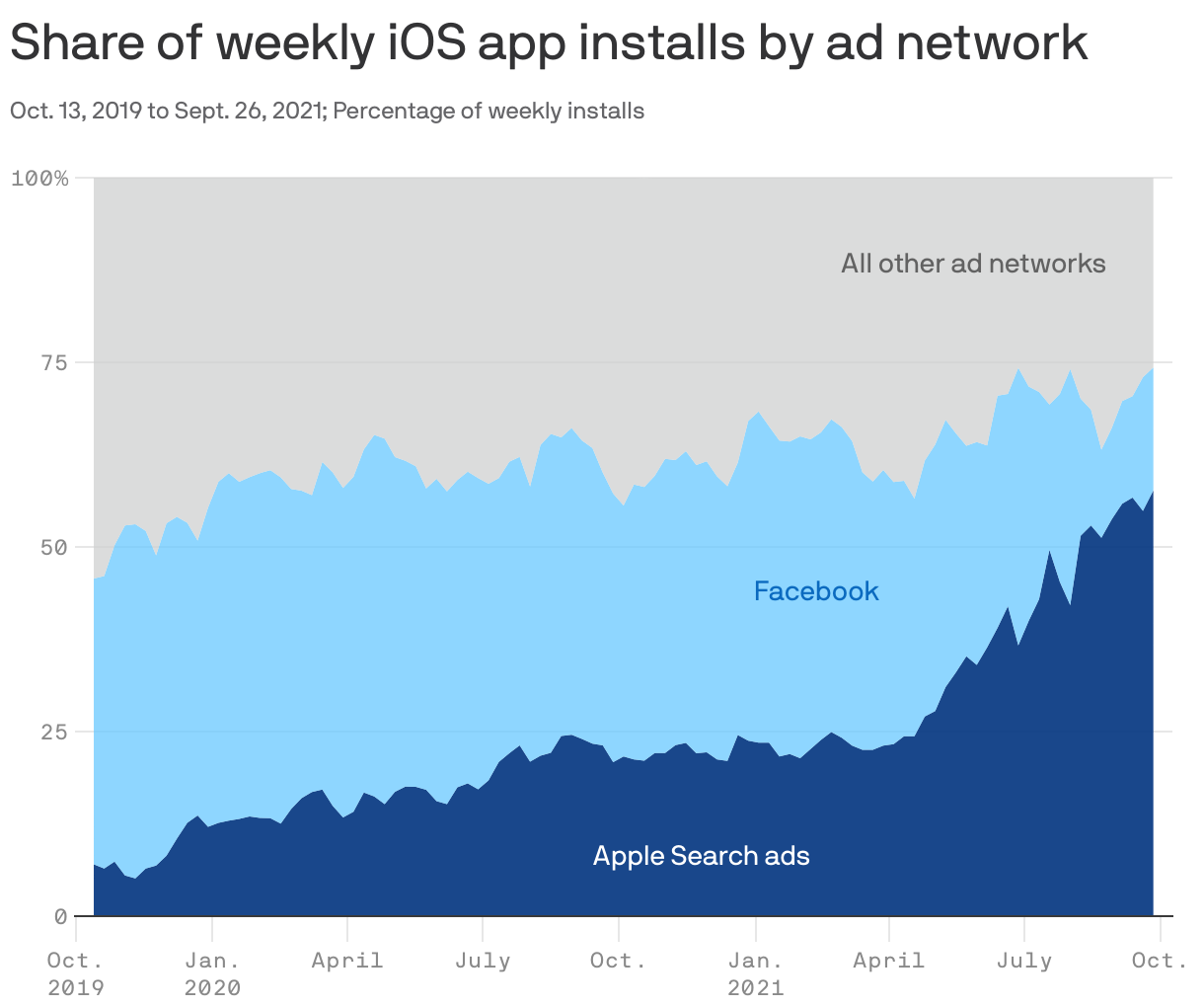
The latest earnings reports from Facebook and Snapchat show that Apple's mobile privacy measures are beginning to have a material impact on the ad businesses of some of its Big Tech competitors.
Why it matters: While experts don't think Apple's moves will do long-term damage to its rivals, they will force social media companies to invest heavily in new technology and products for the next few years — all while their ads business continues to experience significant headwinds.
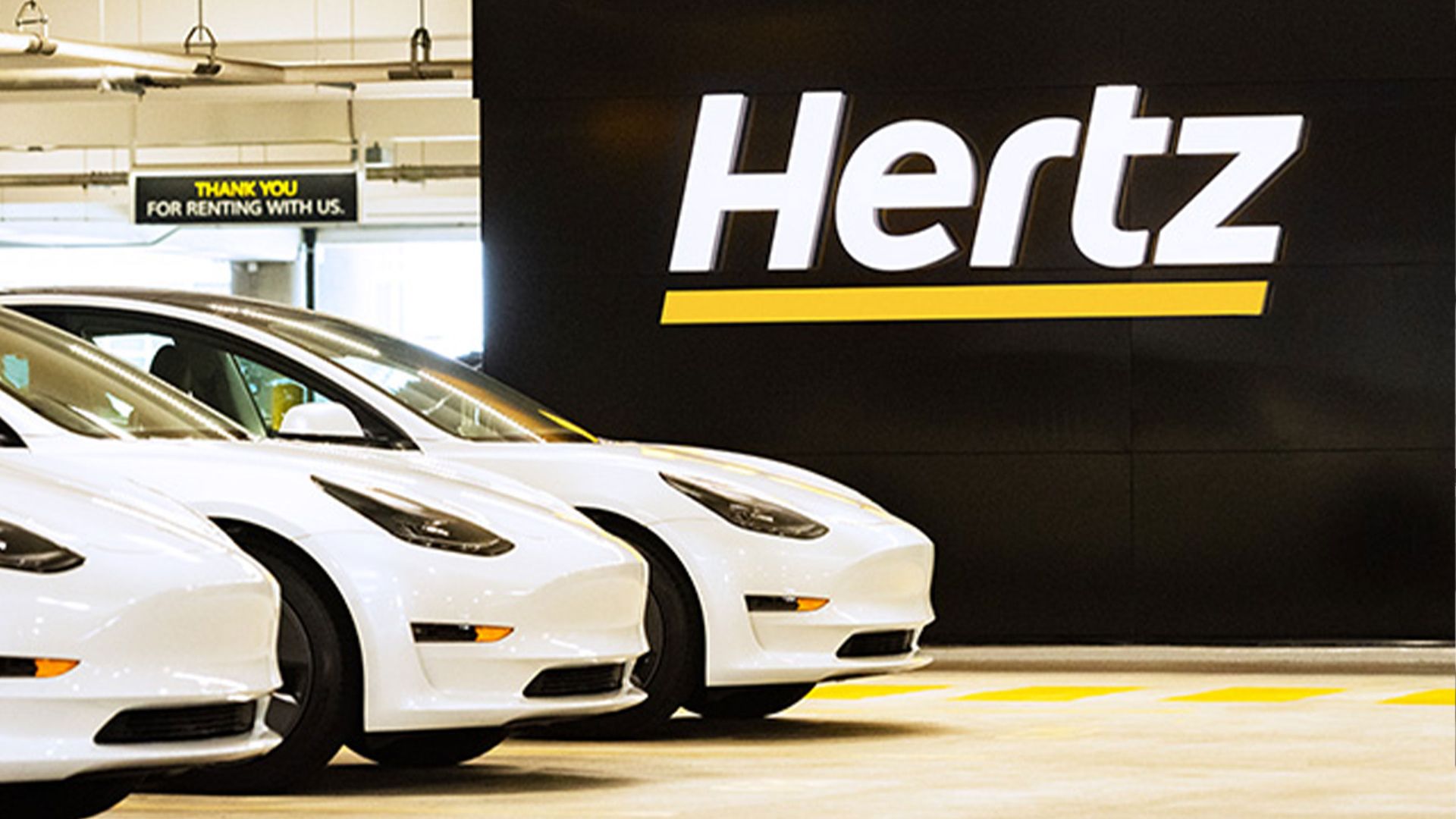
People who are on the fence about buying an electric vehicle — or who can't afford one — can now rent one from Hertz.
Driving the news: The giant rental car company said Monday it is adding 100,000 Teslas to its fleet as the first step in a major shift toward electrification.
The order represents $4.2 billion in revenue for Tesla and is the carmaker's biggest-ever order, Bloomberg reported. Tesla's market cap reached $1 trillion following the deal.
The vehicles will account for more than 20% of Hertz's global fleet. And Hertz is also adding thousands of charging stations to its rental locations and hiring seven-time Super Bowl champ Tom Brady to pitch EVs to consumers.
Why it matters: Broader availability of electric cars on rental lots could give the EV movement a needed boost by allowing cautious consumers a no-risk way to try before they buy.
The big picture: President Biden wants half of all new cars sold to be electric by 2030, and many carmakers are making the pledge to switch away from gasoline-powered vehicles by the middle of the next decade.
But consumer demand remains low, with battery-electric vehicles accounting for less than 5% of auto sales.
Yes, but: Consumers are getting more curious about plug-in models.
"Consumer confidence and acceptance of EVs is growing gradually," says Michelle Krebs, executive analyst for Cox Automotive, adding that the opportunity to try one for a few days could snag more interest.
Surveys show that when people gain experience with new technologies, they become more accepting, she said.
For example, luxury car owners with driver-assist systems like adaptive cruise control are much more accepting of autonomous vehicles than those who've never experienced the technology.
What they're saying: "Electric vehicles are now mainstream, and we've only just begun to see rising global demand and interest," Hertz interim CEO Mark Fields said in a statement.
What's next: Consumers will be able to rent a Tesla Model 3 at Hertz airport and neighborhood locations in U.S. major markets and select cities in Europe starting in early November, with availability growing through 2022.
They'll have access to 3,000 Tesla Supercharger stations, besides the Hertz-installed chargers.
But EVs take some getting used to and features like regenerative braking could be confusing to drivers getting acclimated to their rental car late at night in an airport garage.
Hertz said it will offer help to educate customers about their EV through the Hertz mobile app.
Of note: Teslas are already popular on the peer-to-peer car rental site, Turo, CEO Andre Haddad tells Axios.
Some are booked by travelers and others by potential buyers looking for an extended test drive.
Many Turo hosts maintain small fleets of Teslas and EVs to keep up with demand.
Demand for swimming pools made out of recycled cargo containers is through the roof, and the few companies that offer them can barely meet demand.
Why it matters: For all the news about pandemic-induced cargo backups at sea, many shipping containers only make one-way trips from Asia to North America, and those tend to be repurposed for housing and industrial uses — or, increasingly, for fun.
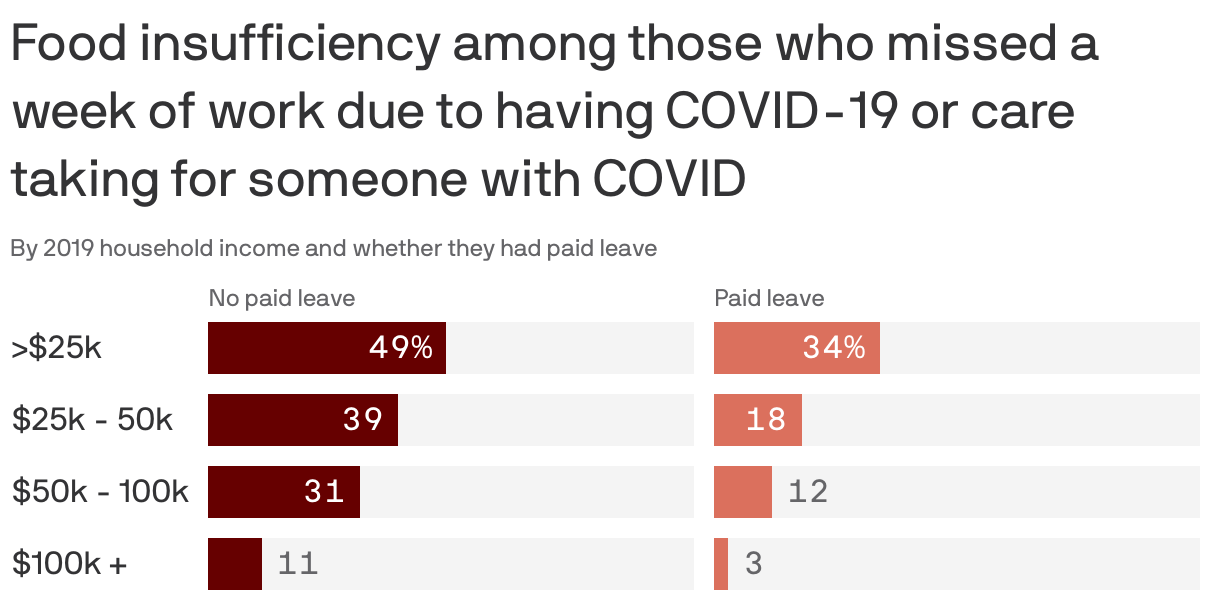
Data: Health Affairs; Chart: Danielle Alberti/Axios
Lower-wage workers in the U.S. were the most likely to report missing work due to COVID-19, but the least likely to have access to paid sick days or family leave, according to a new report out in Health Affairs on Monday.
Why it matters: The gaps in paid leave policies is the latest evidence of food insecurity experienced during the pandemic among Americans who had to miss work because they were sick or had to take care of someone who was sick.
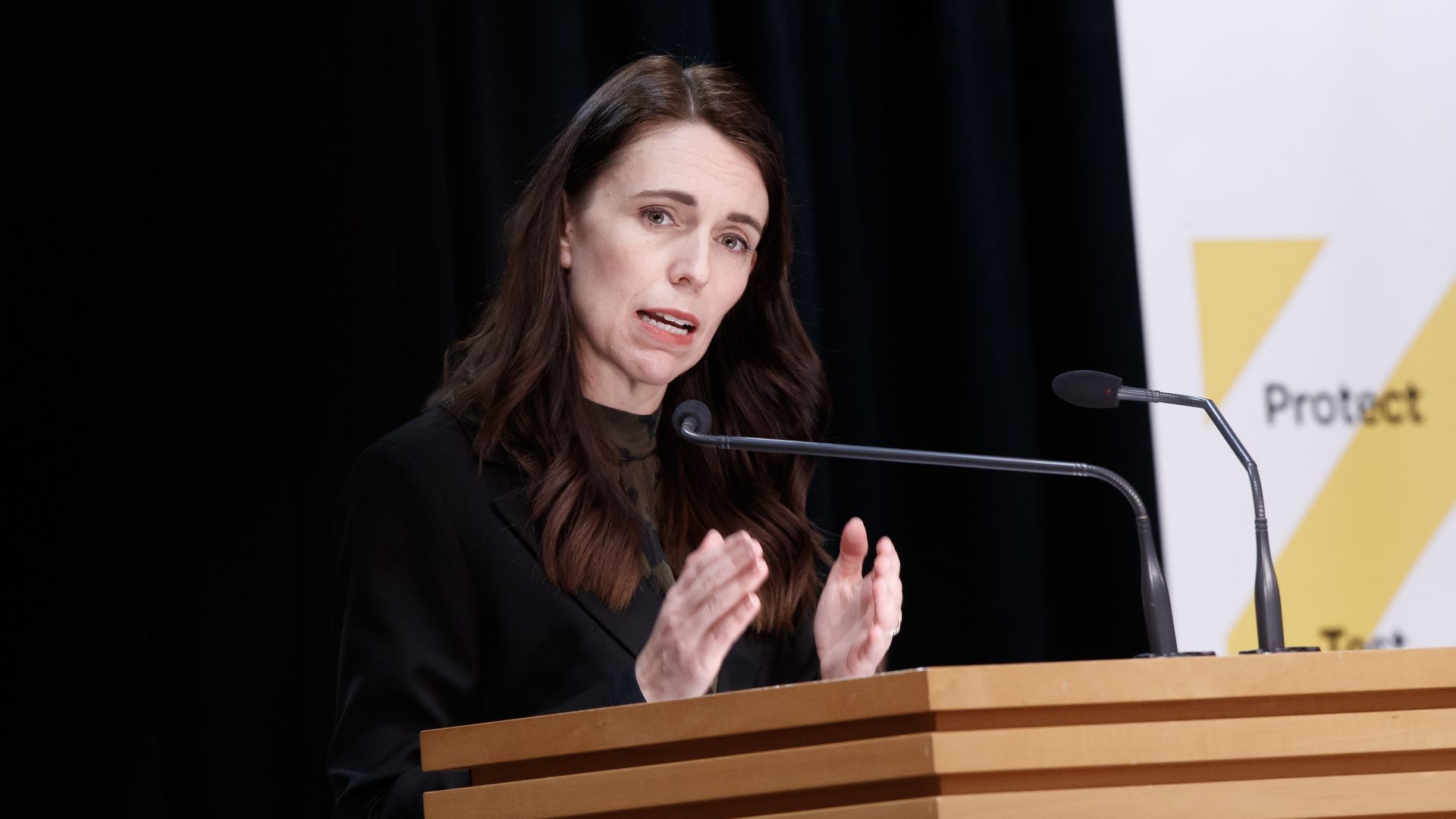
New Zealand Prime Minister Jacinda Ardern on Tuesday announced a COVID-19 vaccine mandate for businesses, as the government pushes to reach a nationwide 90% vaccination target.
Why it matters: Under the new COVID-19 Protection Framework, businesses must require vaccine certificates from customers if they're in close contact with them. Ardern said at a briefing Tuesday that such venues wishing to operate, including hair salons, bars, restaurants and gyms, must ensure staff is vaccinated.