Legacy admissions — the way in which universities are more likely to admit an applicant if she is directly related to an alumnus of the school — are one of the most blatant and unapologetic ways in which rich white families receive privileged access to elite institutions.
Why it matters: Legacy admissions are very slowly going away. But there's a very good reason they still remain at many top-tier universities: They're a way to admit more students from wealthy families, who in turn are more likely to become big donors.
Amazon employees allege that they have been shortchanged pay while on leave, according to a New York Times investigation published Sunday.
Why it matters: Much of the recent spotlight on Amazon — along with Google, Apple and Facebook — has been over competition and privacy, but labor concerns have been growing across the industry as well.
T-Mobile said on Friday that it will extend by three months its planned shutdown of Sprint's old CDMA network. It now plans to shutter the network at the end of March, rather than Jan. 1, 2022.
Why it matters: The move follows complaints by Dish Network that shutting down the network will hurt millions of its customers who own devices that still access the older network.
Car rental company Hertz announced Monday it will purchase 100,000 Tesla Model 3s by the end of 2o22 and install thousands of chargers across the United States as part of the company's turn toward electric vehicles.
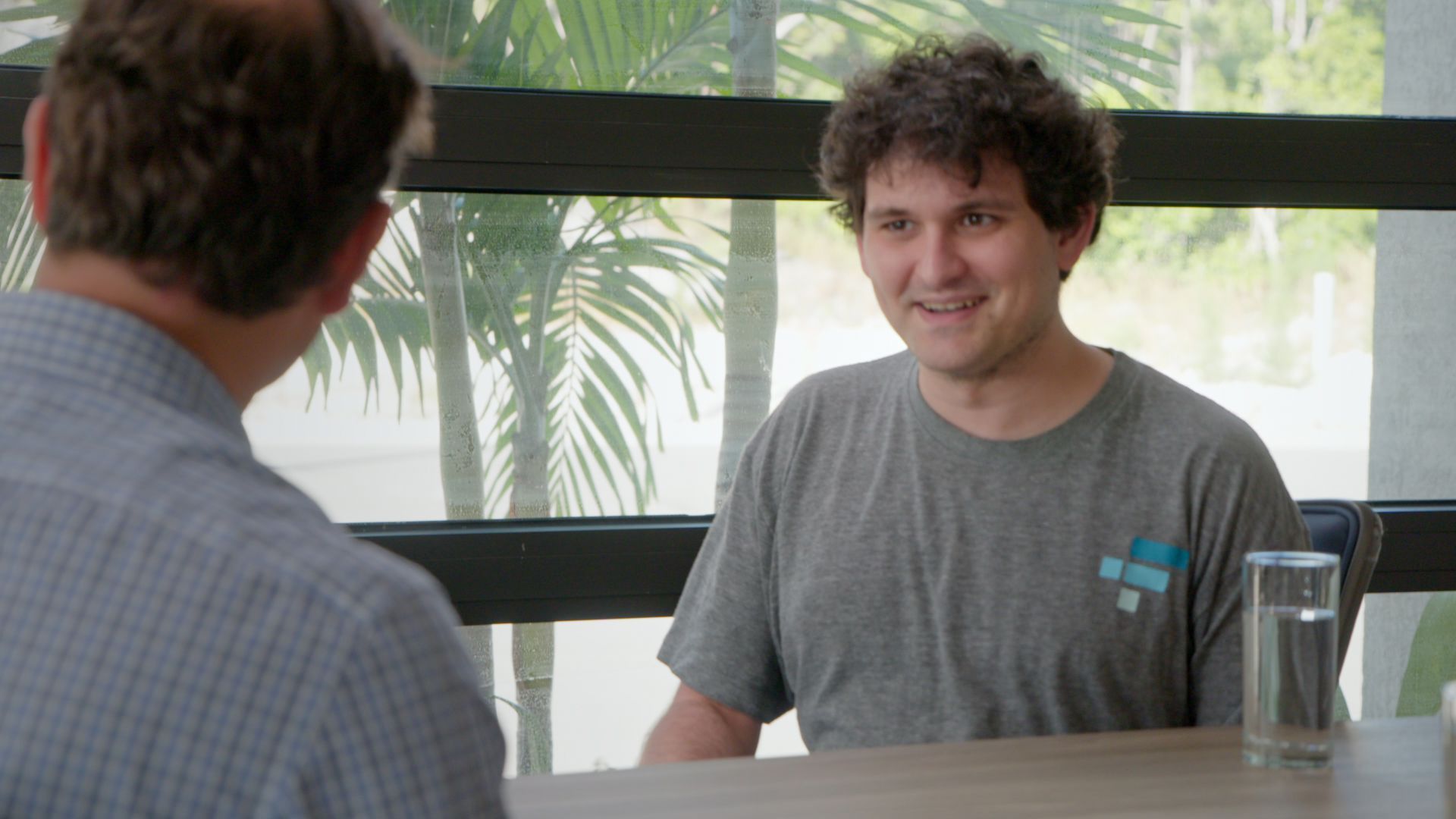
FTX doesn't look much like a company valued at $25 billion. Its new headquarters, located in a sleepy part of The Bahamas, is so nondescript as to not even have a sign. But it does expect to soon have neighbors.
Driving the news: Founder and CEO Sam Bankman-Fried tells "Axios on HBO" to expect "more and more crypto flight from the states" if the U.S. doesn't soon create a regulatory regime for cryptocurrencies.
Telstra (ASX: TLS) agreed to buy the Pacific operations of telecoms firm Digicel Group for at least US$1.6 billion, with the Australian government providing most of the financing.
Why it matters: This is about Australia trying to blunt China's rising regional influence, following reports last year that Digicel was in talks to sell its Pacific business to China Mobile.
Reports based on leaked whistleblower documents from Facebook, known as the Facebook Papers, appeared in a broad range of news outlets Monday, shedding light on what company knew about harms caused on its platform and how it handled that information.
Why it matters: The reports paint a detailed picture of Facebook's efforts over the years to grapple with major problems — from hate speech to inciting violence — while continuing to pursue its business objectives.
It’s all about Big Tech. The five largest companies in the S&P 500 — Apple, Microsoft, Amazon, Facebook, Alphabet — are set to report this week.
Why it matters: These heavyweights will overshadow most of the other 150+ reporting companies, in what will be the busiest earnings week of the quarter.
Investors heading into third-quarter earnings season were uneasy. And with good reason — if Q2 was marked by reopening euphoria, Q3 was marked by the Delta variant.
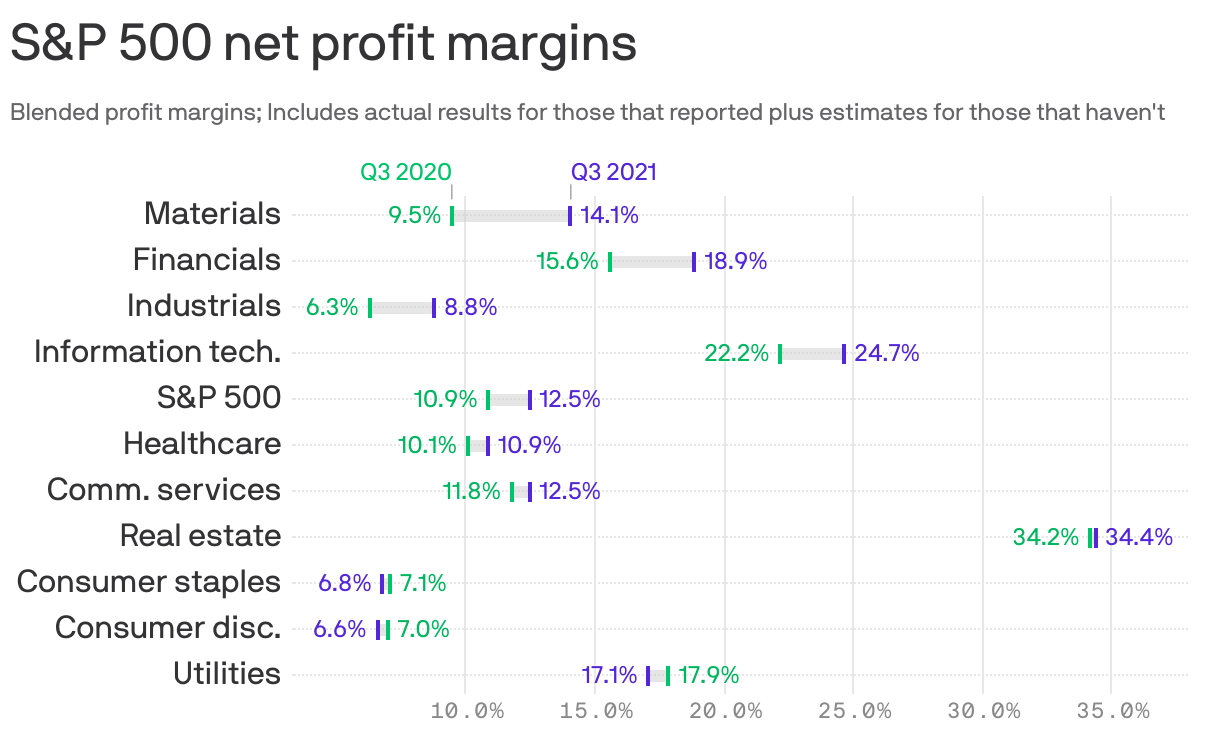
What’s happening: Companies are pretty much still killing it. There are exceptions of course — but with 23% of third-quarter S&P 500 reports in, the rare earnings misses so far are conspicuous.
They're battening down the hatches at Facebook headquarters this week as the company faces a trifecta of tumult: a continuing wave of negative press coverage fueled by document leaks, a critical earnings report Monday and a reported name change looming.
The big picture: All this is unfolding as Mark Zuckerberg tries to transform Facebook from a social network into the prime mover behind a new "metaverse" of VR- and AR-driven remote work and play.
Vinyl records are hot again — outselling CDs in 2020. But there aren't enough manufacturers to fill the demand.
The big picture: Orders are delayed weeks or months, and artists are having to set release dates several months in advance to allow time for the newly popular vinyls to be made.
3D-printed cement houses are about to take off, offering a cheaper, more efficient way to provide homes for those who need them — as long as they can be built in ways that don't worsen climate change.
Why it matters: Developers of 3D-printed homes think they can take on multiple challenges: the affordable housing crisis, the shortage of skilled labor and rising material costs.
Data: NABE Business Conditions Survey; Chart: Thomas Oide/Axios
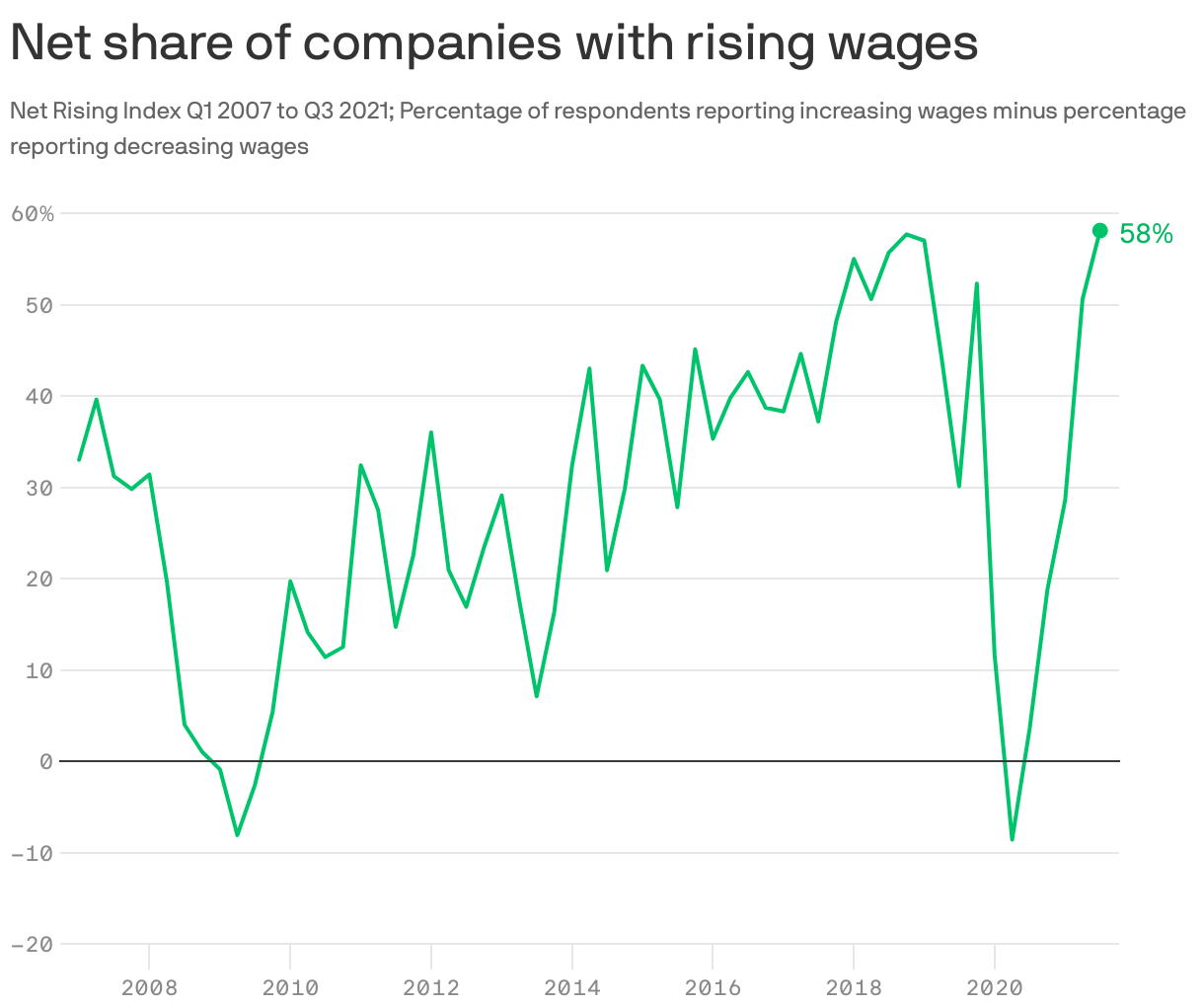
America’s business leaders expect to keep shelling out higher wages to employees.
Driving the news: According a new quarterly survey released today by the National Association for Business Economics, a record high 58% of respondents increased pay at their firms during the third quarter — and nearly the same share expects to do so again in the coming months.
The Indianapolis Motor Speedway helped autonomous vehicle researchers reach a new milestone over the weekend by hosting its inaugural driverless car race.
Driving the news: Nine teams from 21 universities competed to win the $1 million grand prize — with Technical University of Munich (TUM) recording the fastest two-lap average speed of 135.944 mph on the Indianapolis Motor Speedway Oval, per an Indy Autonomous Challenge statement.
















/2021/10/22/1634924294412.gif?w=3840)