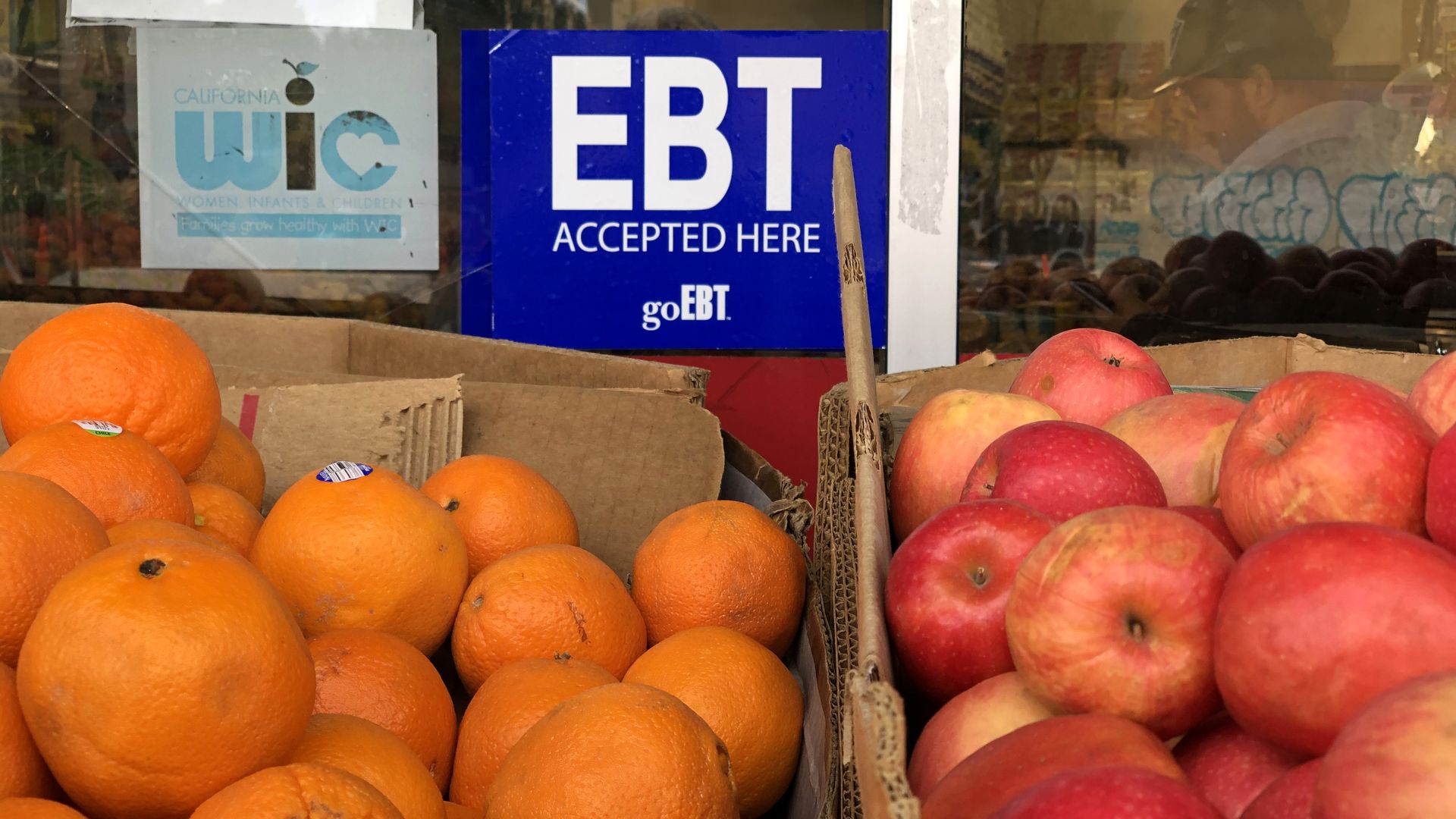
DHS officials recommend SNAP recipients keep their cards locked and secure to avoid losing funds.
What they're saying: "Your existing card will continue to work, but your regular payment will not appear," said Rep. Shontel Brown (D-Ohio) in a press release. "Keep your EBT Card active."
Mackenzie Libbey with Community Legal Services told CBS News: "That's money that's already been appropriated. It's been put on their card."
"So we definitely do not want people rushing out to try to use up their benefits at the end of October thinking they're not going to be able to buy anything in November."
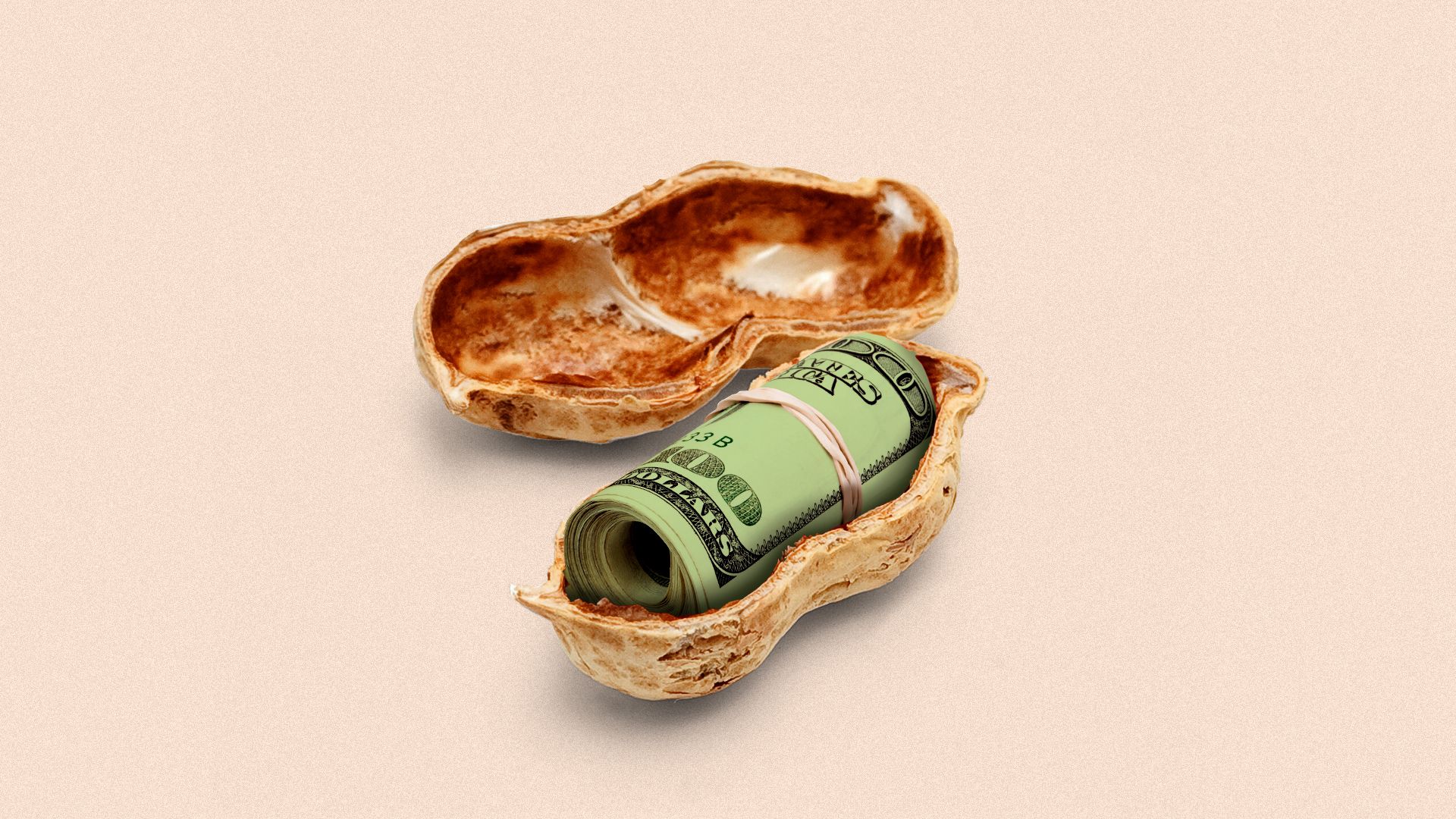
Yes, but: SNAP recipients often spend all of their benefits at once, or in the month they're issued, Axios' Emily Peck writes.
"About 80 percent of benefits are spent in the first two weeks and 97 percent by the end of the month," said Lauren Bauer of the Brookings Institution.
This spending becomes a key revenue driver for grocery stores, meaning a drop in SNAP benefits usage can lead to a broader decline in general spending, too, Peck writes.
States and SNAP benefits
The intrigue:Some states say they're unsure if EBT cards will still work in November and that families should plan ahead.
New Hampshire, for example, recommends beneficiaries use all of their funds before Oct. 31.
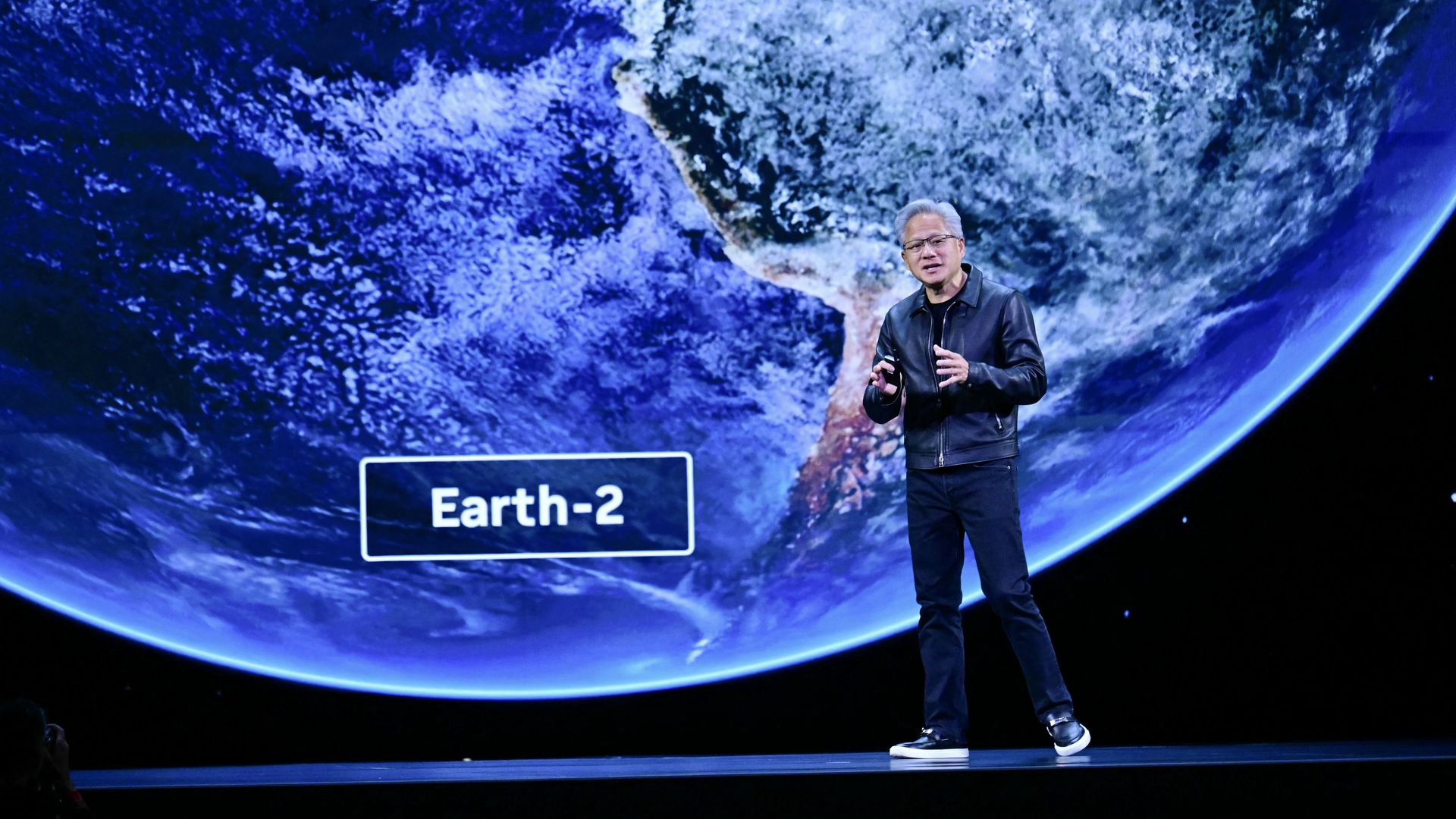
Nvidia on Tuesday revealed a new computing system designed to enable autonomous vehicle developers to accelerate self-driving cars — with Uber signed on as an early collaborator.
Why it matters: The "inflection point" for robotaxis "is about to get here," Nvidia CEO Jensen Huang said at the Nvidia GTC in Washington, D.C.
OpenAI has committed to spend about $1.4 trillion on infrastructure so far, equating to roughly 30 gigawatts of data center capacity, CEO Sam Altman said on Tuesday.
Why it matters: The statement helps clarify the many announcements the company has made with its chip, data center and financing partners.
The Federal Reserve could announce the end of a program that's been sucking money out of the financial system as soon as Wednesday, a bid to prevent chaos in the plumbing of said system.
Why it matters: Friction is emerging in the markets for overnight cash that is a crucial piece of global money markets.
SNAP payments are set to go dark this weekend, yanking billions from grocery aisles — with Walmart and other value retailers most exposed.
Why it matters: The shutdown will halt about $8 billion a month in federal food assistance, money that usually flows straight into grocery stores and big-box retailers.
Trump Media and Technology Group says it will soon offer Truth Social users access to prediction markets.
Why it matters: The rules governing prediction markets are still evolving, but now the company bearing the name of the president is wading into that space.
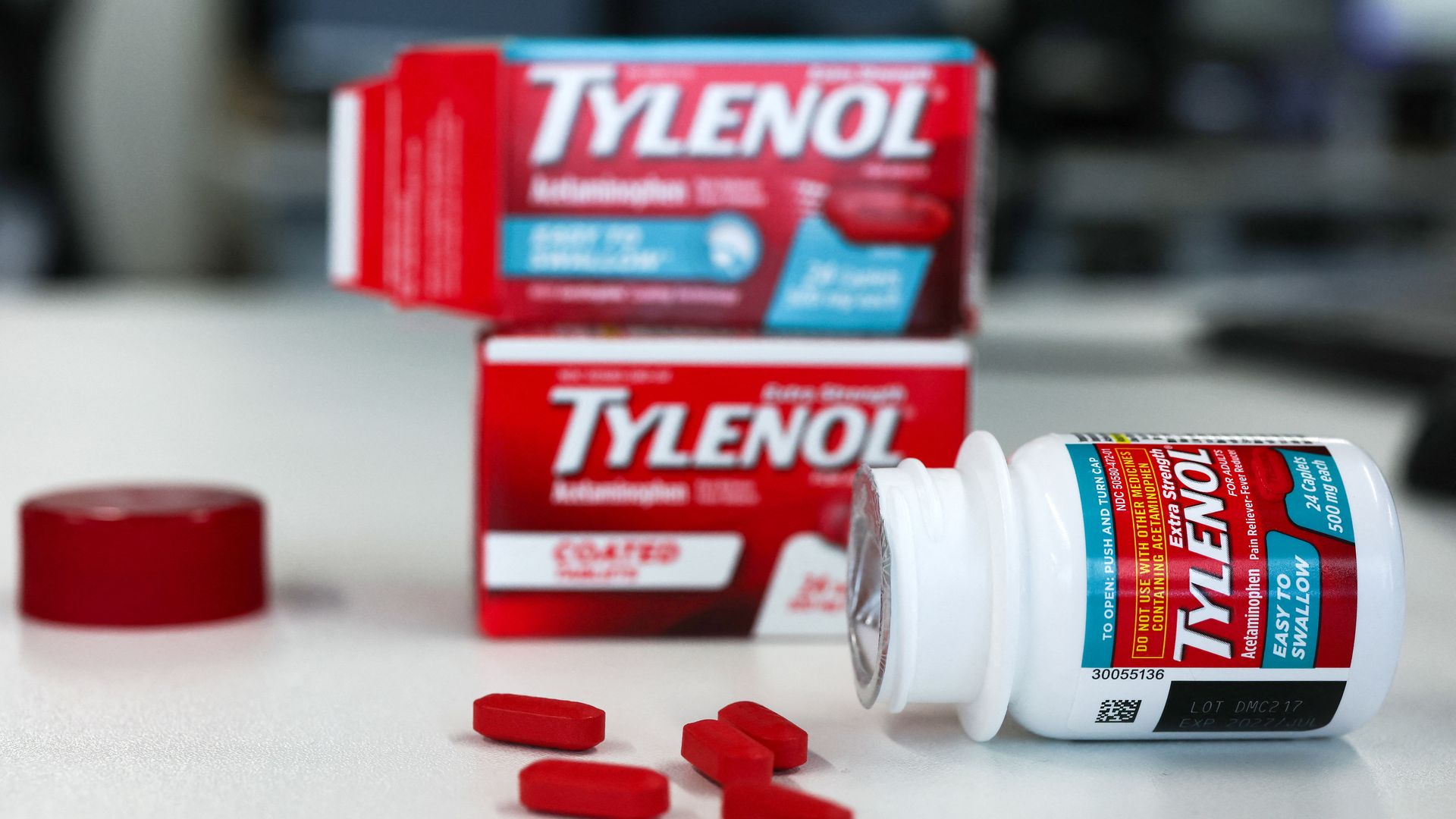
Texas' attorney general sued the makers of Tylenol Tuesday, charging they deceptively marketed the painkiller while knowing its active ingredient increased the risk of autism and other disorders.
Why it matters: The state's involvement adds a new legal twist to the controversy stemming from President Trump's claims that there may be a connection between Tylenol use among pregnant women and autism in children.
Trump officials this morning unveiled a "strategic partnership" with Westinghouse, nuclear fuel provider Cameco and investment giant Brookfield to spur new U.S. projects.
Why it matters: The plan envisions "at least $80 billion of new reactors will be constructed across the United States using Westinghouse nuclear reactor technology."
The big picture: The announcement is also heavy on pushing new reactors to power energy-thirsty AI infrastructure to "win the global AI race."
What we're watching: Specifics, if and when they emerge. Here's one though: the $80B could potentially support restarting construction of unfinished reactors in South Carolina, a Brookfield spokesperson tells me
Campbell Brown, a veteran news anchor and the former head of news at Meta, has raised a $3 million seed round to co-launch a new company called Forum AI that evaluates AI models for bias and makes judgment calls about high-stakes topics.
Why it matters: Brown believes much more transparency and expertise are required to inform human-level intelligence within AI systems.
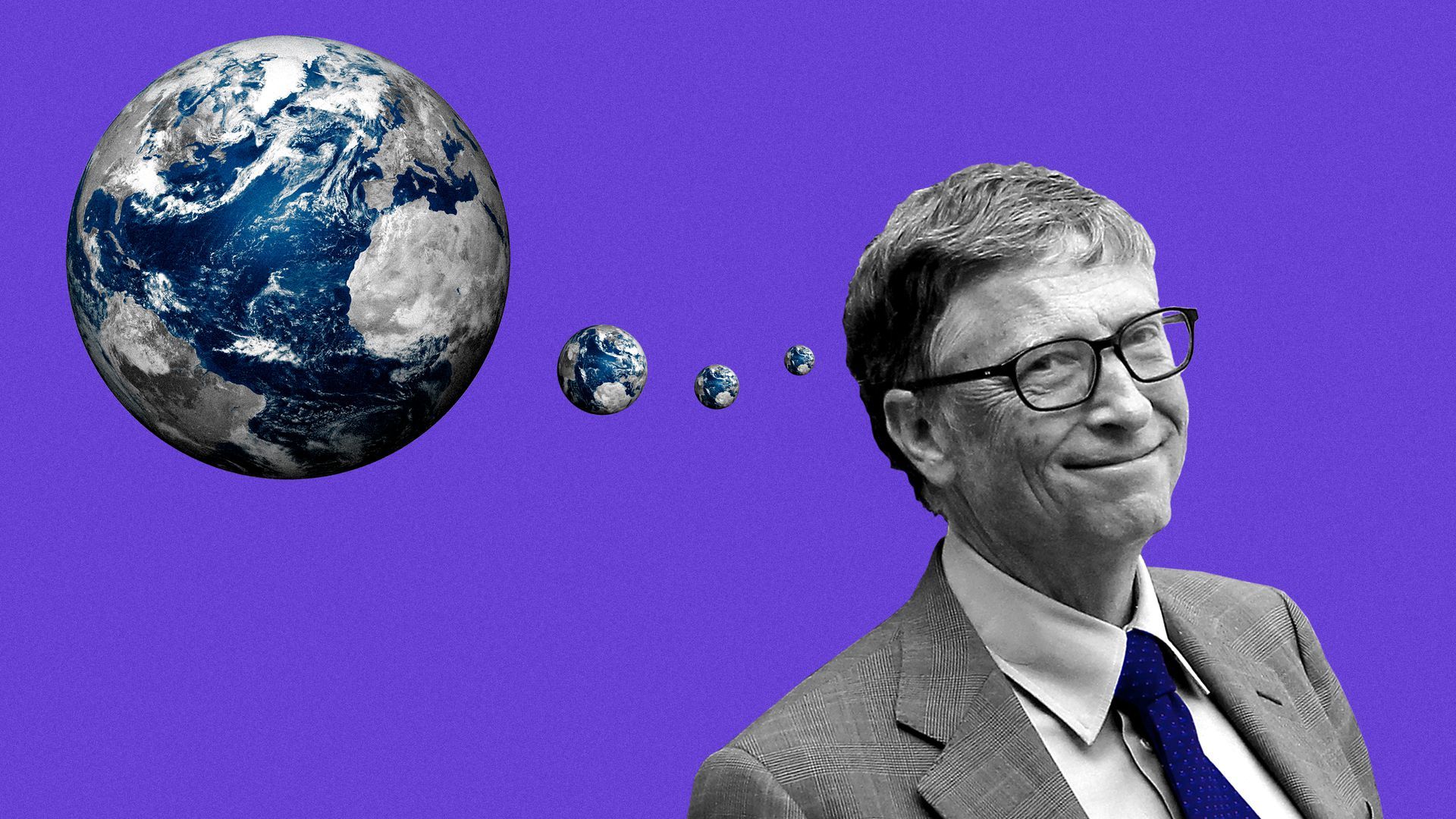
Bill Gates is calling on world leaders gathering at an annual climate summit next month to rethink progress through the lens of human development.
Why it matters: The comments signal a shifted public posture from the Microsoft co-founder, who's among the world's top funders of both new climate technologies and initiatives to save lives from disease and poverty.
Merger Monday is back, with U.S. traded companies announcing more than $80 billion worth of deals to kick off the week.
Why it matters: While the stock market continues climbing a wall of worry about a potential AI bubble and further policy uncertainty, dealmaking looks overwhelmingly positive.
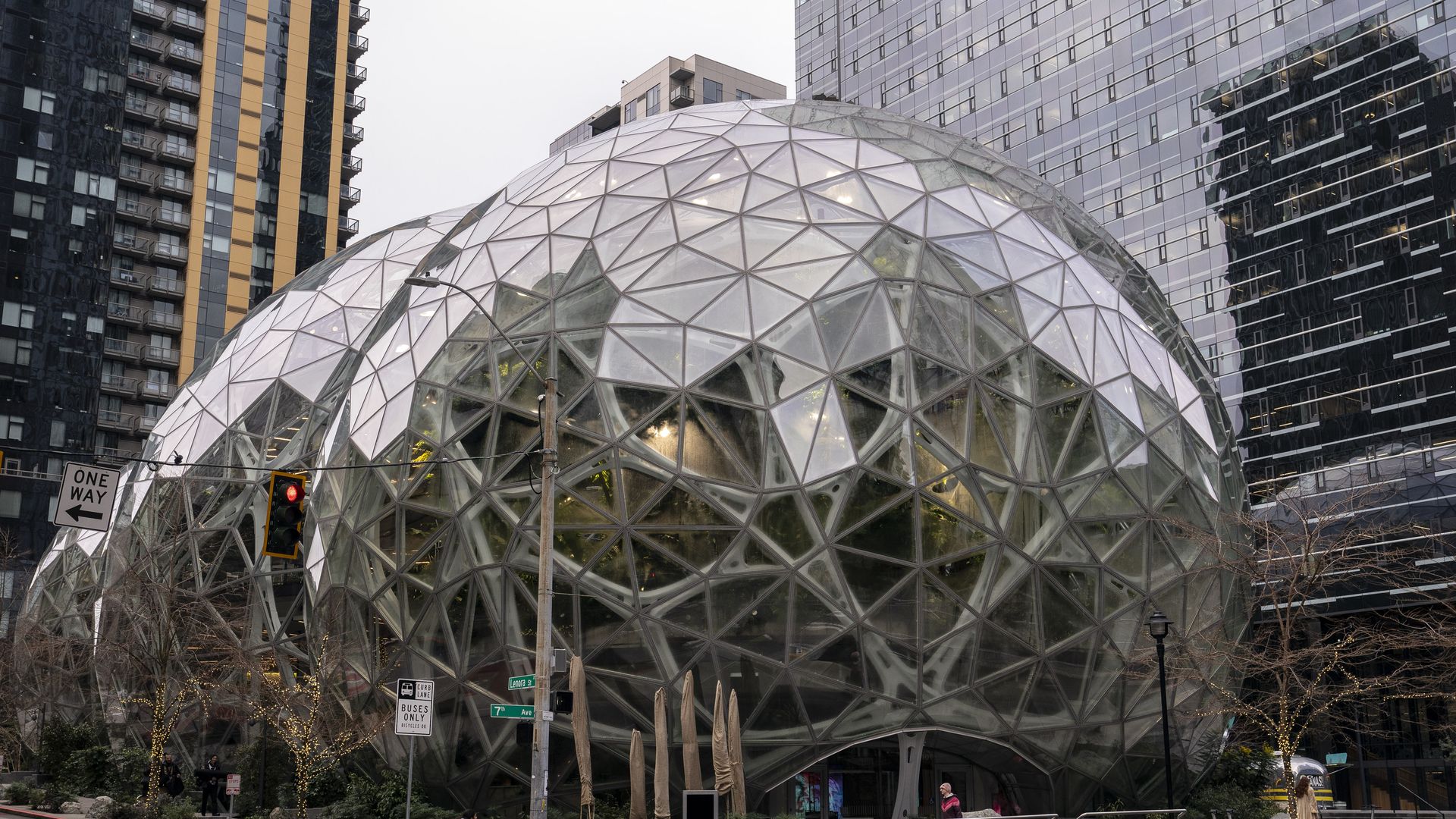
Amazon on Tuesday said it would cut 14,000 corporate roles, in an effort to thin out bureaucracy and be more flexible in an AI-driven era.
Why it matters: Big companies are starting to cut back headquarters positions in an uncertain economy, where AI is increasingly capable of supplanting many roles.
Four hours of "Morning Joe" just isn't enough for Joe Scarborough. The MSNBC host tells Axios he's launching an early-afternoon newsletter, "The Tea, Spilled by Morning Joe," for viewers who crave a lunchtime hit.
"Your newsletter in the morning really drives the day," Scarborough told me. "We thought by noon, it'd be time for another one."
Why it matters: Scarborough and Mika Brzezinski, whose show has been shaping and driving elite opinion for nearly 20 years, have expansive plans for their "Morning Joe" franchise. In addition to "The Tea," debuting today, they'll host virtual town halls where fans can quiz the cast.
As five of the Magnificent 7 report earnings this week, investors are looking for fresh ways to play the AI boom beyond those overbought Big Tech stocks.
Why it matters: Wall Street's shift of attention away from the Mag 7 is throwing a spotlight on three AI companies: Oracle, Broadcom and Palantir.
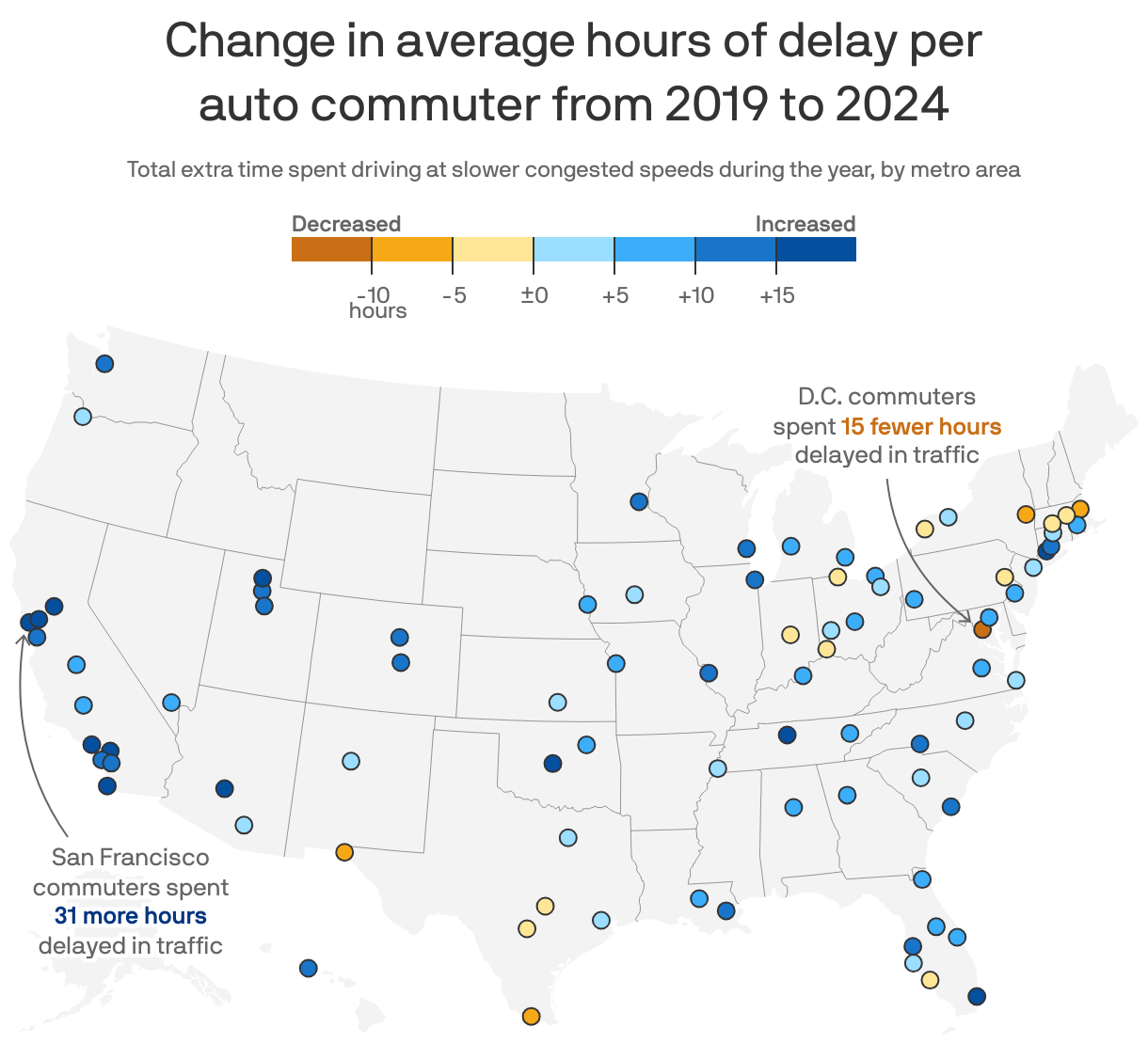
Data: Texas A&M Transportation Institute; Note: Includes metro areas with at least 500k residents in 2024, and passengers who typically travel during peak periods; Map: Kavya Beheraj/Axios
The average U.S. car commuter is spending a record 63 hours annually stuck in traffic amid changes in when and why we drive, a new report finds.
That's the most since 1982, when the dataset begins.
Why it matters: The findings put some hard data behind a common feeling among many drivers: Traffic has been getting worse — or at least different —since the COVID-19 pandemic.
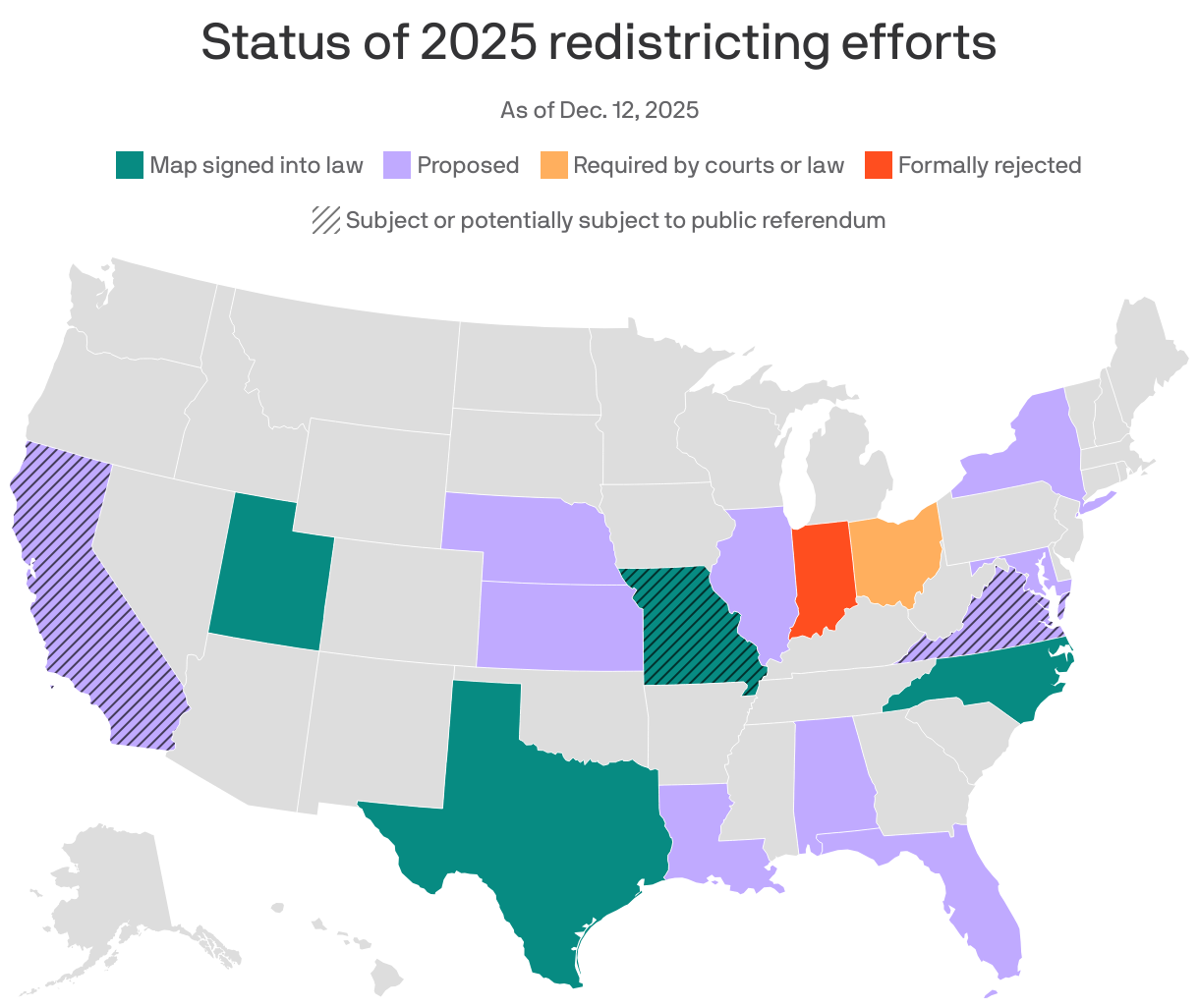
The national fight over redistricting is ramping up in this week, with several states taking new steps to redraw their congressional maps ahead of the 2026 elections.
Why it matters: These changes could have reverberations for years as Democrats and Republicans scramble to nullify each other's gains.
Tesla CEO Elon Musk's "polarizing and partisan actions" may have cost the EV maker over 1 million U.S. car sales, Yale researchers find in a new paper.
Why it matters: It puts huge numbers around what auto analysts and pollsters have directionally believed about the business effect of Musk's political arc.
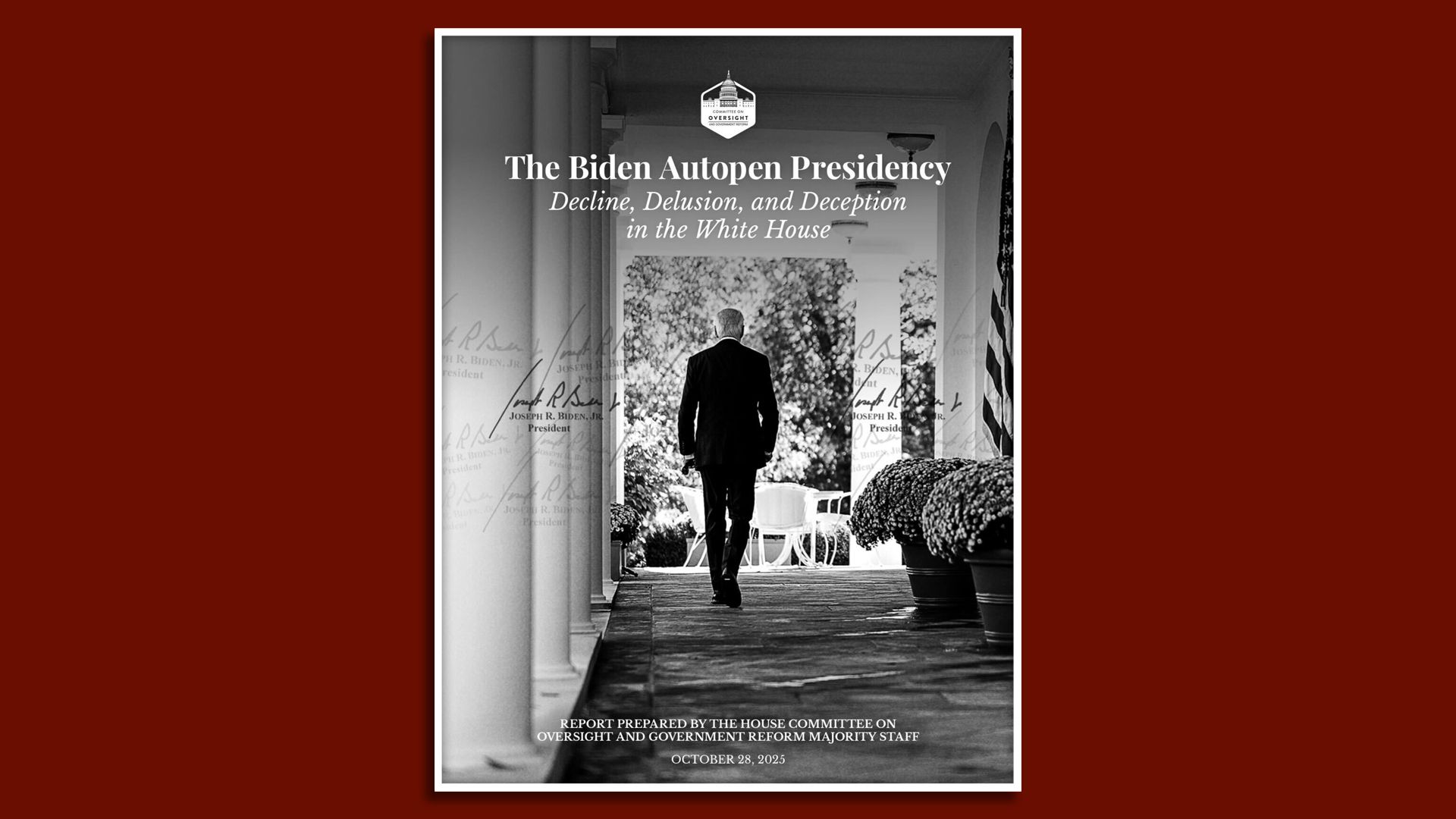
After Joe Biden's disastrous debate performance last year his team fell into a civil war, with longtime aides insisting he was fine and others — including his chief of staff and Cabinet members — saying he should consider exiting the presidential race, a new report by a GOP-led House panel says.
Why it matters: The report, released Tuesday, is the first time most of Biden's top aides have gone on the record to respond to questions about the former president's declining health, and what aides did to obscure it from the public.
By all accounts — even in the absence of government data — the U.S economy is growing strongly, driven by almost unfathomable levels of spending to build AI dominance.
Just one caveat: Don't bother looking for a job.
The big picture: Some of America's largest and most important employers say they don't need to hire to keep growing, as AI takes the place of many workers and drives more productivity out of others.
OpenAI's new browser, Atlas, is triggering fresh privacy and security alarms — and no one's quite sure how to navigate them.
Why it matters: Browsers are the gateway to the internet, and they're known to gobble up some of users' most sensitive information, like their passwords and credit card information.
Elon Musk's Grokipedia launched on Monday, but the encyclopedia powered by xAI's assistant Grok that's built to rival Wikipedia, crashed shortly after — leaving the site briefly inaccessible to users.
The big picture: Grokipedia was launched after Musk complained about "propaganda" on Wikipedia and, after a stuttering start, it was live late Monday evening with nearly 900,000 articles available, according to the homepage.