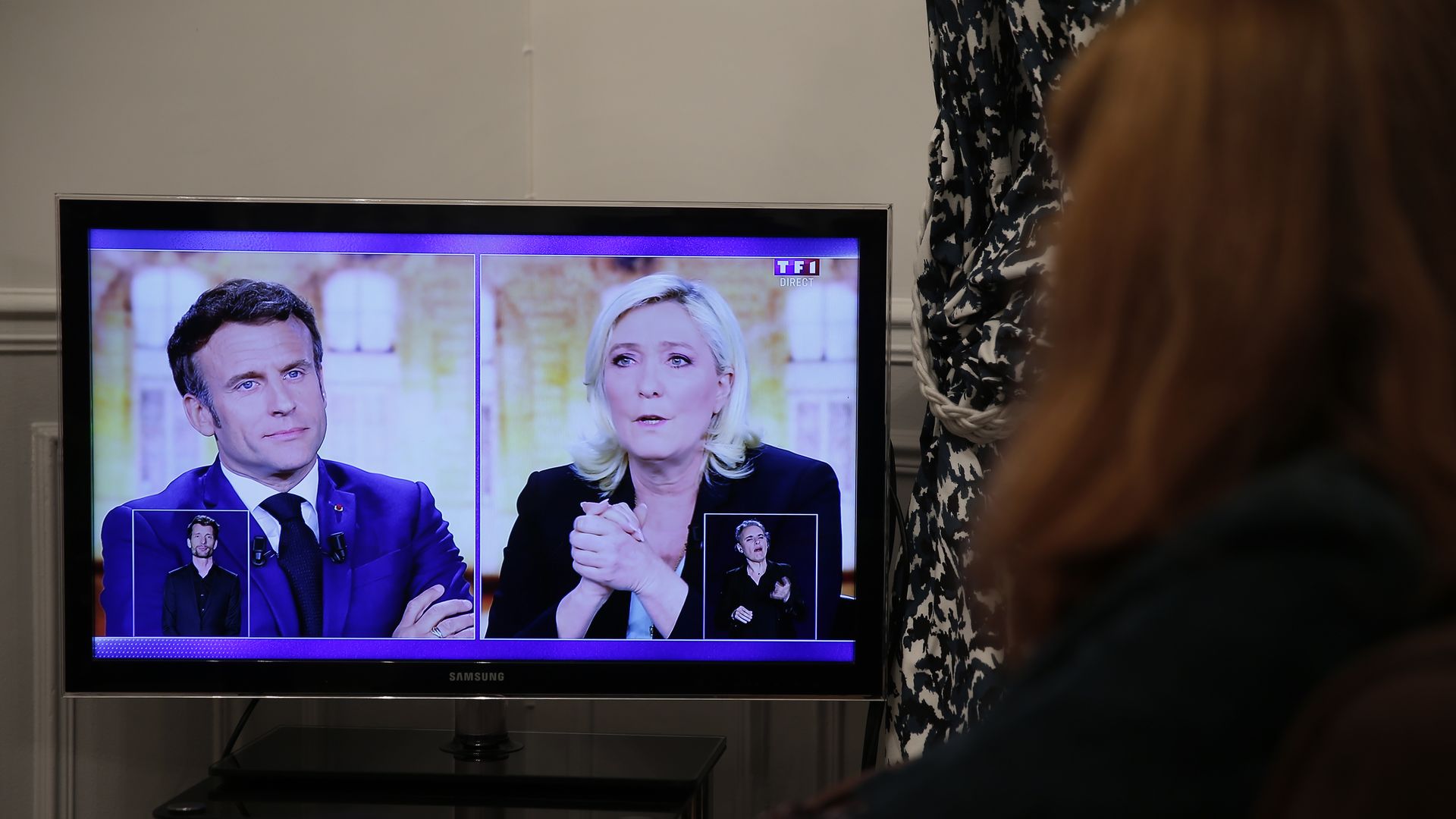
In the sole debate ahead of Sunday's presidential runoff, French President Emmanuel Macron attacked his far-right rival Marine Le Pen for owing money to a Kremlin-linked bank and warned that her proposal to ban headscarves for Muslim women could "create a civil war."
The other side: Le Pen, who has attempted to rebrand herself and party after being crushed by Macron in 2017, hit the French president on crime and the rising cost of living and made the case that she better understands the struggles of voters.
A group of Democratic lawmakers urged Facebook-parent company Meta Wednesday to weed out more Spanish-language disinformation on Russia's war in Ukraine.
Driving the news: The lawmakers sent a letter to CEO Mark Zuckerberg saying Russian state-controlled outlets are targeting Spanish speakers with false narratives about the invasion.
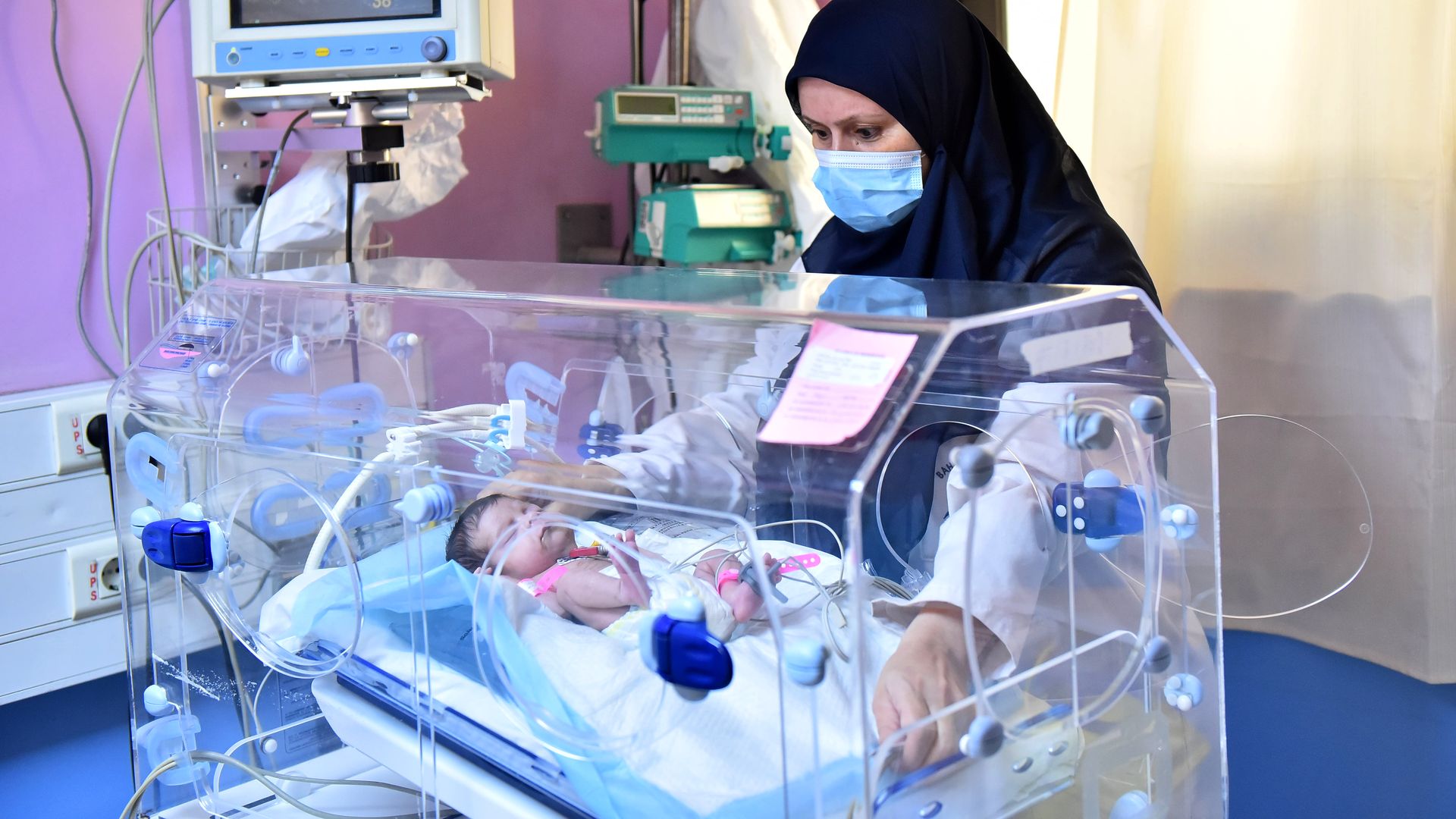
The yearslong economic and political crises plaguing Lebanon, along with rising food prices and worsening poverty, are having "grave consequences" for children's health, the UN children's agency warned Wednesday.
The big picture: A third of children in Lebanon who needed health care last year could not access it by October 2021, UNCIEF said in a report.
The U.S. Treasury on Wednesday announced a new round of sanctions against Russia, singling out entities and individuals involved in attempts to evade previous sanctions imposed by the U.S. and its allies.
Driving the news: The sanctions target a key commercial bank, a virtual currency mining company and a "global network of more than 40 individuals and entities led by U.S.-designated Russian oligarch Konstantin Malofeyev."
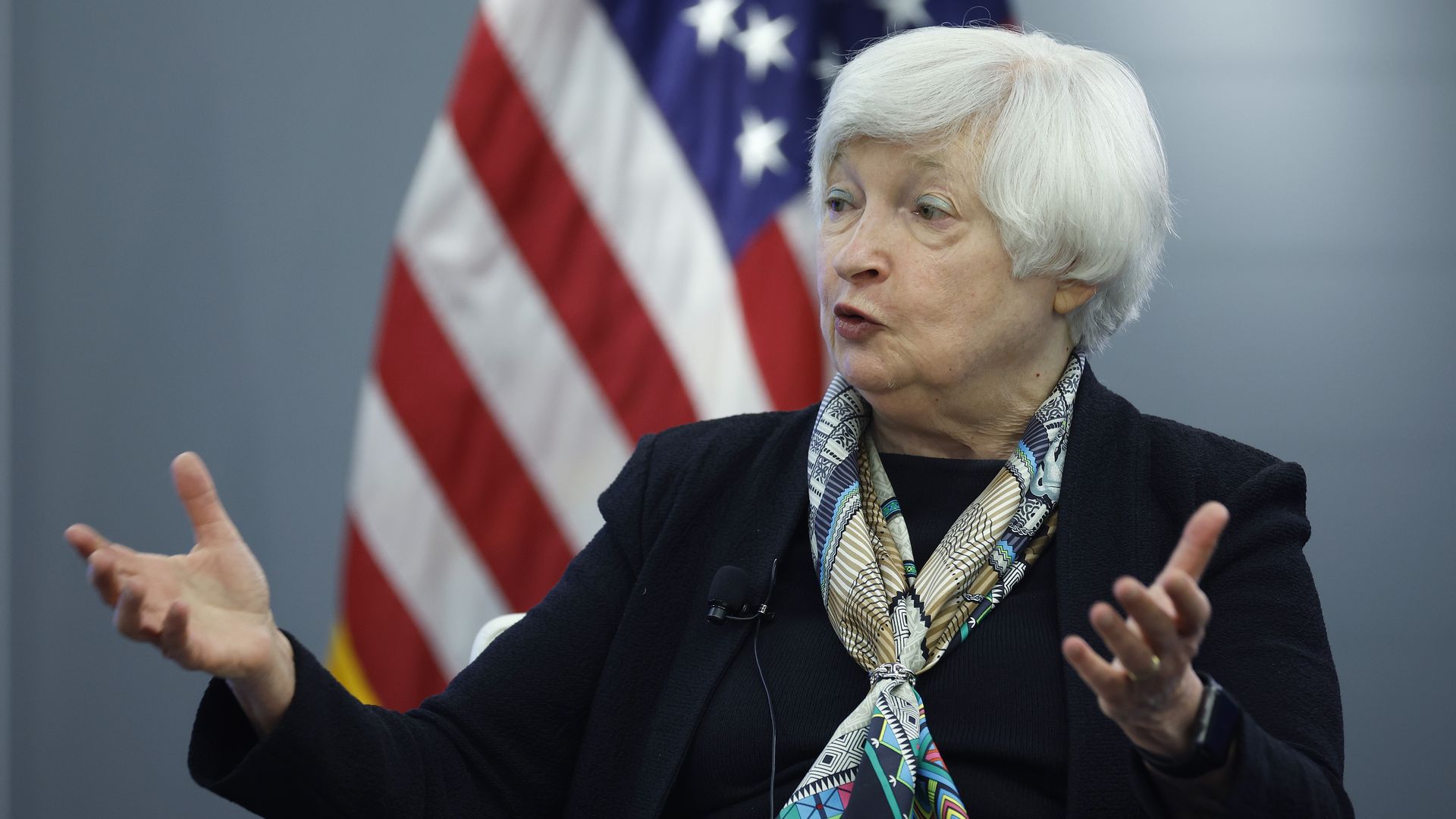
Treasury Secretary Janet Yellen and Federal Reserve chair Jerome Powell walked out of a G20 meeting on Wednesday when the Russian finance minister, Anton Siluanov, started speaking, according to a source familiar with the matter.
State of play: Yellen and Powell were joined by other world leaders, including European Central Bank head Christine Lagarde, Canadian Deputy Prime Minister Chrystia Freeland and Ukraine's finance minister, Serhiy Marchenko.
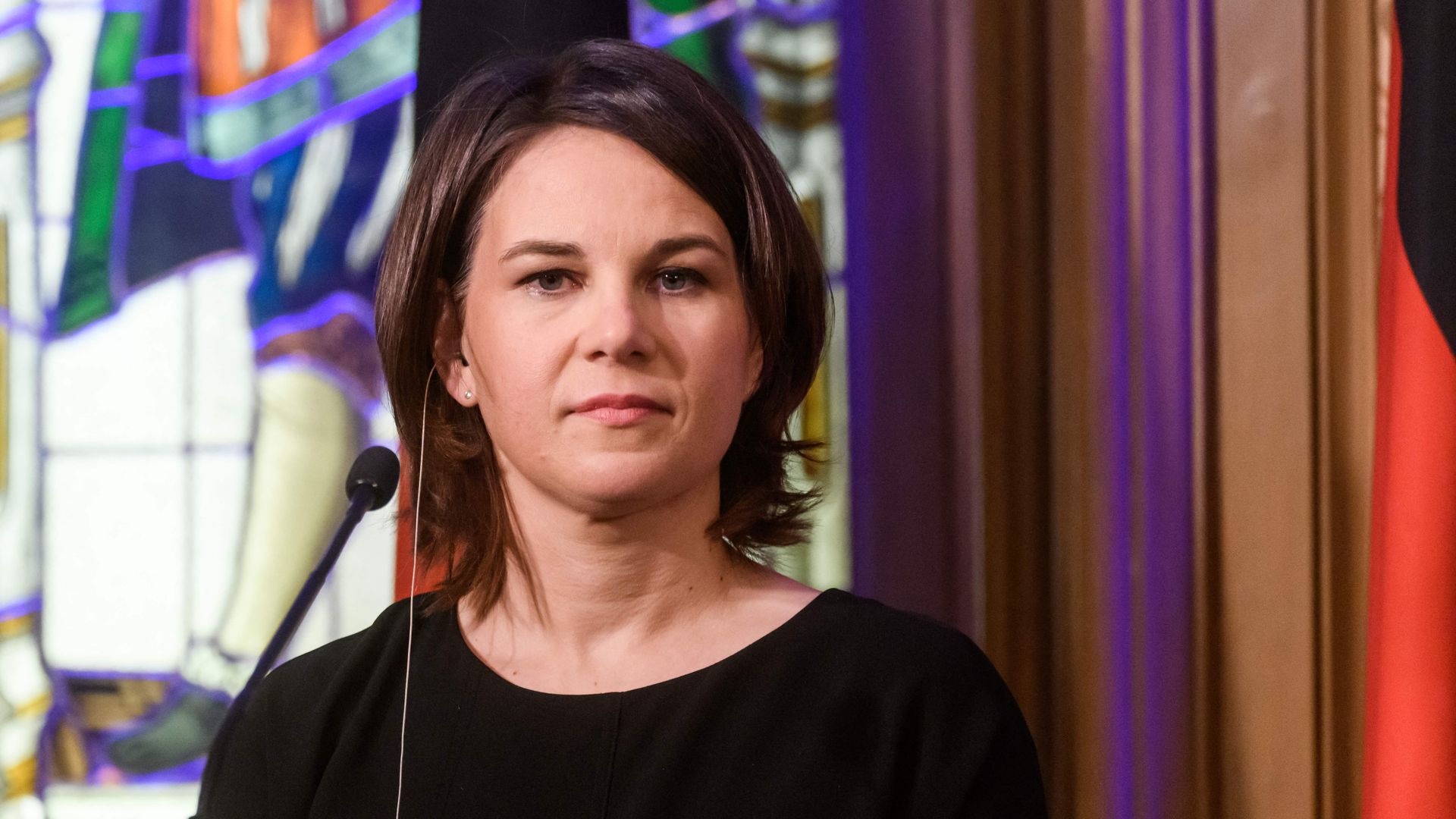
Germany will stop importing oil from Russia by the end of this year, German Foreign Minister Annalena Baerbock said after a meeting with her Baltic counterparts Wednesday, Reuters reported.
Why it matters: Germany, along with the rest of the European Union, has faced mounting pressure to reduce its dependence on Russian oil and gas amid Russia's war in Ukraine.
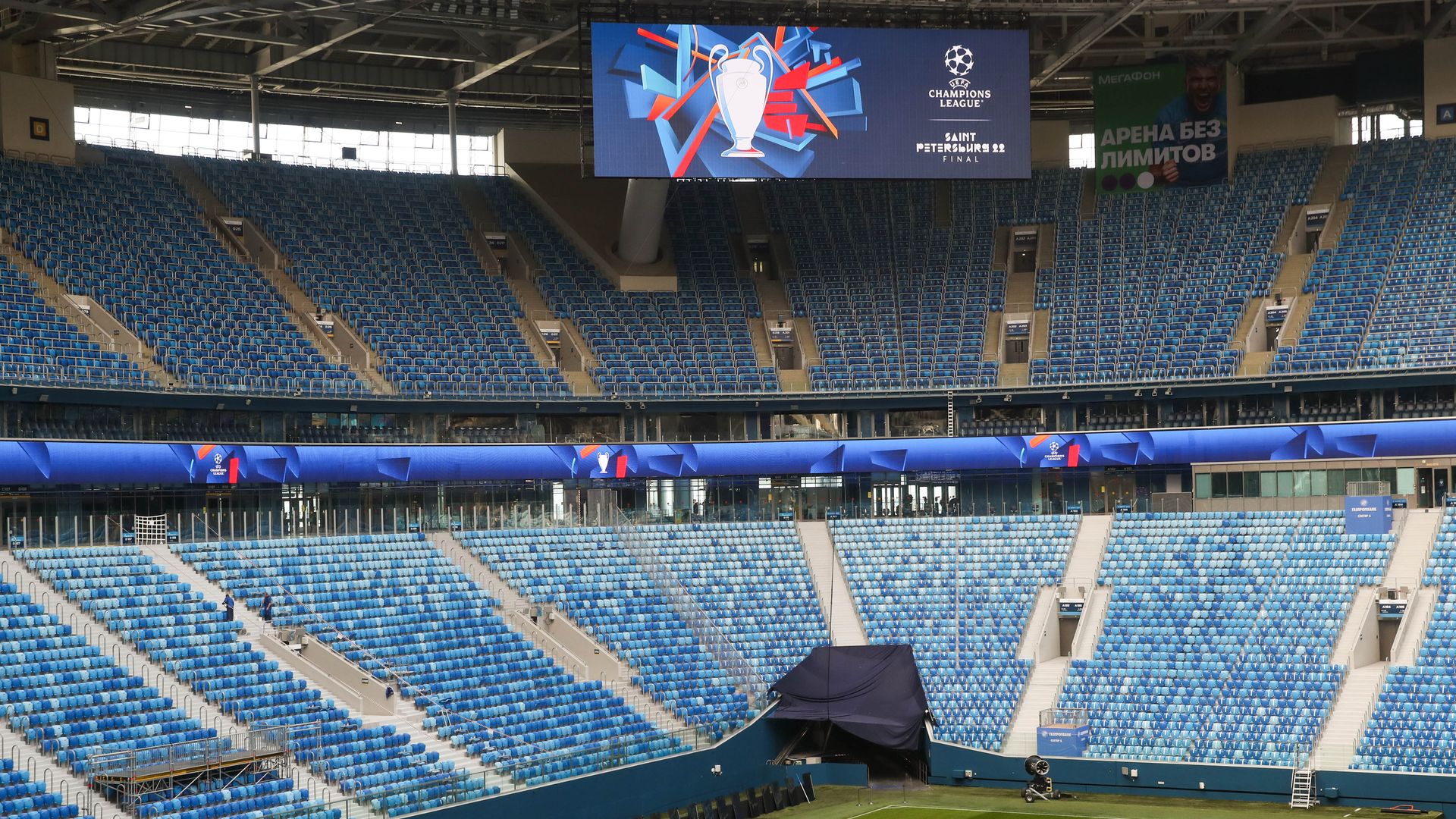
International sports organizations, teams and athletes quickly moved to boycott Russia after it invaded Ukraine, leading to the cancellation of major events in the country and the suspension of its national team from international soccer.
Why it matters: The sports world's rebuke of the invasion signals a swift change of tune about the Russian government, which has spent vast sums of money hosting international events.
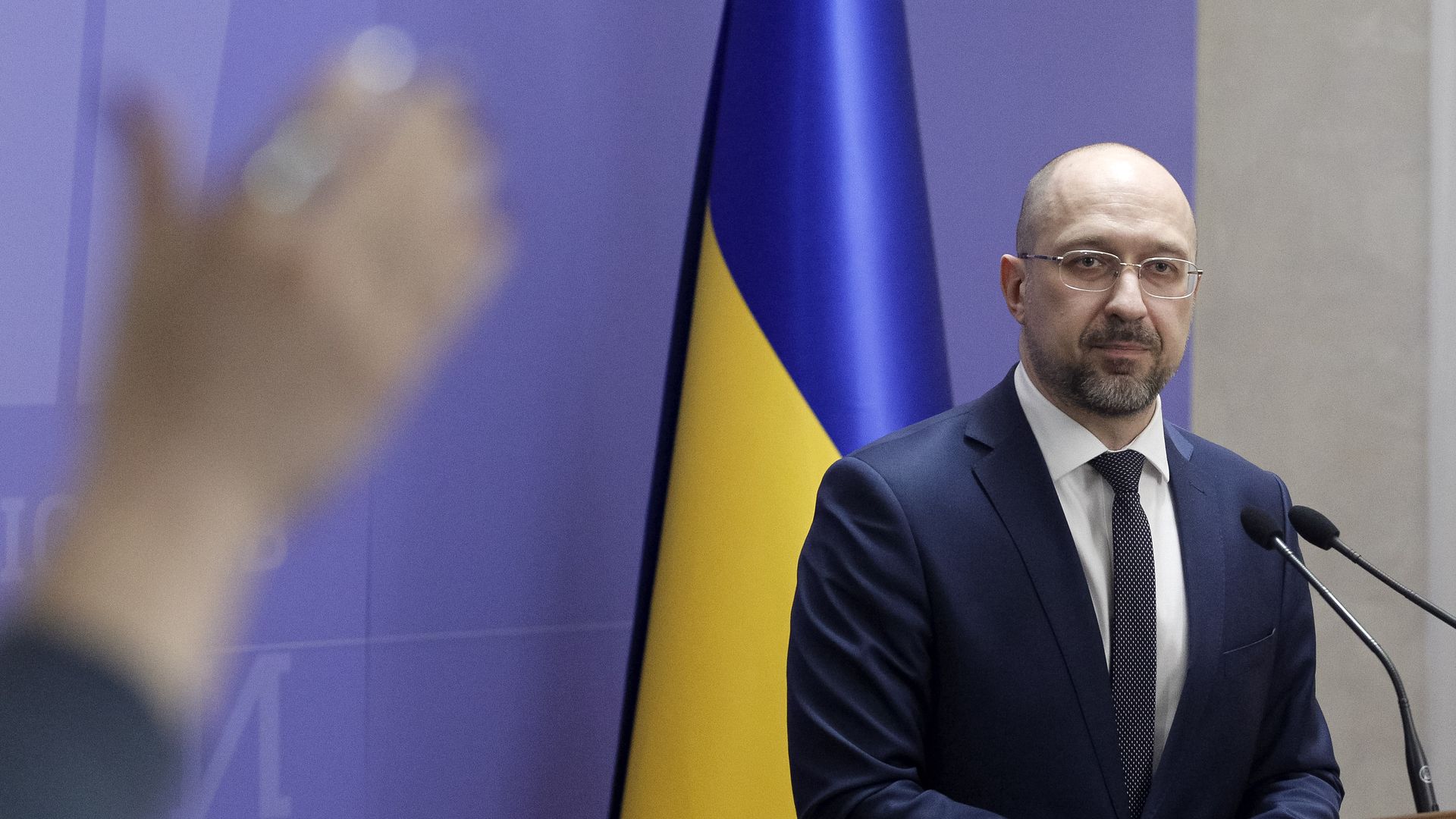
House Speaker Nancy Pelosi (D-Calif.) will meet Ukrainian Prime Minister Denys Shmyhal in the U.S. Capitol on Thursday, according to her office.
Why it matters: Shmyhal will be the most senior Ukrainian official to visit the U.S. since the start of Russia's unprovoked invasion and amid its ongoing large-scale military offensive in the eastern Donbas region of the country.
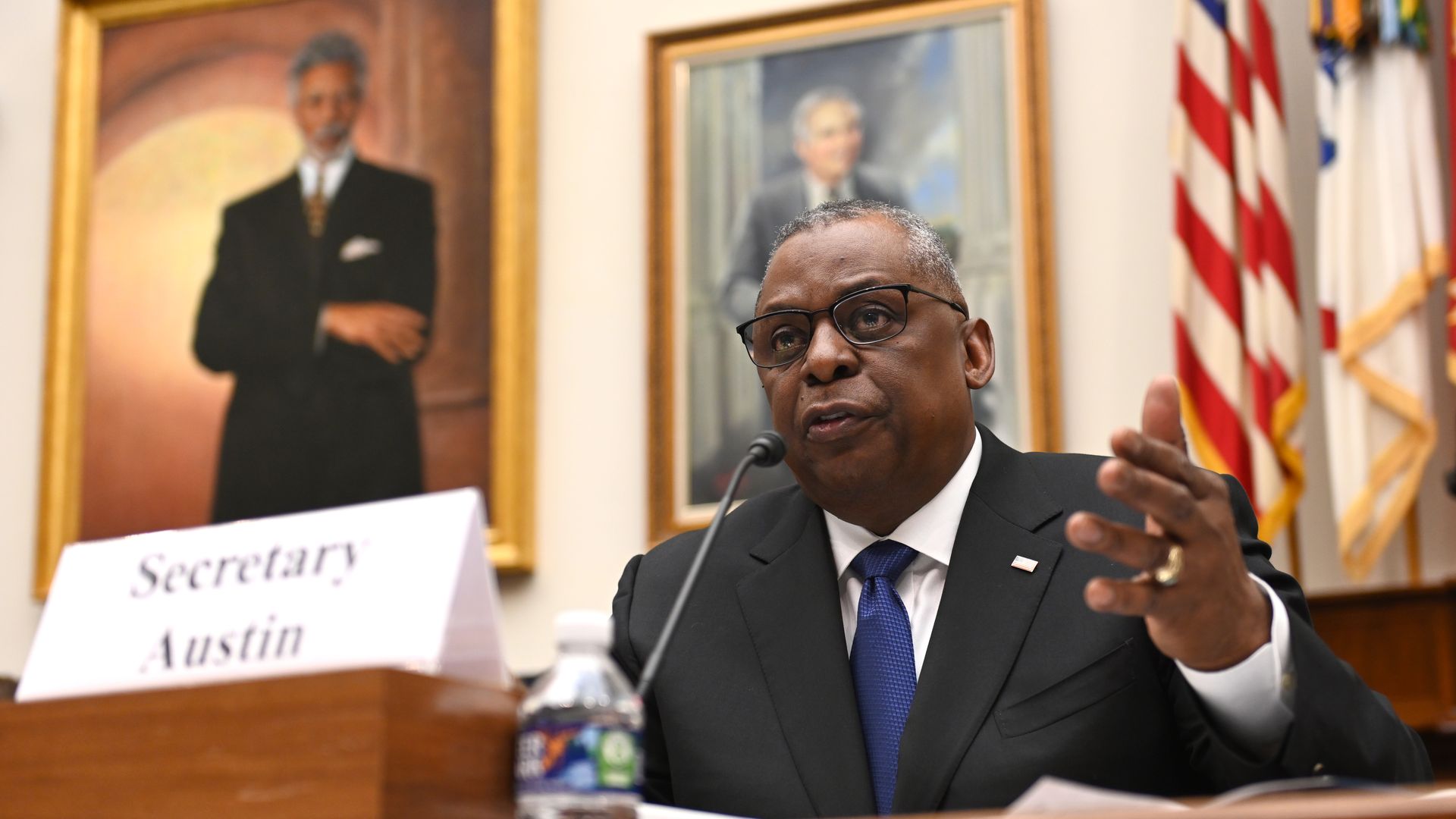
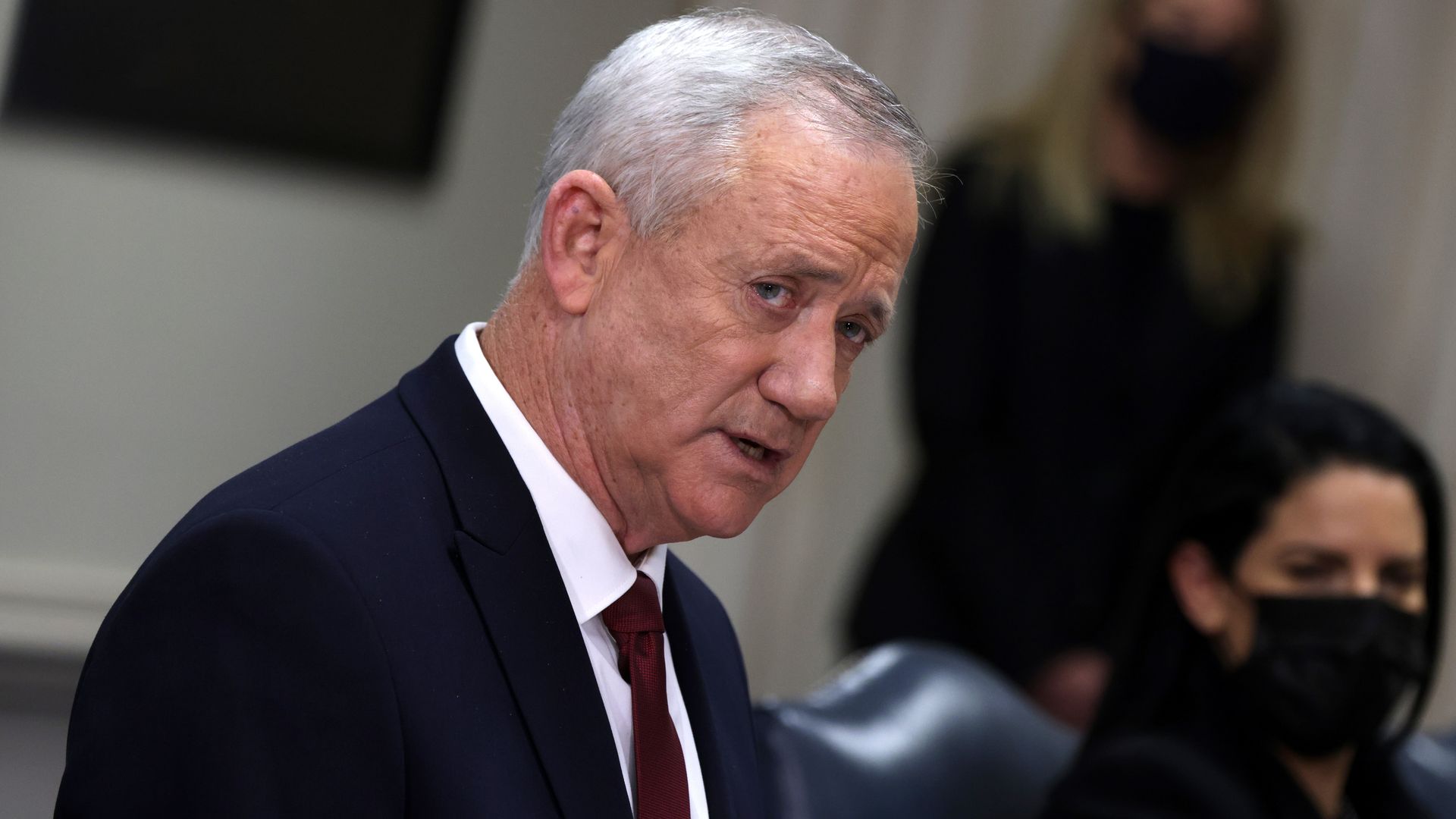
Israel will send Ukraine helmets and bullet proof vests for medical teams and first responders, Minister of Defense Benny Gantz told his Ukrainian counterpart on Tuesday.
Why it matters: Since the first days of the war, Ukraine has asked Israel for protective gear and Israel has repeatedly refused, fearing backlash from Russia. While that policy has now changed, Israel is still not offering the advanced weapons systems Kyiv is requesting.
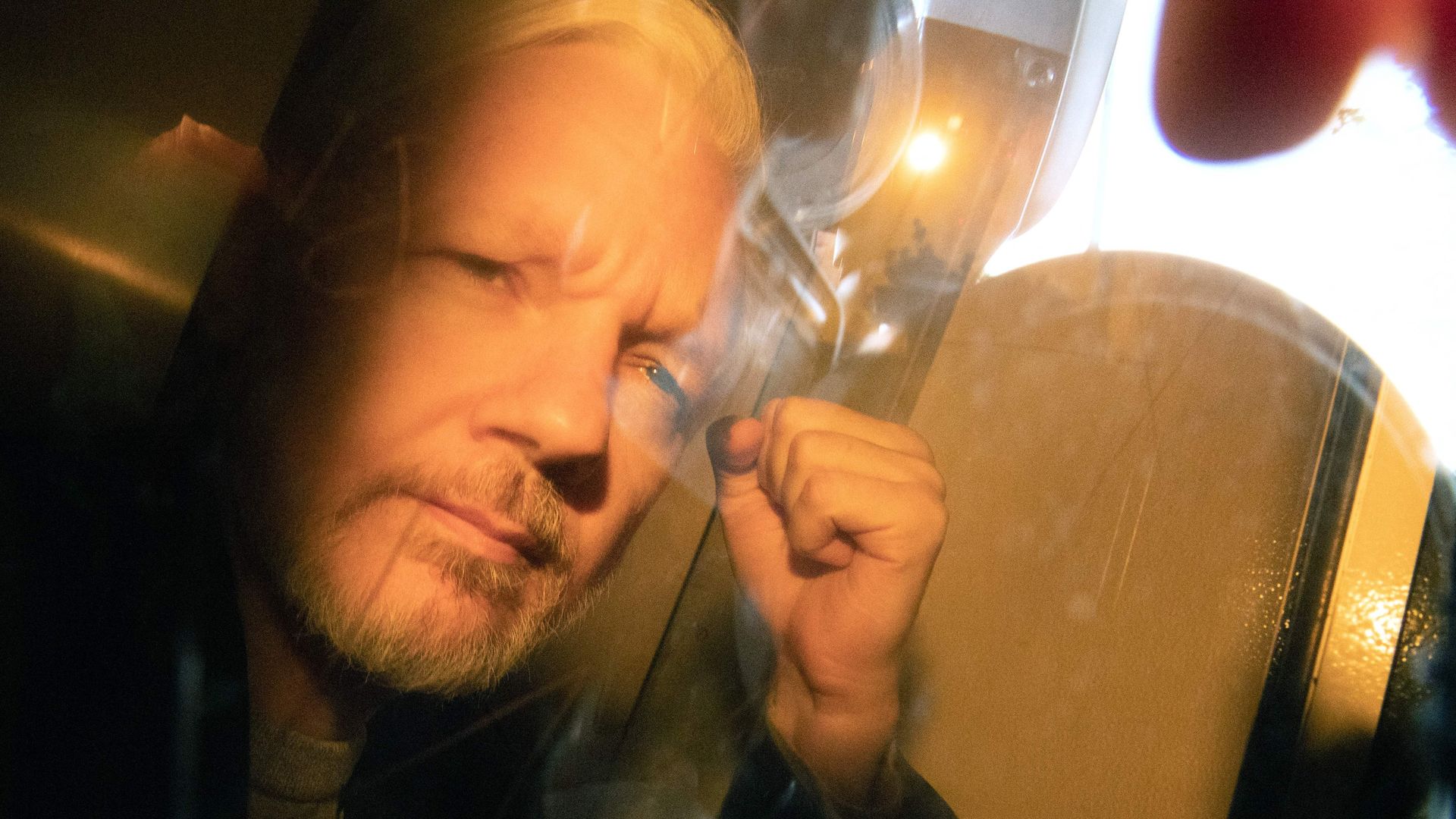
A British judge approved WikiLeaks founder Julian Assange's extradition to the United States to face trial, sending the ultimate decision to the United Kingdom's home secretary, Priti Patel, AP reports.
Why it matters: Assange still has legal options, but the approval is a blow to his decade-long fight to avoid trial over U.S. charges of violating the Espionage Act and hacking government computers.
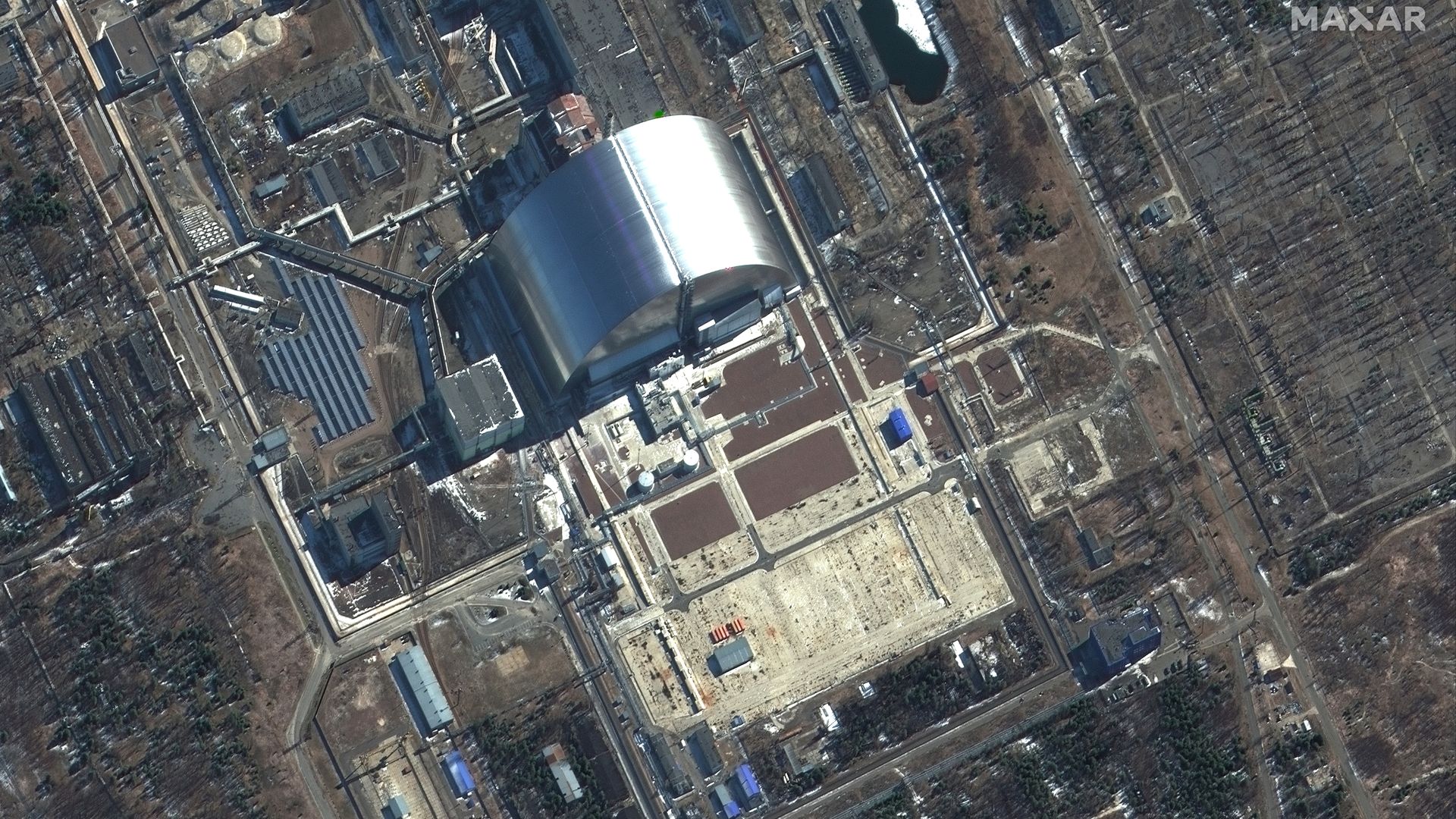
The International Atomic Energy Agency said Wednesday that communications have been restored between the Chernobyl nuclear power plant and Ukrainian nuclear regulators.
Why it matters: It's a step toward resuming Ukraine's regulatory control of the inoperative plant that still houses and processes nuclear waste. It was under Russian control for roughly five weeks after being seized early on in the Kremlin's invasion of Ukraine.
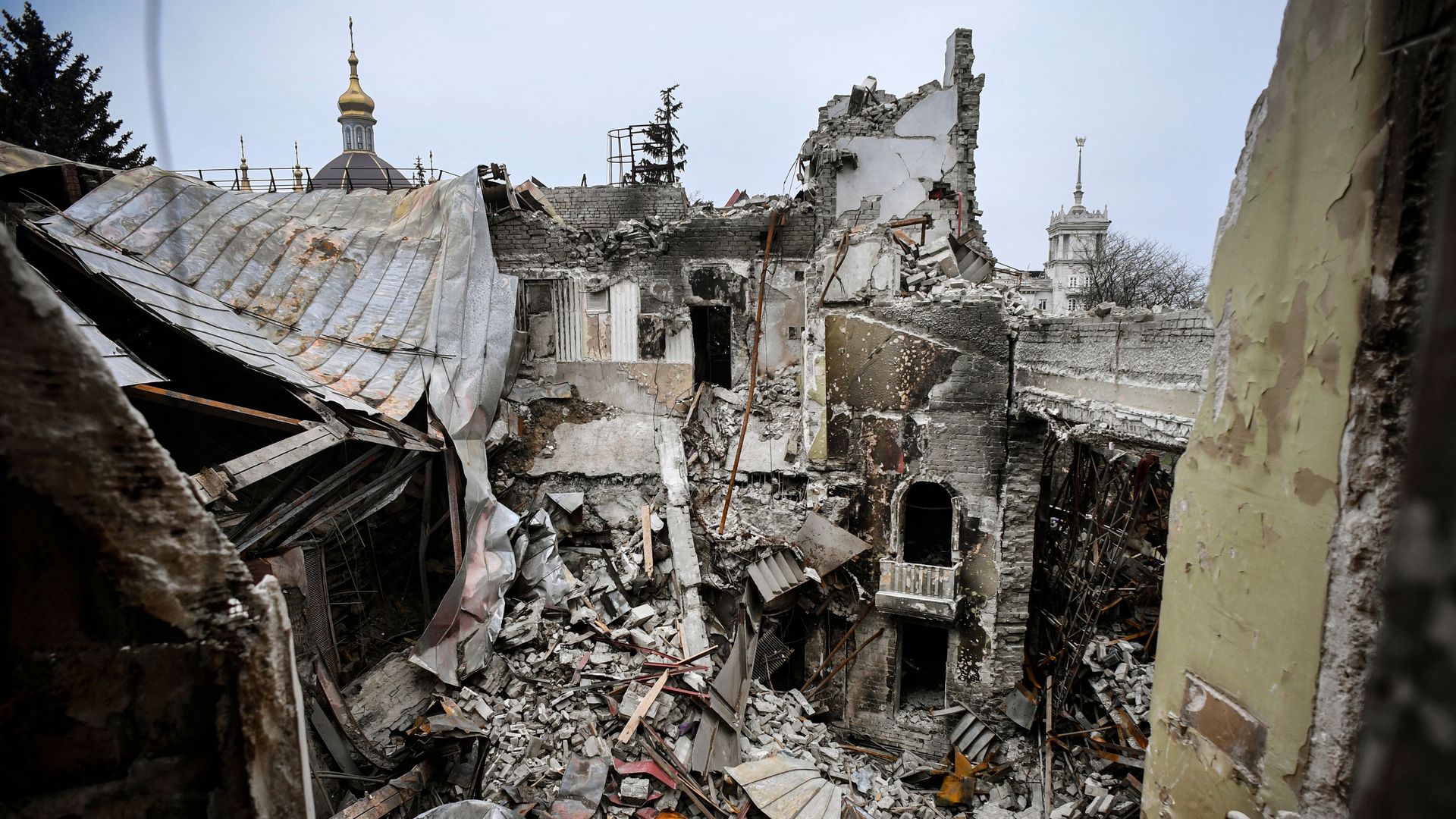
The commander of the last Ukrainian forces in Mariupol pleaded Wednesday with world leaders to help, saying, "We are probably facing our last days, if not hours."
Why it matters: Capturing the key strategic southeastern port city would mark a major victory for the Kremlin, which demanded that Ukrainian soldiers in Mariupol surrender by 2pm Wednesday local time.
Russia's government rejected calls from the United Nations chief Tuesday for a ceasefire in Ukraine during the Eastern Orthodox Holy Week to allow for civilians to evacuate the country, per the New York Times.
Driving the news: As Russian forces bombarded eastern Ukraine, UN Secretary-General António Guterres called for a four-day ceasefire from this Thursday through the Orthodox Easter Sunday so humanitarian corridors could open.
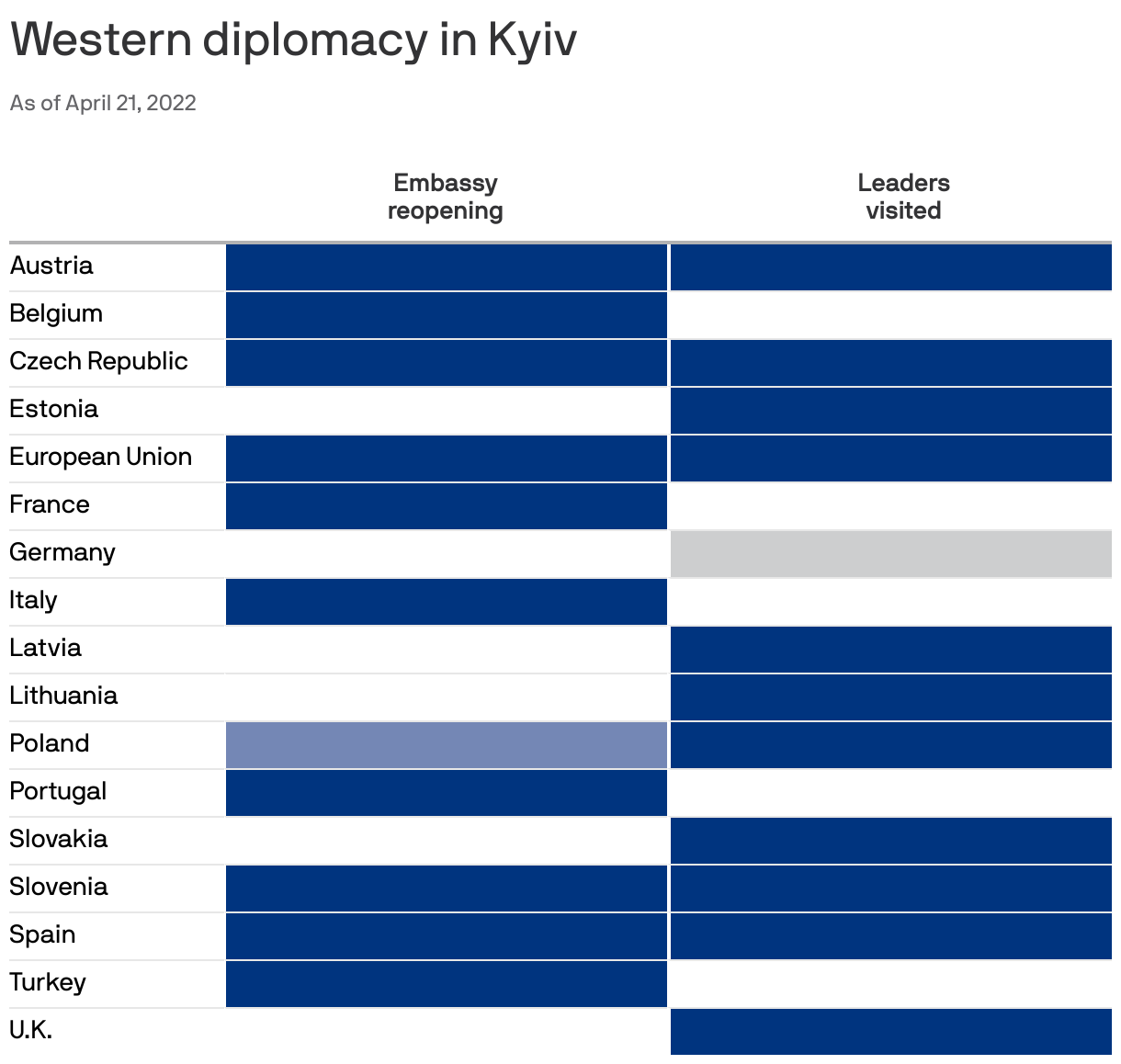
Data: Axios research; Note: Poland's embassy never closed and Kyiv rejected the offer of a visit by German leadership; Table: Kavya Beheraj/Axios
Less than two months after Russia's invasion of Ukraine, a steady stream of Western diplomats are returning to Kyiv to reopen embassies and facilitate in-person visits by their national leaders.
Why it matters: Russia's retreat from Kyiv has alleviated the immediate threat to Ukraine's capital. As Ukrainian President Volodymyr Zelensky pleads for more military aid amid a decisive second phase of the war, he's encouraged Western leaders to visit Kyiv and witness firsthand the devastation Russian forces have left.