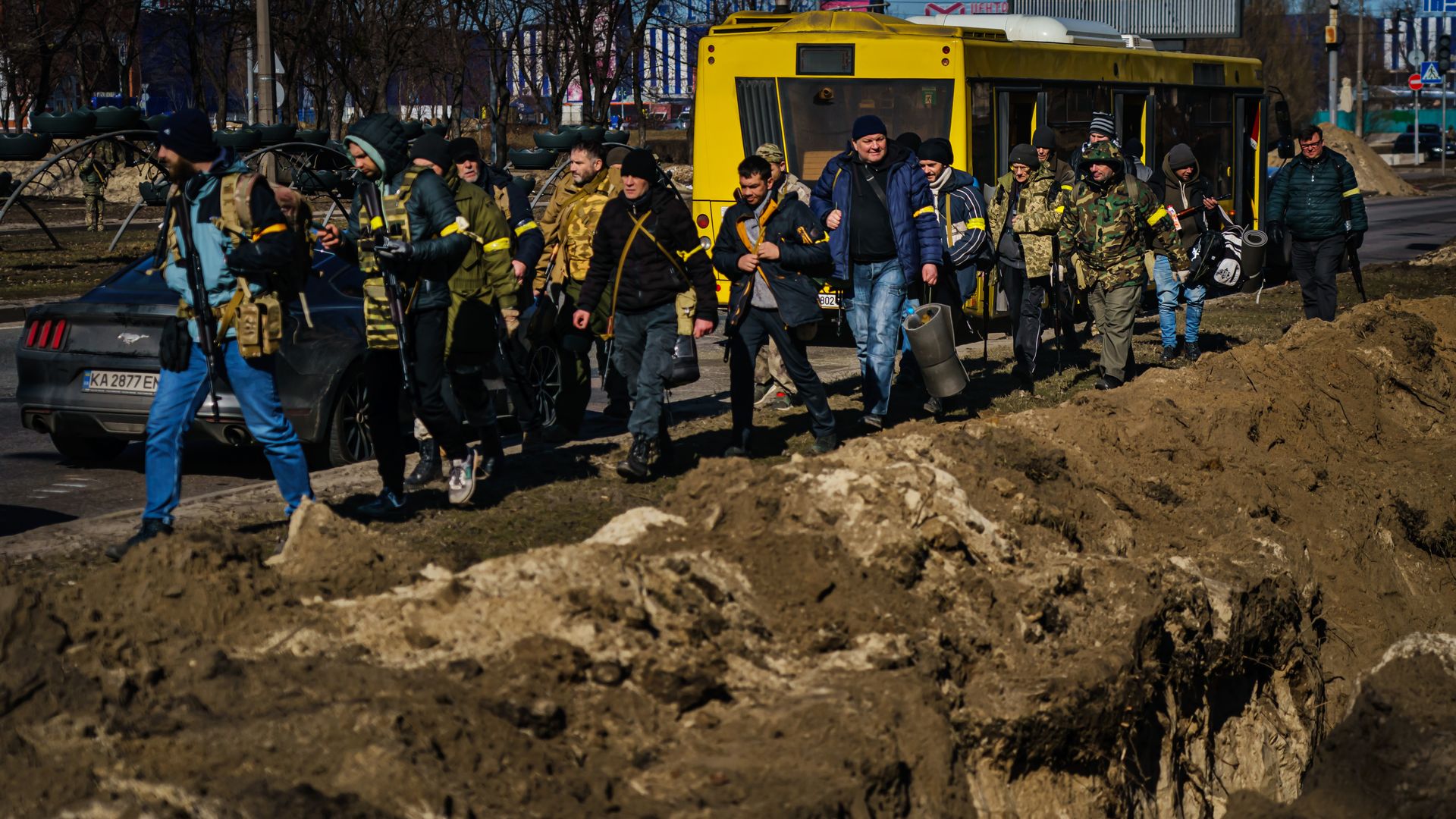
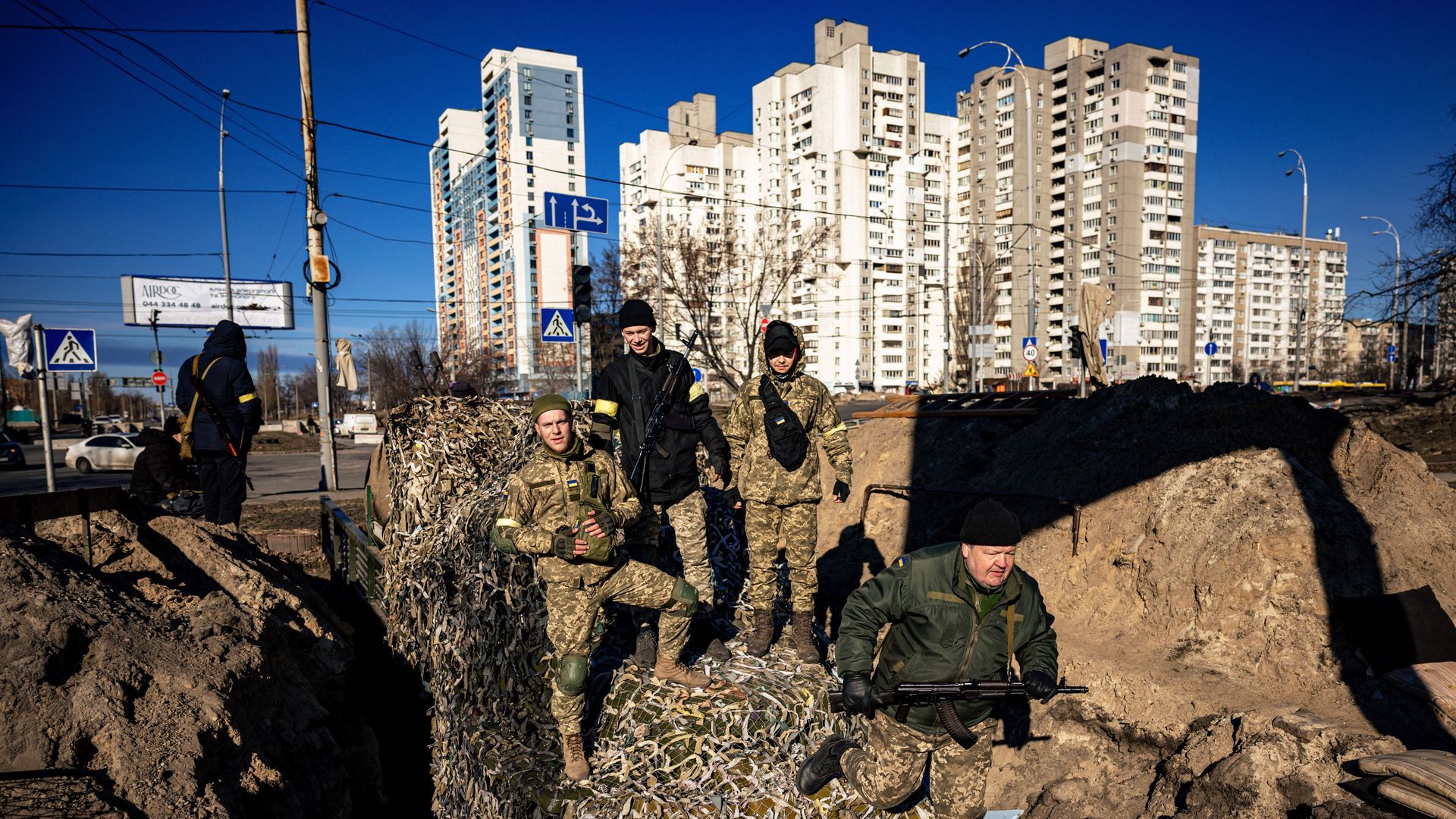
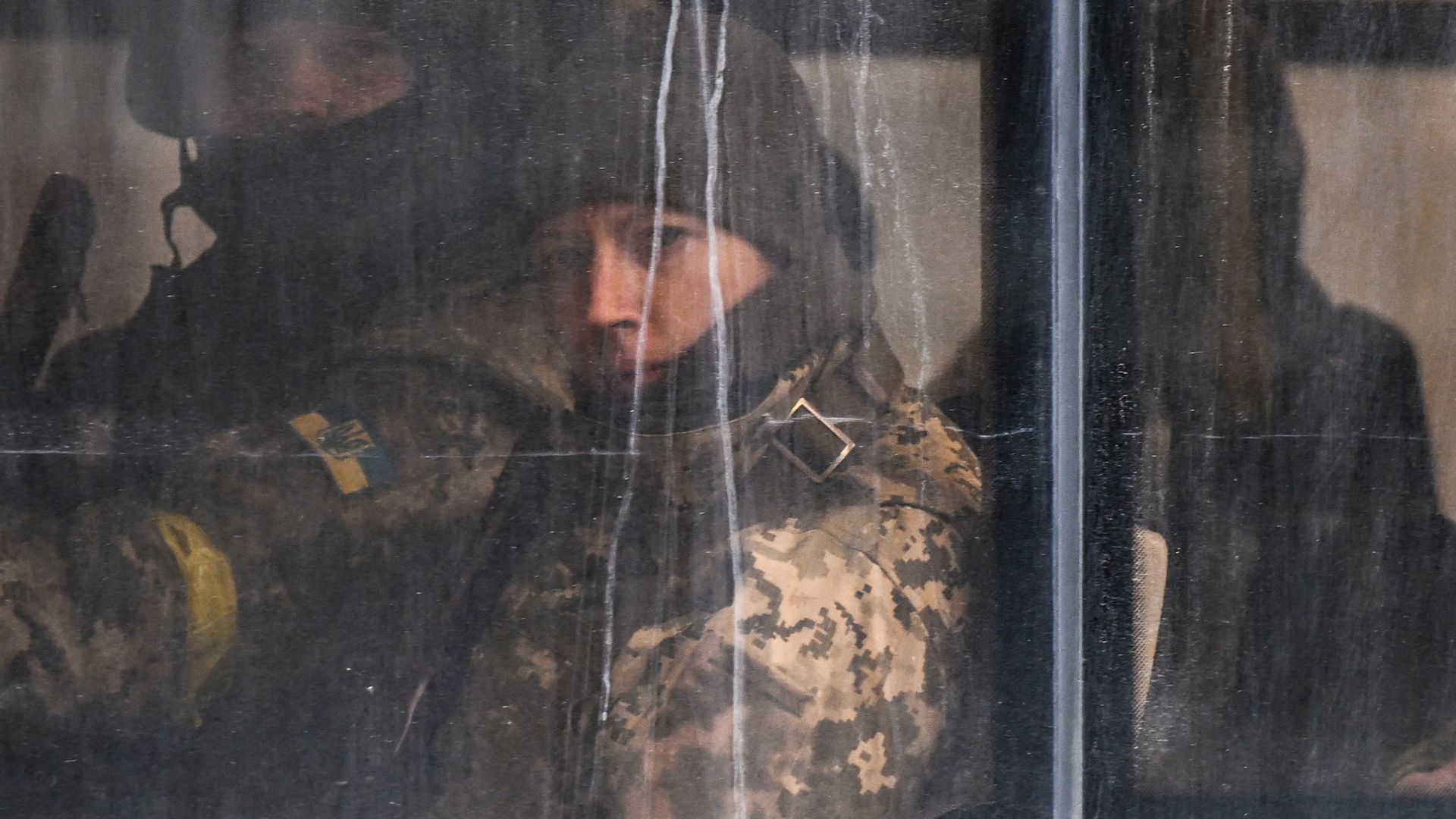
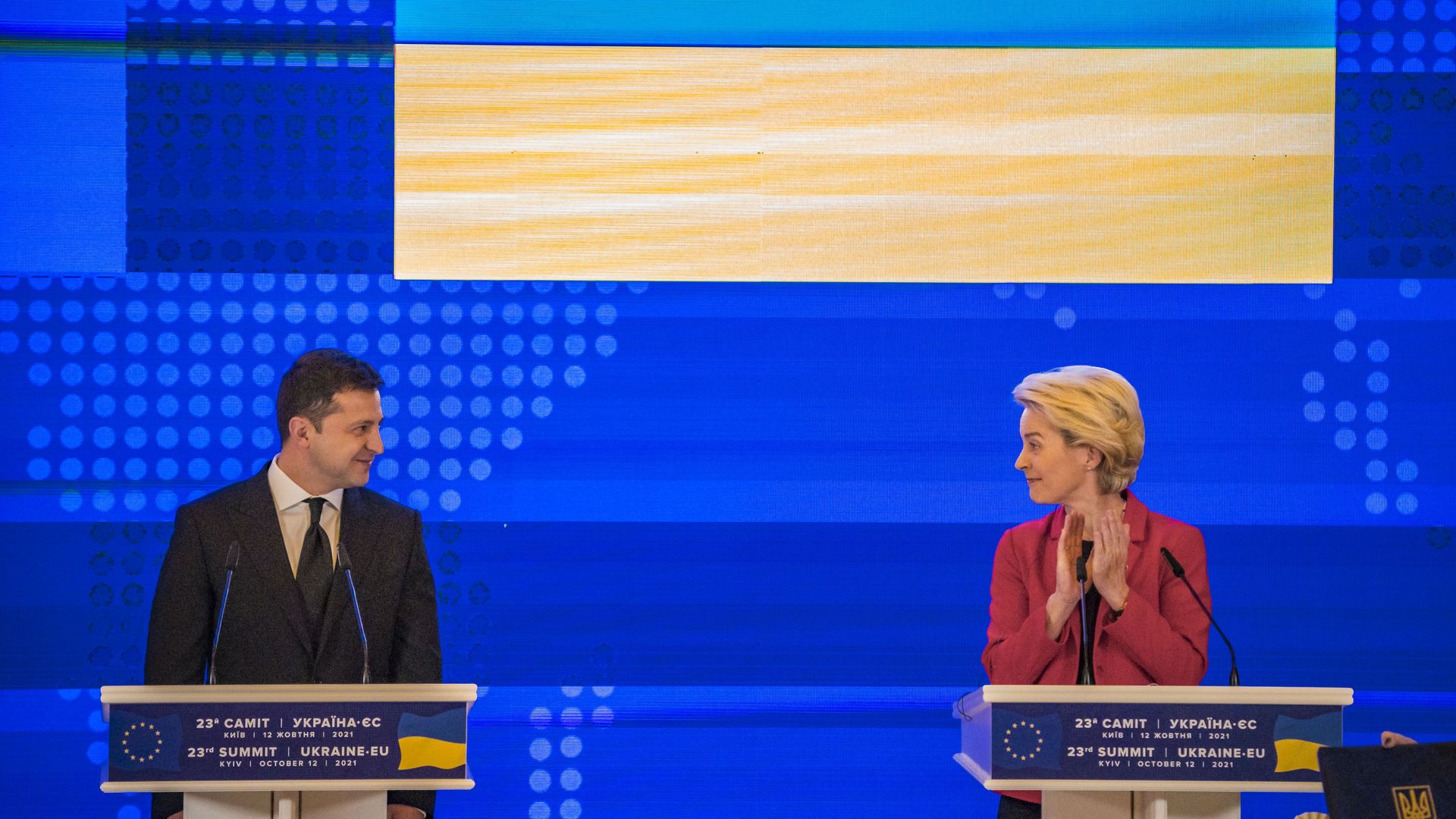
Ukrainian President Volodymyr Zelensky signed a decree late Monday to temporarily lift visas for foreigners wishing to join a new "International Legion" to fight Russia, The Kyiv Independent first reported.
Why it matters: The move could make it easier for non-Ukrainians to join the fight against Russia's unprovoked invasion of Ukraine.
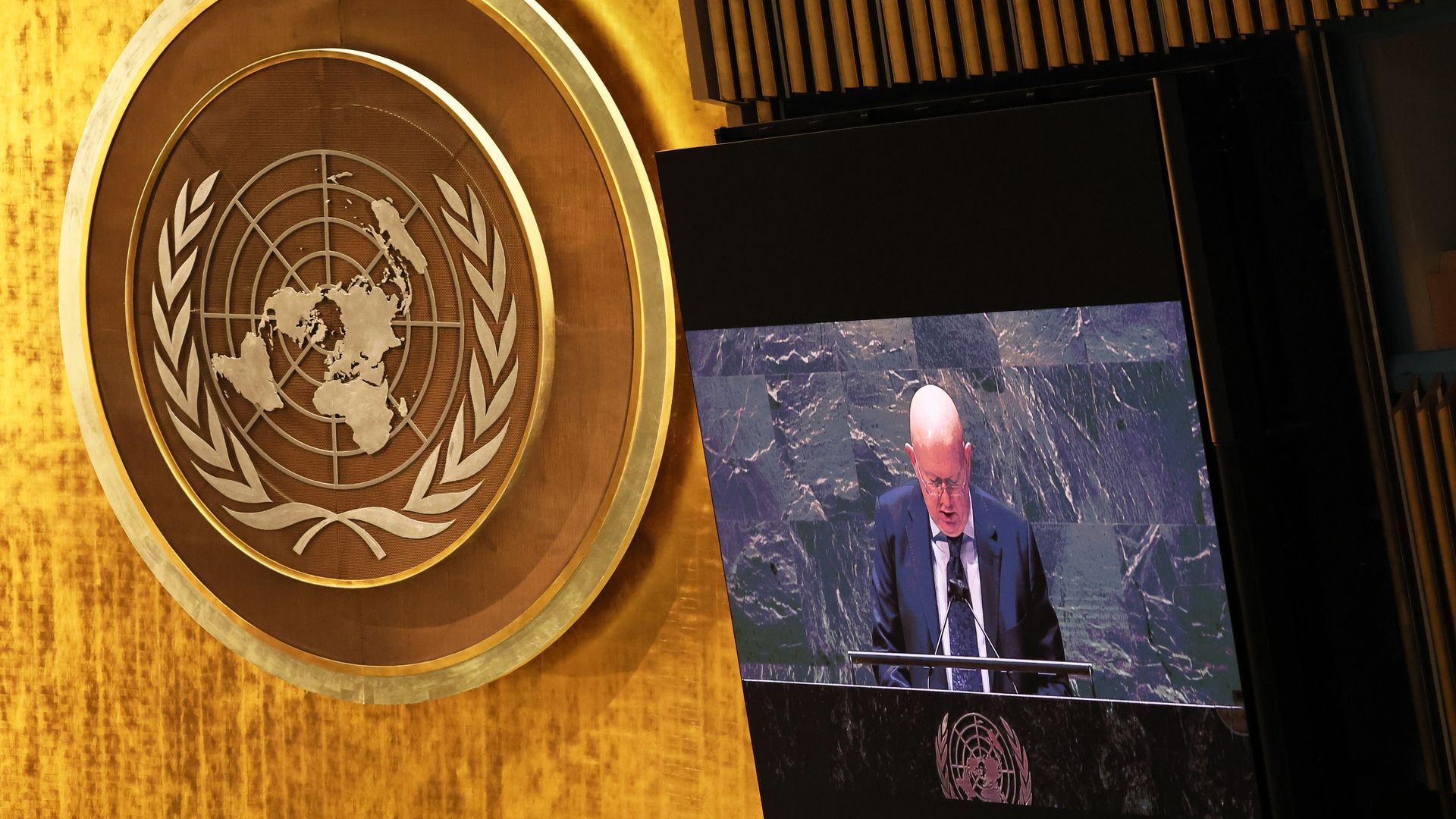
The U.S. has informed the Russian mission to the UN that it will begin expelling 12 people, who it described as "intelligence operatives" that have "abused their privileges of residency in the U.S.," a spokesperson for the U.S. mission to the UN said Monday.
Driving the news: The 12 envoys engaged in "espionage activities that are adverse to our national security," the spokesperson said. "Today’s action has been in the works for several months."
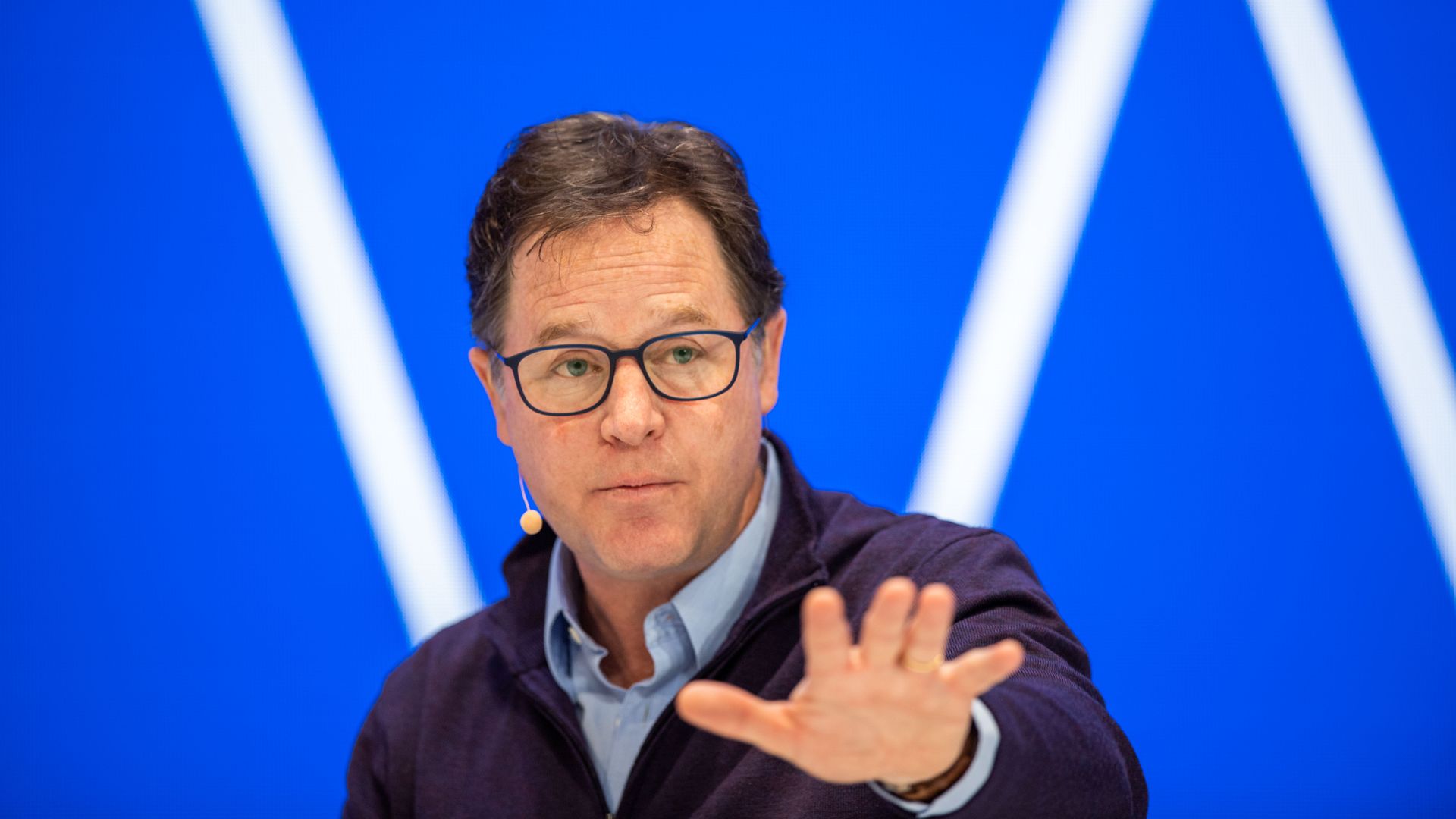
Facebook parent Meta will restrict access to Russian state media on its platforms across the EU in response to Russia's unprovoked invasion of Ukraine, Facebook's vice president of global affairs Nick Clegg announced Monday.
Why it matters: European Commission President Ursula von der Leyen a day earlier said the EU will ban Russian state media to stop their "toxic and harmful disinformation."
The International Criminal Court (ICC) will open an investigation into possible war crimes or crimes against humanity in Ukraine, ICC prosecutor Karim A.A. Khan said Monday.
Driving the news: Khan said in a statement that "there is a reasonable basis" to believe that both have been committed as Russia's invasion unfolds. The ICC is the only permanent judicial body with jurisdiction over prosecuting people for international crimes of genocide, crimes against humanity, war crimes and the crime of aggression.
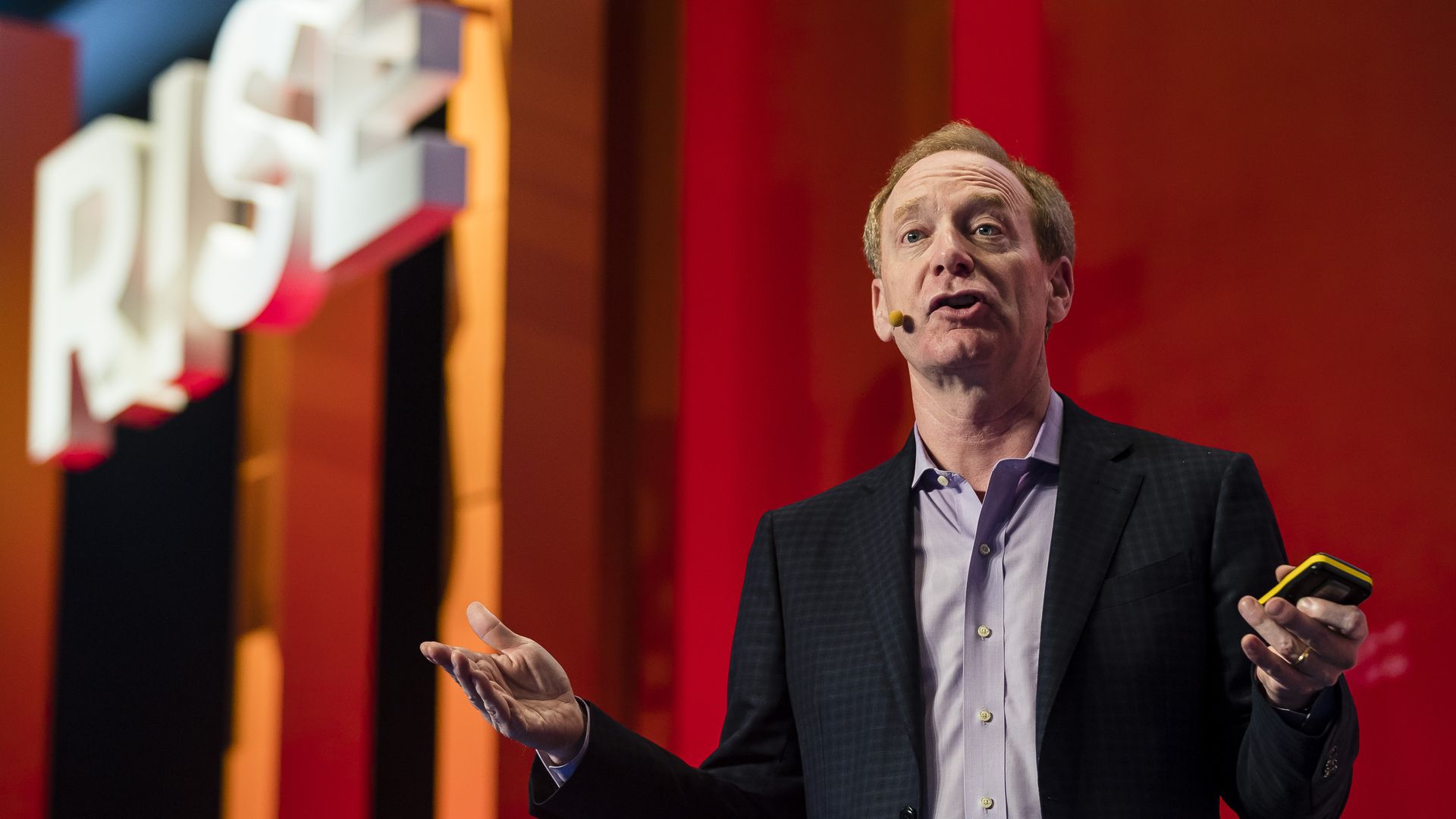
Microsoft president and vice chair Brad Smith wrote in a blog post Monday that recent cyberattacks on Ukraine's civilian digital infrastructure "raise serious concerns under the Geneva Convention."
Why it matters: U.S. officials have warned that cyberattacks will play a key role in Russia's invasion, but Smith's words hint that targeting civilian infrastructure could amount to war crimes under the convention, which sets limits on traditional warfare, CNN's Brian Fung notes.
Tech giants that provide services around the world prefer not to take sides in conflicts where they operate in both combatants' territory, but Russia's invasion of Ukraine is making that stance tough to maintain, writes Axios' Sara Fischer.
State of play: Smith said that Microsoft's Threat Intelligence Center detected a "new round of offensive and destructive cyberattacks" targeting Ukraine's digital infrastructure hours before Russian military movement on Feb. 24.
The company notified the Ukrainian government and has since provided "threat intelligence and defensive suggestions" relating to attacks on targets including Ukrainian military institutions and other government agencies.
What he's saying: "These recent and ongoing cyberattacks have been precisely targeted, and we have not seen the use of the indiscriminate malware technology that spread across Ukraine's economy and beyond its borders in the 2017 NotPetya attack," Smith wrote.
"But we remain especially concerned about recent cyberattacks on Ukrainian civilian digital targets, including the financial sector, agriculture sector, emergency response services, humanitarian aid efforts, and energy sector organizations and enterprises," he added.
"These attacks on civilian targets raise serious concerns under the Geneva Convention," he said. The convention considers it a war crime to intentionally direct attacks against civilian populations or civilian objects.
Worth noting: Microsoft has removed state-sponsored RT and Sputnik content from its platform and is de-ranking their search results on Bing so links will only show up when a user is looking for those pages directly, according to Smith.
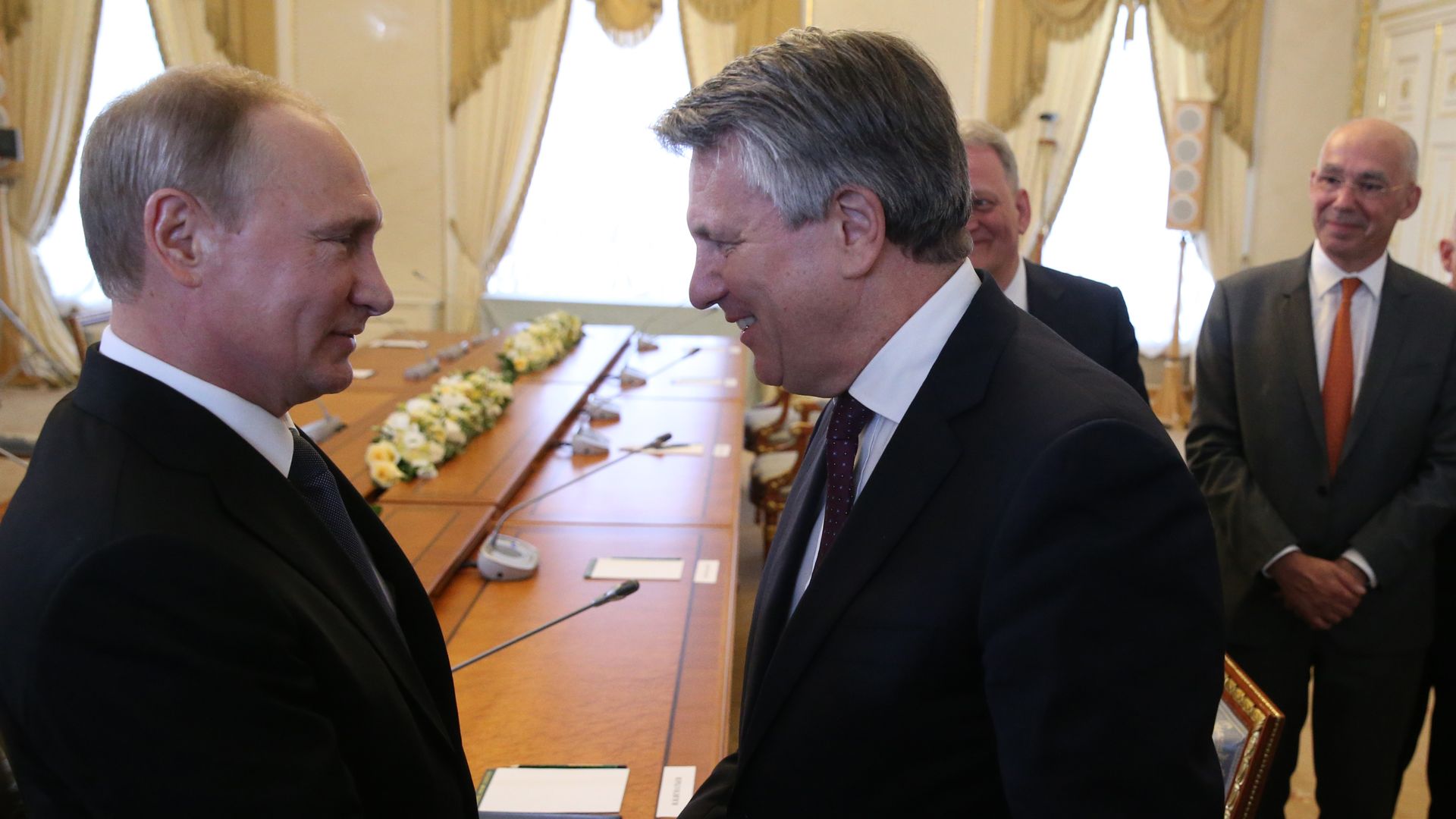
Shell announced Monday it will end its partnerships with Russian energy company Gazprom following Moscow's invasion of Ukraine.
Why it matters: Two major oil companies have now divested from Russian energy companies following the unprovoked attack on Ukraine, further signaling that it could reshape the West’s energy relationship with Russia.
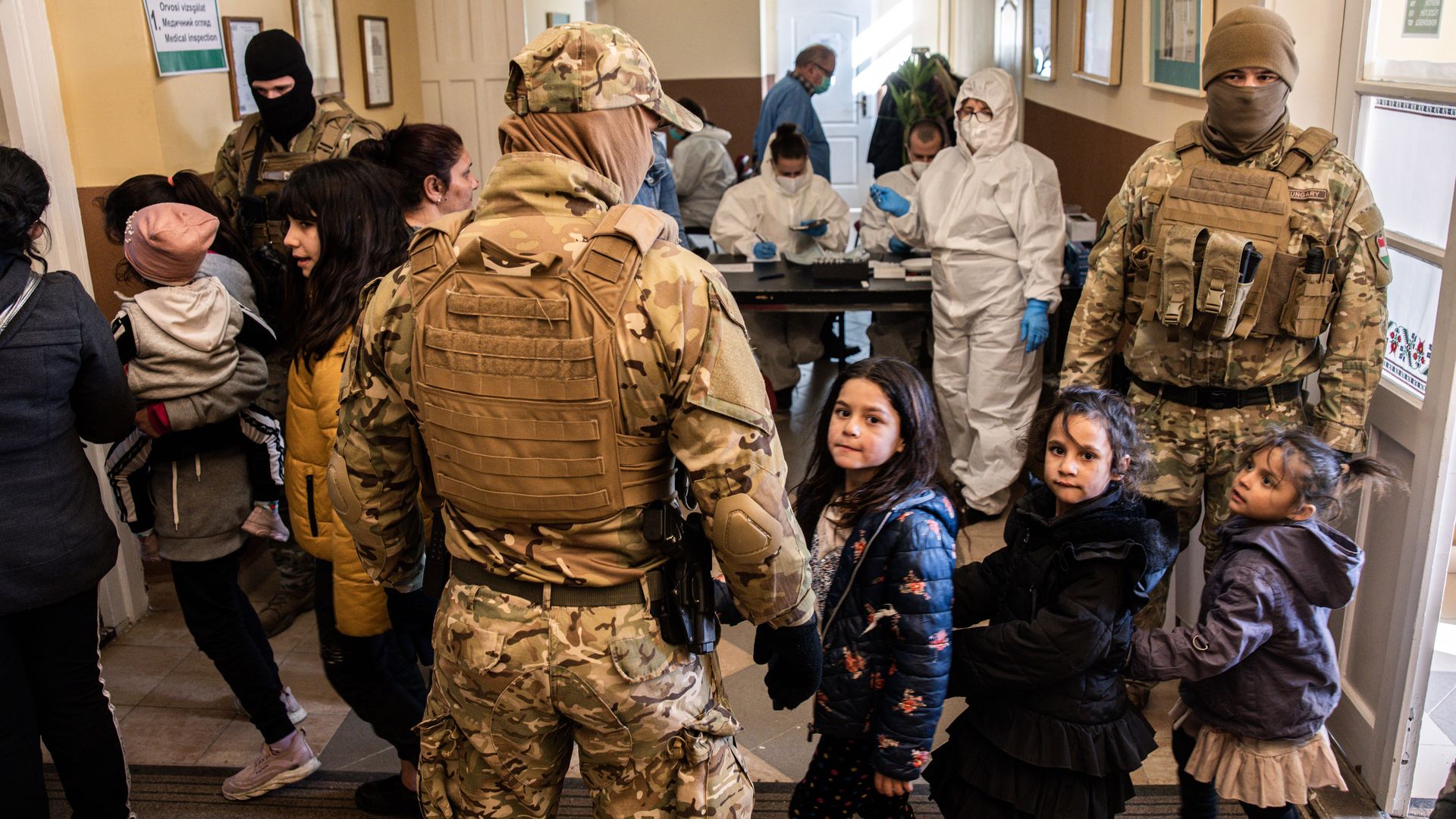
Driving the news: Russian forces have shelled civilian areas and prompted concerns of a humanitarian crisis. The UN Refugee agency on Monday said that 500,000 Ukrainian refugees have fled into neighboring countries since Russia's attack began.
FIFA and UEFA on Monday announced that they will suspend Russia's national and club teams from all international competition "until further notice" due to the country's invasion of Ukraine.
The big picture: It follows a slew of boycotts and condemnation by sports organizations in response to Russia's unprovoked attack on Ukraine.
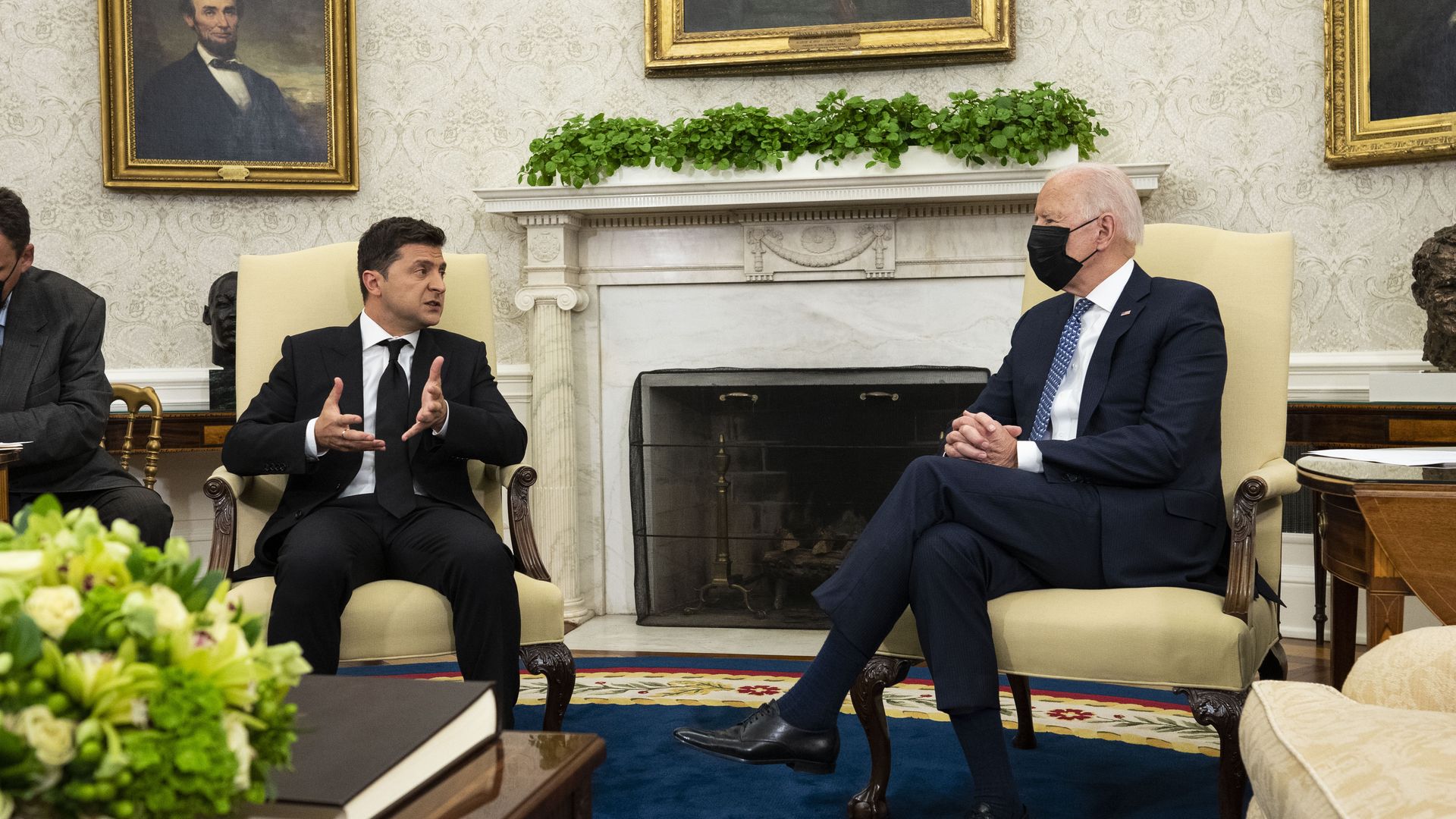
Ukraine's President Volodymyr Zelensky is urging President Biden and NATO to impose a "no-fly zone" over "significant parts" of the country, telling Axios in a statement that Ukraine "can beat the aggressor" if the Western allies "do their part."
Why it matters: President Biden has ruled out sending U.S. troops to fight Russia in Ukraine. That pledge extends to a no-fly zone, which would require the U.S. military to potentially directly engage Russian air forces, White House press secretary Jen Psaki stressed on Monday.
The Ukrainian border guards who were initially reported dead after refusing to surrender tiny Snake Island in the Black Sea to a Russian warship are "alive and well," Ukraine's Navy said Monday.
Driving the news: In a Facebook post, the Ukrainian Navy said that the guards "bravely" held back Russian attacks, but had to surrender "due to the lack of ammunition."
Divestment is the financial buzzword on Russia, but everything after its last syllable is murky.
Between the lines: Announcing plans to divest is very different than actually divesting. Particularly when Russia's central bank is severely limiting the sale of Russian equities by nonresidents, and the U.S. is blocking that bank from engaging in dollar-denominated transactions.
Switzerland on Monday adopted European Union sanctions against Russia over its unprovoked invasion of Ukraine — a historic move given the country's history of maintaining neutrality toward armed or political conflicts between other states.
Why it matters: Swiss sanctions are the latest sign that traditionally neutral countries are turning on Moscow.
Airbnb announced on Monday that it will offer free, short-term housing to up 100,000 refugees fleeing Ukraine.
The big picture: More than 500,000 Ukrainian refugees have arrived in neighboring countries since Russia launched its invasion of Ukraine, according to the UN refugee agency, which expects the number to rise.
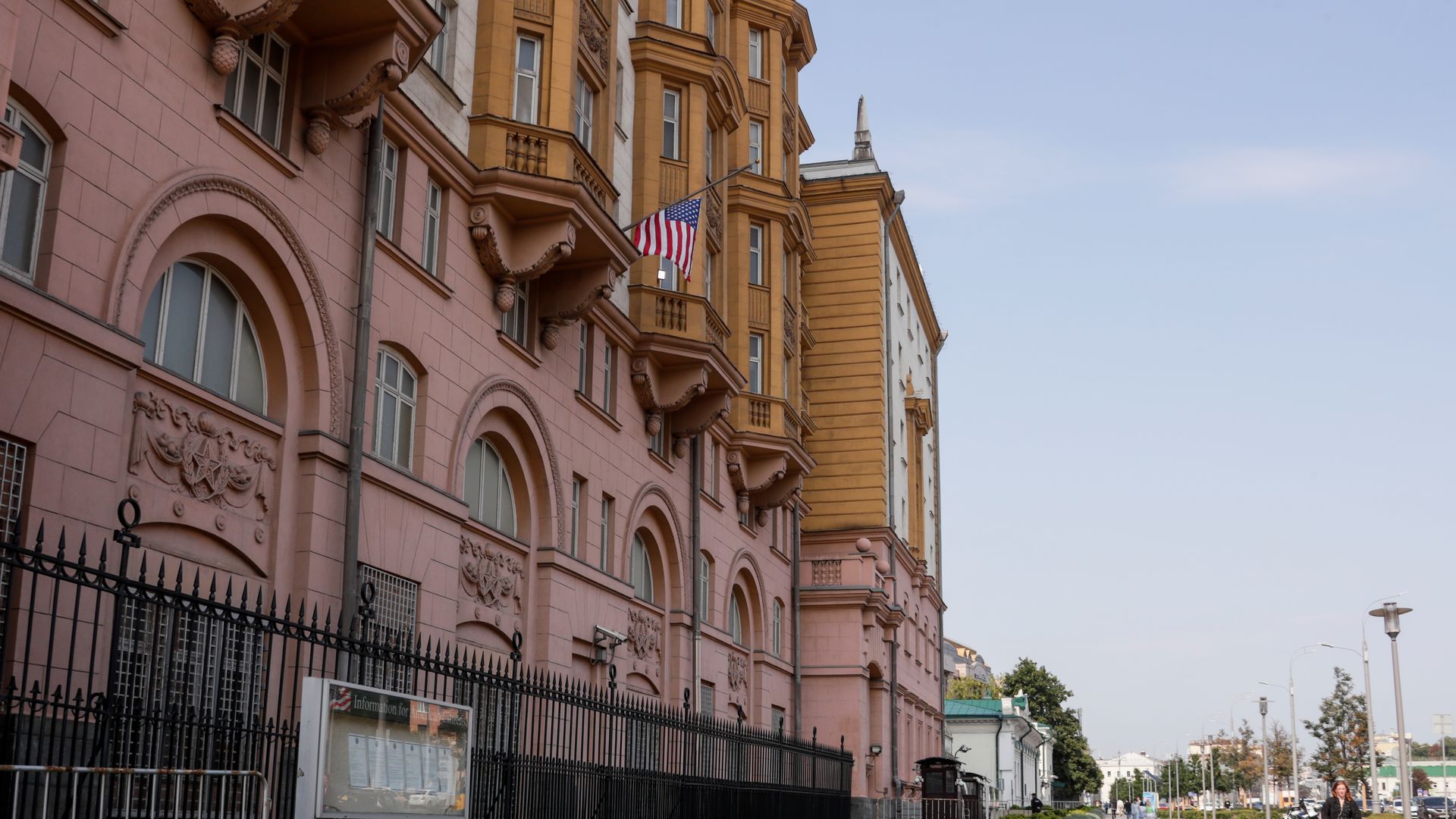
More airlines have canceled flights in and out of Russia and American citizens in the country should consider leaving "immediately," the U.S. Embassy in Moscow warned in a security alert Sunday.
The big picture: The State Department on Monday said it authorized the voluntary departure of non-emergency employees and family members at the U.S. embassy of Moscow.
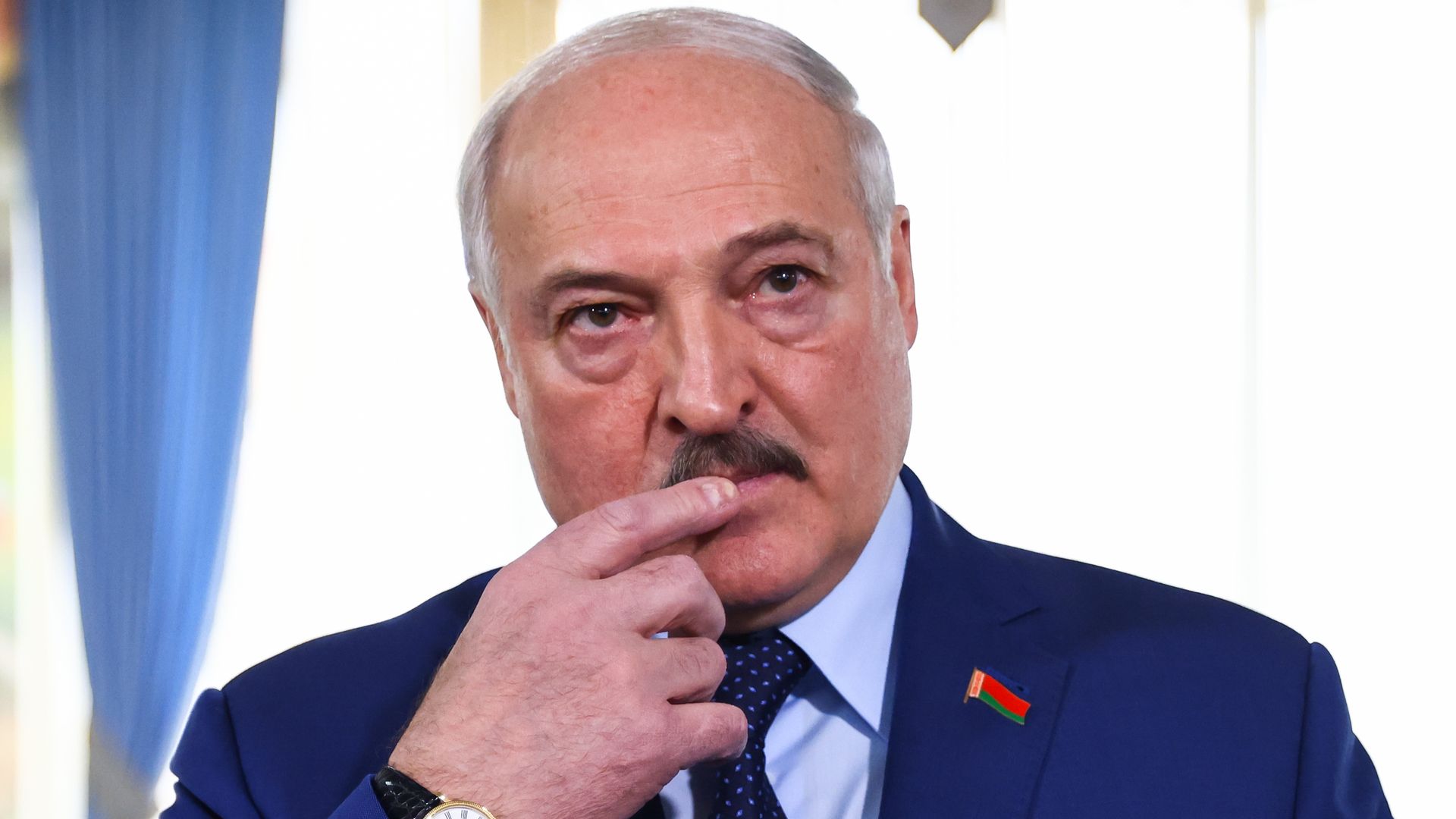
The State Department said Monday it closed the U.S. Embassy in Belarus because of "security and safety issues stemming" from Russia's invasion of Ukraine.
Why it matters: U.S. and Ukrainian intelligence officials have reportedly warned that they believe Belarus will soon officially join Russia's invasion efforts after serving as a launchpad for Russian troops and military equipment for the last several days.
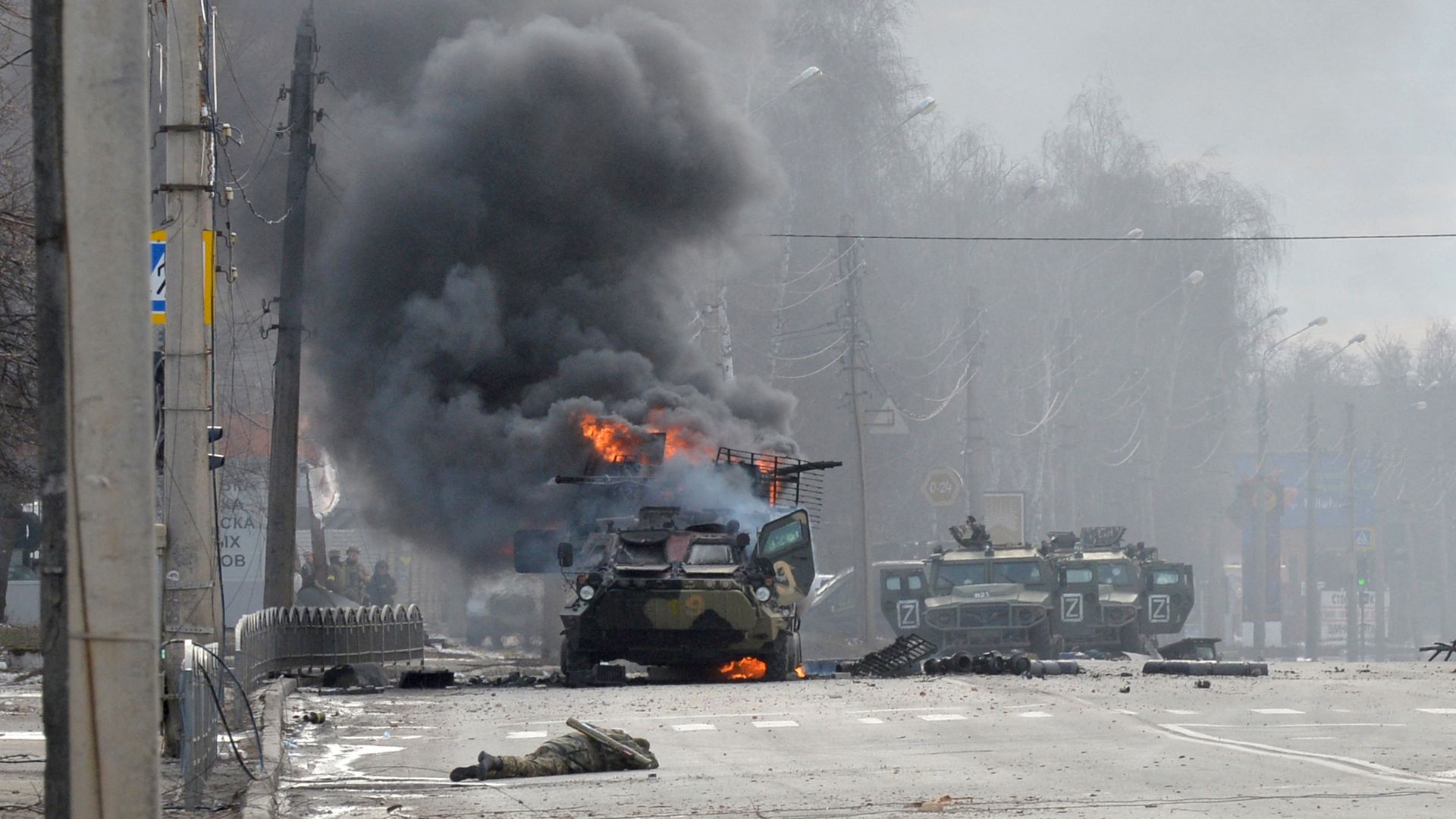
The Ukrainian military said Monday that dozens of civilians were killed and hundreds wounded when Russian forces began firing indiscriminately at civilian areas in Kharkiv, a city in northeastern Ukraine on the border with Russia.
Why it matters: Kharkiv is the second-largest city in Ukraine, with a population of nearly 1.5 million people. Ukrainian forces have retained control of Kharkiv even as the city has endured some of the earliest and most intense clashes of the entire conflict.
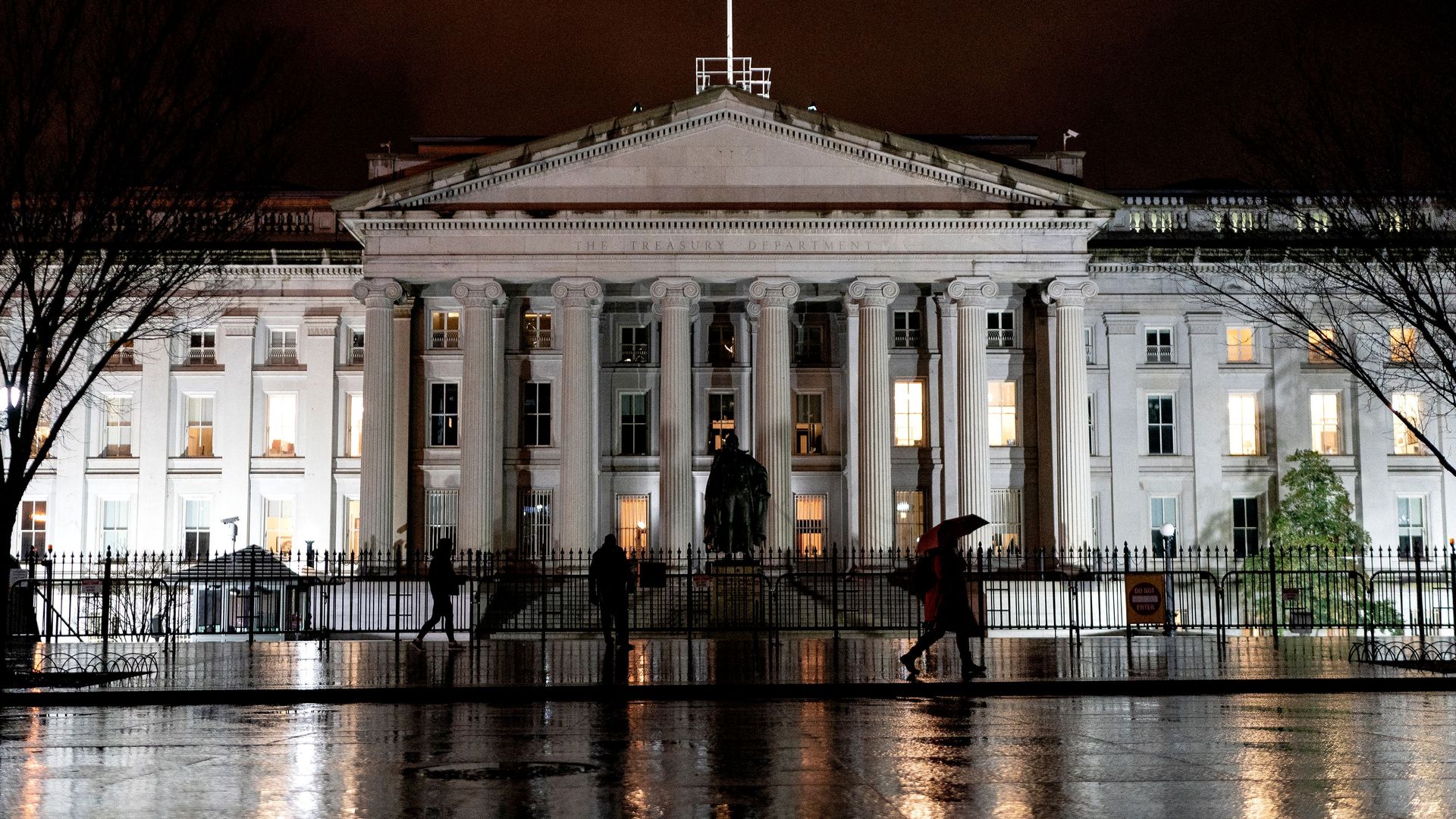
Russia's central bank will be prohibited from undertaking transactions in dollars under a new concerted effort by the United States and its allies, a move that is set to accelerate Russia's economic tailspin.
Why it matters: The measures will severely limit the Russian government's ability to use its $630 billion in reserves to prop up the value of the ruble or fund its war effort in Ukraine.
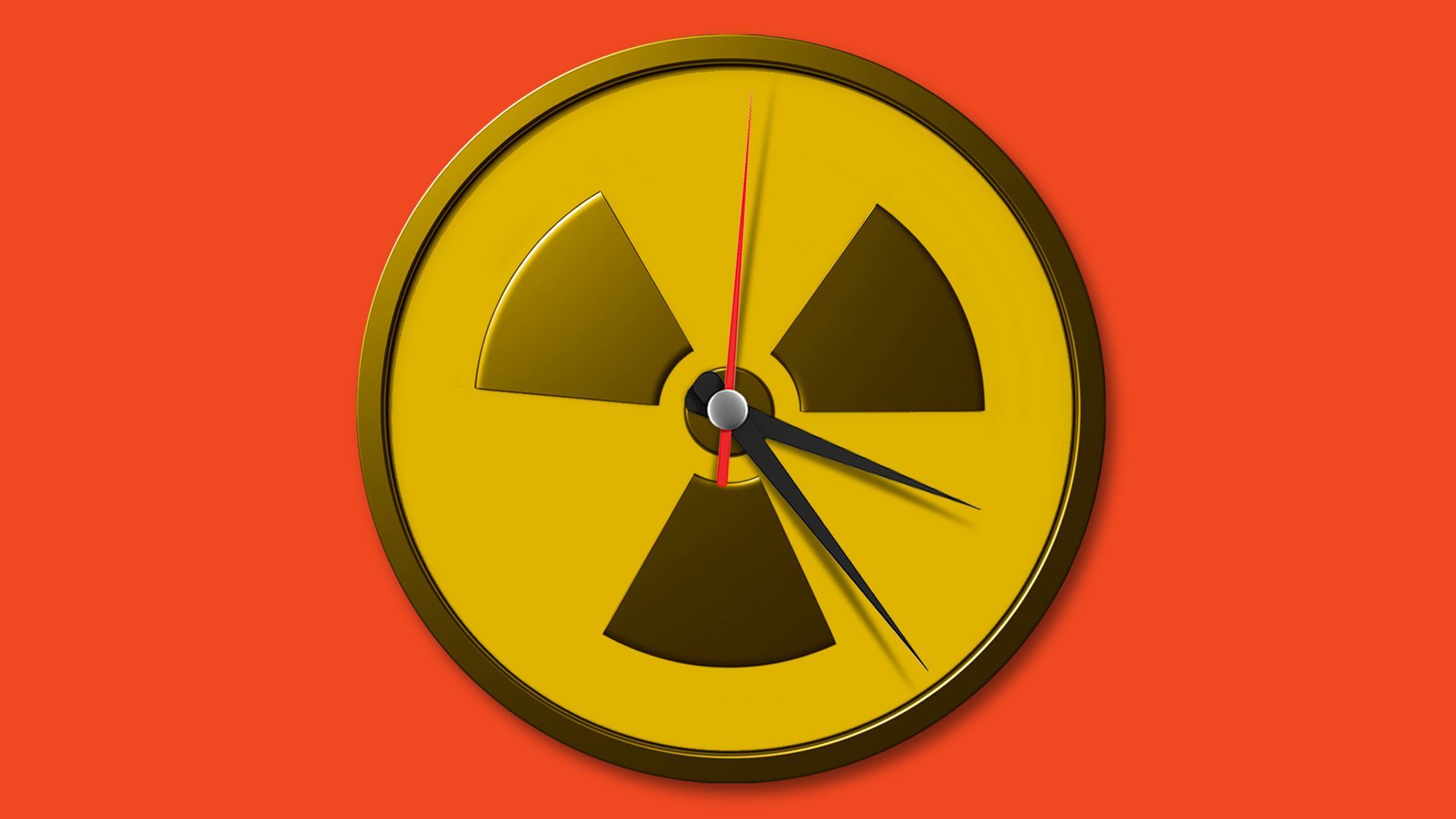
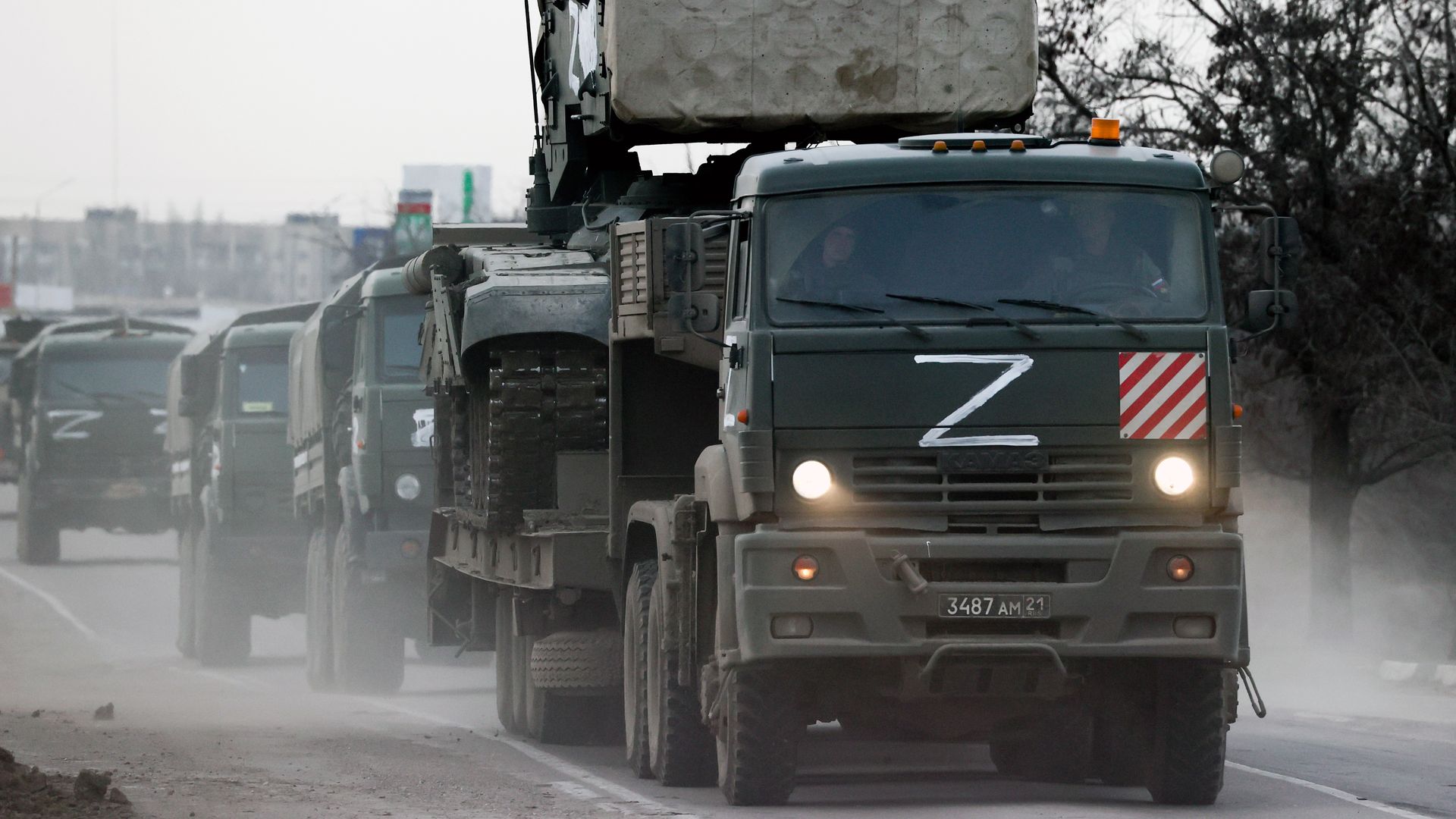
Up until this weekend, Russia's invasion of Ukraine looked very old-fashioned: Columns of tanks, prisoners of war, bombed buildings. Now, however, Russia and the West have both wheeled out their nuclear options — one literal, the other financial — although neither has actually been used.
Why it matters: The stakes could now hardly be higher. This isn't just about Ukraine any more; it has turned into a full-blown confrontation between nuclear powers. If the conflict continues to escalate as quickly as it has in recent days, the unthinkable could become reality.
Much of the misinformation spreading around Russia's war with Ukraine doesn't involve AI-generated deepfakes or expertly-edited videos but originates when everyday social media users take and share images out of context.
Why it matters: "Especially in a war, there is a human cost to false info going viral," said Graham Brookie, director and managing editor of the Digital Forensic Research Lab within the Atlantic Council.
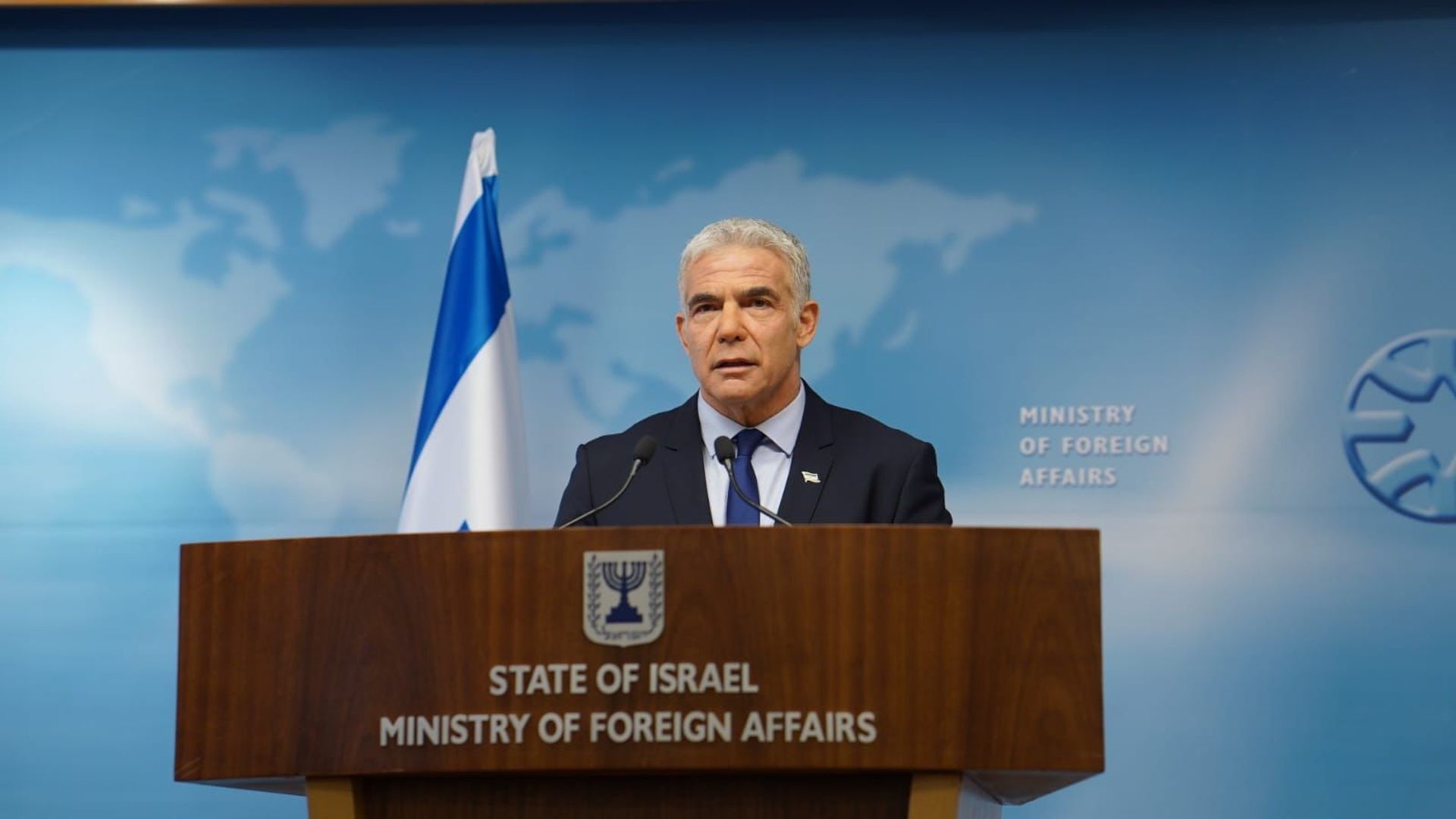
Israeli foreign minister Yair Lapid warned cabinet ministers on Sunday not to help Russian Jewish oligarchs who were targeted by international sanctions or could be targeted in the future, according to three ministers who attended the cabinet meeting.
Why it matters: Oligarchs who are close to Russian President Vladimir Putin are among the main targets of U.S. and European sanctions over Russia's invasion of Ukraine. Many Russian oligarchs have assets, bank accounts and businesses in Israel.
Explosions were heard in Kyiv as Russia's military pressed Ukraine's capital and air raid sirens were heard in several cities on Monday morning following reports of a night of shelling by Russian forces in Chernihiv and Kharkiv.
The latest: As Ukrainian and Russian officials prepared for peace talks Monday, the U.K. Defense Ministry issued a statement saying British intelligence supports Ukrainian forces' claims that they've "slowed down" Russia's offensive, adding: "Logistical failures and staunch Ukrainian resistance continue to frustrate the Russian advance."
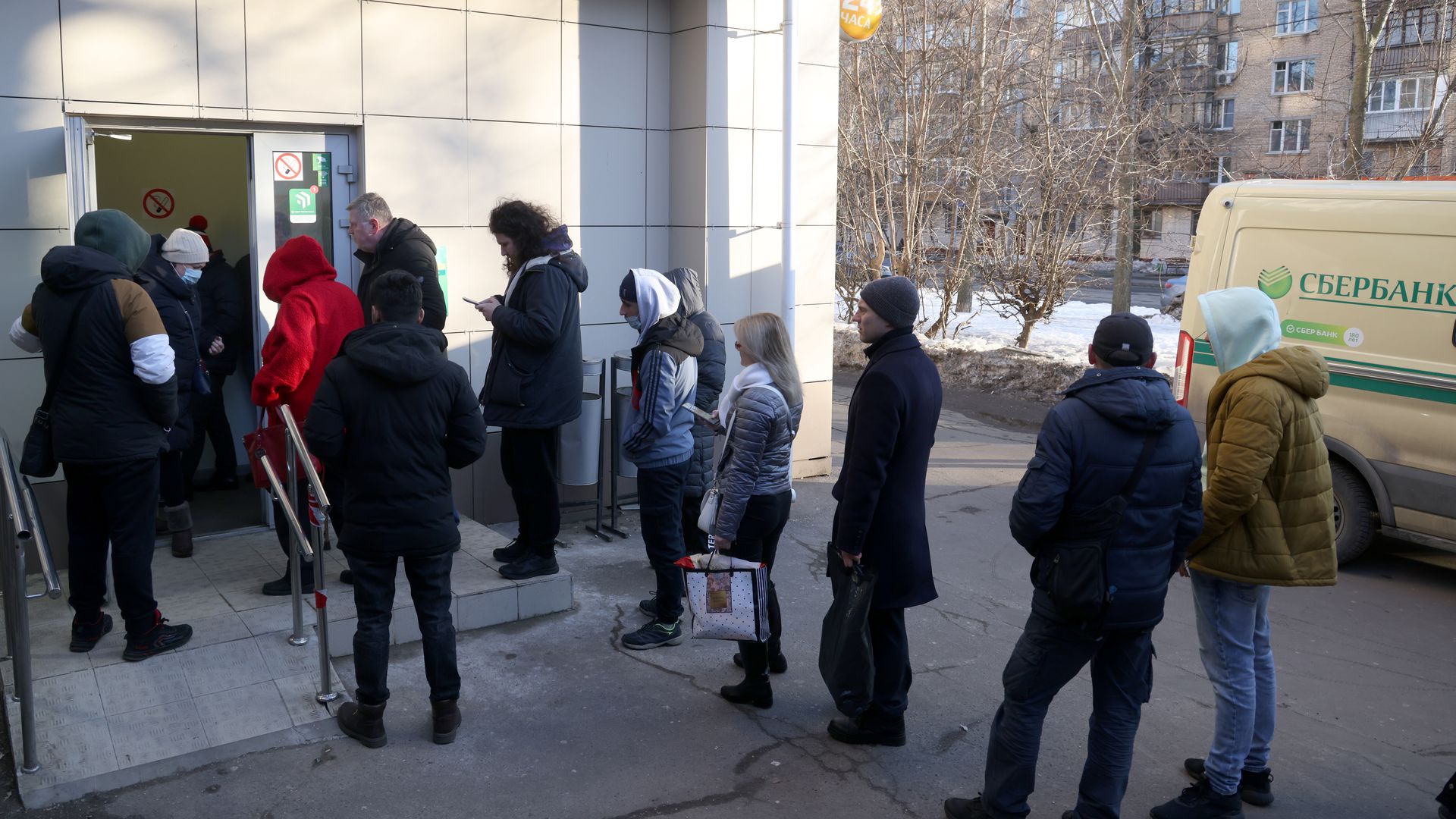
The big picture: The Bank of Russia also announced a series of measures in response to the sanctions — including that brokers must "suspend the execution of all orders by foreign legal entities and persons who want to sell off their Russian investments, such as stocks and shares," per a BBC translation.
Facebook parent Meta said Sunday it removed two disinformation campaigns from its platforms that targeted Ukraine.
Why it matters: Security officials have warned that efforts to manipulate online conversation, from Russian state actors or pro-Russian groups, could be used to help justify Russia's invasion of Ukraine.
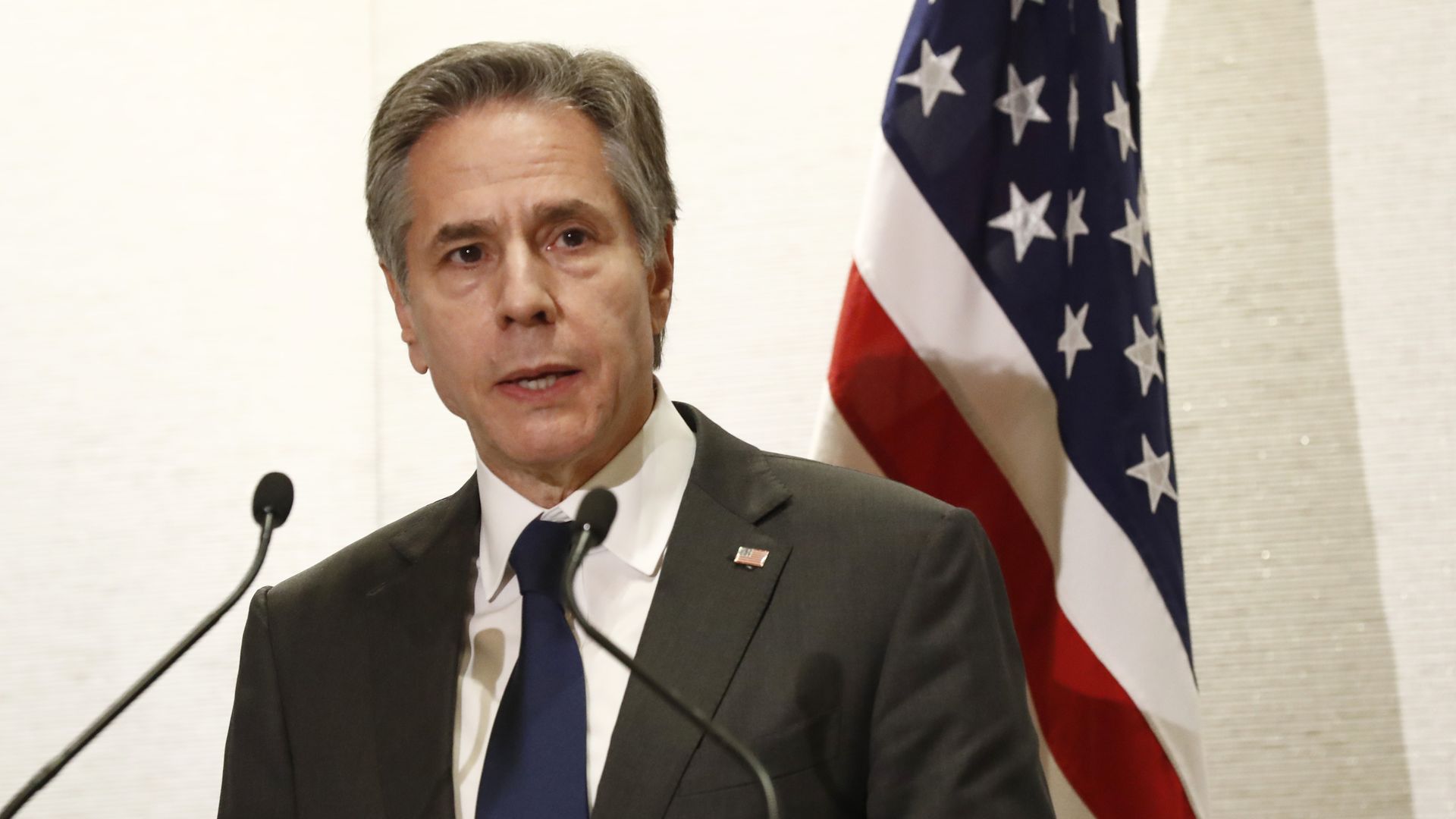
The U.S. will send nearly $54 million in humanitarian aid to Ukraine to help "hose affected by Russia's military invasion, Secretary of State Antony Blinken announced Sunday.
The big picture: The assistance will help international humanitarian groups provide food, safe drinking water, shelter, emergency health care and protection in Ukraine, per a statement from Blinken.
Google Maps has temporarily disabled some of its tools in Ukraine following the Russian military's invasion of the country, a spokesperson confirmed Sunday.
Driving the news: Following consultation from local authorities, the tech giant disabled tools that provide live details on traffic conditions and how busy places like stores are in order to help ensure the safety of Ukrainian communities, Reuters first reported.
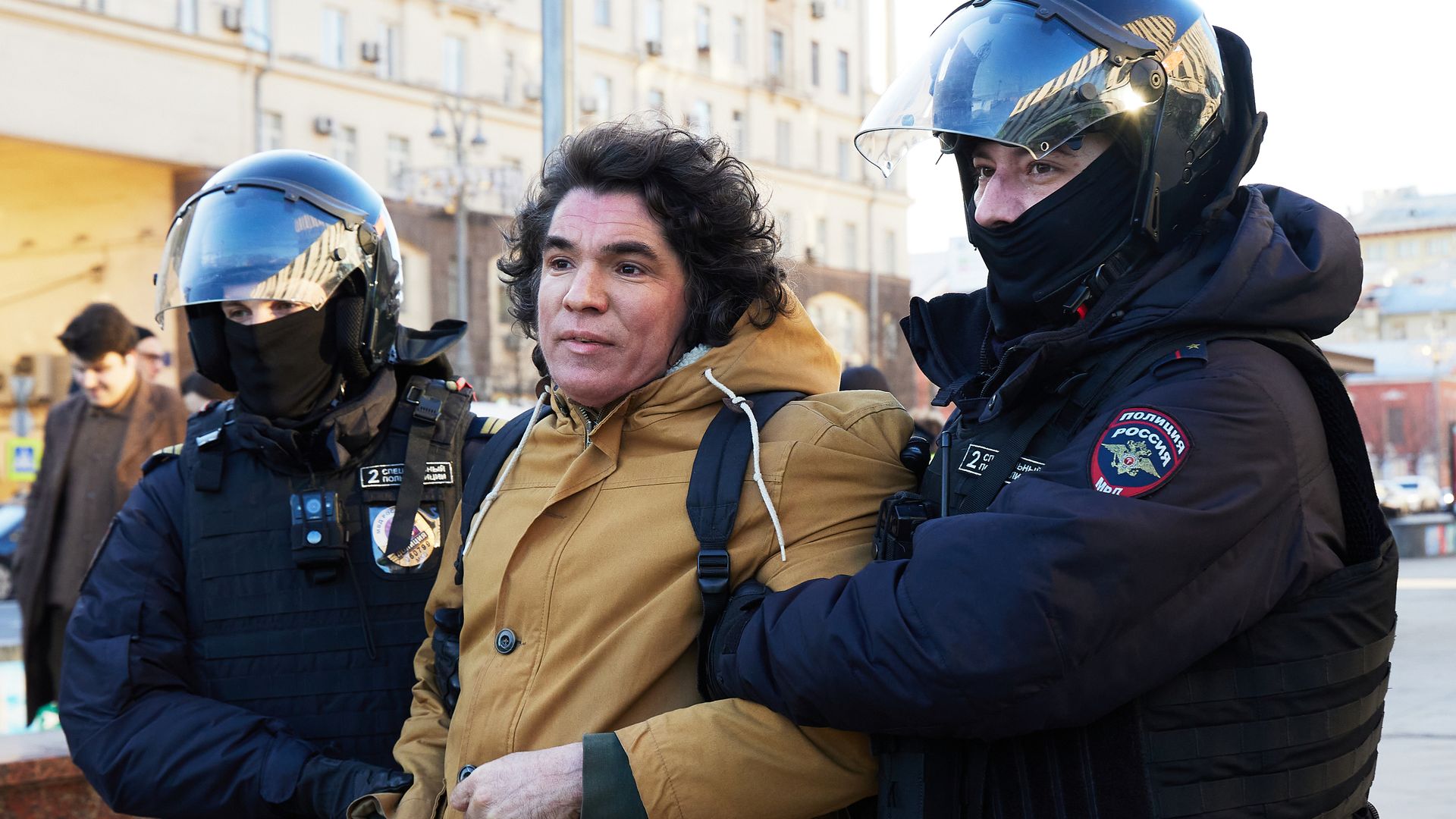
Police in Russia arrested over 2,000 people protesting the invasion of Ukraine, and authorities in Belarus detained more than 400 others in massive crackdowns on the anti-war movement in the countries on Sunday.
The European Union will finance the purchase and delivery of $500 million worth weapons to Ukraine, marking the first time in the bloc's history that it will send arms to a country under attack.
Why it matters: Longstanding policy taboos are falling across the EU because of Vladimir Putin's unprovoked assault on Ukraine. The new weapons program, which will be funded through the European Peace Facility, was announced Sunday alongside new sanctions on Russian aircraft, state media and the Belarus economy.