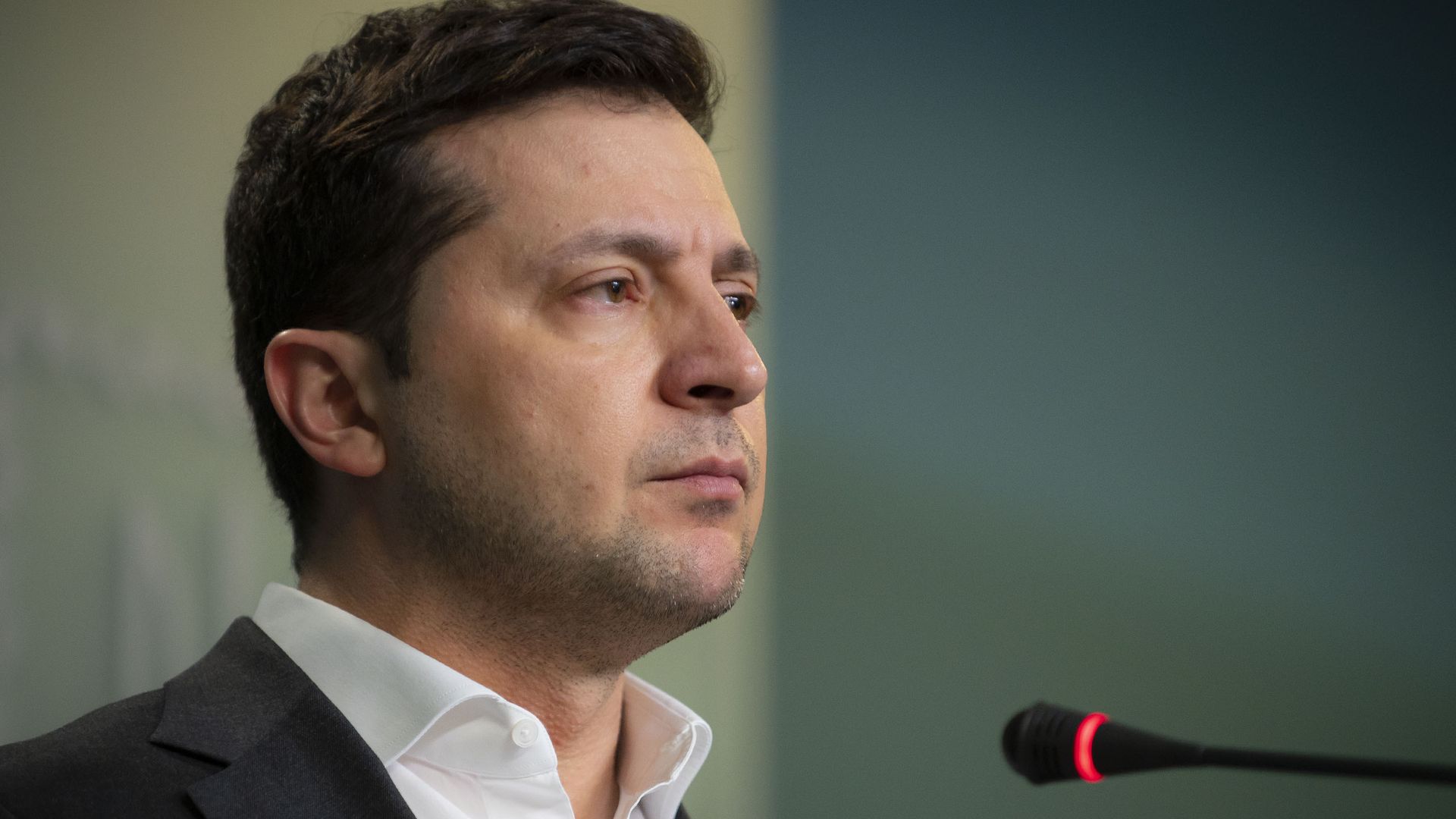
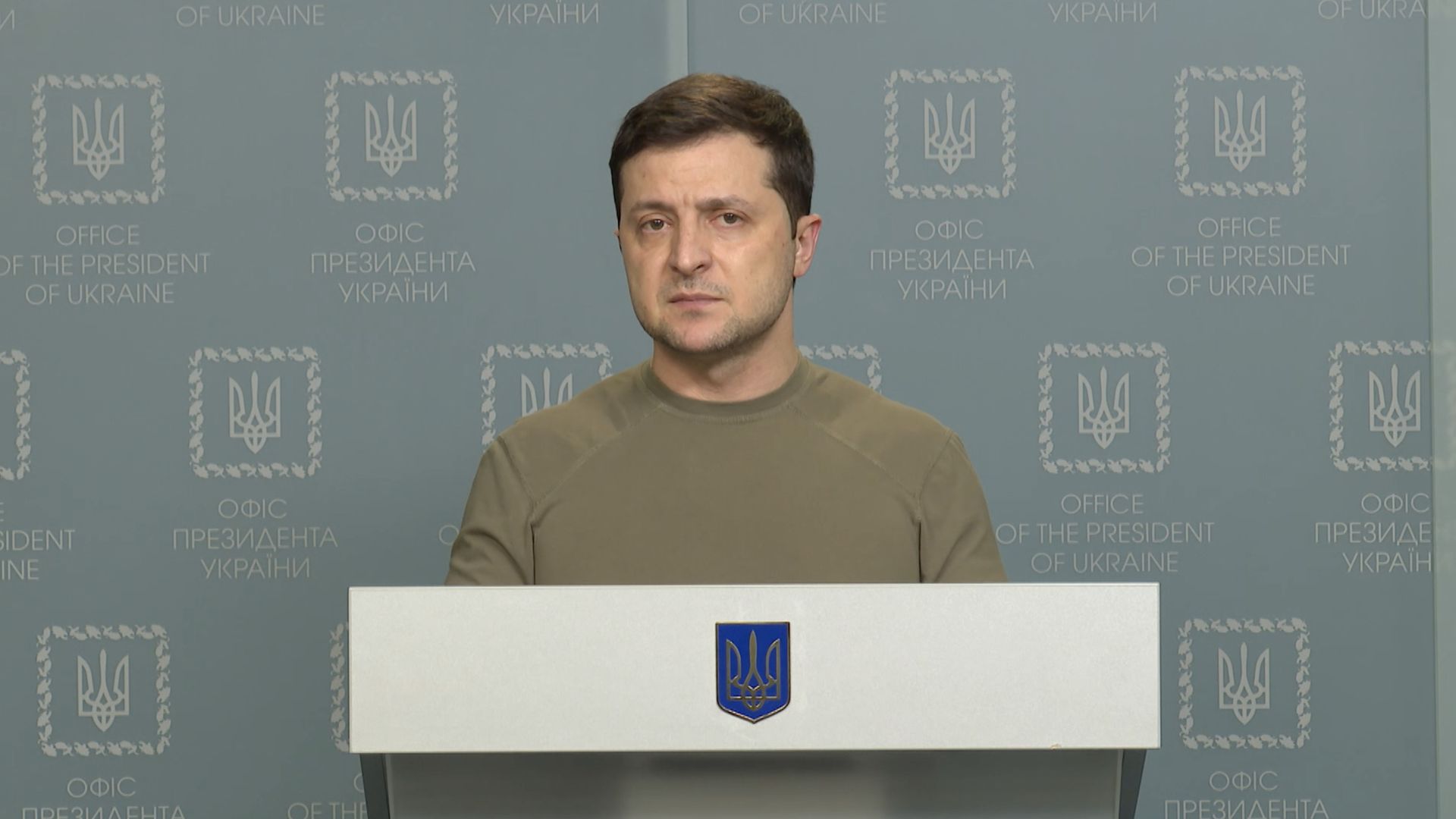
Ukrainian President Volodymyr Zelensky released a new and defiant video message Saturday night as curfew set in for Ukrainians in Kyiv, saying "we will fight as long as it takes to liberate the country. "
Driving the news: Zelensky also suggested Western allies were now prepared to cut off Russia from the SWIFT international payments system, a secure messaging service used by more than 11,000 banks and financial institutions throughout the world.
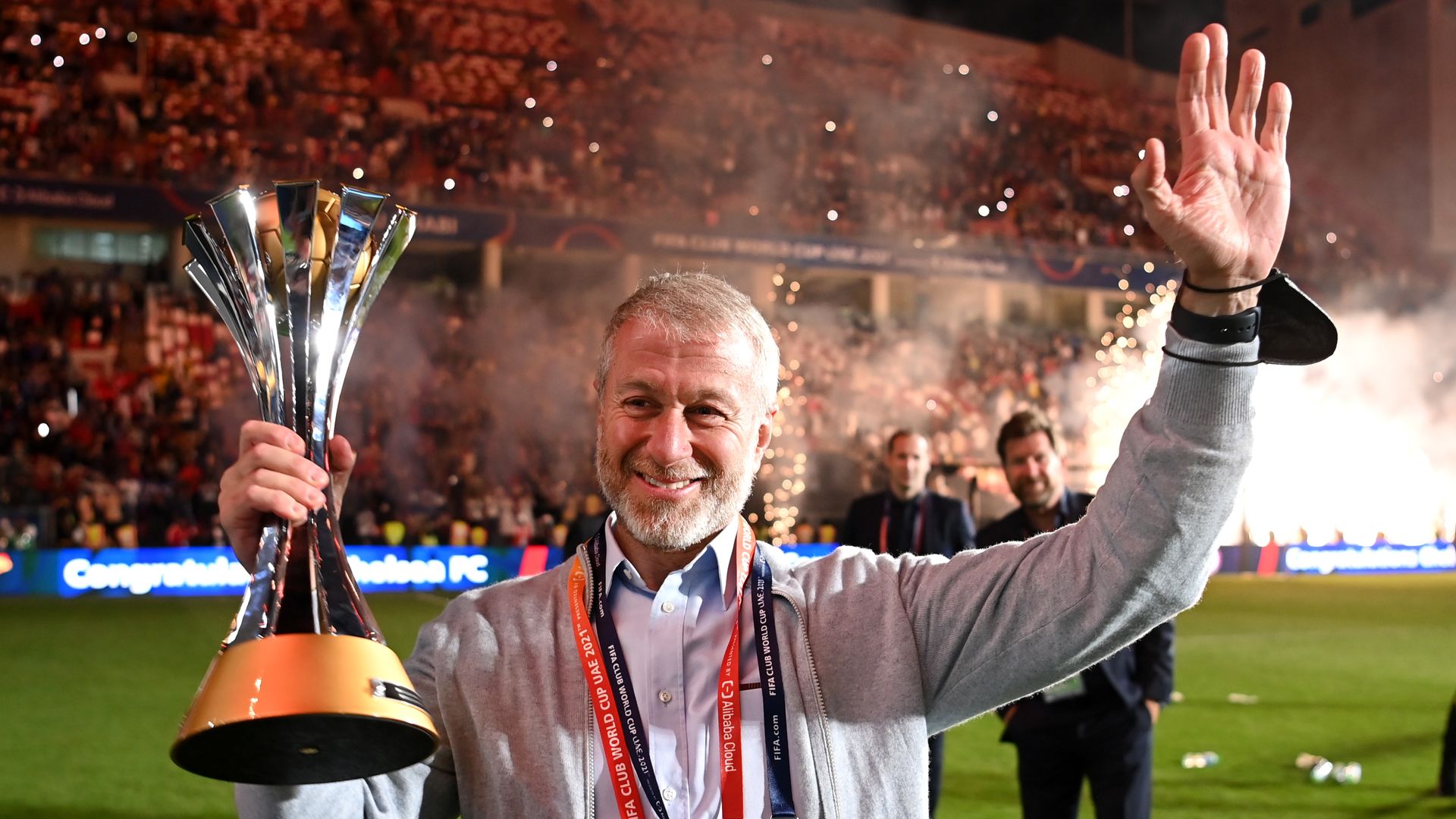
Russian oligarch Roman Abramovich on Saturday turned over "stewardship and care" of Chelsea FC, the British soccer club he's owned since 2003, to Chelsea FC's charitable foundation.
Why it matters: Abramovich is trying to distance his team from Russia's war on Ukraine, even though his brief statement didn't mention the conflict.
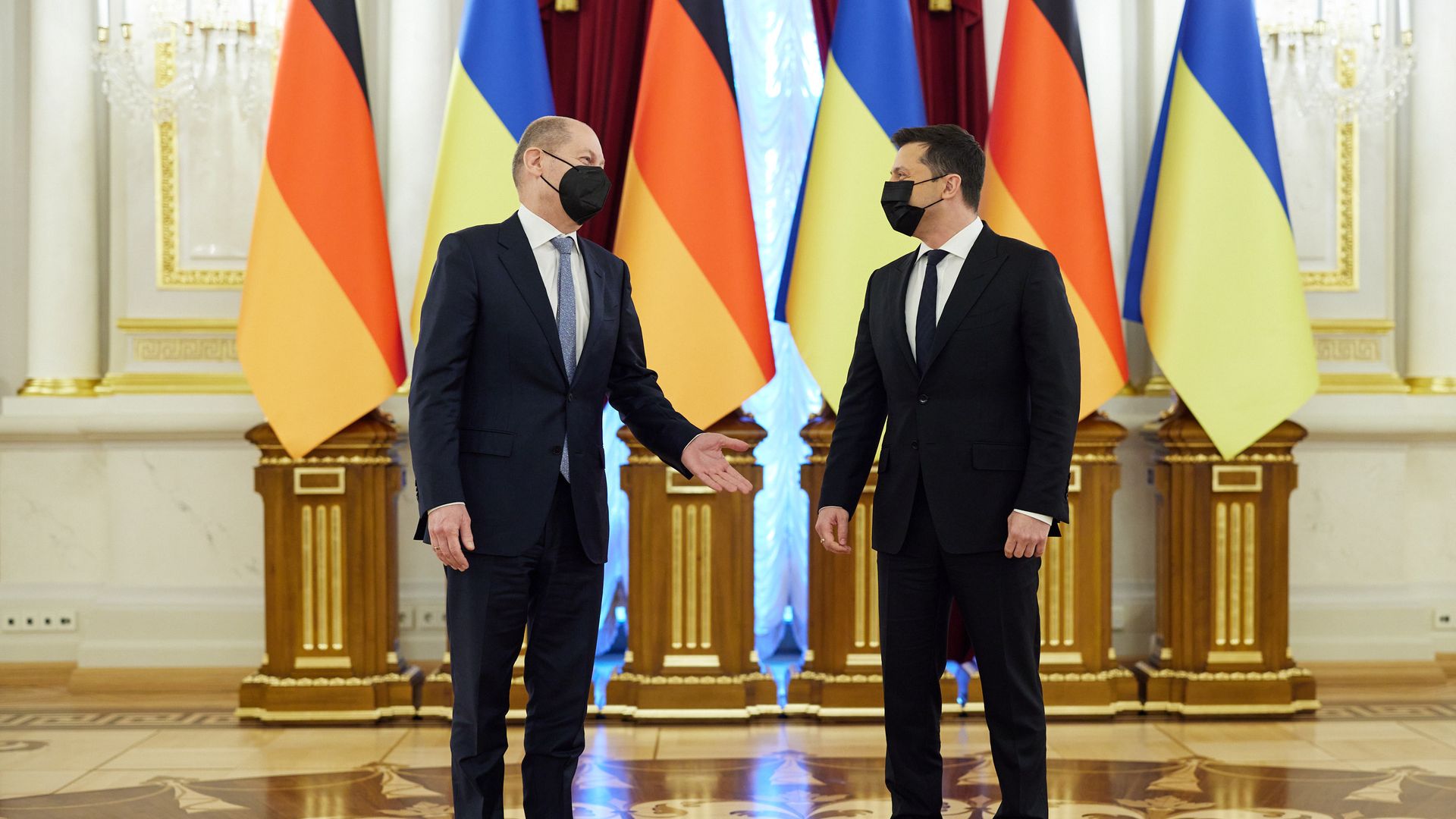
Germany will send 1,000 anti-tank weapons and 500 Stinger missiles to Ukraine, marking a complete reversal in Berlin's restrictive arms export policy, German Chancellor Olaf Scholz announced Saturday.
Why it matters: Germany has for months come under intense criticism for its response to Russia's aggression toward Ukraine. The government said its "historical responsibilities" prevented it from shipping arms to conflict zones, and had previously blocked other NATO allies from transferring German-origin weapons to Ukraine.
Ukrainian President Volodymyr Zelensky has emerged as a resolute and unifying wartime leader for his country during the first days of the Russian invasion, calmly delivering defiant speeches from his phone on the darkened streets of Kyiv.
The big picture: It's a role few could imagine Zelensky playing when he won the presidency in 2019, his closest qualification being playing a president on television.
Former Ukrainian President Petro Poroshenko said Saturday, "I’m ready, unfortunately yes," when asked if he was prepared to die in Kyiv as Russian military forces resume their offensive.
Why it matters: It's a unifying decision that echos that of President Volodymyr Zelensky, who defeated Poroshenko in 2019, and has also remained resolute in his determination to stay put.
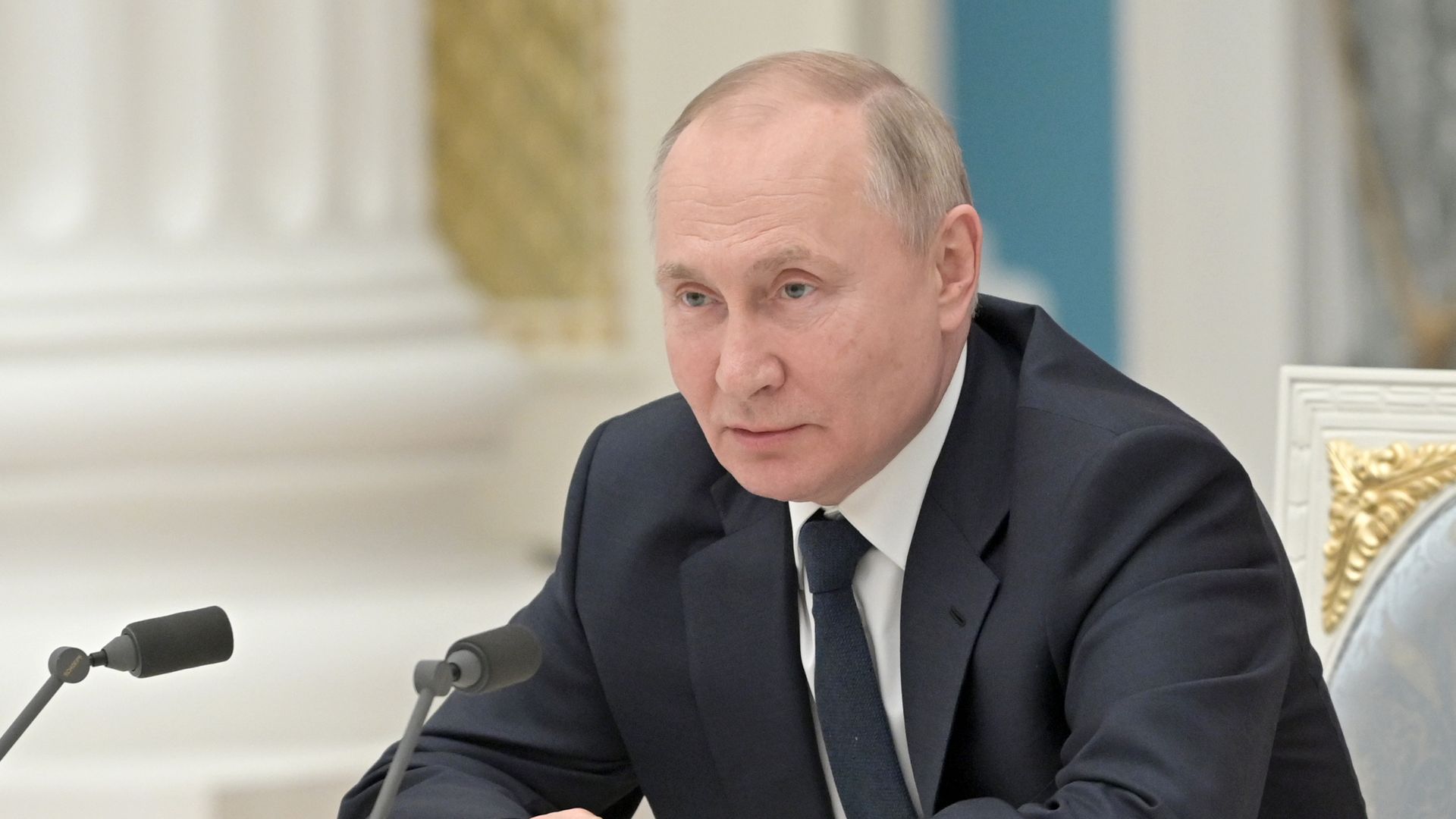
Several of Russia's closest allies and former Soviet satellite states have sharply rebuked President Vladimir Putin over his unprovoked invasion of Ukraine.
Why it matters: As the Western world seeks to make Putin an international pariah, even his closest allies are resisting showing support for his assault on Ukraine.
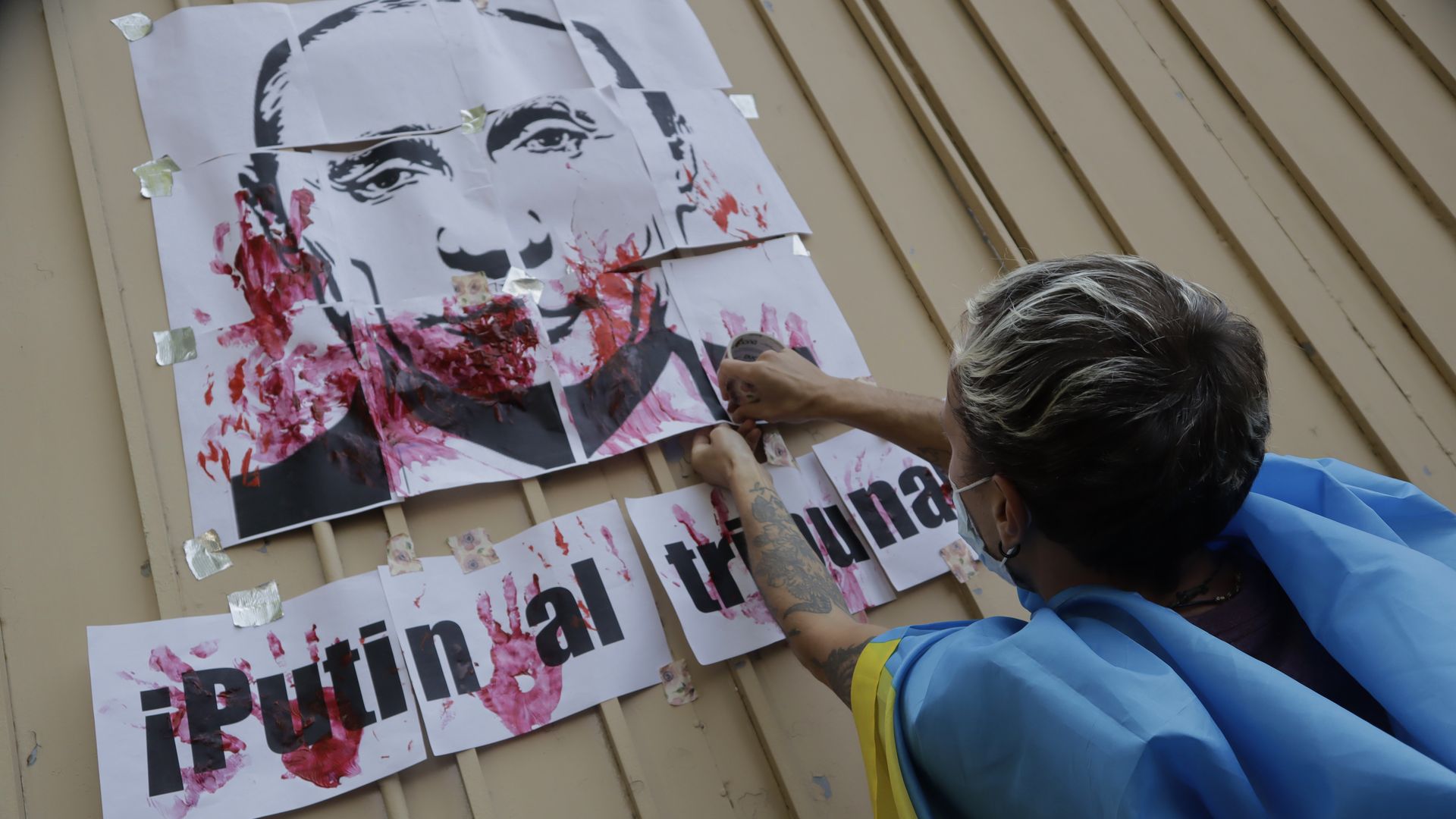
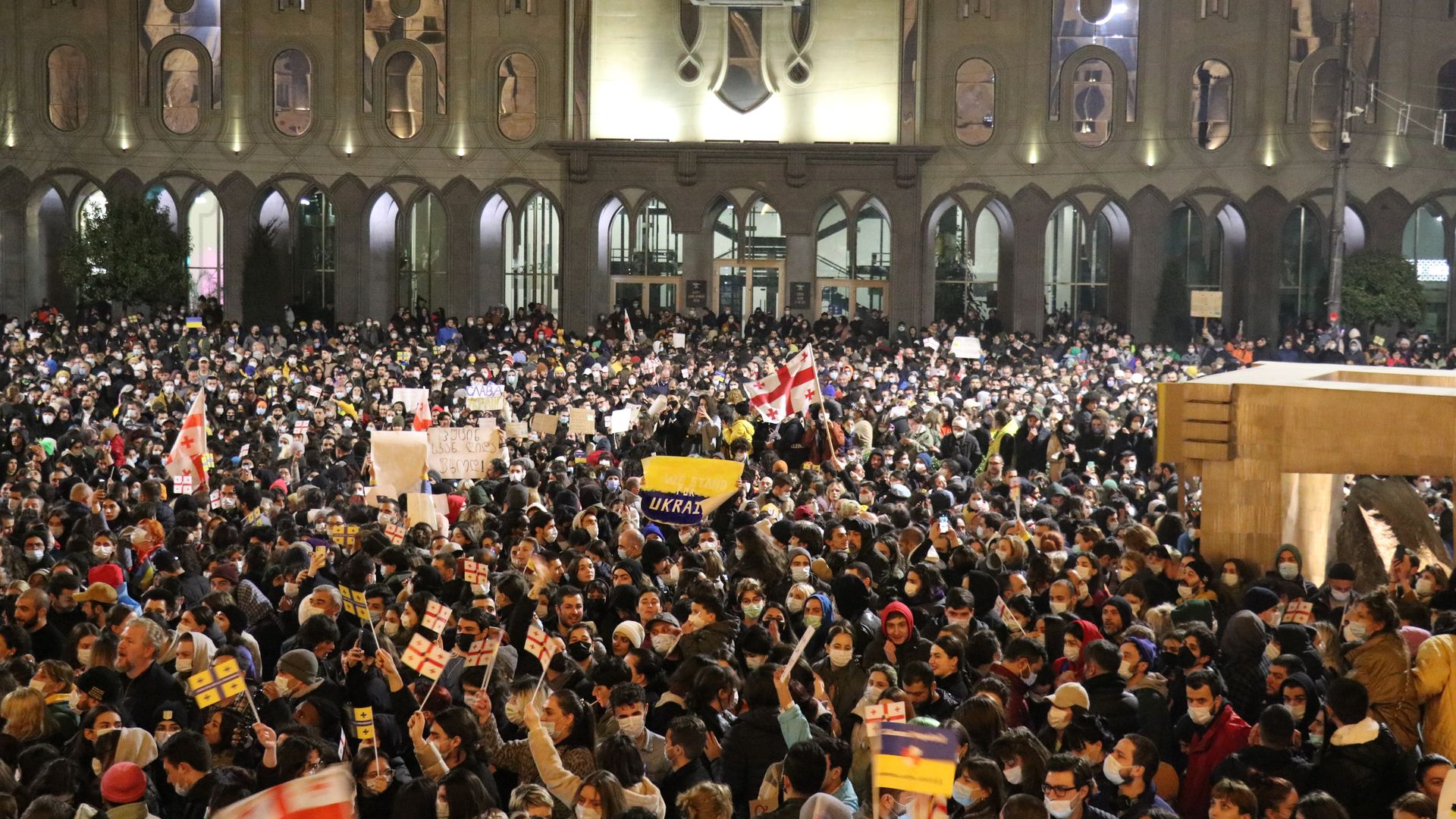
The big picture: Rallies have been documented in countries ranging from Thailand and Greece to the former Soviet republic of Georgia and Russia itself. Many are calling on their governments to take stronger action against the Kremlin as tens of thousands of Ukrainians flee their homes.
Eighty-seven countries either voted for or co-sponsored a draft UN Security Council resolution deploring Russia's invasion of Ukraine on Friday, though Russia used its veto to block it.
Driving the news: Eleven Security Council members backed the resolution with only Russia voting against and China abstaining rather than backing Russia. Ahead of the vote, the U.S. and Albania led an effort to get as many countries to sign the resolution as possible to underscore Russia's international isolation.
The U.S. imposed sanctions Friday on Russian President Vladimir Putin, Foreign Minister Sergei Lavrov and other members of Russia’s Security Council.
Why it matters: It is extremely rare for the U.S. to sanction a sitting world leader, and the Kremlin had previously said it would consider sanctions on Putin himself to be a de facto severing of relations between the U.S. and Russia.
Thousands of Georgians poured into the streets Thursday and Friday to protest their government's inaction following Russia's invasion of Ukraine.
Why it matters: Georgia was the one under attack in 2008 when Russian President Vladimir Putin ordered forces to attack and occupy the former Soviet republic.