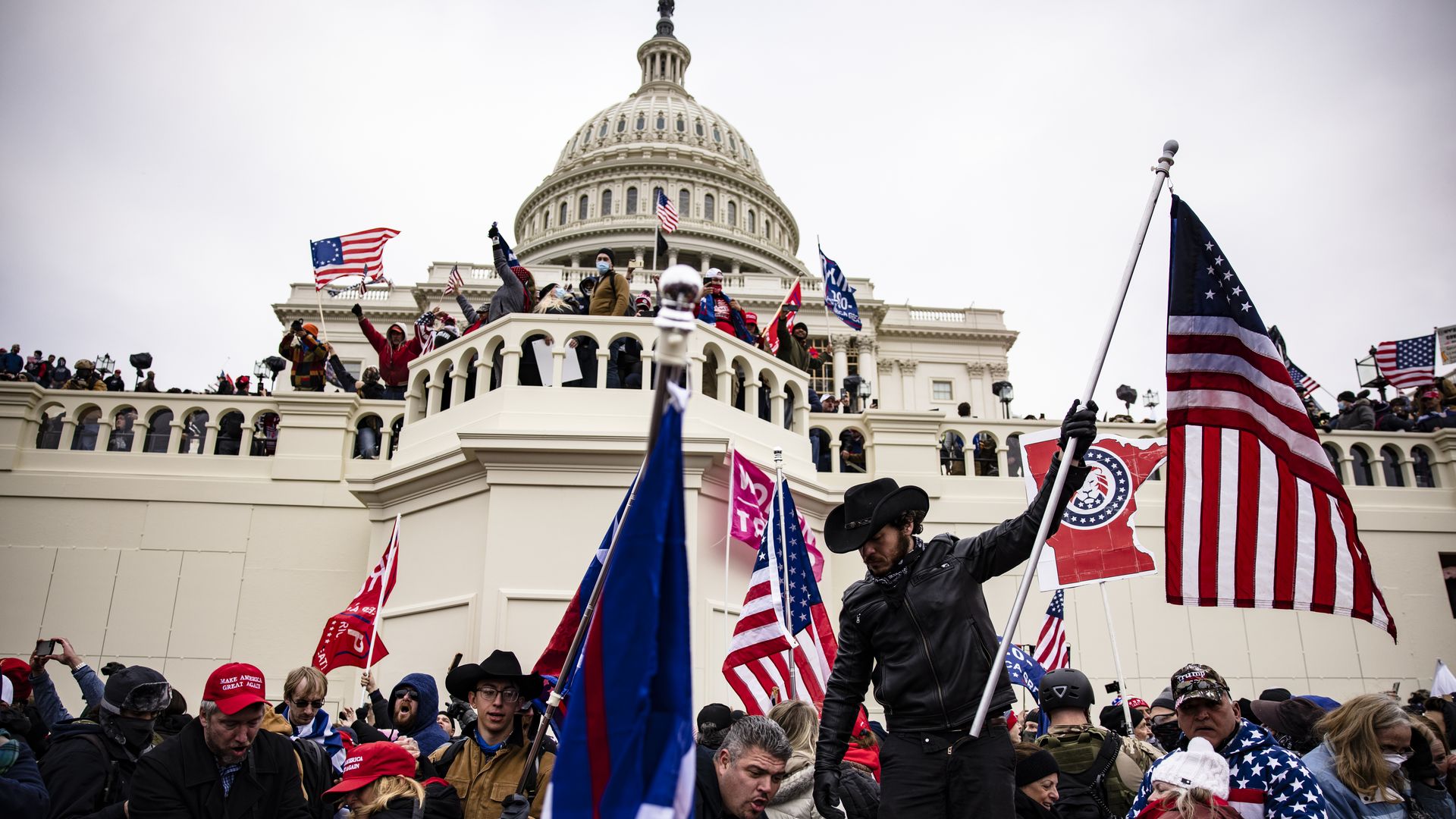
President-elect Biden declared during the siegeof the U.S. Capitol on Wednesday that "the world is watching." Indeed, the world was watching long before that.
Why it matters: Biden has made restoring America's global image, leadership and alliances the cornerstone of his foreign policy agenda. That was a tall order even before audiences around the world watched a mob forcefully disrupt America's democratic process.
The COVID-19 variants first detected in the U.K. and South Africa and now circulating globally aren't a current threatto the effectiveness of the first vaccines, but mutations will be closely monitored because "they could be an issue," NIAID director Anthony Fauci tells Axios.
The big picture: Vaccinations are underway, albeit with a slow start. The get-back-to-normal-goal depends on reaching 70%–85% herd immunity in the population, Fauci says. While there are some concerns the mutations might circumvent the vaccines, he says they pose more of a problem for certain treatments than for vaccines.
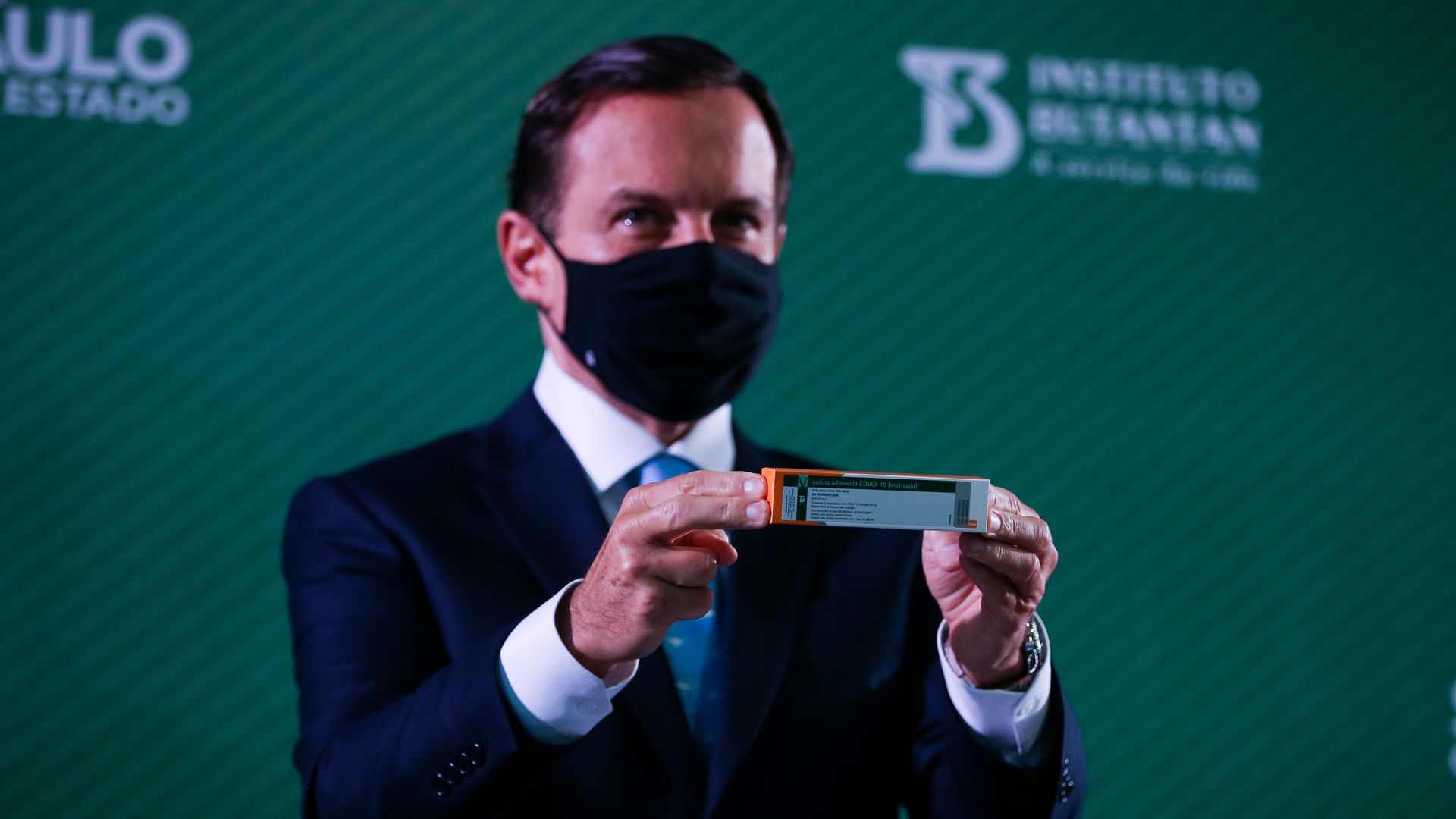
A coronavirus vaccine produced by Chinese company Sinovac is 78% effective, Brazil officials announced Thursday.
Why it matters: Regulators in other countries are closely following the Phase 3 trials in Brazil. If the vaccine is approved for use, it could help fill a gap in access to coronavirus vaccines for many low- and middle-income countries.
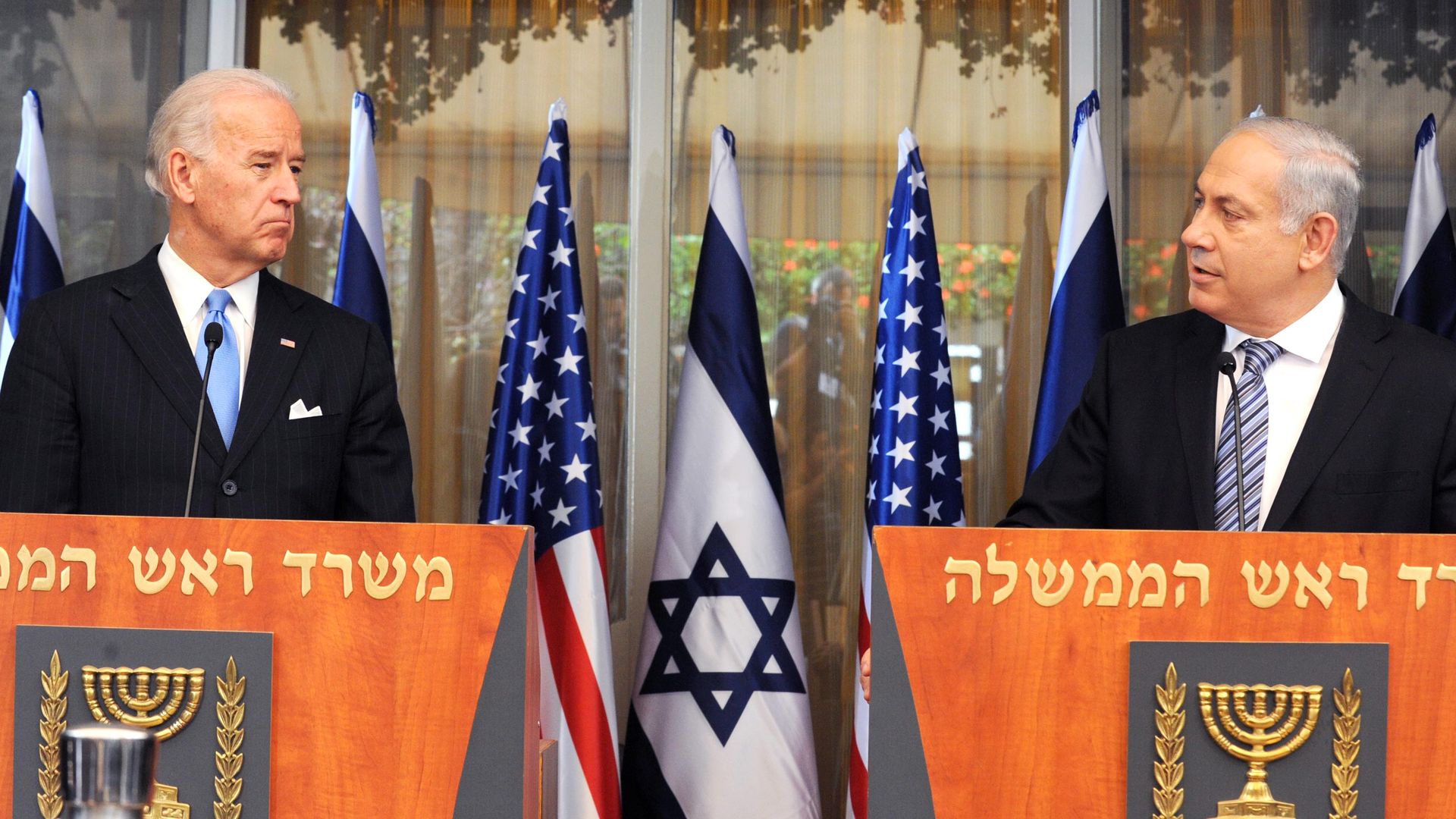
Prime Minister Benjamin Netanyahu is demanding full control of Israel's Iran policy as Joe Biden prepares to assume the Oval Office, setting off a fierce fight at the highest echelons of Israel's government, senior Israeli officials tell me.
Why it matters: Prime Minister Benjamin Netanyahu is preparing to take a very hard line over Biden's plan to return to the 2015 nuclear deal, in contrast with the more moderate approach favored by Defense Minister Benny Gantz, Foreign Minister Gabi Ashkenazi and the heads of Israel's security services.
World leaders reacted with horror after a pro-Trump mob assaulted American democracy and the peaceful transfer of power by storming the U.S. Capitol on Wednesday, as lawmakers were attempting to certify President-elect Biden's victory in November.
Why it matters: The U.S. government is typically a leading voice in condemning political violence all over the world.
Here's how 2021 is beginning:On one side of the Pacific, a show of strength that has shocked the world. On the other side, a show of weakness that has shocked the world.
Why it matters: The chaos that unfolded on Capitol Hill Wednesday afternoon is a sign that the U.S. can't even run an orderly transition of power, let alone project its soft power internationally.
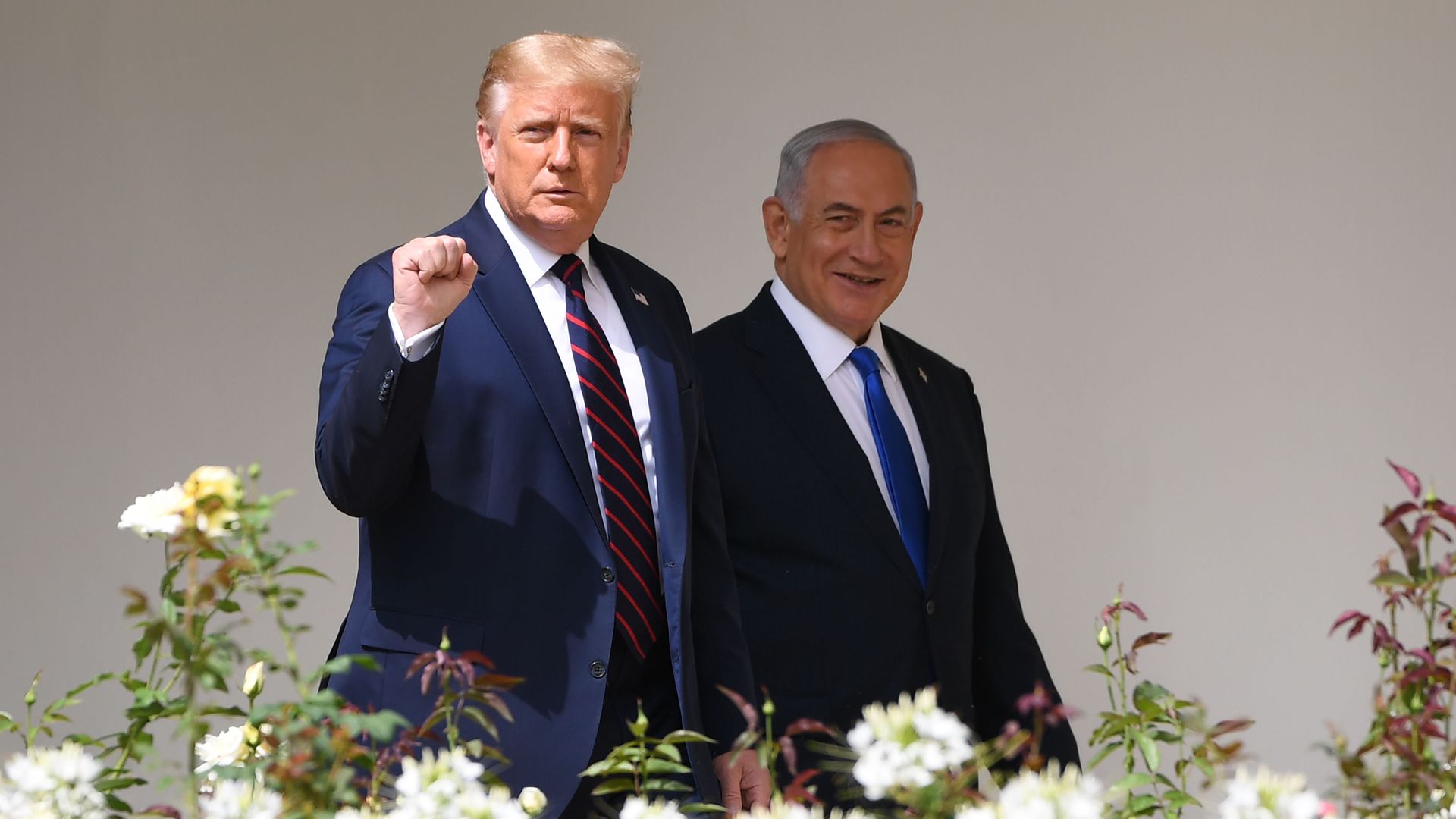
Israeli Prime Minister Benjamin Netanyahu condemned the attack on Congress, which came as it was certifying the Electoral College vote for Joe Biden, and stressed that American democracy will prevail.
Why it matters: Netanyahu, who has been President Trump’s most loyal ally among world leaders, delivered the statement at the top of his meeting in Jerusalem with Treasury Secretary Steve Mnuchin. The prime minister neither criticized Trump nor referred to him directly.
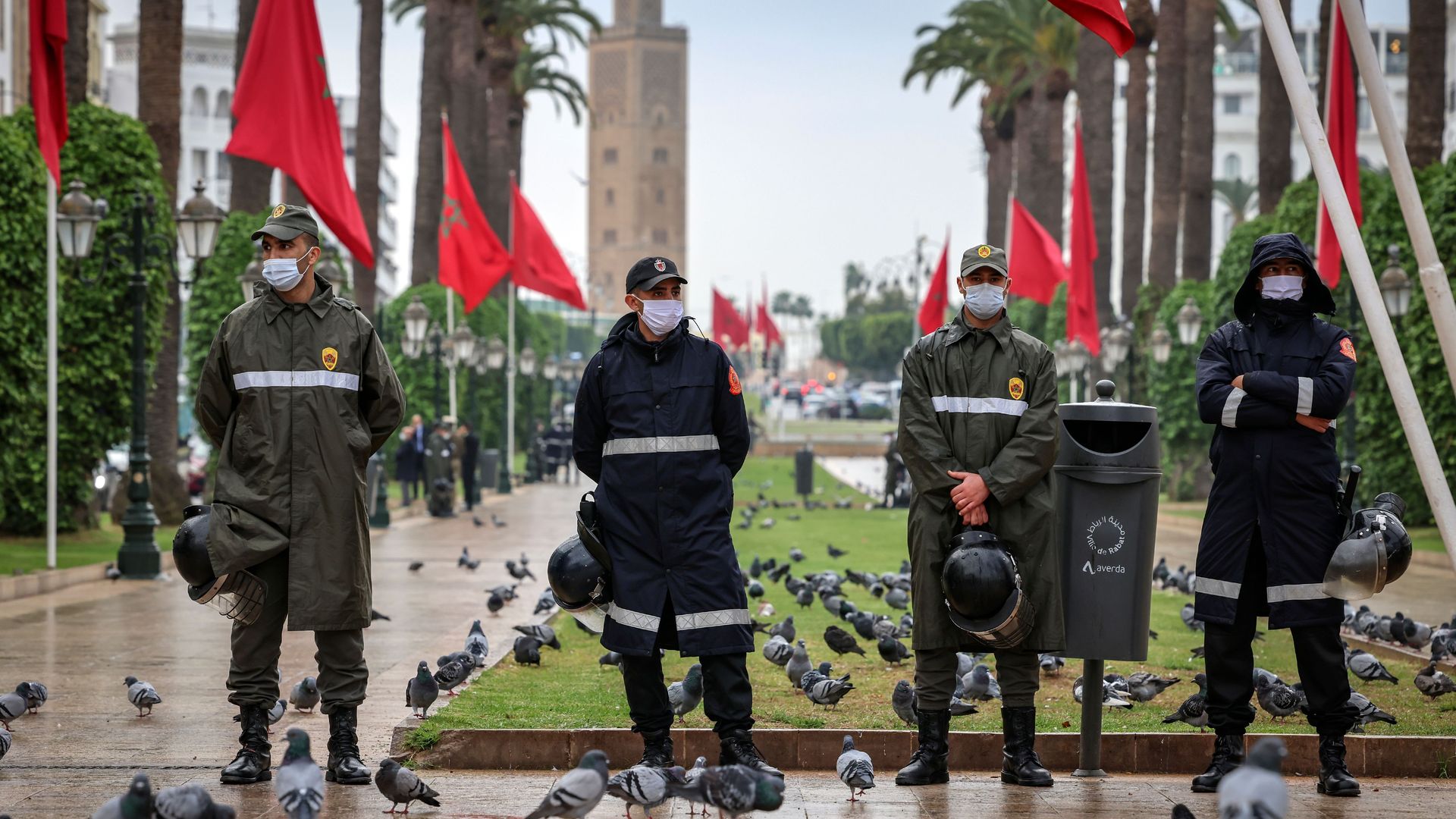
Morocco went most of the way to normalizing relations with Israel last month, but only committed to opening liaison offices, rather than embassies.
Why it matters: That decision led to speculation that Morocco was waiting to see if the Biden administration would roll back Trump's recognition of Moroccan sovereignty over Western Sahara before going all the way with Israel. It also disappointed Netanyahu, who hoped Morocco would commit to full embassies, according to a senior Israeli official.
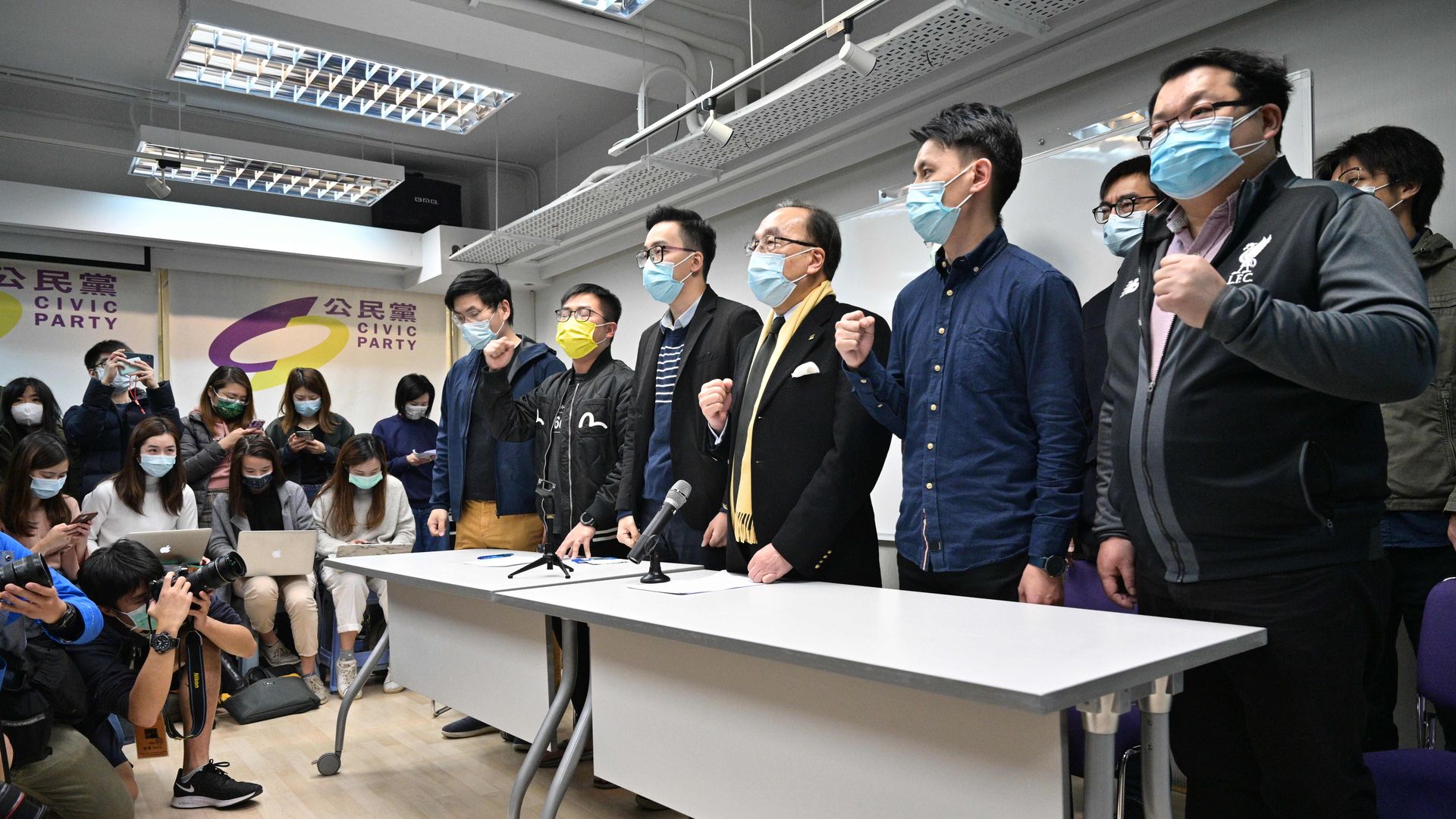
On Jan. 6, Hong Kong authorities arrested more than 50 pro-democracy activists and politicians who participated in primary elections last year, charging them with "subverting state power" under the national security law that China forced on the city last year.
The big picture: The arrests indicateChinese Communist Party leaders see any form of true participatory government as an illegitimate subversion of their power.
Russian cyber operators are almost certainly still rummaging through U.S. networks, potentially lifting data or setting traps for future havoc even as officials scramble to assess the damage Moscow's hack has already dealt.
Why it matters: The hack, powered by malicious code inserted into an update of SolarWinds network management software, could be among the most significant in the country’s history, perhaps on par with China’s hack of the Office of Personnel Management or Russia’s 2014 hack of the State Department.
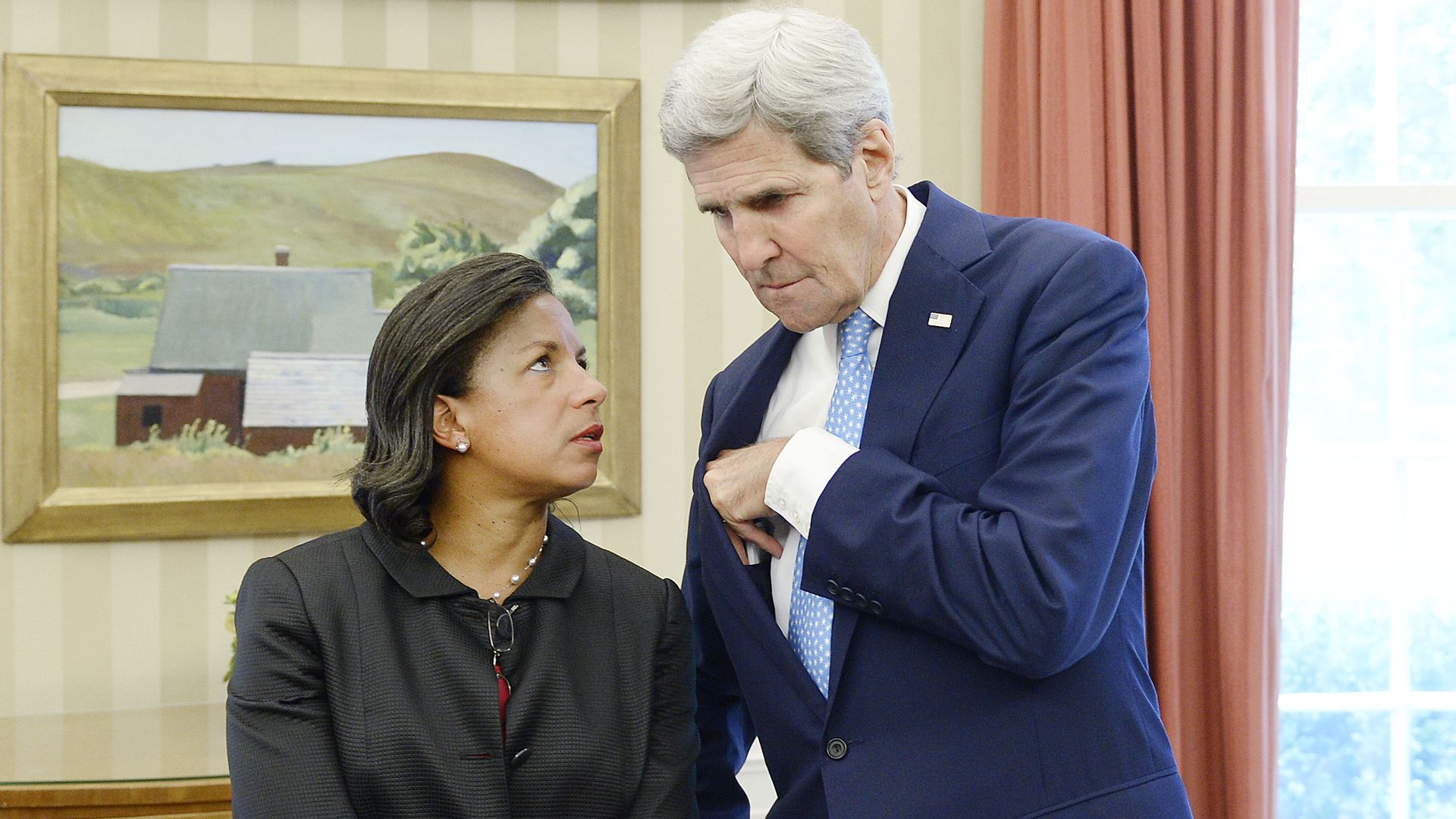
Members of Israeli Prime Minister Benjamin Netanyahu's inner circle are concerned that President-elect Joe Biden is filling his administration with veterans of the Obama administration, some of whom they've had difficult relations in the past, particularly over Iran.
Why it matters: The Biden and Netanyahu administrations are on course for an early clash over the Iran nuclear deal. Several of Netanyahu’s aides at the Israeli National Security Council have been grumbling about the fact that Biden will be surrounded by "Obama people" — including the deal's architects and some of its fiercest advocates.
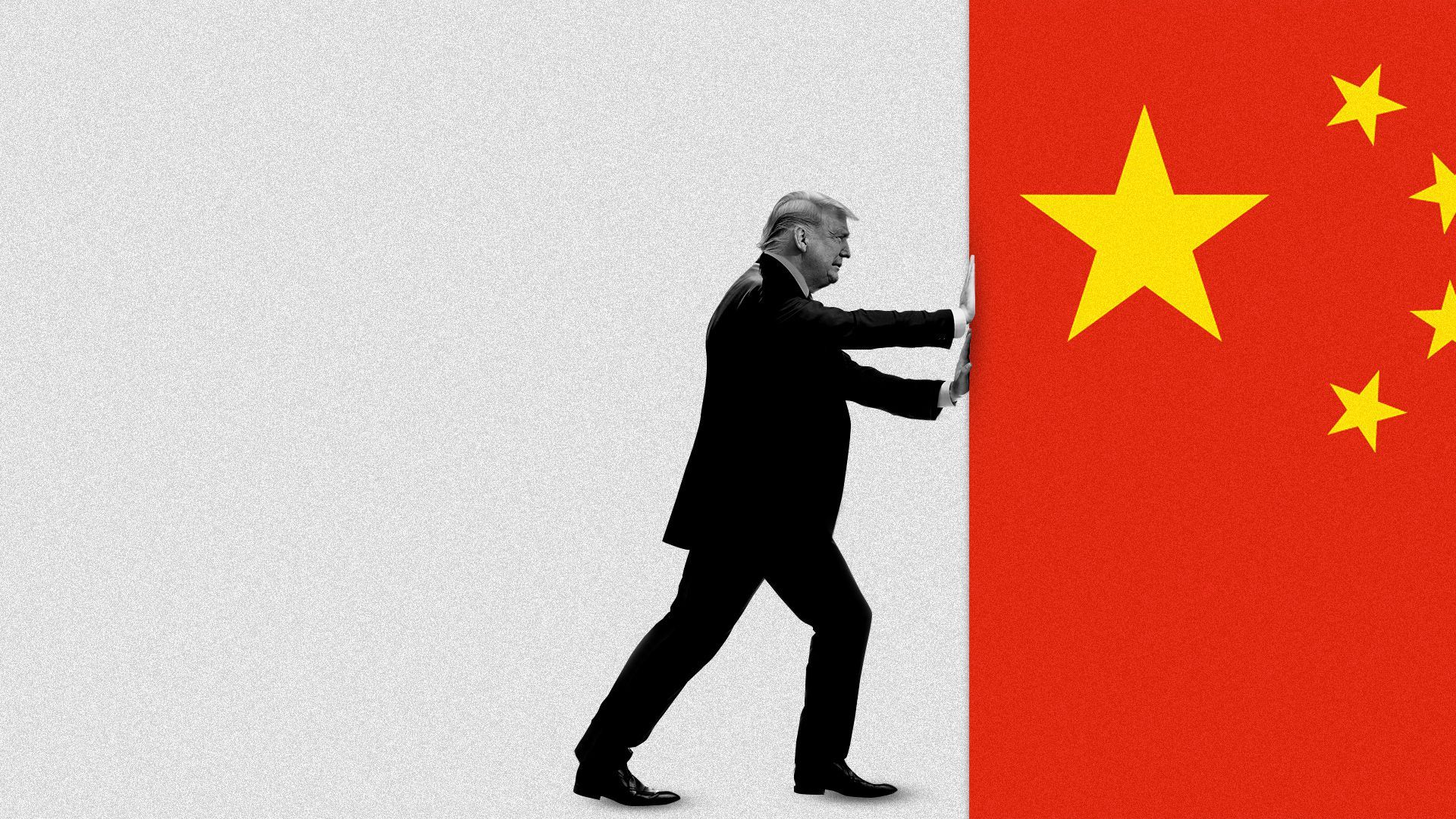
President Trump last night signed an executive orderprohibiting transactions with eight Chinese apps, including Ant Group's Alipay, arguing they pose a national security threat.
Why it matters: This is the latest example of ratcheting up economic tensions with China, using private companies as pawns.
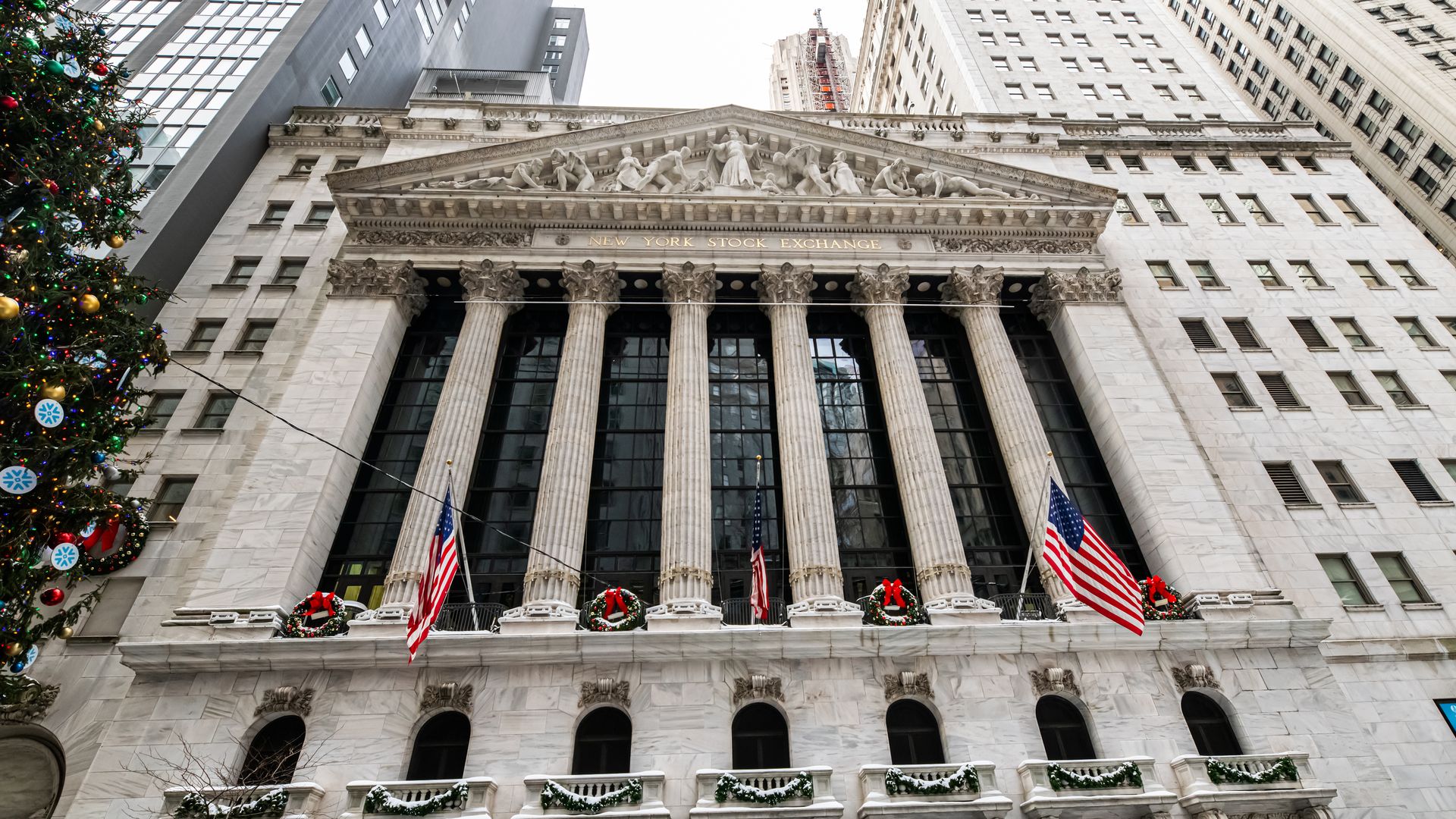
The New York Stock Exchange again reversed course Wednesday and announced it would delist three major Chinese telecom companies — China Mobile, China Telecom, China Unicom Hong Kong.
The backdrop: The NYSE originally announced it would delist the companies on New Year's Eve in order to comply with a White House executive order. The exchange then reversed course late on Monday and said it would no longer delist the telecoms.
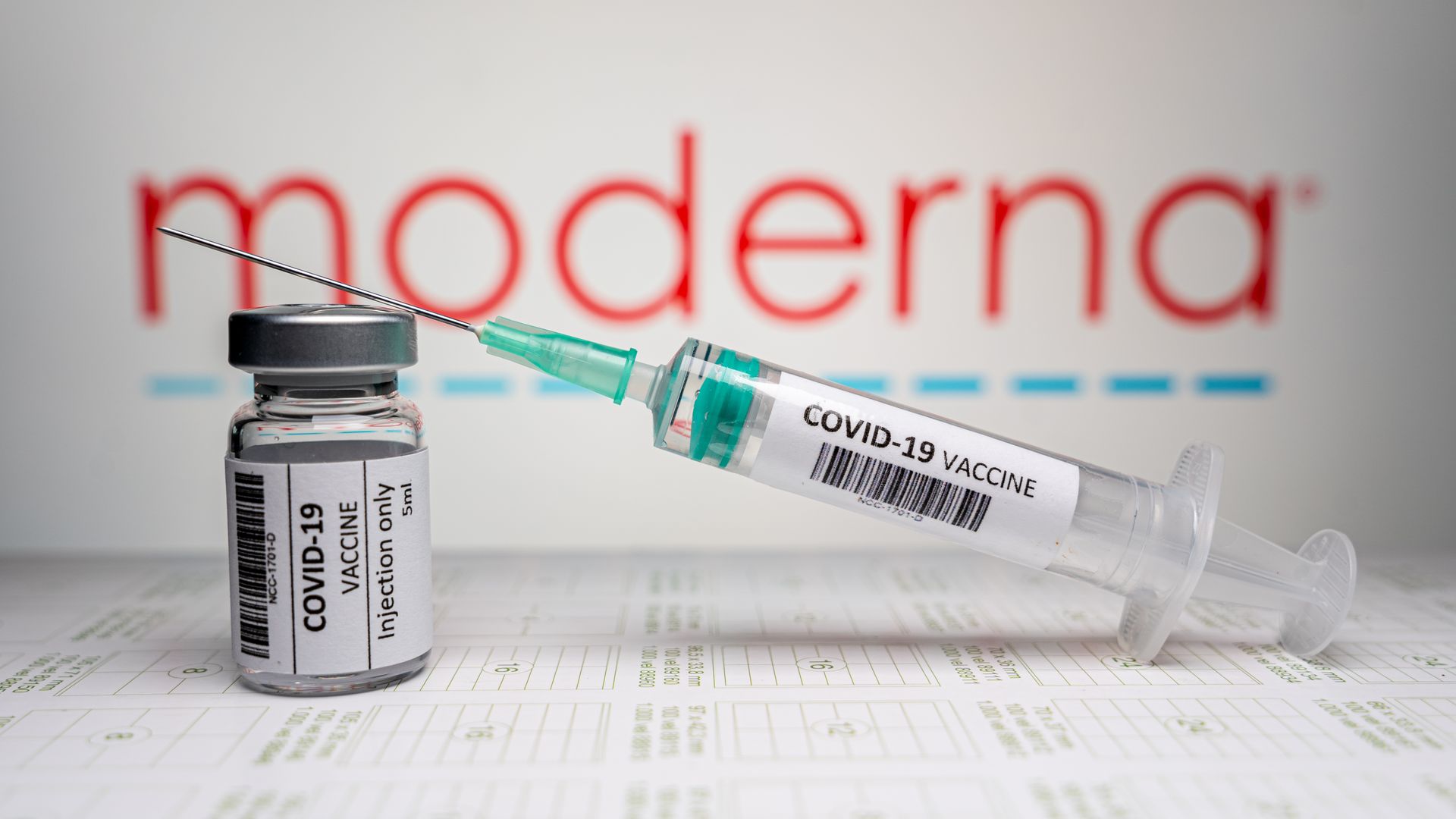
The European Medicines Agency on Wednesday recommended Moderna's coronavirus vaccine for authorization in the European Union's 27 member states.
Why it matters: This is the second vaccine to be granted approval by the regulator. The European Commission — which has purchased 160 million doses of the Moderna vaccine — is likely to issue final approval this week.
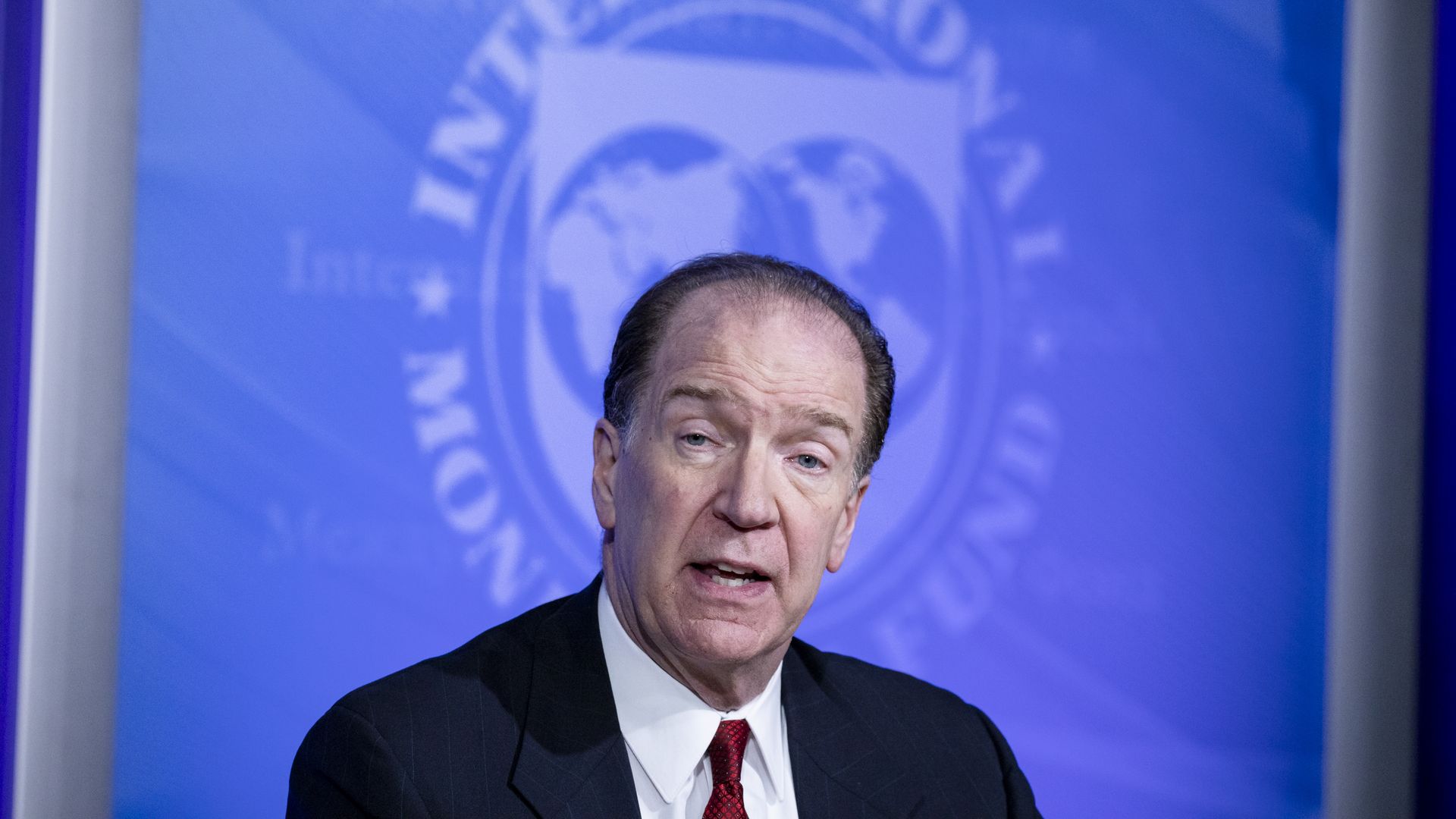
More countries will soon face serious debt problems and likely defaults this year if swift action is not taken, World Bank president David Malpass said Tuesday, calling for debt restructurings and a focus on inequality and investment in the "post-COVID economy."
Why it matters: Malpass is the latest to issue a stern warning about the state of the global economy, calling on creditors, such as China and the Paris Club group of wealthy nations, to share the burden.
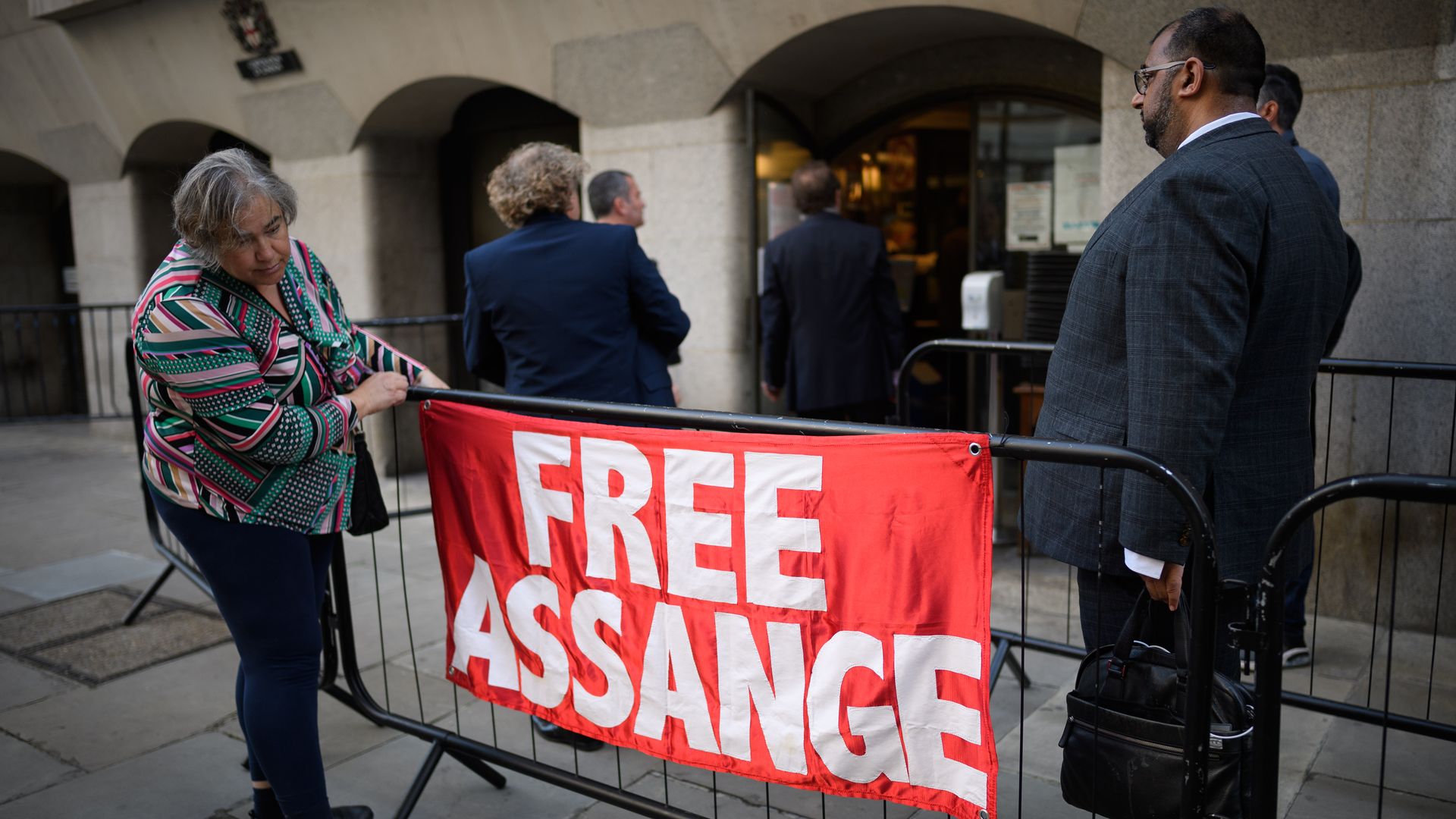
A London judge has denied bail to WikiLeaks founder Julian Assange after ruling this week that he must not be extradited to the U.S. to face espionage charges due to a high risk of suicide.
The state of play: Deemed a flight risk by the judge, Assange must now remain in British prison as the U.S. government appeals the decision to block his extradition. Assange's lawyers say his mental health has deteriorated significantly after he spent years in London's Ecuadorian Embassy seeking asylum before his arrest last year.
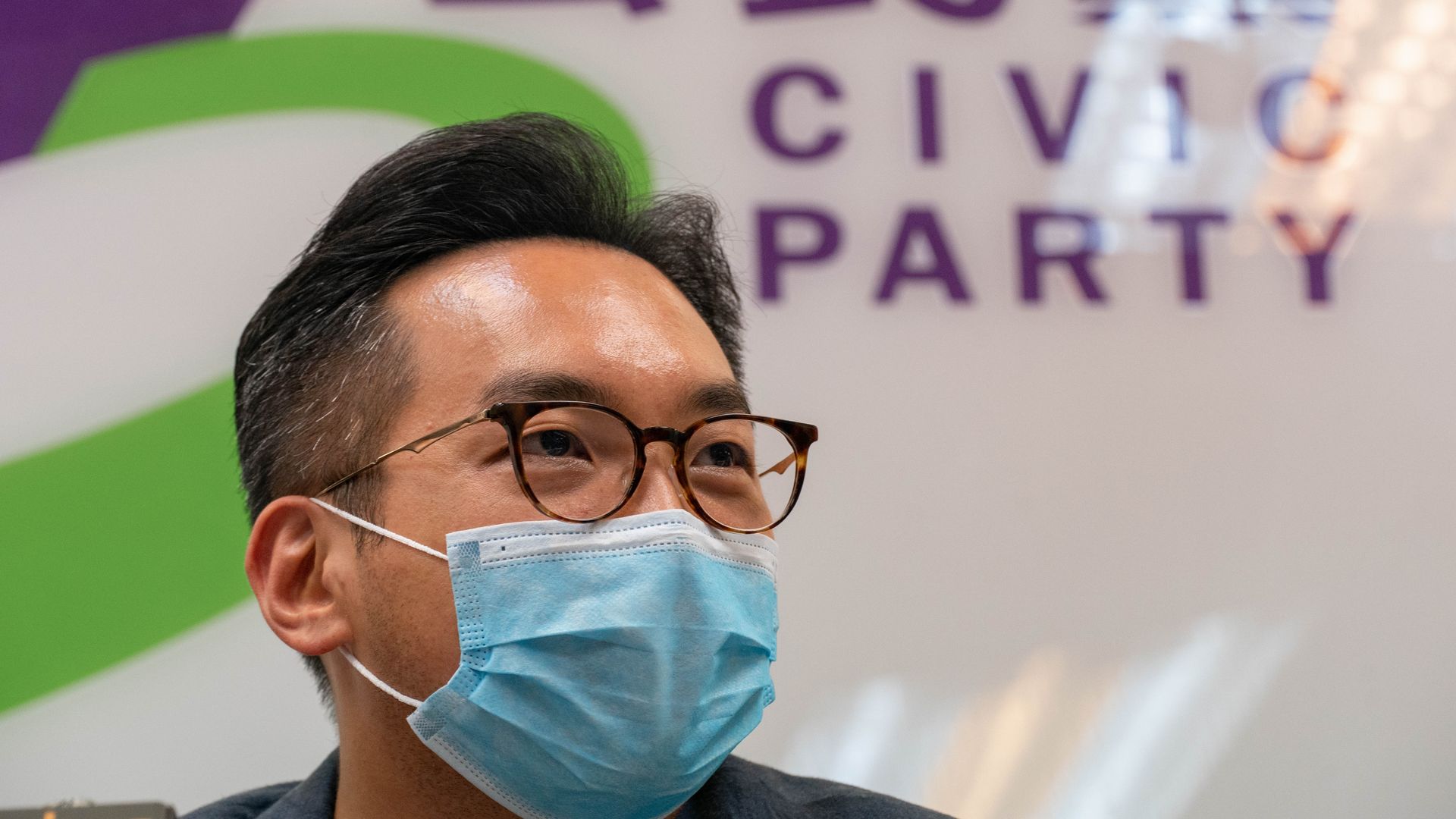
A group of former lawmakers were among dozens of pro-democracy activists arrested on Wednesday under the national security law imposed by China, per opposition groups and local media.
Why it matters: Hong Kong had enjoyed a high degree of autonomy, but the passage of the sweeping security law by Chinese lawmakers last June has led to a major crackdown on the pro-democracy movement. It has escalated in recent weeks, with the arrests of activists including media tycoon Jimmy Lai and the imprisonment of other prominent figures like Joshua Wong and Agnes Chow.