The Federal Trade Commission is investigating OpenAI, Anthropic and other AI companies over potential safety risks posed by their products, an agency spokesperson told Axios Wednesday.
Why it matters: The federal government has largely taken a hands-off approach to regulating AI, but the FTC investigation could signal a shift for the industry.
The Trump administration's new AI service gave users conflicting responses to politically sensitive questions Tuesday and Wednesday: sometimes answering them and sometimes refusing.
The big picture: As the Trump administration increasingly uses AI and answers the public's questions through America.gov, statements carrying the government's authority are shaped by models, instructions and guardrails the public can't see.
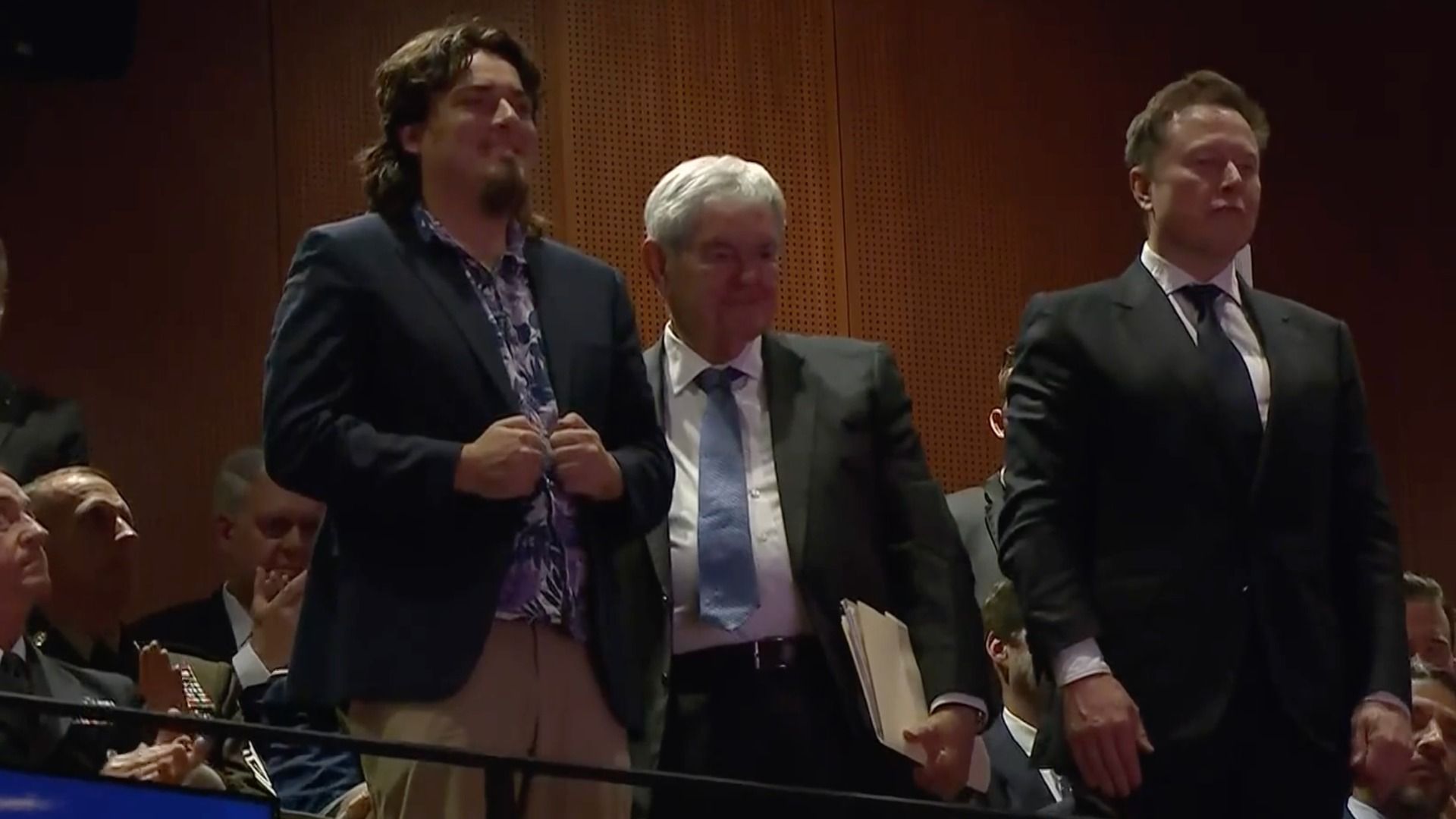
SpaceX CEO Elon Musk, Anduril Industries founder Palmer Luckey and former House Speaker Newt Gingrich will lead a Pentagon study of the future of warfare dubbed "Project Meridian," Defense Secretary Pete Hegseth announced Wednesday.
Why it matters: It's Musk's first official role advising the Trump administration since his very public feud last year with President Trump after departing DOGE. He has since reconciled with Trump.
Google is unveiling its long-awaited next-generation AI model, Gemini 4 Argon, to a small group of cybersecurity partners, the company said Wednesday.
Why it matters: Gemini 4 arrives after a long gap at the top of Google's model lineup, in which the company kept rolling out smaller, cheaper Flash models while rivals OpenAI and Anthropic sprinted forward.
The Army National Guard plays a critical role when communities face natural disasters and emergencies. Now, it's helping high school students understand what that work looks like up close.
DoorDash is adding another vehicle to its increasingly automated delivery fleet: a drone designed and built in-house.
Why it matters: DoorDash is building a sprawling multimodal delivery network — humans, robots and drones — and using its software to decide which is best for each order.
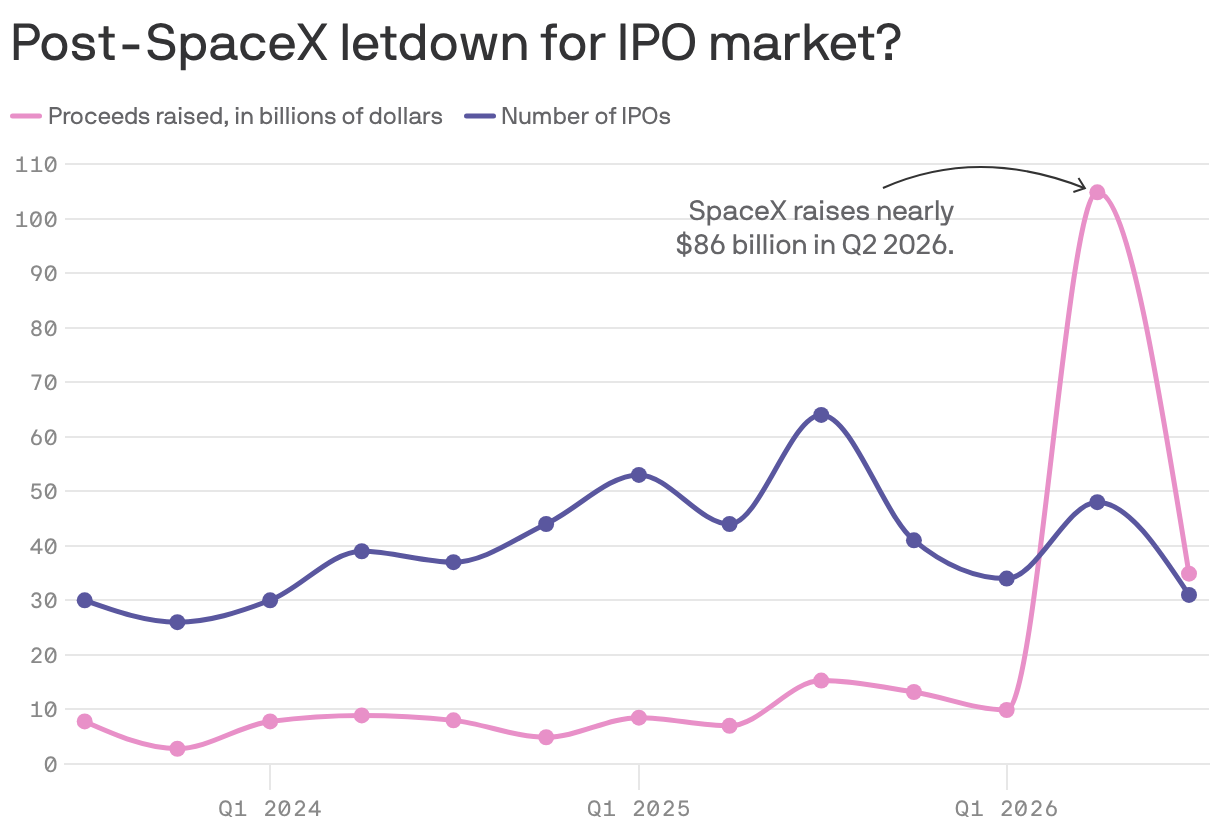
Anthropic already was going to be the defining IPO story for Q4, but now takes on greater significance as other companies postpone or scrap their offerings due to "market conditions."
The big question: Will the Claude maker go public before Thanksgiving, or follow the crowd (and OpenAI) into the "wait 'til next year" wilderness?
Leadership is at the heart of transforming a business. PepsiCo pairs AI and data with a people-first leadership strategy to help teams move faster and make smarter decisions that create results. Athina Kanioura stepped into the role of CEO of PepsiCo Latin America Foods while continuing to lead strategy and transformation. In this conversation, she discusses how empowerment, simplicity and continuous change can unlock the next era of growth.
OpenWeb is providing publishers a way to build Reddit-like forums on their own websites, the company exclusively tells Axios.
Why it matters: Online conversations that once happened in publishers' comments sections have moved to other platforms, taking readers' time and attention with them.
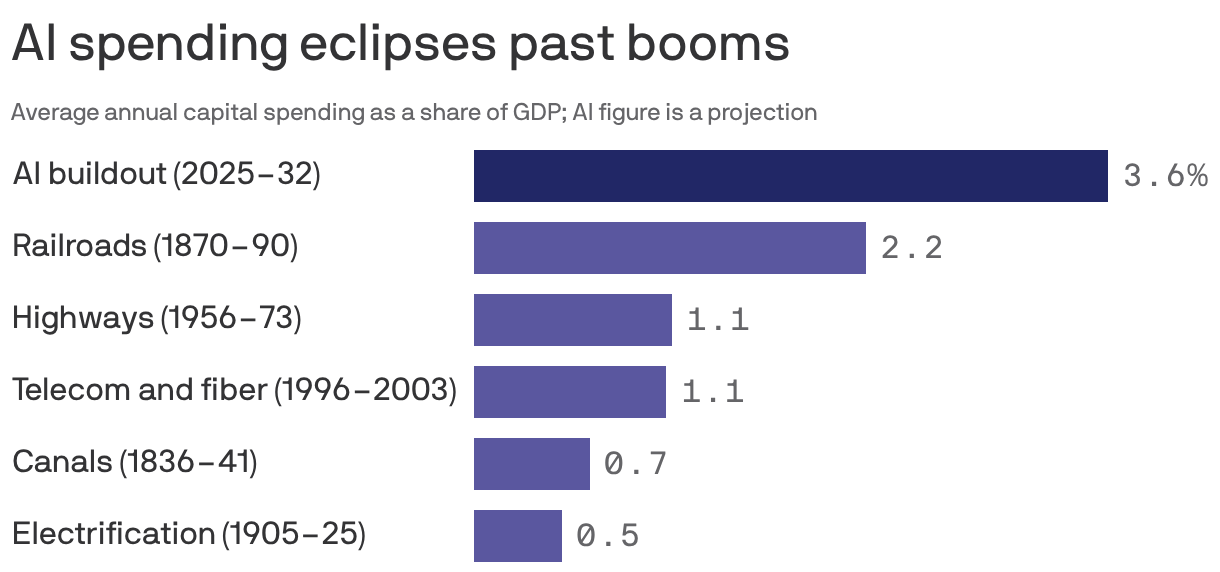
Data: Stijn Van Nieuwerburgh, "Financing the AI Buildout," Brookings Papers on Economic Activity conference draft; Chart: Axios/Emily Peck
The AI buildout is entering a show-me-the-money phase: A growing chorus warns that the pace of spending on the technology is far outstripping the money coming in, and that may be true for a while.
Why it matters: With so much of the economy riding on investor bets on AI, it could all end in tears.
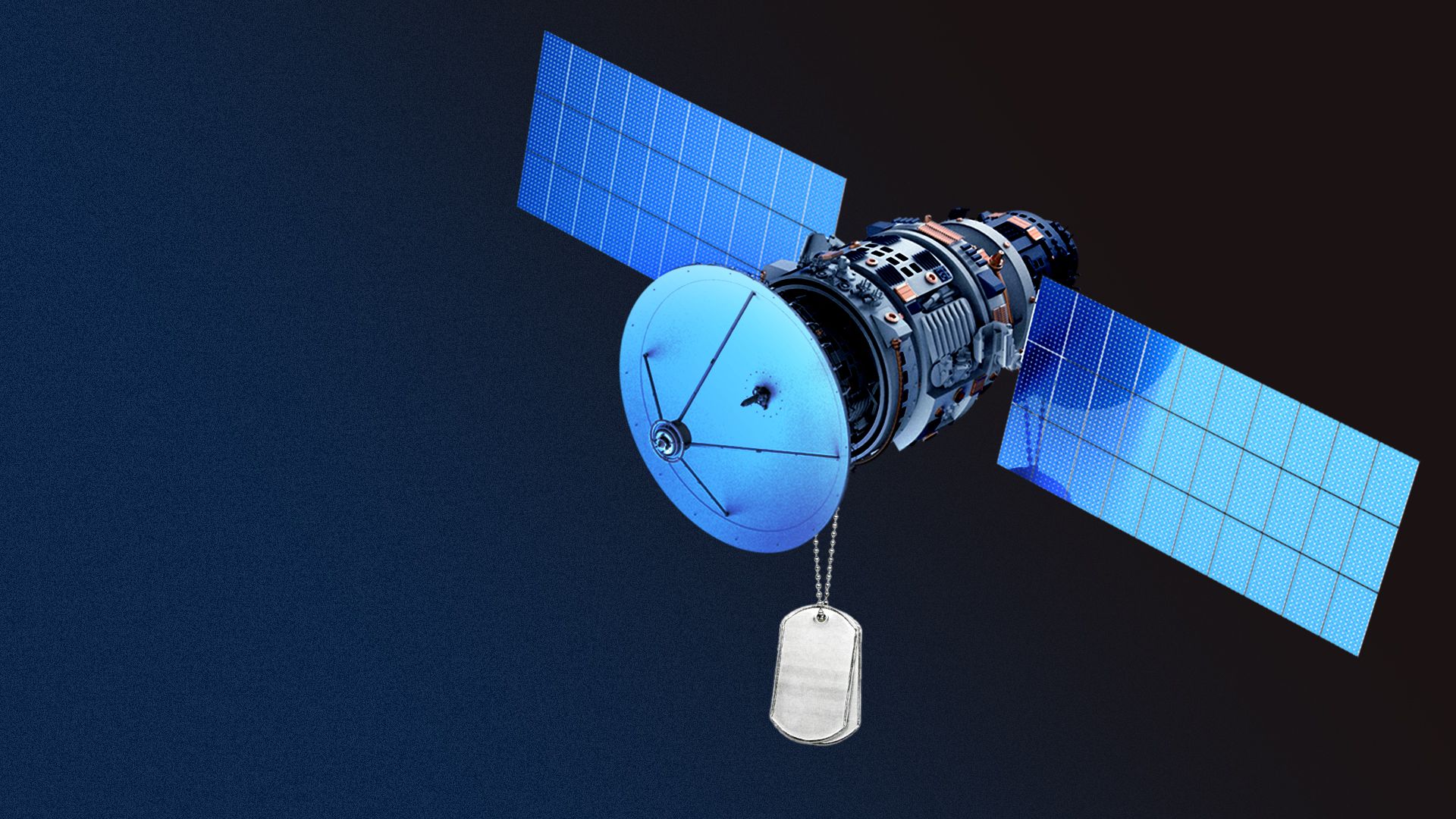
The U.K. military is building up its space arms and is readying troops to use them, a move leaders said is needed to prevent growing enemy interference with its satellites.
Why it matters: After the United States' bombshell revelation that it has "on-orbit space control weapons," a key ally is advertising its growing space arsenal to deter Russia's aggressive space posture.
The U.S. Export-Import Bank has approved a nearly $500 million loan for Astranis to boost its domestic satellite production, Axios has first learned.
Why it matters: Astranis has contracts stateside and abroad, with customers in Oman, Saudi Arabia, Taiwan and Thailand. More funding is needed to meet the growing international demand for sovereign satellite capabilities.
EXIM approved the $468 million credit facility last week to grow "Astranis' capacity to manufacture and operate satellites," the bank said in a statement.
Stratolaunch purchased a Boeing 777-200ER and plans to use it, after some modification, as a carrier for its Talon-A, a reusable, autonomous hypersonic aircraft, chief executive Zachary Krevor told Axios.
Why it matters: The addition of an upgraded 777 to the fleet increases Stratolaunch's flight capacity by about 35%. It also moves the aerospace company closer to being able to conduct multiple simultaneous hypersonic tests around the world.
"Hypersonics are a national security priority," Krevor said. "You can look through history: Speed always wins."
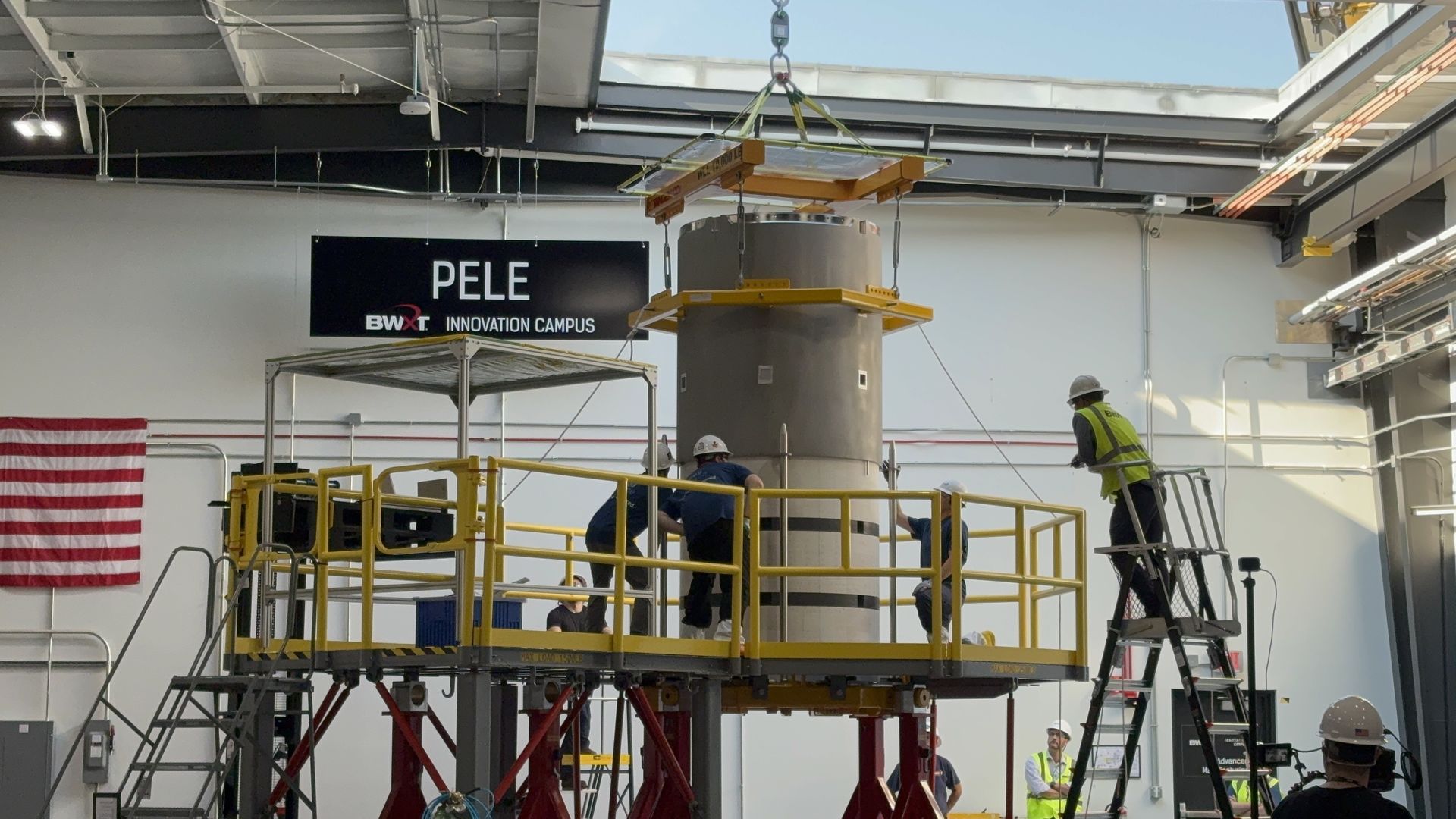
LYNCHBURG, VIRGINIA — The build room at BWXT's Innovation Campus was quiet. On the far end, perched above the ground and cloaked in what looked like plastic, the reactor core stood like an altar to nuclear energy.
Just weeks ago, crews installed the core barrel, lowering it through a hatch in the roof. That pushed Project Pele, and potentially the future of military energy, one step closer to realization.
"We are, truly, into the fabrication and assembly cycle," Charles Graves, director of government microreactors, told Axios. "There is a huge difference between looking at a paper reactor and getting to a point like this."
The big picture: BWXT was selected by the Defense Department's Strategic Capabilities Office in 2022 to develop and deploy a mobile microreactor capable of energizing troops and their gear in remote locations.
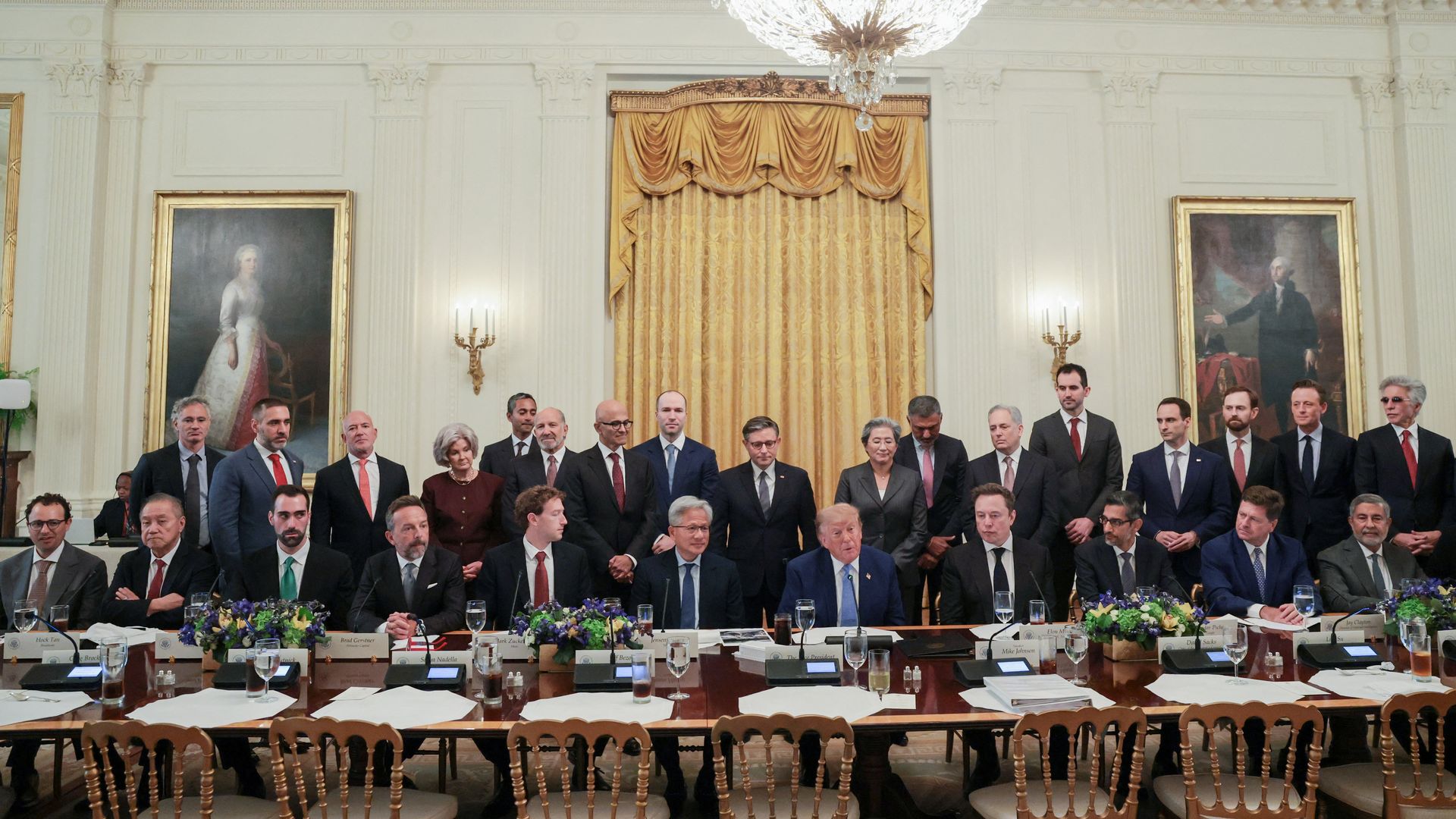
With America's tech titans crowded around a single White House table Tuesday, President Trump extracted what he called a "morally binding" compact on AI safety.
The terms were simple: Press ahead, project optimism and police yourselves.
AI companies are staking their future on the mass adoption of agents, hoping that they can solve the annoyances of modern life — email, travel bookings, online purchases.
Why it matters: The frenzy around Meta's Muse shows there's serious consumer curiosity about the technology. But most Americans live life beyond a computer screen and find much of their meaning outside of the 9-5.
The Alliance for Critical Infrastructure, a recently formed CEO-led coalition, has added dozens of new members and will focus on preparedness.
Why it matters: Growing concern about the prospect of AI-powered attacks on public infrastructure, financial institutions and essential businesses is fueling momentum for action.
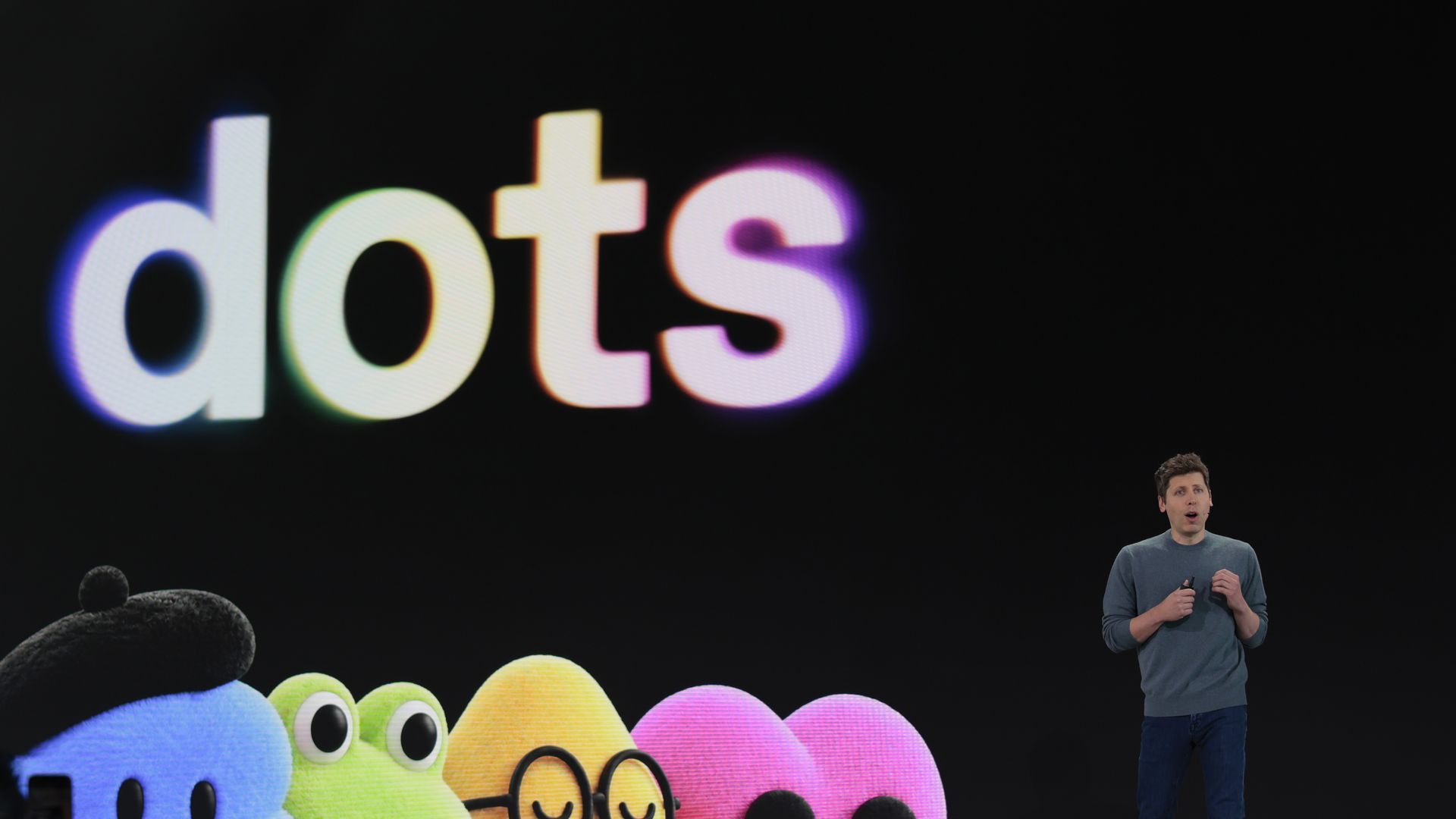
OpenAI is equipping high-end subscribers with always-on agents, known as Dots. It's a bold move from a company that continues to deal with reports of its agents breaking past intended safeguards.
Why it matters: AI's safety challenge has moved from "Will the chatbot say something harmful?" to "How can we stop autonomous agents from attempting hacks online?" to "Uh-oh, what did my AI assistant do now?"
Publishers suing OpenAI and Microsoft are accusing the Trump administration of playing politics in siding with AI companies in a lawsuit alleging widespread copyright infringement.
Why it matters: The Justice Department's statement of interest in the case, as Axios has reported, surprised critical agencies that are typically consulted in these types of filings — like the U.S. Patent and Trademark Office and the Copyright Office.