Restaurant delivery robots return to D.C. with AI upgrade

Add Axios as your preferred source to
see more of our stories on Google.
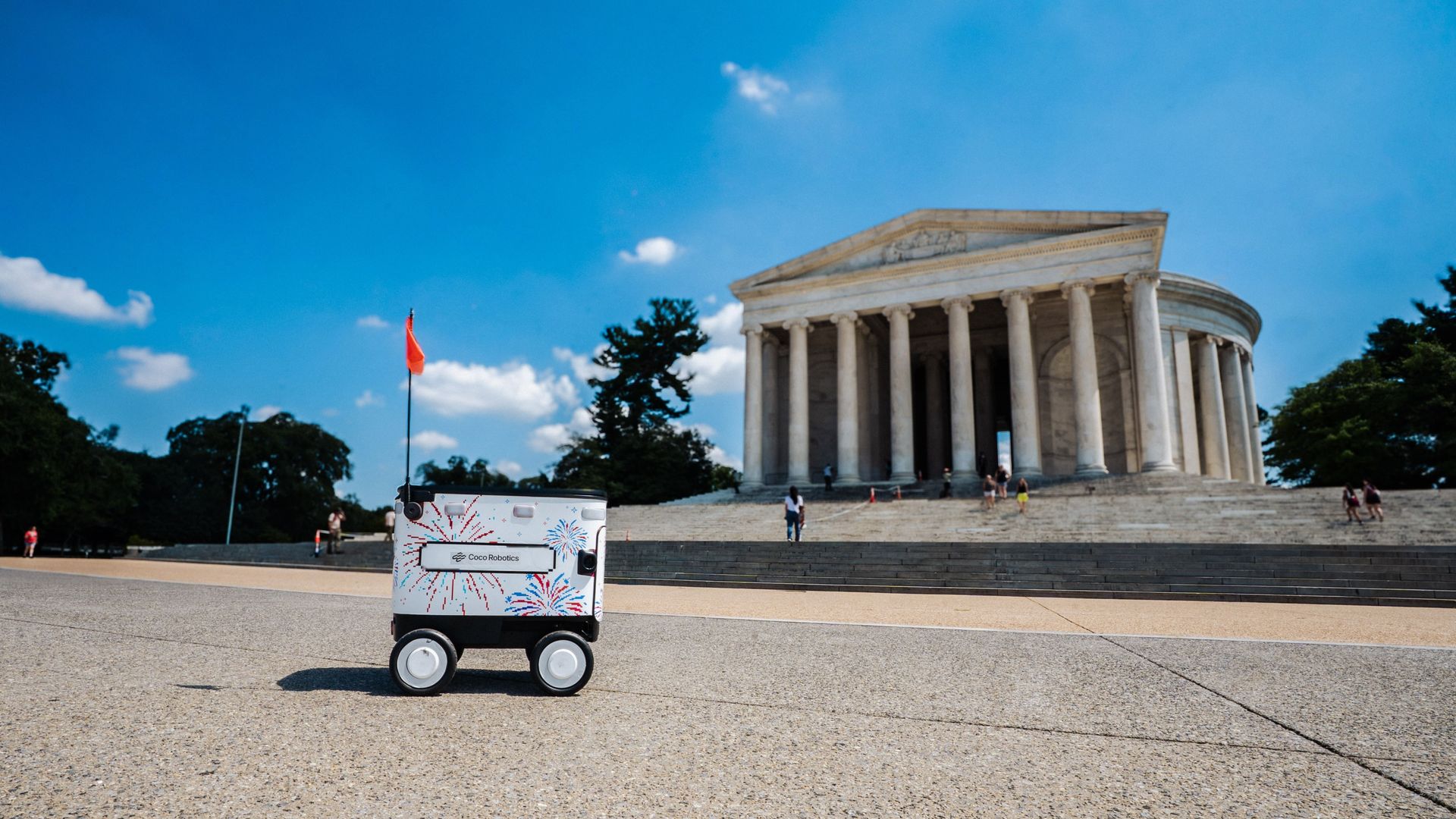
Coco Robotics rolls out its delivery bots in Logan Circle this week. Photo: Courtesy Coco Robotics
A new fleet of delivery robots is rolling into Logan Circle this week, with ambitions to expand across D.C. if diners embrace them.
Why it matters: Robo-couriers have beep-booped around the DMV for nearly a decade, but earlier experiments struggled to stick. Coco Robotics — one of the world's largest robot delivery companies — says advances in AI and the post-pandemic delivery boom have changed the equation.
State of play: Coco is launching about 25 autonomous robots serving Logan Circle, and wants to expand into Dupont Circle and beyond if demand is there.
- Founded in 2020, the company operates in cities including Chicago, Miami and Helsinki, and plans to deploy thousands more robots across the U.S. and Europe.
What they're saying: "A lot of companies in this industry have been very tech-first, rather than asking, 'How do we make this actually useful for restaurants?'" CEO Zach Rash says. "We want to reduce friction instead of adding tech for tech's sake."
How it works: Coco partners directly with restaurants, Uber Eats or DoorDash.
- You can track the robot in their apps and unlock its lid with a tap when it arrives.
- The robots travel at walking speed and can haul everything from groceries to about eight extra-large pizzas within roughly 2 miles.
- Unlike many human couriers, the robots make just one delivery at a time, which Coco says keeps food hotter, drinks upright and arrival times more predictable.
Plus: No tip required.
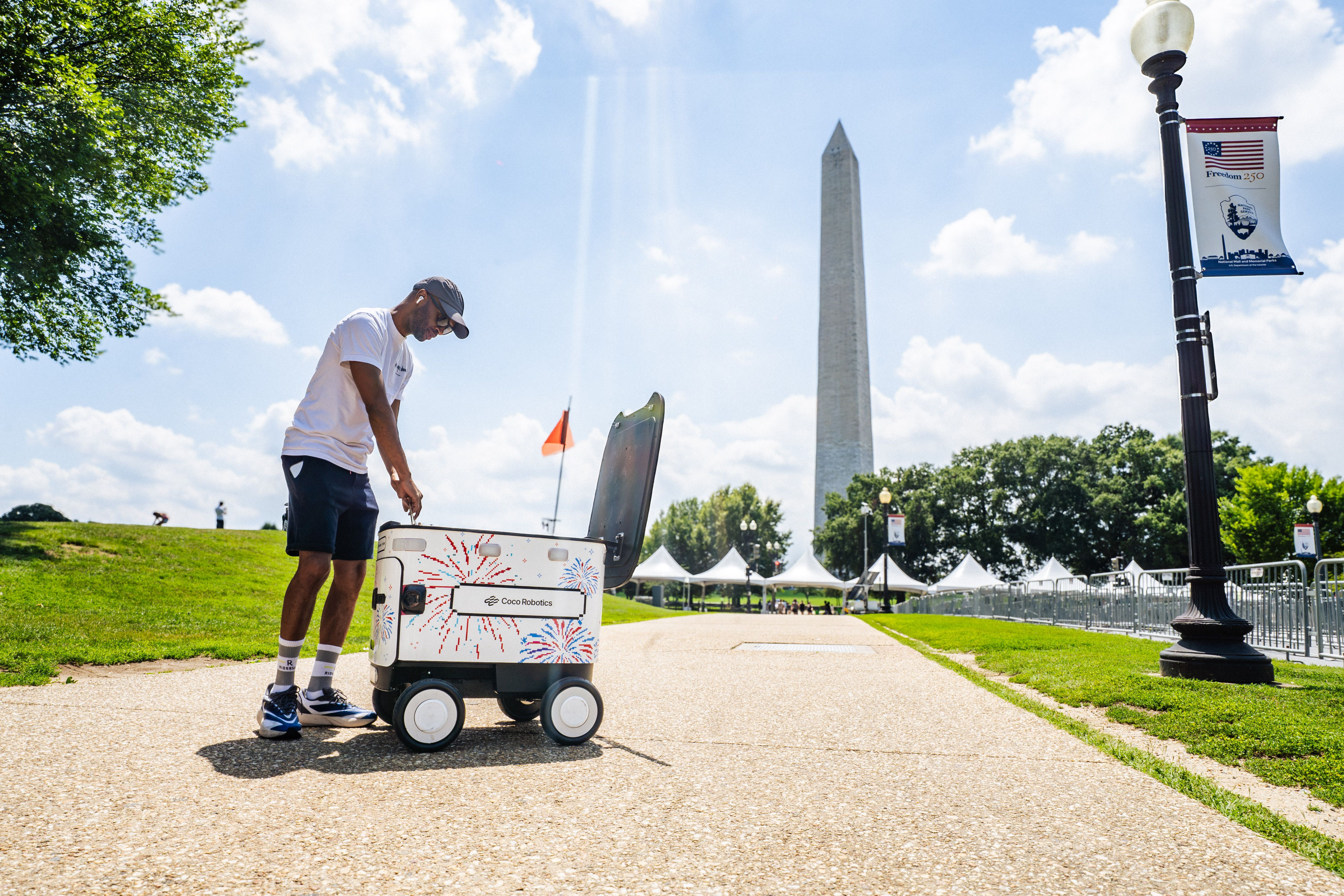
The intrigue: Yes, a hot topic. The robots are performing work traditionally done by people — at a lower cost.
- Coco says its robots can reduce delivery expenses by up to 20%.
- In Arlington, new delivery robots from rival Avride have faced some backlash from the bot-adverse.
Yes, but: Rash says the robots fill labor shortages rather than replace drivers, arguing delivery demand has outpaced the supply of couriers since the pandemic — especially during bad weather and dinner rushes.
- The company also says it creates roughly one operations job for every 10 robots deployed to maintain, charge and repair the fleet.
- Uber Eats and DoorDash customers can also opt out and request human deliveries.
Between the lines: Coco says advances in AI have made its robots significantly better at navigating busy sidewalks than earlier generations.
- Ahead of launch, the company worked with DDOT to meet the District's safety framework, as D.C. has wrestled with delivery traffic.
- It also shares anonymous sidewalk data with accessibility app BlindSquare to warn visually impaired users about construction, scooters and other obstacles. Coco says it doesn't use facial recognition or collect personally identifiable information.
What's next: Logan Circle is just the beginning. If the rollout succeeds, don't be surprised if a little carrier-on-wheels is dropping off your dinner.