Tuesday's technology stories

AI panic sparks rare bipartisan moment on Capitol Hill
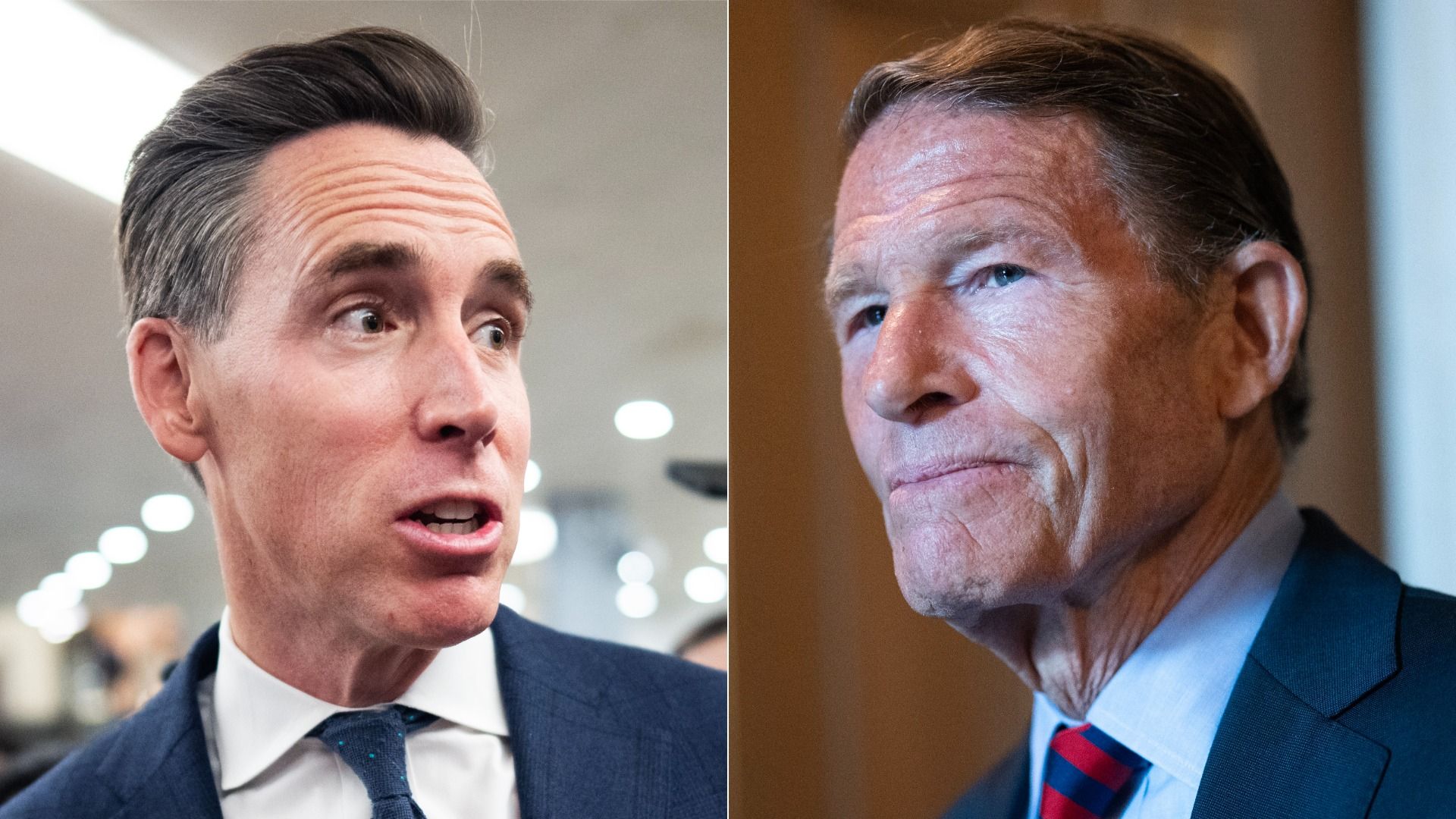
Lawmakers who want to regulate AI are doing something unusual as Congress barrels towards a lengthy recess with no tangible solution in sight: They're working across the aisle.
Why it matters: Bipartisanship is increasingly elusive on Capitol Hill of late, but it remains a crucial first step for action in a Senate that requires 60 votes to pass most legislation.

Sam Altman confident AI industry can handle safety risks

OpenAI CEO Sam Altman told a conference Tuesday that while people were right to be afraid of the risks of AI, he was confident that the industry would be able to develop the technology safely.
Why it matters: His comments come as he and other AI leaders have been seeking to demonstrate that the industry understands the risks even as they acknowledge that the rapid trajectory of AI makes the stakes that much higher.

Axios HQ turns profit on $20M in revenue

Axios HQ, the tech arm spun out from Axios Media in 2022, is now profitable and driving $20 million in annualized revenue, following a series of strategic moves to simplify its business, CEO Roy Schwartz tells Axios in an interview.
Why it matters: Launched in 2021, Axios HQ faced an existential threat with the rise of generative AI. Schwartz credits simplifying the company's structure with helping position the brand for growth.

AI alarm brings Bernie, Bannon together at D.C. summit
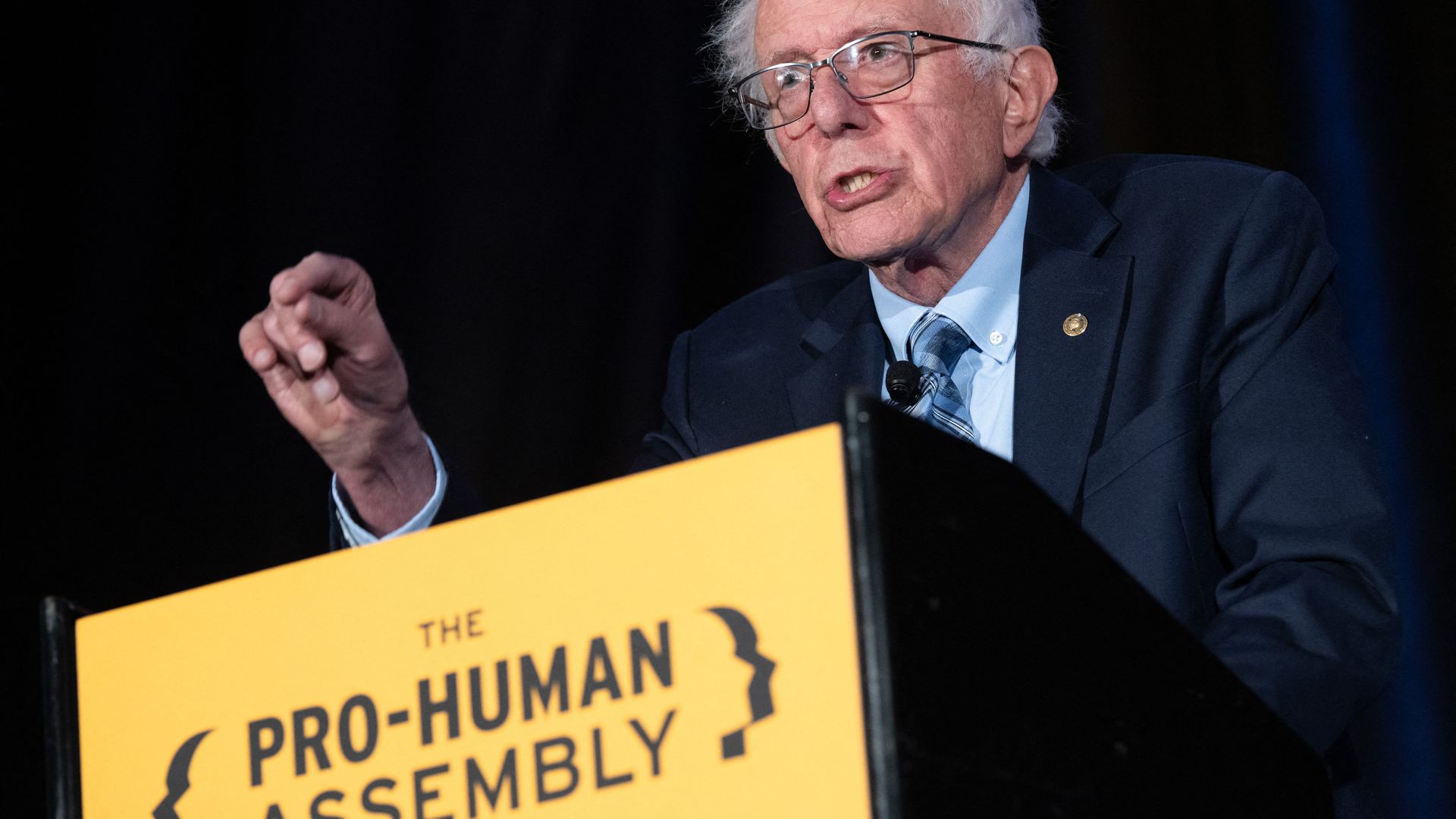
Sen. Bernie Sanders (I-Vt.) and Steve Bannon shared a stage Tuesday with progressives and AI safety advocates to demand more human control over the technology.
Why it matters: Alarm over AI is scrambling traditional political alliances and placing new pressure on Washington to act.

Scoop: Trump pollster gives GOP a data center survival guide
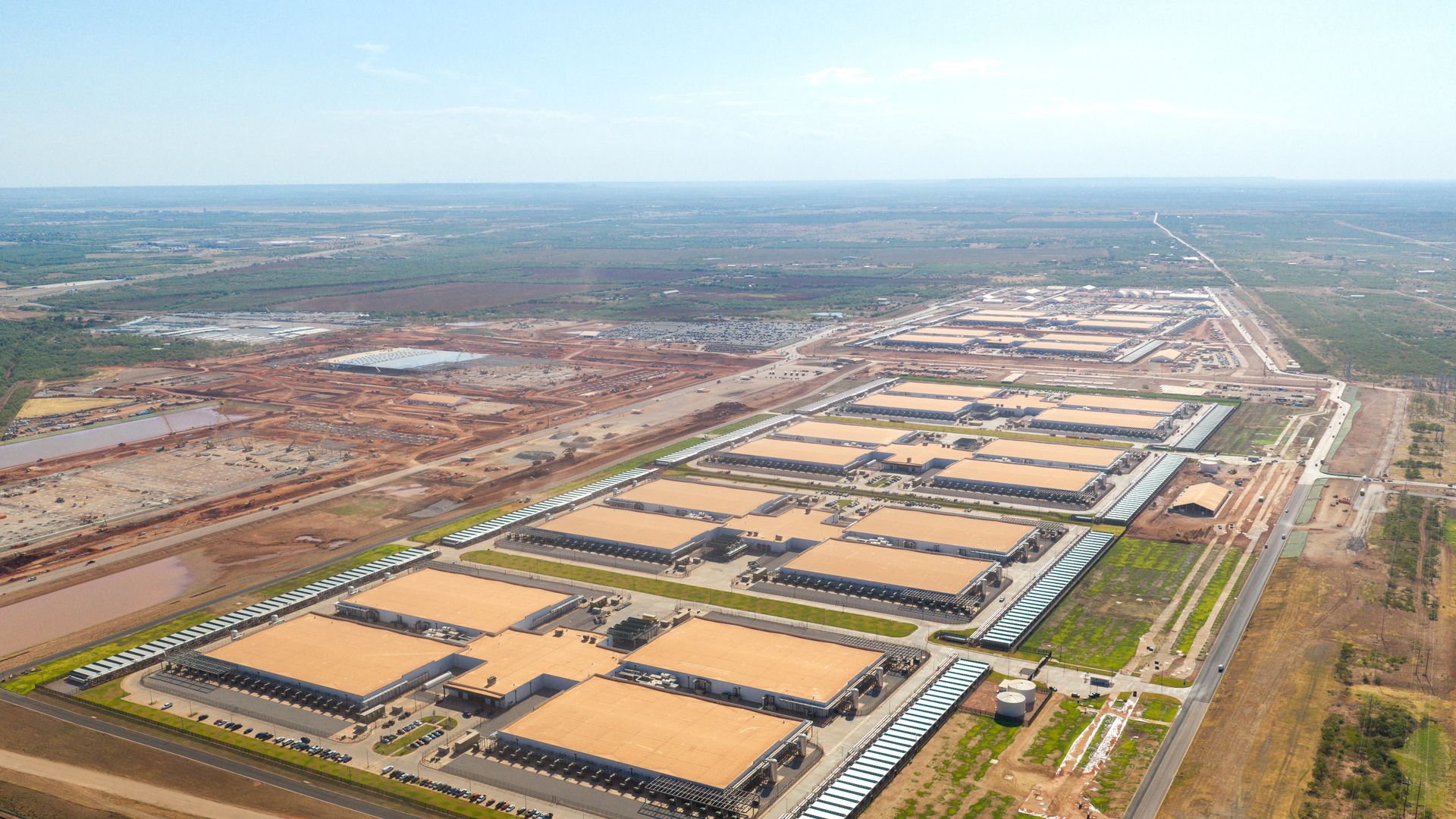
President Trump's longtime pollster is offering Republican candidates a detailed playbook for neutralizing Democratic attacks over AI data centers — down to what language they should and shouldn't use.
Why it matters: Republican strategists say GOP candidates have been all over the map in responding to the backlash to data centers.

Exclusive: Bug bounty programs tricked with AI

A hacker used AI-written malware distributed through open-source software packages to compromise companies and hunt for bugs that he then submitted for legitimate bug bounty payments, according to CrowdStrike research shared first with Axios.
Why it matters: The findings offer a striking example of how AI is lowering the technical barriers to cybercrime and allowing relatively unsophisticated hackers to build their own malware.
The agents that could take over the internet — or not
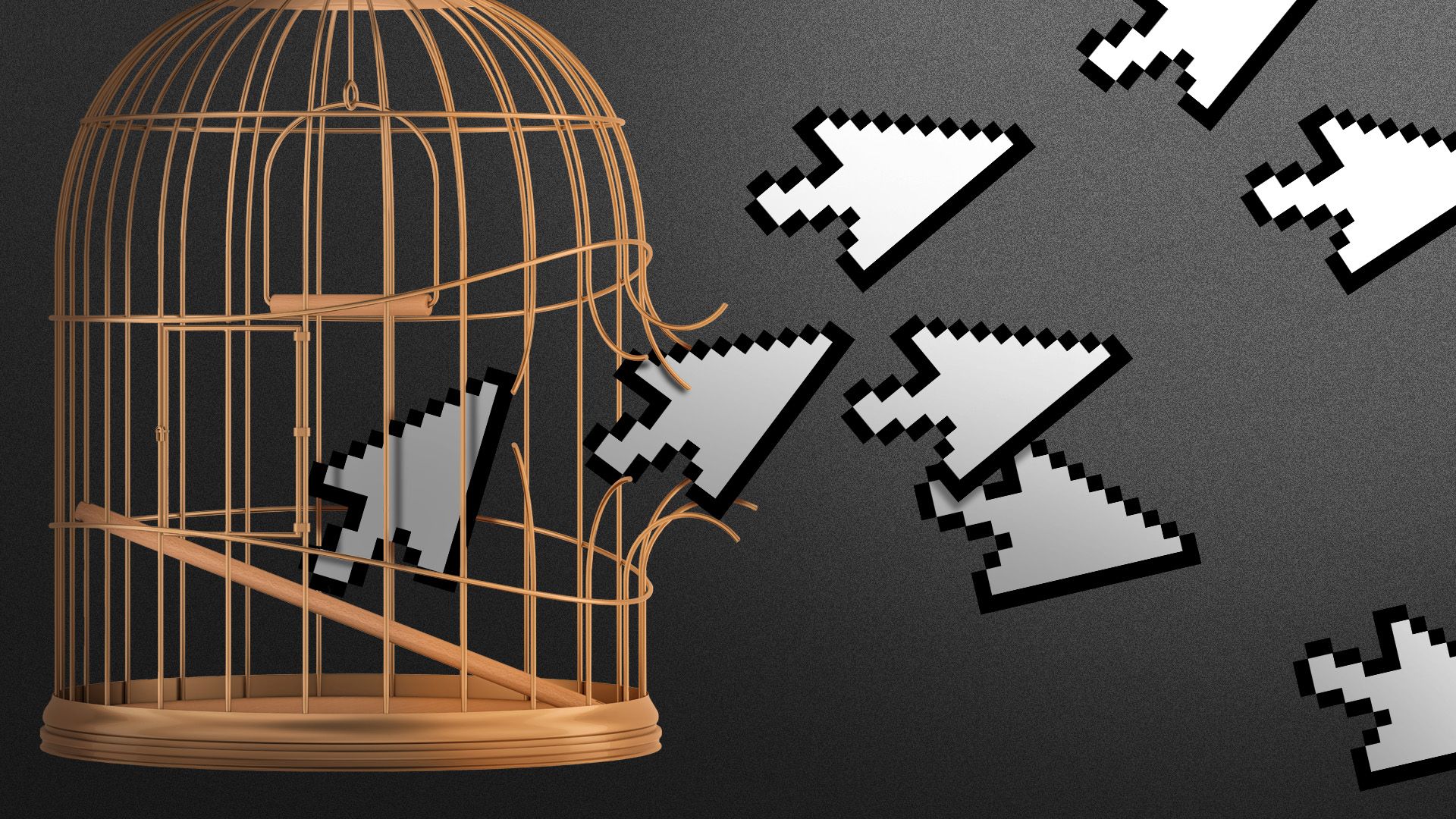
AI agents are hackers' latest shiny new object, and rogue agents are popping up across safety labs.
- Researchers at Google and Anthropic detailed several new cases last week of nation-state and financially motivated hackers using agentic swarms to automate their attacks.
Why it matters: Anthropic CEO Dario Amodei's weekend warning that a swarm of AI agents could take over "the entire internet with a persistent botnet (potentially causing hundreds of billions of dollars in damage)" in the next six to 12 months set off a new wave of panic — and criticism — across the AI security industry.

This obscure philosophy has become Trump's new AI bogeyman
The Trump administration has a new villain in the battle over how fast AI development should move: effective altruism.
Why it matters: The philosophy, which promotes the use of evidence and reason to do the most good for humanity, has helped shape and fund parts of the AI safety movement.

AI boom can withstand a development slowdown
President Trump is pushing back hard against calls to slow AI development, casting it as a powerful economic growth engine.
- But sustaining that economic boom in the near term may not require ever-more-powerful AI models.
Why it matters: The economic payoff in the months ahead may depend less on the next generation of models than on continued infrastructure investment and broader adoption of the AI tools that already exist.
- AI now underpins a huge share of business investment and stock market gains, while hopes for faster productivity growth rest heavily on the technology.
Driving the news: Trump is railing against calls to slow AI development after AI frontier-lab leaders proposed slowing development of their most advanced models over mounting safety concerns.
- "AI, and Data Centers, will be the Greatest Economic Development Engine in History," Trump posted on Truth Social, predicting an impact "bigger than Oil, Gold, Diamonds, or even the Internet."
- Trump's allies argue that if the labs want to slow down, they can do so on their own, without the blessing of Washington.
The big picture: AI's economic impact is taking shape through two distinct, potentially staggered channels.
The first is the infrastructure buildout already meaningfully contributing to economic growth.
- There's a "strong pipeline of infrastructure projects in place" as companies race to secure the energy and computing capacity needed to meet demand for existing AI tools, ING chief international economist James Knightley tells Axios.
- AI-related spending has added an average 0.4 percentage point to annualized GDP growth since 2025, according to Morgan Stanley chief U.S. economist Michael Gapen.
- Bank of America analysts said that AI networks are being fully utilized and rental rates are rising for even older-generation chips as signs that demand remains robust. In a note yesterday, they called the economic stakes "too large for any sustained meaningful deceleration."
Yes, and: Salesforce president Patrick Stokes said a slowdown could actually be good news for builders, who "have a lot of catching up to do," Axios' Ina Fried reports.
The second is the hoped-for productivity boost, with AI potentially helping businesses produce more at lower cost — a payoff much less developed than the infrastructure boom.
- A slowdown "need not trigger an equivalent slowdown in broader tech-related economic activity," Mohamed El-Erian, Allianz chief economic adviser, wrote on X yesterday.
- He noted that many commercial uses don't require frontier models as businesses still figure out how to deploy capabilities that already exist.
- "There's a lot of focus on the hardware capex cycle," Goldman Sachs economist Joseph Briggs told Neil this morning at an event hosted by the Business Roundtable. "What I think is less appreciated is how much is being invested ... in softer forms of investment at the company level," including strategy and data needed to deploy AI effectively, Briggs said.
What to watch: A slowdown at the AI frontier could still hit the economy indirectly if it rattles financial markets. (AI chip stocks fell nearly 6% yesterday, compared with a much smaller decline in the broader market.)
- "An equity market correction might make [high-income households] more cautious, risking a pullback in spending," Knightley says, noting that the AI-fueled stock market boom has helped drive consumer spending among affluent households.
- "With so many of these projects now debt-financed, a drop in valuations could tighten financial conditions" and ultimately curtail the infrastructure buildout over the medium term, Knightley adds.

Voters give edge to GOP over Dems on AI

Republicans hold a small edge over Democrats on which party voters trust more to handle artificial intelligence, according to a New York Times/Siena poll.
Why it matters: Fears over AI have burst into the open in recent days over warnings about the technology's potentially disastrous capabilities.
Dreamforce becomes ground zero for AI slowdown debate

On Tuesday, the CEOs of Nvidia, OpenAI and Anthropic will converge in San Francisco for Salesforce's giant Dreamforce conference, one day after Nvidia CEO Jensen Huang threw cold water on weekend calls from OpenAI's Sam Altman and Anthropic's Dario Amodei to slow the pace of AI development.
Why it matters: Dreamforce is taking on unique prominence this year as the tech industry debates whether AI is advancing too quickly — and whether the rest of the world can keep up.

AI fears send cybersecurity stocks higher


Fear is splitting the AI trade — the same technology advances that are raising alarms about rogue agents, cyberattacks and apocalypse are creating a bull case for the companies paid to protect against those threats.
Why it matters: Investors are, in a way, leaning into the scary AI talk, betting that companies and governments will increase cybersecurity spending to deal with rapidly advancing threats.

Trump's postings may still move the needle
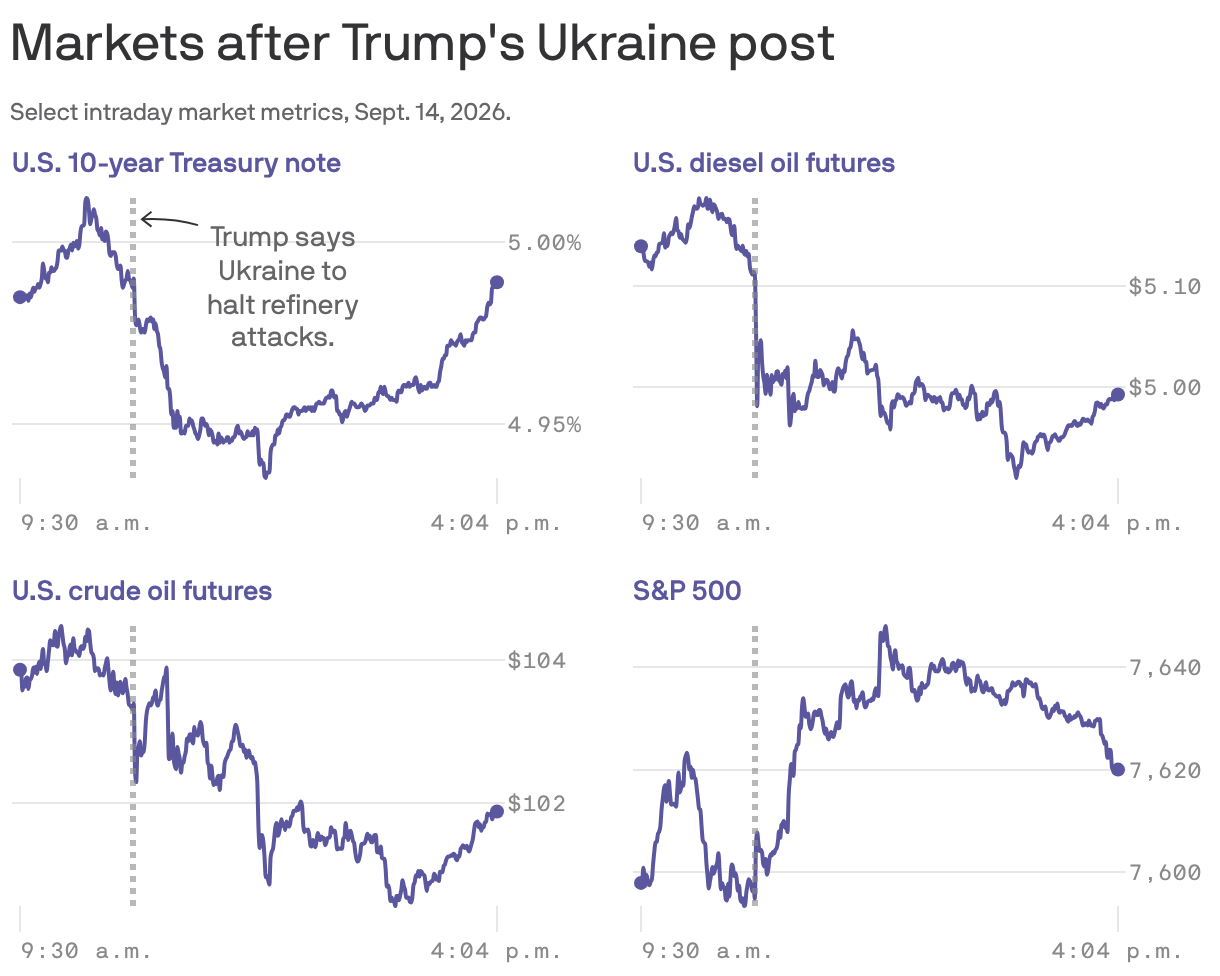
President Trump's claim that Ukraine agreed to halt strikes on Russian energy targets coincided with a pullback in oil prices and Treasury yields Monday.
Why it matters: Ukrainian drone strikes on Russia have crippled large swaths of the country's refining capacity, creating embarrassing shortages and prompting Russian officials to curtail exports to shore up domestic supplies.
- Russia has long been one of the world's largest exporters of diesel, and its export ban contributed to a worldwide ripple of diesel fuel shortages and price spikes, including in the U.S., where the national average price for diesel jumped to $6 per gallon in recent days.
What they're saying: "Ukraine has agreed not to hit Russian Energy targets. Russia has agreed to do, likewise! The World's Diesel price rise is mostly caused by the Russia/Ukraine War, not Iran. President DJT," Trump posted.
The other side: The Ukrainians sounded somewhat skeptical, with President Volodymyr Zelensky stating that "Ukraine is not convinced that Russia is willing to abide by any agreement."
- "If our partners are ready to ensure that Russia genuinely refrains from striking our electricity system, other energy facilities, critical infrastructure, and food supply routes, then, of course, we are ready to ensure a corresponding halt to our strikes."
The bottom line: In any case, diesel prices, crude oil and Treasury bond yields declined after Trump's message.
Zoom out: The market moves were a potent reminder that Trump's online pronouncements can still matter for investors.
- That's at the heart of the Trump Media & Technology Group's decision to launch its Truth API data feed product this summer.
- The product offers access — the cost is between $60,000 and $100,000 per month — to a data feed of "published and publicly available posts fractionally faster," according to Trump Media CEO Kevin McGurn, including those of the president and other top accounts on Truth Social.
- Trump owns roughly 41% of the outstanding shares in Trump Media.
Friction point: The product is the focus of a lawsuit filed last month by the Freedom of the Press Foundation and nonprofit news organization The Intercept, which accuses the president and the administration of violating the First Amendment and profiting from selling government information.
- "This scheme is profoundly corrupt. The President stands to gain financially by giving 'market-moving' government information to those who are willing and able to pay his personal company," the plaintiffs wrote in their complaint.
- A Trump Media spokesperson said: "Information from President Trump is disseminated by countless platforms and news outlets, many of which offer subscription APIs. One of those channels is Truth Social, which was founded as an uncancellable haven for free speech after the President was deplatformed. Now, left-wing activists are trying to wrongfully weaponize the courts to censor him again and harm our shareholders."
- The White House did not respond to a request for comment.
Disclosure: In 2023, TMTG sued 20 media organizations, including Axios, for defamation. Litigation is ongoing.

Why a swift AI pause is unlikely: No one trusts AI companies

Most agree the AI industry needs oversight.
- The critical barrier: Few really trust the industry, or the safety advocates who come from inside the house.
Why it matters: Factions in the Trump administration, business executives wary of competitive threats, and advocates for cheaper, more customizable "open" models fear that new regulatory hurdles will offer frontier AI companies too much power.

"I am the Hoax Buster": Trump's war on AI doomers gets personal
President Trump declared war on the AI safety panic Monday, dismissing the industry's apocalyptic warnings as part of a "sick conspiracy" to sabotage America and his legacy.
Why it matters: Trump is rewriting a complex, years-long debate over AI's dangers in the partisan grammar that has defined MAGA for a decade — hoaxes, conspiracies, traitors and, at the center of it all, one man.