This obscure philosophy has become Trump's new AI bogeyman

Add Axios as your preferred source to
see more of our stories on Google.
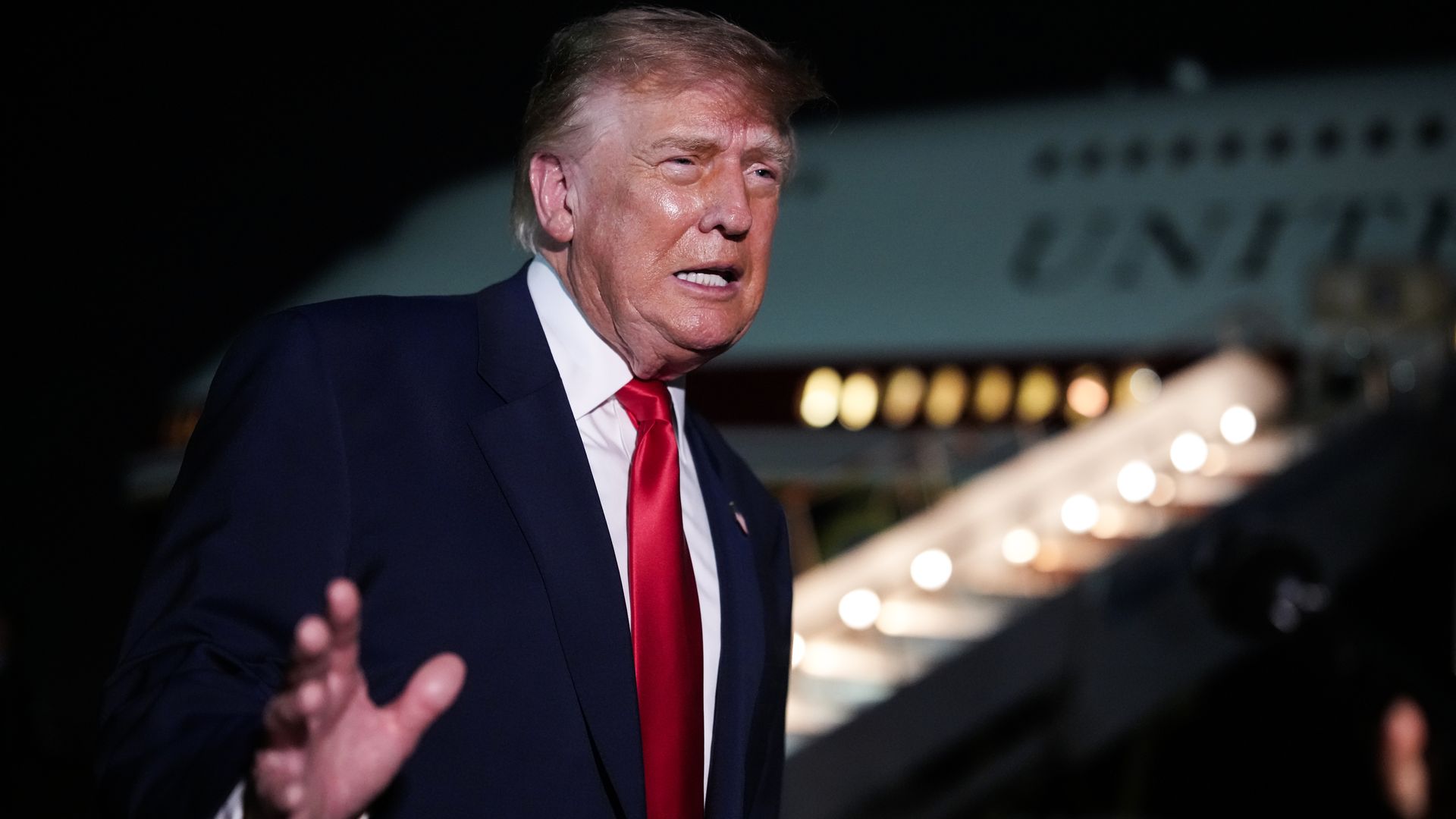
President Trump speaks to reporters on an airport tarmac before boarding Air Force One on Sept. 10. Photo: Andrew Harnik/Getty Images
The Trump administration has a new villain in the battle over how fast AI development should move: effective altruism.
Why it matters: The philosophy, which promotes the use of evidence and reason to do the most good for humanity, has helped shape and fund parts of the AI safety movement.
- But it has put some of its supporters at odds with President Trump's push to accelerate U.S. AI development.
State of play: The Trump administration spent the early part of the week criticizing AI leaders after a number of key voices called for a slower development pace due to concerns about catastrophic risks from the technology.
- Trump bashed AI doomers on social media, claiming that fears of AI are a hoax on par with "Russiagate" and the president's own impeachments.
Driving the news: The Defense Department called out the EA movement by name, posting "Americanism, not effective altruism" on X.
- Defense Department Under Secretary Emil Michael told Fox News that EA and the push for AI safety "comes from a deep-rooted ideology that is pretty dystopian."
- Trump adviser and former AI czar David Sacks argued that organizations linked to effective altruism are part of what he calls the "Doomer Industrial Complex," pushing tougher AI regulation that could handicap the United States' global competitiveness.
What is effective altruism
How it works: Effective altruism (EA) urges the use of data to determine how time and money can do the most good for humanity.
- The movement took off in the 2010s through universities, philanthropy and online communities with a focus on causes like malaria prevention and farm-animal welfare. It soon became influential within Silicon Valley.
Flashback: FTX founder Sam Bankman-Fried was the standard bearer for EA before his fraud conviction damaged the movement's reputation.
How EA impacts the AI race
More recently, AI safety has become a major focus for some parts of the EA movement, particularly among "longtermists," who believe that protecting future generations from catastrophe should be a top priority.
- The idea is that decisions about AI development today should account for the technology's potential impact on future generations.
Between the lines: EA-linked groups have been spending on AI alignment and safety for years, with the goal of making sure that humans don't lose control of AI and that the technology doesn't lead to catastrophic events.
Case in point: Open Philanthropy, an EA-linked organization now known as Coefficient Giving, reportedly donated $30 million to OpenAI back in 2017.
- Time found deep EA ties among Anthropic's early staff and funders, though neither CEO Dario Amodei nor president Daniela Amodei has identified as an effective altruist.
Why Trump is opposed to it
The Trump administration argues that the AI safety worldview associated with EA would put America at risk of falling behind China in the AI race.
- Trump has actively rejected the validity of a risk that many EA supporters take seriously — that advanced AI could cause catastrophic harm to humanity.
- "The robots will not be taking over," Trump told Nvidia CEO Jensen Huang on Monday. "The AI will not be taking over the rest of the world. The whole thing is a hoax."
