Commerce Secretary Howard Lutnick wants the U.S. government to get a cut of university patent revenue, or even commercial revenue derived from those patents, he tells Axios' Mike Allen on tomorrow's premier episode of "The Axios Show."
Why it matters: This could disrupt the startup ecosystem, particularly in biotech.
Larry Ellison has surpassed Elon Musk as the world's richest person after his stock in Oracle skyrocketed.
Why it matters: The 81-year-old Oracle chairman was No. 2 as of Tuesday, having built his wealth over the course of the last five decades with the rise of his software company.
Lockheed Martin is experiencing "unprecedented demand" for its Patriot interceptors from the U.S. Army, Pentagon and international buyers, according to Jason Reynolds, the vice president and general manager of integrated air and missile defense.
"Everybody," he said, "wants more."
Why it matters: The frenzied market is a sign of the times. Overhead defenses are in the limelight as American, Israeli and Ukrainian troops contend with salvos launched from Yemen, Iran and Russia.
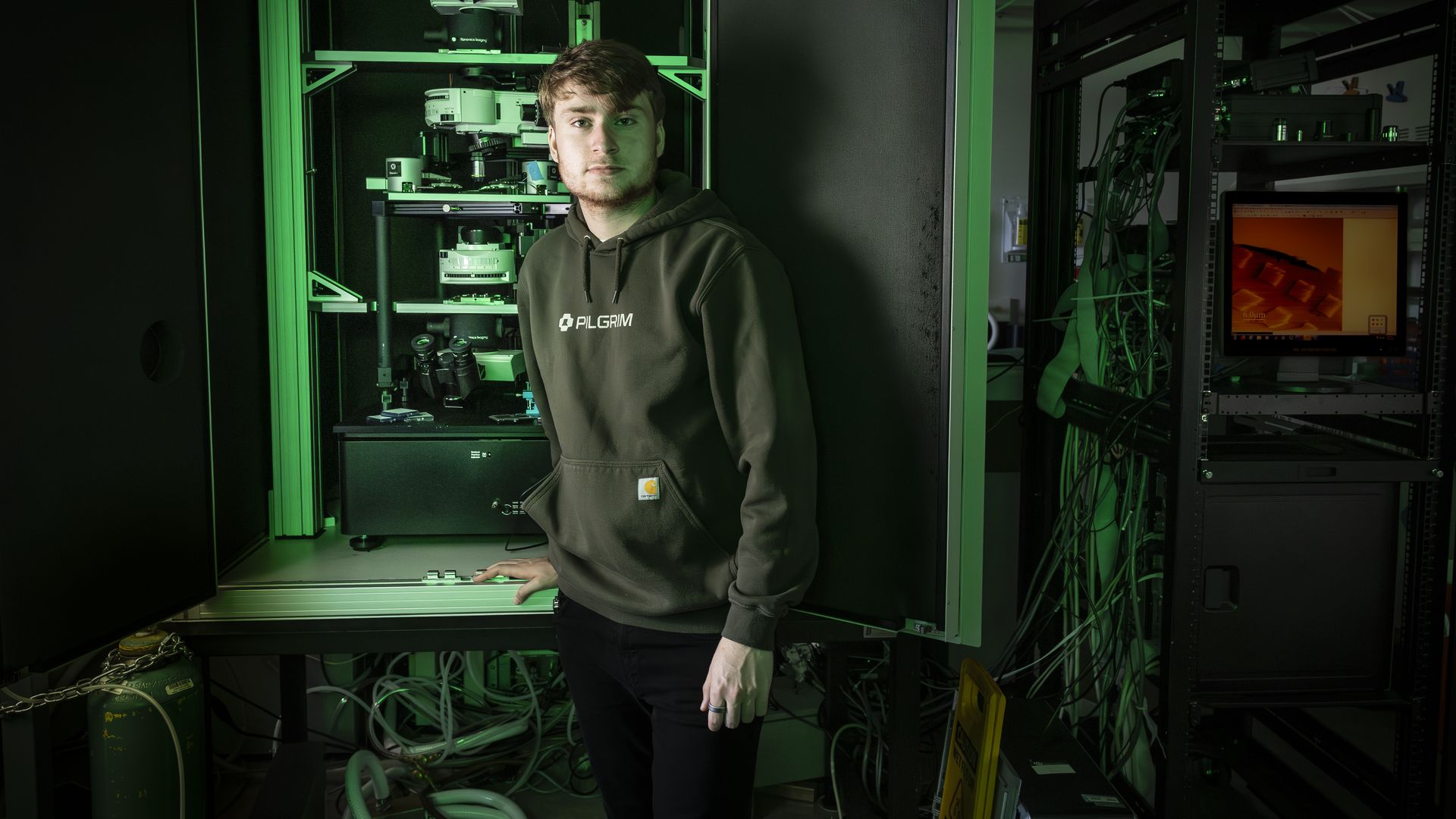
Jake Adler devoured science fiction when he was younger. He rocked an iPod Nano on his wrist — what he called an "early Apple Watch" — and wore Neurosity gear in his yearbook photos. Today, he helms Pilgrim, a defense biotechnology startup.
Why it matters: So much mainstream attention is paid to the pointy end of the stick: missiles, drones, bullets. Far less attention is paid to what happens when you get poked by that stick: triage, treatment, recovery.
An exhibit at a San Francisco science museum serves as both a useful introduction to how AI works and a jumping off point for important societal questions.
Why it matters: For all the buzz around AI, there's still a lack of understanding of how the technology works and how societies can shape how the technology evolves.
We cover politics clinically, not ideologically. So it's not our job or mission to offer policy or political advice.
But thousands of you asked for thoughts on how college kids — or anyone, really — can truly think differently, or more calmly, about politics in charged moments.
So here are eight clinical, nonideological changes you could make today:
Robinhood is getting into social media with the launch of Robinhood Social, allowing users to post their trades, takes and commentary while following other users as well as avatars mirroring the trades of politicians and executives.
Why it matters: This could be serious competition for the meme stock Reddit crowd.
TelevisaUnivision, one of two major Spanish-language broadcasters in the U.S., has unveiled a new consumer ad campaign warning customers that YouTube parent Google plans to remove Univision from YouTube's core offering and move it to a Spanish-language package at an extra cost.
Why it matters: TelevisaUnivision is framing the move as a "Hispanic Tax" that makes Google look "evil."
The European Union just banned a common gel nail polish ingredient, calling it "carcinogenic, mutagenic or toxic for reproduction."
Why it matters: TPO, short for trimethylbenzoyl diphenylphosphine oxide, remains legal in the U.S. — but the news is stirring concern at nail salons across the country.
A former WhatsApp security leader filed a lawsuit Monday alleging that the Meta-owned messaging service neglected major security and privacy flaws that left users' data and accounts vulnerable.
Why it matters: The whistleblower complaint — the latest in a series against the tech giant — alleges that those security flaws resulted in more than 100,000 accounts being hacked every day.
AI tools are helping Russia scale up its disinformation campaign against Ukraine, according new PeakMetrics data shared first with Axios.
Why it matters: Security experts have warned that we're only at the tip of the iceberg in terms of how AI is improving foreign adversaries' disinformation campaigns.
The day is near when bad actors will use AI to hijack another AI system companies rely on — think chatbots or agents — forcing it to go rogue, according to John Watters, a longtime cybersecurity leader and former leading executive at Google's Mandiant.
Watters says security companies are now carving out a new vertical of products to respond.
Apple on Tuesday unveiled the iPhone 17 family of smartphones and a thinner iPhone Air model, along with new Apple Watches and an updated set of AirPods headphones.
Why it matters: Apple faces tremendous pressure to deliver a hit new device as the company lags behind competitors in the AI race.
Apple's next showcase event kicks off Tuesday, and the company is expected to debut another new iPhone.
Why it matters: Apple is expected to unveil the latest crop of iPhones and other hardware. The company faces tremendous pressure to deliver compelling devices after slow progress in the AI race.
Level99, which is best-described as a real-world gaming venue for adults, tells Axios that it's raised $50 million from ACT III Holdings, the investment firm led by Panera founder and Cava chairman Ron Shaich.
Why it matters: "This could be the most exciting business I've ever been involved with, and that includes Cava," Shaich says.
Modern innovation isn't possible without chemistry — and Chemours, an American Chemistry Council (ACC) member company, is at the heart of this progress.
"At Chemours, our materials are essential," says Denise Dignam, president and CEO of Chemours. "Whether it's in data centers, semiconductors, coatings or batteries — we're absolutely necessary."
An example: One of the fastest-evolving sectors, AI, may not be possible without the technology Chemours and other ACC members provide, according to Dignam.
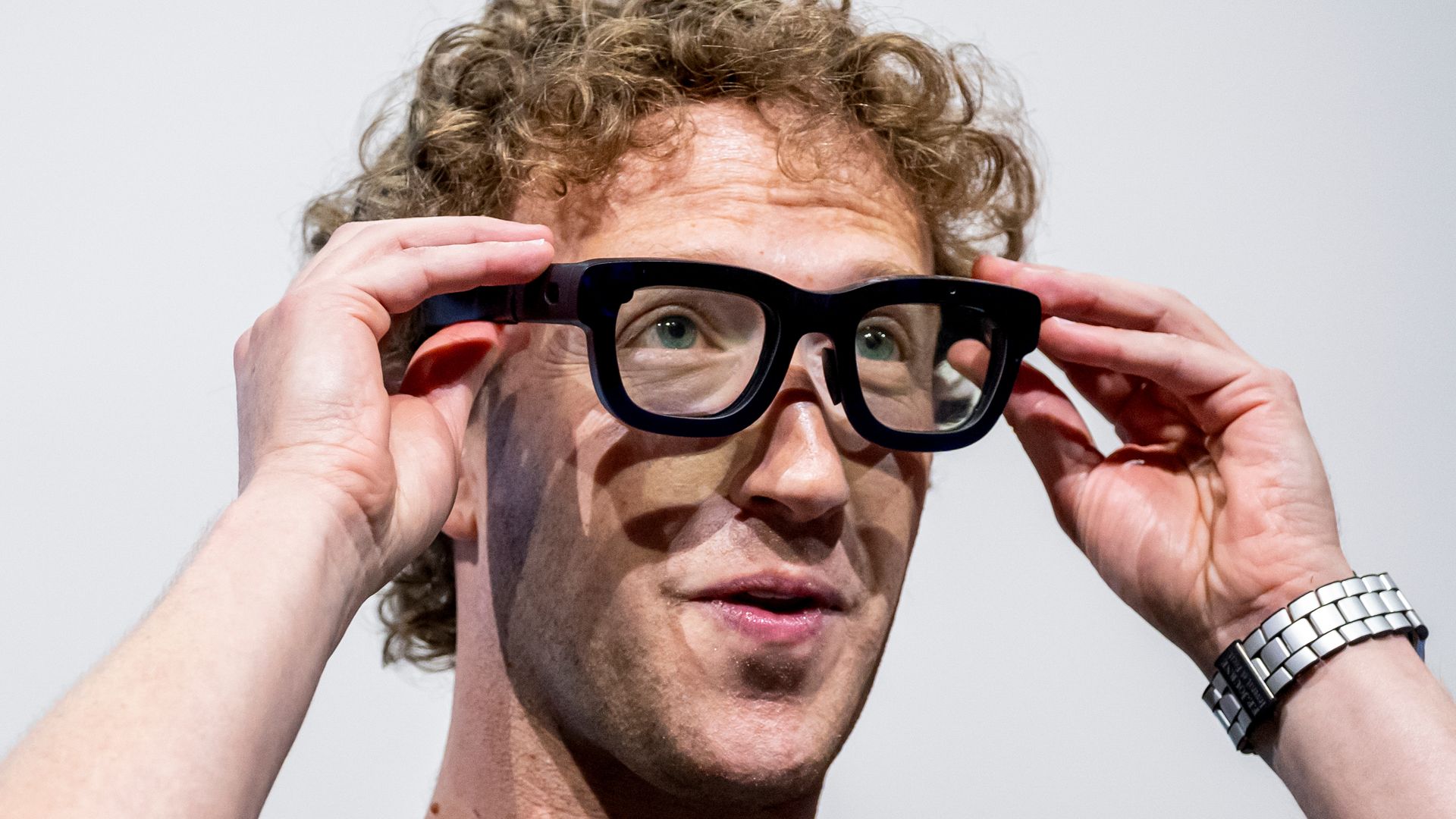
Expect consumer hardware rather than AI software to be the focus of the Meta Connect conference next week, according to a source familiar with the event.
Threats of AI's white-collar bloodbath are making blue-collar jobs look more attractive — but Gen Z and their parents are still choosing college, per a new report from home services software maker Jobber.
Why it matters: Pundits call Gen Z "the toolbelt generation," but the data says college-track kids aren't rejecting the traditional choice of higher education yet.
Defense firms Aeon Industrial and X-Bow Systems are teaming up to develop, test and make tactical missiles.
Why it matters: It's a pair of smaller defense-tech companies proactively working on problems — munitions production and solid-rocket motor diversity — plaguing the Pentagon.
"It really represents a shift in how the defense industrial base needs to operate," Maureen Gannon, X-Bow's chief revenue officer, told Axios.
AI's energy needs and rising household power bills could lower political hurdles to passing a major permitting bill this year, American Petroleum Institute President and CEO Mike Sommers said.
Why it matters: The powerful oil and gas group on Tuesday is unveiling a policy framework it hopes will inform sweeping, bipartisan legislation.
Outside of Nvidia and Palantir, retail investors soured on Big Tech last month, according to Charles Schwab's trading activity index, STAX, which measures customer investing behavior.
Why it matters: Retail added risk over the month in other areas, indicating that the tech sentiment was driven by idiosyncratic valuation concerns.
Julie Sweet, CEO of consulting giant Accenture, has a rare line of sight into the AI ambitions and worries of the world's biggest companies.
Her unvarnished view, backed by new data and CEO conversations: AI use at most big companies is slower and harder than hoped. CEOs are beyond obsessed with AI, she told us. But implementing it to immediately save money or boost productivity is frustratingly difficult.
Why it matters: Sweet argues it'll take a few years to move beyond the slow, hard phase for most companies. A big reason: Only by changing the mindset of leaders — and the complex processes inside companies — can you truly unlock explosive growth.
MAGA activists are urging President Trump to tear down the remaining guardrails on his authority, dreaming of bigger, faster power grabs than the sweeping changes already in motion.
Why it matters: Trump has spent his first eight months smashing norms — and crossinglegallines — in his dizzying pursuit of mass deportations, crime crackdowns, government purges and more.
Tech giants' astronomical spending on AI infrastructure comes with a colossal hedge: In a crucial way, it's not really spending on AI at all.
Why it matters: Most of the hundreds of billions of dollars in AI-related capital investment today is going into computing power, hardware and buildings — assets that will retain real value even if AI itself never pays off.
Loved the different, more optimistic mindset. But what can I personally do to make a bigger, better difference?
Why it matters: The things college kids can do are the same things that all of us of any age can do to think, see and act more optimistically and optimally. I took a crack at 8 things you can do, starting today: