Museum exhibit on AI prompts hard questions

Add Axios as your preferred source to
see more of our stories on Google.
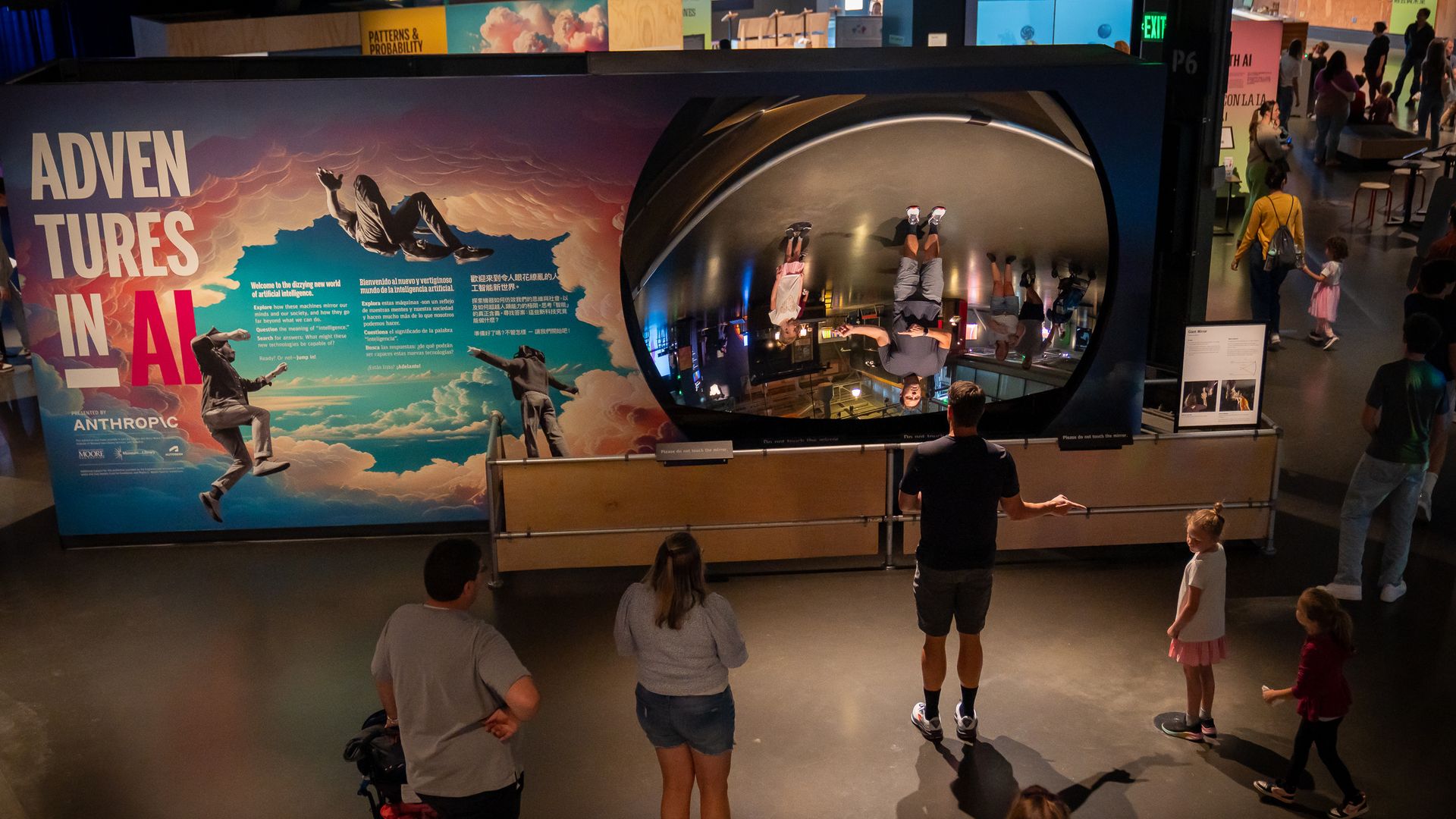
Photo: Courtesy of Exploratorium
An exhibit at a San Francisco science museum serves as both a useful introduction to how AI works and a jumping off point for important societal questions.
Why it matters: For all the buzz around AI, there's still a lack of understanding of how the technology works and how societies can shape how the technology evolves.
Driving the news: "Adventures in AI" is a temporary exhibit at the Exploratorium museum, running through Sept. 14 at Pier 15 on San Francisco's waterfront.
- Developed over the course of a year and a half, the exhibit is designed to be approachable enough for a child, while also offering a sophisticated, nuanced look at artificial intelligence.
- The exhibit includes explanations of how large language models and other AI technologies work, examples of AI art as well as a hands-on station to try out both Anthropic's Claude and OpenAI's ChatGPT.
Yes, but: "Adventures in AI" isn't a love letter to technology. The exhibit also highlights AI's downsides, including bias and environmental toll.
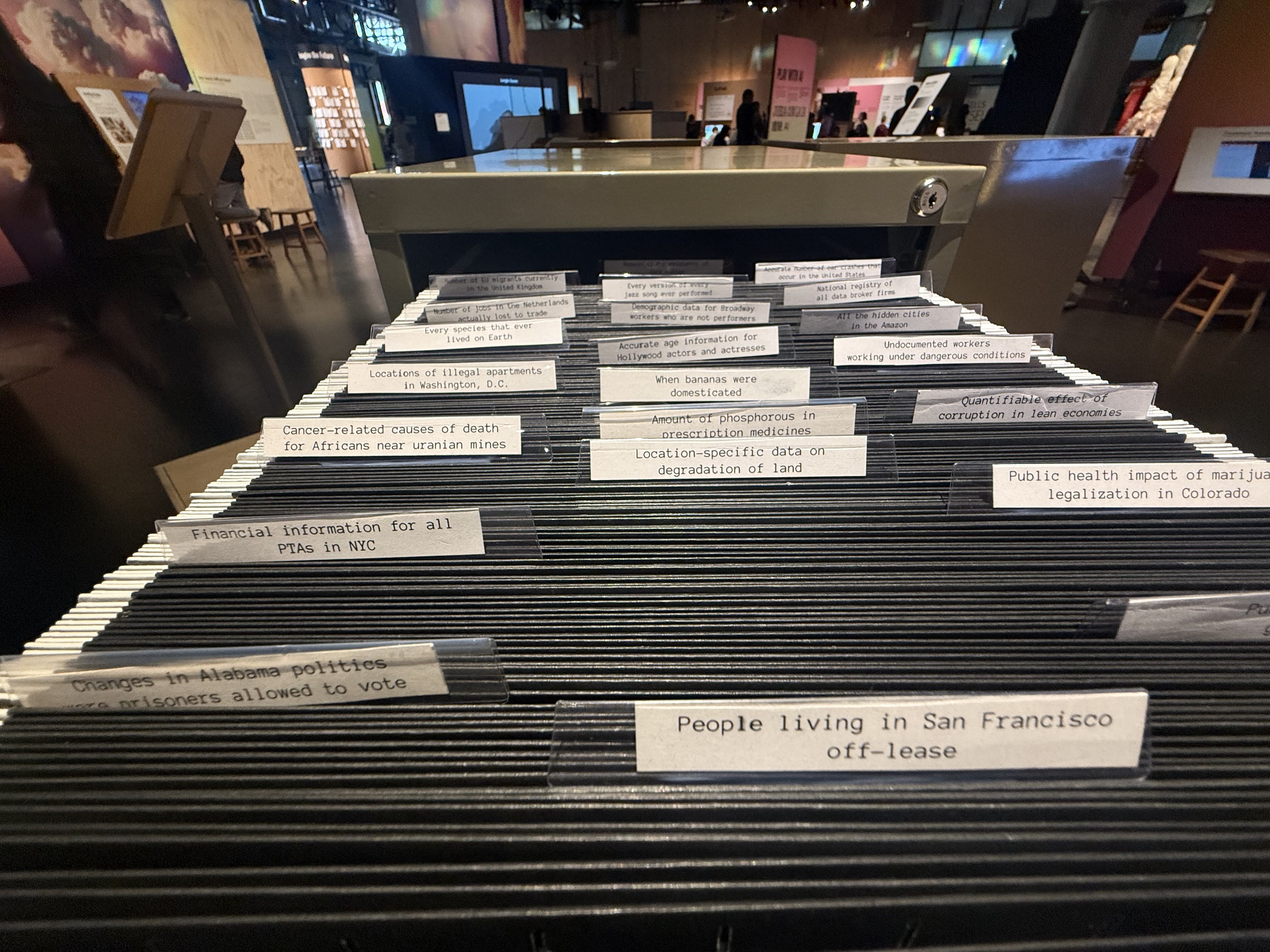
- One section invites visitors to open filing cabinets of empty folders labeled with data missing from AI models.
- Examples include "a national registry of data brokers," "crop species lost to industrial agriculture" and the number of undocumented workers toiling under dangerous conditions.
- A few feet away, people can enter a question into an AI model while simultaneously seeing just how much clean water that query uses to generate an answer.
- At the end of the exhibit, visitors are invited to share hopes and fears about AI. Both kids and adults voiced similar concerns: fears of job loss and machines gone wild, and hopes for advances in health, education and the environment.
Between the lines: Anthropic is the presenting sponsor of the Exploratorium exhibit, but officials said the AI company had no say in its curation.
What they're saying: Eric Dimond, the Exploratorium's senior director of exhibits, says the goal is not to say "AI is good" or "AI is bad," but to show how it works and foster much-needed dialogue.
- "Really good experiences lead to conversations," Dimond told Axios. "And I oftentimes say that the strongest exhibit experience is the conversation that happens afterwards."
- "We're trying to create experiences that raise questions, but they're not the questions that we have dictated," he said.
The big picture: Other museums are also exploring AI, including the Misalignment Museum, which had a temporary space in San Francisco where it used robots made of Spam cans and other artistic works to highlight the shortcomings of the technology.
- While it used different means and took a more concrete stance, Dimond praised the exhibit. "Their use of art, I thought it was actually really quite good," he said.
What's next: The Exploratorium plans to continue grappling with AI-related topics when this exhibit ends. It's already written a grant proposal for a new exhibit and plans to integrate AI-related pieces into its main collection, including within the social sciences.
- AI is just a tool, Dimond said. The real questions are what people do with it. "It's about humans."
