Level99 raises $50 million for real-world gaming venues

Add Axios as your preferred source to
see more of our stories on Google.
Source: Level99
Level99, which is best-described as a real-world gaming venue for adults, tells Axios that it's raised $50 million from ACT III Holdings, the investment firm led by Panera founder and Cava chairman Ron Shaich.
Why it matters: "This could be the most exciting business I've ever been involved with, and that includes Cava," Shaich says.
- Act III previously invested $10 million.
Anecdote: A few years back, some friends decided to take me to Level99 for my birthday. When I asked what it was, they said they weren't sure but that they'd heard it was lots of fun. Plus, there would be beer.
- They were right. On both counts.
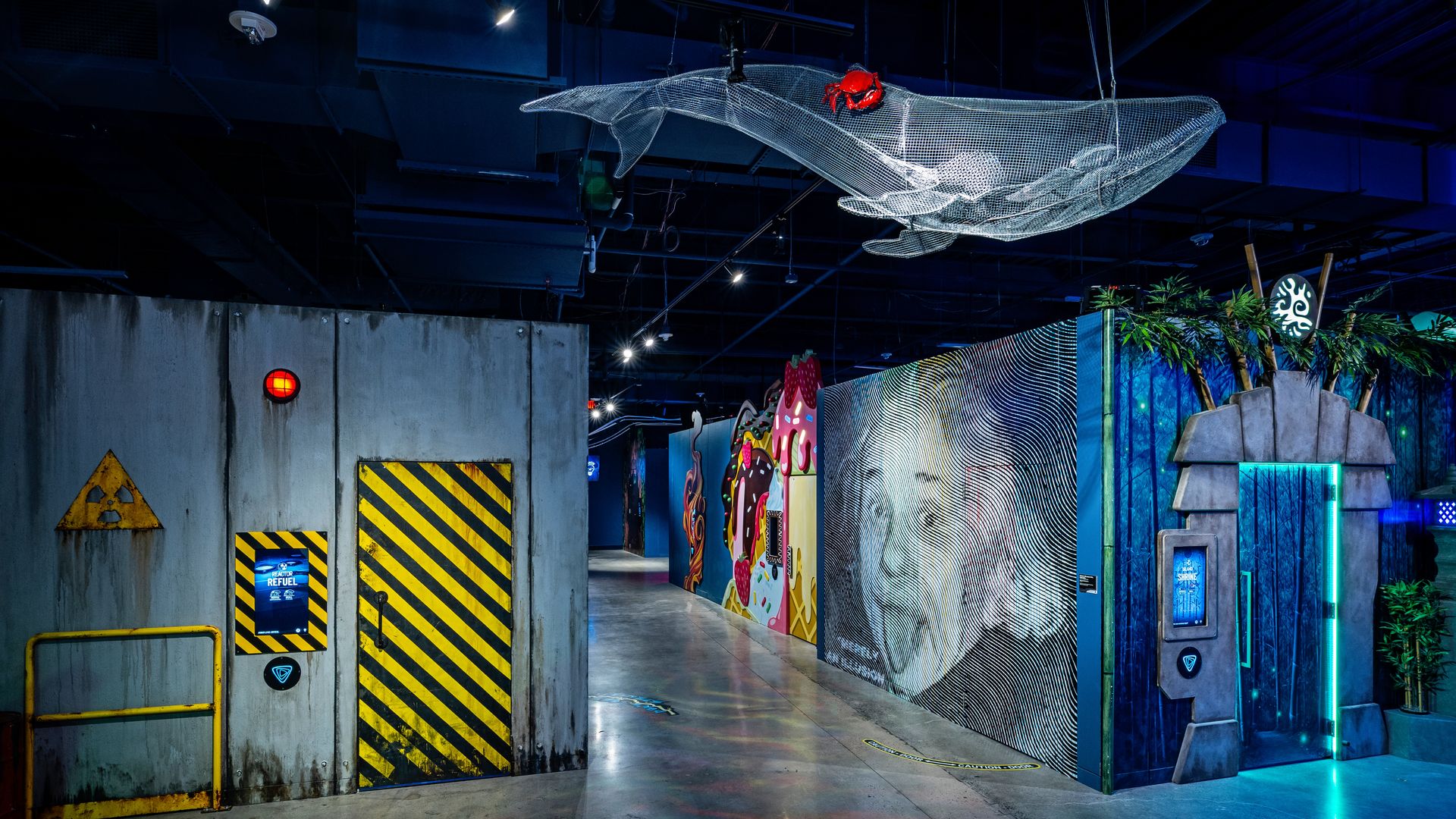
Zoom in: Each venue features around 50 physical and mental challenges inside small rooms, ranging from relatively easy to maddingly difficult. And everyone wears wristbands to access the rooms and keep track of your performance (yes, there's a giant scoreboard).
- Plus immersive art, a scratch kitchen serving comfort food, and a full-service bar that's partnered with a local brewery. Its team includes vets of Disney Imagineering and Meow Wolf.
- The inaugural Level99 is located inside what once was a suburban shopping mall Sears outside of Boston.
- It now has two more open locations, with a fourth coming in early 2026 and ground recently broken in Disney Springs. Other leases are signed, although the company isn't disclosing geographies.
By the numbers: Shaich sold Panera for $7.5 billion, which is around the same figure as Cava's current market cap.
What they're saying: "My last company, which now is part of Level99, had a team that for 17 years did designs and builds for third-party clients," says Matt DuPlessie, founder and CEO of Level99. "Disney. Museums. Major theme parks. Theatrical productions. We built stage sets for Blue Man Group. We put exhibits in the Smithsonian."
- He adds: "I started to see patterns of what was working in location-based entertainment and what would go stale."
- A big key, he and Shaich say, is engaging people without relying on screens.
