Nvidia, the primary avatar of the AI revolution, has solidly ensconced itself not only as one of the most valuable companies in the world but also as one of the most profitable.
Why it matters: Nvidia's profit margins are the envy of the corporate world — it made $14.9 billion of net income on revenue of $26 billion last quarter.
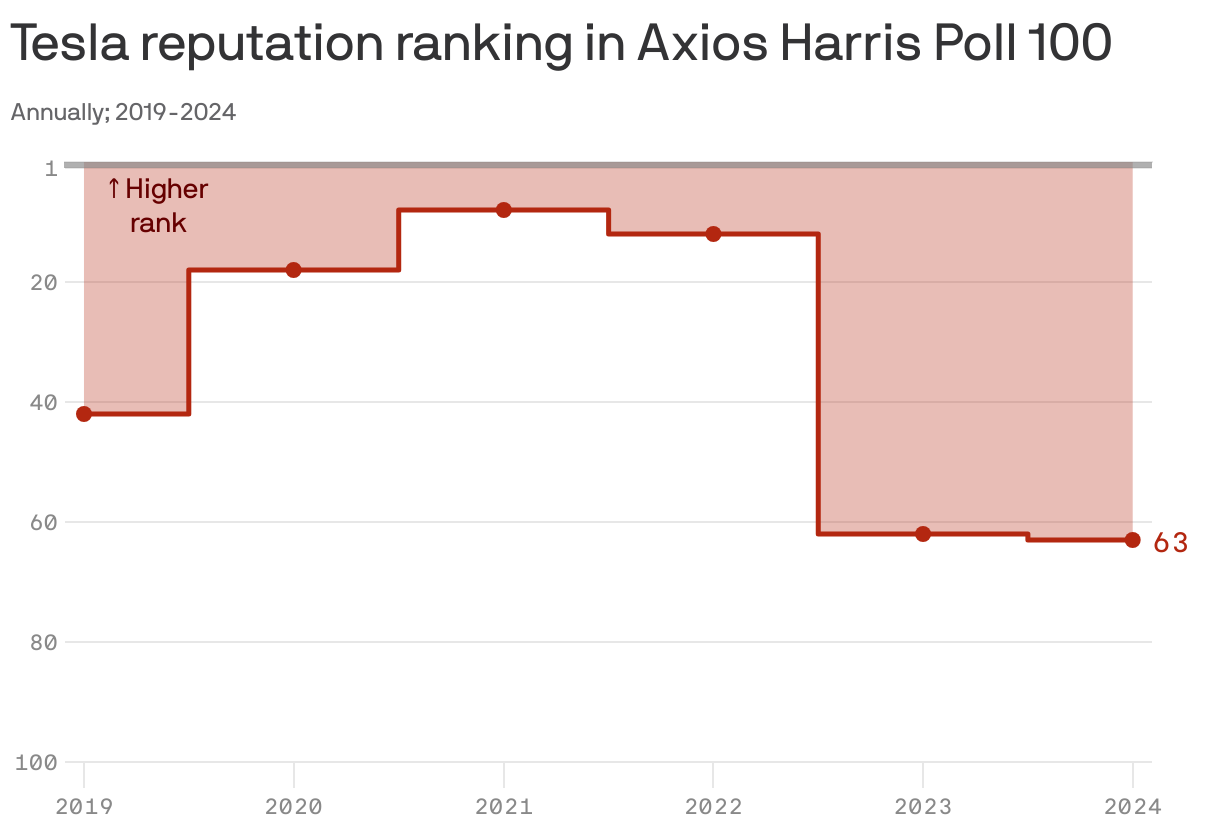
Tesla Motors' brand reputation continued to slip over the last year as Elon Musk's antics and other issues tarnished its once-impeccable image, according to new Axios Harris Poll 100 survey results.
Why it matters: Tesla soared to 8th place in 2021's ranking of America's 100 most visible companies by their perceived image, but has since plummeted to 63rd — suggesting Musk and his company flew too high and too fast, like Icarus of Greek myth.
Tesla Motors' brand reputation continued to slip over the last year as the antics of polarizing CEO Elon Musk and other issues tarnished its once-impeccable image, according to new Axios Harris Poll 100 survey results.
Why it matters:Tesla soared to 8th place in 2021's ranking of America's 100 most visible companies by their perceived image, but has since plummeted to 63rd — suggesting Musk and his company flew too high and too fast, like Icarus of Greek myth.
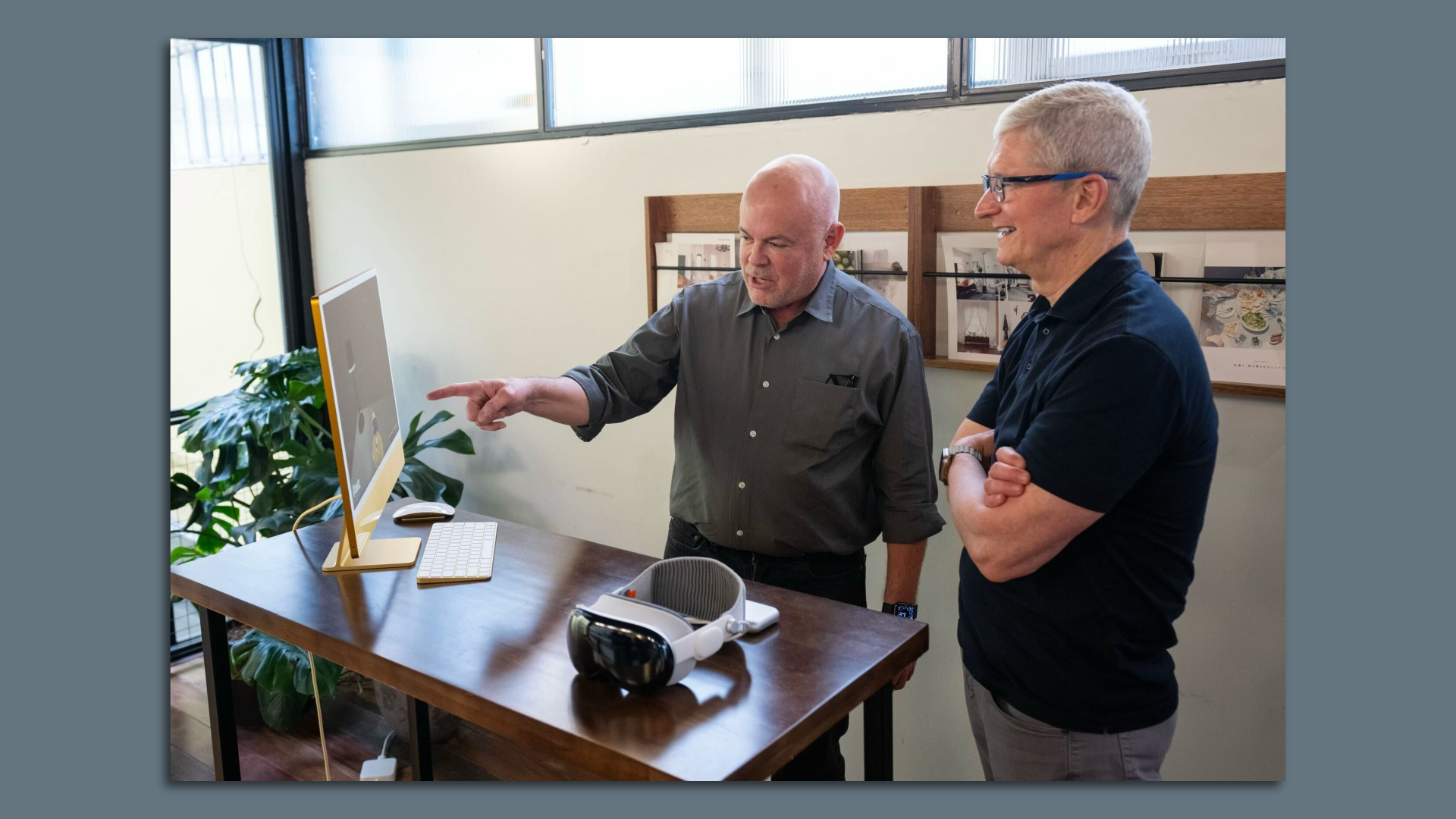
A new startup is coming out of stealth with a plan to offer digital pets for the Apple Vision Pro that use AI to read and respond to human emotion.
Why it matters: AIs designed to play digital characters or inhabit physical robots will need some form of emotional intelligence to interact with people — so the race is now on to develop AI that can read your feelings.
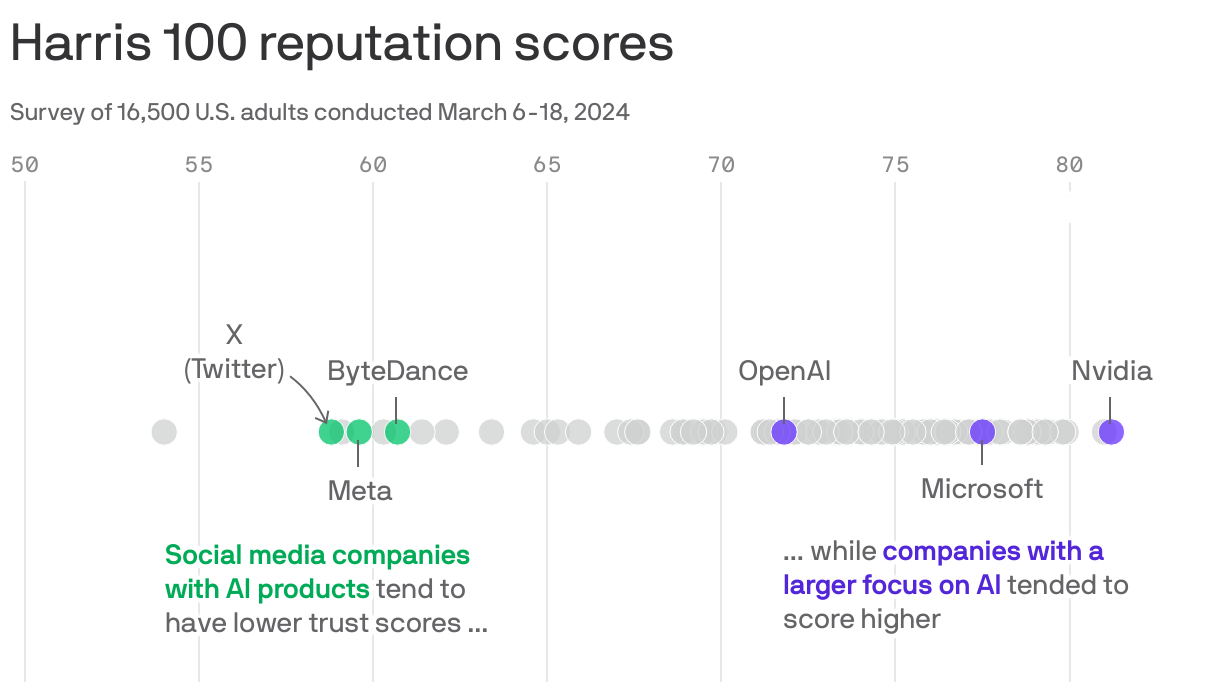
The U.S. public trusts tech companies leading the generative AI wave — like Nvidia, Microsoft and OpenAI — more than firms chiefly known as social media platforms, like Meta, ByteDance and X.
Why it matters: These findings — part of the 2024 Axios Harris Poll 100 reputation rankings — show that continued fallout from public disenchantment with social media could hamper companies' effort to reinvent themselves as AI innovators.
The Department of Justice and a group of U.S. state attorneys general on Thursday plan to sue ticketing giant Live Nation on antitrust grounds, a source familiar with the DOJ's plans told Axios.
Why it matters: The outcome of the legal battle with one of the largest ticketing and live events companies in the U.S. could fundamentally upend the industry.
Nvidia's CEO Jensen Huang said Wednesday that demand for generative artificial intelligence training is "accelerating," as the AI-chip designer posted quarterly earnings that beat market expectations.
Why it matters: Dubbed the most important stock on planet earth by Goldman Sachs, the company is the main bellwether for the pace of AI progress.
News Corp., the parent company to The Wall Street Journal, on Wednesday announced a long-anticipated, multiyear deal to license its archived and current content to ChatGPT parent OpenAI.
Why it matters: The news industry has split over whether to work with or challenge AI firms — and the Journal's biggest rival, The New York Times, opted to sue OpenAI and its parent Microsoft instead of striking a deal.
The dispute between Scarlett Johansson and OpenAI is adding fresh heat to long-simmering questions about CEO Sam Altman's credibility.
Why it matters: Altman and OpenAI, the company avowedly dedicated to making sure that AI "benefits humanity," have to persuade a skeptical world that AI can be trusted — and that will be a lot harder if they lose trust themselves.
Airbnb and electric vehicle infrastructure company ChargePoint are teaming up to give hosts discounts on charging tech.
Why it matters: As EVs slowly but steadily grow more popular, demand for charging is increasing in kind — and Airbnb hosts who offer it may get a leg up on their local rivals.
Sonos' first headphones, the Sonos Ace, will go on sale June 5, the company revealed yesterday — and Axios was one of the first to try them.
Why it matters: The $449 headphones have been widely anticipated by audiophiles and investors alike, but join a crowded category dominated by Apple, Sony and Bose.
Microsoft is hoping that AI will reinvigorate PC sales, but it also sees its new Copilot+ line of Windows computers as finally able to challenge the popularity of the Apple Silicon-powered Mac.
Why it matters: The Mac has gained significant market share in recent years, with Apple's chips giving the company an edge, but the long pendulum of personal-computing competition could be swinging back.