Launching new hardware is hard, as they say, but Sonos CEO Patrick Spence looked very much at ease nine hours into a day packed with back-to-back media presentations.
Why it matters: The premium wireless speaker maker has built a loyal following and is accustomed to carving out space in crowded markets against the likes of Sony, Bose and Google and Amazon.
Fatal attacks on U.S. troops in the Middle East, harassment of ships in the Red Sea and the balance of power in Russia's war against Ukraine share a dangerous common thread: the rise of cheap drones.
Why it matters: This evolution of warfare, driven by accessible and inexpensive materials, is upending decades of U.S. military planning, spending and dominance.
The latest AI tools and computing advances are providing a more detailed view of plants and their interactions with the world that could help breeders develop more resilient crops and farmers plan for a far different future.
Why it matters: A growing global population needs to be fed using less land — allunder the pressures of degrading soil, pests, disease and climate change.
AuditBoard, a Southern California provider of audit and risk management software, has agreed to be acquired for over $3 billion by European private equity firm Hg.
Why it matters: When we think about the hottest startups, it's usually the ones pushing edge technologies and earning "unicorn" status from venture capitalists. But sometimes boring is best.
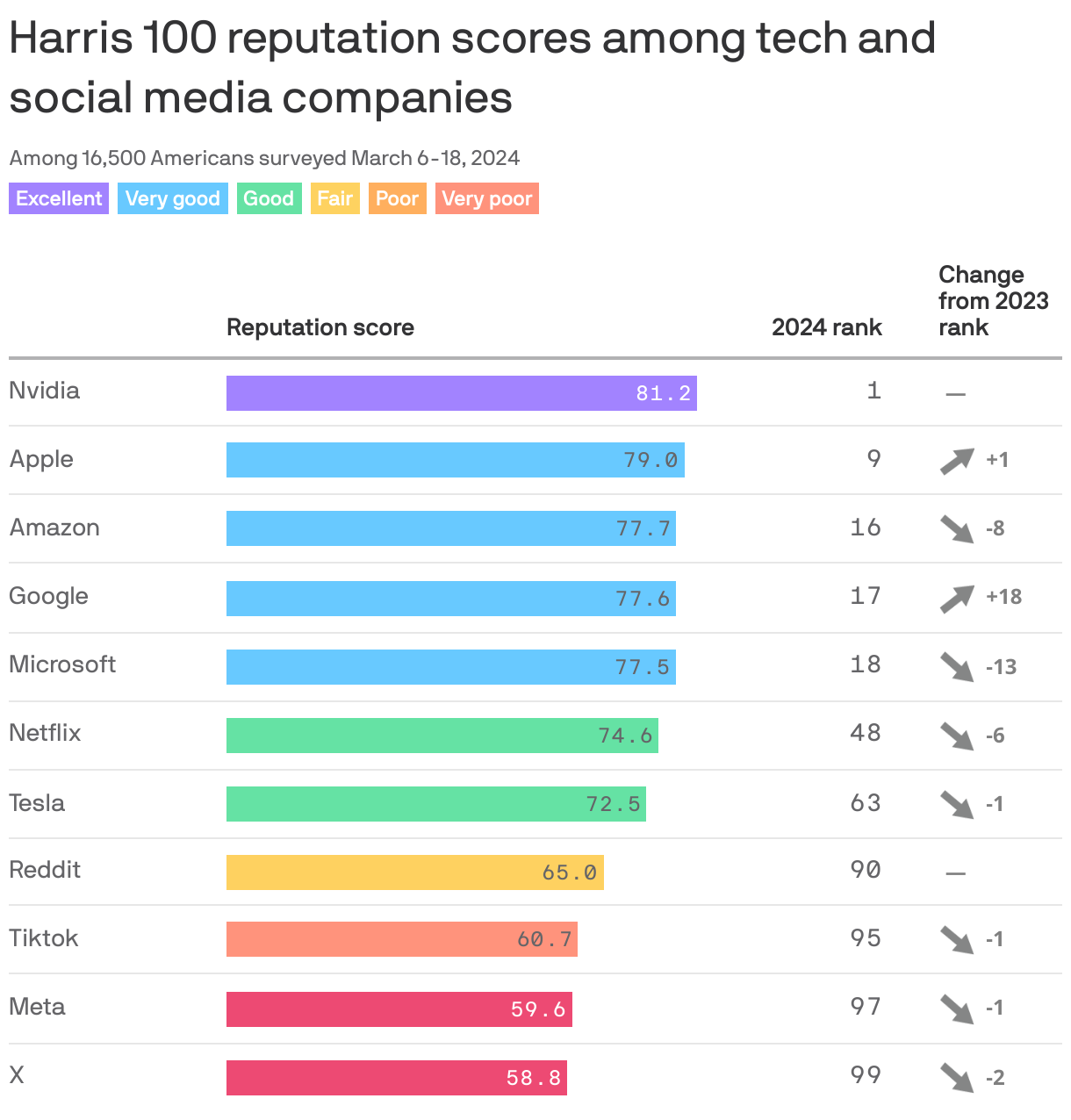
Americans' opinion of Elon Musk's social media platform X has fallen to a new low, according to the sixth annual Axios/Harris Poll 100 — while AI chipmaker Nvidia, in its first appearance on the list, snagged the number one position.
Why it matters: Social media companies overall have fallen behind the rest of Big Tech both in terms of their value to investors and public perception scores over the past year.
A new memory-searching function in Microsoft's highly anticipated AI PCs is spurring concern among privacy-conscious executives and consumers.
Why it matters: Microsoft will have to address a growing list of questions about the functions of its new Recall feature in some Copilot+ PCs if it hopes to make the PCs a ubiquitous household and workplace device.
State officials are increasingly targeting public mask-wearing in new legislation and prosecutions in an attempt to crack down on pro-Palestinian campus protests.
Why it matters: Wearing a mask can help protesters evade facial recognition cameras that police and campus officials use to identify participants in a campus demonstration.
Much of my work life is spent bouncing back and forth between those expressing optimism that generative AI will lead to a new golden era of human productivity and those who believe we are headed into a dystopian hellscape.
Zoom in: These two tweets, which appeared right next to each other in my feed on Wednesday, encapsulated that dichotomy perfectly.
In the first one, Box CEO Aaron Levie lays out a compelling case for why he is "insanely bullish" on how generative AI will let companies make far better use of their data.
The second post, an unrelated tweet from Fortune journalist Sharon Goldman, takes issue with the oft-touted notion that inserting AI into so many formerly human interactions is actually a worthwhile goal.
My thought bubble: I struggle myself, being both tantalized by the potential of generative AI and horrified by some of the ways it could be — and often is being — used.
The blowback to Google's AI Overviews is growing now that they are showing up for all U.S. users — and sometimes getting things glaringly wrong.
Why it matters: The search giant's addition of AI-generated summaries to the top of search results could fundamentally reshape what's available on the internet and who profits from it.